With all of the millions of different species of plants and animals living together here on planet Earth it’s not hard to find many incredible stories to tell. Here are a few, one of which teaches us that we’re not the only intelligent animal on the planet, a second that relates to a ‘living fossil’ while the third concerns very surprising behavior from a very familiar animal.

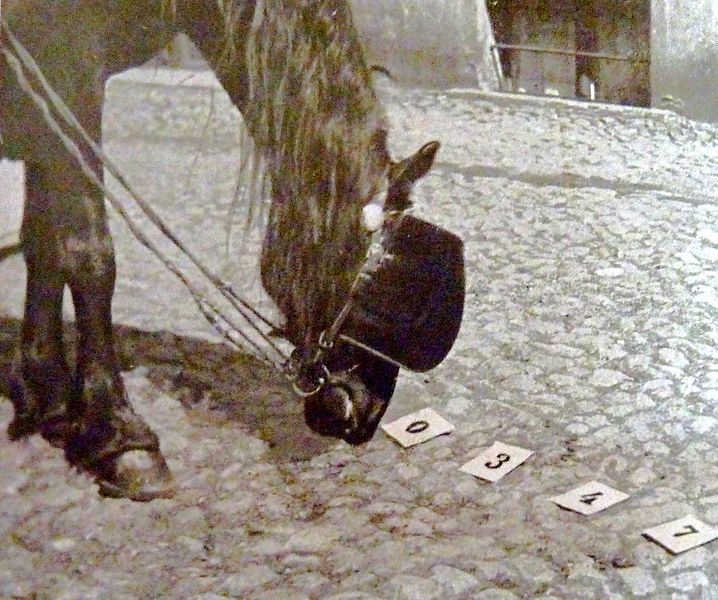
Mathematics, and geometry in particular are usually considered to be purely human activities. O’k once in a while you’d hear about a horse that is advertised to be able to count by pawing the ground with its front hoof but even such animals cannot recognize different geometric shapes, they cannot tell a square from a triangle or a parallelogram.
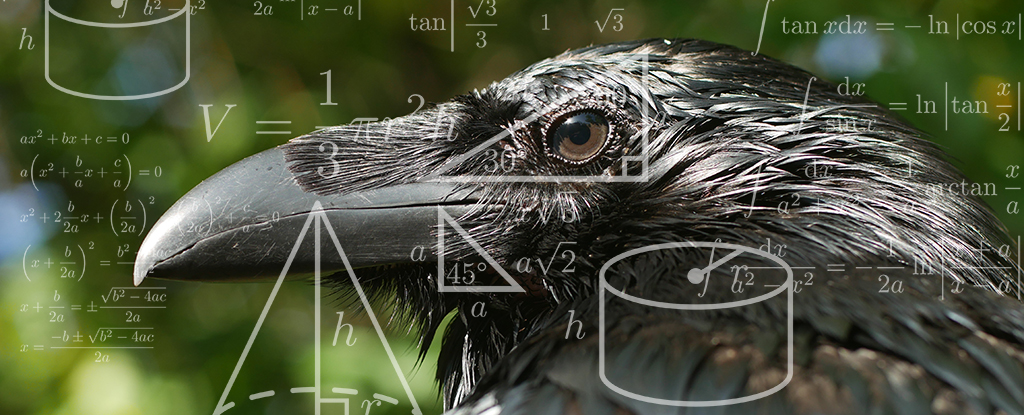
Or can they? A recent study from the University of Tübingen in Germany has demonstrated that crows are capable of differentiating one geometric shape from similar shapes. Now in previous studies crows have been found to be able to count as well as young human children so the researchers at Tübingen decided to see whether their pair of tame crows could tell one geometric shape from another.
They started by showing six shapes on a touch screen, five of which were the same while the sixth was very different, say five crescent moons and a flower. If the crow pecked at the flower, the oddball figure it got a treat of a mealworm. Once the crows understood the game the researchers made it harder, for example six perfect squares and one slight parallelogram.
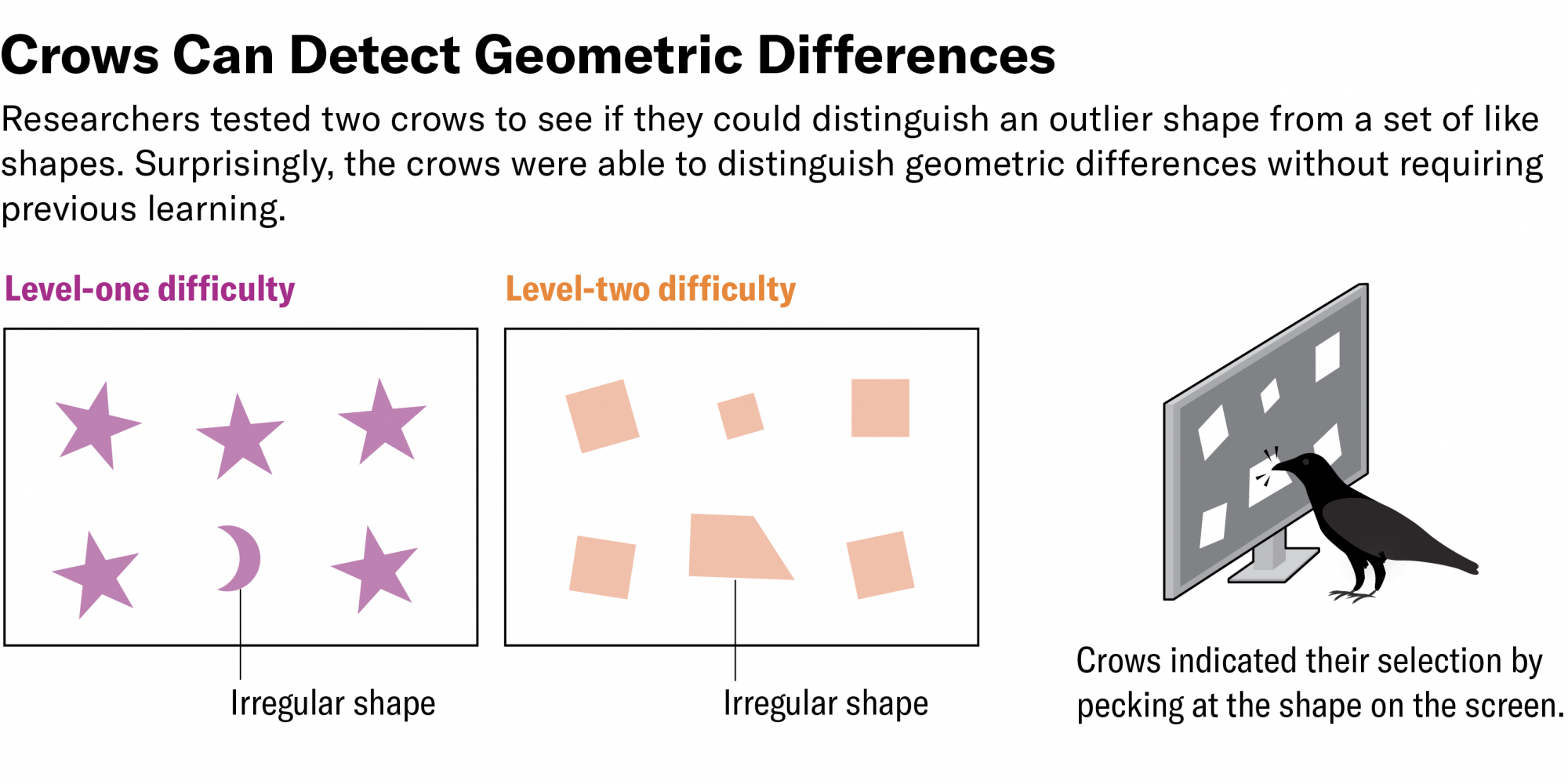
The crows had no problem spotting the oddball. It wasn’t long before the crows had demonstrated that they could recognize right angles, parallel lines and even symmetric shapes.

So now the question becomes, how many other animals have similar geometric abilities. This study with crows is really the first time any species of animal has taken a geometry test. It remains to be seen how many other species can also pass.

Another very common species of animal also made some very surprising news recently, not for its intelligence but for a totally unexpected degree of bloodthirstiness. The animal in question is the California ground squirrel, which like most species of squirrel life on a diet of nuts, grains and seeds.
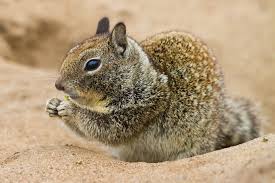
However a recent study by naturalists at the University of California Davis along with the University of Wisconsin-Eau Claire has documented that ground squirrels in the San Francisco bay area have been adding an unexpected kind of protein to their diet. That protein comes from hunting, killing and eating voles. The very idea of cute little squirrels as vicious predators may come as something of a shock but the researchers succeeded in filming and photographing numerous cases of squirrels chasing, killing and then eating the small rodents.
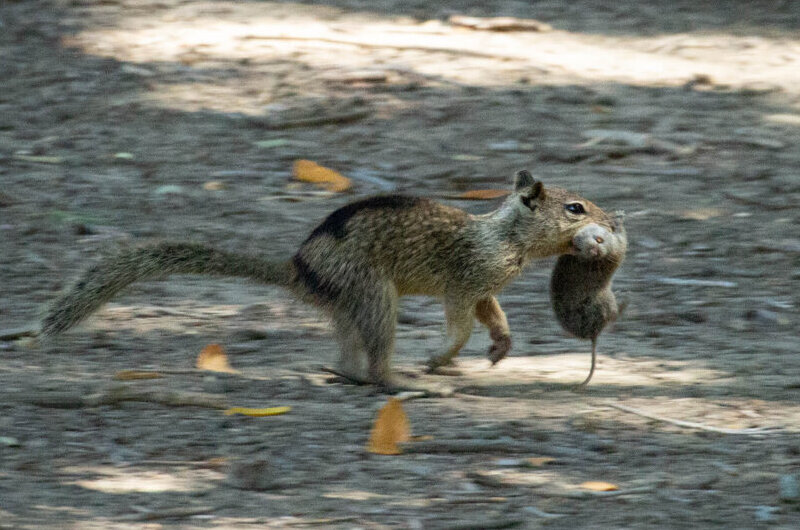
One interesting fact that the naturalists noted was that vole hunting by squirrels peaked during the first two weeks of July, just the time of year when the vole population peaks. In general the team found that squirrels are opportunistic hunters, chasing and killing their prey when one is nearby but not actively searching for voles as true predators would.
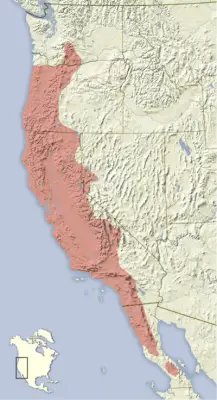
This behaviour fits in well with general squirrel conduct, taking advantage of every kind of food that’s available. There are still many questions about carnivorous squirrels, is this behavior general in the species, California ground squirrels have a wide range, or is it localized to the area south of San Francisco. Also, are hunting skills taught from generation to generation as in wolves and lions or do individual squirrels learn to hunt on their own. In any case animals like that, creatures that have a wide range of habits and can live off of a variety of different foods, including we humans, have a big advantage during times of change such as the times we live in.
My final story concerns a type of animal that is far older than either crows or squirrels. In fact the coelacanth, a family of lobe-finned fishes that are related to the first fish that walked on land, is considered to be a ‘living fossil’ because members of that family are known to have swum in the oceans of 400 million years ago. For a long period of time it was thought that the coelacanths had gone extinct at the same time as the dinosaurs.
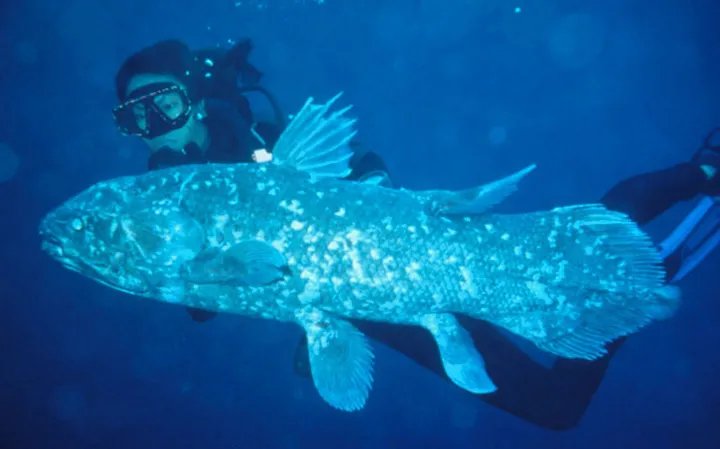
The first living specimen of a coelacanth was discovered in 1938 by a zoologist named Marjorie Courtenay Latimer living in Tanzania who made a habit of perusing the local fish markets for interesting specimens. World War 2 prevented scientists from learning more about the living coelacanths but after the war it was found that a large population of coelacanths, Latimeria chalumnae, were living in the deep waters, 1,000 to 1,300 meters, off the southeast African coast. Then, during the 1960s a second species of coelacanth was discovered at similar depths around the islands of Indonesia.
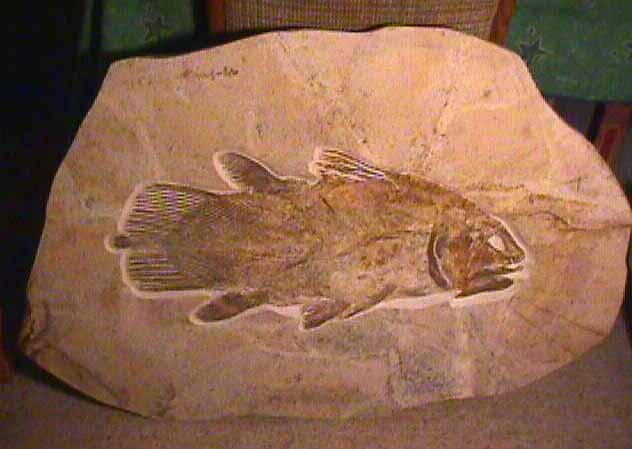
Recently oceanographers from the Monterey Bay Aquarium Research Institute (MBARI) were conducting a biodiversity survey in an underwater canyon about 100 kilometers off the coast of San Diego when purely by chance the cameras of their Remote Operated Vehicle (ROV) caught images of a coelacanth. The ROV was not capable of capturing so large a fish, and the specimen was only visible for a few seconds but there was no doubt, the creature was a coelacanth. A water sample brought back by the ROV was even tested for environmental DNA, eDNA and traces of coelacanth DNA was found.
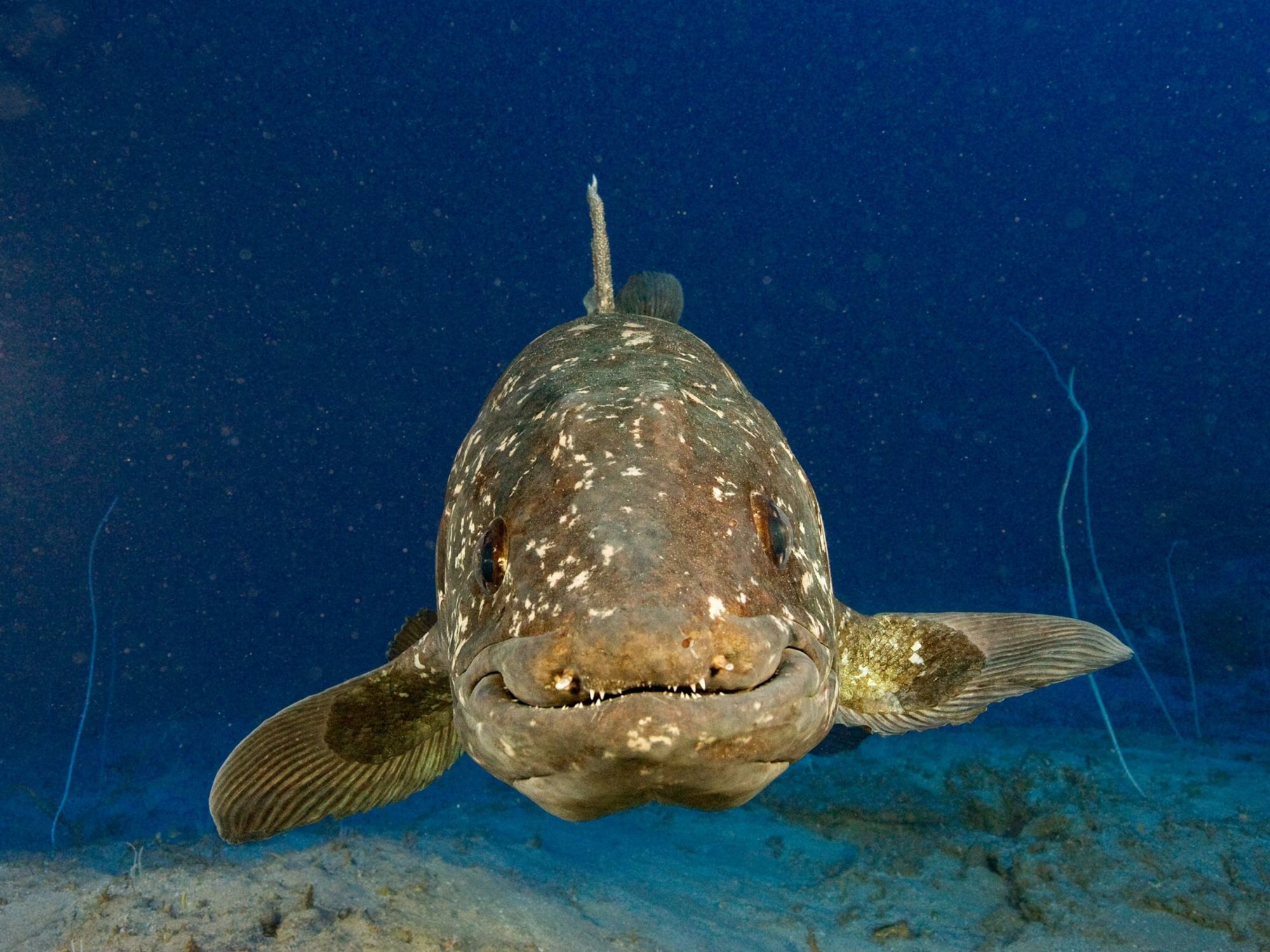
At least we now know that there is a population of coelacanths living off the west coast of North America. Is this a new species or a separated population of one of the already known living species? I’ll be sure to let you known when more is learned!