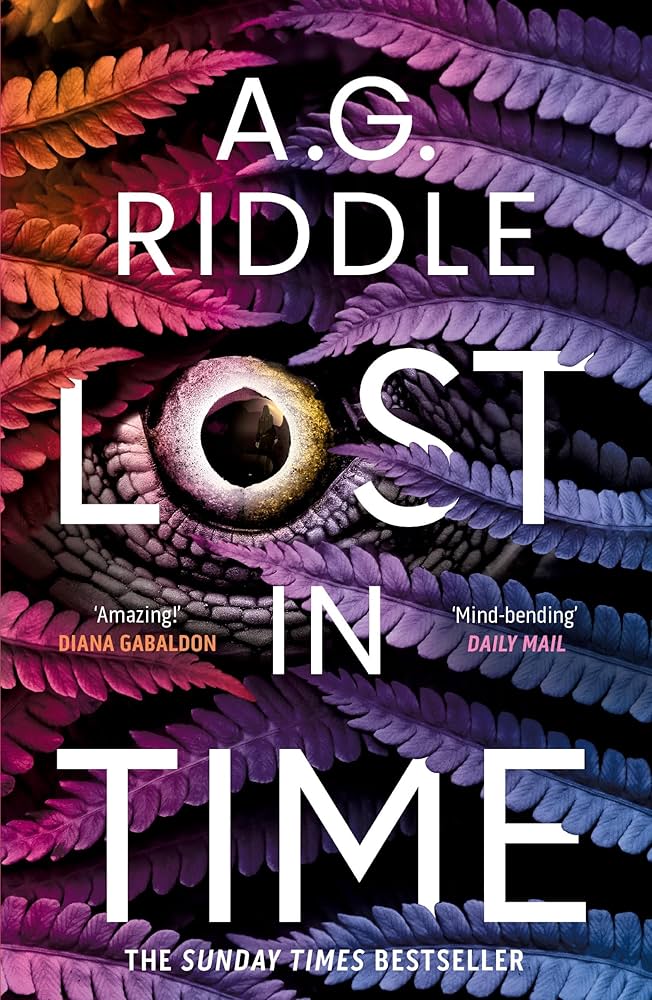
About a quarter of the way into ‘Lost in Time’ by author A. G. Riddle I had the feeling that I was going to be disappointed by this novel. The story was shaping up to be a murder mystery with some time travel thrown in to spice things up a bit. I am no fan of ‘who done it’ stories and despite the subplot in the Triassic period I wasn’t too impressed.
I do not like Murder Mysteries, in fact I really think that ‘Murder on the Orient Express’ may be the worst book I’ve ever read. I’ll give away the ending, ‘Who done it?’, ‘Everyone done it!’ (Credit: Barnes and Noble)
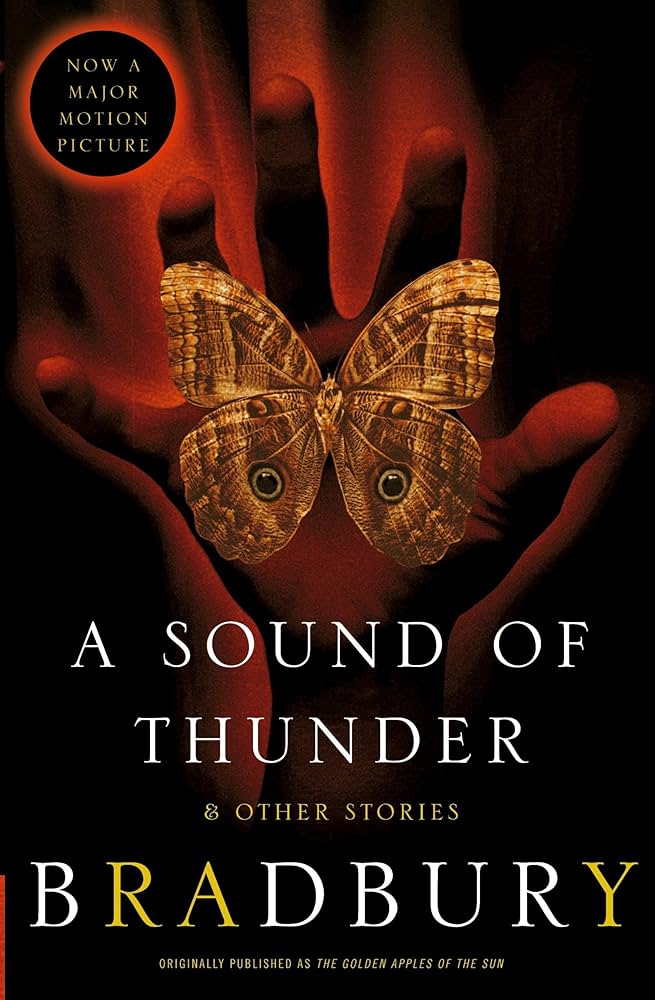
Boy was I wrong. About one third of the way into the story and the author begins using time travel to the fullest, mentioning but pretty much ignoring the usual time travel no-no’s of altering the past in any way causing disaster in the present. (See Ray Bradbury’s story ‘The Sound of Thunder’ for the classic take on what happens when a time traveler so much as steps on a butterfly.) Another time travel cliché that Riddle breaks is that you can never have a person meet themself.
Cover art for ‘Lost in Time’ by A. G. Riddle. It starts out like a ‘Who done it?’ with some time travel thrown in but it gets better! (Credit: Amazon.com)
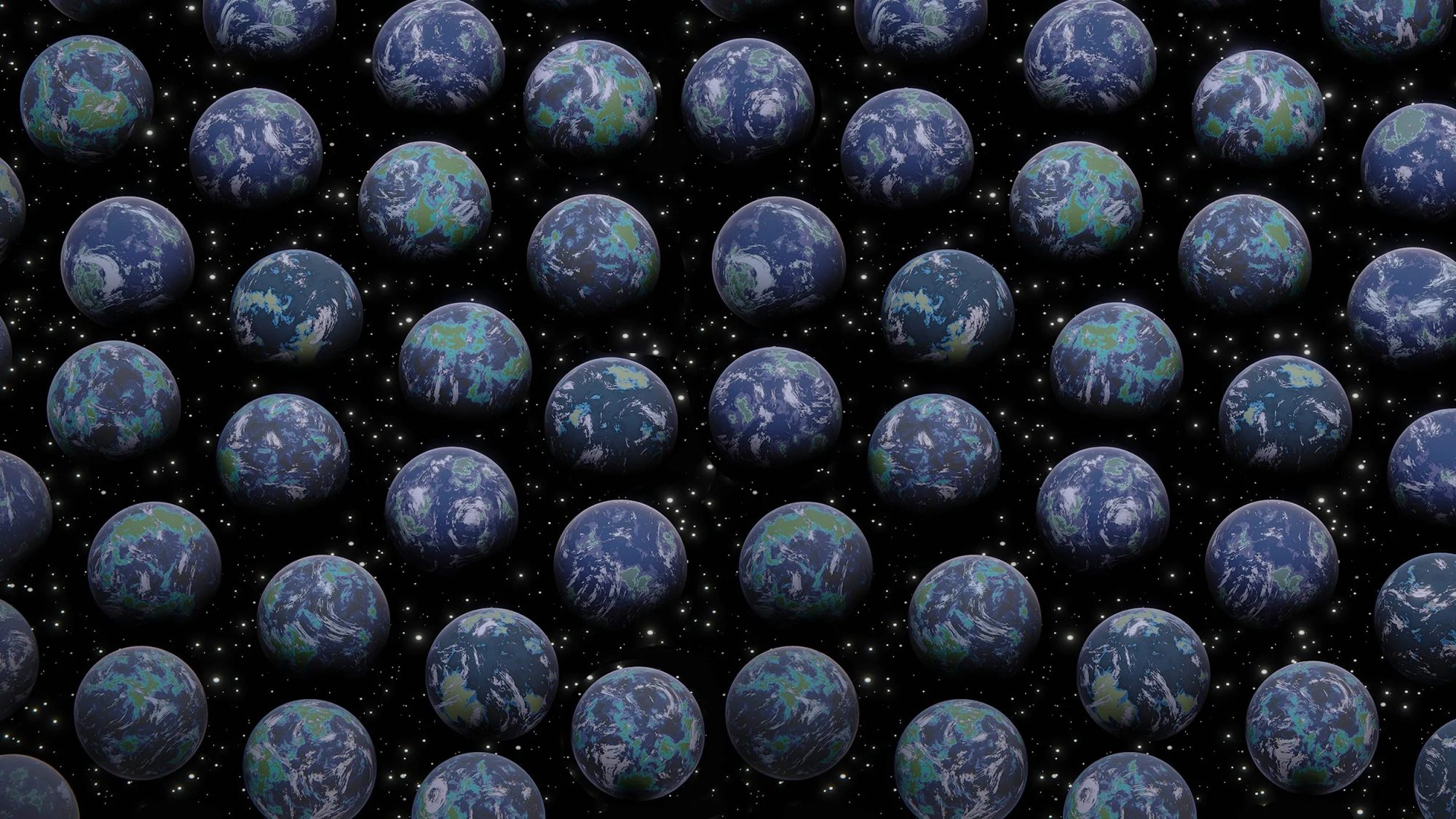
In the near future a company called Absolom has discovered a method to use quantum entanglement to send objects, including people into the past. Now this time travel is a one-way trip so the only practical use for Absolom is to send convicted murderers into the past, the distant, pre-human past. That way the very worst of humanity are removed from society without society having to execute them, they just died in the past the way virtually every creature who has ever lived has done. Governments the world over have taken advantage of this invention which has also caused crime in general to decrease significantly. The people sent into the past cannot alter our future because it turns out they are actually sent to a different universe in the Multiverse.
The Multiverse, an infinite number of different Universes, has become an infinite source of plots for SF novels and stories. (Credit: Big Think)
The trouble starts when the six scientists who developed Absolom have succeeded in creating Absolom 2, a new version that allows objects to be placed in our Universe’s past, and perhaps also allow the recall of those objects. One of the scientists, Dr. Nora Thomas argues against the whole project, reminding her colleagues of the dangers of altering the past.
‘The Sound of Thunder’ is a classic SF story by Ray Bradbury about the danger of trying to alter the past. It’s also where the term ‘Butterfly Effect’ comes from. (Credit: Amazon)
That night another of the scientists, Dr. Sam Anderson visits Nora along with his young daughter Adeline. Nora and Sam have begun a relationship and try to tell Adeline about it but the girl is still traumatized by the death of her mother and storms out of the house followed by her father.
Author of ‘Lost in Time’ A. G. Riddle posing in front of a well-known bit of the past. (Credit: A-Thrill-A-Week)
The next day Nara is found dead in her house, Adeline’s DNA and prints on the murder weapon. To save his daughter Sam confesses to the murder and is sent back to the Triassic period as his sentence. So there we have the murder mystery set up. Can Adeline solve the crime and get her father back from the past before a dinosaur eats him.
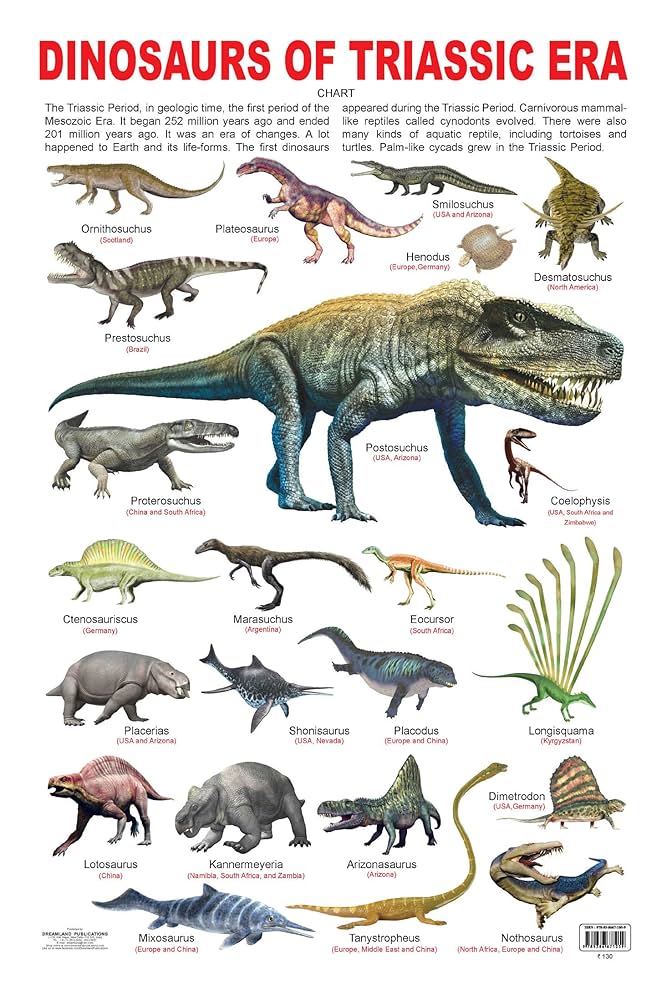
While not as well-known as the dinosaurs of the later Jurassic and Cretaceous period it was during the Triassic that dinosaurs first evolved. (Credit: Amazon.com)
Turns out things are a lot more interesting then that. As I said author Riddle uses time travel to make the plot much more interesting, and just plain weirder. The solution to the mystery is certainly the most unique ‘who done it’ I’ve ever heard of.
Here’s my kind of ‘Who done it?’ at least you know with the Three Stooges you’re going to get a few laughs! (Credit: en.wikipedia.org)
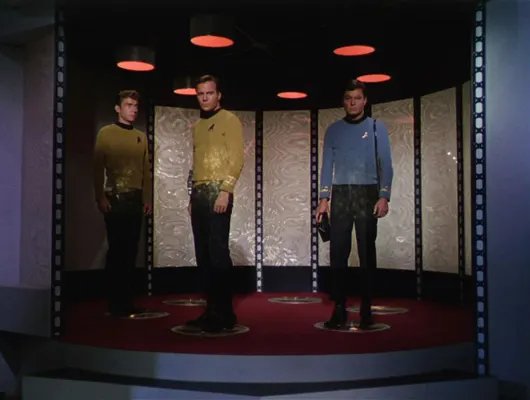
I do have a few problems with ‘Lost in Time’ however. First off the scientists who developed Absolom were actually trying to use quantum entanglement to build a kind of ‘Star Trek’ transporter, a device capable of sending objects across the world in an instant. When the objects just keep disappearing the team decides they must be going into the past, how they know this, the evidence for time travel is never explained.
The scientists in ‘Lost in Time’ were trying to invent something like a Star Trek transporter. When all of their test objects simply disappeared they figured it had to be time travel? That’s quite a bit of a leap in logic if you ask me! (Credit: Forbes)
Second, the Constitution to the United States strictly prohibits ‘Cruel and Unusual’ punishments and ya gotta think Absolom is unusual. It’s also cruel because Absolom isn’t too precise about where it drops a person in the past. Remember the Earth is 70% ocean so about 70% of prisoners would quickly drown. Indeed in the story Sam Anderson is dropped in a Triassic Ocean and barely manages to reach a shore.
The history of Europe is full of examples of ‘Cruel and Unusual Punishment’ that our founding fathers were hoping to eliminate. It seems to me that sending a convicted criminal to the Triassic period is certainly unusual if not actually cruel. (Credit: Tennessee Star)
Finally, author Riddle seems to feel that traveling into the past won’t alter our present, if you’re really careful! By the end of the novel people are going back and forth in time quite cavalierly, too cavalierly in my opinion. Just the idea of taking matter from our present and suddenly adding extra matter at some time in the past makes my physicist’s brain ache.
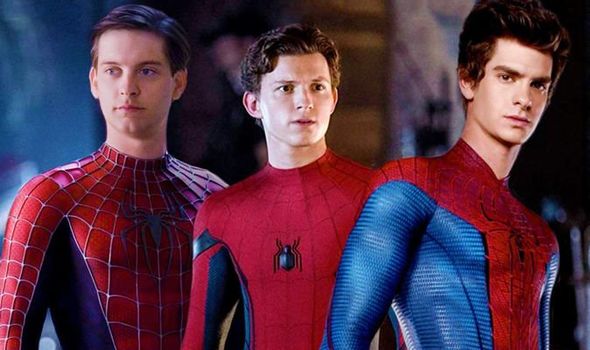
In the movie ‘Spiderman: No Way Home’ the idea of a Multiverse and time travel was used to bring three Spidermen together. It was fun but a little farfetched. (Credit: Daily Express)
Still, ‘Lost in Time’ was a fun read, as I said the solution to ‘who done it’ was quite a twist, the most unique murder reveal I’ve ever read. So I do recommend ‘Lost in Time’, even people like me who don’t care for murder mysteries will enjoy it.
Back a few months ago the asteroid 2024 YR4 made quite a few headlines because the astronomers whose job it is to discover and keep track of Near Earth Objects (NEOs) calculated that there was a very small but not insignificant chance that 2024 YR4 could collide with our planet on the 22nd of December in 2032. (See my post of 8 March 2025.) At an estimated size of between 50 and 100m, 2024 YR4 was a potential ‘city killer’ so it was no wonder that there was some concern when the chance of a collision rose to about 3%.
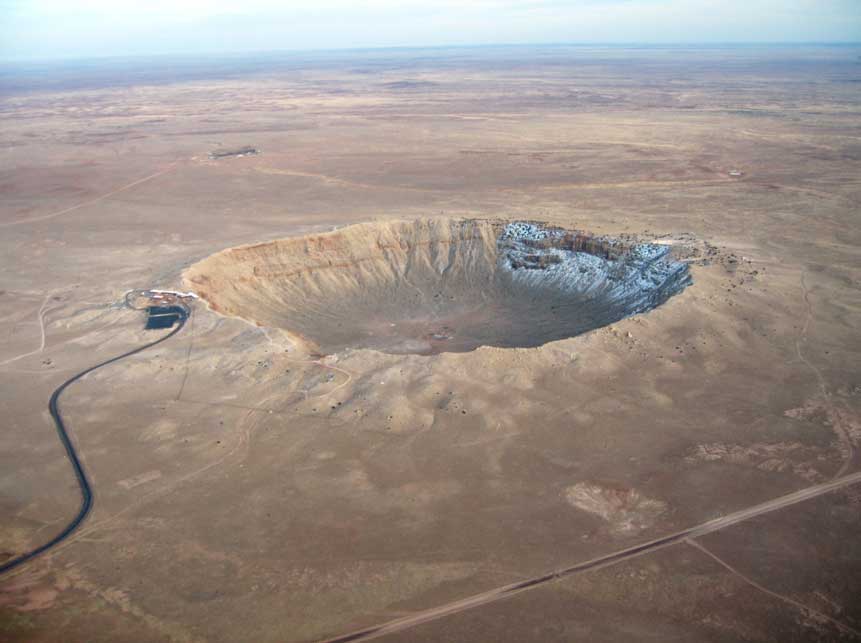
At more than a kilometer across the Asteroid crater in Arizona clearly shows how much damage a sizable rock from outer space could do. (Credit: Understanding Global Change)
Now 2024 YR4 had only been discovered in 2024, hence the designation 2024 YR4, and after several weeks of measurements of its position and velocity it was announced that better, more precise calculations clearly showed that while 2024 YR4 would come close to Earth on the 22nd of December 2032, it definitely would not collide with our planet.
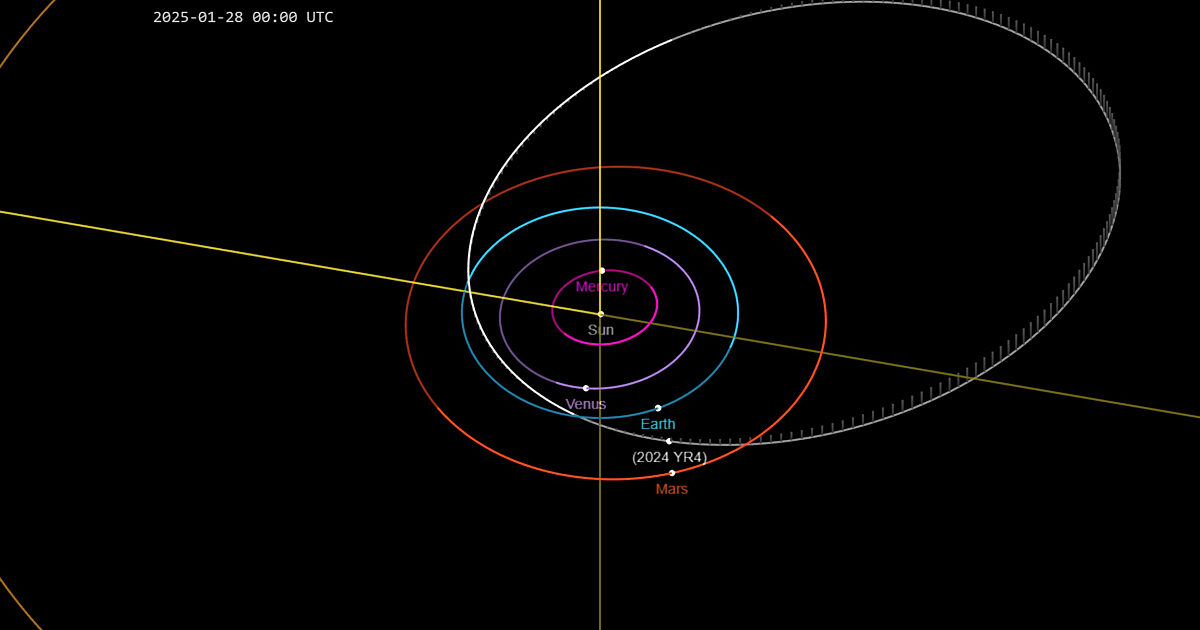
The orbital path of asteroid 2024 YR4 (Big Ellipse) brings to close to our planet (Blue Circle) on a regular basis. Of course close in outer space can mean millions of kilometers so any collision could be millions of years away. In any case 2024 YR4 will not strike the Earth any time soon. But it could collide with the Moon! (Credit: The Planetary Society)
But it could still strike the Moon. In fact a recent review of the observations made of 2024 YR4 while it was close to our planet has now given a better chance of 2024 YR4 striking the Moon than it ever did of colliding with Earth, 4.3%.
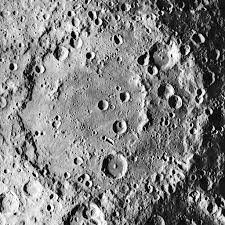
Much of the Lunar surface is covered in impact craters, some billions of years old, some very recent. The Moon is used to being hit by asteroids but what effects will that event have to us here on Earth? (Credit: ScienceABC)
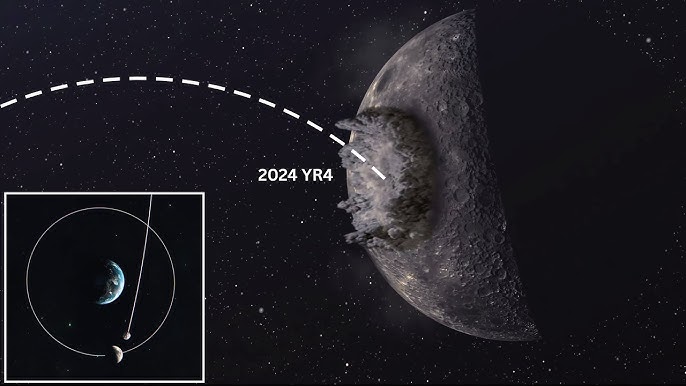
So, what would be the results of 2024 YR4’s striking the Moon? Would there be any danger to us here on Earth? A 50-100m in diameter asteroid slamming into the Moon would cause an explosion as powerful as that of an H-bomb, an estimated 6.5 megatons of explosive power. Such an explosion would create a crater that is estimated to be about a kilometer in diameter and cause as much as 200 million tons of lunar rock to be ejected.
The impact that an asteroid such as 2024 YR4 could cause would be as large as the largest nuclear bombs ever tested. (Credit: Atomic Heritage Foundation)
Now, the collision itself could only be a danger to someone on the Moon; an astronaut in other words and by 2032 there is the possibility that NASA or the Chinese space agency could be sending astronauts to the Moon on a regular basis. Of course if astronomers were certain that the asteroid were going to crash on the Moon you can bet that both space agencies would cancel any lunar missions until they were convinced it was safe.
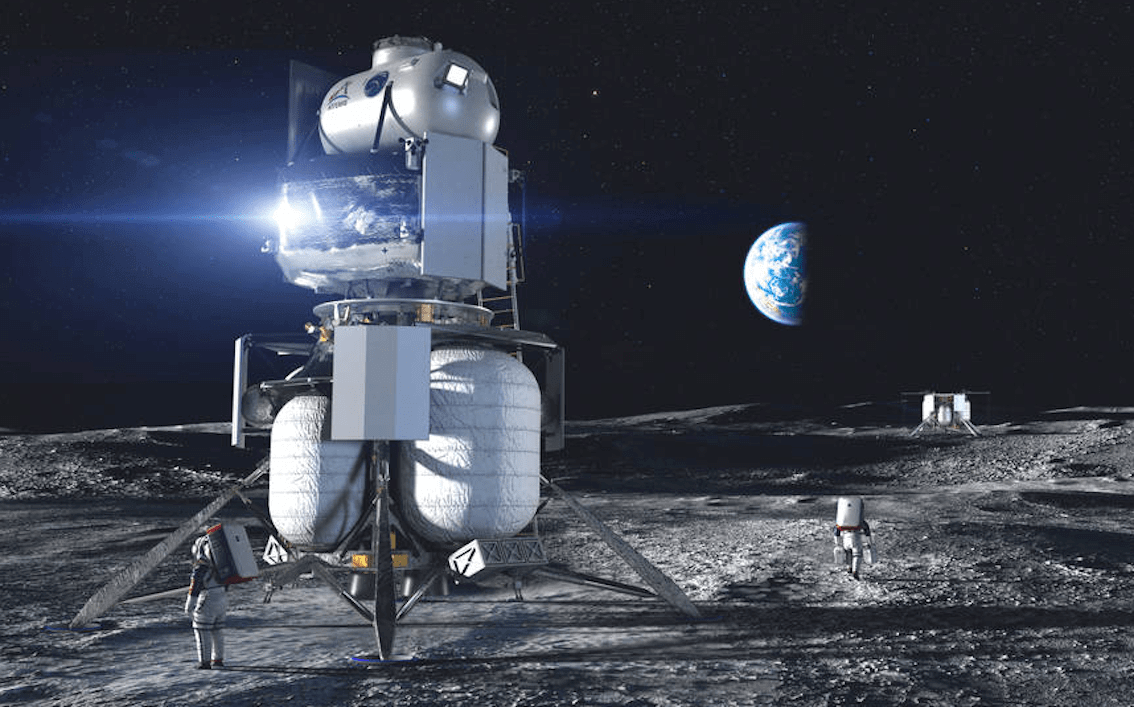
By 2032 both NASA and the Chinese expect to have landed people on the Moon but you can bet they won’t be sending any missions there if and when 2024 YR4 is going to strike. (Credit: Air Power Asia)
Here on Earth all that we would see is a bright flash of light on the lunar surface lasting several seconds. The calculations right now indicate that 2024 YR4 would strike the visible face of the Moon so it would be a once in a lifetime viewing opportunity for the half of the world where the Moon is up.
If asteroid 2024 YR4 does strike the Moon in 2032 it will be an event visible to half of the people on Earth, a sight unlike anything we’ve ever seen. The problems caused by the collision would come days later. (Credit: YouTube)
The danger comes after the actually strike with all of that Lunar material that got ejected by the collision. A small fraction of that material will actually escape the Moon’s gravity and a fraction of that will come towards Earth. Starting about a week after the collision our night skies will treat us to the most glorious meteor showers in history, and that show could continue for months.
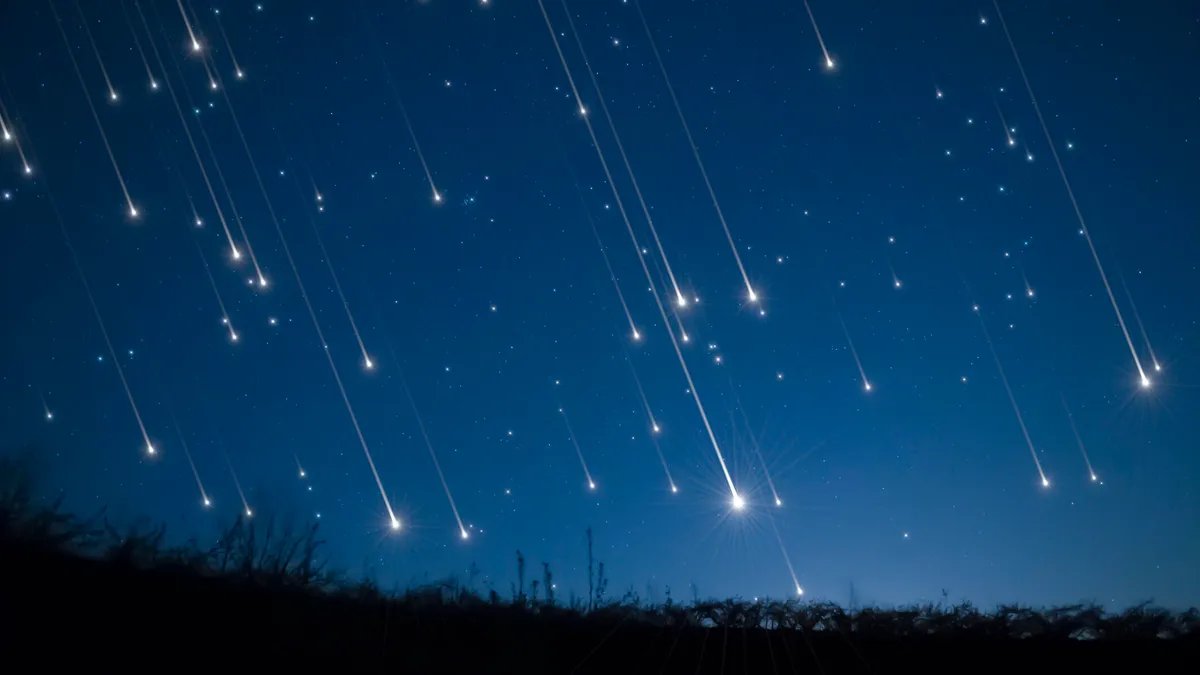
A few days after the collision the Skies of Earth would see the biggest meteor shower in recorded history as millions of fragments of the Moon fell onto our planet. The real danger would be to all of our satellites in orbit, satellites that our modern technological society has become dependent on. (Credit: CNET)
There is little chance of anyone on Earth’s surface being hurt by the meteors, virtually all of the particles will be smaller than a peanut and burn up in the atmosphere. The danger would be to astronauts in Low Earth Orbit (LOE) space stations and to the hundreds of satellites circling our planet.
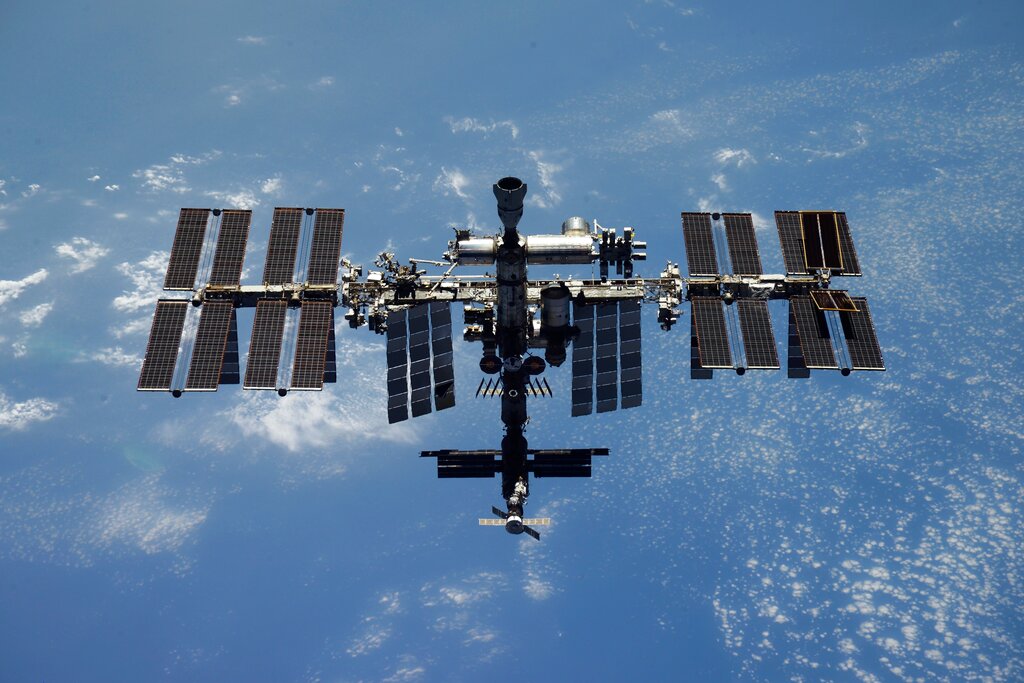
Any space station in orbit would have to be abandoned because of the danger of a meteor strike. (Credit: WUSF)
That’s the real danger because any collision with even a tiny grain of lunar dust at velocities of 10 kilometers or more per second could do serious damage to a spacecraft. Remember our increasingly technological society has become quite dependent on GPS satellites, communications satellites, weather satellites etc, etc. If 2024 YR4 should strike the Moon the danger to LOE satellites and manned stations could last for years.
The swarm of particles caused by the asteroid collision on the Moon would last for years being a constant danger to satellites as well as any manned spacecraft. (Credit: Dreamstime.com)
So, on the whole I’m hoping that 2024 YR4 misses the Moon entirely. It would make for a spectacular show but the problems it causes could seriously impact space exploration for a long time.
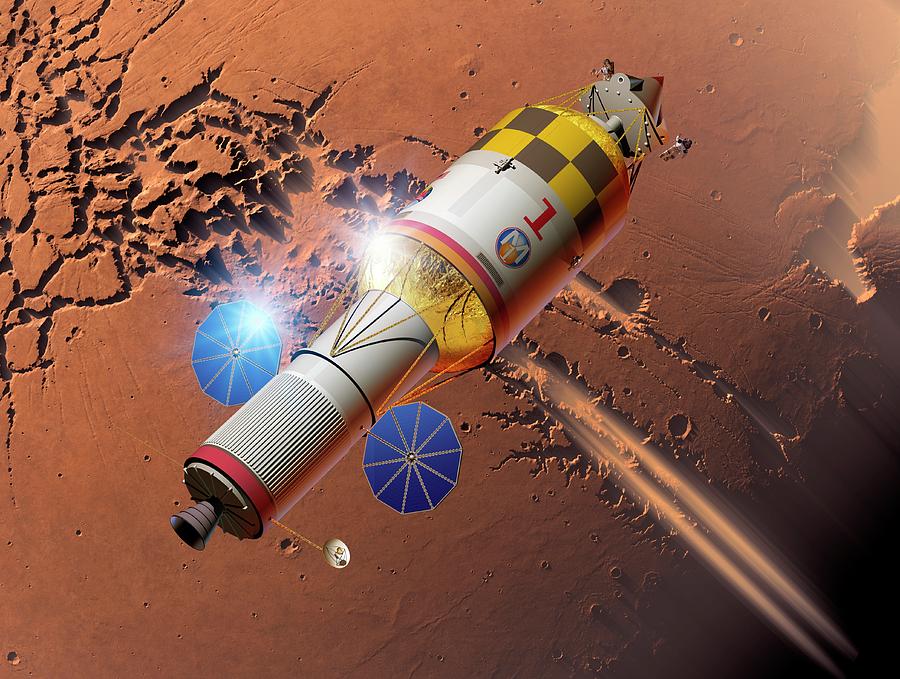
With all of the debris that would be moving through the inner solar system due to the asteroid impact a mission to Mars would be out of the question for who knows how long. (Credit: Science Photo Gallery)
My second asteroid is not going to put on such a show, nor be as much a threat as 2024 YR4 but 3I/Atlas is in many ways more interesting. Discovered on July 1st of 2025, 3I/Atlas is the third interstellar visitor to our solar system to be discovered by astronomers and differs greatly from the first two.
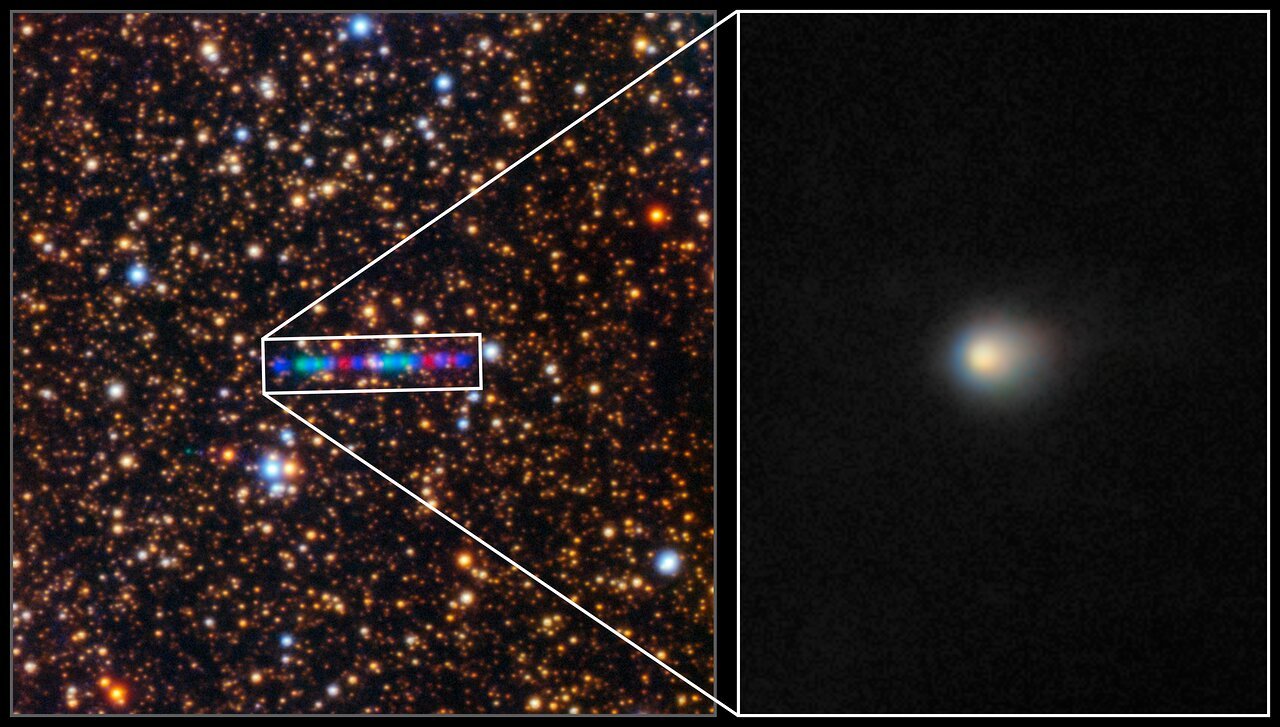
The third interstellar visitor to our solar system that has been discovered by astronomers is designated as 3I/Atlas. While only a speck of light in even the biggest telescopes it is actually at least twice as big as the first two interstellar visitors. (Credit: Gemini Observatory)
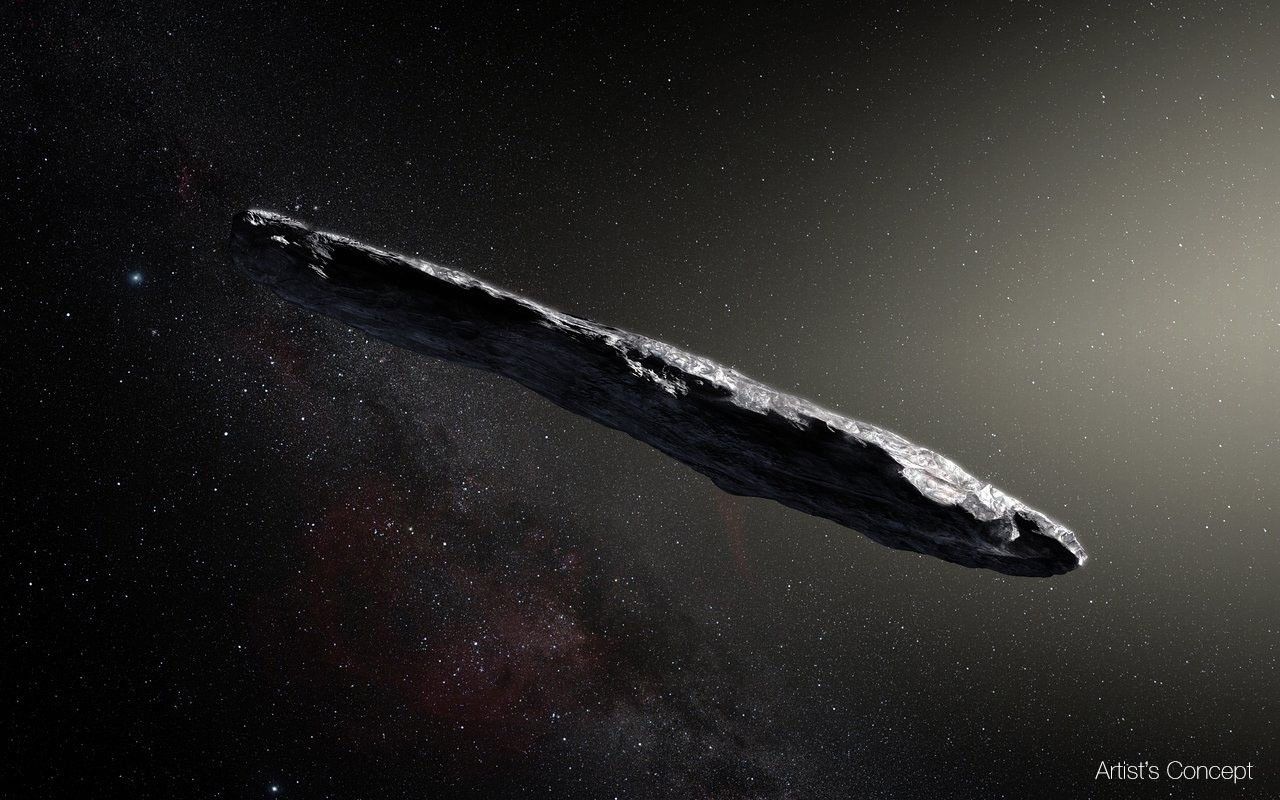
You may remember that back in 2017 there was a lot of talk about Oumuamua, the first object to be discovered in our solar system that was definitely from outside, a visitor from interstellar space. There was even suggestions back then that Oumuamua could be an alien spaceship, its shape was more like a spaceship than a normal asteroid’s. (See my post of 11 November 2017 for more information on Oumuamua). Then in 2021 a second interstellar visitor was detected and given the name 2I/Borisov. Both these two objects made one pass through our solar system and then returned to interstellar space, never to be seen again.
The first interstellar visitor, designated as Oumuamua, turned out to be a long, cigar shaped object. This strange shape caused many people to suppose that it was an alien spacecraft of some kind! (Credit: NASA Science)
If you’re wondering how astronomers know that an object they’ve discovered is an interstellar visitor well it’s all a question of velocity. If an object is moving too fast for the Sun’s gravity to force it into a stable orbit then it will quickly leave the solar system, and therefore must have originally come from outside the solar system. Oumuamua was first observed to have a velocity of 26.33 kilometers per second (kps), a little more than solar escape velocity and 2I.Borisov’s velocity was a bit higher at 32.2 kps.
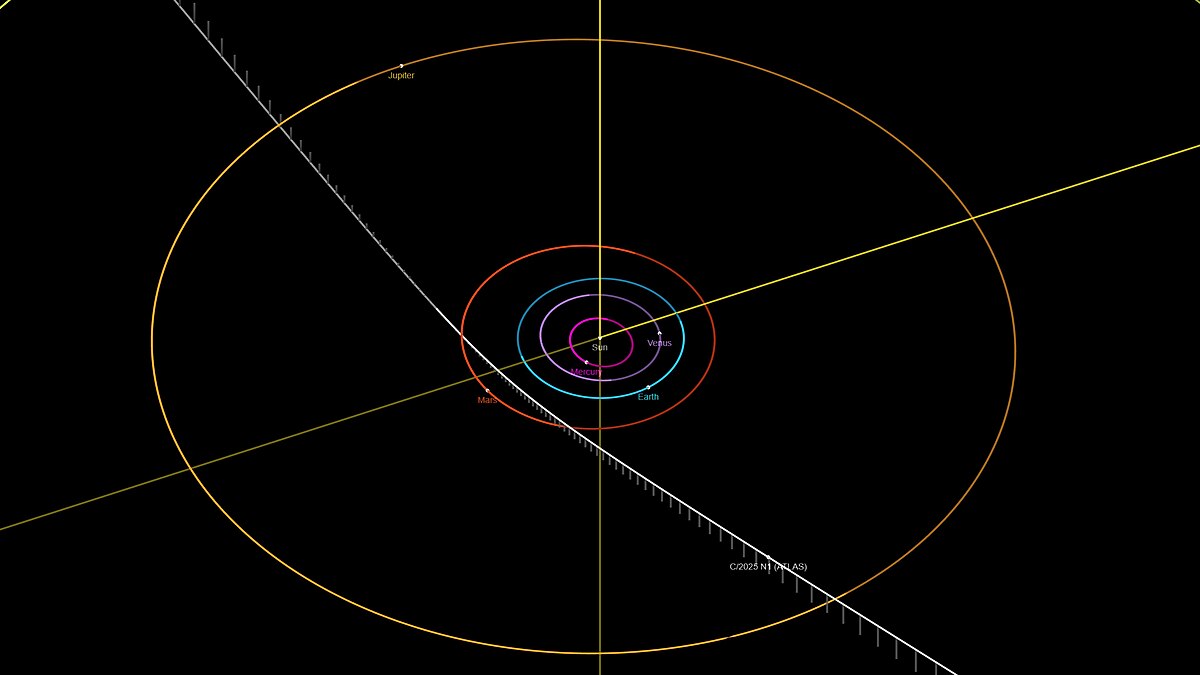
3I/Atlas is moving so fast through our solar system that even the gravity of the Sun will barely deflect its trajectory. Notice how it will not come anywhere close to Earth. (Credit: en.m.wikipedia.org)
3I/Atlas has been clocked at a much faster velocity, 57 kps, nearly twice as fast as the other two. Additionally 3I/Atlas is more than twice the size of our first two interstellar visitors, its size is estimated to be 10-20 kilometers in diameter. Those facts alone would be enough to make astronomers sit up and take notice but when they projected it trajectory backwards they got another nice surprise, 3I/Atlas appears to have come from outside of the local spiral arm, from a much older region of our galaxy.
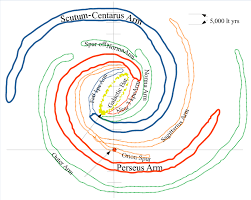
We can’t really see the Milky Way from inside it but this is what astronomers think it looks like. The arrow bottom center points to our solar system. Based on its trajectory astronomers feel that 3I/Atlas did not come from the spiral arm that our Sun resides in but from a much older part of the galaxy. (Credit: ResearchGate)
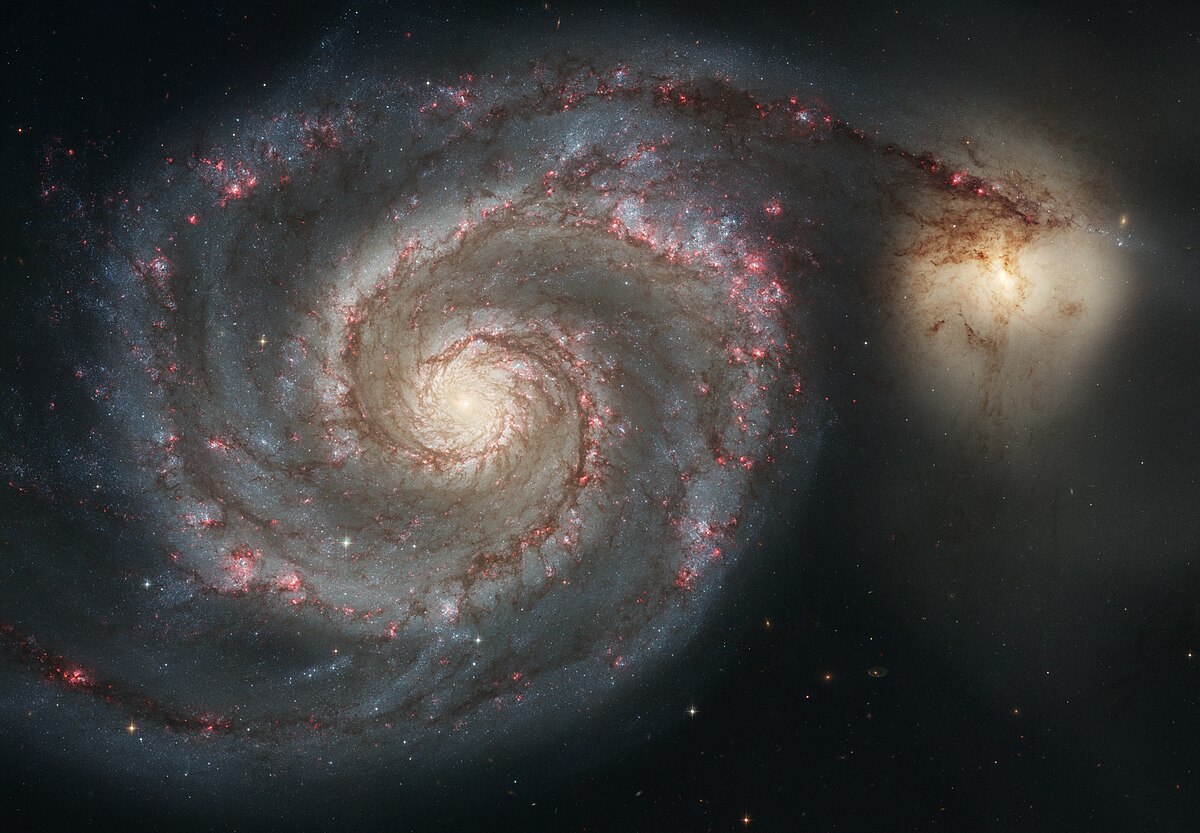
Now remember that our Sun and solar system are about 4.5 billion years old but the Universe is much older than that at 13.5 billion years. Most astronomers think that, although it has changed a great deal, our Milky Way galaxy is more than 10 billion years old, so our Sun is less than half the age of our galaxy. Another thing that astronomers know is that the spiral arms of galaxies are regions where stars are being born, and our Sun is in one of these regions. If 3I/Atlas does come from outside our spiral arm it could be twice the age of our Sun, it could be the oldest thing we have ever been able to observe close up.
The spiral arms of galaxies like the Whirlpool shown here are bright because of all of the young stars being born there. If 3I/Atlas does come from outside of a spiral arm it could be twice the age of our solar system. (Credit: e.wikipedia.org)
Unfortunately, 3I/Atlas will come no closer to Earth than the orbit of Mars later this year and, like the first two interstellar objects will then return to the darkness between the stars. In the last eight years we’ve found three interstellar objects but in the future you can expect we will find a lot more. The new Vera C. Rubin telescope in Chile was designed to look for asteroids and has already discovered hundreds. So, astronomers expect that from time to time it will spot a new asteroid from outside our solar system.
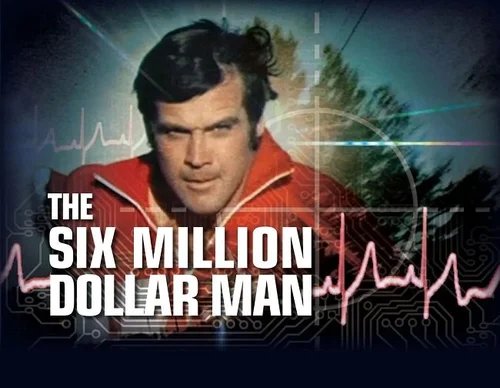
Back in the 1970s there was a popular TV show called ‘The Six Million Dollar Man’ about an astronaut named Steve Austin who suffered massive injuries during a training flight but who was ‘rebuilt’ with robotic arms, legs and an eye. The tag lines for the opening of the show were ‘we can rebuild him, we have the technology’ and ‘we can make him better, faster, stronger’. Incidentally, there was a spin off show called ‘The Bionic Woman’ where Steve Austin’s girlfriend also suffered massive injuries and was also made ‘better, faster, stronger.’
Opening Title of ‘The Six Million Dollar Man’ a TV show about a man who has had body parts replaced by mechanical parts giving him superhuman abilities. The show helped to bring the idea of ‘Bionic’ to the general public. (Credit: IMDb)
Of course back in the 1970s we didn’t have the technology, the show was just science fiction. In the last 50 years however we have made a lot of progress in prosthetic limbs at medical centers around the world. So it won’t be too long before we actually do have a ‘Bionic Man’, a patient whose missing limbs have been replaced by mechanical ones, limbs that they can control directly with their brain just like real, living ones.
British teenager Tilly Lockley was born without hands, small image. The mechanical ones she has now, while not perfect, are simply amazing! (Credit: Daily Mail)
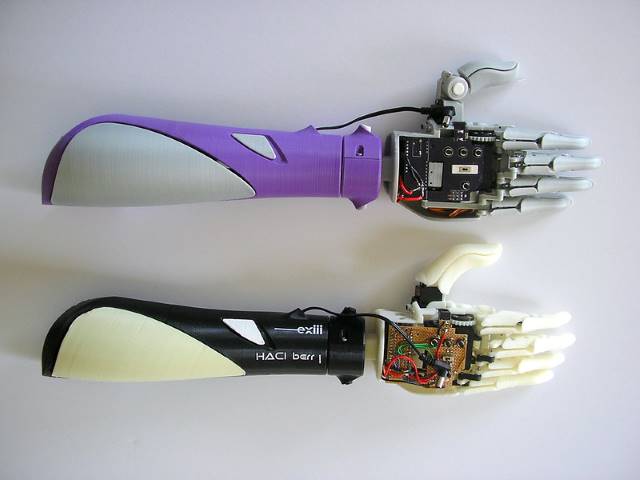
To date that progress has mostly been made in creating mechanical / robotic limbs that are separate from the patient’s body and which are attached to or removed from the patient whenever required. As you can imagine it would be better for the patient if his bionic limbs were fully integrated with their body, the way Steve Austin’s were in the TV show. There are presently two reasons why this level of integration has not yet been achieved.
Two examples of bionic arms that can be connected to, or separated from a user. Current models are mostly of this type. (Credit: The Borgen Project)
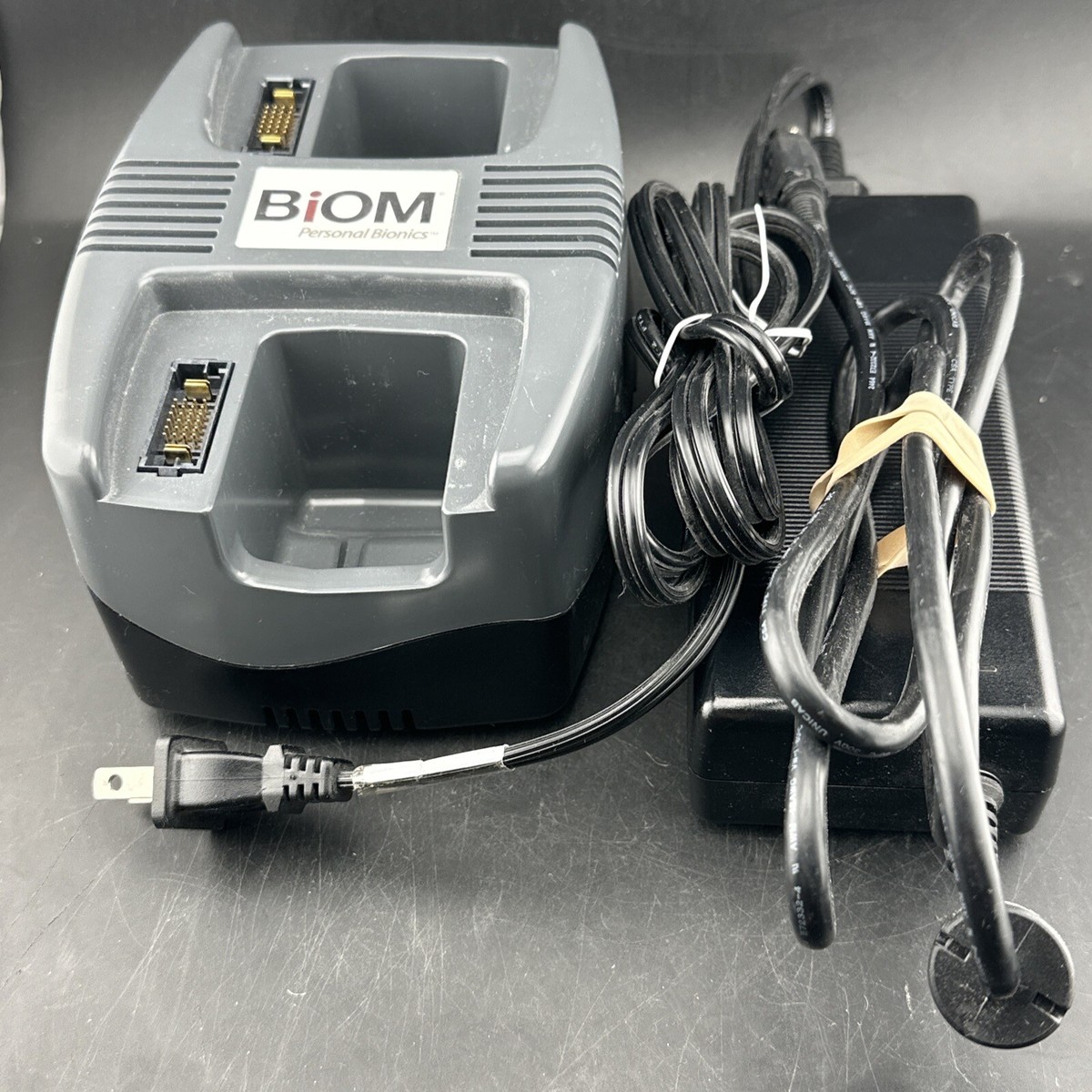
The first reason is engineering, it’s simply not easy to fit all of the motors, actuators, spring mechanisms and etc. needed to make a mechanical arm, and fit it into the volume of a living arm. We’ve made a lot of progress, just a few decades ago bionic arms or legs were massive, bulky things that you wouldn’t want to have permanently attached to you, but today mechanical limbs are much sleeker, although they still don’t look like living ones. A bigger problem is what to do with the battery pack that provides power to the bionic limb. Currently battery packs for mechanical limbs are worn on the back or as a belt. It’s gonna be a long time before we can fit the power source for a bionic limb inside the limb itself.
This is the kinda equipment you need to keep the batteries in a bionic limb powered. As you can imagine it a fair amount of work keeping bionic limbs fully charged. (Credit: eBay)
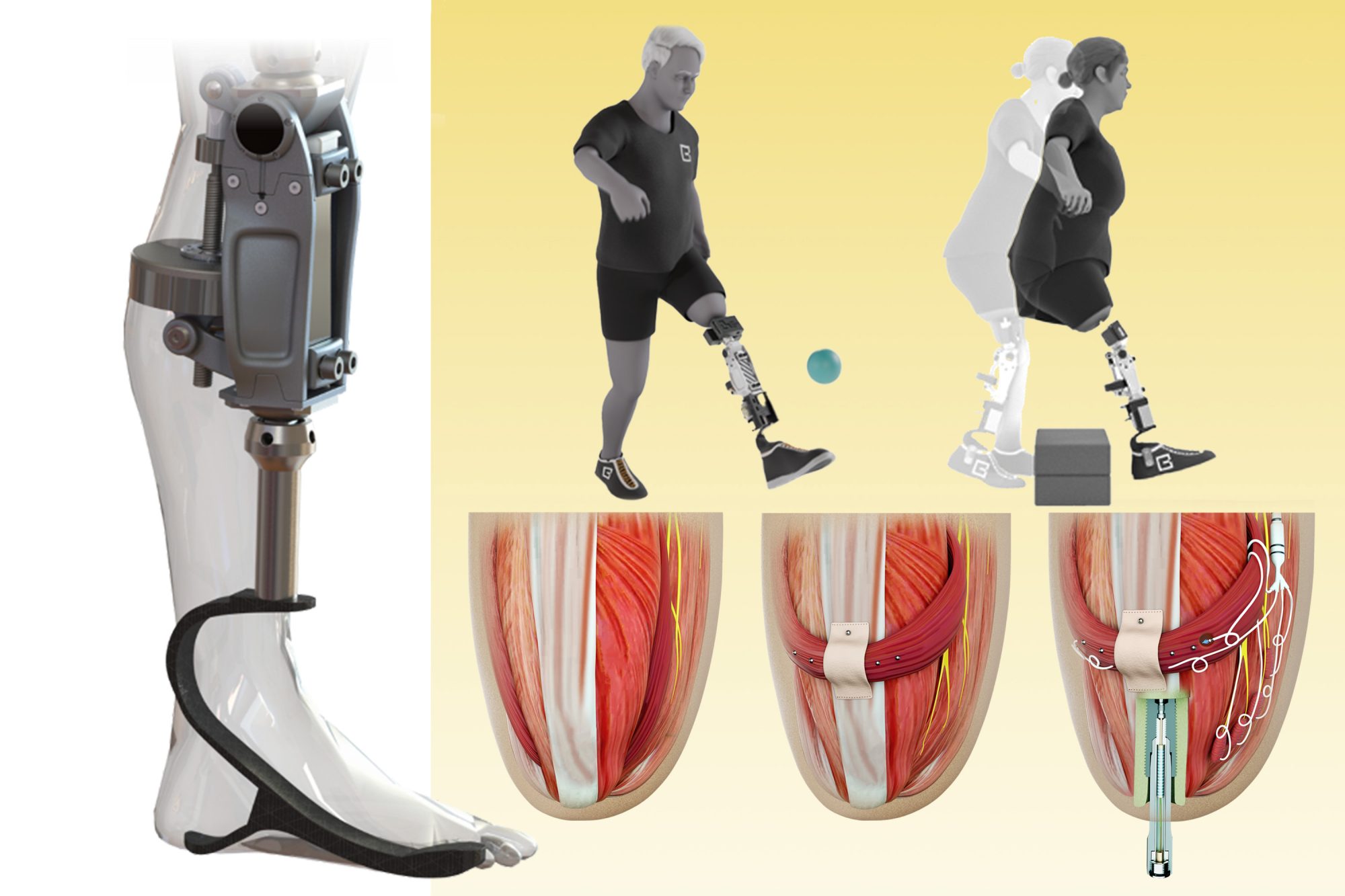
The second reason is simply the difficulty in getting living tissue to integrate itself with non-living metal or plastic. Considerable progress in this area has been made recently at MIT’s K. Lisa Yang’s Center for Bionics. In a small clinical study patients who have had one of their legs amputated above the knee have had a new bionic knee and leg directly integrated with their remaining leg bones and muscles. Not only are the tissues and mechanical parts attached to each other but the remaining nerves in the leg are used to control the functioning of the bionic leg. This new bone-integrated system has been given the name e-OPRA.
Iron Man himself, Robert Downey Jr. speaks at the MIT K. Lisa Yang Center of Bionics. (Credit: Steph Stevens Photo)Images showing some of the techniques involved in integrating a bionic limb directly into a patient’s body at the K Lisa Yang Center. (Credit: MIT News)
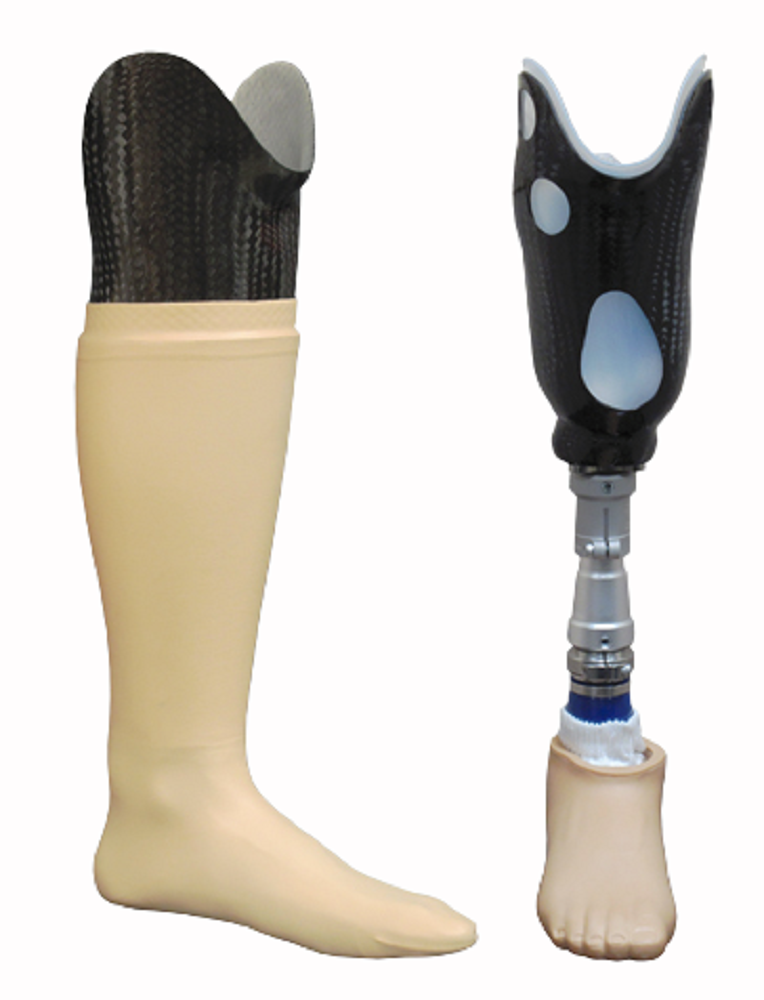
Testing of the new limbs clearly showed a considerable improvement in walking and climbing over objects than currently available prosthetics. At the same time the patients involved in the study reported that their new, fully integrated mechanical limb felt more like a part of their own body. The system also has the added benefit of directly loading the weight of the patient’s body onto the mechanical leg. This is similar to the way the body’s skeleton actually works rather than inserting the amputated leg into a socket on a prosthesis, which is less stable and can be very uncomfortable.
Two different styles of artificial leg. The remaining limb is inserted into the cup at the top of the artificial leg but as the patient moves, chafing occurs where the two meet causing great discomfort for many patients. (Credit: IndiaMART)
A great deal of effort around the world is being expended in studies that hopefully will one day bring the science fiction of ‘The Six Million Dollar Man’ to the lives of thousands of patients. That makes the study being conducted at MIT a very practical application of medical science. My second story is just the opposite, an esoteric investigation into one of life’s deepest mysteries, why do living creatures sleep?
One of the big mysteries of life, why do we sleep? (Credit: UCLA Health)
All animals sleep, even plants and single celled creatures show signs of metabolic slowdowns that can be compared to sleep so in some sense all living things sleep in some way. Problem is that despite almost a century of study, and many centuries of wonder, we have no real idea of why we need to sleep, what physical reason is there that makes us need to sleep.
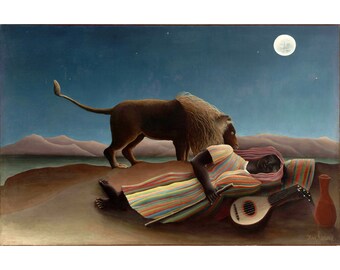
The Sleeping Gypsy by Henri Rousseau. Obviously, we are quite defenseless while we are asleep, but every creature does it. Why? (Credit: Etsy)
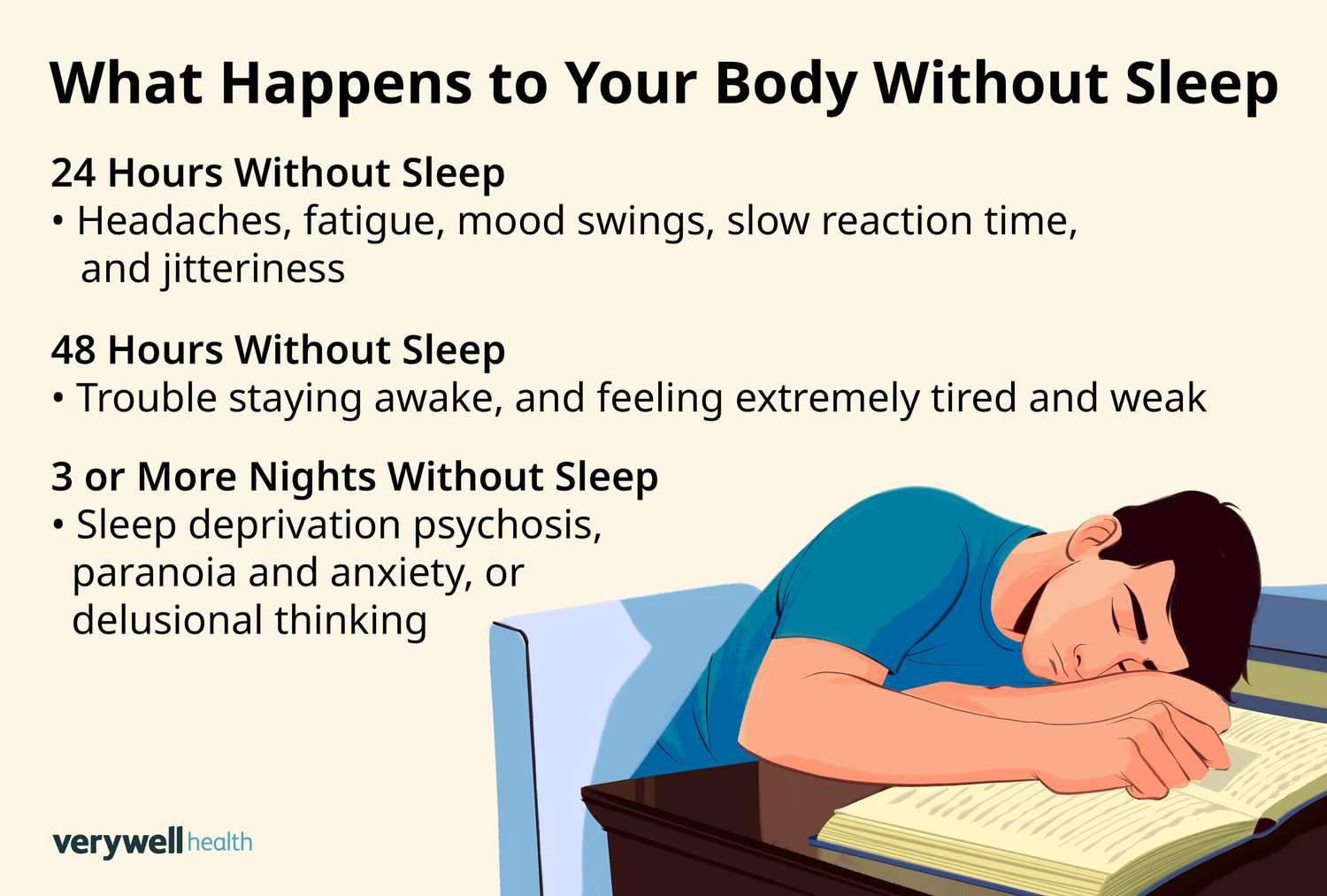
We certainly do need to sleep; just three or four nights without any sleep will make a person very sick, so sick that death is possible. Many people suffer from insomnia and over time lack of sleep or poor sleep can have a severe impact on their health.
Just a few nights without sleep can cause all sorts of medical problems. So it’s obvious that we really need sleep. (Credit: Verywell Health)
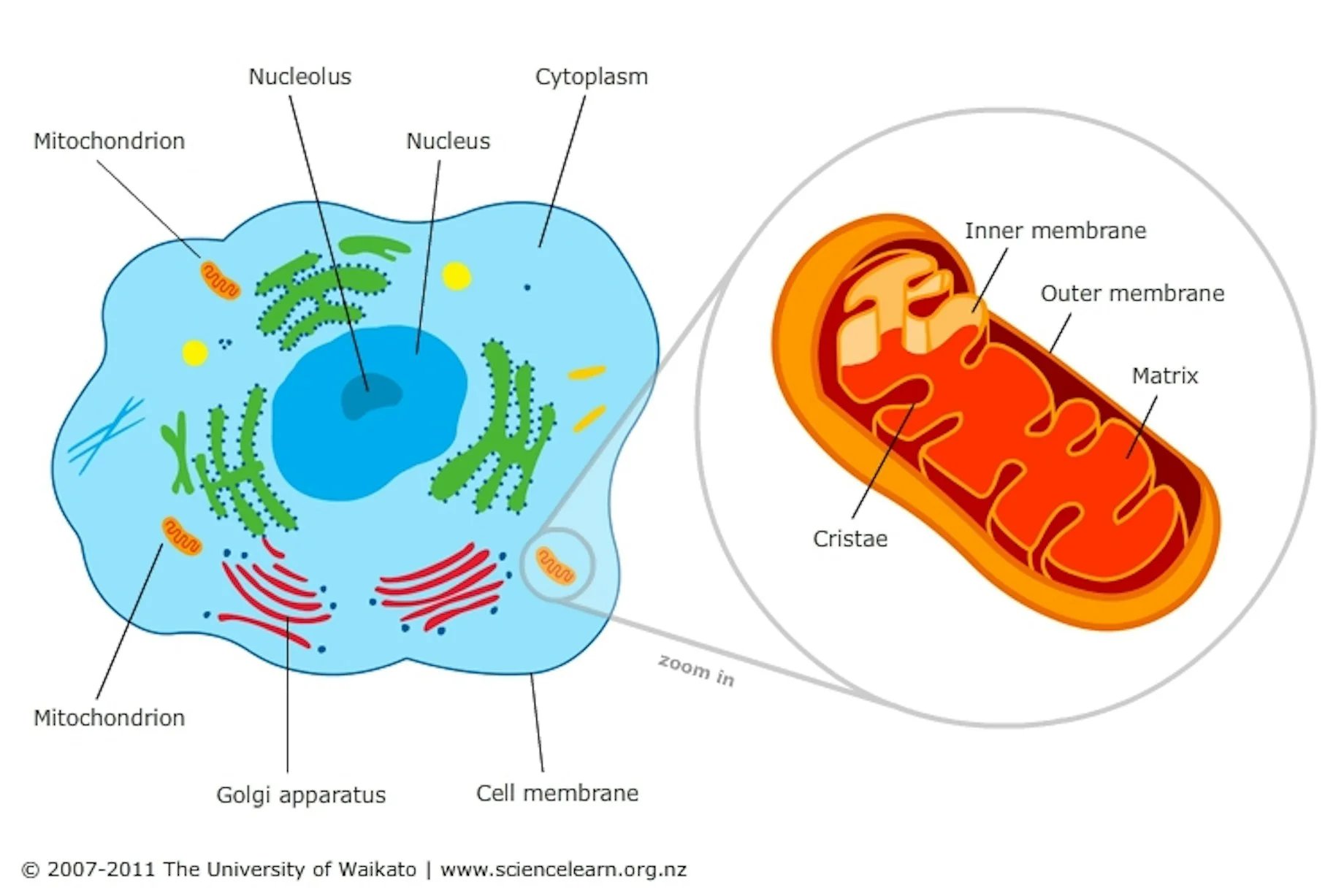
Now a study from Oxford University’s Center for Neural Circuits and Behaviour has for the first time pointed to a precise metabolic process that they assert triggers sleep. The secret lies in the mitochondria, the energy producing ‘organelles’ inside each of the cells of our body where sugars are combined with oxygen to generate the power that our cells need. As a part of this metabolic process the mitochondria produce free electrons that ‘leak’ into the body of the cell. The build up of these free electrons can generate unwanted chemical reactions that can damage the cell, so the cell must have some means of controlling and reducing these free electrons, we call that process sleep.
Mitochondria are organelles inside every cell in our body. They are the power sources of the cells taking the food we eat and converting it to energy for the rest of the cell to use. (Credit: Science Learning Hub)
Working with fruit flies, yes the same fruit flies that you may have played with in high school biology, the researchers at Oxford succeeded in both increasing and decreasing the generation of free electrons and observed how that affected the sleep patterns of the flies. According to the scientists sleep acts as a kind of circuit breaker, switching off the generation of free electrons for a time to restore the balance of the cell’s energy flow. Since all eucaryotic cells contain mitochondria it reasonable to think that this answer to why we need sleep applies to virtually all living things.
Free electrons in a metal allow it to conduct electricity. That’s a good thing in a metal but we don’t want that happening inside the cells of our body! (Credit)ResearchGate)
It will probably be years before this research on sleep can be turned into treatments for sleep disorders but it is a start. That’s the way progress works, some research is practical, yielding results quickly like the study on integrating prosthetics directly into the human body. Other research is to find the deeper truth to life’s mysteries and may not yield benefits for decades, if ever.
You may recall three years ago when NASA’s DART mission successfully slammed a spacecraft into the asteroid Dimorphos as an initial test of a planetary defense system. The idea was that, if an asteroid was on a trajectory that would cause it to collide with Earth in several years, then by altering its velocity just a tiny amount would, after those years cause it to miss our planet by tens of thousands of kilometers. One or more spacecraft like DART would provide that little nudge.
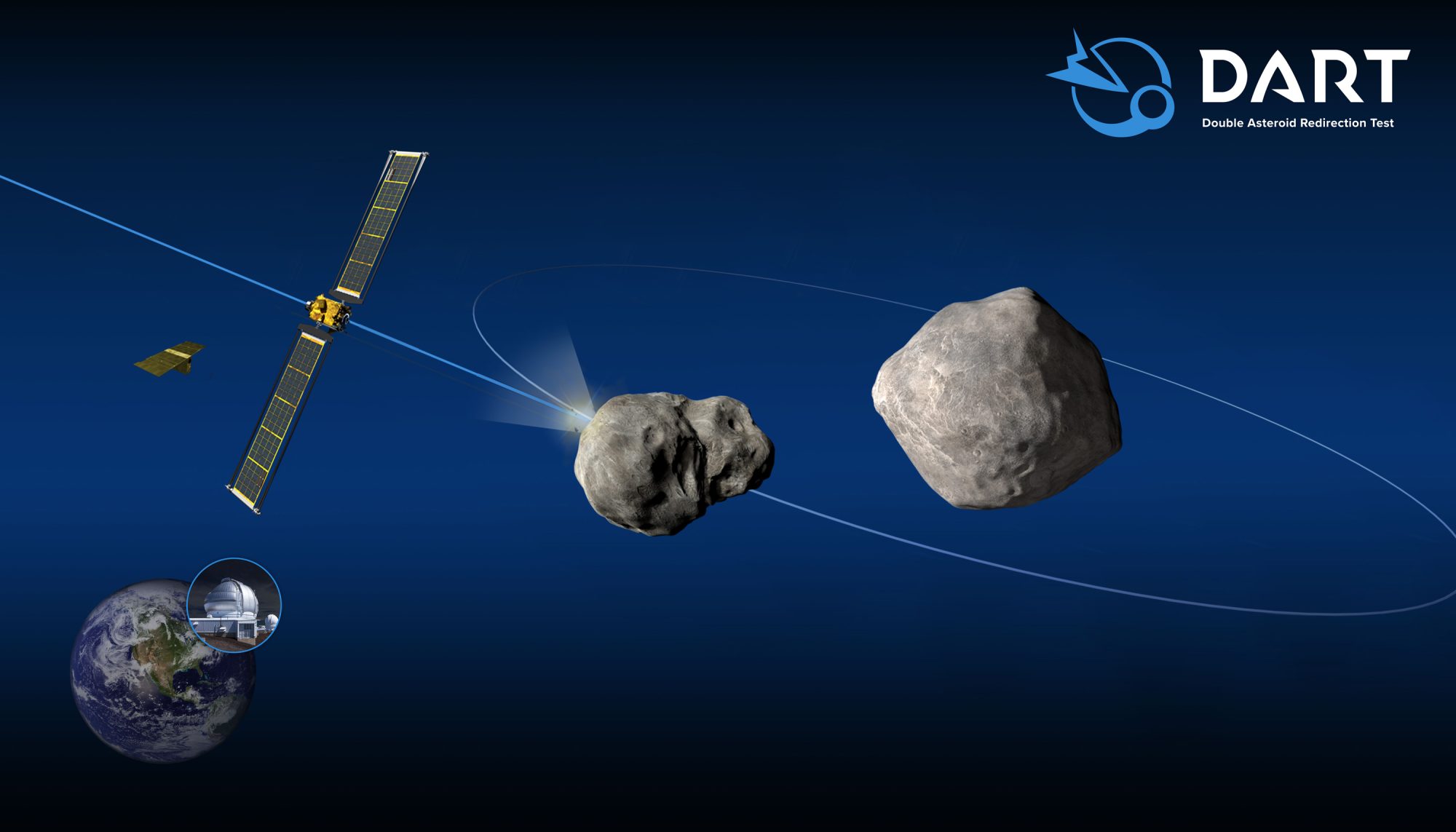
The DART spacecraft’s mission was to literally crash into the asteroid Dimorphos, which orbits around the bigger asteroid Didymos. By observing how much Dimorphos’ orbit was changed the scientists at NASA could determine if such a crash could prevent an asteroid from crashing into the Earth. (Credit: en.wikipedia.org)
The DART mission turned out to be a big success, images from the spacecraft itself were transmitted back to Earth until just a fraction of a second before the collision. Further images taken by a small cube satellite that accompanied DART showed that the spacecraft struck right in the center of Dimorphos and that a large amount of material was ejected from the asteroid by the collision.
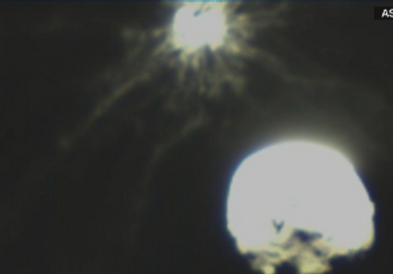
Actual image of DART crashing into Dimorphos taken by the small cube satellite that accompanied DART. Observations since then have confirmed that DART altered the asteroid’s trajectory by more than was anticipated, a true success. (Credit: NEW Scientist)
Later, ground based observations of Dimorphos’ orbit around its parent asteroid Didymos showed that the collision had in fact altered the asteroid’s orbit more than the scientists in charge of the mission had expected. In all, the mission was judged to be a major success.
Images taken a few hours after the collision show the large number of boulders that were ejected by Dimorphos. This huge amount of debris may complicate any actual attempt to alter an asteroid’s path. In any case the scientists at NASA now have some data to use in their calculations. (Credit: Phys.org)
Not so fast. I mentioned above that Dimorphos had ejected a large amount of material when the DART spacecraft struck it, a lot more material than any one expected. Well, a team of astronomers led by the University of Maryland has carried out a recent study of that debris and has concluded that the change in the asteroid’s orbit was much more chaotic then originally thought.
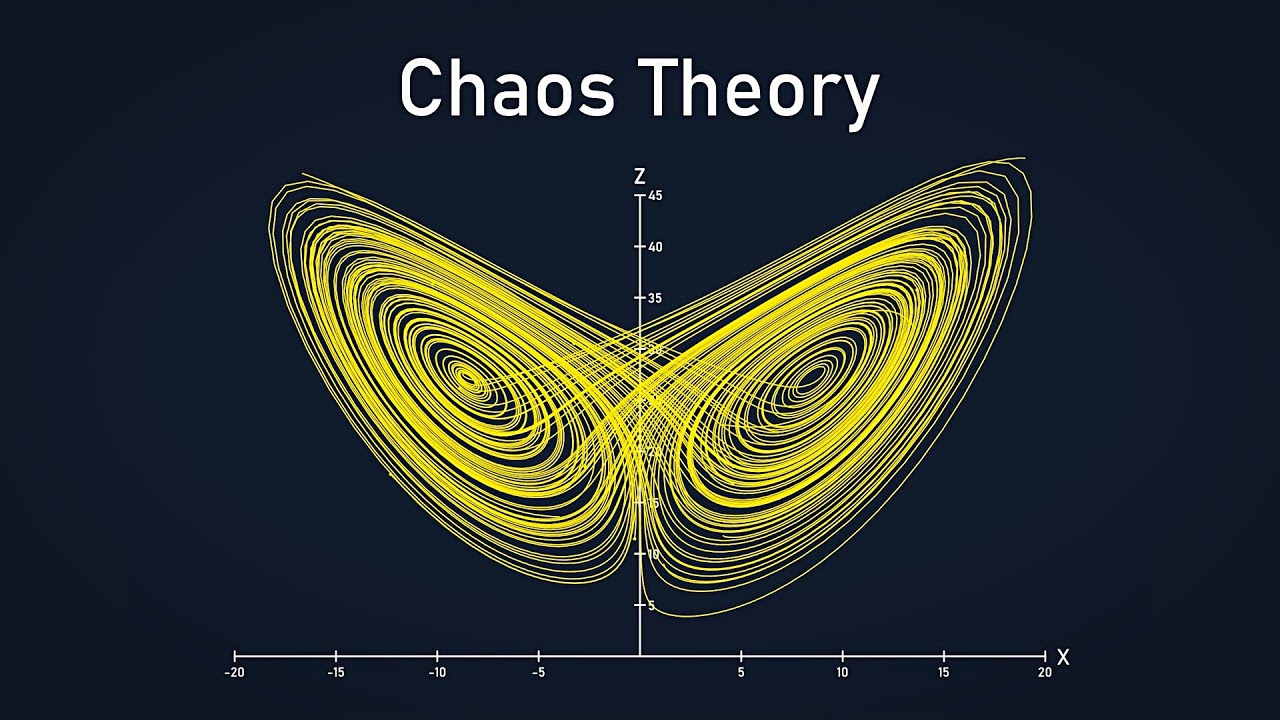
There’s a whole branch of mathematics that deals with chaotic systems. Problem is that even with the best math the predictions are only approximate. Chaos remains unpredictable. (Credit: YouTube)
The astronomers succeeded in tracking 108 boulders in that debris ranging in size from 0.2 to 3.6 meters in radius, some moving at speeds of up to 552 meters per second, nearly 190 kph. They also found that the debris was, for reasons unknown, clustered into two main streams. Some of the ejected boulders were even flung in a direction perpendicular to DART’s trajectory into Dimorphos, again difficult to explain.
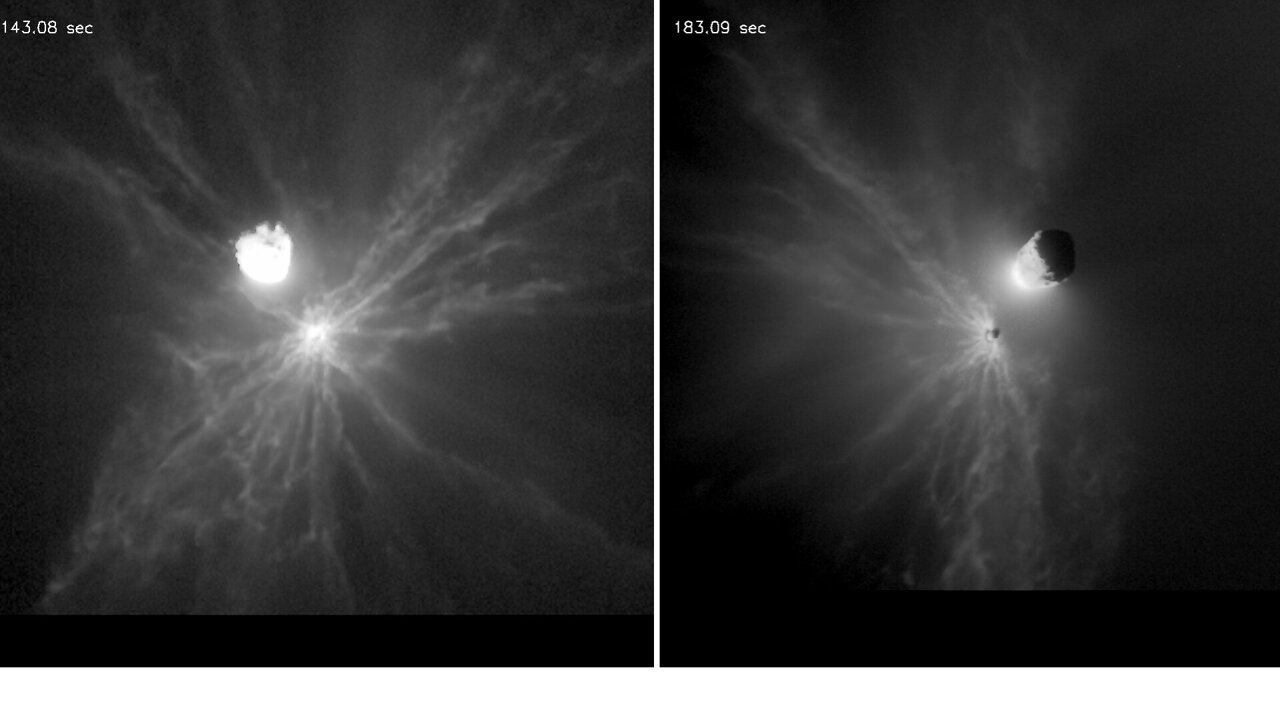
These images, taken by ground based telescopes, show how the debris from the Dart-Dimorphos collision spread out over several hours. The fact that the debris seems clustered in several streams is hard to explain. (Credit: UPI)
This new analysis doesn’t not mean that DART was a failure; it certainly did alter the path of an asteroid. What it does mean is that there are factors in play here that we presently don’t understand. Factors that possibly could affect an actual mission to deflect an asteroid away from Earth. More research and perhaps another mission like DART may be needed in order to better understand, and therefore predict, the outcome of an actual Earth Defense mission should one ever become necessary.
There’s always more research that can be done to improve your results. The DART mission was a success, but another such test might be needed to make our calculation more accurate. (Credit: Facebook)
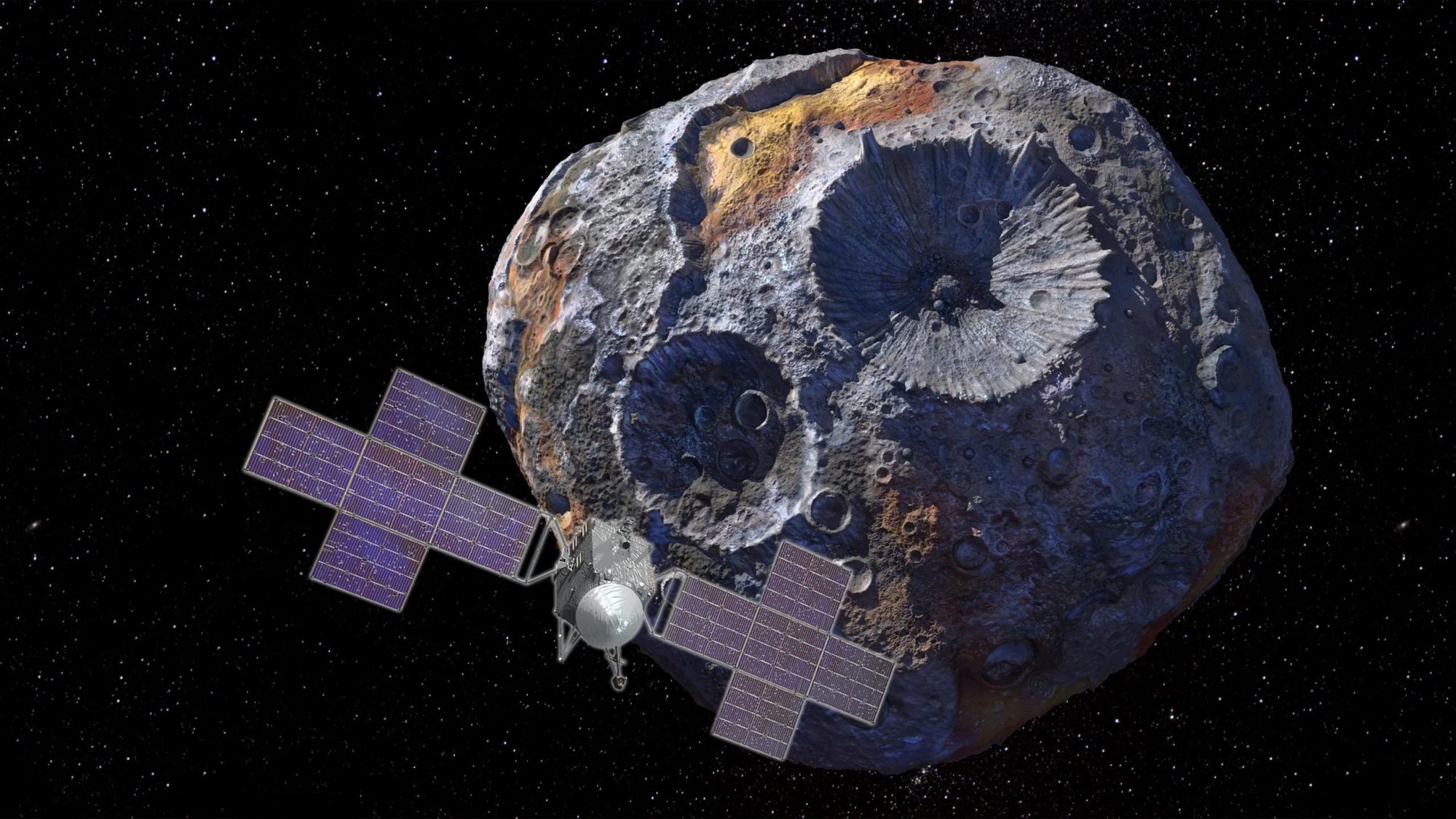
Speaking of asteroids and spacecraft the Psyche mission, that’s both the name of the space probe and the asteroid it’s headed towards, has run into a bit of trouble. Launched in October of 2023 the Psyche spacecraft has been using its electric-powered ion rockets to propel it towards the planet Mars where in May of 2026 it will get a gravity boost sending it towards the asteroid belt for a 2029 rendezvous with its namesake.
The asteroid Psyche is known to be a metal rich asteroid. Astronomers are interested in it because it could tell them a lot about how such asteroids were formed in the early solar system. That’s why NASA has sent the Psyche space probe for a 2029 rendezvous with the asteroid. (Credit: SciTechDaily)
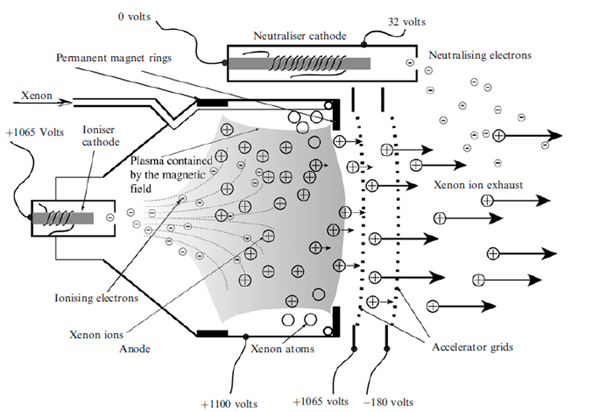
The problem began back in April when engineers at NASA’s Jet Propulsion Labouratory (JPL) detected a drop in pressure of the xenon fuel line supplying the spacecraft’s thrusters. The advantage of ion rockets is that, although they provide only a small thrust they can continue to do so for weeks, months, even years as in the case of Psyche. In the long run this makes them much more efficient than the chemical used most often in spaceflight.
Ion rocket engines use electric voltages to accelerate charged atoms. Although they only produce a small thrust they can burn for months or even years eventually producing a much higher total change in spacecraft velocity or ‘Delta Vee’. (Credit: Aerospace Notes)
The automatic pilot onboard Psyche acted on its programming and shut off the rockets while the engineers at JPL analyzed the situation and decided what to do. Fortunately the Psyche spacecraft has a second, redundant fuel line and the spacecraft’s engines were soon firing at full thrust again. The engineers at JPL continue to monitor the problem however, in the hopes of fixing the problem in the primary fuel line.
I have an argument with this definition. There are many times when a problem occurs and you are glad you build in some redundancy! (Credit: Instagram)
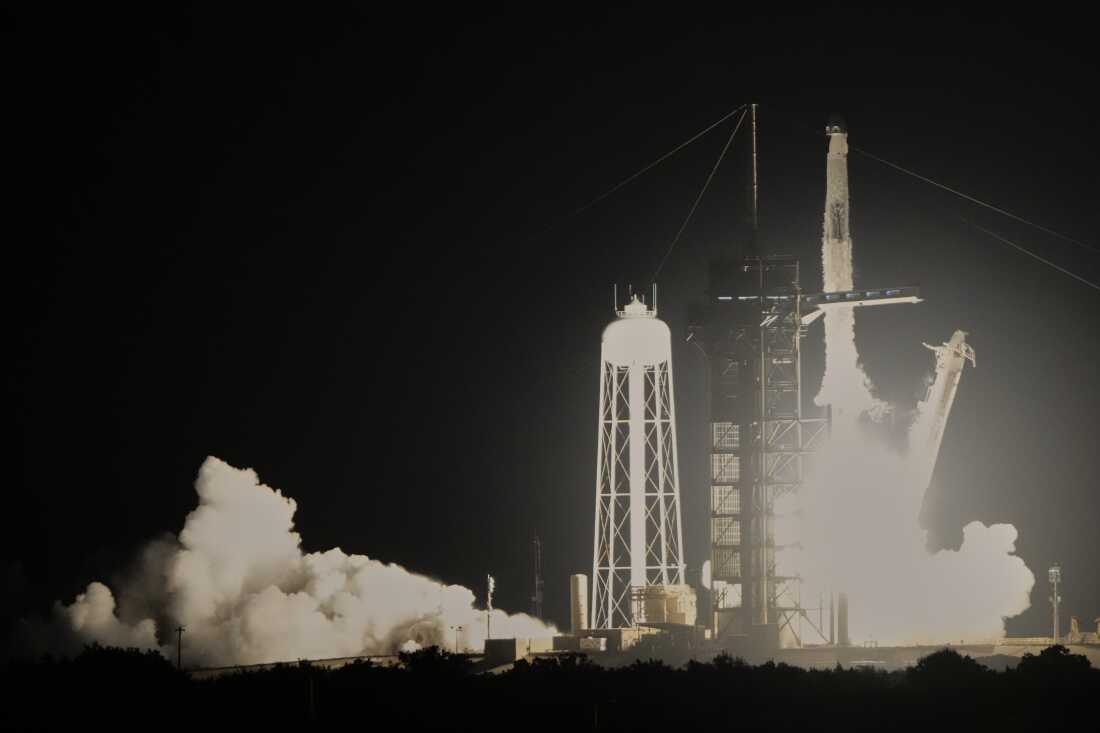
There is also news concerning manned space flight. On June 25th Space X successfully launched another private space mission to the International Space Station (ISS). Designated the Ax-4 mission, the capsule is commanded by former NASA astronaut Peggy Whitson and includes scientists from India, Poland and Hungary.
A SpaceX Falcon 9 rocket with a crew of four aboard a Dragon Spacecraft lifts off from pad 39A at the Kennedy Space Center in Cape Canaveral, Fla., Wednesday, June 25, 2025. (AP Photo/John Raoux)
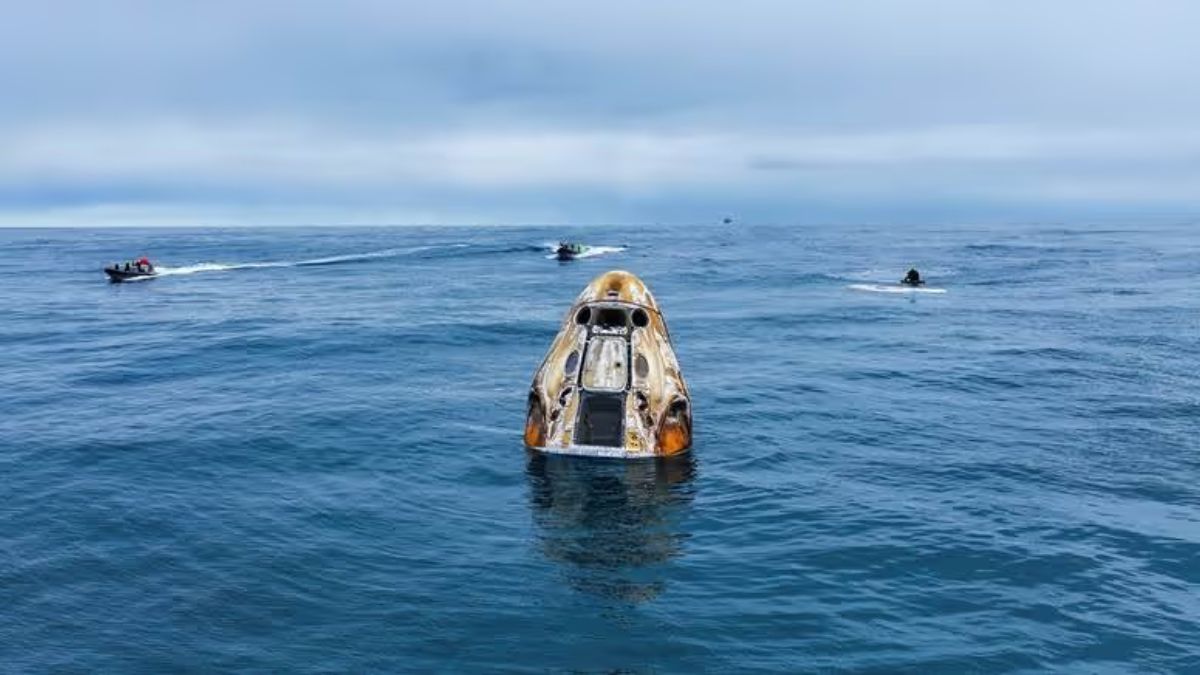
During their 18 day stay aboard the ISS the scientists performed over sixty experiments while also conducting outreach activities to their home countries. The ability of private corporations to provide access to Low Earth Orbit (LEO) for astronauts from countries that otherwise could not get into space is one of the selling points of the whole commercial space industry. The Ax-4 astronauts undocked their Dragon capsule from the ISS on the 14th of July and the capsule safety returned to Earth the next day, splashing down in the Pacific Ocean.
The Ax-4 capsule floating comfortably in the Pacific waiting for the Space-X recovery boats to arrive. (Credit: The Week)
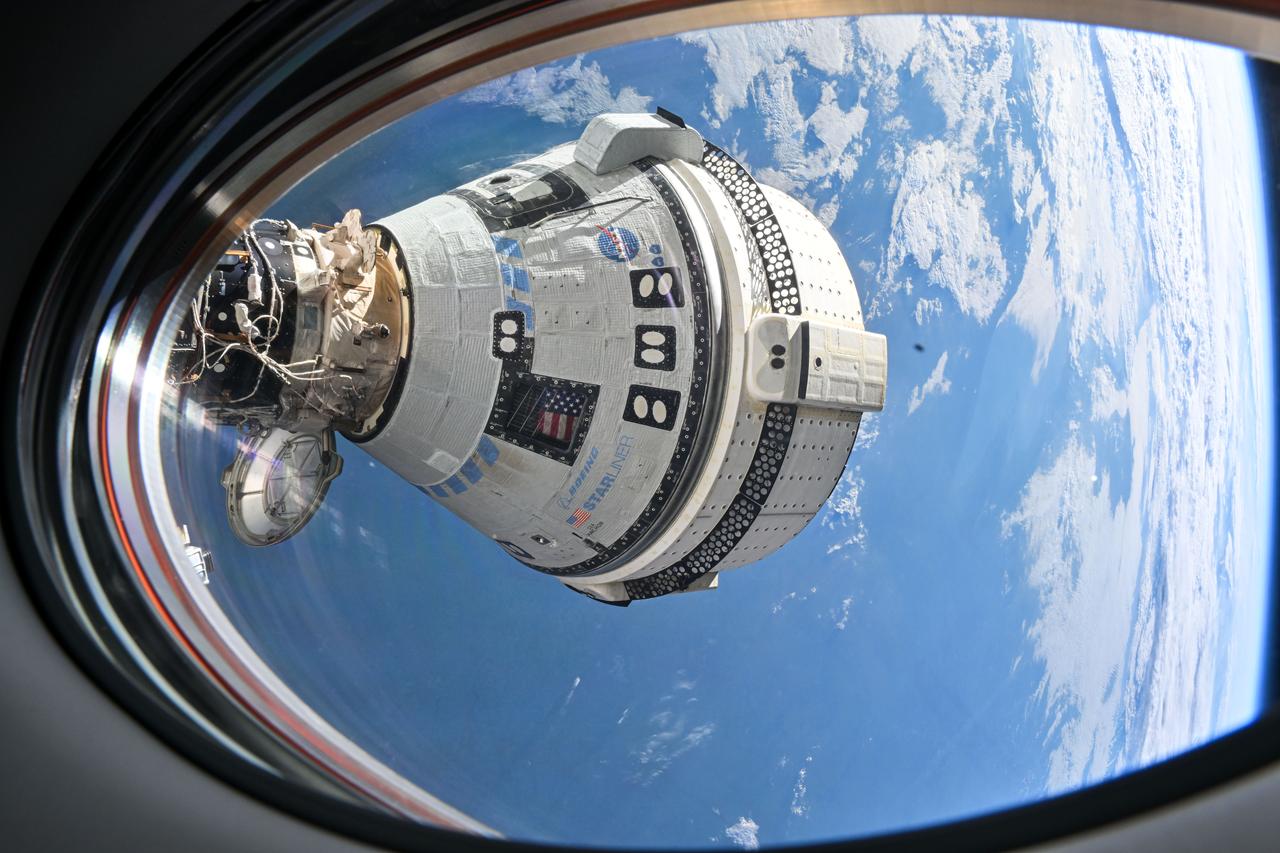
Meanwhile Space X was busy preparing for the launch of its Crew 11 mission to the ISS under the NASA Commercial Crew Program. As a part of that program every six months Space X sends a crew of four astronauts to man the ISS and relieve the previous crew. Boeing’s Starliner capsule was supposed to alternate with Space X’s Dragon but we all know about Starliner’s problems, see my posts of 12 April 2025 and 31 August 2024.
Starliner, the little capsule that couldn’t, complete a mission that is. (Credit: Texas A&M University)
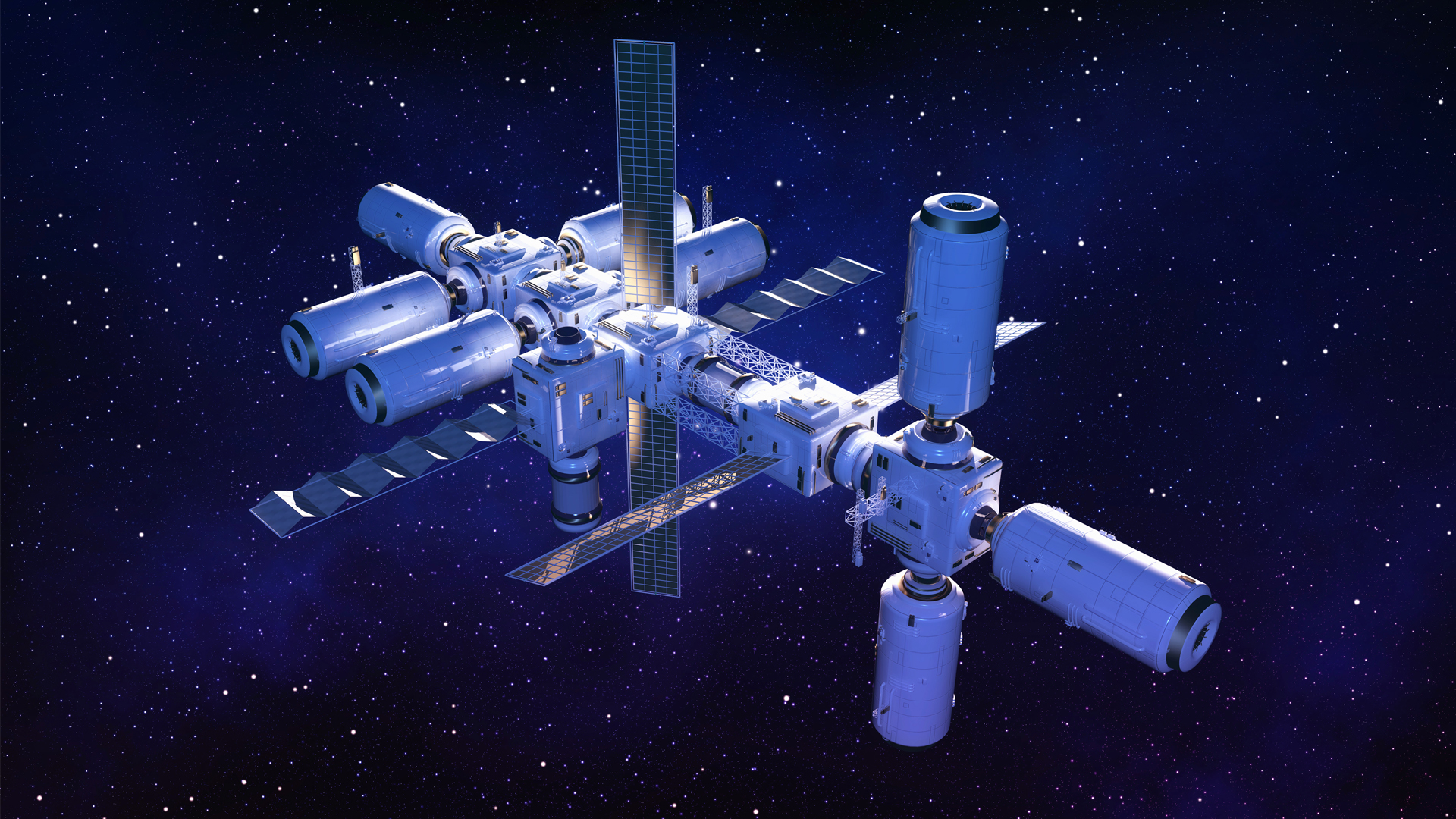
The launch took place on 31 July and the Dragon capsule arrived at the ISS the next day. On the 8th of August the Crew 10 astronauts boarded their Dragon and began their return to Earth, splashing down on the 9th of August. Thanks to Space X and their reusable Falcon 9 rocket and Dragon capsule trips to and from the ISS have become routine, and hopefully that will continue after the ISS is deorbited in 2030 and newer, commercial space stations are built in LOE.
There are a lot of ideas for a commercial space station going around right now. The is Axion Space’s. (Credit: Innovation News Network)
One final word before I go. Trump’s original choice to lead NASA, businessman Jared Isaacman, has been removed from consideration for the post due to his relationship with Elon Musk, who has become an enemy of Trump. (The very idea of our country’s space program being subject to the whims of powerful men who act like third graders is appalling.) Regardless, instead of Isaacman Trump has nominated Transportation Secretary Sean Duffy to act as an interim NASA director.
Many times in these posts I’ve discussed how at least 95% of the fossils that paleontologists, and amateurs collect are really just the hard parts of ancient animals, the bones and shells for the most part. The soft parts, the muscles, the inner organs, the skins are rarely preserved. Now to be sure paleontologists have become very good at figuring out what an extinct animal looked like, and how it lived from just the hard parts. Still whenever they find some trace of soft anatomy it’s a treasured discovery
This is what everybody thinks of when you say a fossil. The skeleton or maybe the shell of an extinct animal. The soft anatomy of ancient life rarely fossilizes and therefore is even more valuable, more important when it does. (Credit: Builder 3D Printers)
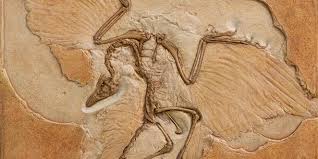
Obviously some remains of the soft anatomy of an extinct animal is necessary to really understand it, without the impressions of feathers those fossils of archaeopteryx would just look like a small dinosaur. That’s why paleontologists get so excited whenever they come across a particularly important fossil with the soft parts preserved.
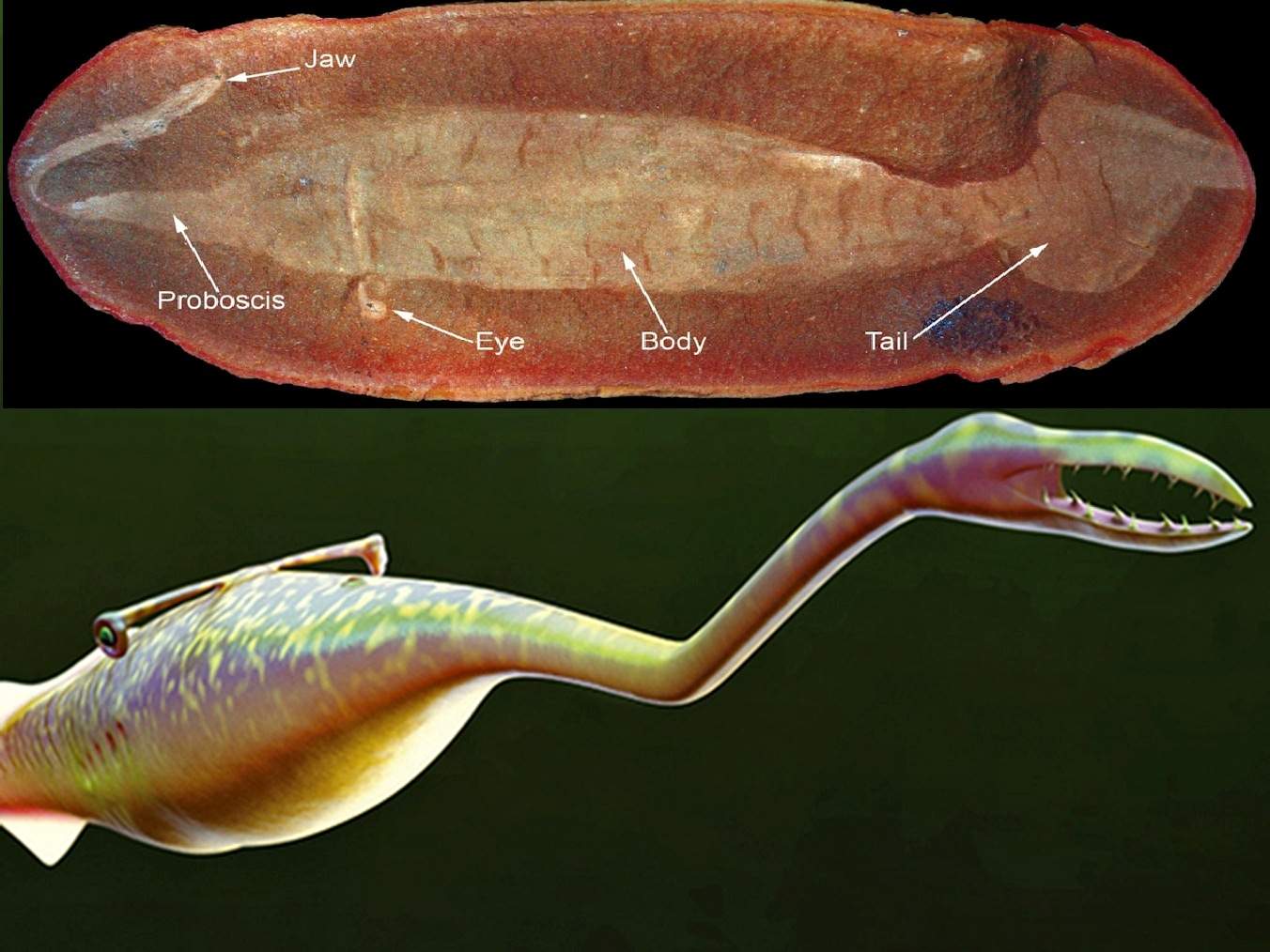
One of the most mysterious of all extinct animals is the Tully Monster. Found only in a single location in Illinois Tully is completely soft and presumably so were its relatives so we know very little about it. (Credit: Geology In)
In this post I’ll be discussing two recent examples of how preserved soft parts are teaching paleontologists important facts about past life. As always I’ll talk about the oldest fossil first and move forward in time.
The famous fossil of Archaeopteryx. Would this fossil be so important if it didn’t preserve all of those soft feathers? (Credit: American Museum of Natural History)
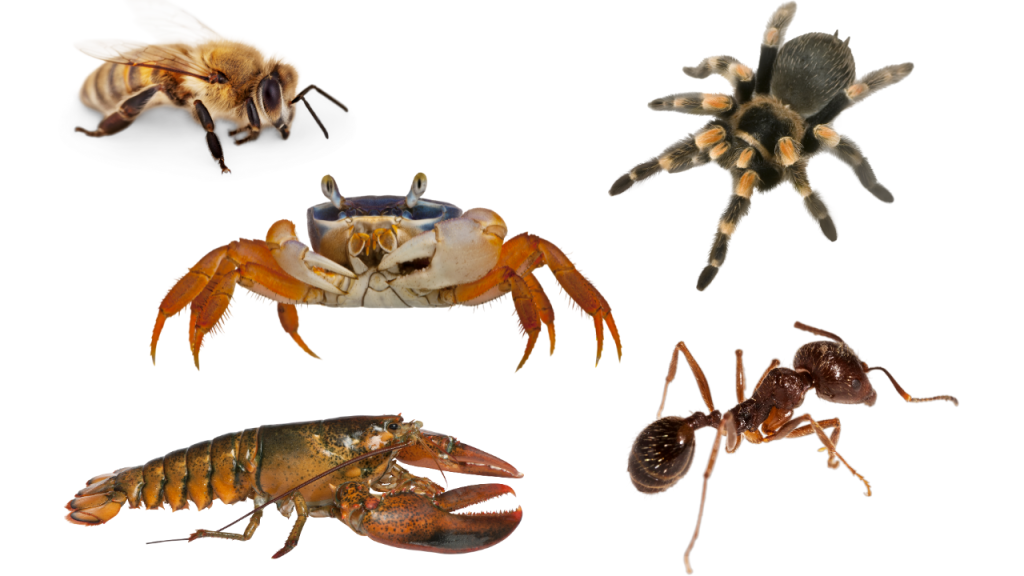
Arthropods are the most numerous and diverse form of animal life in our world today and have been pretty much since the first animals appeared over 500 million years ago. Think about it, all of the insects, spiders, and millipedes not to mention lobsters and crabs and barnacles are arthropods. The basic plan of a segmented body with jointed legs and an exoskeleton is without doubt the most successful way to build an animal.
There are millions of species of Arthropod alive today and many millions more that have gone extinct. The basic anatomy of a segmented body with an exoskeleton and jointed limbs is certainly the best way to build an animal. (Credit: MooMoo Math)
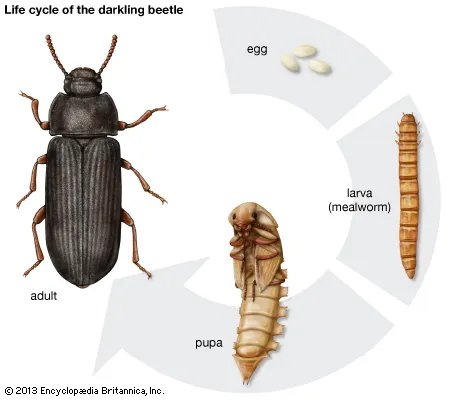
Yet despite all of the arthropod fossils that have been collected we still have a great deal to learn both about how arthropods evolved and how they grew at various times in the past. One thing to remember about arthropods is that very often their young don’t resemble the adults at all, think caterpillar and butterfly. Most arthropods go through various stages of growth as an egg, a larva, and pupae before becoming mature adults. Since larval stages of arthropod species can look very different from adults it is quite possible to mistakenly think that they are different species.
The life cycle of a typical beetle goes through four stages, egg, larva, pupa and finally adult. Notice how the larva looks nothing like the adult, this makes it difficult to know what larva goes with what adult, especially when you’re dealing with an extinct species! (Credit: Britannica Kids)
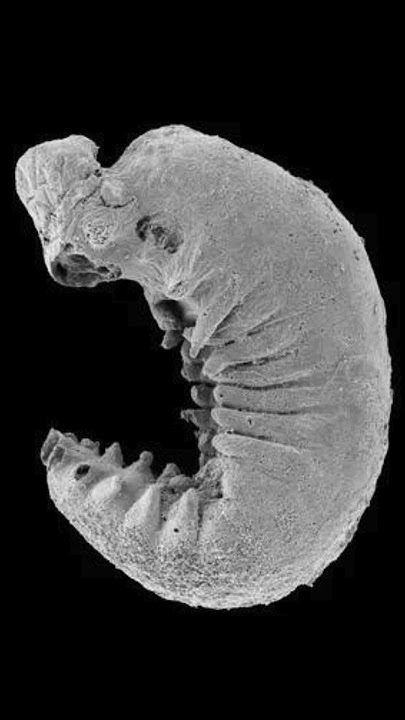
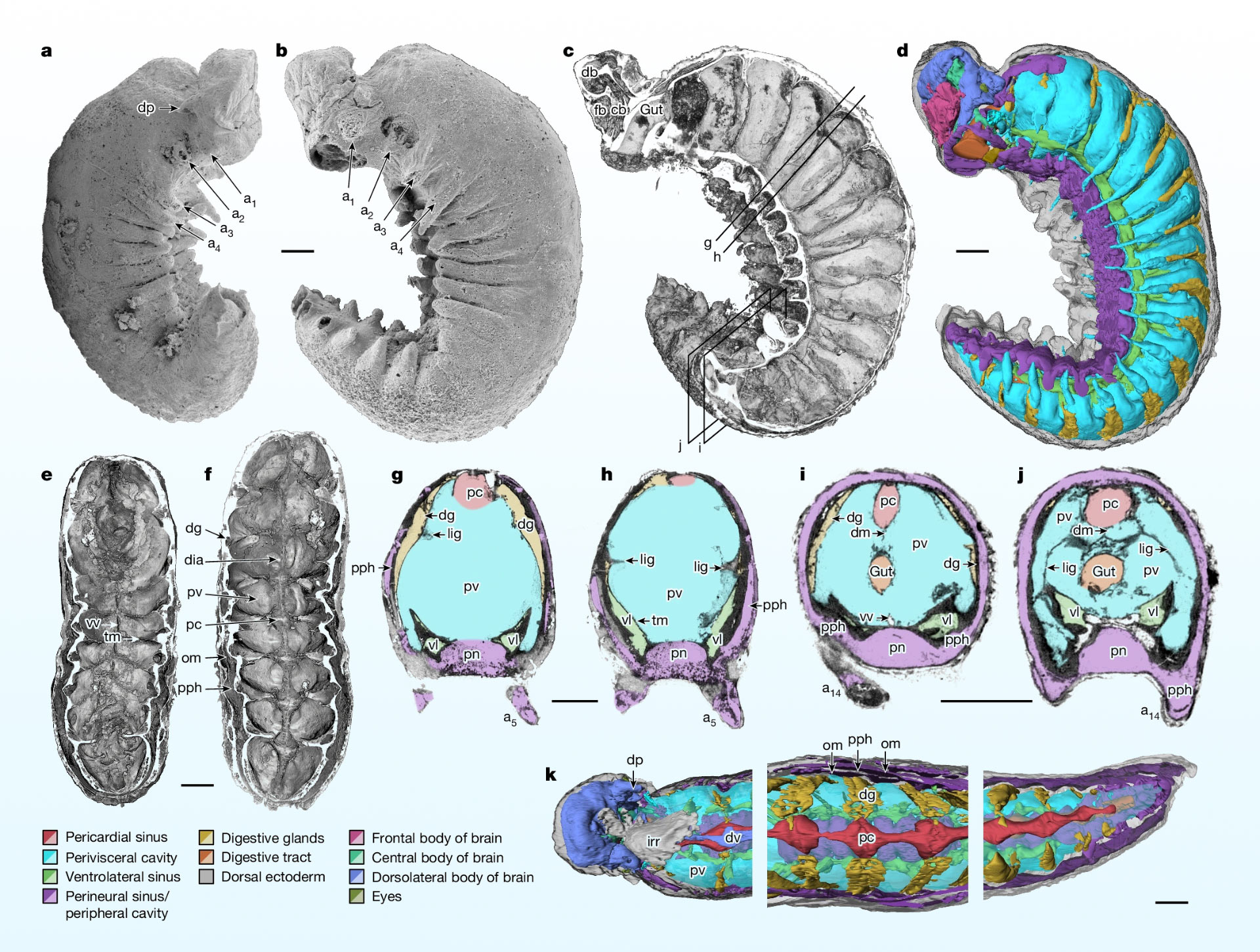
That’s why finds such as the 520 million year old specimen of Youti yuanshi are so remarkable. The small fossil, less than 4mm in length, somehow not only preserves virtually all of the soft parts of the larva’s anatomy but, unlike most arthropod fossils which are squashed flat, the specimen maintained its three dimensional shape. This enabled the researchers to reconstruct the internal arrangement of the animals organs. Not only muscle tissue but digestive organs were preserved along with traces of the circulatory system and even the presence of a ‘protocerebrum’, in other words a brain.
The fossil of Youti yuanshi, a 520-million-year-old arthropod larva. (Credit: YouTube)
The specimen was found in the Yu’anshan formation in the Chinese province of Yunnan and has been described by paleontologists at Durham University and the University of Strathclyde in the UK along with Yunnan University in China. Best of all perhaps, at 520 million years old the specimen of Youti yuanshi comes from the Cambrian period, that time in Earth’s history when animal life was diversifying rapidly and the major groups of animal were becoming clearly defined. Because of this the specimen of Youti yuanshi can also tell us a great deal about the early evolution of what is perhaps the most important group of animals.
Using the latest technology paleontologists have succeeded in examining the internal structure of Youti yuanshi, including discovering its brain. (Credit: Sci.News)
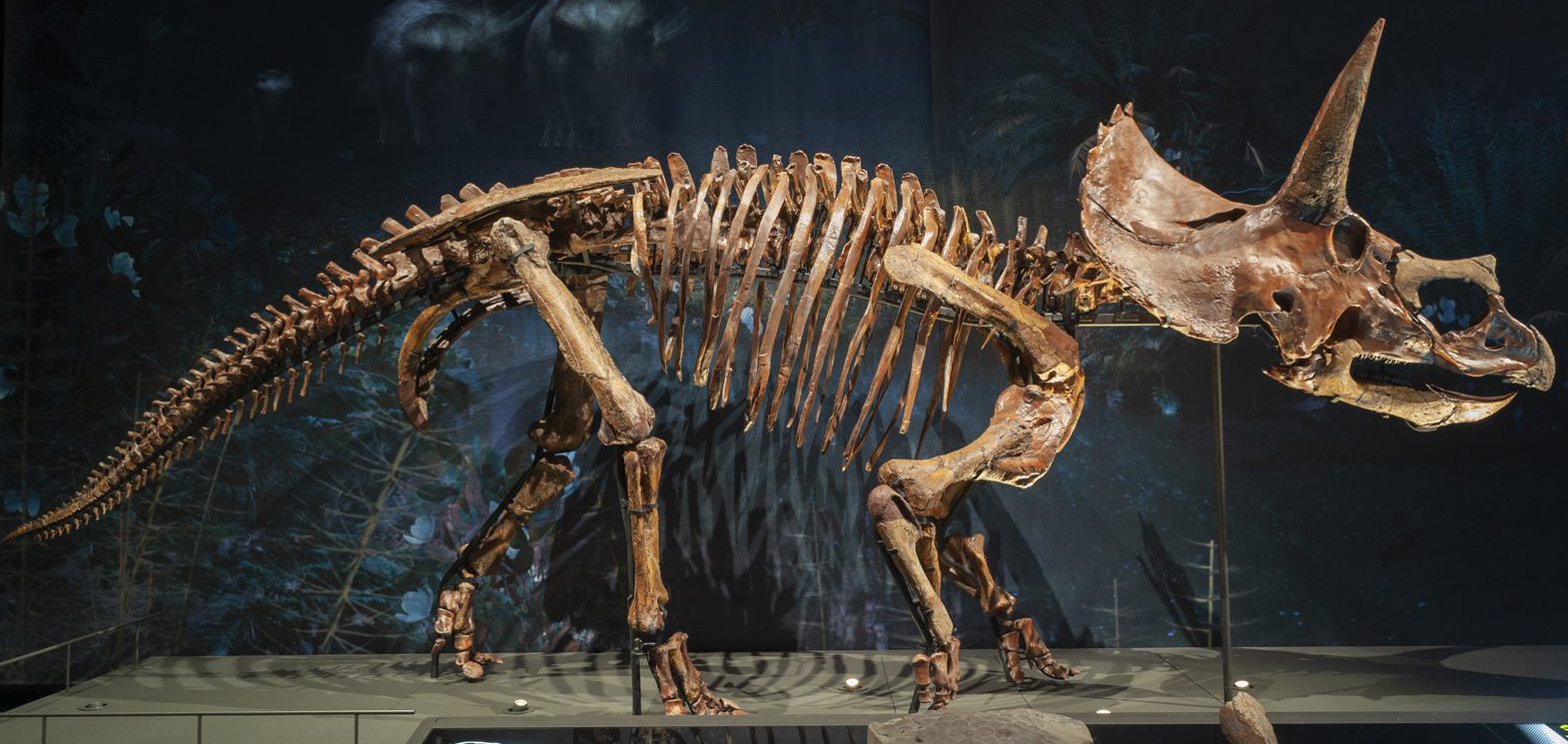
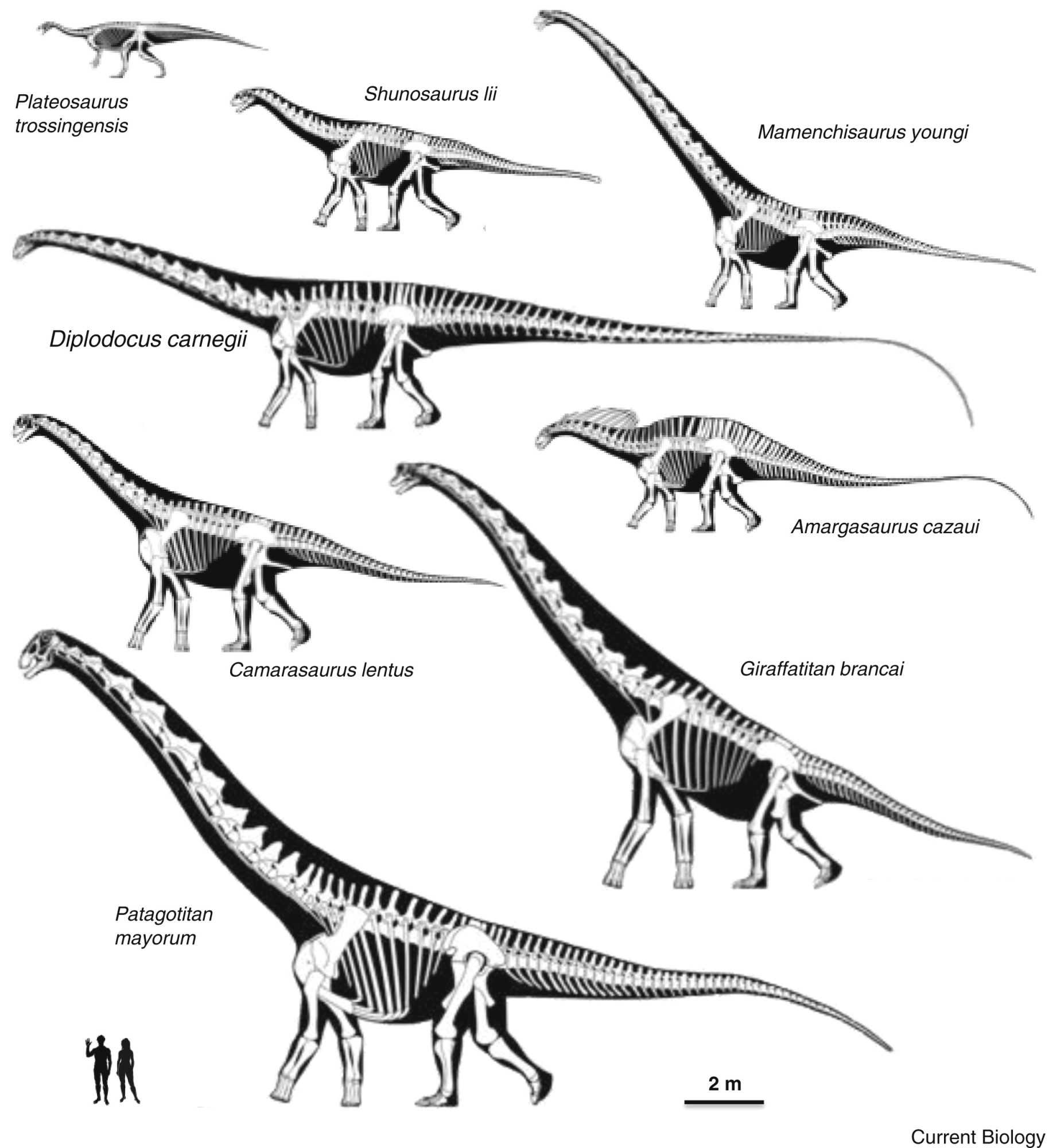
Let’s skip ahead now a couple of hundred million years to the age of the dinosaurs, in particular those long necked, long tailed sauropod dinosaurs that were the largest animals to ever walk the Earth. Now everyone knows that the sauropods were plant eaters, herbivores. Just looking at their massive, kinda awkward bodies and you can tell they weren’t predators chasing down or ambushing their prey. At the same time sauropods don’t possess any kind of offensive weapons like sharp teeth or claws that a predator would need.
Sauropods lived throughout the age of the dinosaurs and came in many sizes. Just by looking at them and you can tell that they were all plant eaters. (Credit: Cell Press)
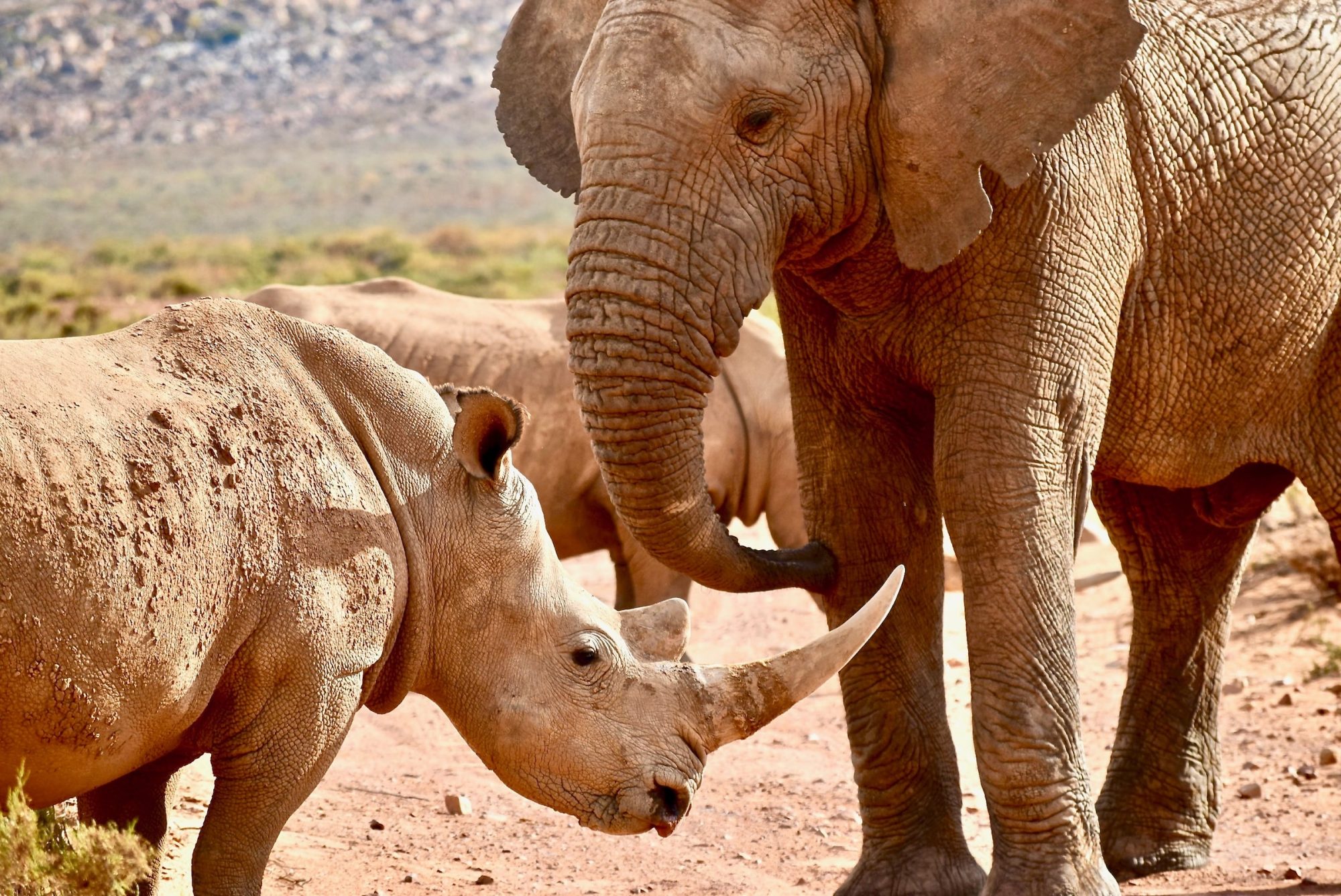
The biggest land animals today, the elephants are herbivores, to grow so big an animal just has to eat and eat and eat, and that usually means plants, again that indicates that sauropods were plant eaters. One more thing, the teeth of sauropod dinosaurs are peg shaped, good for nipping off plant material but not good for tearing flesh.
Elephants and Rhinos are two of the largest animals existing today and both are plant eaters. It just seems that in order to grow so large it takes a lot of food and that pretty much means plants! (Credit: Rhino Recovery Fund)
Surprisingly however, there has never been any direct, conclusive evidence that sauropods are in fact herbivores. No fossilized fecal material or stomach material, technically known as coprolites or cololites, that are unquestionably associated with a sauropod specimen has ever been found. Until now!
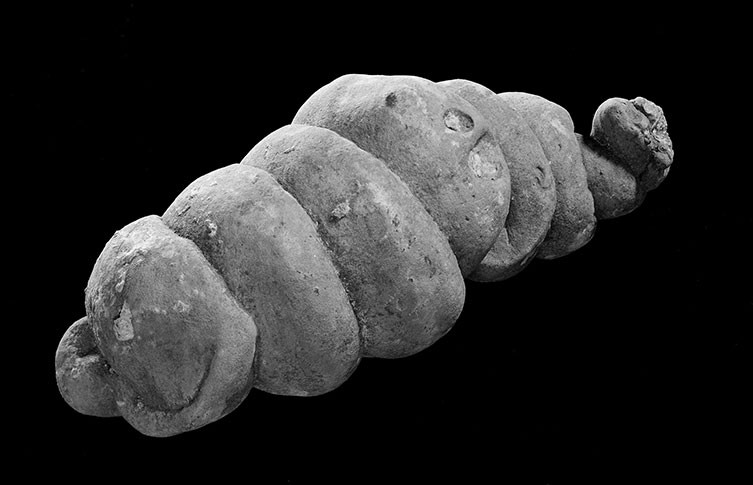
Coprolite is the polite word for fossilized shit. Paleontologists love these fossils because you can tell a great deal about what extinct animals ate by studying their coprolites. The problem is figuring out which extinct animal a particular coprolite belongs to. (Credit: Natural History Museum)
Recently a specimen of the sauropod Diamantinasaurus matildae was excavated from the Winton formation in Queensland, Australia. Dated to between 94 and 101 million years ago the animal was a ten-meter long juvenile. As the researchers from Curtin University and the University of Melbourne, both in Australia, were removing the animal’s bones they came across a mass of fossilized plant material right where the animal’s stomach would be.
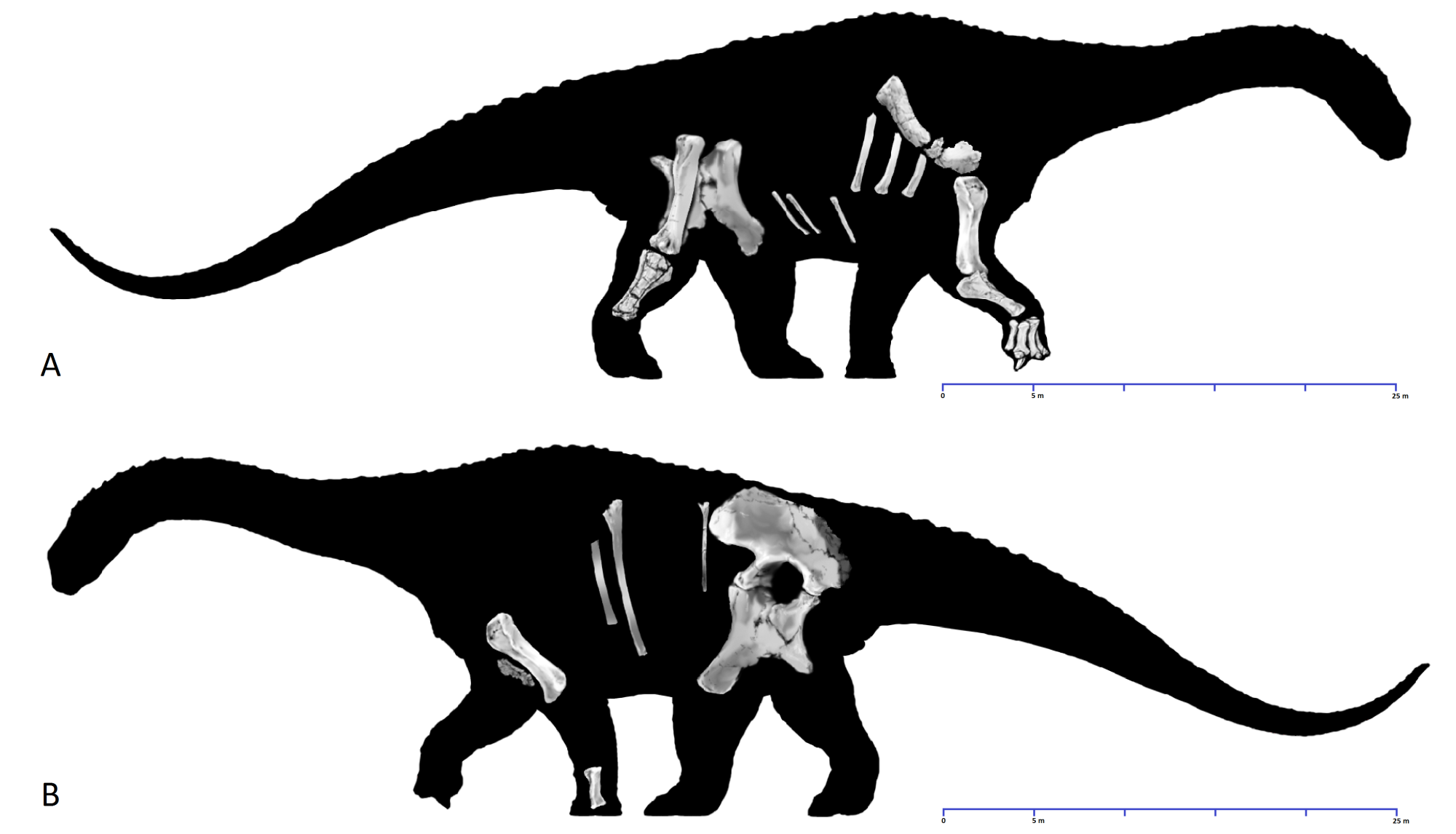
Australia has its share of dinosaurs including the large sauropod Diamantinasaurus matildae shown here with the actual bones discovered so far of the species. (Credit: Wikipedia)
Wanting to be absolutely certain the paleontologists carefully examined the area around the plant material and found impressions of skin both above and below the plant fossils, the material was indeed the contents of the animal’s stomach when it had died. Using the latest technology the paleontologists were even able to determine the types of plants D matildae had been eating before it died, while tall conifers seemed to predominate there was still evidence of recently evolved flowering plants, which at that period would have grown closer to the ground.
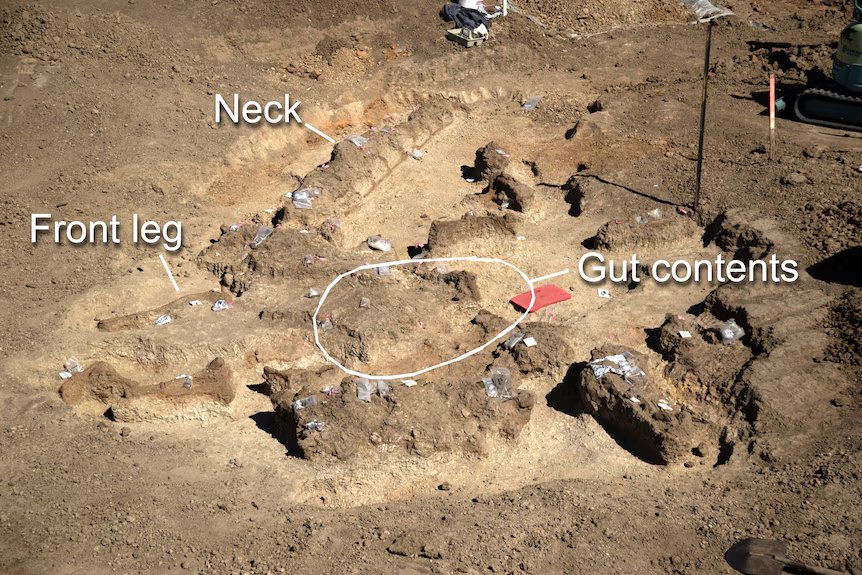
The actual dig where Diamantinasaurus matildae was excavated showing the location of the animal’s stomach contents. For the first time paleontologists can examine exactly what a sauropod ate and how they ate it. (Credit: ABC News)
One thing that was clear from examining the cololites was that the plant material had been barely chewed, unlike the stomach contents of a modern cow that continuously chews its cud in order to break down the tough plant fibers. It appears that this sauropod at least simply bit off large amounts of leaves and then swallowed them.
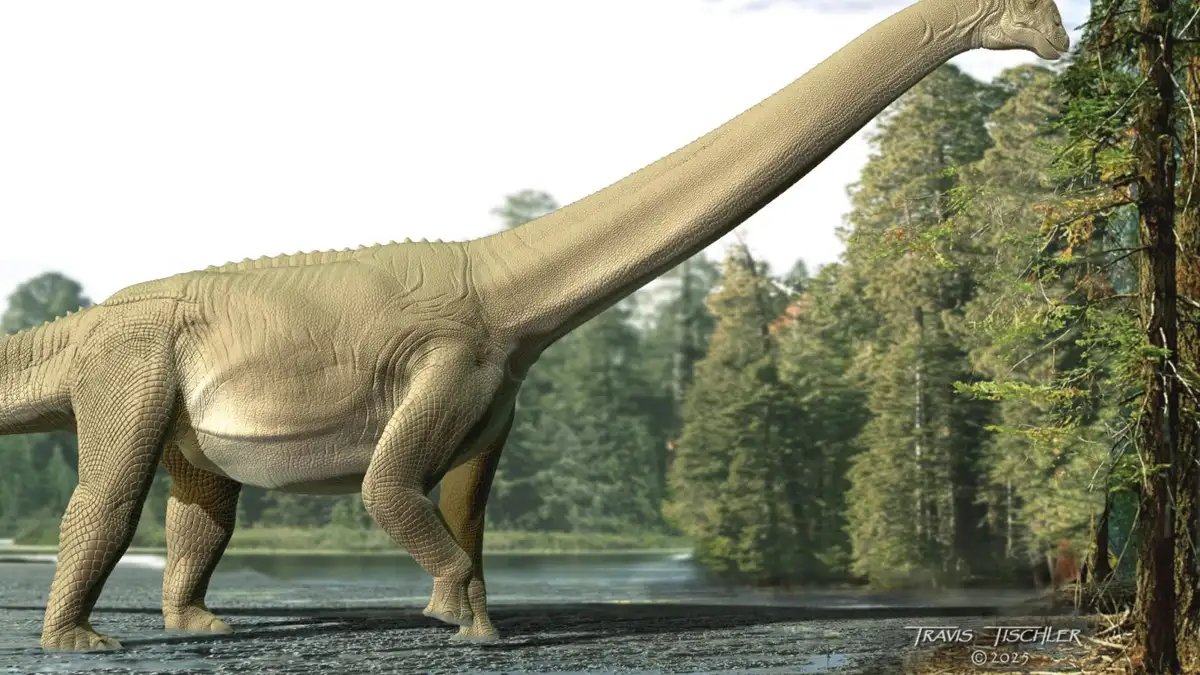
It’s thought that, like Giraffes, Sauropods used their long necks to reach up to eat the very highest leaves on trees. Now we know that, at least some sauropods didn’t bother to chew their food but just swallowed it. and kept on eating. (Credit: New Scientist)
Presumably, once in the sauropod’s stomach gut bacteria would have gone to work reducing the plant fibers to a digestible mass. In other words the stomach of this sauropod was something like a fermenting vat for beer or whiskey. Now this is just one specimen of the many species of sauropod dinosaur, just one data point, so other sauropods may have chewed more. Still we have finally unearthed conclusive evidence that sauropods were plant eaters, and we now know something of just how they ate and digested their food.
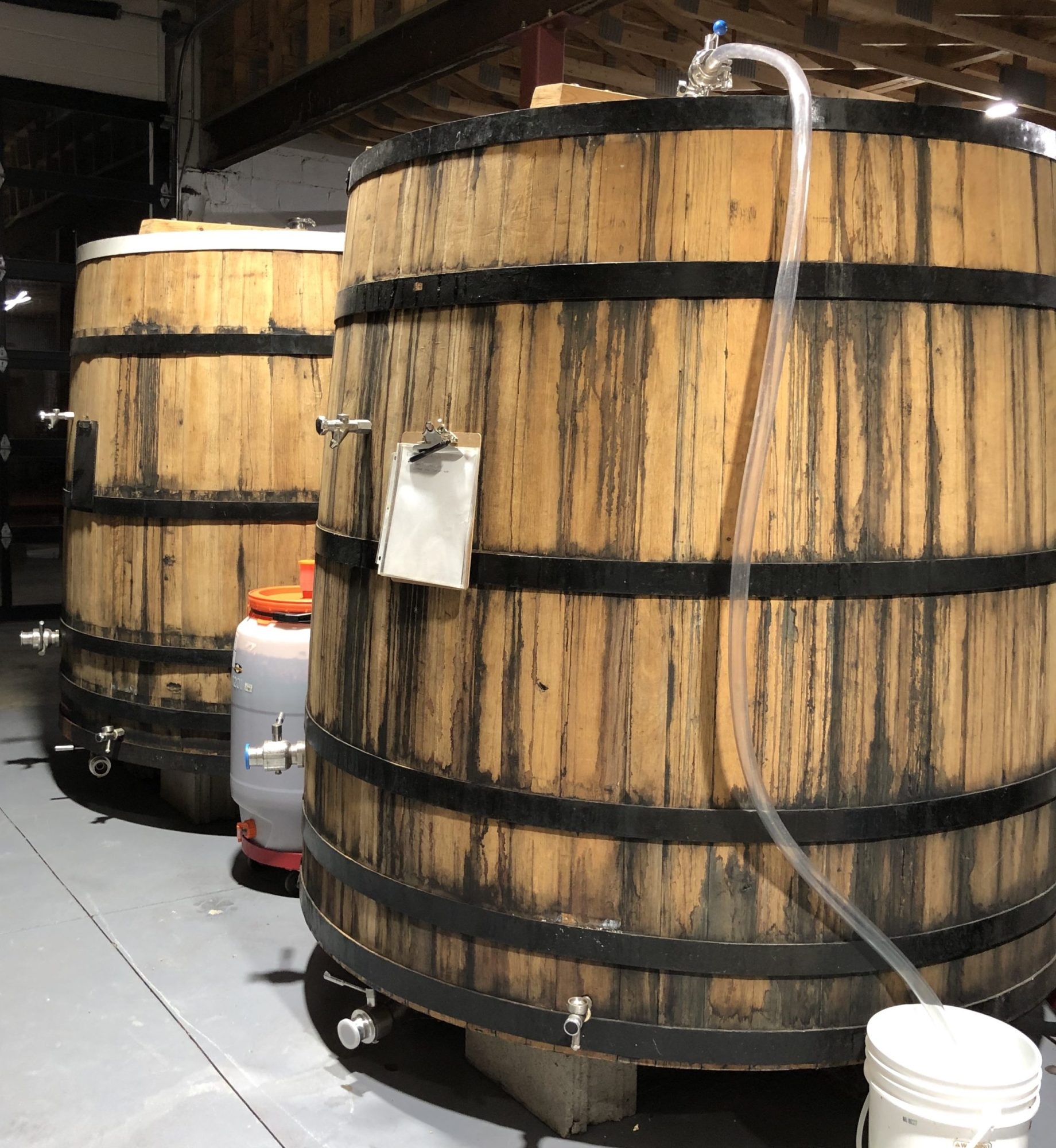
Beer, and many other substances are fermented in large vats. A sauropod’s stomach may be a lot like that, using yeast and bacteria to do the work of breaking down the animal’s food. (Credit: Garth’s Brew Bar)
There are still many questions about the history of life on this planet, but with every discovery we learn a little bit more. The fun is in the discovery and learning.