The Nobel Prizes for 2025 have been Announced: 

The Nobel prizes for 2025 in the categories of Physiology or Medicine, Physics and Chemistry have been announced and this year there’s a common theme running through the science prizes.
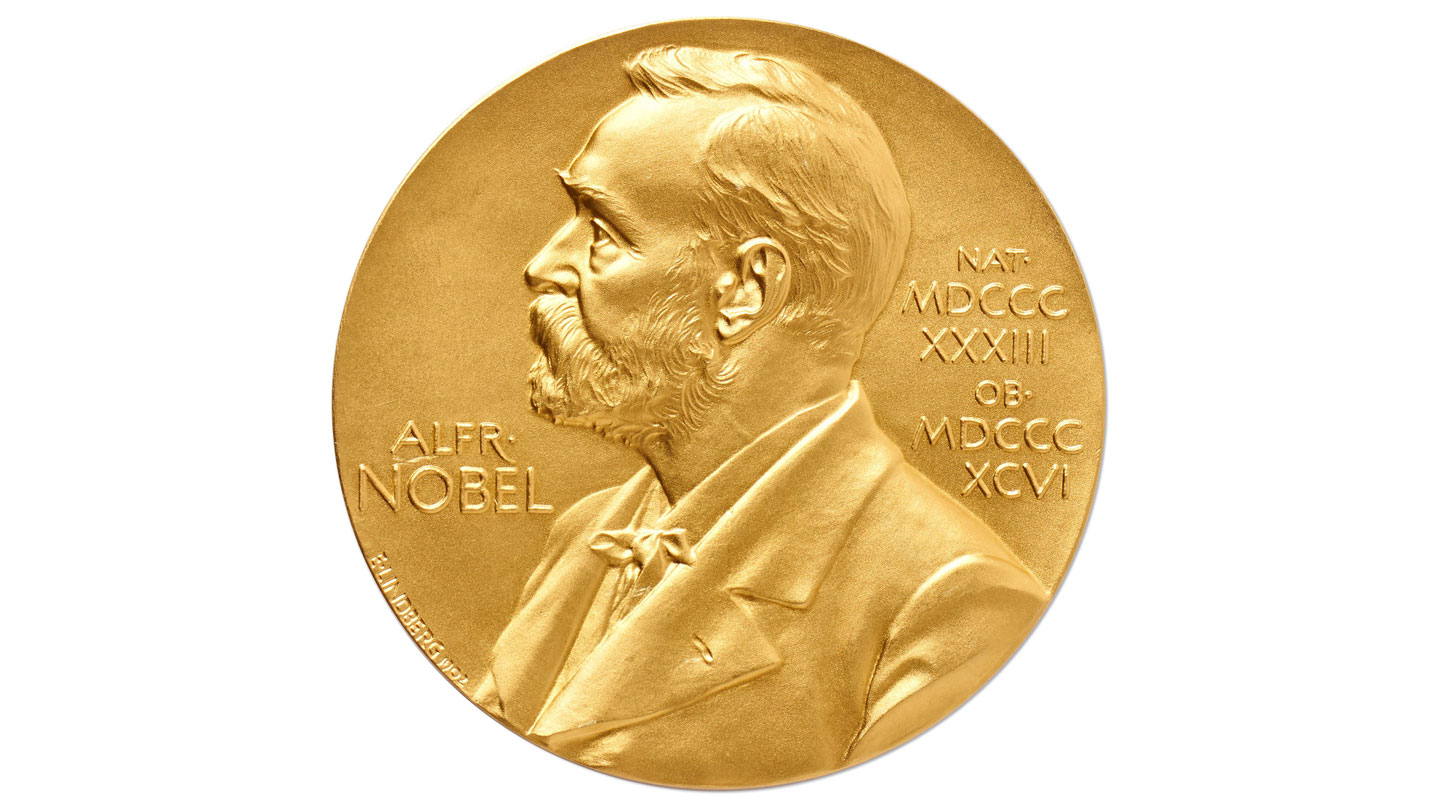
Funded in the will of Alfred Nobel, the Nobel Prizes were first awarded in 1901. (Credit: Science News Explores)

We’re all familiar with the difference between practical research, that is research that immediately yields benefits to people or that, more importantly, immediately makes money and more fundamental research, the kind of studies that are made simply for the joy of knowing and which are unlikely to ever make any money. Good examples of the practical science would be studying insecticides to help eliminate pests like locusts while pure research would be studying how locusts manage to come together in such huge numbers that they form a destructive swarm. You may have noticed in my example that the pure research may in fact discover facts about locusts that could be applied to reduce the harm they do without resorting to poisons that harm other creatures as well as locusts.
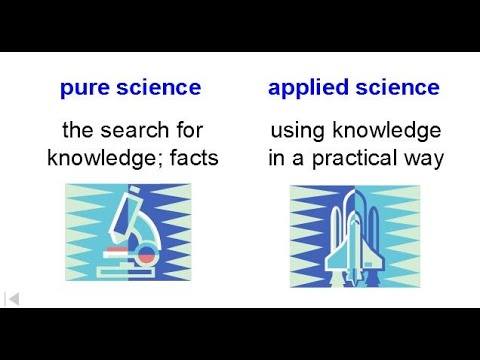
Think about it, without the facts discovered by pure science there’s nothing for the practical scientist or engineer to apply! (Credit: YouTube)

A lot of people take a dim view of fundamental research. After all science is about making all of our lives better isn’t it. Science just for the pure joy of knowing only benefits a few nerds while the rest of us never understand it anyway. Pure science isn’t worth the money it costs they feel. Of course the irony is that without the pure research there wouldn’t be any new ideas, any new discoveries for the ‘practical men of science’ to work with. Well, this year’s Nobel prizes in the sciences celebrate several examples of pure research that in the decades since they were carried out have yielded a great deal of practical benefits.
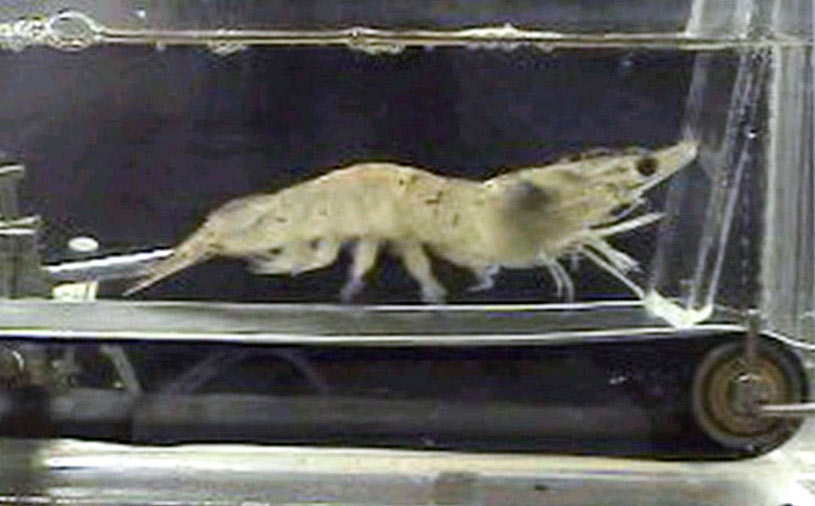
The ignorant people at Fox News like to joke about 3 million dollars in federal money being wasted on leaning how fast a shrimp can run on a treadmill. Actually, the study was an examination of the entire lifecycle of shrimp which has proven to be immensely valuable to the shrimp industry! The treadmill part of the study cost all of fifty bucks! (Credit: Science)

The first up this year was the Nobel prize for Physiology or Medicine which was awarded on the 6th of October to Mary E. Brunlow of the Institute for Systems Biology in Seattle, Washington, Fred Ramsdell of Sonoma Biotherapeutics in San Francisco, California and Shimon Sakaguchi of Osaka University in Osaka, Japan for their research on how the Immune System works. Specifically the trio examined the phenomenon of ‘peripheral immune tolerance’, that is how the disease fighting T-cells in the immune system of our bodies know to attack foreign cells like bacteria but not to attack our own cells.
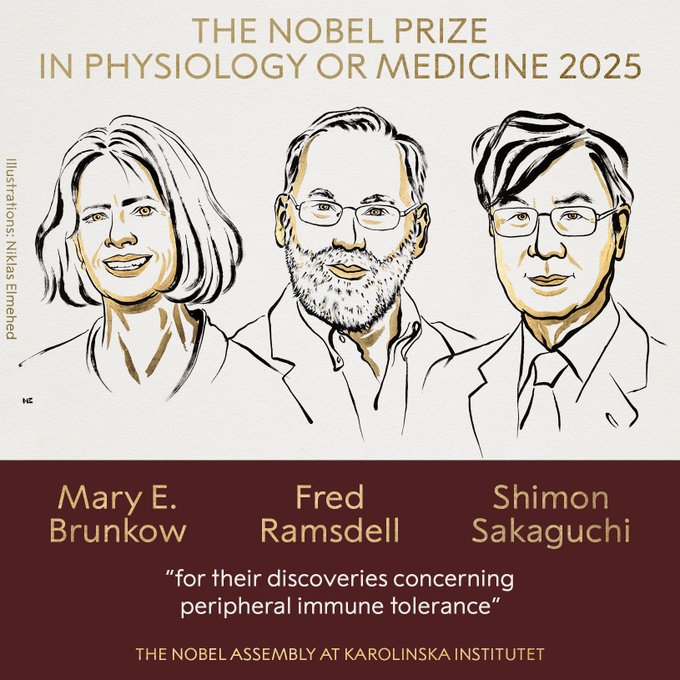
This year’s Nobel Prize in Physiology or Medicine went to Mary E. Brunkow, Fred Ramsdell and Shimon Sakaguchi. (Credit: UCLA Newsroom)

It was Dr. Sakaguchi who began the research in 1995. Working with labouratory mice Sakaguchi discovered a previously unknown type of T-cell that regulated the behavior of the more common, disease fighting T-cells that he named ‘regulatory T-cells’. Then in 2001 Doctors Brunkow and Ramsdell discovered a series of gene mutations that could result in dysfunction of the body’s T-cells resulting in autoimmune diseases like eczema or arthritis. Later Sakaguchi was able to demonstrate that the two studies were linked through his regulatory T-cells.
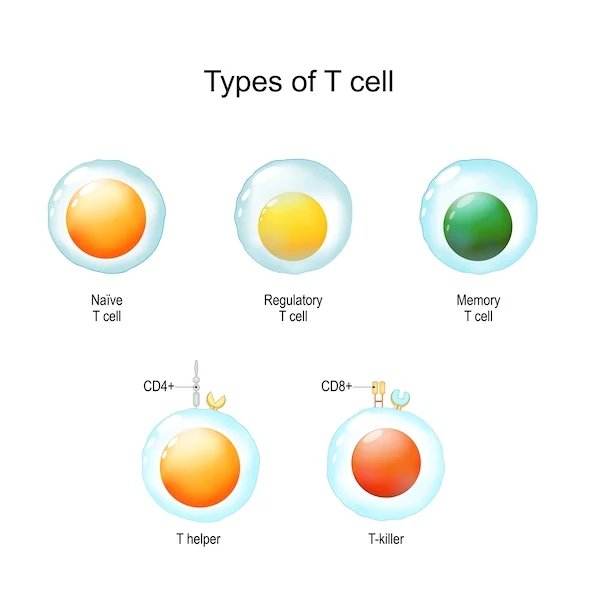
The T-Cells in our body are a major part of our ability to fight diseases. This year’s Nebel Prize in Medicine was awarded for the discovery of, and study of the regulatory type of T-cell. (Credit: Beckman Coulter)

Since that time the research carried out by Sakaguchi, Brunkow and Ramsdell has led to new treatments for autoimmune diseases along with techniques to prevent the rejection of transplanted organs. There are currently over 200 clinical trials underway that are based on the science gained by the trio’s ‘fundamental study’.
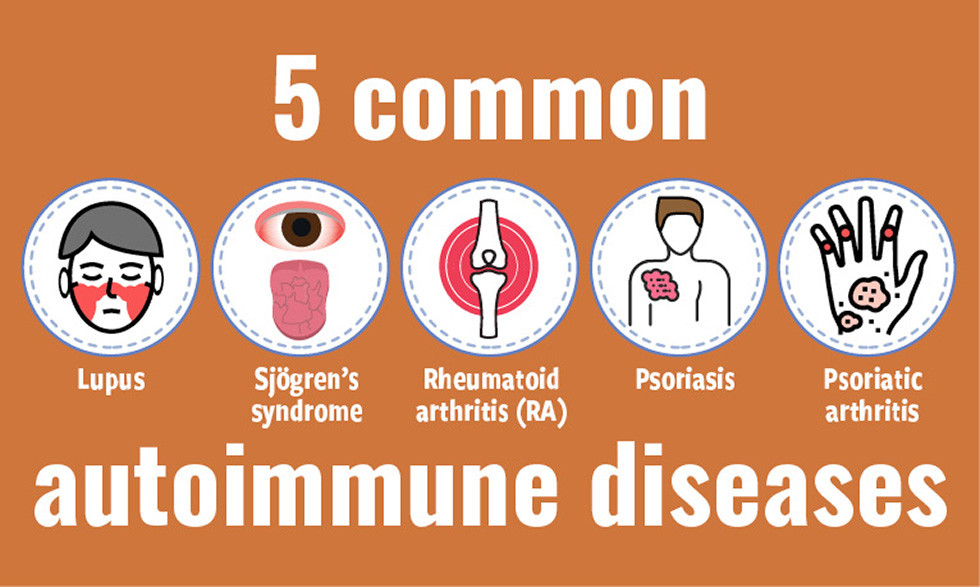
As our population ages autoimmune diseases are becoming more and more of a concern. These afflictions occur when our disease fighting T-cells attack the cells of our body. (Credit: NIH Medline Plus Magazine)

On the 7th of October it was Physics turn and this year’s Nobel was awarded to John Clarke of the University of California in Berkeley, Michel H. Devoret of Yale University and John M. Martinis the University of California at Santa Barbara for their work on quantum mechanics and in particular for research that laid the foundation for quantum computers. In research carried out in the 1980s the three scientists examined the way that energy was quantized in an electric circuit. In their work they discovered the ability of electrons to ‘tunnel’ their way through energy barriers that classically they would not be able to cross.
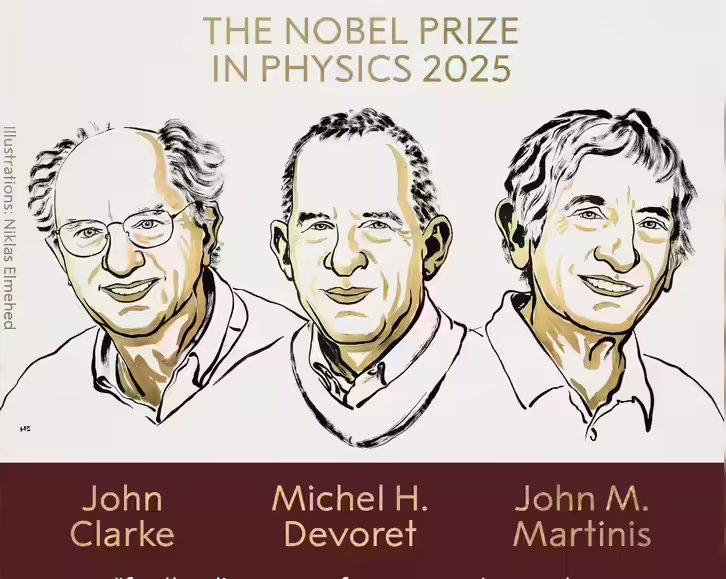
This year’s Physics Nobel went to John Clarke, Michel H. Devoret, and John M. Martinis. (Credit: Times of India)

This phenomenon is now a key to many of the microchips that today’s technology relies upon. Everything from digital cameras to mobile phones are dependent on quantum tunneling. What’s more the development of new, more powerful quantum computers is a direct result of the work by doctors Clarke, Devoret and Martinis. Once again fundamental research, studying how energy is quantized in an electric circuit, has resulted in technology worth literally billions of dollars.
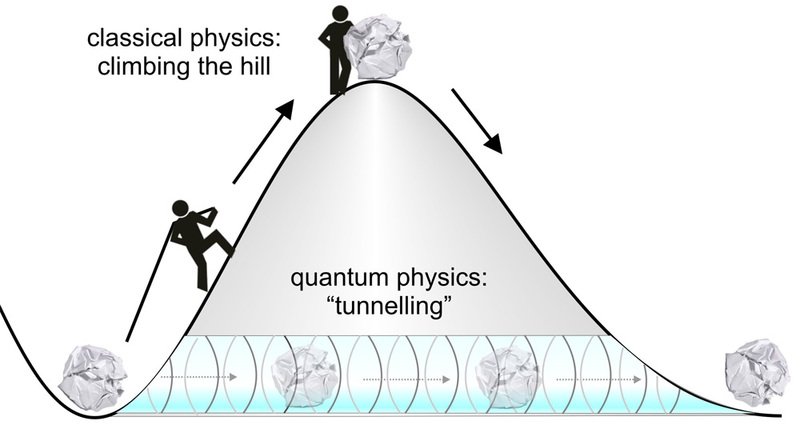
In classical physics in order to get over a hill it’s necessary to have enough energy to get to the top of the hill. In quantum physics even if you don’t have enough energy you can tunnel through thanks to the uncertainty principle. Mind you, tunneling may take billions of years! (Credit: Max-Planck-Gesellschaft)

On the 8th of October the final Nobel science prize was awarded for Chemistry to Susumu Kitagawa of Kyoto University in Japan, Richard Robson of the University of Melbourne and Omar Yaghi at the University of California in Berkeley for their work on Metal-Organic Frameworks (MOFs). These are materials that are capable of soaking up large amounts of either gasses or liquids like a sponge and then releasing them so that they can be captured.
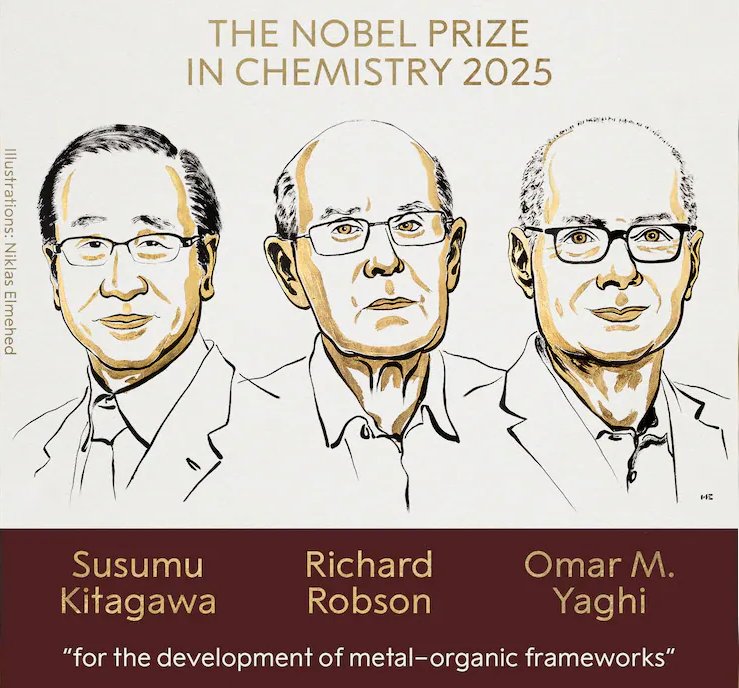
This year’s Chemistry Prize went to Susumu Kitagawa, Richard Robson and Omar M. Yaghi. (Credit: NDTV)

You see most chemical reactions take place at surfaces. Think about it, when you put a wooden log on a fire the combustion takes place at the intersection of the wood and the oxygen in the atmosphere, at the log’s surface in other words. MOFs are materials that contain myriad pores and channels throughout them giving them an enormous amount of surface area where chemical reactions can take place.
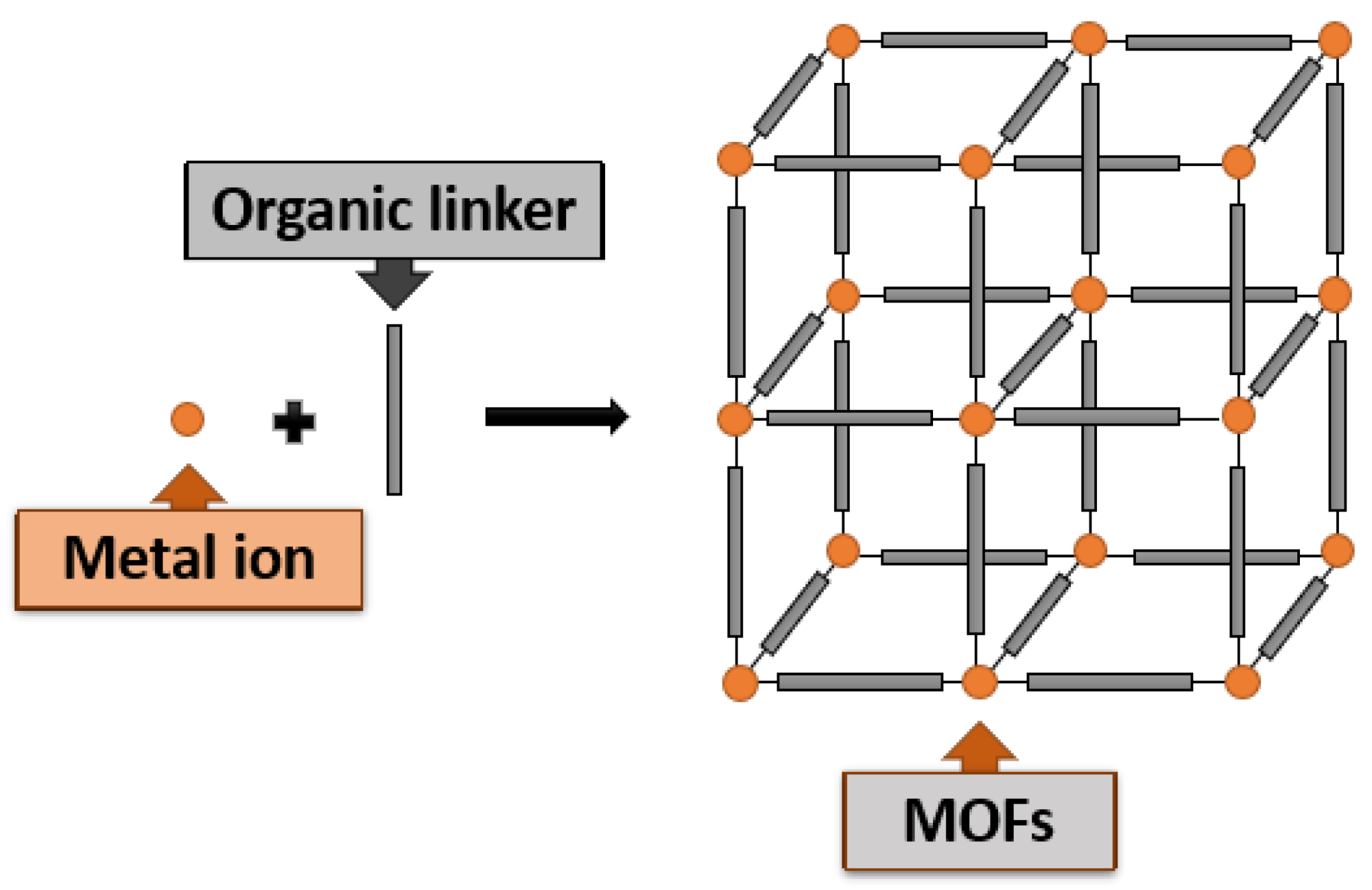
Metal-Organic Frameworks (MOFs) have large volumes but contain a lot of empty space inside them. This allows the MOFs to absorb a lot of gasses or fluids. (Credit: MDPI)

The discovery of MOFs began way back in the 1970s when Dr. Robson was using wooden balls as models of atoms for his class. In order to construct molecules out of his wooden atoms he drilled holes in them so that he could then use rods to connect them together. As he was drilling the holes he realized that a lot of chemical information was contained in where and how many holes he drilled. In a series of experiments Robson was able to produce copper compounds that contained large cavities creating a large amount of surface area per unit volume.

Remember your High School chemistry class when your teacher showed you have molecules were built using balls connected by rods. Well, that’s what Dr. Robson was doing when he had the idea for MOFs. (Credit: Indigo Instruments)

Doctor Kitagawa extended Robson’s ideas eventually developing materials that could absorb and then release large amounts of methane or nitrogen or even oxygen. One problem with these first MOFs was that they were rather delicate; heating in particular caused their inner surfaces to collapse.

A lot of MOFs are subject to defects and are very fragile substances. (Credit: Nature)

It was Doctor Yaghi who solved this problem with MOF-5, which can be heated to 300º Celsius without degradation. Yaghi has since experimented with his MOF to capture water vapour in the desert of Arizona during the night and then releasing it during the day.
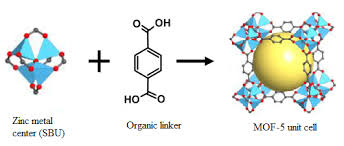
The component parts of MOF-5, shown on the right having captured a gas or liquid molecule. (Credit: Journal of Chemical Reviews)

Again it can be seen how fundamental research back in the 1970s has developed into practical engineering with several companies working on producing MOFs in large quantities to absorb CO2 from the atmosphere, reducing the amounts of greenhouse gasses. All of the scientific studies that were awarded the Nobel prize this year share that idea in common, fundamental research that leads in time to practical innovation.
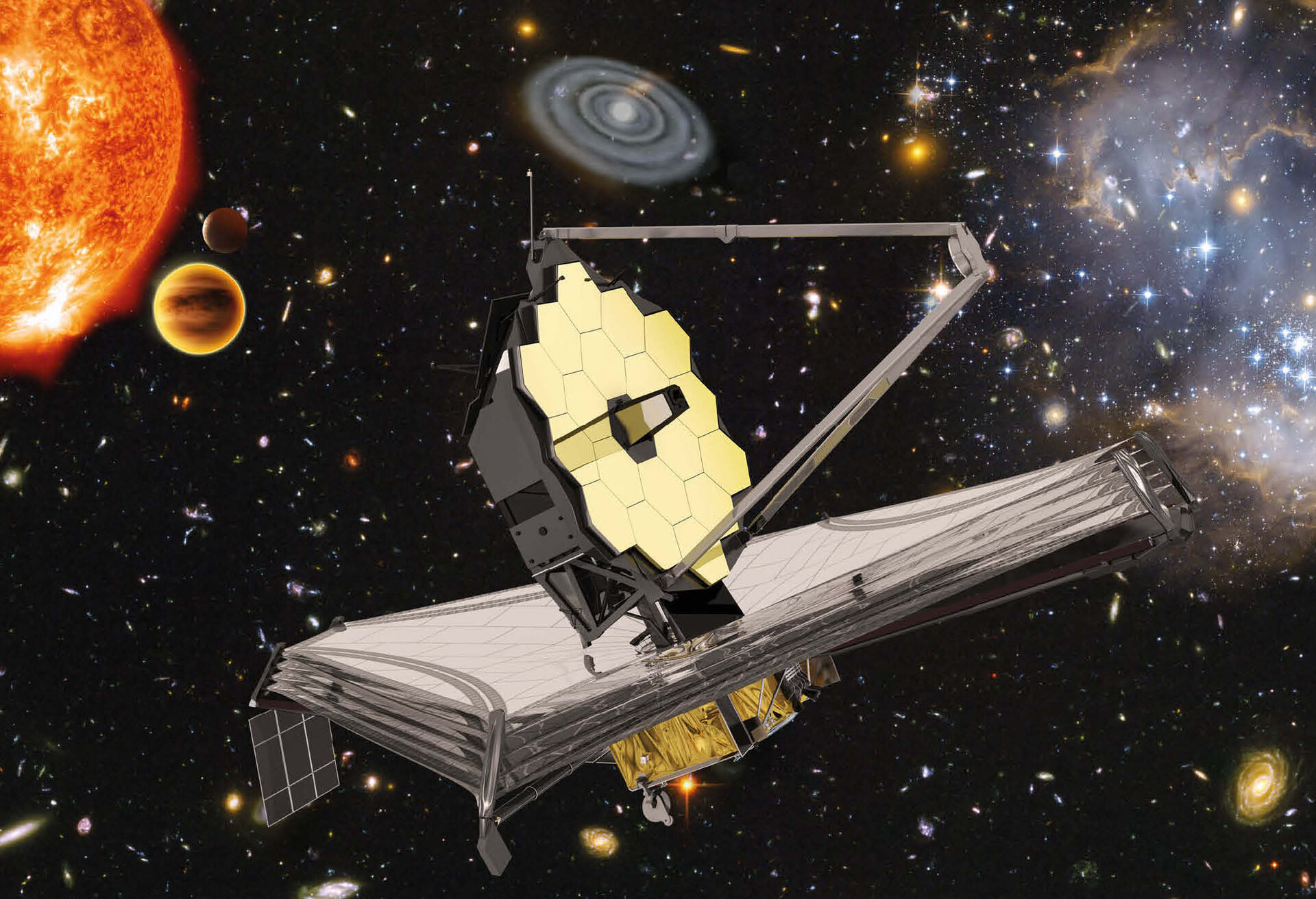
Astronomy News for October 2025: James Webb Telescope and the ‘Little red Dots’ at the beginning of time. 

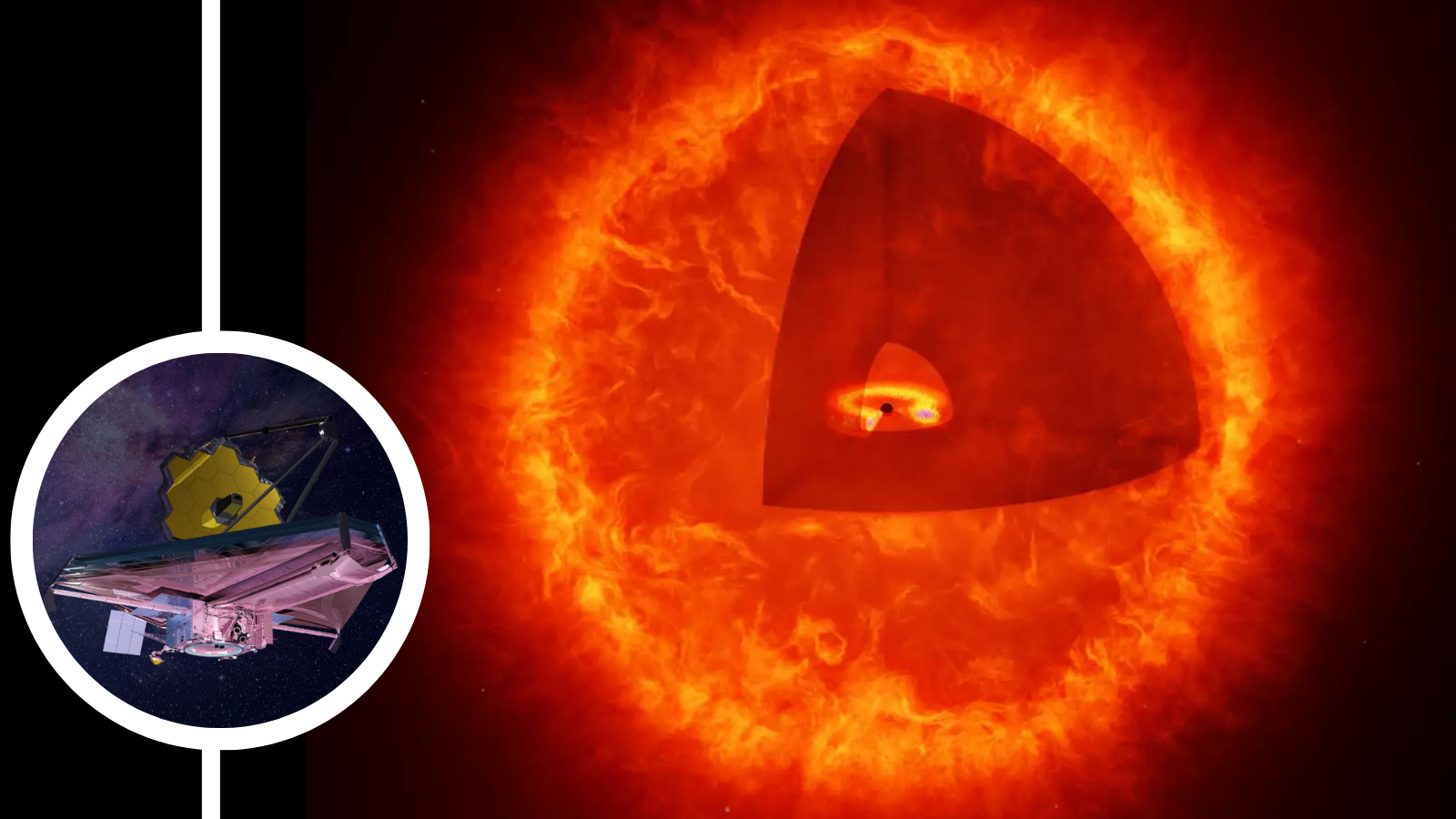
As I described in several earlier posts, see 6July2024 and 22Febuary2025, one of the prime design goals of NASA’s new James Webb space telescope was to be able to study the early Universe, that is the Universe as it appeared just about one billion years or less after the Big Bang. How does that work, you ask? How can any telescope, even one as advanced as James Webb, see into the past?

By looking at objects billions of light years from Earth the James Webb Space Telescope actually looks billions of years into the past, seeing our Universe as is was billions of years ago. (Credit: European Space Agency)

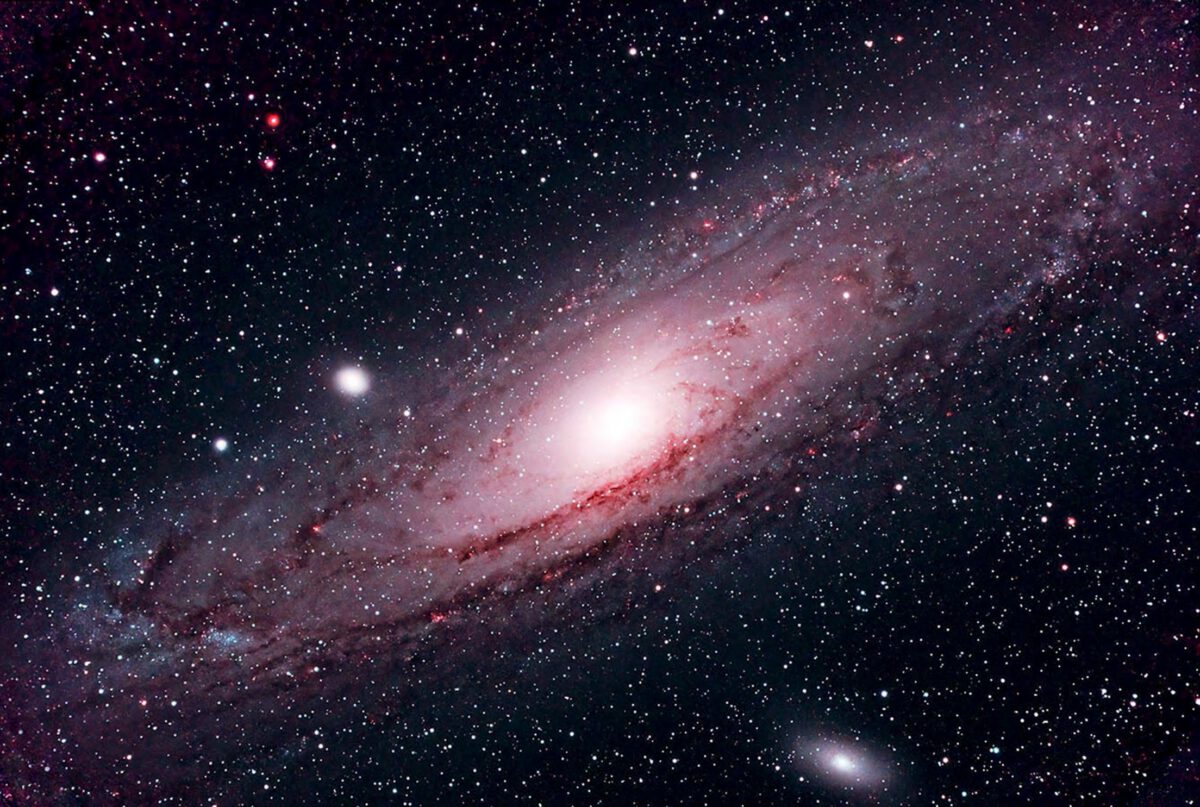
Well actually all telescopes look into the past. Because the speed of light is finite, about three hundred million meters per second, if you look at the star Sirius for example, at a distance of 8.7 light years you are not seeing Sirius as it is but rather as it was 8.7 years ago because that’s when the light entering your telescope left Sirius. Similarly, if you look at the North Star Polaris, at a distance of about 500 light years you are seeing Polaris as it was 500 years ago. The distance to the Andromeda galaxy is about two and a half million light years so whenever an astronomer looks at Andromeda they are looking two and a half million years into the past.

The famous Andromeda Galaxy is the farthest object you can see with your naked eye, although it doesn’t look this good. At a distance of two and a half million light years it takes the light from Andromeda two and a half million years to reach your eyes. So, when you look at Andromeda you’re looking two and a half million years into the past. (Credit: Astronomy Magazine)

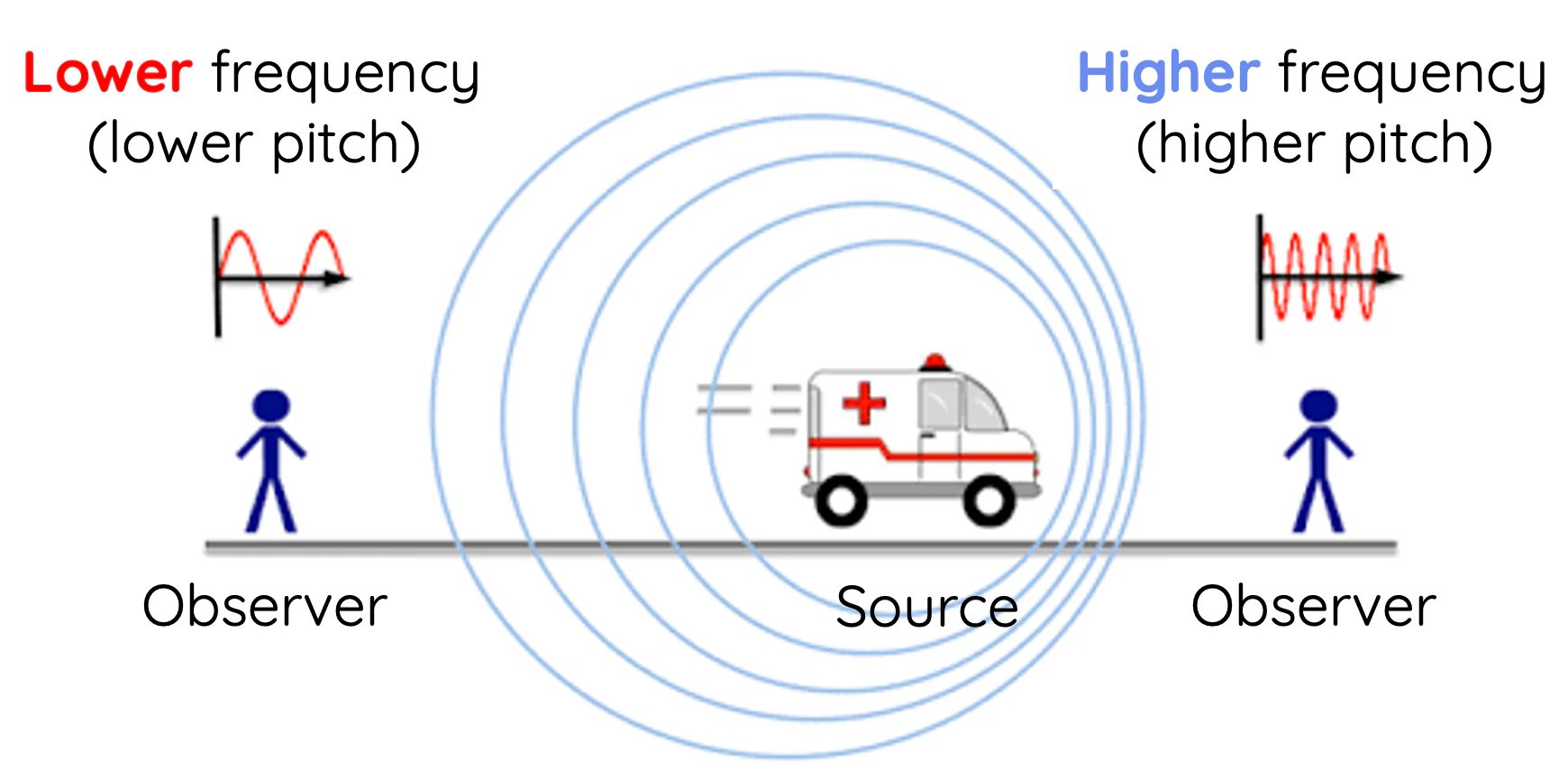
Most galaxies are in fact billions of light years away so astronomers observe them in order to try to understand how the Universe has changed, how the galaxies evolve over billions of years. There’s a catch however, because the entire Universe is expanding, the further away a galaxy is the faster it is moving away from us, and objects that are moving that fast away from us have the light they emit shifted into the infrared due to the Doppler effect.

We’re all actually familiar with the Doppler effect. Whenever an emergency vehicle is moving towards you its siren has a higher pitch than when it is moving away from you. The same thing happens to light so that’s how we know that the Universe is expanding, the light from all but the very closest galaxies is shifted towards the red. (Credit: Science Ready)

Which is why the design of the James Webb space telescope was centered around its ability to see in the far infrared. That’s also why the telescope had to be positioned more then a million kilometers from Earth because our planet also emits a lot of infrared light, enough to blind Webb’s sensitive instruments. Astronomers can also use James Webb to study other objects closer to home like the gas clouds where stars are born but first and foremost the space telescope was intended to study the Universe at around one billion years after the Big Bang.

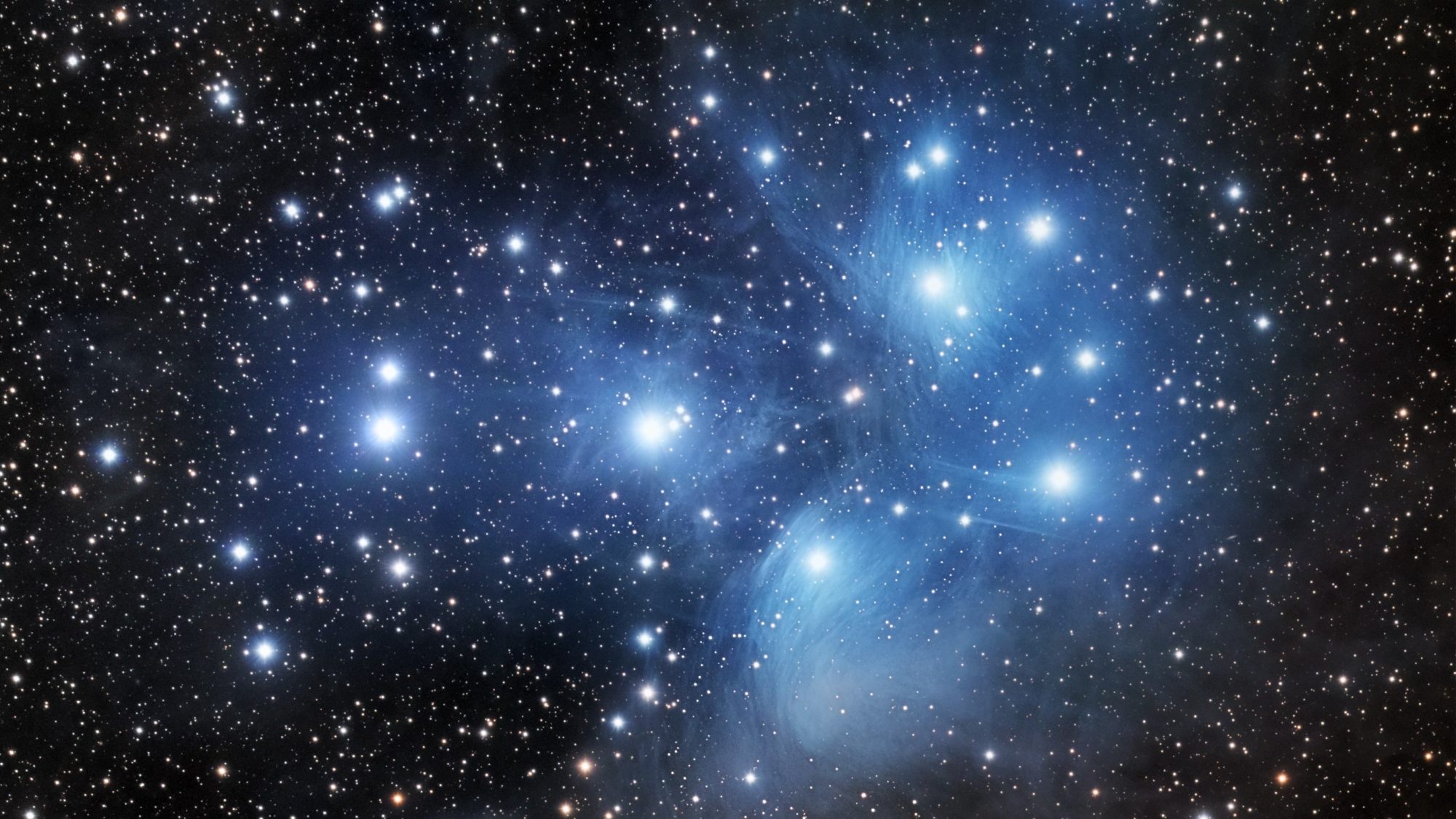
The famous Pleiades star cluster is a huge gas cloud in our galaxy that has been a stellar nursery forming hundreds of stars over the last couple of million years. By seeing in the infrared Webb can actually see through the gas and dust to actually see stars being born. (Credit: Space)

So what did astronomers and cosmologists, physicists who study the Universe as a whole, expect James Webb to find. They had quite a few theories, basically the idea was that about half a million years after the Big Bang the Universe had cooled enough for atoms, mostly hydrogen and helium, to form and when that happened the whole Universe would grow dark because there were no stars yet to emit any light. The theorists expected that gravity would cause the first stars to form around a half billion years after the Big Bang and based on their calculations those first stars would be really big ones, very bright, very blue in colour. A few hundred million years later those first stars would then be clumping together to form the first galaxies.

Astrophysicists expected that the very first stars to form after the Big Bang would big really big and hot, glowing in the blue portion of the spectrum. (Credit: Forbes)

That’s pretty much what astronomers expected James Webb to see, small, simple galaxies containing a few million or so really bright stars. Instead what they got as they studied the first images from James Webb almost three years ago now were a bunch of ‘Little Red Dots’ (LRDs).

Instead, what James Webb found was a large number of ‘Little Red Dots’. (Credit: ESA/Webb)

Colour means a lot to an astronomer, red stars are actually cool while blue or violet stars are much hotter so the LRDs that Webb imaged were not the big bright stars that astronomers were expecting. At the same time the objects seemed to be too small to be any kind of galaxies. For these reasons, among others the LRDs were initially called ‘Universe Breakers’ because they went against all of our theories about the early universe at that time.

We think of red as being the colour of fire but actually the colour blue is much hotter. (Credit: Commercial LED Lights)

Trying to come up with some kind of model to describe the LRDs astrophysicists first suggested that they were small but well formed galaxies with millions of red stars packed in real tight. The idea of such compact, well organized objects already existing just a few hundred million years after the Big Bang was so outrageous is the reason why astronomers considered them to be Universe Breakers. One thing everybody agreed on was the need for more data; especially we needed the spectrum of a few of these LRDs. The early Universe cosmologists had to wait their turn however, as other programs got their first chance with Webb.

Having to wait your turn, whether at a doctor’s office or elsewhere can be the most boring thing imaginal. (Credit: Medium)

Eventually Webb did return to observing the early Universe and succeeded in obtaining the spectra of some of the LRDs and that better data has caused a shift in thinking about what they could be. The latest model for the LRDs is a black hole that has succeeded in pulling so much material around itself that it looks much like a very large but very cool star.

The latest theory as to what the little red dots could be is that they are a black hole that has gathered a large amount of gas around it. Deep in the center the black hole is feeding, releasing large amounts of energy that causes the entire gas cloud to glow. (Credit: Space)

In a paper from the journal Astronomy and Astrophysics with lead author Anna De Graaff these objects have been named ‘Black Hole Stars’ because even though they get their energy from matter falling into a black hole at their center, their atmospheres closely resemble those of red dwarf stars. The researchers also suggest that the LRDs are in fact the early stages in the development of the Supermassive Black Holes that are now considered to be at the center of every big galaxy.

The first ever image of the supermassive black hole that is at the center of our Milky Way galaxy. The image was actually taken in radio waves and converted to a visible image. (Credit: CNN)

If that analysis is true, and there’s still a great deal to be learned about the LRDs, then James Webb has given us the answer to a question that has been bouncing around for the last twenty years or so. Which came first, do galaxies form supermassive black holes in their centers or do supermassive black holes form galaxies around them. If LRDs are baby supermassive black holes then before long Webb should find some of them with proto-galaxies around them.

We still know very little about how the galaxies formed. Hopefully James Webb will give us the data we need to understand how the Universe as it is today developed. (Credit: Wikipedia)

When, and if that happens the astrophysicists will have the data they need to rewrite their theories of how galaxies form. Then we will know more about how our Universe came to look the way it does.

Who was Trofim Lysenko and why are you likely to hear more about Lysenkoism in the years to come? 

The following sketch of the life and career of Trofim Lysenko is necessarily both brief and lacking in detail. A virtual unknown outside of the former Soviet Union, Lysenko has nevertheless become a byword for the abuse of scientific truth for political purposes and the consequences of that abuse to both individuals and the greater population as a whole.

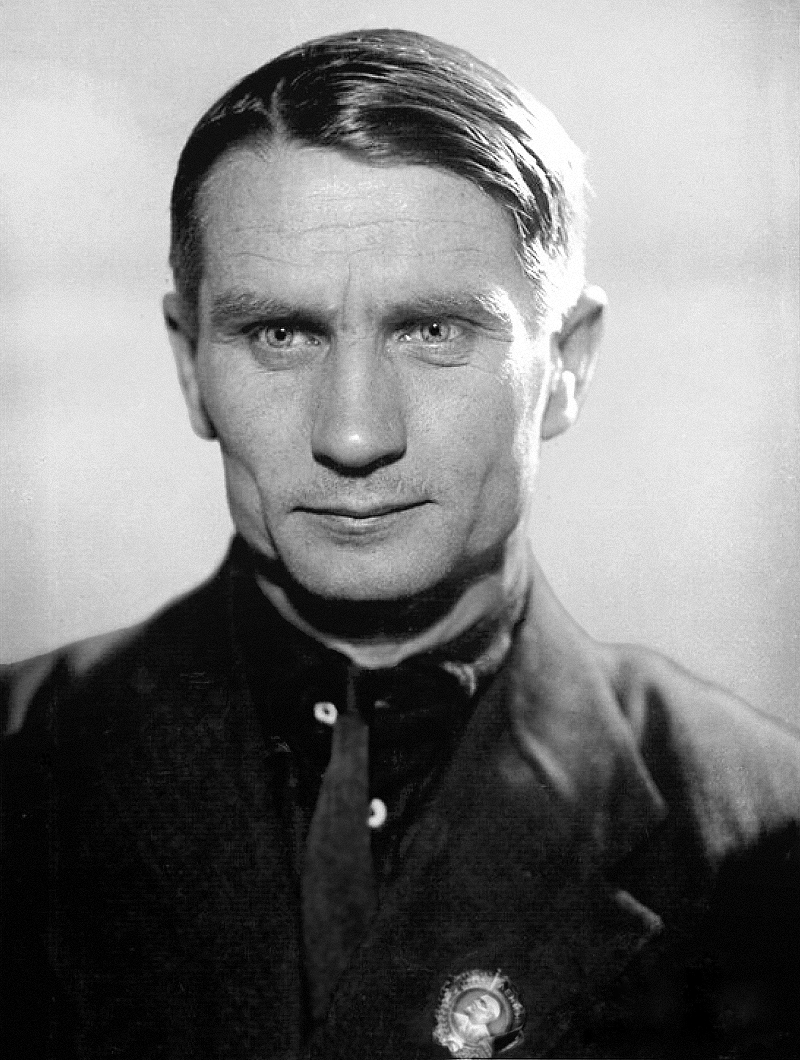
Soviet scientist Trofim Lysenko in a portrait dated to 1938. I don’t want to be superficial but there are some people that you can just look at and tell they’re up to no good! (Credit: Wikipedia)

 Born on the 29th of September in 1898 to a peasant family in old Tsarist Russia Trofim Denisovich Lysenko only learned to read and write at the age of 13 when he was given two years of schooling. In Russia at that time that was the most education that someone of his class could hope for. It was expected that Trofim would spend his entire life as a peasant farmer like his father, so he really didn’t need much education.

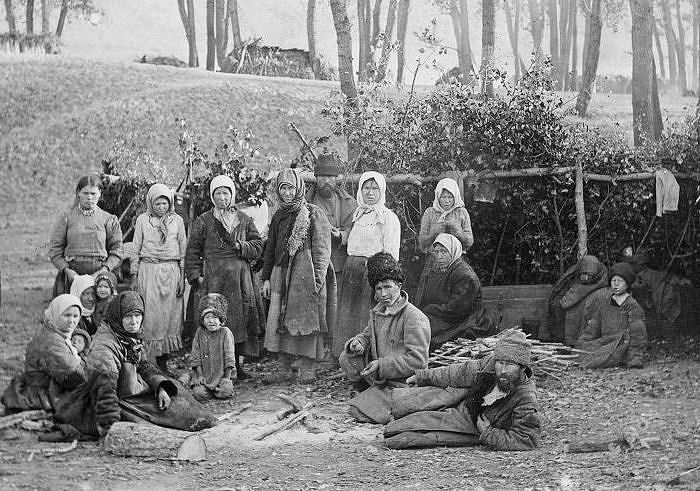
During the reign of the Tsars the serfs in Russia were virtually slaves having little or no rights and for the most part receiving no education. (Credit: Jacobin)

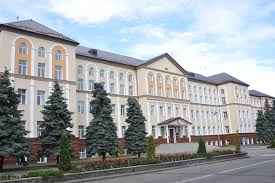
That changed with the Russian Revolution, to do them justice the Bolsheviks were determined to educate the peasants as a means of modernizing their country, of improving Russia’s economy and eliminating all social classes. Taking part in this educational revolution Lysenko received both what we would call a high school degree and then his bachelor’s degree at the Kiev Agricultural Institute, now the National University of Life and Environmental Sciences of Ukraine. For the rest of his career Lysenko would work with the object of improving the yields of the various crops that were grown in the Soviet Union, no easy task thanks to the harsh Russian winter.

The National University of life and Environmental Sciences, now in the Ukraine is typical of the early Soviet Union’s emphasis on educating everyone in the USSR to the best of their ability. (Credit: Smapse Education)

Early in his career Lysenko tried to convert spring wheat to winter wheat in order to increase the growing season, and therefore increase the yearly yield of that important crop. Discounting Mendel’s ideas about genes, Lysenko instead tried to ‘teach the wheat’ to survive better in the winter and assumed that the lessons learned by each plant would be passed on to future generations of the wheat. Although Lysenko claimed great results from his experiments his papers were criticized for sloppy statistical analysis. To this day it is still unclear if Lysenko ever deliberately falsified his evidence but sloppiness and mathematical errors abounded.

Amber waves of grain. Well not in Russia where the growing season is very short and the winters are very harsh. Lysenko dedicated himself to creating a variety of wheat that could flourish in the Russian climate and therefore help feed the people of the Soviet Union. A noble goal but when he failed he turned to persecuting his critics rather than correcting his mistakes. (Credit: Limagrain Cereal Seeds)

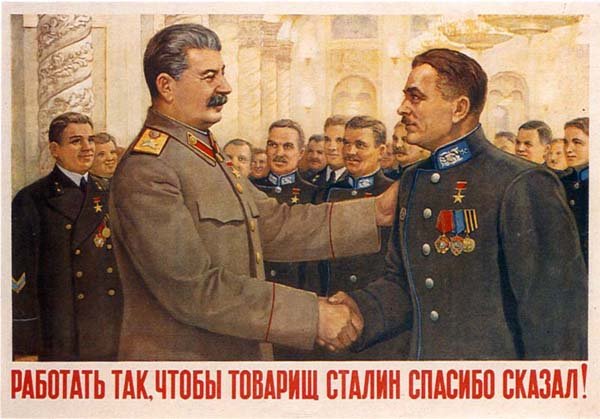
Lysenko’s work however brought him to the attention of Joseph Stalin who in the late 1920s was trying to collectivize all of the farms in the Soviet Union. Stalin liked Lysenko because of his peasant background and because Lysenko’s ideas about teaching wheat to change its behaviour fitted in well with Communist dogma. Also, it turned out that Lysenko had considerable rapport with the peasants who were giving Stalin trouble and proved himself to be useful in convincing them to accept collectivization.

Poster of Joseph Stalin greeting Trofim Lysenko. Stalin found the scientist to be politically useful and paid little attention to the botanist’s bad science. (Credit: X)

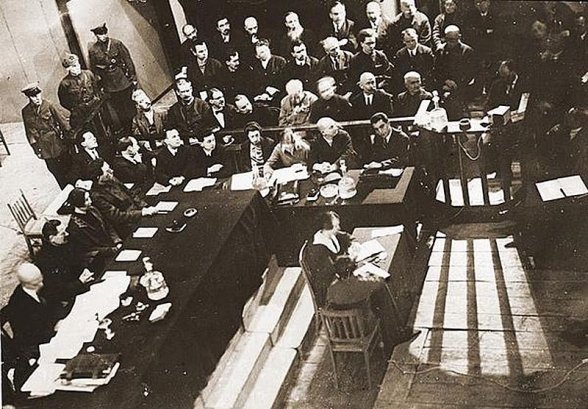
With Stalin’s support Lysenko’s career was assured no matter how ludicrous his ideas, no matter how sloppy his work, no matter how many other scientists criticized his papers. In fact it wasn’t long before those scientists who criticized Lysenko were being denounced for ‘anti-soviet’, ‘reactionary’, ‘western’ even ‘Trotskyite’ behaviour. Hundreds of biologists were arrested and sent to gulags where many died, some were even executed.

Stalin liked to subject his rivals to show trials accusing them of crimes against the state, meaning against him. Because Lysenko was a friend of Stalin’s his enemies became Stalin’s enemies and often faced the same purges. (Credit: X)

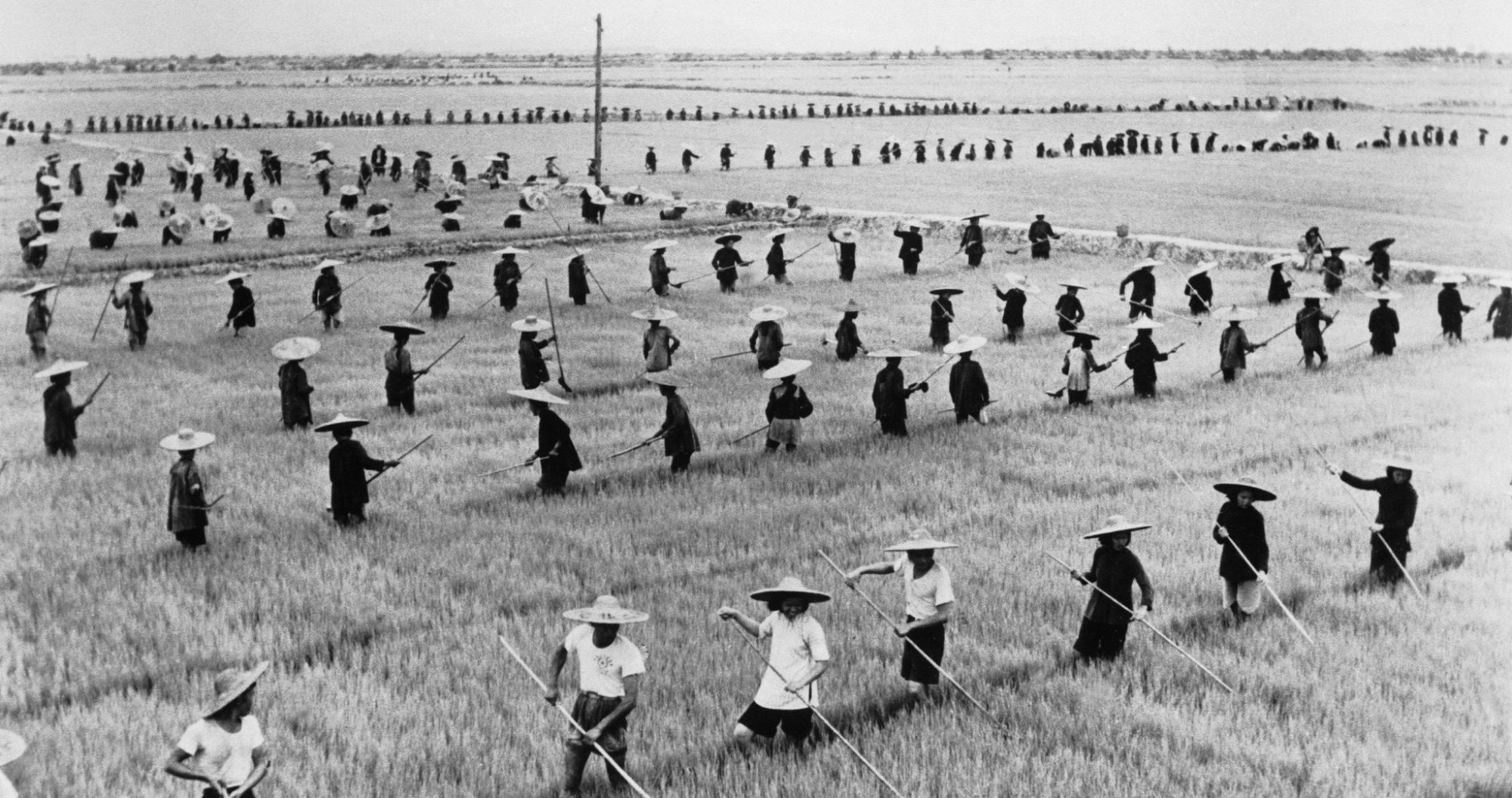
Lysenko’s control of Soviet agriculture became total as far as people were concerned but somehow the crops themselves weren’t impressed. One example of Lysenko’s ideas about increasing crop yields will illustrate just how preposterous they were. Despite hundreds of years of experience by farmers that every plant needed some space in order to fully grow, Lysenko insisted that ‘plants from the same class never compete with one another’ so crops could be planted much closer together thereby increasing the yield each acre of land could provide. Such nonsensical theories were partly the cause of numerous famines in both the Soviet Union as well and in Red China under Mao, who also approved of Lysenko’s theories.

When the communists took over China Mao instituted many of Lysenko’s ‘reforms’. The result was a famine that may have killed as many as 45 million people. (Credit: The New York Times)

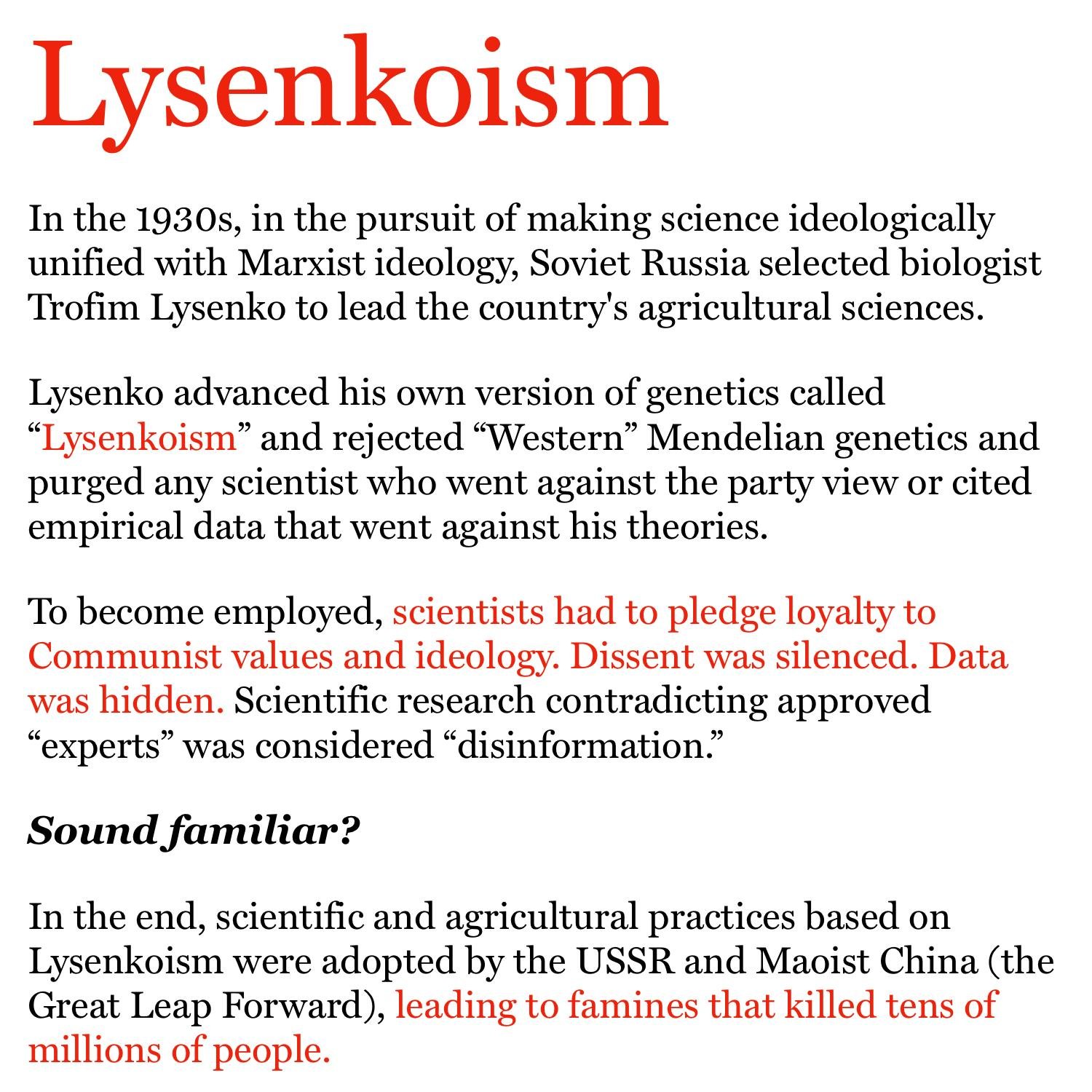
So what does the life of Torfim Lysenko have to do with us today? Well in the years since Lysenko’s death the term Lysenkoism has been used to denote the falsification of scientific truth in the service of political orthodoxy and of using political force to silence scientific truth. In that respect I think you’ll agree that Lysenko’s life has a great deal to teach us today.

Politics and Science simply do not mix together well. There are no compromises in science while in politics a good compromise is usually the best path forward. (Credit: X)

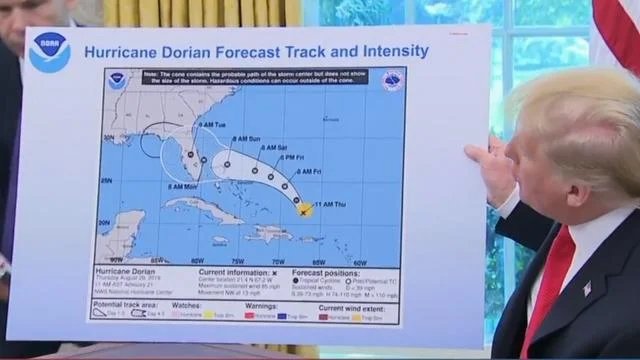
Let’s just consider a few of the sillier moments of Trump’s presidency. Remember the clumsy redrawing of the map for hurricane Dorian so that Trump could claim he was right about where the storm might go. Remember his suggestion that we somehow inject disinfectant into our bodies in order to kill the Covid virus. Trump has never had much interest in science and his refusal to ever admit that he is wrong has often brought him into conflict with reality.

It wasn’t just that Trump falsified science it was the crude and ugly way that he did it that displayed his utter contempt for the truth! (Credit: The New York Times)

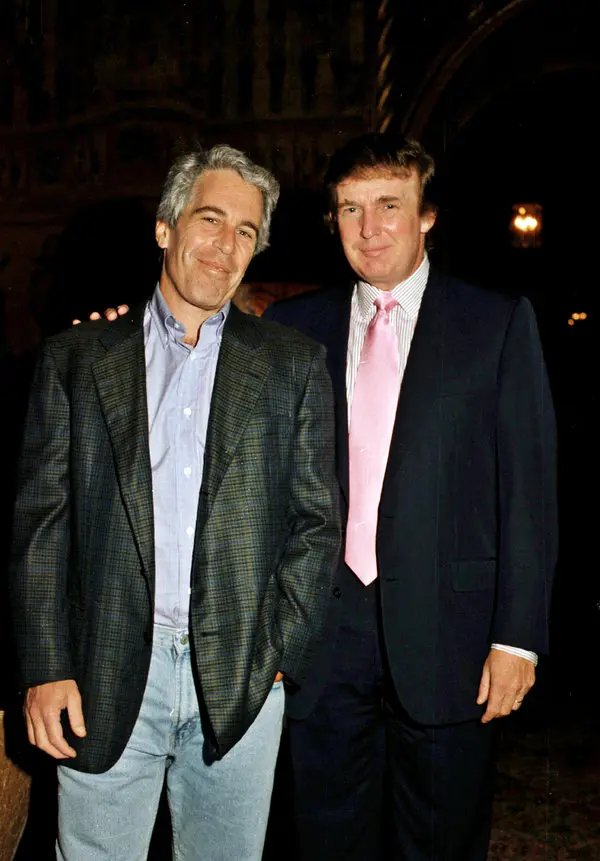
Trump’s refusal to accept his loss in 2020 seems to have only increased his dislike for the truth. Now in his second term he has repeatedly claimed that crime is rampant in democratically controlled cities despite FBI statistics clearly showing that violent crime is down over the last several years. Trump has even gone so far as to use the Jeffrey Epstein pedophile scandal to attack his political opponents while falsely minimizing his own relationship with the disgraced financier.

During the campaign Trump promised to release all of the Epstein files but now he’s doing everything he can to keep them from being made public. Again showing a complete disregard for the truth. (Credit: The New York Times)

Worst still, Trump has threatened to withhold federal funding for scientific research from both Universities and corporations whose policies he disapproves of, canceling or at least delaying important research. At numerous federal agencies he has canceled or severely cut back on studies dealing with climate change, the environment and vaccines for illnesses.

Trump’s personal Lysenko, at least so far, would have to be Robert F. Kennedy Jr whose attacks against medical science are seriously endangering the health of the American people. (Credit: Yahoo)

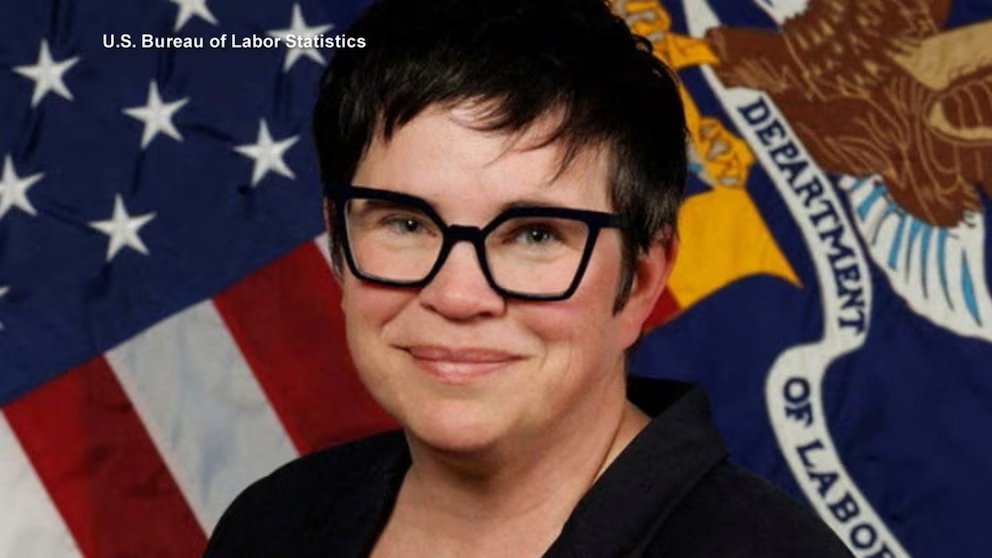
As the head of the federal bureaucracy Trump has chosen for his cabinet and other important posts not people with experience or ability but incompetent sycophants who flatter him and obey him without question. Now Trump has decided that the economic statistics complied by various agencies of the government are just wrong, not because of any evidence he has but just because they make him look bad. He has fired the head of the Bureau of Labour Statistics because of a bad jobs report and Trump’s chosen successor has questioned whether those numbers are even needed.

Erika McEntarfer was fired from her post as the head of the Bureau of Labour Statistics because of several poor job reports. In fact the head of the Bureau has very little to do with the actual job of collating the numbers reported by the Bureau. (Credit: ABC News)

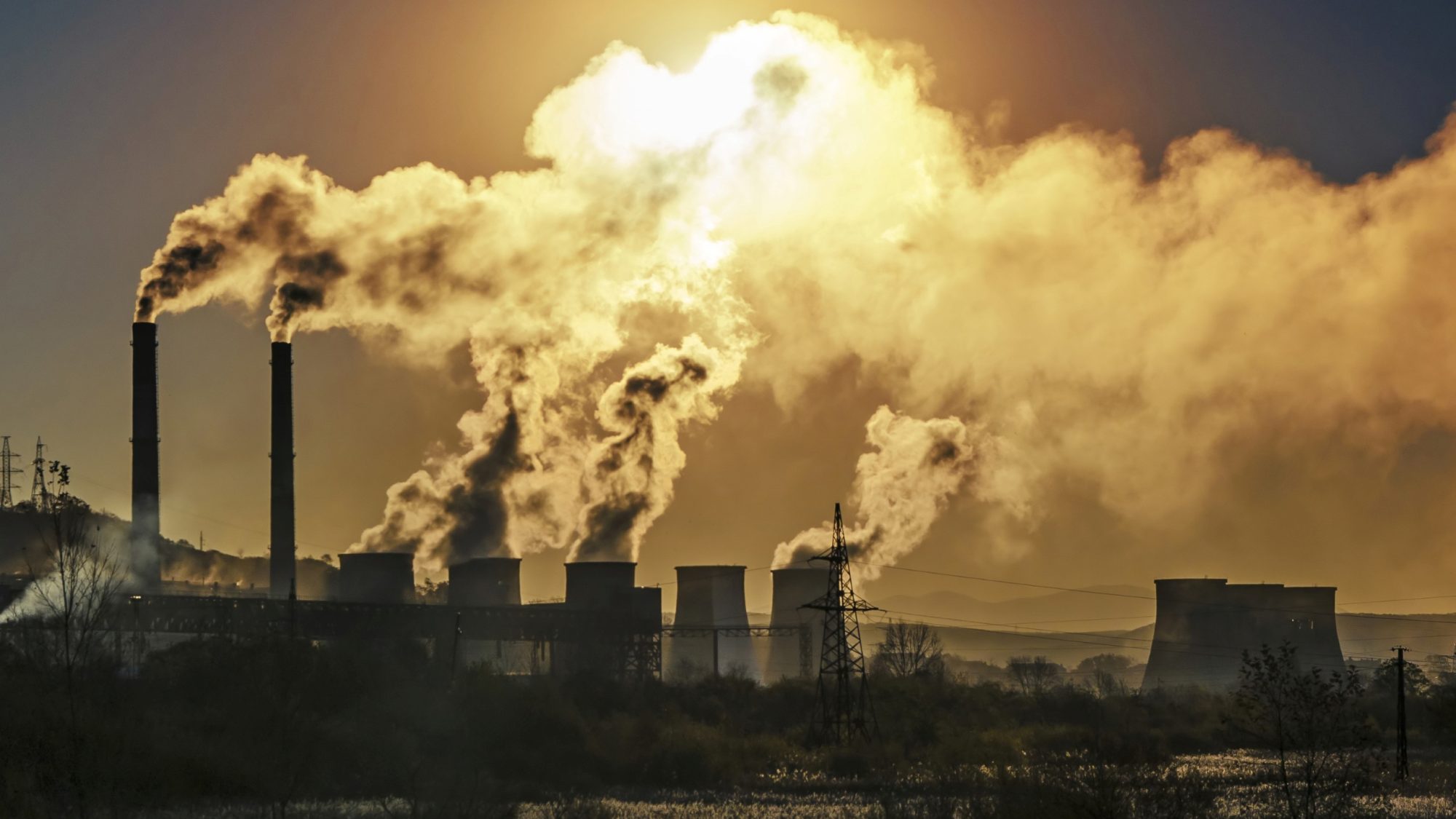
Now I don’t mean to imply that Trump is the root cause of all that is wrong in our country today, far from it. The biblical creationists have been denying evolution for over a hundred years now, and using political force to fight it since they have no evidence worthy of the name. The tobacco industry actually conducted tests on their product showing how dangerous tobacco was, and then lied to their customers saying that tobacco was safe so that they could stay in business. The petroleum industry learned from big tobacco and so, even when their own scientists told them global warming was real, they just fired the scientists and then bribed conservative politicians and news networks to deny climate science.

The lies and distortions now being spread by the modern Lysenkos are a threat not just to millions of lives but to the very Planet on which all life depends. (Credit: Live Science)

So you can see that Lysenkoism has been a part of American politics for a long time. Now however we have a President who is more than willing to destroy American science in order to get his own way, in a sense simply because he has been a liar his entire life and liars just hate the truth.

That’s just in his first term. Can he break his own record in his second term? One thing for certain of is that if he doesn’t break his own record he’ll claim he did! (Credit: The Times of India)

Who knows how long this current stage of Lysenkoism will continue in this country. It is worth noting however that when reality finally pushes its way through the lies of Lysenkoism it is usually a big disaster, like the famines that Lysenko himself was responsible for. Will we keep going down this disastrous road until climate change has led to the deaths of millions, until plastic pollution is causing severe illnesses in a large section of our population? With all of the problems we humans will face in the coming decades we won’t survive by simply lying to ourselves that there are no problems.   

Vacationing in Ireland. 

O’k, I know that vacationing in Ireland is hardly science and certainly not science fiction but I just spent two weeks in the emerald isle and I want to talk about it. So There!

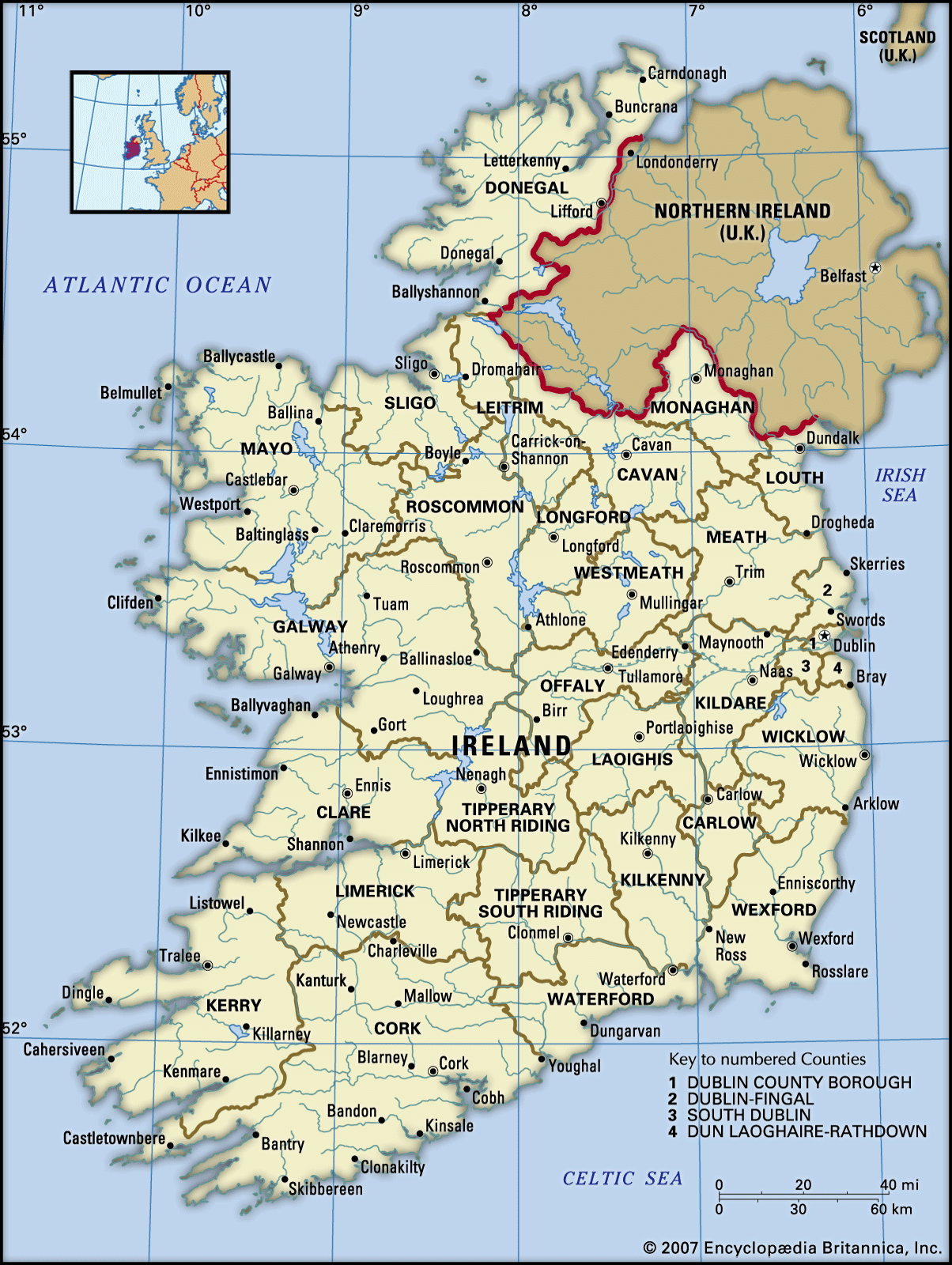
The Island of Ireland is still split between two countries, the Republic in the southern 3/4ths while Northern Ireland is still part of the United Kingdom (UK). At least right now that’s not a cause for fighting but it certainly has been over the last 800 years. (Credit: Britannica)

Just so you know, I’m about 3/4ths Irish so I’ve always had an interest in Ireland and Irish culture; I’ve always known it was my heritage. And I’ve been to Ireland once before, just forty years ago so I was curious to see how the country had changed.

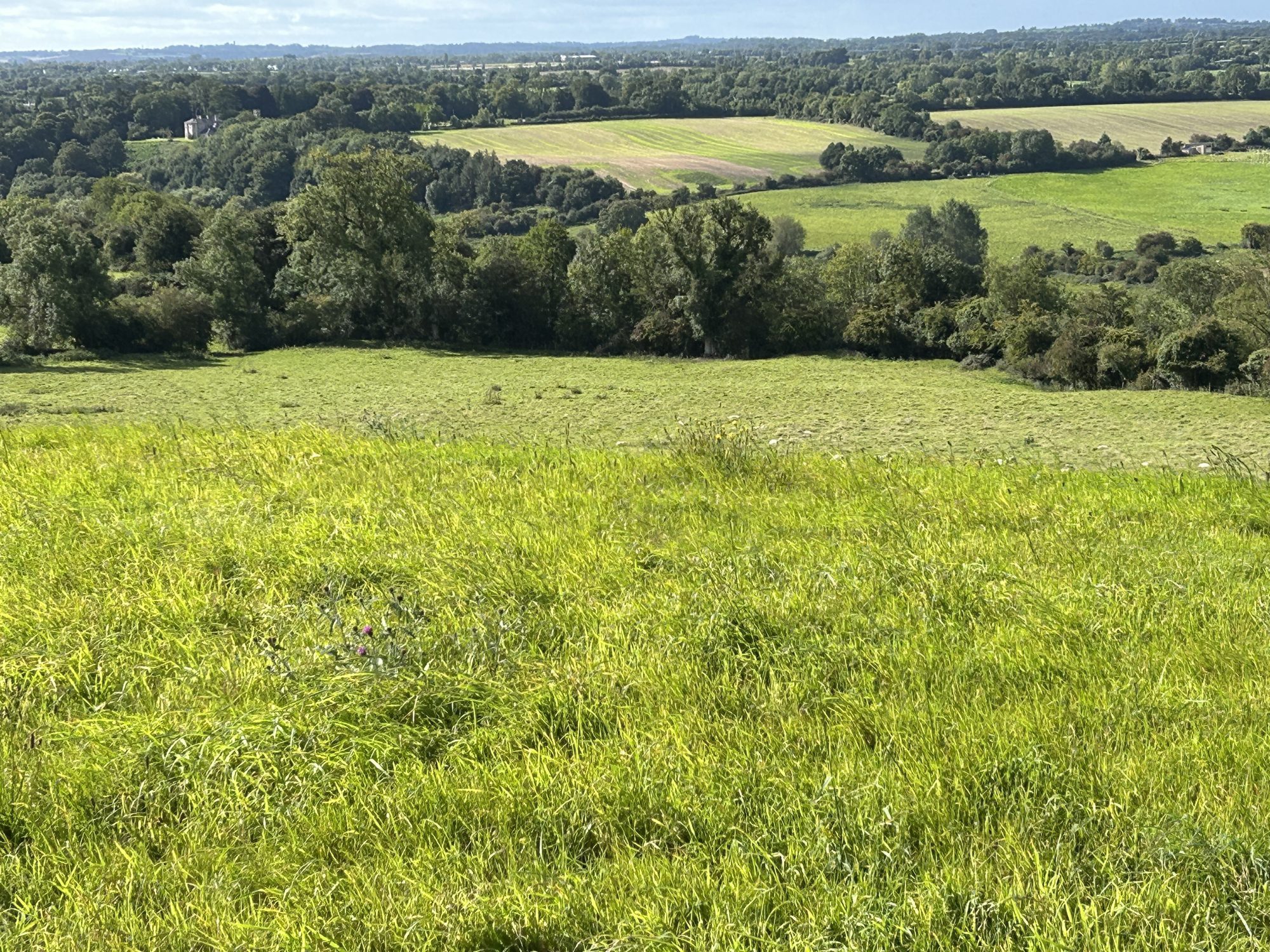
If you want to know why Ireland is called the Emerald Isle, well it is just so green! (Credit: R. A. Lawler)

One thing that we decided even as we were planning the trip was that this time we were going to visit Northern Ireland, also known as Ulster and which is still a part of the United Kingdom (UK). Back in 1985 Ulster was the scene of ‘The Troubles’ as Protestant Unionists and Catholic Republicans waged a bloody terrorist war against each other. That violence has now subsided with the implementation of the “Good Friday Accords’ where power is being shared by both sides.

Thanks to the ‘Good Friday Accords’ Ireland is at peace right now but it’s still rather fragile and the UK’s decision to leave the European Union (Brexit) has already stirred up some problems. (Credit: University of Birmingham)

Another big political change is that the Irish Republic, the southern and western three quarters of the island, is now a part of the European Union (EU) along with 25 other nations like France, Italy and Germany. This union of nations uses a common currency, the Euro, and travel by any citizen of one nation in the union to another is exactly like going from Pennsylvania to New Jersey here in the states.

Ireland is a part of the European Union of nations. Citizens of the EU can travel freely between all nations in the union and use the same currency. Nations within the union cooperate on economic and to some degree foreign affairs. (Credit: Gale Blog)

In fact it turned out that going from the Irish Republic to Northern Ireland, and hence the UK, was exactly the same despite the fact that the UK left the EU in Brexit. So far it appears that everyone realizes that putting a hard border across Ireland once more would be the quickest way to start the troubles all over again.

So much for politics, let’s talk about Ireland and her people. From what I could see there’s a lot more energy in Ireland today than when I was last here in the 1980s. The capital of Dublin in particular is growing rapidly with buildings going up all over the city. Still the Irish are also anxious to protect a great deal of their past, and that means from the Stone Age right up to the Rebellion that got them their independence just over a hundred years ago. The country does seem to have found a good balance between preservation and growth.

Probably the best way to see if a city is growing is the number of canes dotting the city skyline. Everywhere you look in Dublin there are cranes. (Credit: R. A. Lawler)
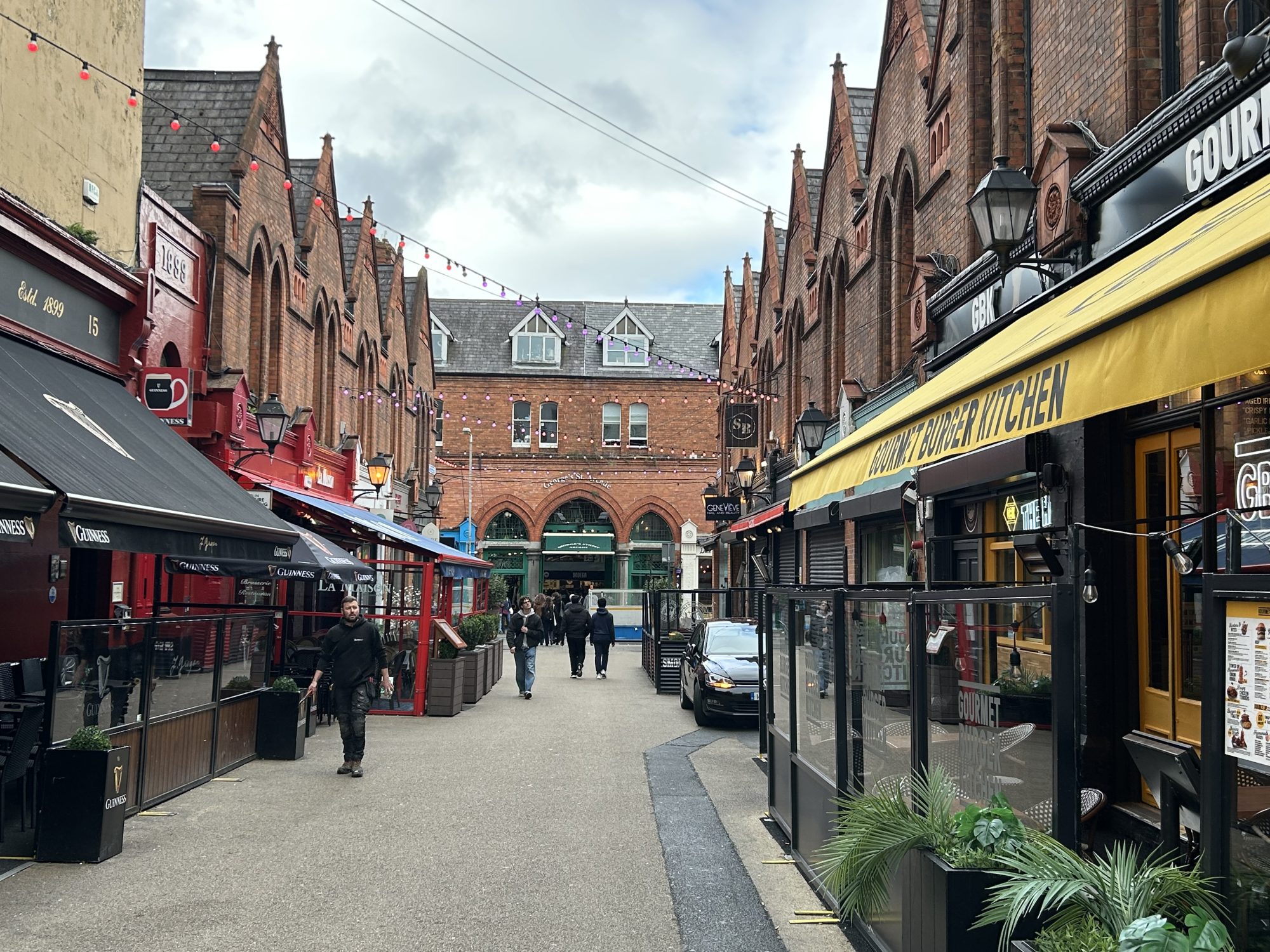
But there are still plenty of narrow streets that seem as if they haven’t changed in a hundred years. Ireland wants, and so far is achieving both growth and preservation. (Credit: R. A. Lawler)

The young people of the Republic in particular seem energetic and looking forward to accomplishing great things, although I admit that view might be a bit biased because our hotel was right across from Trinity College and we saw many young people every day. Still, the hope and eagerness among people for what tomorrow brings seems to be a far cry from what I see happening in the US, where our young people see little hope of a life as good as the one their parents had.

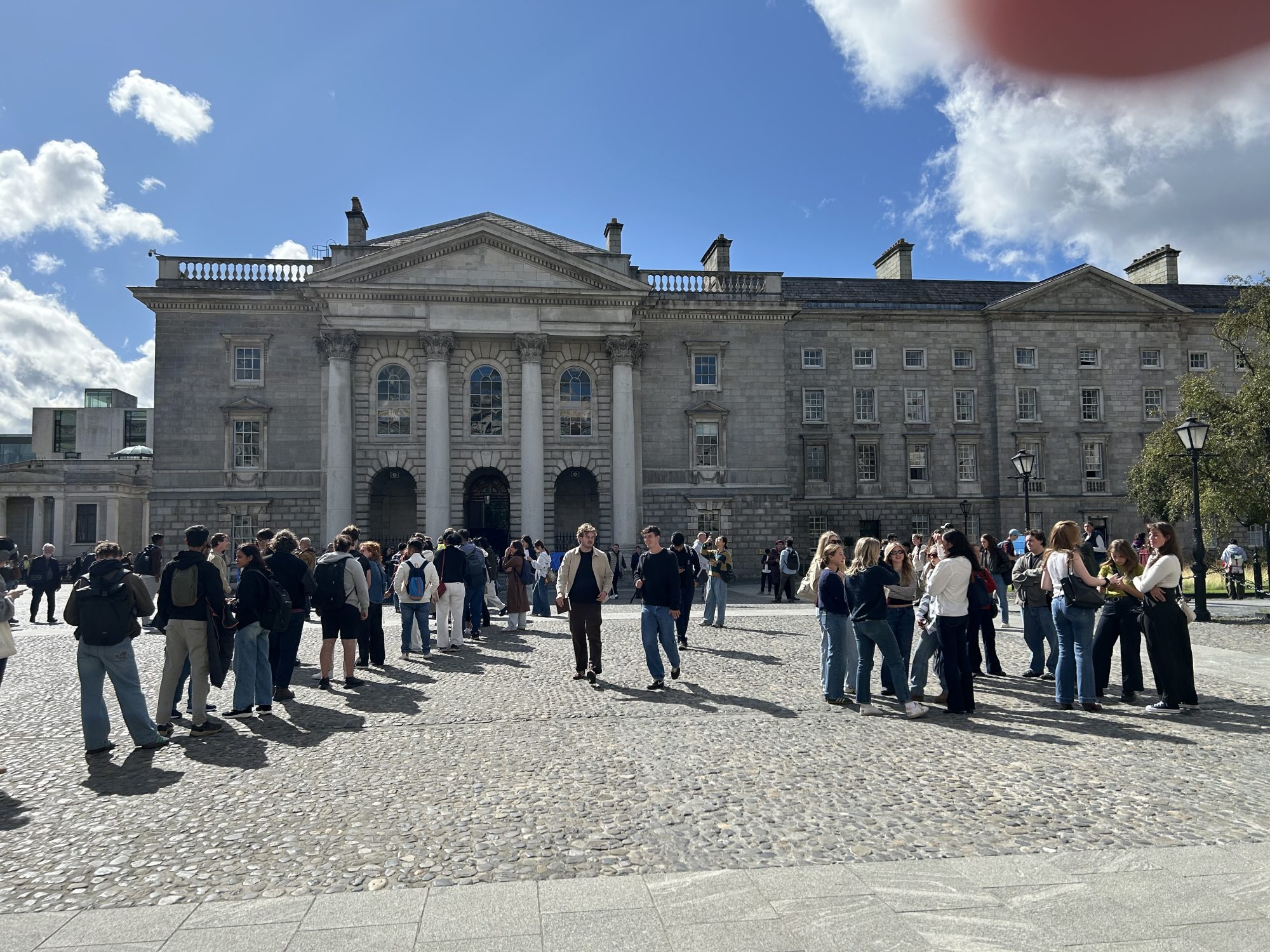
We arrived in Dublin on the day that freshmen students at Trinty College had their orientation. Here the new students are lining up to enter the Examination building on their first day. (Credit: R. A. Lawler)
Our guide on our trip to Ulster was Elisa whose youthful energy and hope was typical of the young people we met. (Credit: R. A. Lawler)

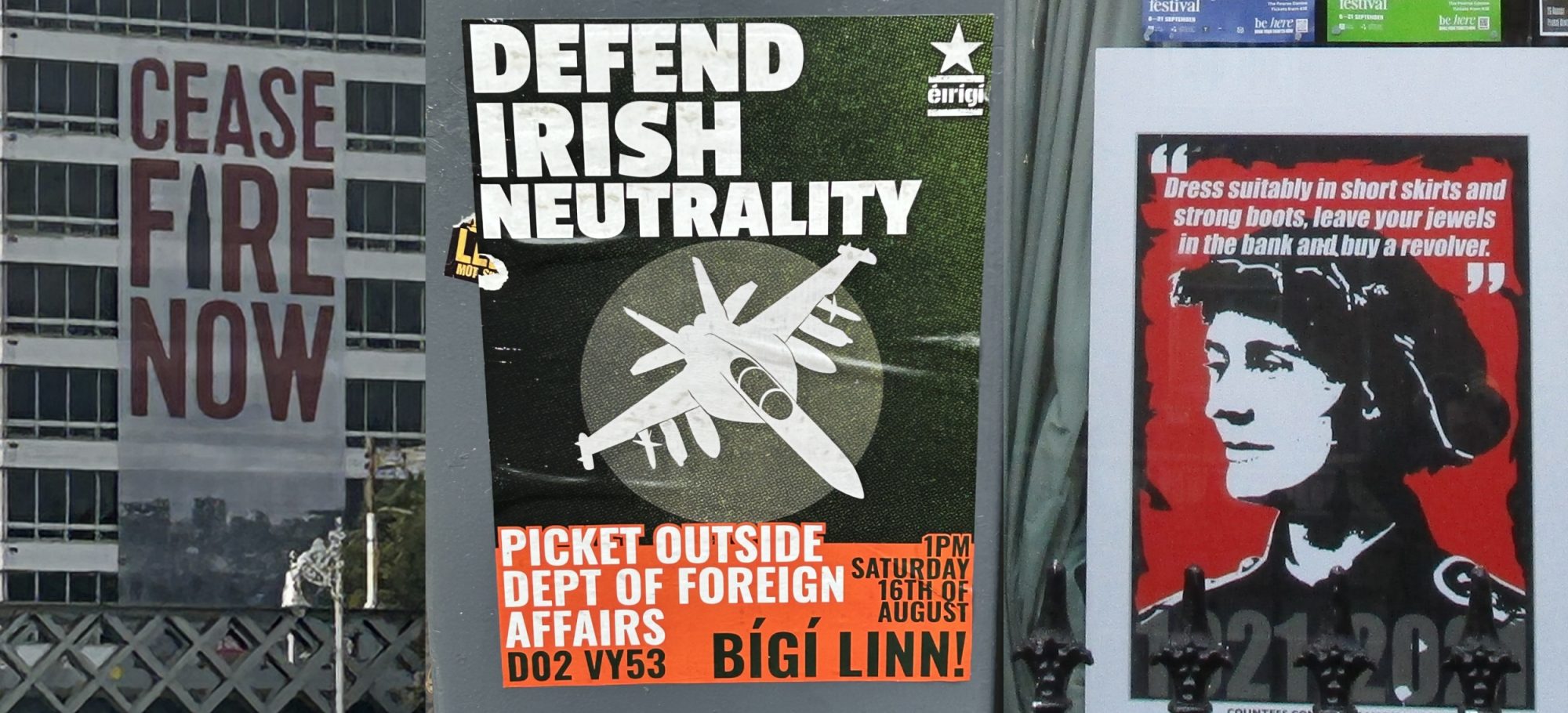
One aspect of the energy of the Irish people is the amount of political protest I saw in the streets everywhere. The wars in Ukraine and Gaza were the main topics being discussed but there was also the question of Irish neutrality, Ireland is actually not a member of NATO, along with many other issues. The willingness of the Irish government and media to allow discussion of these topics is again in stark contrast to what is currently happening in the US.

Just a few of the many politically motivated signs we saw in Dublin. A society that allows, indeed participates in such issues is a healthy society! (Credit: R. A. Lawler)
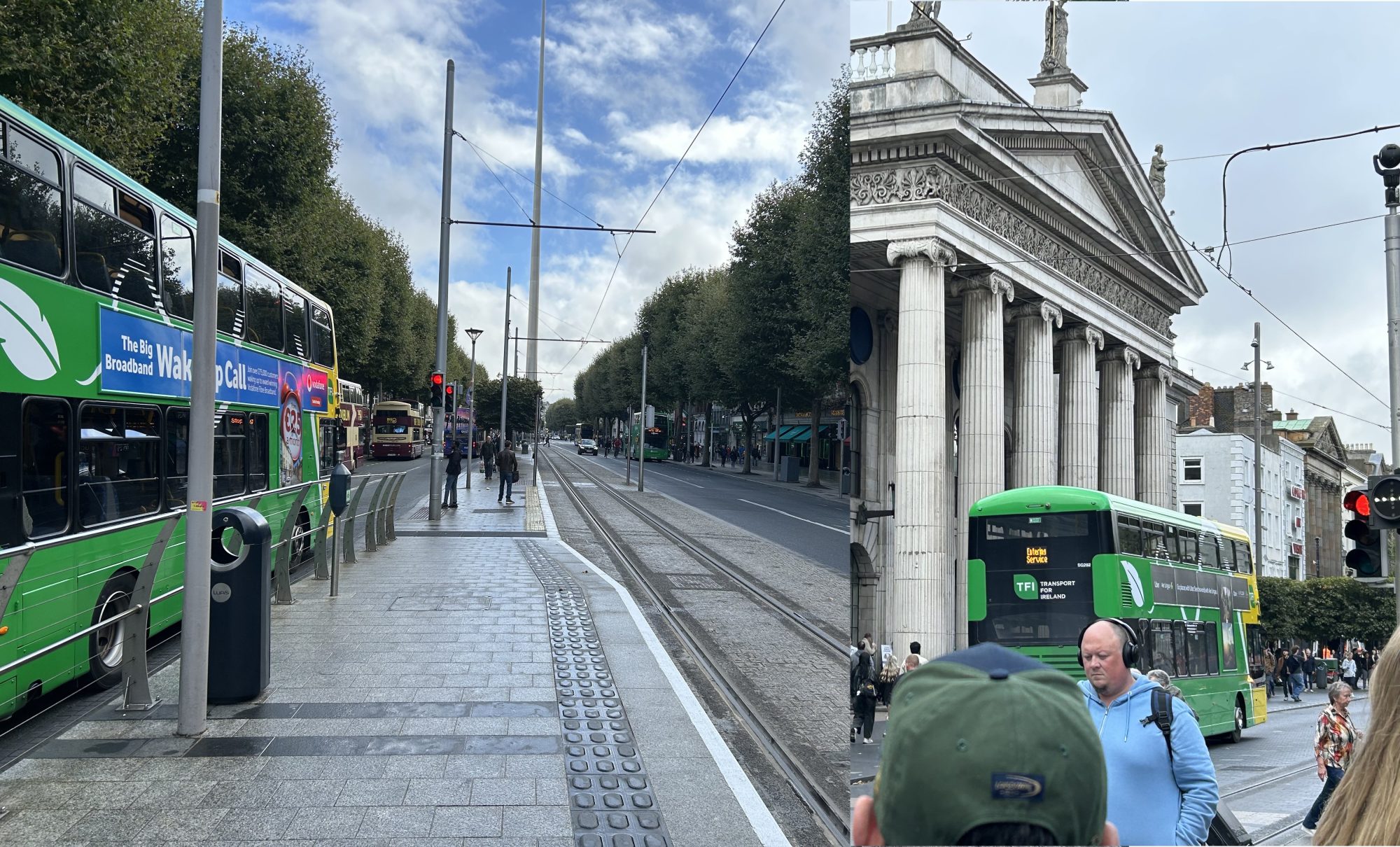
Another interesting topic in Ireland is actually the public transportation system in the capital, and indeed public services in general. Thanks to the bus and trolley lines it is possible to ride anywhere in Dublin and its suburbs in comfort and travel around the country is possible by a first rate rail service. All these methods of getting around the country are clean and modern as well as getting you to your destination quickly. Like the busses and trolleys everything in Dublin is clean and well taken care of, a tribute not only to the efficient government but to the people of Ireland who put their trash in the right receptacles and are willing to put a little effort into making their country a pleasant place to live.

On all of the main streets in Dublin there are Busses and Trolleys. Public transportation is both quick and well cared for making getting around town without a car a pleasure. (Credit: R. A. Lawler)

Before I go on let me just take a moment to discuss the Irish weather. In the fall the weather in Ireland is constantly changing, seeming to alternate between rain and sunshine what seems like several times a day. The temperature remains pretty constant around 15ºC as a high down to 10ºC for an overnight low but you can have a clear sky one moment and an hour or two later be getting a light rain, what the Irish call a ‘soft day’. We did in fact get rained on every day we were there and still got to see the Sun every day as well so “Welcome to Ireland” as the people there told us.

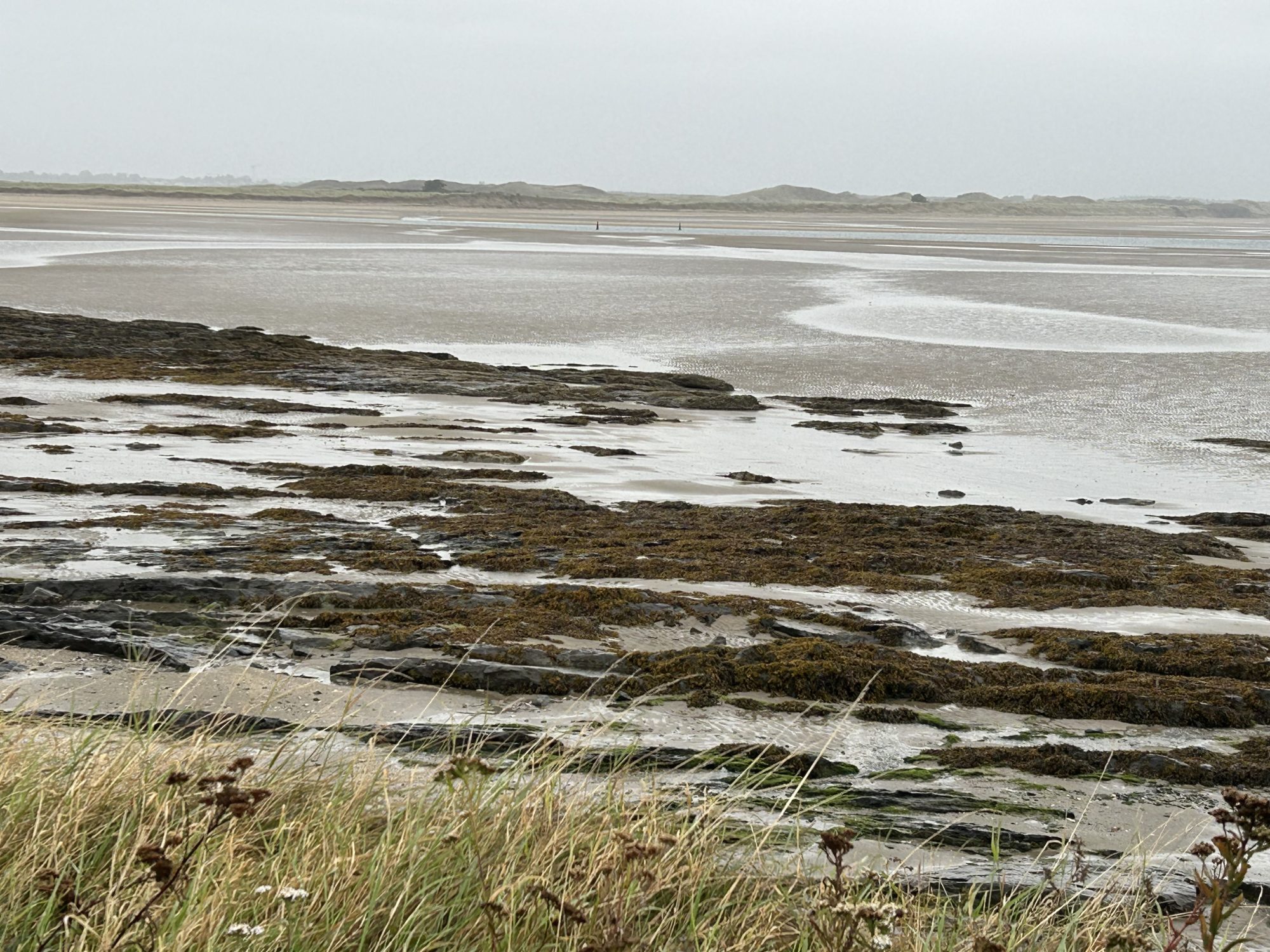
Our day on the beach at Malahide was probably the wettest but it rained every day and we had sunshine every day as well! (Credit: R. A. Lawler)

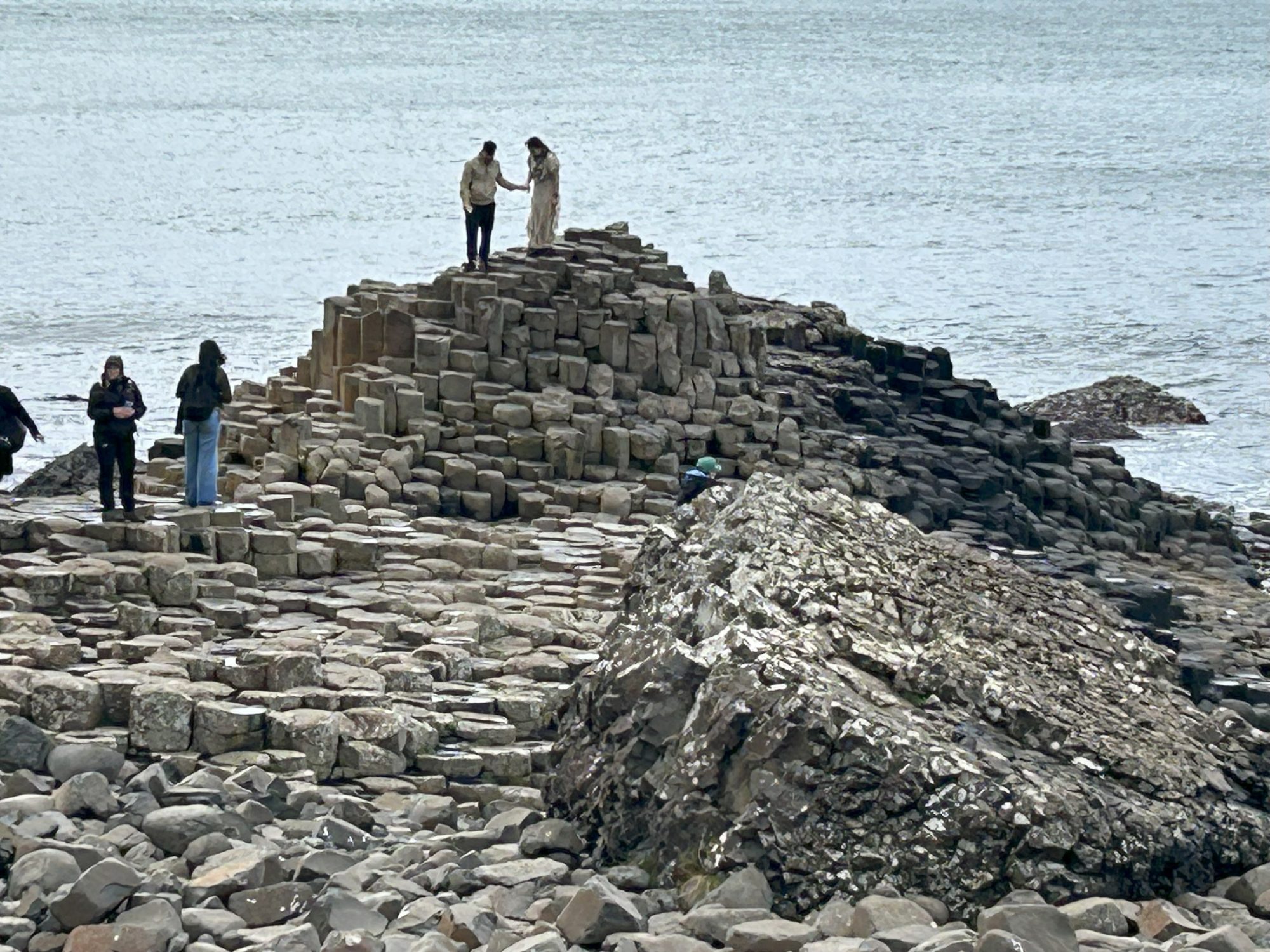
O’k, so what did I actually see while I was in Ireland. Well for the most part the trip was about the history of Ireland, both natural and human history. Geologically we visited the Giant’s Causeway, which is pretty much at the northeast tip of the island. I also got to do a little fossil hunting along the beach at a town called Malahide just north of Dublin.

The Giant’s Causeway is one of the most unusual geological formations on Earth. Formed when lava flowing from a volcano over half a billion years ago was instantly cooled by the waters of an ancient ocean the rock formed into tall hexagonal pillars! (Credit: R. A. Lawler)

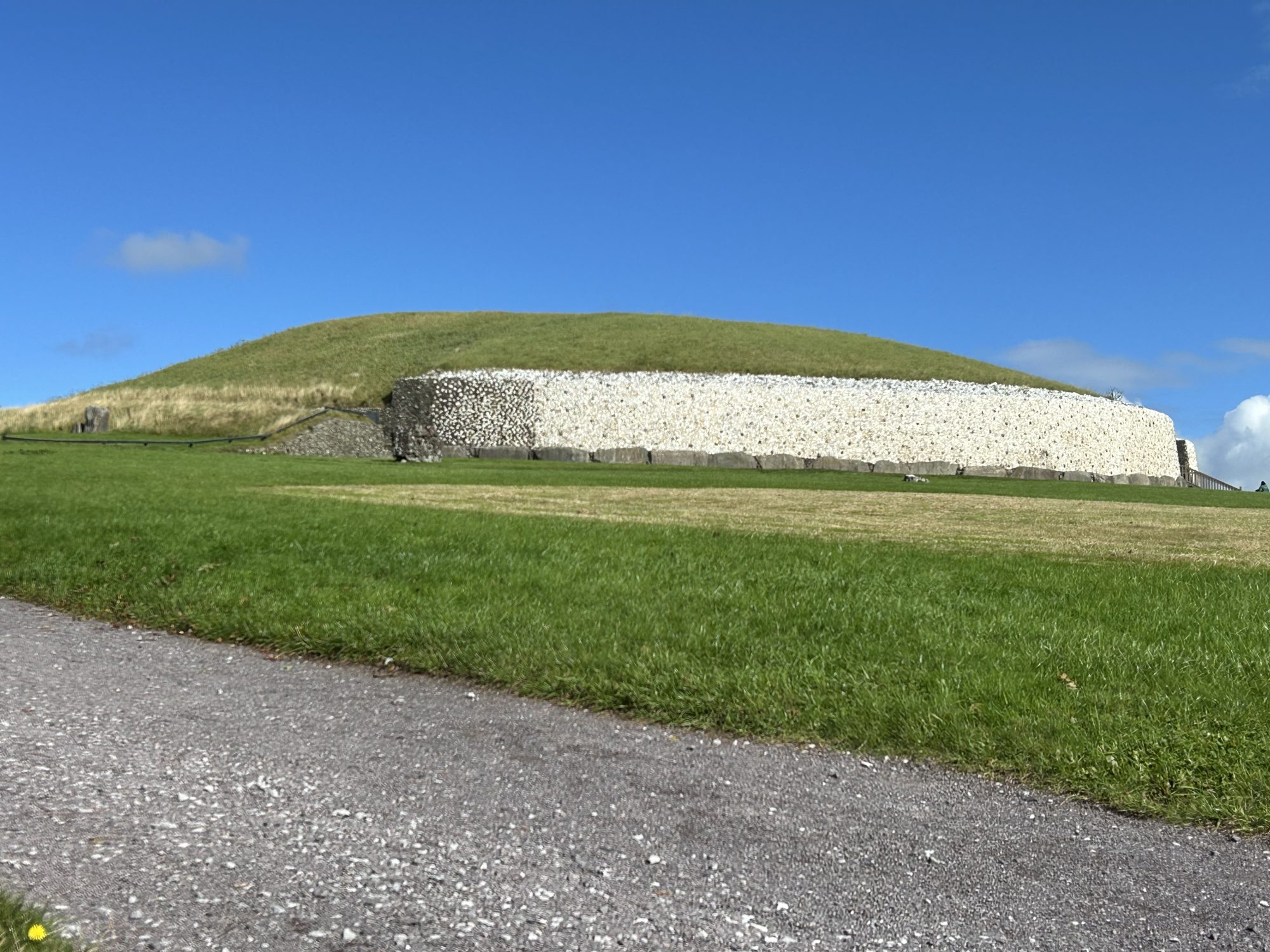
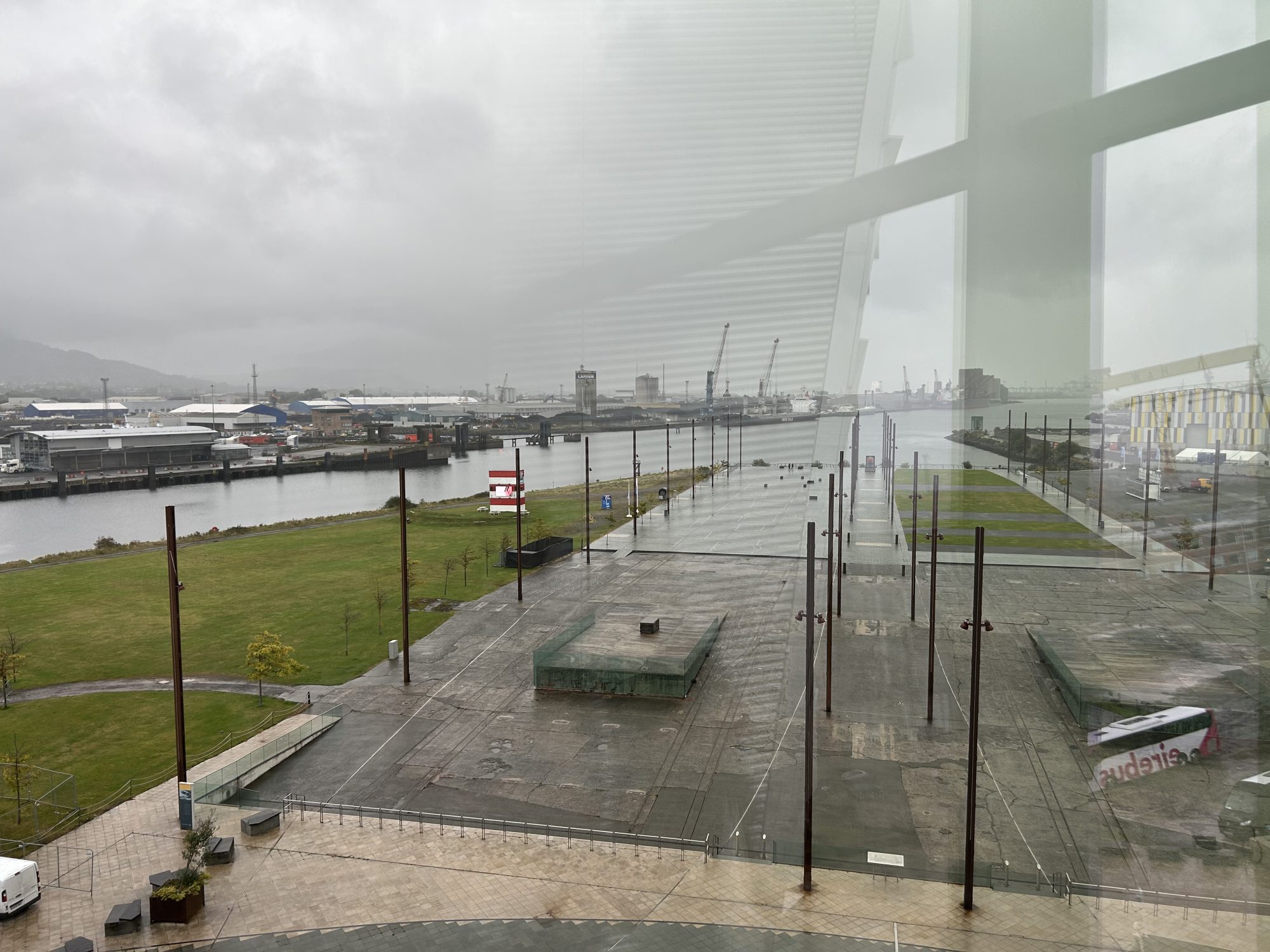
Most of the trip however dealt with human history of which Ireland has more than it’s share. Ancient history came in the form of a trip to the Neolithic site of Newgrange along with other Stone Age sites along the Boyne River. More modern history consisted of a morning spent at the Titanic museum in Belfast where the story of the most famous shipwreck in history was recounted at the very place where the Titanic was built.

The ancient mound of Newgrange served as a gravesite for the stone age people of the Boyne valley. Today it is an archaeological site open to the public. You can even go inside to the actual burial chamber in the middle of the mound. (Credit: R. A. Lawler)
Image taken from the Titanic Museum of the actual location of where the doomed ocean
liner was constructed in Belfast. (Credit: R. A. Lawler)

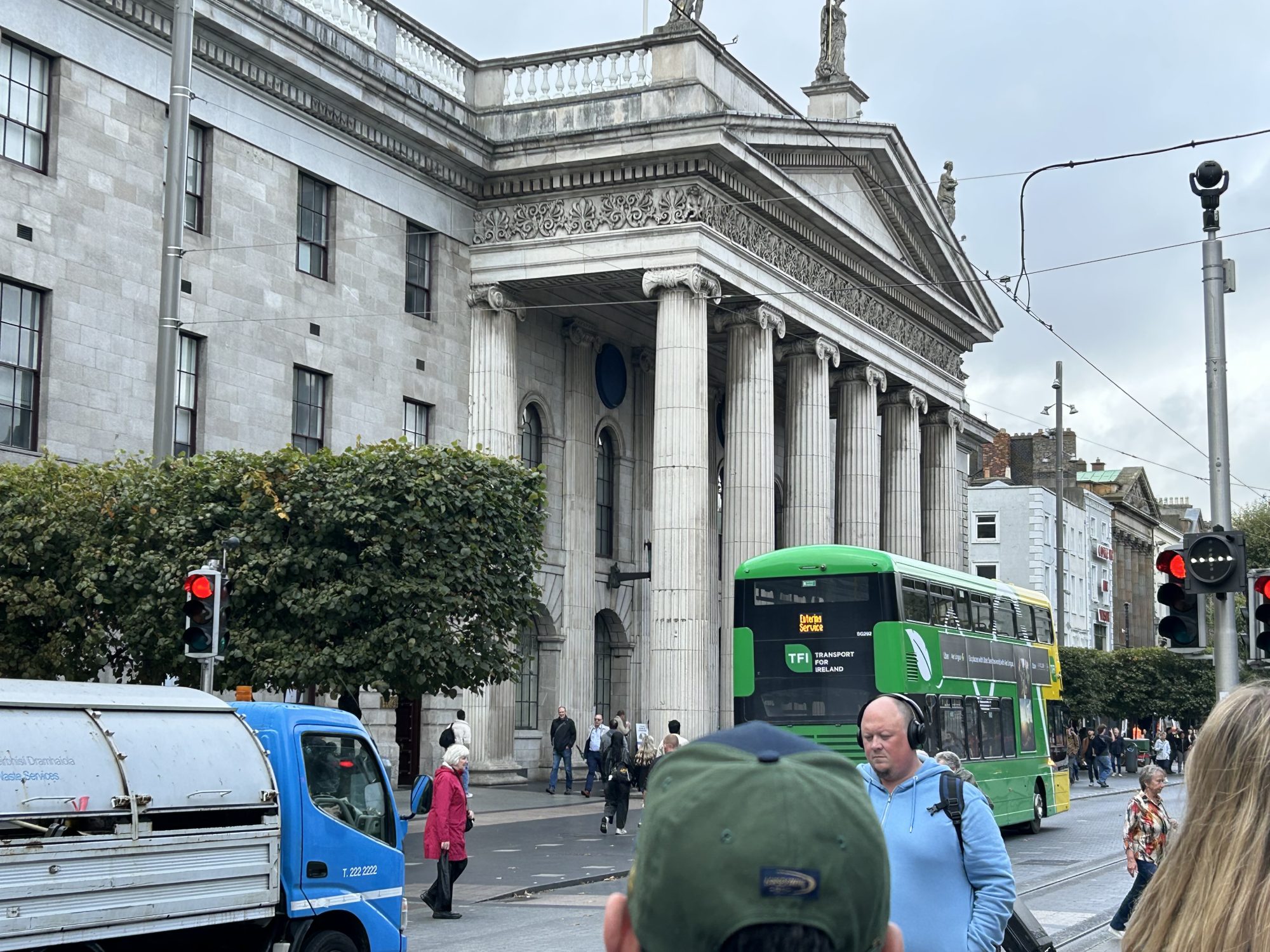
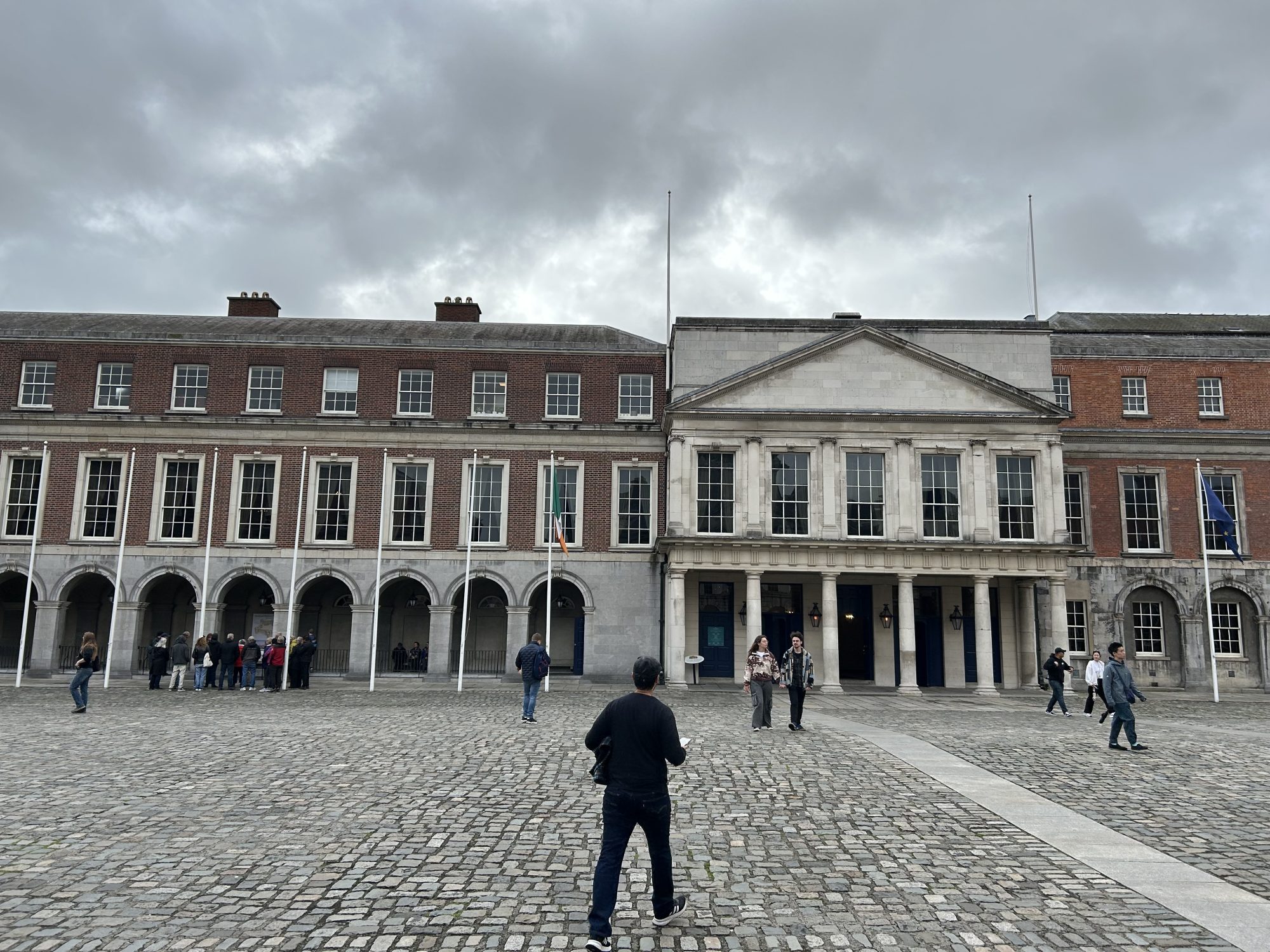
Most of the historical sites we visited however were connected with the Easter Uprising in 1916 and the rebellion that followed leading to Irish independence in 1922. We took a walking tour of many of the places in Dublin that played an important part in the Easter Uprising and visited the cemetery where many of the Irish patriots, including Michael Collins and Eamon De Valera, are buried. As a fitting final site we visited Dublin Castle, the seat of English power in Ireland for over 600 years and the place where the formal hand over of power to the Irish Free State took place in 1922.

Th General Post Office in Dublin became headquarters for the rebels during the Easter Uprising in 1916 that led to the Independance of Ireland in 1922. (Credit: R. A. Lawler)
Bullet holes in one of the Columns of the General Post Office bear witness to the fighting in 1916. (Credit: R. A. Lawler)
Dublin castle was the center of English power in Ireland for over 800 years and it is also the place where the British government officially turned power over to the Irish people in 1922. (Credit: R. A. Lawler)

But really the best part of visiting Ireland was the people, how friendly they were, how much they appeared to enjoy their lives, basically just how happy they all seemed to be. Speaking of the people of Ireland it should be noted that many of the people we met and interacted with during our stay were not ethnically ‘Irish’, certainly more than I saw 40 years ago. Over the last 20 years or so a good many immigrants have come to the Irish Republic seeking a better life for themselves, and there’s no doubt that the republic has benefited from their energy. Now there have been a few small demonstrations by anti-immigrant protestors but so far as we saw the ‘Old Irish’ and the ‘New Irish’ are working together to make a better Ireland.

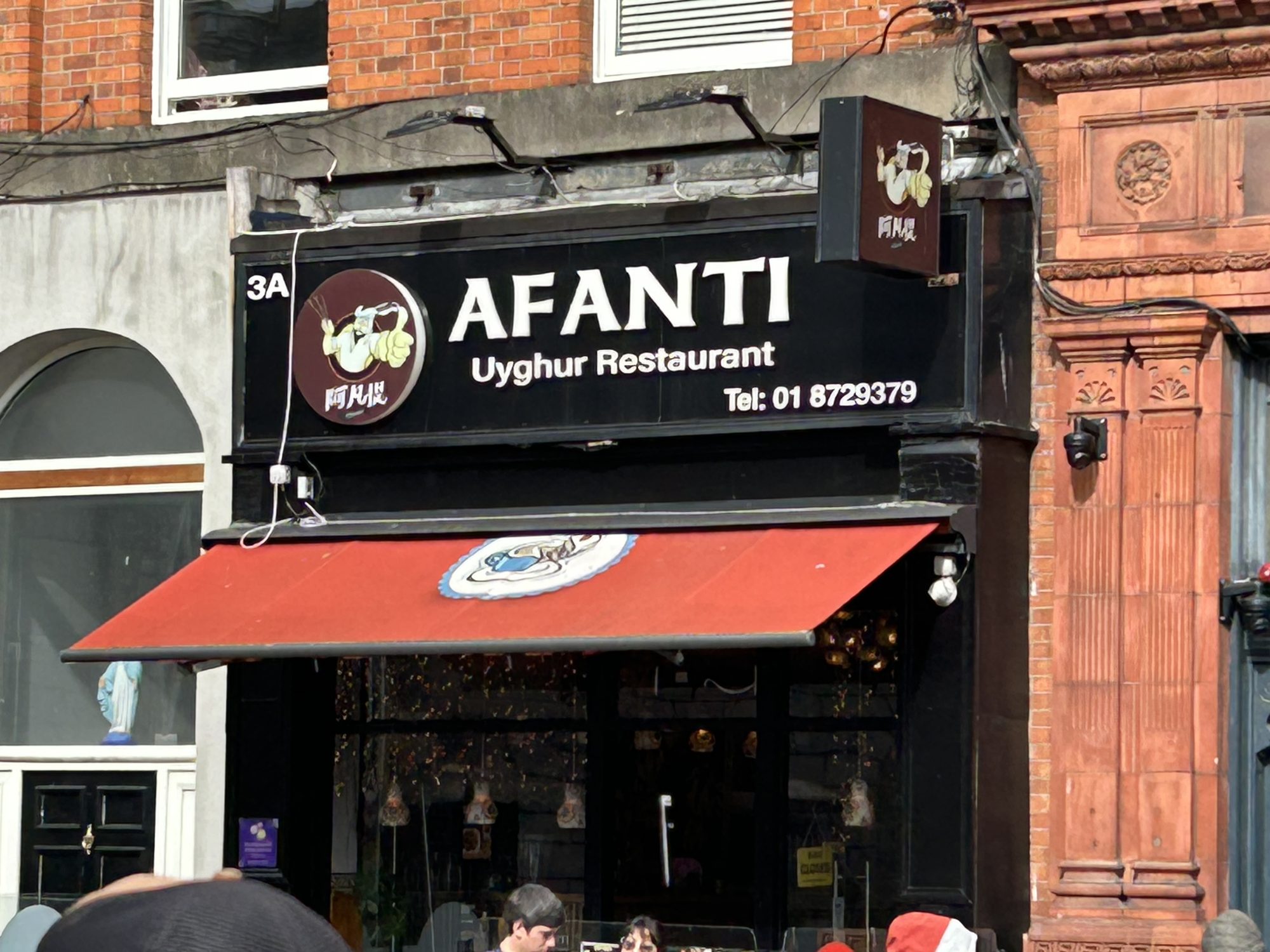
A Uyghur restaurant in Dublin. Yes, there were many ethnic restaurants throughout the city giving Dublin a very international flavour. (Credit: R. A. Lawler)
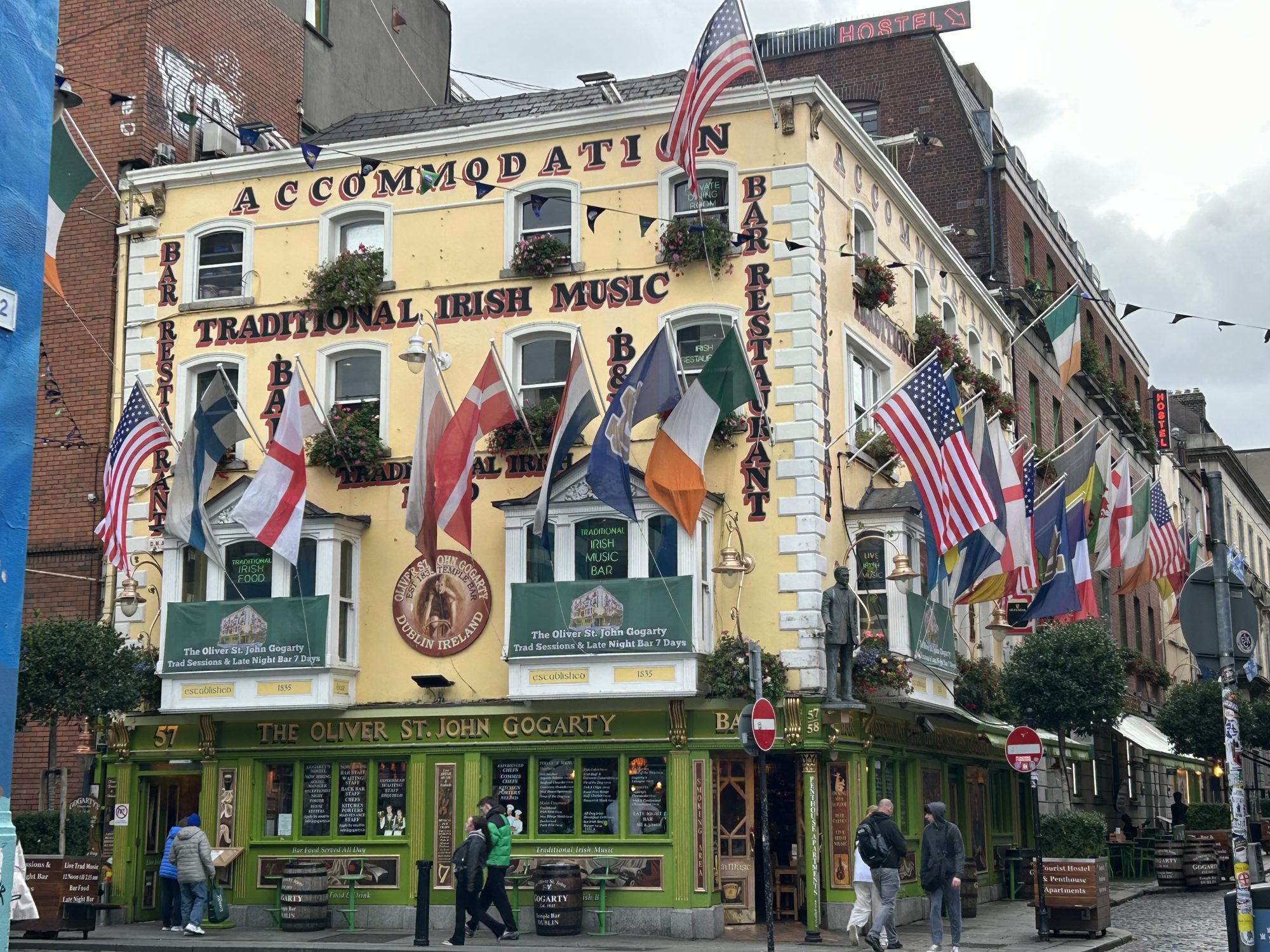
At the same time there were dozens of good olde Irish pubs to be enjoyed. Again, Dublin has a wonderful mixture of old and new. (Credit: R. A. Lawler)

Trump, in his speech this week before the UN General Assembly told the world that if other countries didn’t follow his policies, especially about immigration, they were “all going to hell”. Living in the US and having just visited a part of the EU all I can say is that the EU may not have as many billionaires as the US does, but your people are a lot happier and looking forward to the future.

An insult to the US and the world even a little country like Ireland has managed to find better leaders than the US. (Credit: Atlantic Council)

I only wish I could say the same about my country.