The Effects of Climate Change on the Creatures with whom we share this World. 

As I write this post hurricane Melissa has intensified from a category 1 to a category 5 in just about 24 hours, a rapid growth that had never been seen in any storm before the advent of global warming. Right now as I write this the storm is taking at direct aim at the island nation of Jamaica and all of the news programs are discussing the effect Melissa could have on the lives of people in its path.
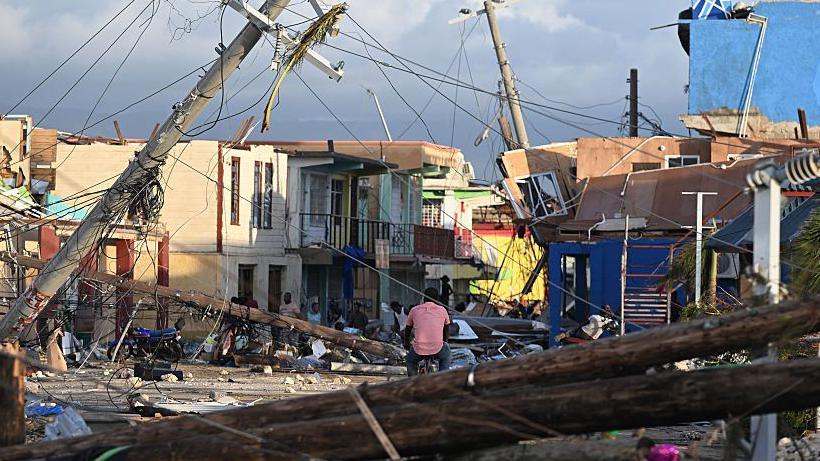
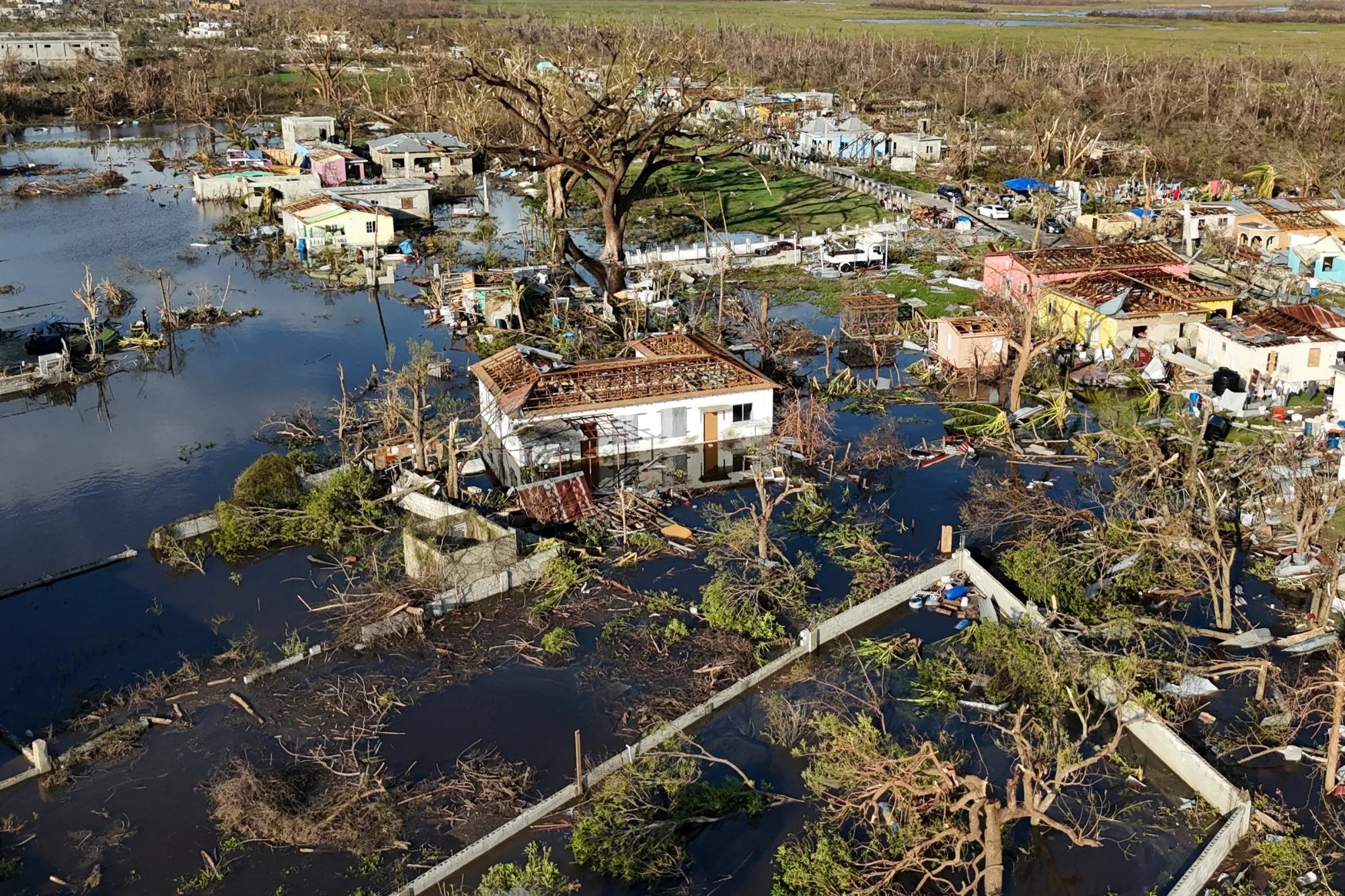
Hurricane Melissa did a tremendous amount of damage to Jamaca. Are we simply going to adapt to these extreme weather events, like the animals in this blog have to, or are we going to do something about climate change? (Credit: BBC)

The harm that climate change is doing to our species is real and growing but what about the effects that it is having on the other creatures that live here on planet Earth? In this post I’ll be discussing the way that three different species of animal are adapting to global warming and it’s not always bad news, at least not for them. I’ll start with the most northerly species and work my way south.
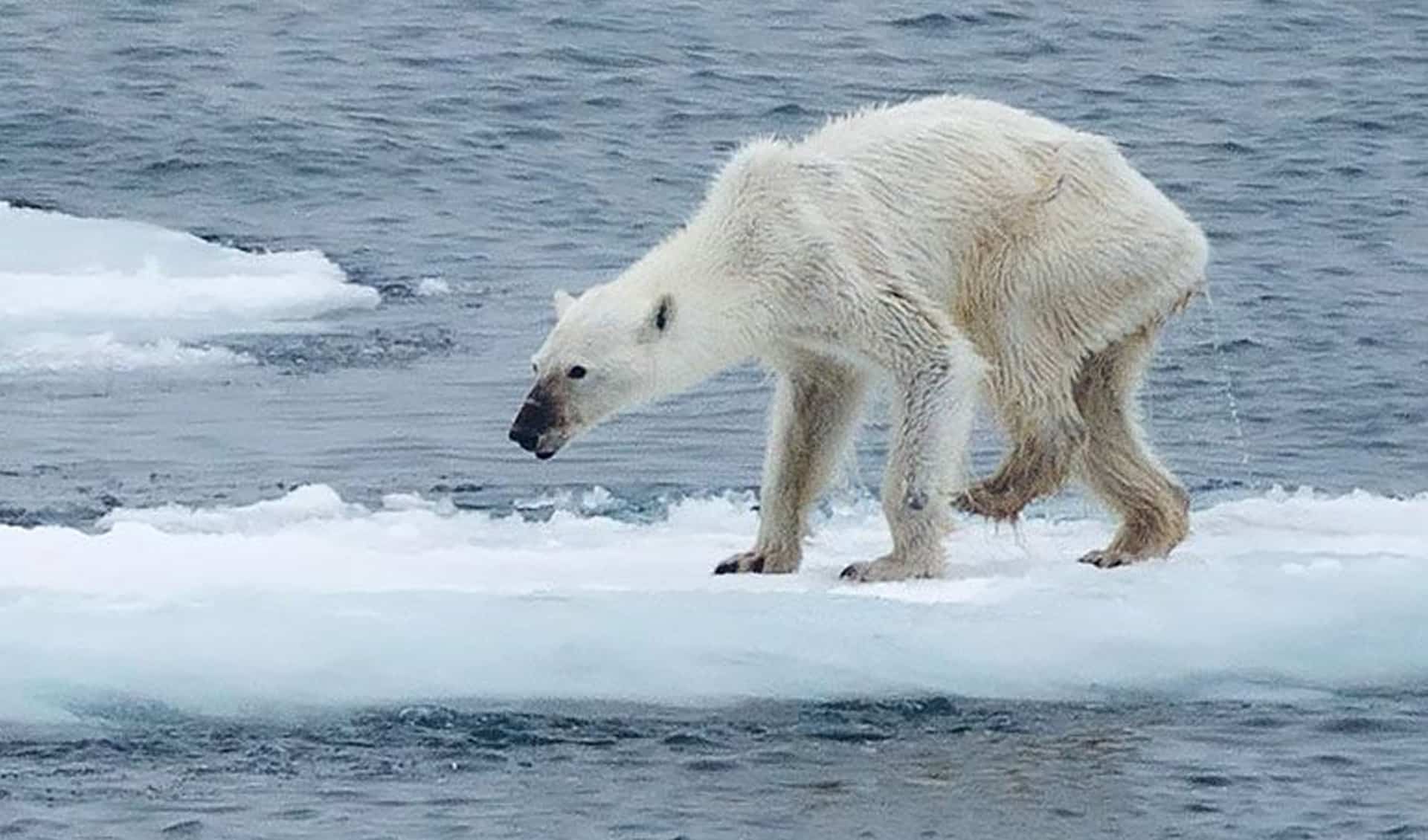
Perhaps the best known species being driven to the edge by climate change is the Polar Bear. As more and more sea ice melts the hunting grounds for the polar bear are disappearing and maybe with it, the bear itself! (Credit: Earth.org)

The island of Iceland is one of the very few places on Earth that are considered to be completely free of the insect pests mosquitoes, the other being Antarctica. Obviously both places are very cold but Iceland is also rather isolated and because of the nearby Gulf Stream, Iceland can have several periods of Ice-Thaw every year. That makes it difficult for any species of insect to both get to the island and to survive there for very long. Now, mosquitoes have been detected several times at the airport for Iceland’s capitol Reykjavik, stowaways on jets coming from other countries. Those invaders have never survived for long however, until now.
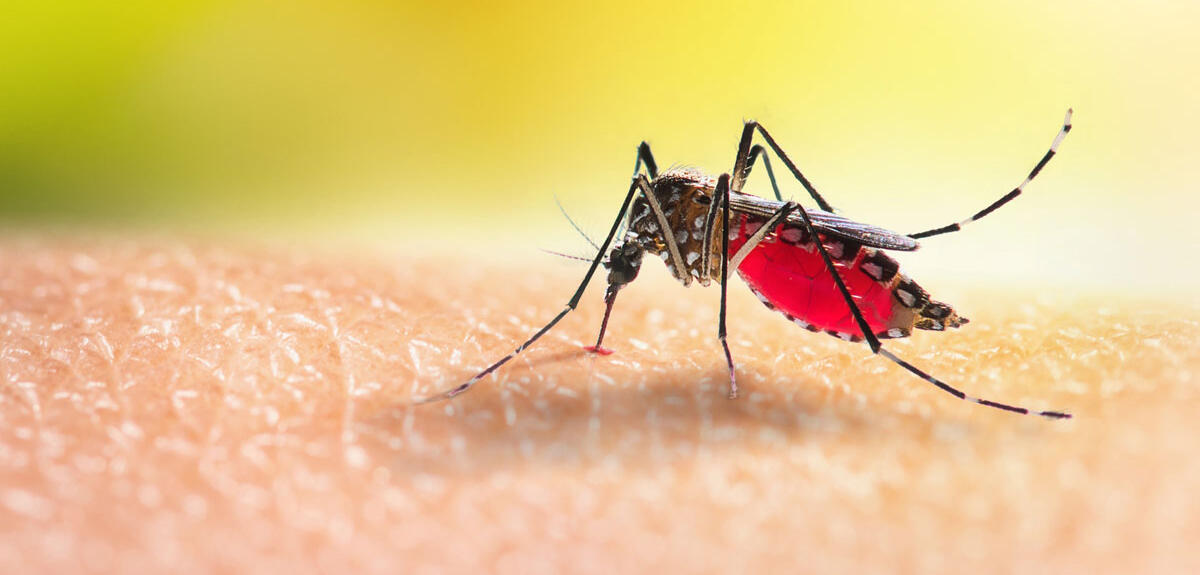
It’s thought that diseases spread by mosquitoes have killed as much as half of all the human beings who have ever died! (Credit: CRNS News)

Amateur naturalist Bjorn Hjaltason, who lives in Kjós, a glacial valley to the southwest of the capital, commonly hangs wine soaked ropes outside of his home in order to capture and study Iceland’s moths. Just a few weeks ago Mr. Hjaltason noticed three flies on his ropes of a type that he had never seen before. Mr. Hjaltason sent his finds to the Iceland Institute of Natural History where the flies were identified as two females and one male of the mosquito species Culiseta annulata, a common pest in Europe and one of the most cold-resistant species of mosquito.
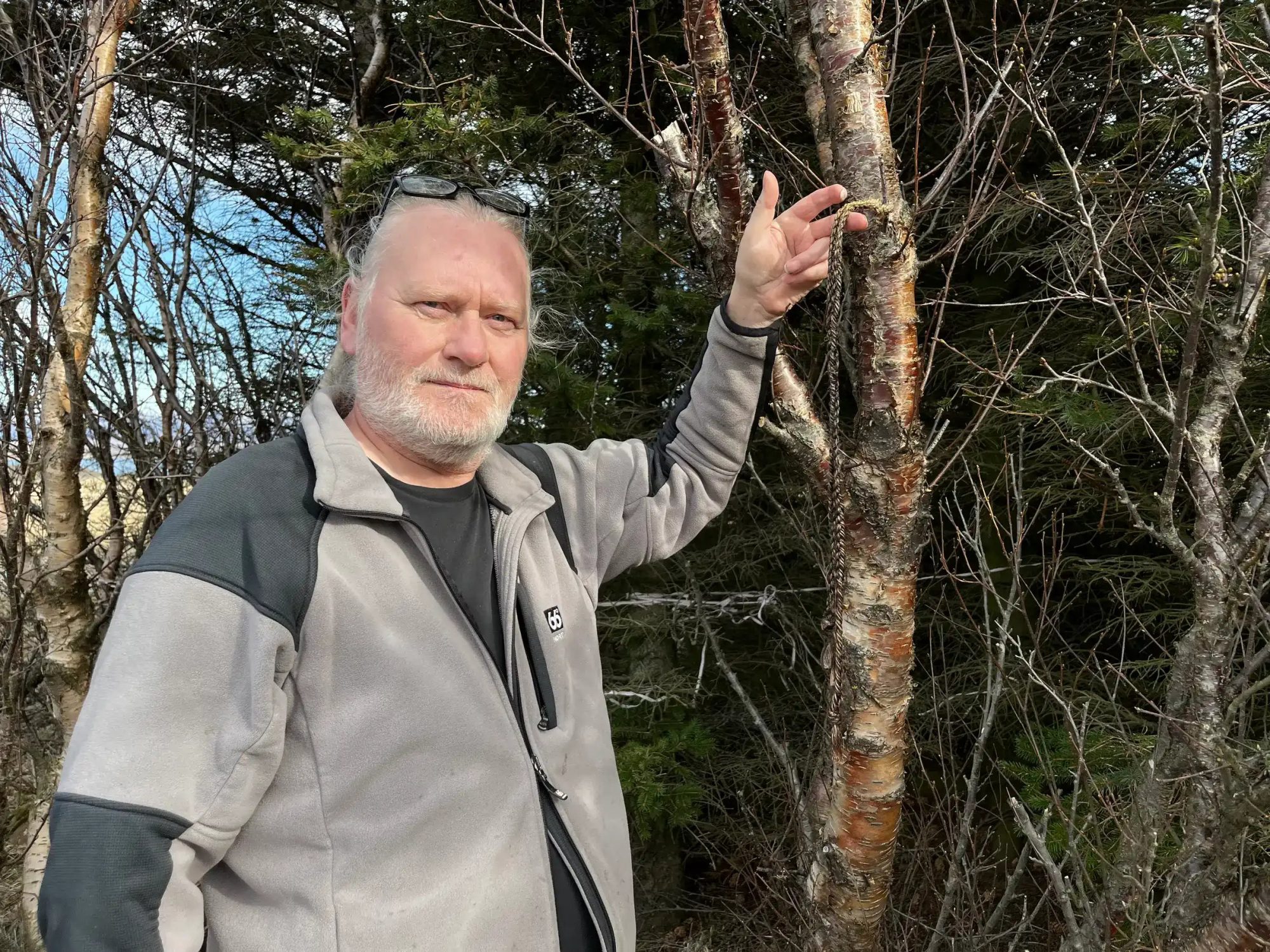
Bjorn Hjaltason with his wine soaked traps for catching insects in Iceland. An amateur naturalist Bjorn recently discovered the first evidence for mosquitoes living in Iceland, another development caused by climate change. (Credit: ZME Science)

There’s no doubt as to why mosquitoes have suddenly been able to survive in Iceland, over the last twenty years the average temperature on the island has increased by more than one degree Celsius, that’s one degree over the entire year for the entire island. Just this past May Iceland recorded its highest ever temperature, 26.6ºC and the temperature remained above 20 degrees for ten consecutive days, another record. Just more evidence that, as the world’s temperatures warm species that we think of as tropical or temperate are moving northward.
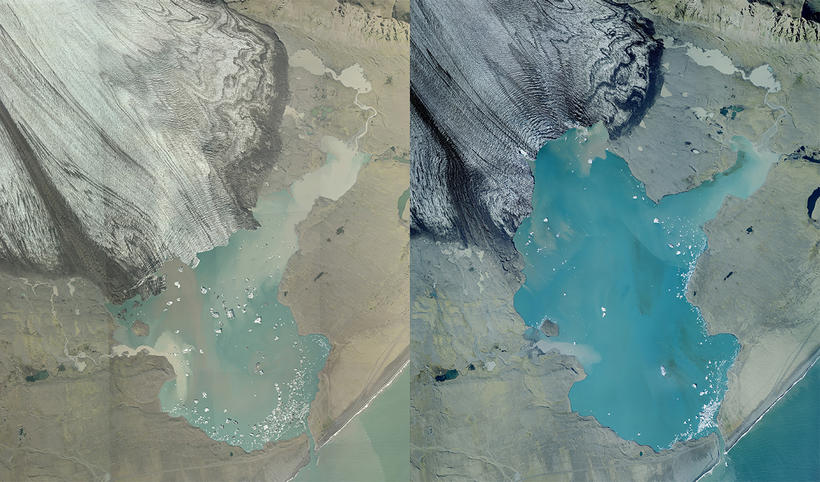
Known as the land of fire and ice, Iceland is rapidly losing its glaciers thanks to global warming. The picture on the left is from 2003 while the one on the right is from 2013, the change is significant in only ten years. (Credit: Iceland Monitor -mbl.is)

The cold waters around Great Britain have been fished for thousands of years. A large part of the food eaten by the citizens of the UK today still consists of plaice, turbot and Dover sole harvested from the English Channel and the North Sea. Recently however fisherman along the English coast have been bringing up an unexpected catch, hundreds or thousands of octopodes, the correct plural for octopus.
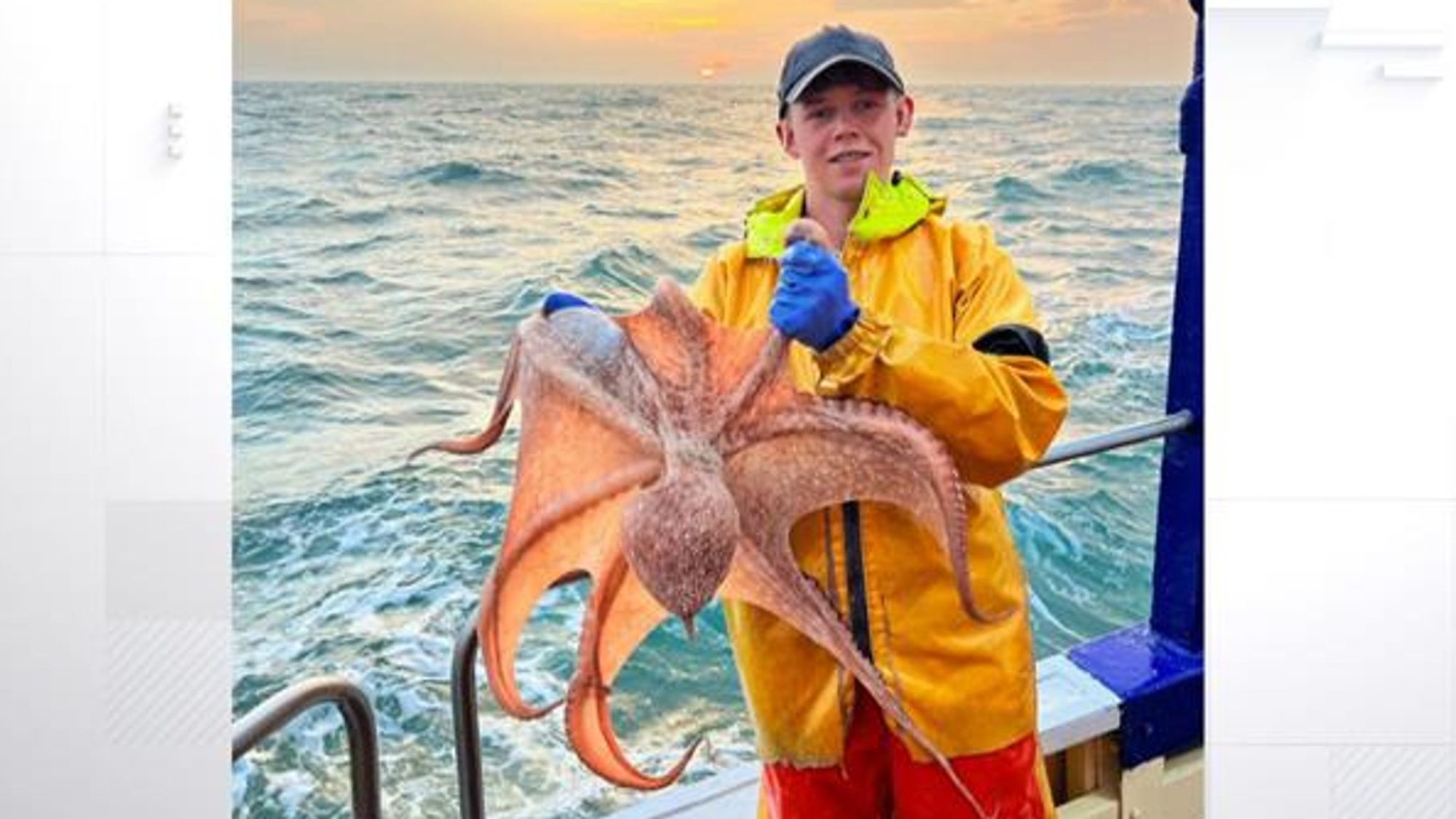
Fisherman in England are profiting from the octopodes who are moving into English waters. Those who make their living off of crabs and lobsters are not at all happy about the new arrivals however. (Credit: SKY News)

The octopodes are members of a species normally found in the warmer waters of the Mediterranean but once again thanks to global warming the temperature of the waters of the channel have risen and so the cephalopods are moving north. The fishermen along England’s south coast are thrilled because octopus sells for around seven pounds a kilo, a good deal more than their usual catch. Lobstermen and crabbers are not so thrilled however because the octopus feed on their catch, and octopodes are both clever and voracious eaters.
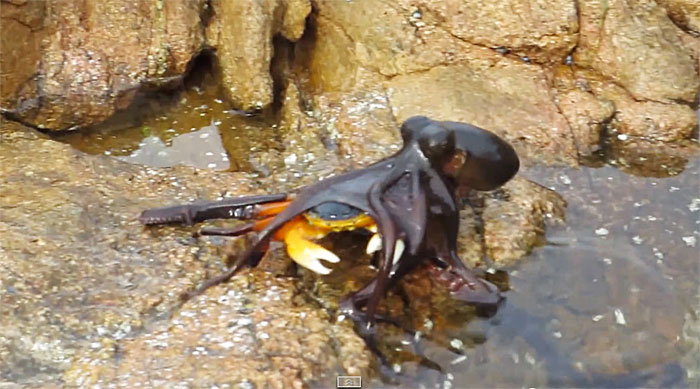
Even out of water an octopus is very skilled at hunting crabs and lobsters. No wonder the lobstermen in England are not thrilled about their increasing numbers. (Credit: California Diver Magazine)

Another such example is happening in the waters of Chesapeake Bay where Stone Crabs have been captured for the first time ever. Native to the warmer waters of Florida and the Gulf of Mexico Stone Crabs have never before been observed north of the Carolinas. Four males of the species were discovered near Norfolk, Virginia over this past summer however.
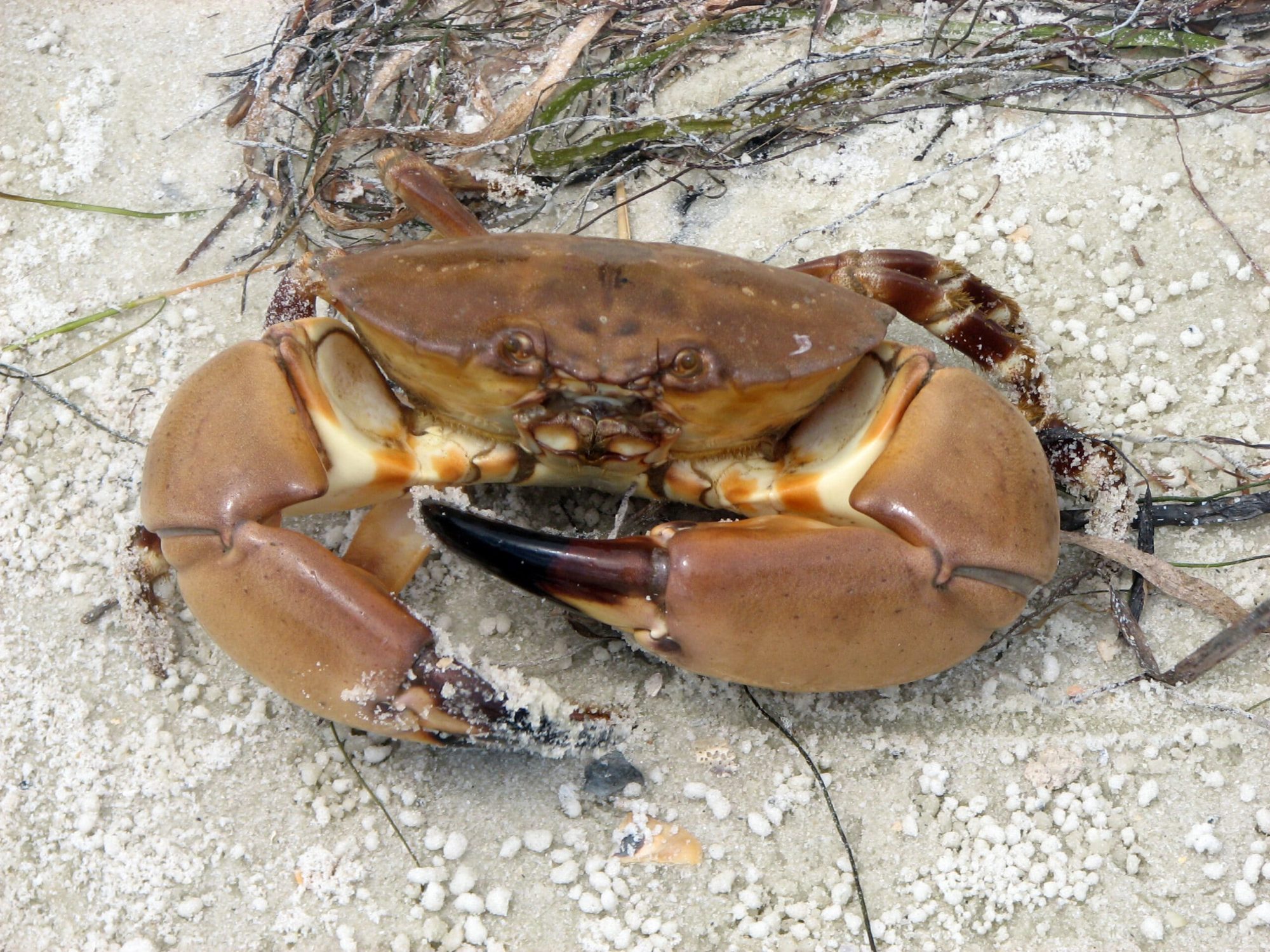
The big claws of Stone crabs are delicious but the rest of the animal not so much. So sometimes crabbers in gulf states just break off the claws and throw the crabs back into the water. If, that’s a big if, the crab survives it will regrow its claws. (Credit: Port Royal Sound Foundation)

Labouratory tests have shown that Stone Crabs do not survive in waters with a temperature below 5ºC and do not survive well below 10ºC. The waters of Chesapeake Bay have also been warming by more than 1ºC since the 1980s and that appears to be enough to allow Stone crabs to extend their habitat northward into the Bay.
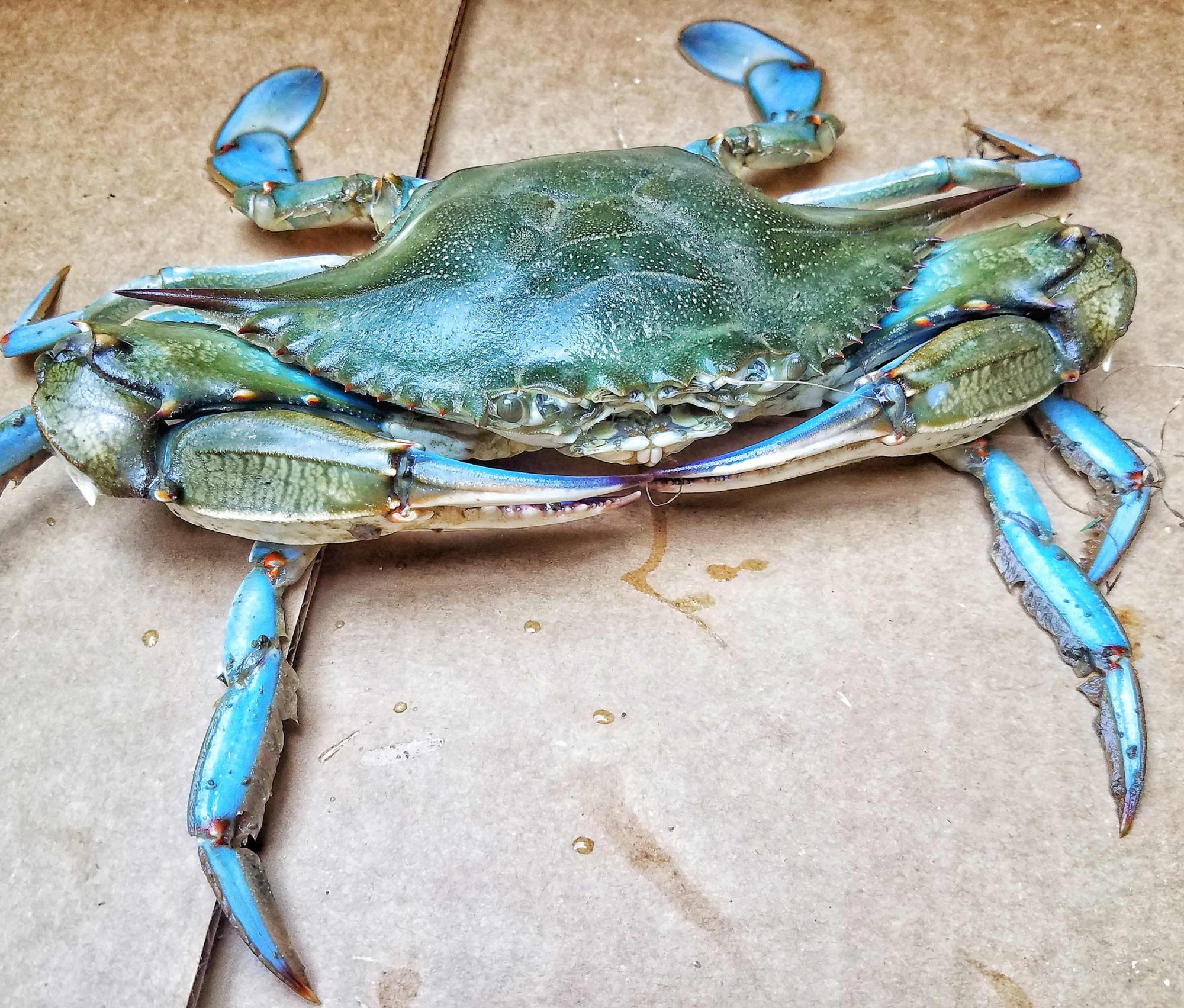
The Chesapeake Bay however is famous for its Blue Crabs, of which you can eat almost the whole thing, which I have done many times! (Credit: Sandaway Suites and Beach)

Now this could be a small silver lining in the dark cloud of climate change because Stone Crab claws are delicious and the species will not compete with the Chesapeake’s famous Blue Crabs. So in the future the bay’s crabbers may find themselves with a new source of income.

In nature competition is the rule whether it be within a species or between species. Stone crabs and Blue Crabs should not compete however. (Credit: CK-12)

Finally my last story about how climate change is causing species to move northward is about a single individual, a single animal who would not exist except for climate change.

Blue jays are one of the most common songbirds in the eastern US and Canada. Not only are blue jays colourful but they are also fearless, often getting into fights with other birds many times their size, sometimes even with human beings. At the same time Mexico and Central America have their own species of jay, the closely related green jay.
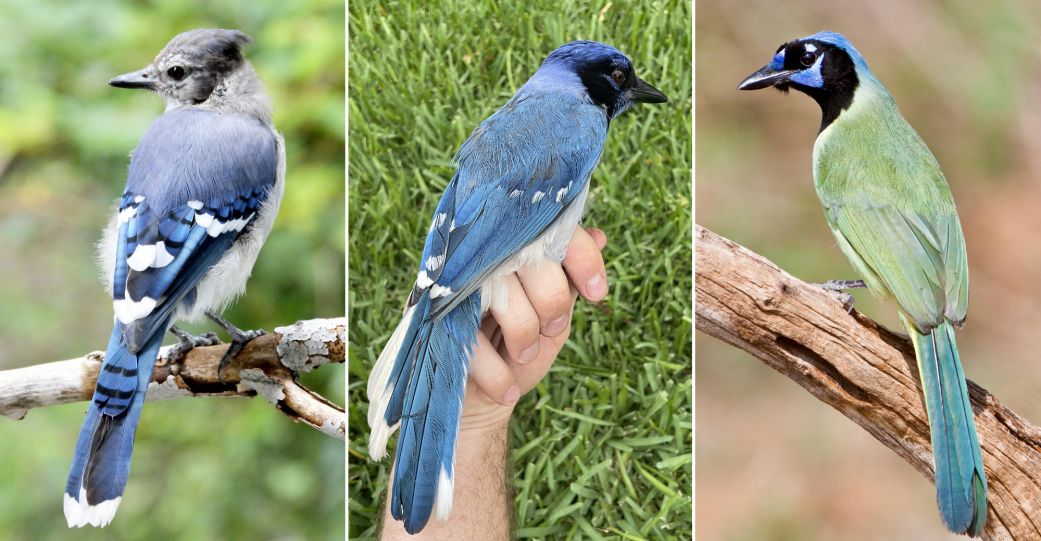
The familiar Blur Jay is on the left while the Mexican Green Jay is on the right. In the middle is a Hybrid Jay with a Blue father and a Green Mother. (Credit: CNN)

Now green jays are a tropical species who have rarely been seen north of the Rio Grande while blue jays are a temperate species rarely seen west of Houston, Texas. Thanks to climate change however the two species, separated by an estimated seven million years of evolution, are now intermingling in southern Texas. And when two closely related species share the same habitat the result can be, a hybrid.
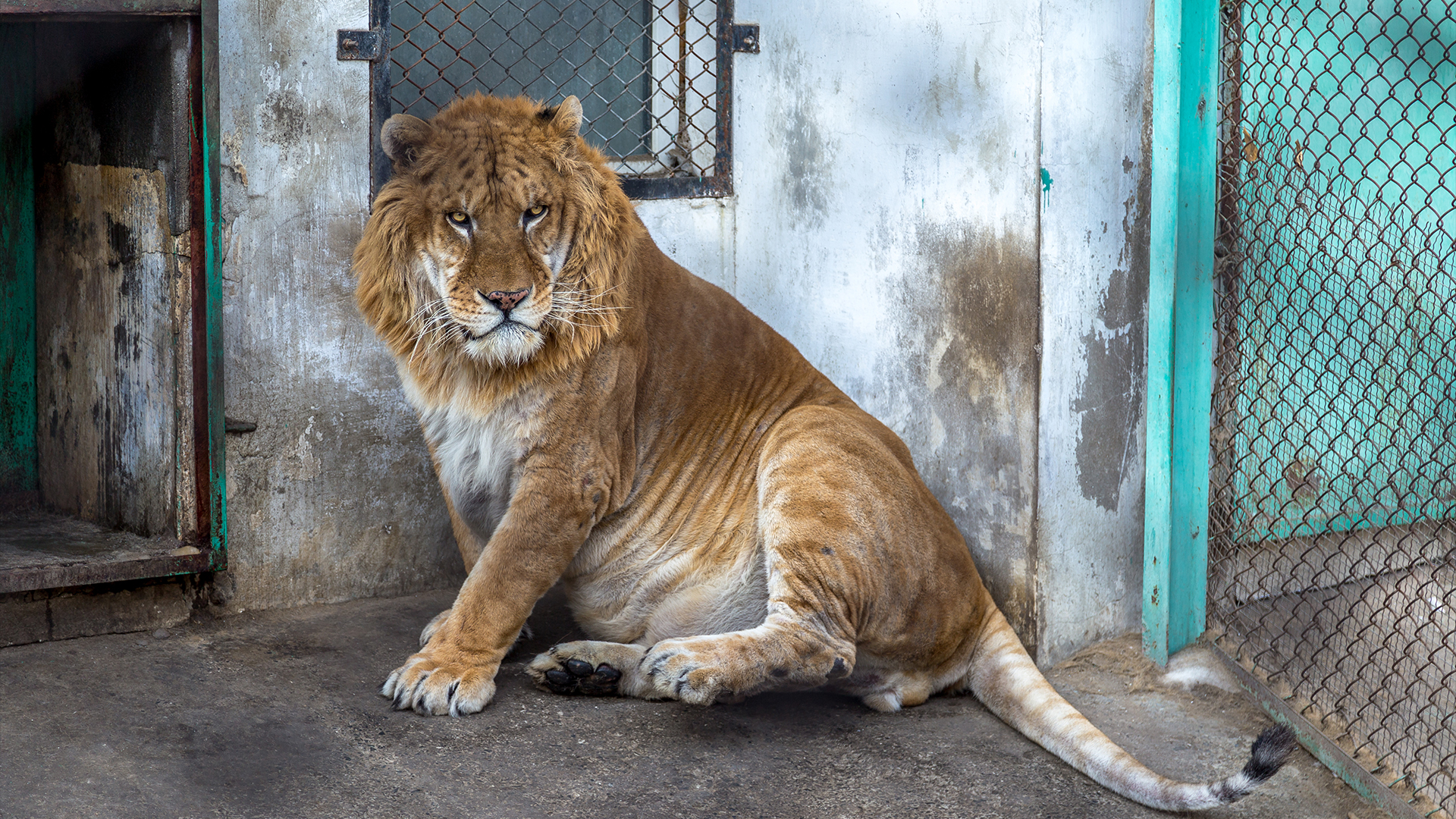
Yes, Lions and Tiger can interbreed as can many other closely related species, a mule is the best known example. (Credit: Live Science)

A birder living in a suburb of San Antonio recently posted a photograph of an odd looking bird on the social media app eBird.  The photo was noticed by Brian Stokes, a Ph.D. candidate at the University of Texas at Austin. Stokes contacted the woman and arranged to come to her home to observe, and hopefully catch the animal. Using a mist net, a common technique ornithologists use to capture small birds unharmed, Stokes managed to capture the bird and get a blood sample before banding and releasing it.

Naturalists studying birds species will often catch their specimens in mist nets. The birds are rarely harmed and are usually released after being examined and banded. (Credit: Kadoorie Farm and Botanic Garden)

DNA testing of the blood sample showed that the bird was a hybrid of a male blue jay and a female green jay, an animal that would not have existed without climate change. How many more such hybrids will be born because of global warming remains to be seen.
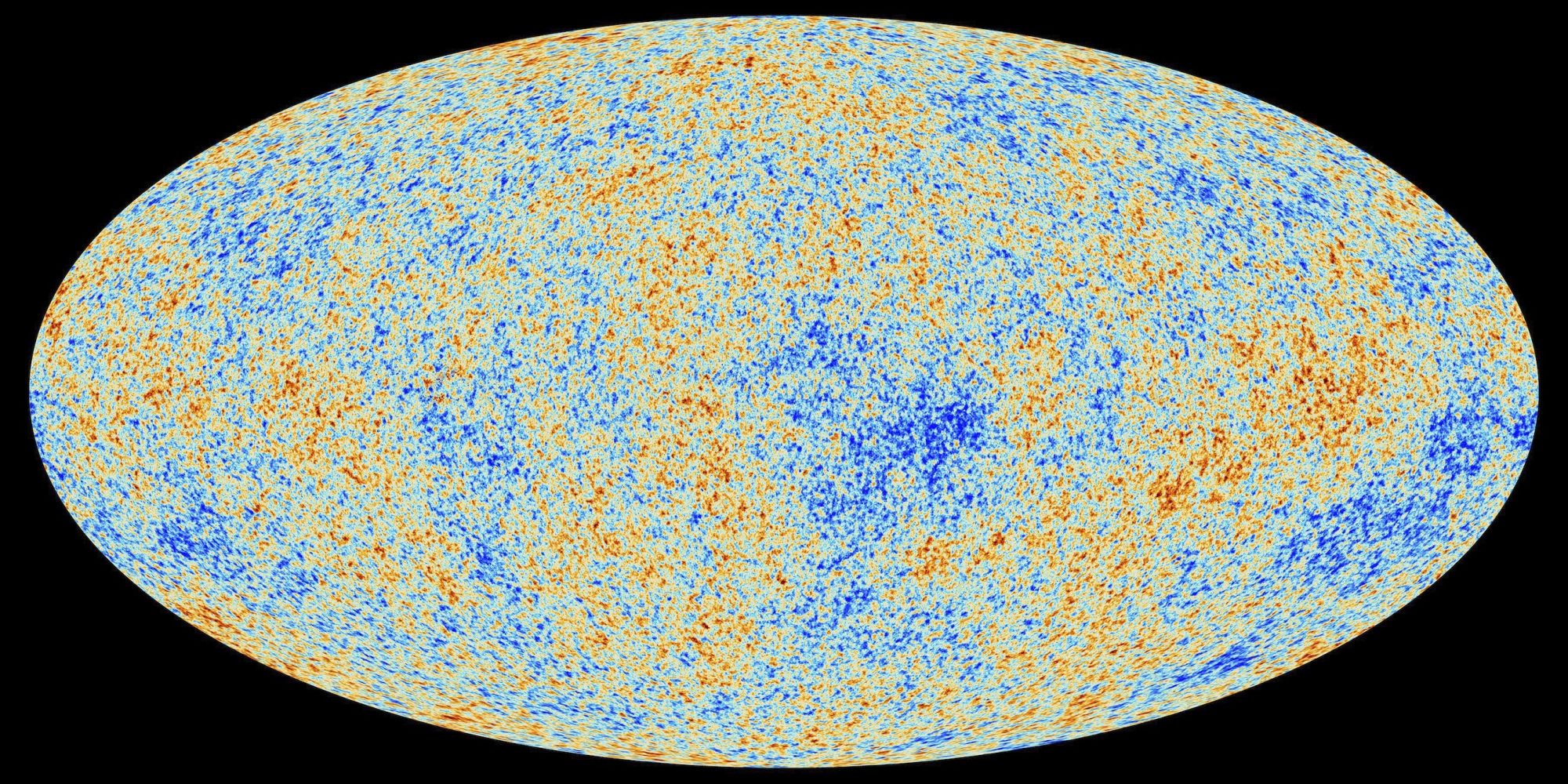
A Recent Paper on Cosmology, the study of the Universe as a whole, has asserted that the Universe has passed an Inflection Point where Dark Energy has become weaker than gravity and the Universe is beginning to Decelerate.

I’ll begin today’s post by reviewing out current model of the Universe. About 13.5 Billion years ago our Universe underwent a ‘Big Bang’, an explosion of unimaginable energy and pressure. This explosion caused the entire Universe to expand rapidly as time passed but also caused it to cool until atoms could form. We can still see the ‘fossil’ evidence of this time in the Cosmic Microwave Background (CMB).

The Cosmic Microwave Background (CMB) as seen by the Planck Satellite. This is the ‘fossil’ light left over from about 370,000 years after the Big Bang. (Credit: Wikipedia)

After about 500 million or so years gravity caused the gasses of the early Universe to begin to clump together, forming the first stars and galaxies. Gravity also should have made the general expansion of the Universe slow down but something that we call ‘Dark Energy’ is actually making the expansion accelerate. Discovered in the 1990s we still know very little about dark energy even after almost 30 years of intense study.

Back in the 1990s astronomers all thought that the ultimate fate of our Universe would be one of the three scenarios on the left. Either gravity would cause the expansion to stop and then begin a contraction phase leading to a ‘Big Crunch’, far left. Or gravity was too weak to stop the expansion and the Universe would expand forever, third from left. The second from the left is a scenario where gravity and the expansion are exactly balanced. When astronomers tried to decide which scenario was correct they found that the expansion was actually increasing, far right. We still have little knowledge of what is causing the acceleration, so we call it ‘Dark Energy’. (Credit: LSST.org)

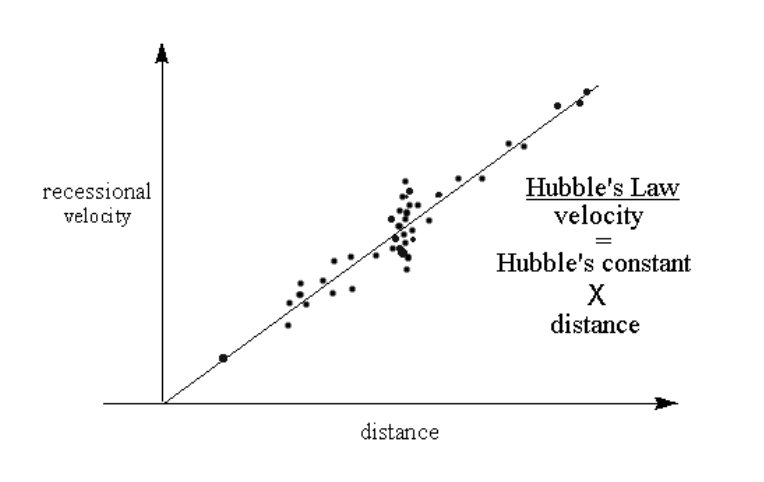
I’m going to have to get a little technical here about how astronomers actually measure whether the Universe’s expansion is decelerating or accelerating. The whole idea of the Big Bang began when Cark Hubble first found that, except for a few really close galaxies, the light from all of the galaxies was red shifted, meaning that they were moving away from our galaxy. At the same time he discovered that the further away a galaxy was the faster it was receding. Hubble expressed this as a simple equation.

V=HoD

Some of Hubble’s actual data for his ‘Law’ about the expansion of the Universe. (Credit: Curious STEM)

Here D is the distance to a galaxy, V is the velocity that galaxy is moving away from us and Ho is a constant called Hubble’s constant. Now astronomers realized that if gravity were slowing the expansion of the Universe, then Ho would not be a constant but rather be getting smaller as the Universe aged.

Before Newton’s law of gravity people thought that gravity only affected things here on Earth, that the heavens obeyed different rules. It was Newton who realized that gravity is everywhere and affects everything, even the expansion of the Universe. (Credit: BBC)

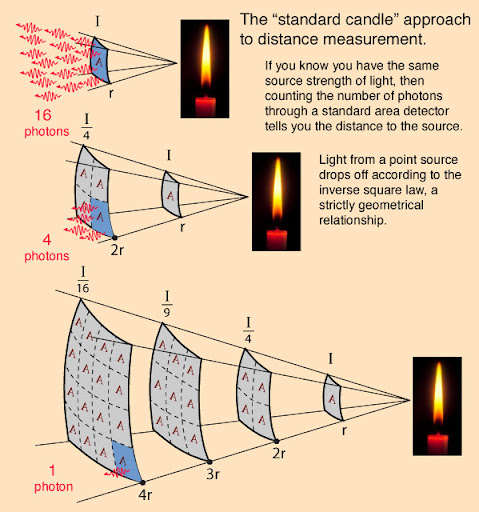
It wasn’t until the 1990s that astronomers developed a technique to measure any change in Ho. Astrophysicists studying Type 1a supernova calculated that all such supernova should explode with the same amount of energy, should shine with the same absolute brightness. So if a Type 1a supernova appeared bright that meant the galaxy it was in was fairly close to our Milky Way while if the Type 1a supernova appeared dim it meant that the host galaxy was farther away. Astronomers call such objects ‘Standard Candles’ and can use them to measure the distance to objects in the Universe.

Astronomers are always searching for what they call ‘Standard Candles’ that is sources of light far away in space whose absolute brightness they know somehow and whose apparent brightness they can measure. A simple calculation will then tell them just how far away that candle is! (Credit: hyperphysics.phy-astr.gsu.edu)

So using Type 1a supernova to measure the distance, and then using redshift to measure velocities they could determine whether Ho was getting smaller. What they found was that Ho was actually getting bigger, that something was pushing the Universe to expand faster, something they called ‘Dark Energy’.

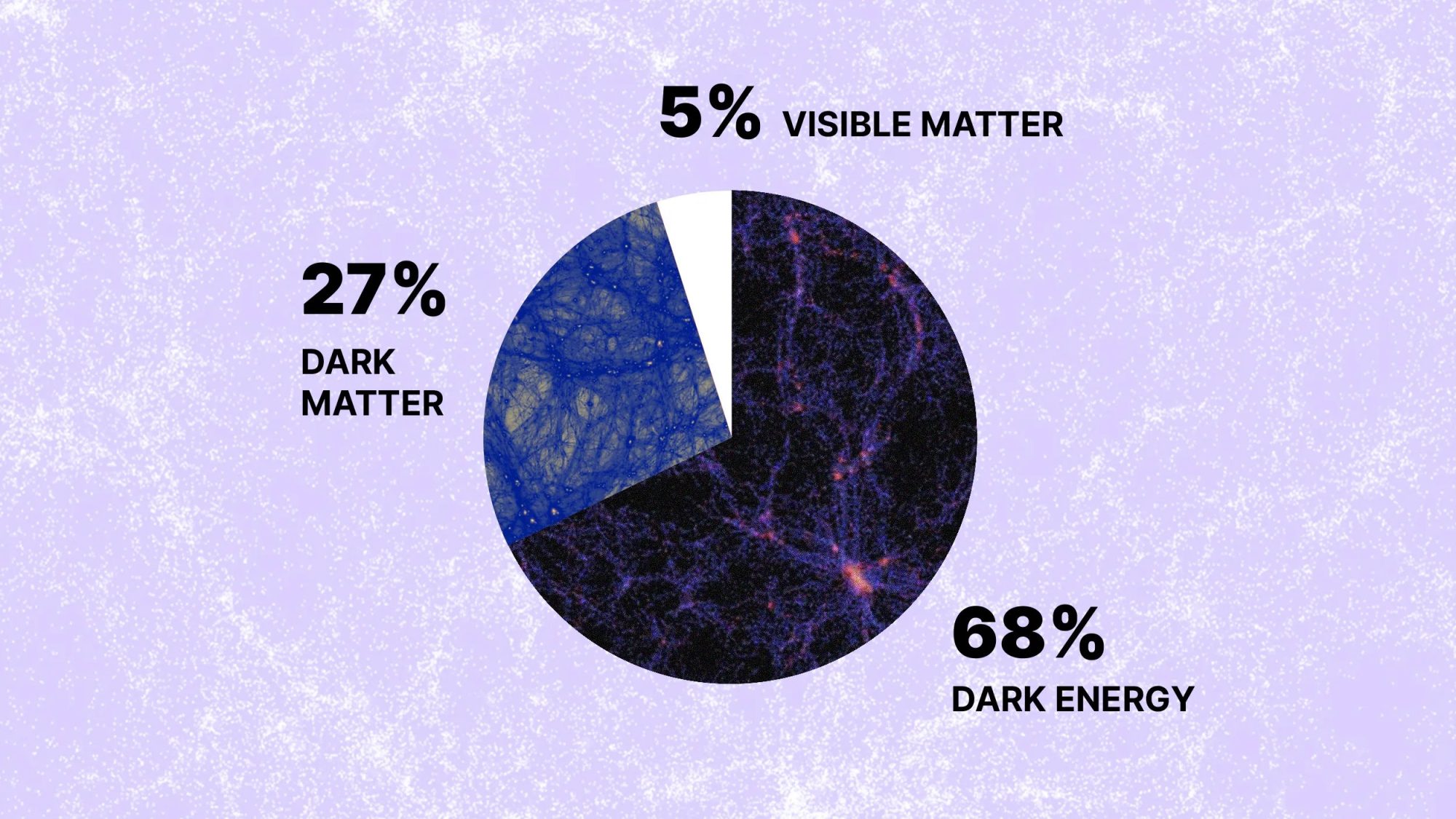
Astronomers calculate that about two-thirds of all the energy in the entire Universe is ‘Dark Energy’ about which we know almost nothing! (Credit: Big Think)

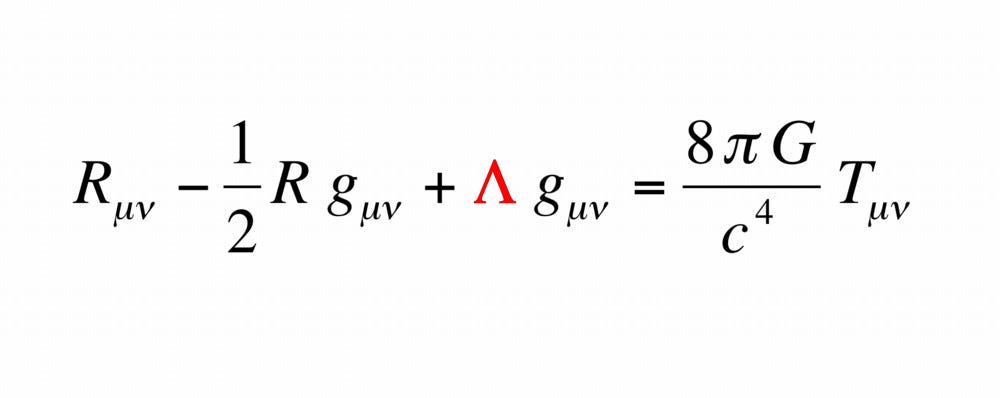
As I said earlier the standard model of the Universe considers Dark Energy to be the Cosmological Constant that made Einstein’s field equations complete, a property of space itself. Still cosmologists wanted to be sure and so they continued to gather supernova data in order to see if Dark energy did remain constant with time.

The full, tensor version of Einstein’s field equations for gravity. Mathematically the constant lambda has every right to appear, but its value had to be very small or it would be seen in the way the planets orbit our Sun. Einstein was glad to get rid of it but it would generate something like ‘Dark Energy’ so now its come back. The question is, is lambda really constant? (Credit: Medium)

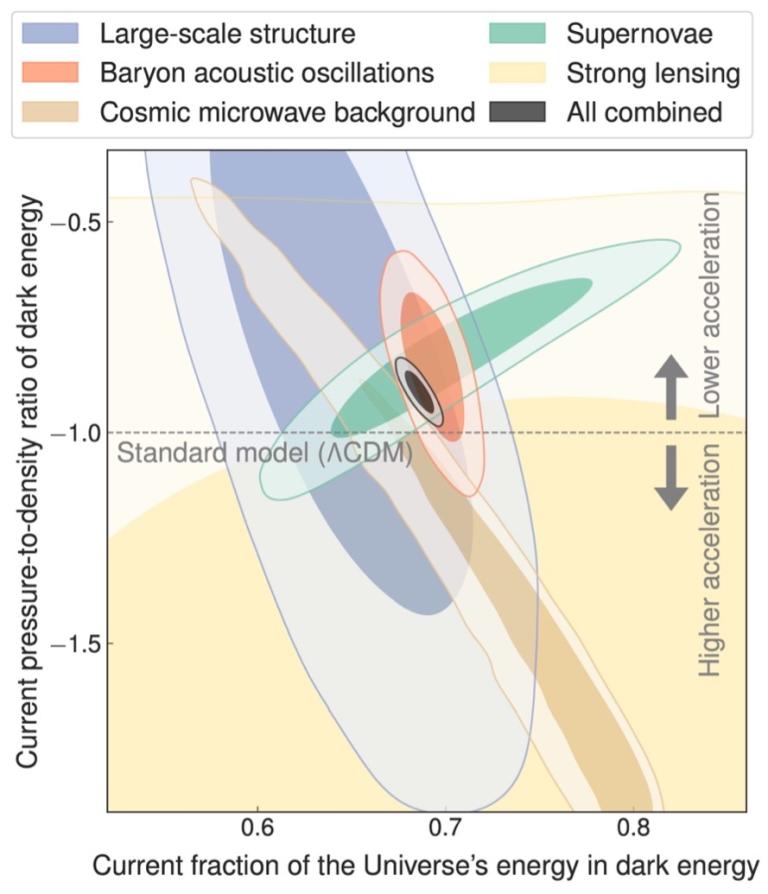
In several of my past posts I have discussed recent evidence that Dark Energy is in fact dynamic, that it does change with time and that it has been growing steadily weaker as the Universe ages. Now a new paper published in the Monthly Notices of the Royal Astronomical Society by astrophysicists at the Department of Astronomy and Center for Galaxy Evolution Research at Yonsei University in Seoul, South Korea asserts that the technique used to measure Dark Energy needs a correction factor. When that correction is carried out it makes λ much weaker and in fact in just the last billion years or so the Universe has actually begun to decelerate.

Over the last 20+ years astronomers have tried to study Dark Energy by many different techniques. A consensus is growing that Dark Energy is not constant but rather dynamic, changing with time and growing weaker! (Credit: UChicago News – University of Chicago)

What the researchers assert is that the brightness of a Type 1a supernova depends on the age of the white dwarf star that explodes. Taking this correction factor into account the supernova data becomes far more conclusive that dark energy is weakening and in fact agrees more closely with data based on analysis of the CMB. It also means that sometime in the last billion years dark energy became weaker than gravity and the Universe has in fact begun to decelerate.

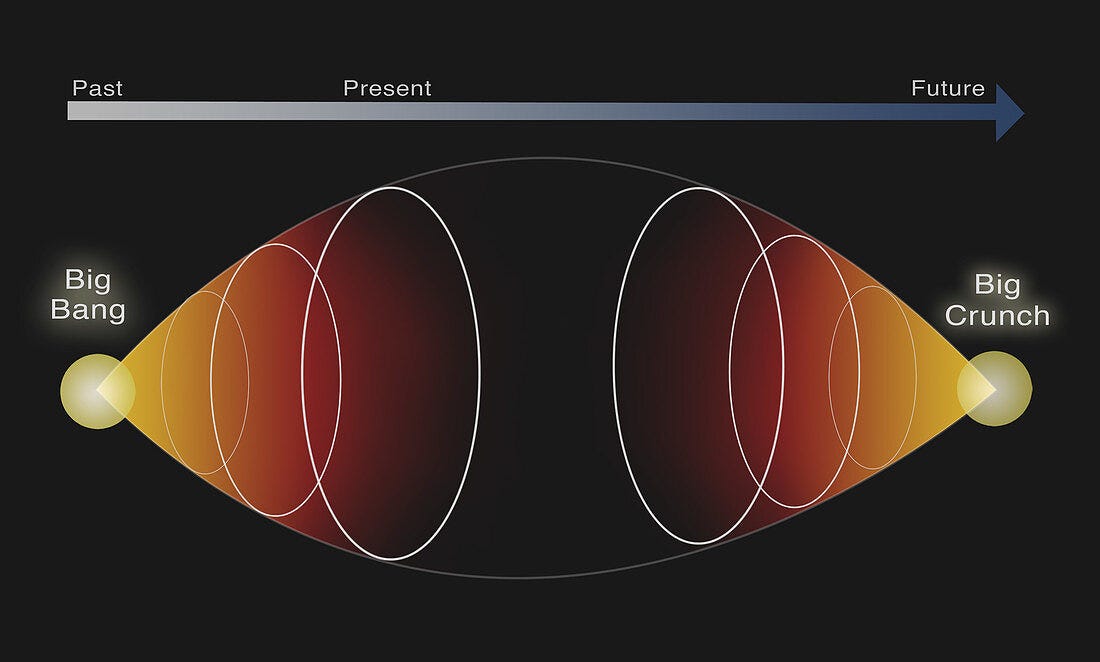
If Dark Energy is growing weaker, we may be headed toward a ‘Big Crunch’ where the entire Universe collapses into a singularity triggering another ‘Big Bang’. (Credit: Avi Loeb – Medium)

Now there are already criticisms of the paper, the researchers did not in fact measure the age of the star that goes nova, a rather impossible thing to do with all the billions of stars in other galaxies. Instead they measured the age of the galaxy and used that value as a proxy for the age of the star that went nova. Still the author’s new measurements of the change in dark energy do closely align with the analysis made from the CMB data.

Guessing someone’s age at a party may be fun but guessing the age of a star in a distant galaxy is a lot of hard work. (Credit: Amazon.com)

The eventual fate of the Universe itself depends on the nature of Dark Energy and cosmologists and astrophysicists are working hard to uncover its secrets.

COP-30: What, if anything, was Accomplished? 

The United Nations sponsored international Conference of Parties (COP) for dealing with Climate Change has wrapped up its annual meeting (COP30) in Belem, Brazil and so it’s time to review what has, or has not been accomplished at this years meeting. To be short, not much.

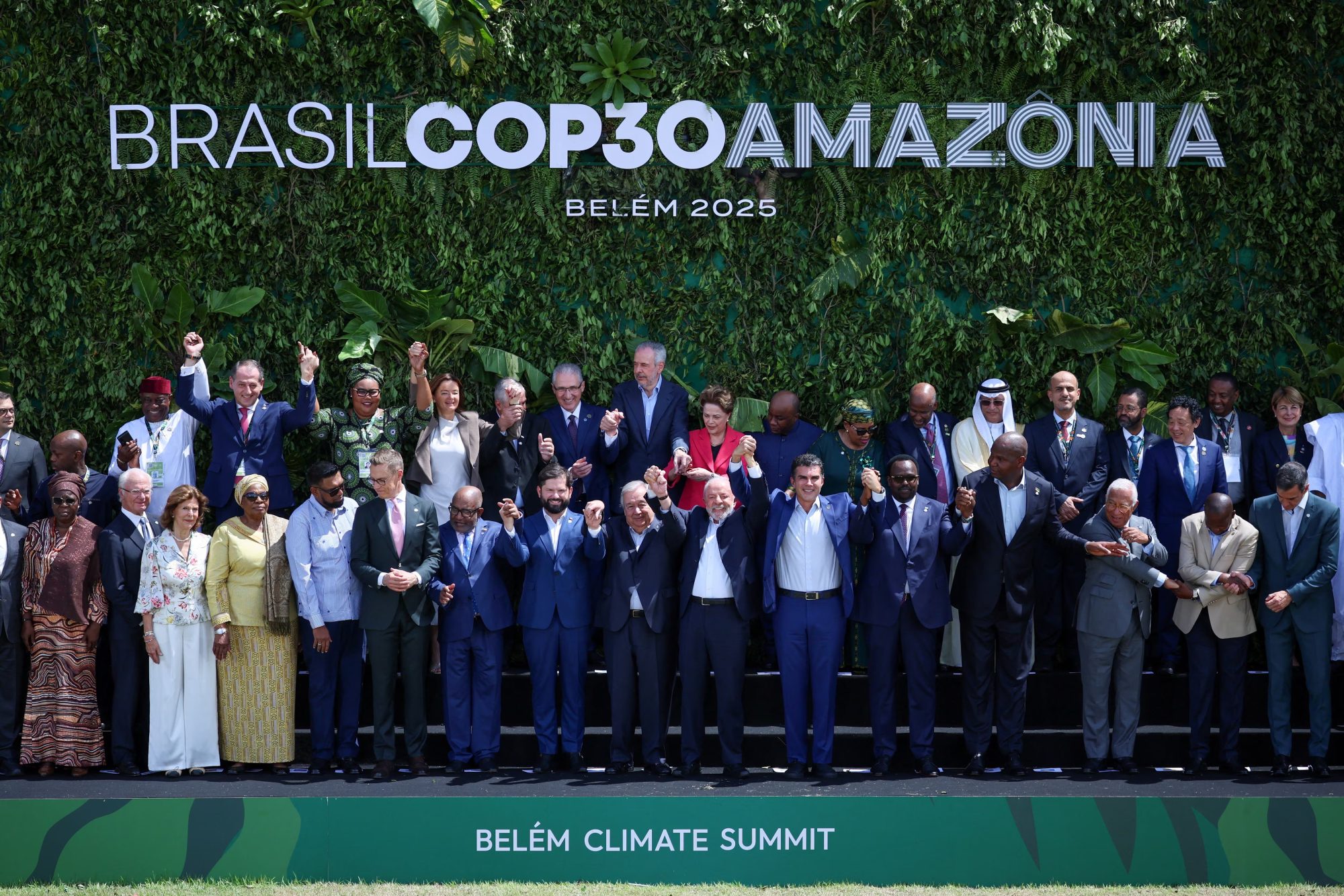
It was all smiles as the international Conference of Parties (COP30) got underway in Brazil. Trouble was none of the important world leaders bothered to attend and the conference soon broke down into special interests. (Credit: Reuters)

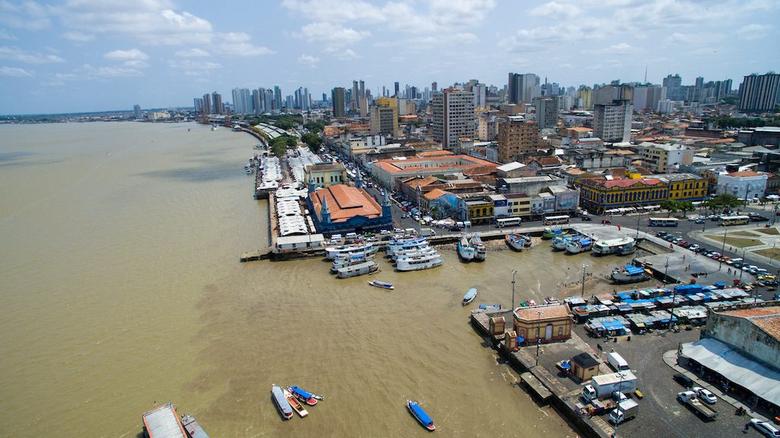
Brazil’s President and host for the summit, Lula da Silva had hoped to focus the meeting on his efforts to preserve the tropical rainforests. These vast forests like the Amazon are vital in our fight to reduce greenhouse gasses in the atmosphere thanks to their ability to absorb and store CO2. That was the rationale behind the choice of Belem as host city, because of its position at the mouth of the Amazon. Problem was that Belem was too small and remote a city for such a large gathering, over 50,000 attendees. In addition to the carbon footprint of everybody traveling to Belem there weren’t enough hotel rooms for all the delegates leading many to stay aboard palatial yachts brought to Belem harbour for just that purpose.

Situated at the very mouth of the Amazon River, the choice of Belem as the host city was symbolic of the need to preserve our natural resources. Problem was the city wasn’t prepared for such an influx of visitors. (Credit: Brol.com)

But the problems of who attended the conference were outweighed by who didn’t attend. The heads of state of China, India and Russia refused to attend but at least sent delegations. The United States on the other hand, under orders from Trump sent no official delegation at all. To have the heads of state of the four biggest greenhouse gas emitting countries not attend a conference on climate change pretty much dooms the whole affair right at the start.

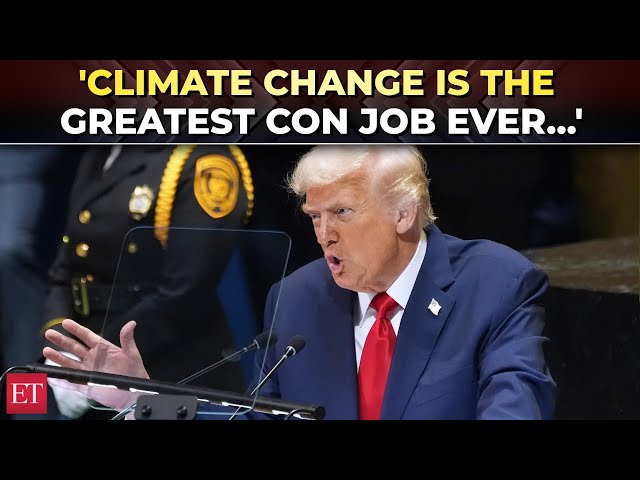
Historically the US has emitted more greenhouse gasses than any country and we’re still currently in second place, but the ‘Stable Genius’ here thinks climate change is just a big hoax! (Credit: YouTube)

Still the world leaders who did show up, headed by the UK’s Keir Starmer, France’s Emmanuel Macron, Germany’s Friedrich Merz, along with host da Silva, tried their best to salvage some results from the conference. The biggest issue to be dealt with was an attempt to develop a ‘roadmap’ for the future elimination of fossil fuels as a power source. At the conference over 80 countries, led by Colombia, pushed hard for the adoption of such a timetable where each country would announce how they intend to de-carbonize their economies. Even a few oil producing nations, like Mexico and Brazil supported the idea of a roadmap.

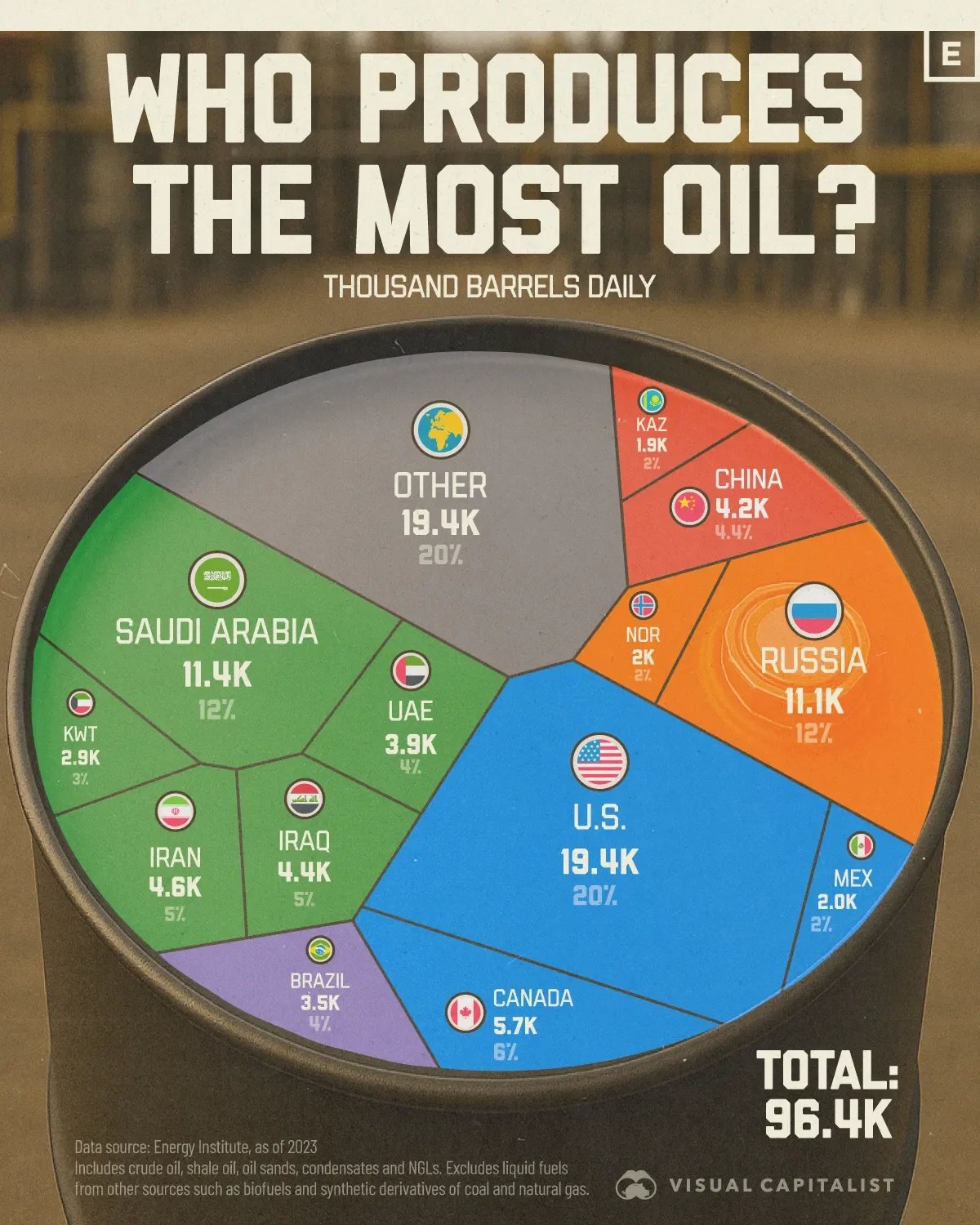
Here’s the real reason why Trump insists climate change is a hoax, the US just makes too much money from fossil fuels. After all money is no hoax! (Credit: Voronoi)

Since global fossil fuel use is the greatest contributor to greenhouse gasses eliminating coal, oil and natural gas as fuels is the surest, quickest way to reduce the amount of greenhouse gasses in the atmosphere. However, the big fossil fuel producing countries fought tooth and nails against the very idea of such a roadmap. In fact countries like Saudi Arabia, Russia and Venezuela still are fighting against any official recognition of the fact that fossil fuels generate greenhouse gasses.

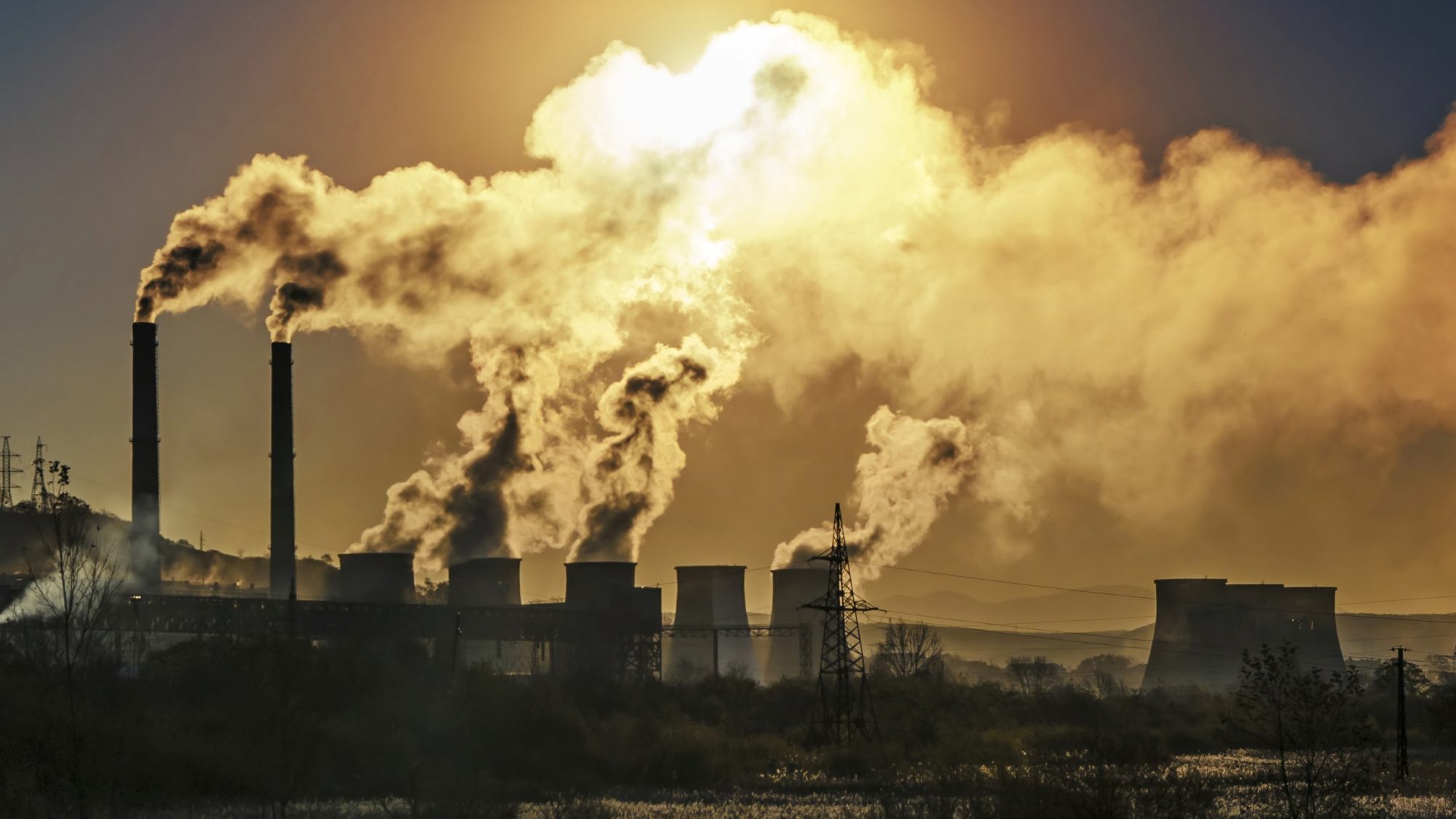
How can anybody look at something like this and not think we’re changing the world somehow? There are thousands upon thousands of such industrial plants around the world and little by little we are just turning mother nature into a garbage dump! (Credit: Live Science)

That’s true, the official communiqué agreed to at the end of COP30 called for the reduction of greenhouse gasses without explicitly mentioning fossil fuels. Without a roadmap however, without even facing the fact that fossil fuels are the driving cause of global warming there is little hope of any real progress being made in ending climate change. Countries with growing economies like China and India will simply do whatever serves their own interest, even if that means building more coal burning power plants.

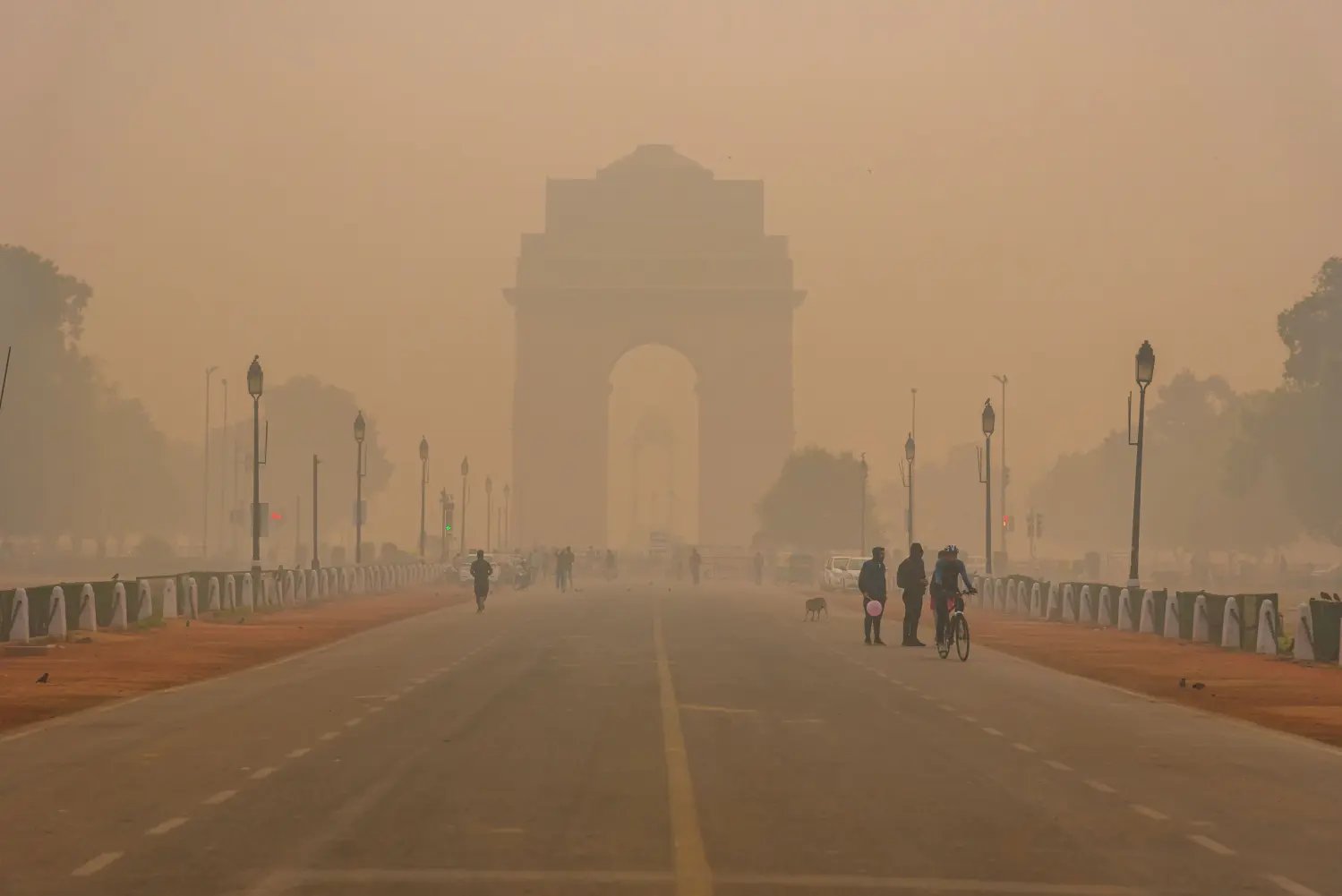
The nation of India is determined to grow their economy even if it means turning their capital New Delhi into the world’s most polluted city! (Credit: Brookings Institute)

There was little progress on another front as well, that being financial aid for small countries that are already feeling the effects of climate change. These small countries are collectively responsible for only a tiny fraction of the greenhouse gasses in the atmosphere but many are already suffering greatly from global warming.

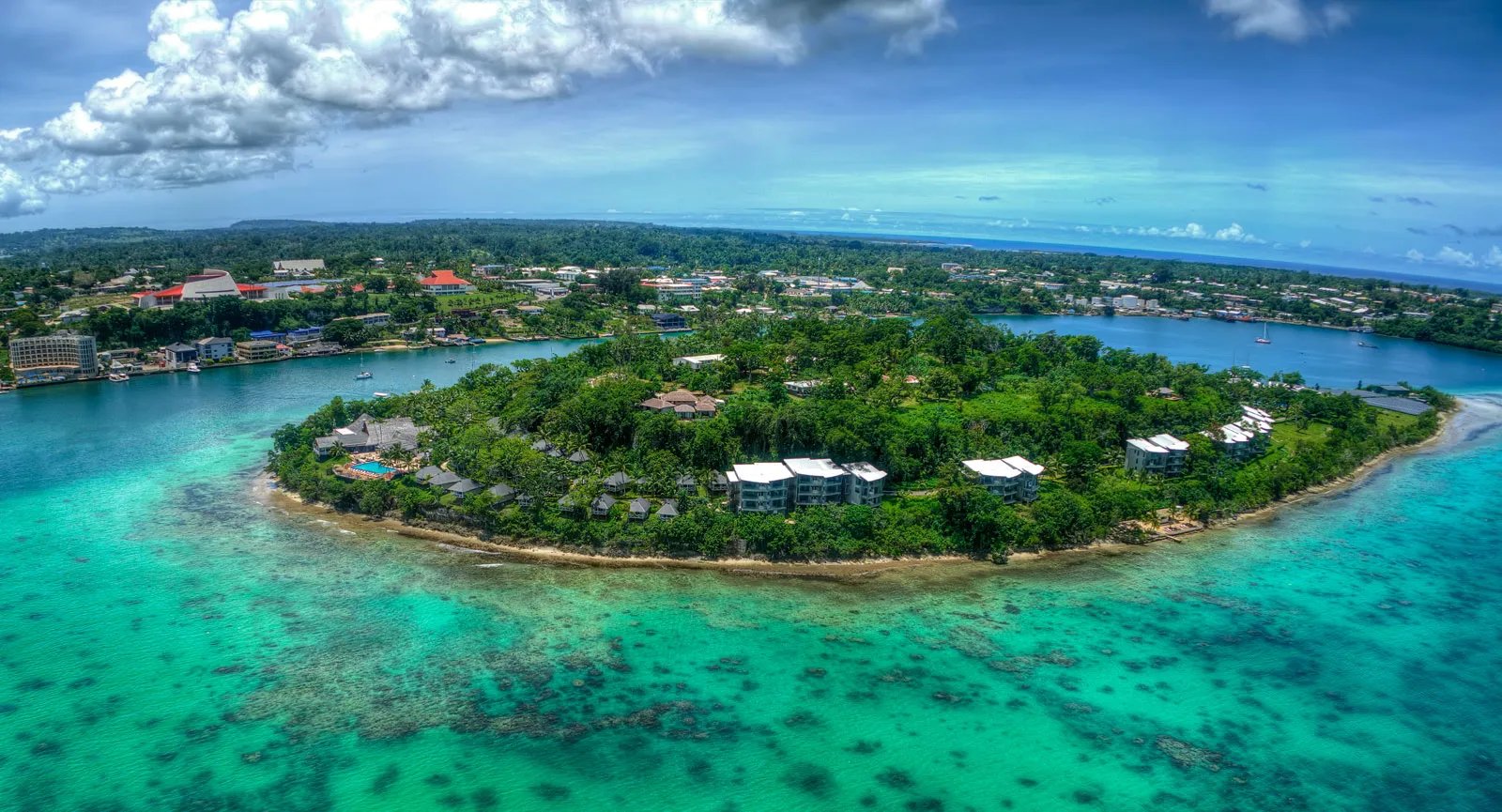
The tiny island nation of Vanuatu has never emitted much in the way of greenhouse gasses but thanks to rising sea levels induced by global warming it is threatened with complete destruction by climate change. (Credit: Britannica)

Consider Ethiopia, never an economic powerhouse, over the last hundred years the country has emitted maybe one percent as much greenhouse gas as the US does in one year. Yet Ethiopia has been dealing with both increased heat and drought conditions brought on by global warming. Or think of Jamaica, which has just been hit by the most powerful hurricane in the island’s recorded history. A recent paper has estimated that Hurricane Melissa’s winds were increased by 16% because of global warming. How much of Jamaica’s damage, how many lives were lost due to climate change? Should the richer countries of the world, countries that have emitted by far the most greenhouse gasses, compensate the smaller countries for the damage caused by climate change.

Can you say Fox News? Sure you can! Let’s face it this is the way the world usually works and unfortunately, it’s probably the way we’re going to deal with climate change. (Credit: Redbubble)

It is estimated that climate change is already causing about $1.3 Trillion dollars in damage every year, most of that being borne by small countries. At COP29 last year the richer nations promised $300 billion to help mitigate the cost of climate change but in the end only $26 billion was raised. At COP30 no definite figure was announced so it is likely that the money actually raised will be even less than last year.

The destructive winds of hurricane Melissa were about 15% stronger because of global warming. How much more destruction was there in Jamaica because of that increase? (Credit: Bloomberg.com)

Even the question of what country should hold next year’s COP31 conference turned into controversy. Both Turkey and Australia wanted the honour, actually there’s money to be made from having so many big high muckety mucks come to your country, and both had the backing of other countries. In the end it was decided that COP31 will take place in Turkey, but Australia will chair the conference, which sounds to me like a disaster waiting to happen.

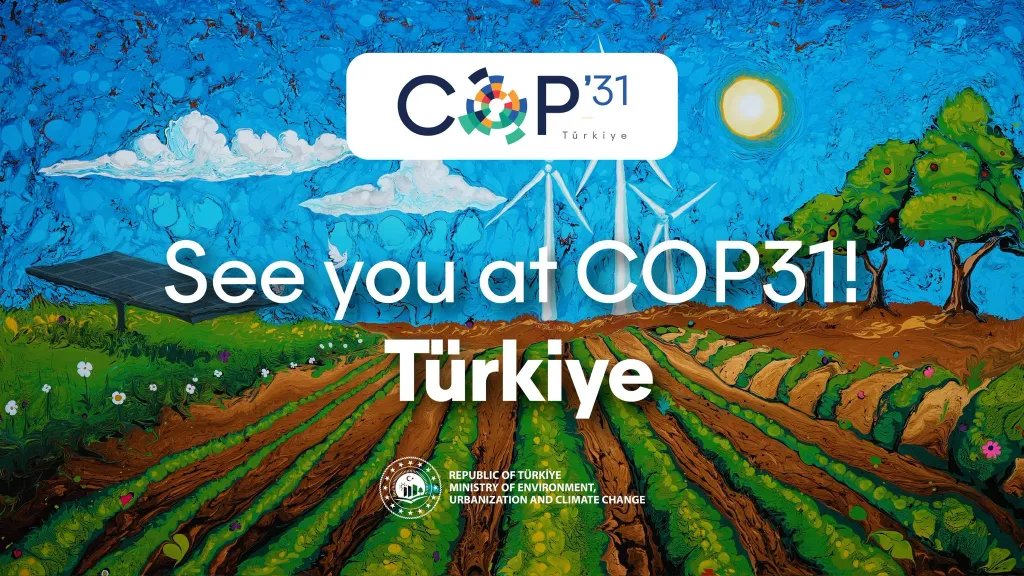
Next year’s COP31 will be held in Turkiye but will be chaired by Australia, that’ll work well I’m sure. (Credit: SETA)

But then there are many people who have decided that the entire COP process for fighting climate change has become a disaster that year after year achieves nothing. Ten years ago, in Paris the world agreed to limit temperature rise to 1.5ºC above pre-industrial levels but in the past two years we’ve already exceeded that figure and still our world leaders dither about doing anything real to keep temperatures from increasing still further.