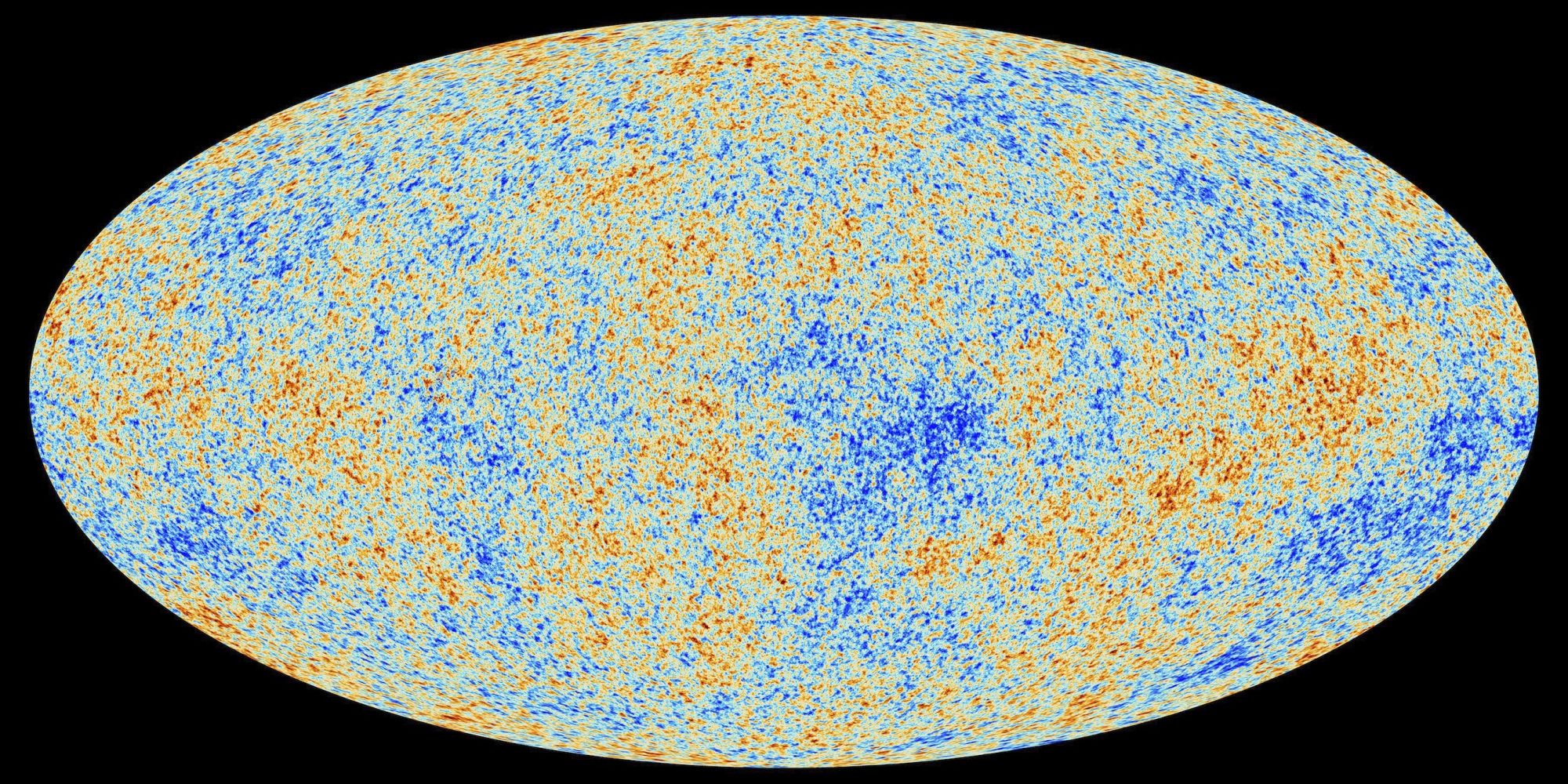
I’ll begin today’s post by reviewing out current model of the Universe. About 13.5 Billion years ago our Universe underwent a ‘Big Bang’, an explosion of unimaginable energy and pressure. This explosion caused the entire Universe to expand rapidly as time passed but also caused it to cool until atoms could form. We can still see the ‘fossil’ evidence of this time in the Cosmic Microwave Background (CMB).
After about 500 million or so years gravity caused the gasses of the early Universe to begin to clump together, forming the first stars and galaxies. Gravity also should have made the general expansion of the Universe slow down but something that we call ‘Dark Energy’ is actually making the expansion accelerate. Discovered in the 1990s we still know very little about dark energy even after almost 30 years of intense study.

I’m going to have to get a little technical here about how astronomers actually measure whether the Universe’s expansion is decelerating or accelerating. The whole idea of the Big Bang began when Cark Hubble first found that, except for a few really close galaxies, the light from all of the galaxies was red shifted, meaning that they were moving away from our galaxy. At the same time he discovered that the further away a galaxy was the faster it was receding. Hubble expressed this as a simple equation.
V=HoD
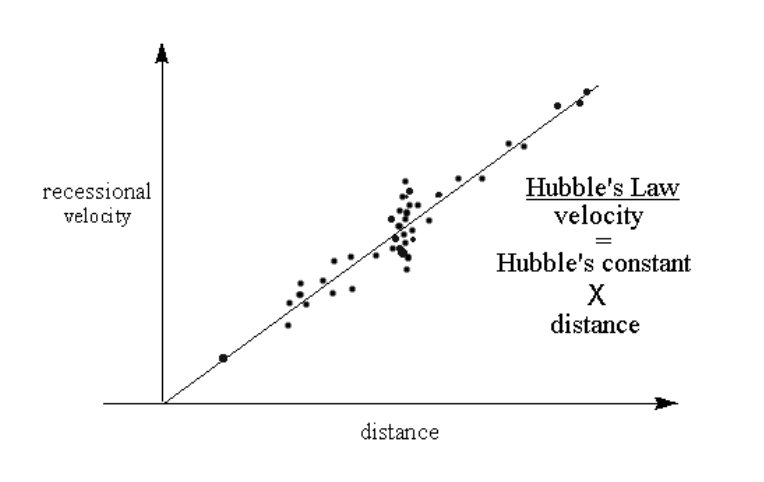
Here D is the distance to a galaxy, V is the velocity that galaxy is moving away from us and Ho is a constant called Hubble’s constant. Now astronomers realized that if gravity were slowing the expansion of the Universe, then Ho would not be a constant but rather be getting smaller as the Universe aged.

It wasn’t until the 1990s that astronomers developed a technique to measure any change in Ho. Astrophysicists studying Type 1a supernova calculated that all such supernova should explode with the same amount of energy, should shine with the same absolute brightness. So if a Type 1a supernova appeared bright that meant the galaxy it was in was fairly close to our Milky Way while if the Type 1a supernova appeared dim it meant that the host galaxy was farther away. Astronomers call such objects ‘Standard Candles’ and can use them to measure the distance to objects in the Universe.
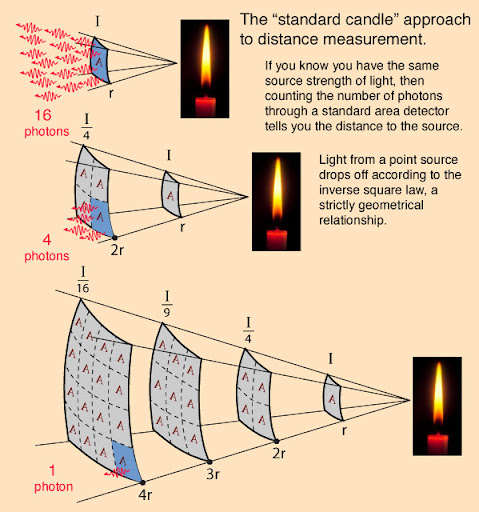
So using Type 1a supernova to measure the distance, and then using redshift to measure velocities they could determine whether Ho was getting smaller. What they found was that Ho was actually getting bigger, that something was pushing the Universe to expand faster, something they called ‘Dark Energy’.
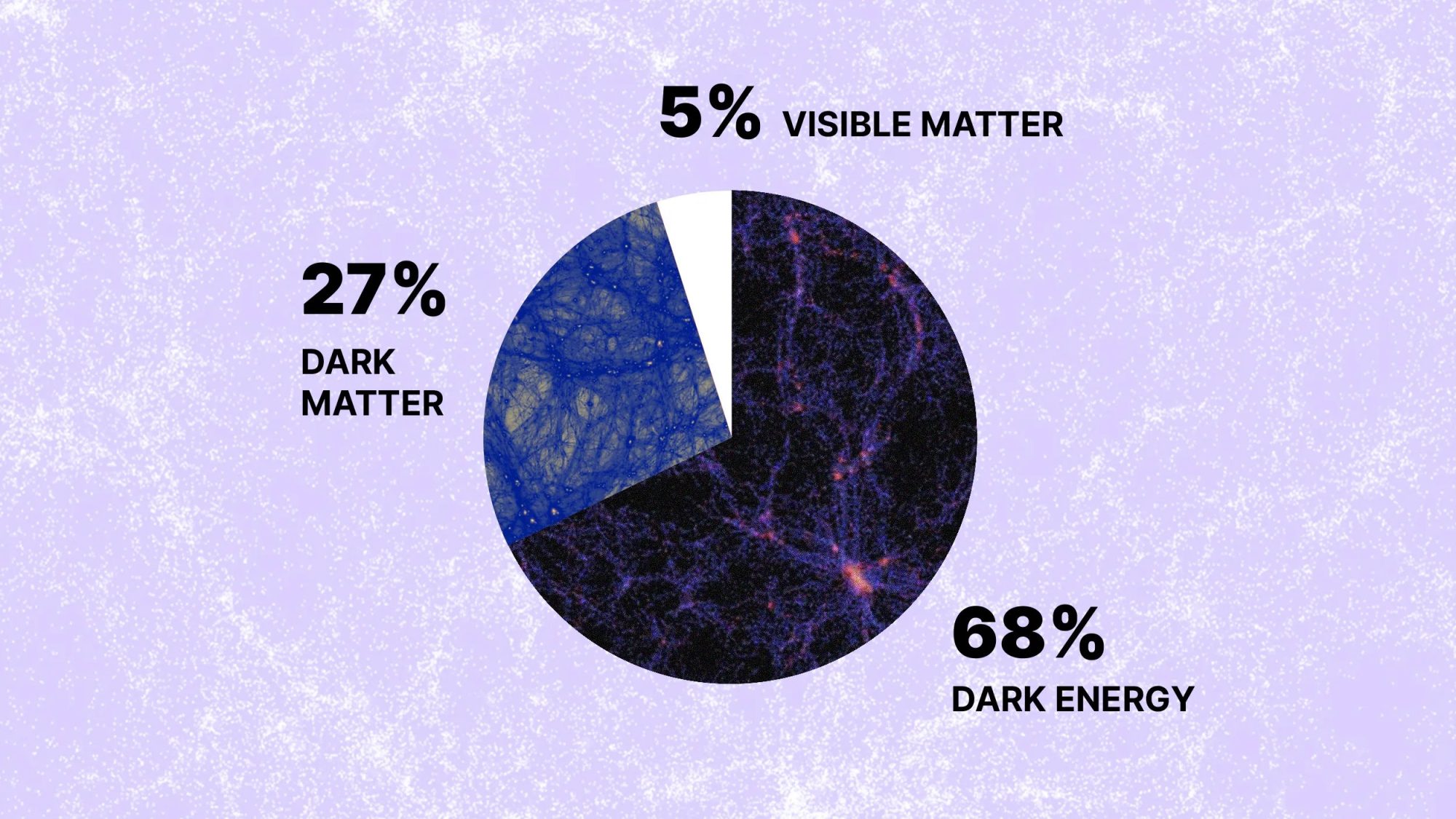
As I said earlier the standard model of the Universe considers Dark Energy to be the Cosmological Constant that made Einstein’s field equations complete, a property of space itself. Still cosmologists wanted to be sure and so they continued to gather supernova data in order to see if Dark energy did remain constant with time.
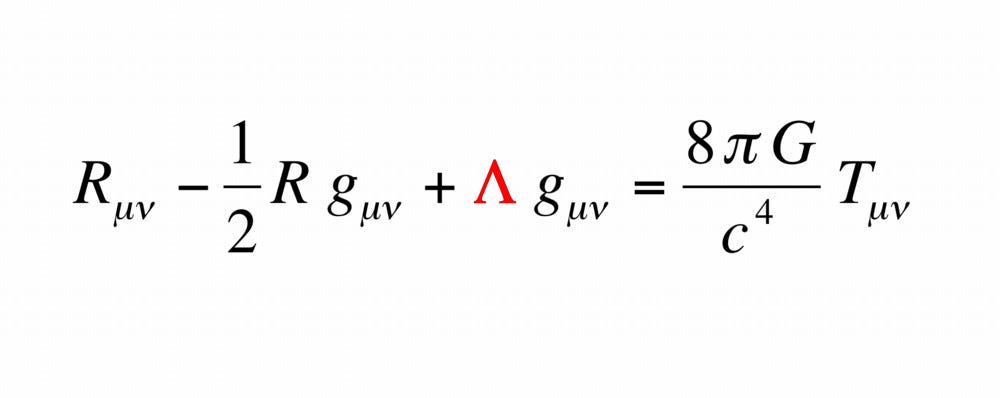
In several of my past posts I have discussed recent evidence that Dark Energy is in fact dynamic, that it does change with time and that it has been growing steadily weaker as the Universe ages. Now a new paper published in the Monthly Notices of the Royal Astronomical Society by astrophysicists at the Department of Astronomy and Center for Galaxy Evolution Research at Yonsei University in Seoul, South Korea asserts that the technique used to measure Dark Energy needs a correction factor. When that correction is carried out it makes λ much weaker and in fact in just the last billion years or so the Universe has actually begun to decelerate.
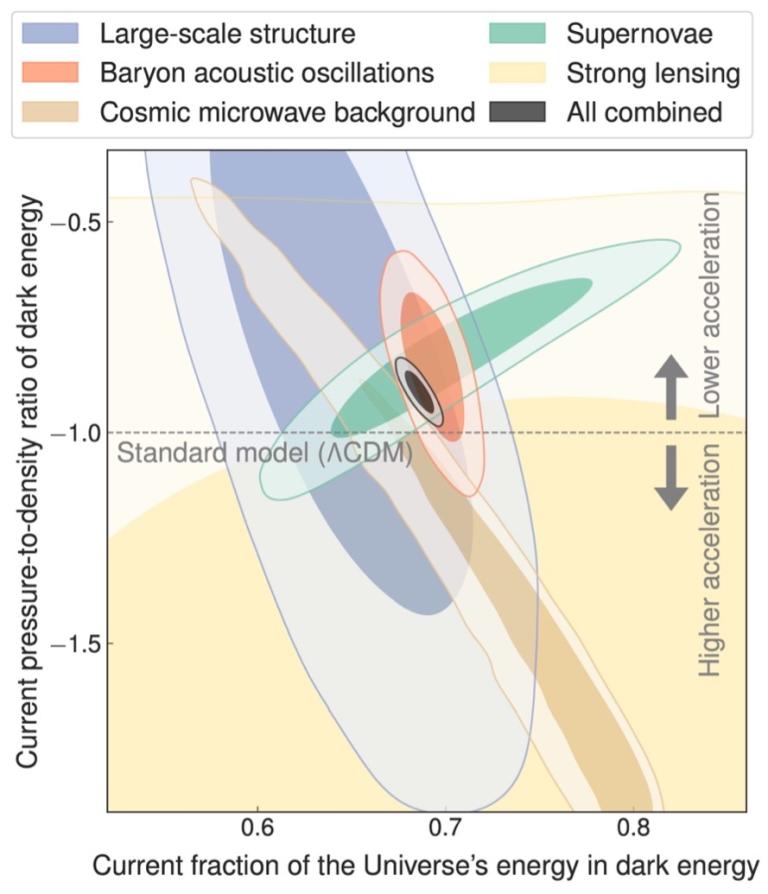
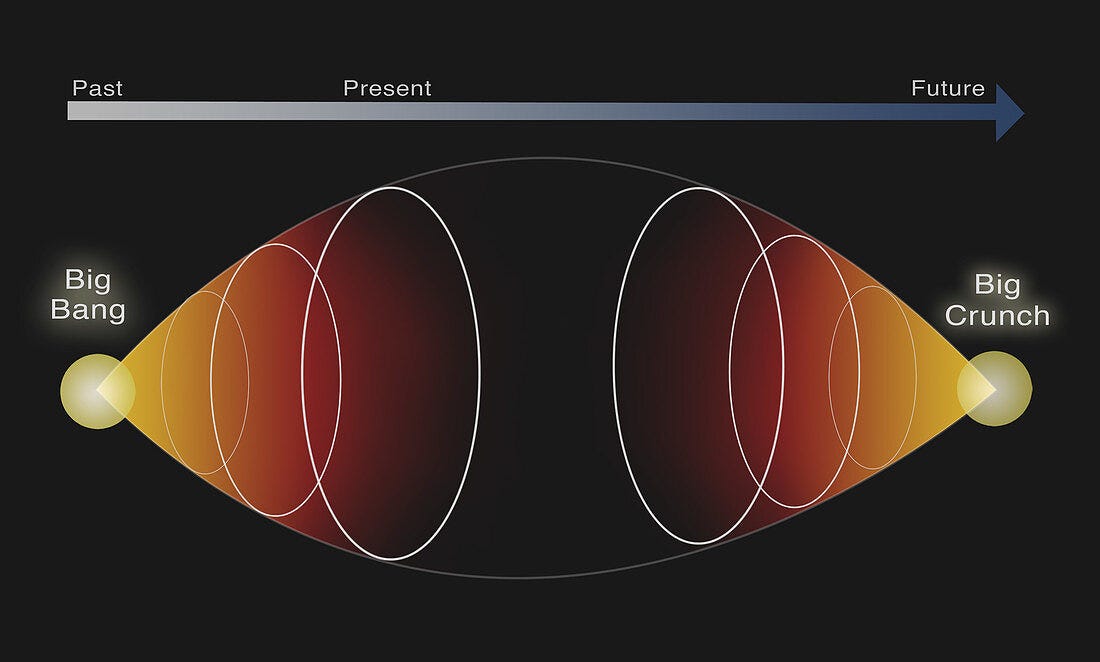
What the researchers assert is that the brightness of a Type 1a supernova depends on the age of the white dwarf star that explodes. Taking this correction factor into account the supernova data becomes far more conclusive that dark energy is weakening and in fact agrees more closely with data based on analysis of the CMB. It also means that sometime in the last billion years dark energy became weaker than gravity and the Universe has in fact begun to decelerate.
Now there are already criticisms of the paper, the researchers did not in fact measure the age of the star that goes nova, a rather impossible thing to do with all the billions of stars in other galaxies. Instead they measured the age of the galaxy and used that value as a proxy for the age of the star that went nova. Still the author’s new measurements of the change in dark energy do closely align with the analysis made from the CMB data.

The eventual fate of the Universe itself depends on the nature of Dark Energy and cosmologists and astrophysicists are working hard to uncover its secrets.