A Couple of Stories from Nature, one Awesome, one Awful!      

Several times in these posts I’ve discussed how it seems as though every time scientists study animal intelligence or behavior they are surprised to discover just how much our fellow creatures are really like us. My first story today is a case in point and concerns our closest relatives the Chimpanzees.

Nestled near the Equtor on the west coast of Africa the Loango National Park in Gabon is a haven for many species of wildlife including Chimpanzees. (Credit: Google Maps)

The Loango National Park in Gabon is the home to the Ozouga Chimpanzee Project where a community of about 45 Chimpanzees has been under behavioral study for many years. A scientific research team led by Biology Professor Dr. Simone Pika of Osnabrück University has made many discoveries concerning the social behavior, tool use and hunting strategies of chimpanzees.

A multi-national project to study our closest relatives the Ozouga Chimpanzee Project has already discovered many similarities between Chimp culture and ours. (Credit: Ozouga.org)

The latest revelation concerns the first ever observations of chimpanzees applying possibly medicinal substances to external wounds. The substances in question are the bodies of insects plucked from the air and the chimpanzees were not only observed applying the insects to their own cuts and abrasions but on a few occasions one chimp was observed using the insects to tend to the cuts of another chimp.

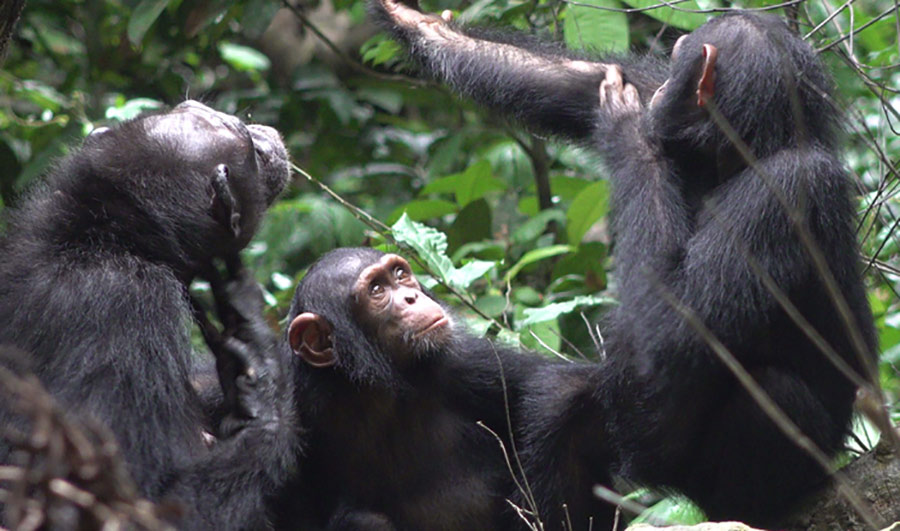
Three of the Ozouga chimps, Suzee on the left was the first chimp to be observed applying insects to her son’s wounds. (Credit: Ozouga.org)

Now for animals to eat various substances with known medicinal properties is a well known behavior in many species of not just mammals but birds and even reptiles. Chimpanzees themselves have been observed to chew bitter leaves that will kill internal parasites.

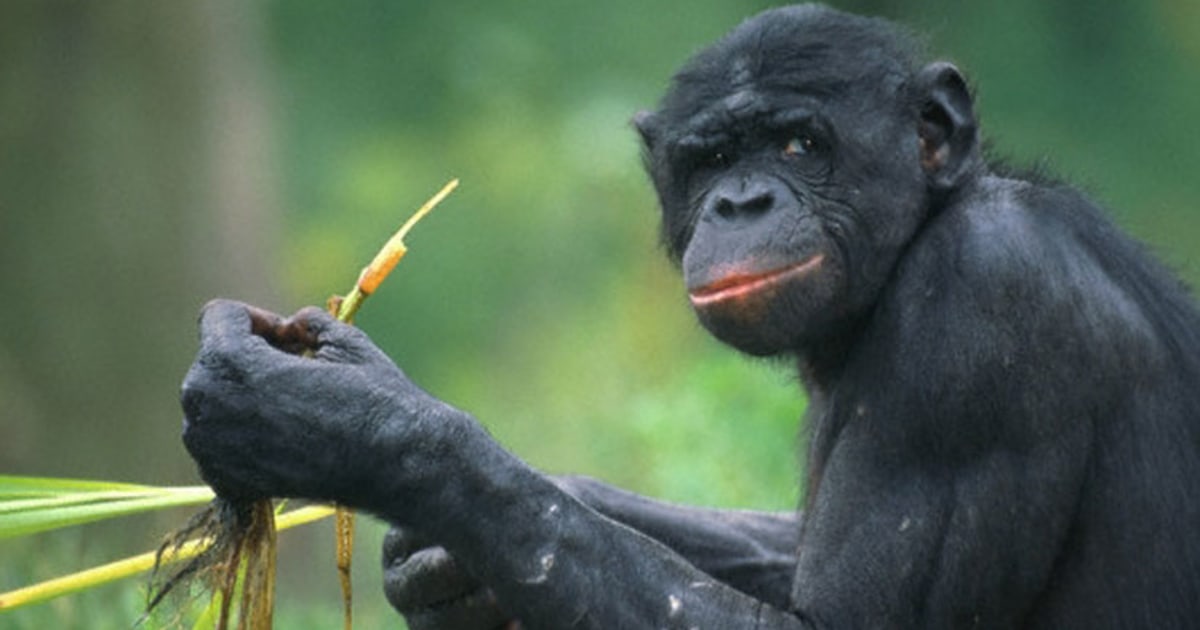
In the wild Chimpanzees have been observed to eat several different kinds of plant that are known to have medicinal value. (Credit: NBC News)

The application of anything to external wounds however is a totally new behavior and was first observed in 2019 by researcher Alessandra Mascaro as a mother chimp named Suzee inspected the injured foot of her son Sia. To Mascaro it appeared that Suzee had something between her lips that she then applied to Sia’s wound. Only later as she watched the video of the event did the researcher see Suzee grab something out of the air that she then placed between her lips before applying it to Sia’s wound.

Many human cultures have a long history of using insects as medicine. Today there are many scientists studying the medicinal properties of insects. (Credit: Science Direct)

Subsequent observations showed that what the chimps were grabbing from the air were insects, and indeed numerous primitive human cultures have been known to use insects on wounds for antiseptic or anti-inflammatory purposes. Just what insects the chimps grab, and if they actually have medicinal benefits is something the researchers have yet to ascertain. However the team at Loango has observed the behaviour more than 20 times now and feels confident that they will soon be able to answer those questions.

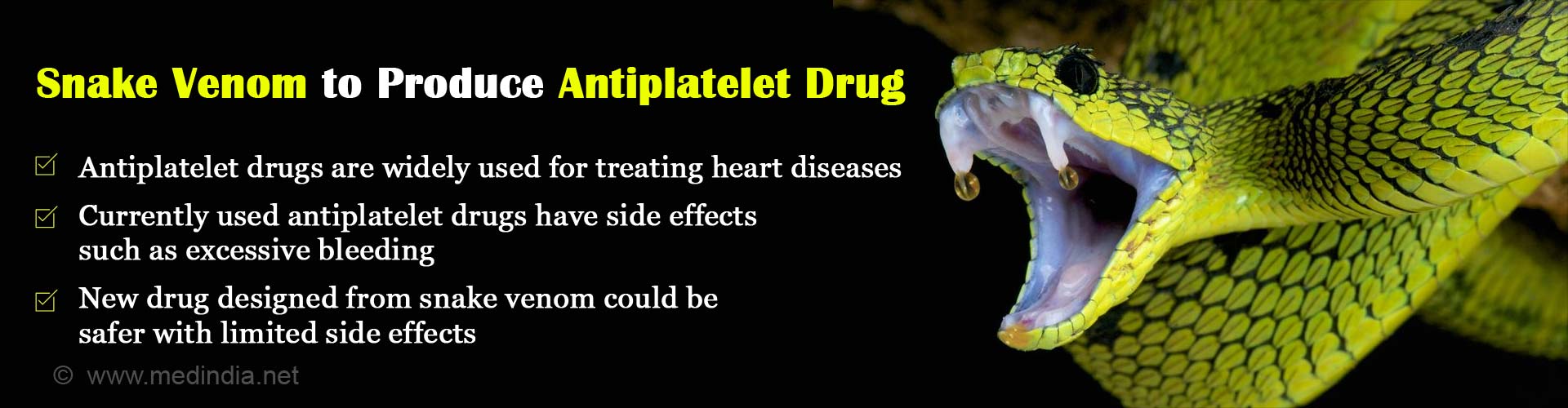
Getting medicine from insects really isn’t so strange when you consider all of the drugs we already get from snake venom! (Credit: Medindia)

Chimpanzees continue to surprise the scientists who study them. What the Ozouga Chimpanzee Project’s team have uncovered could be evidence about the very beginnings of the field of medicine in ancient human societies. Further proof of just how much like us our relatives really are.

Makes you wonder just how different we really are! (Credit: The Stem Cellar)

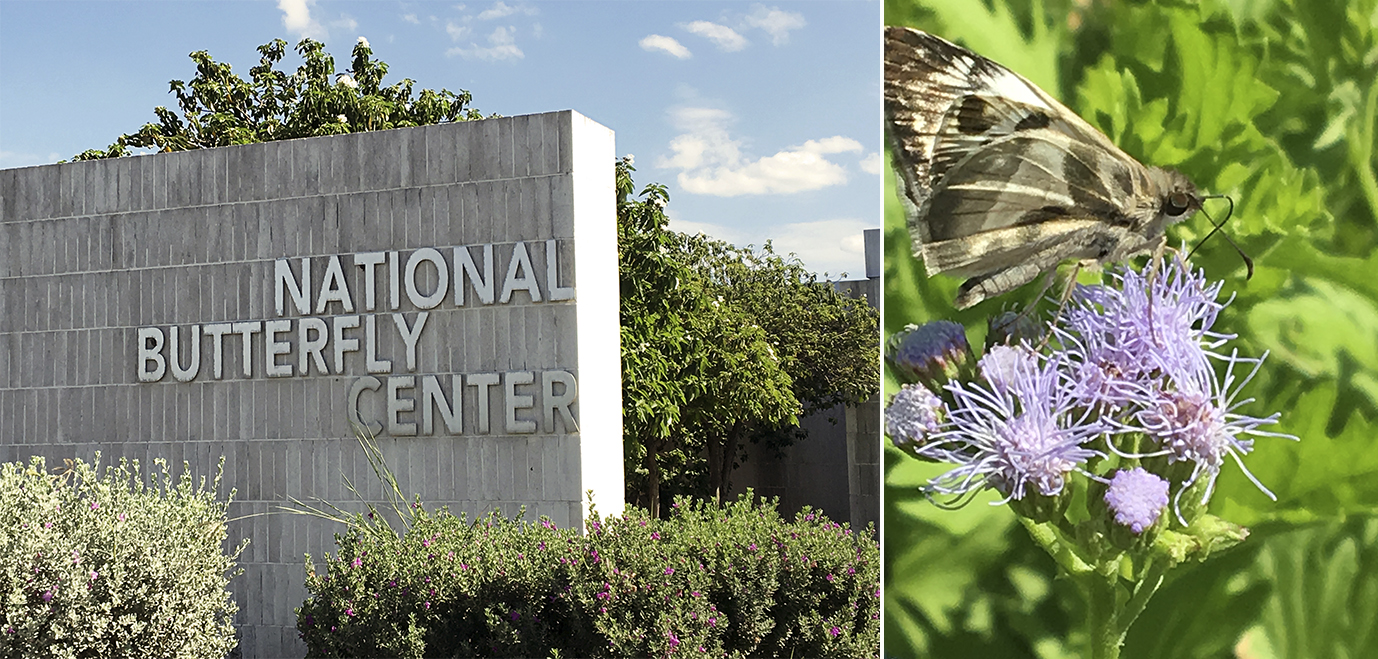
And even as the scientists at Loango learn more about animal behaviour the behaviour of the particular breed of human animal known as a conspiracy monger is causing a great deal of harm at an animal refuge here in the United States. The refuge in question is the National Butterfly Center, which lies along the Rio Grande River in southern Texas and which for over two decades has helped migrating butterflies along their path between the United States and Mexico.

Hard to think of anything more innocent than a butterfly refuge but in today’s America simply being innocent will cause some people to attack you! (Credit: Xerces Society)

The 100 acre preserve first came into national attention back when Donald Trump was president and trying to get his wall built along the border with Mexico. The non-profit North American Butterfly Association that runs the center objected to the wall on the grounds that a wall would do more to interfere with butterfly migration than attempts by illegal aliens to enter the US. Throughout the Trump administration both the center and its staff had to endure multiple and vicious attacks by right-wing agitators.

He never built it, Mexico certainly never paid for it and it never actually stopped anyone from entering the US. It did get him elected however and that’s really all he ever cared about! (The New York Times)

Even the end of the Trump administration hasn’t ended the refuge’s problem because there are several privately funded campaigns seeking to continue wall building on private lands, including that of the center. One of these groups is the “We Build the Wall” project headed by Steve Bannon and Brian Kolfage. Following the lead of these provocateurs right-wing conspiracy mongers have now begun to accuse the butterfly center on social media of actually being a focus for human trafficking, especially the trafficking of children for sexual exploitation.

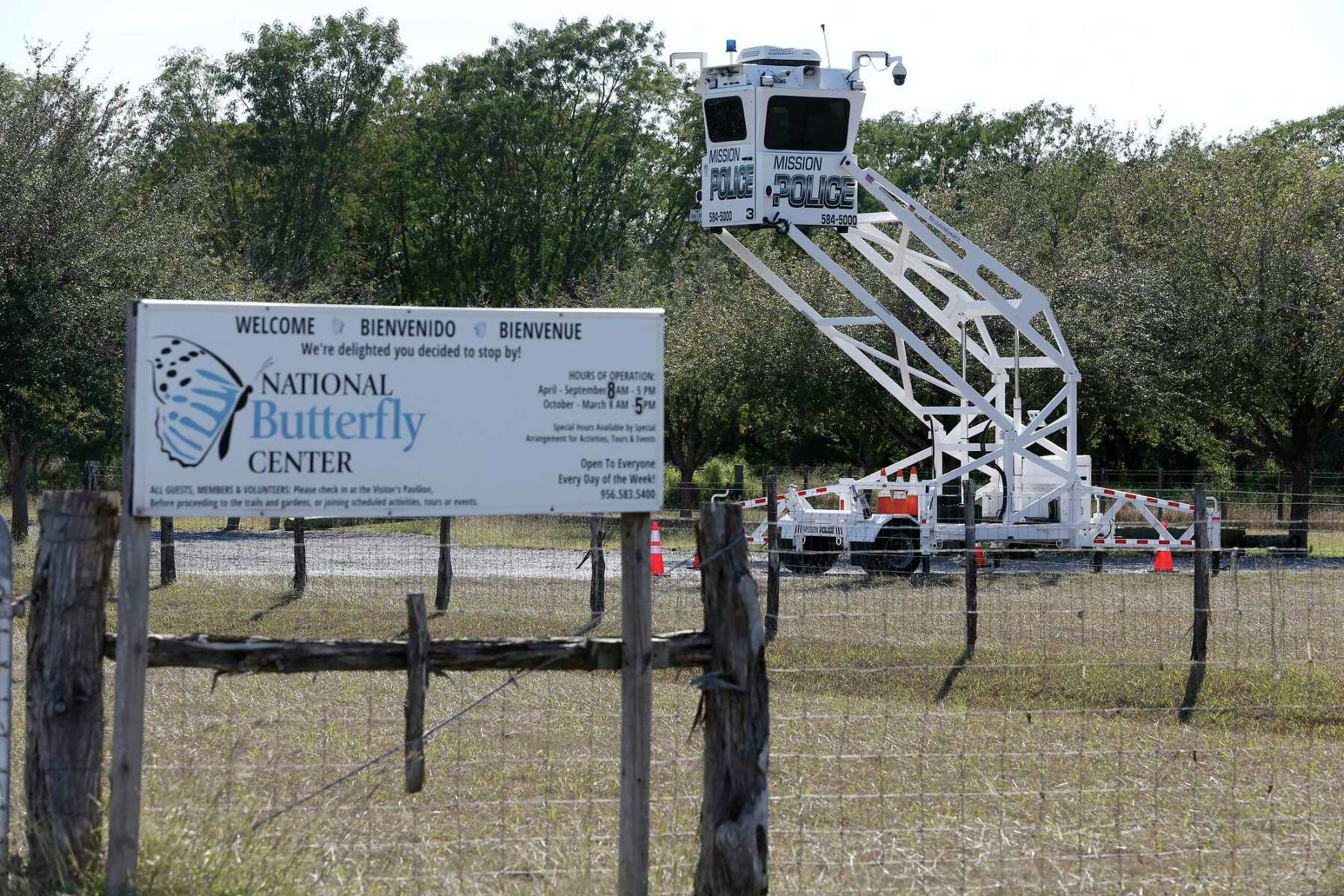
Things have gotten so out of hand at the National Butterfly Center that the local police are now keeping a watch on the place. (Credit: San Antonio Express-News)

The baseless accusations have continued to grow and threats have been launched at the center’s staff and supporters. The whole mess has gotten so bad that a conservative candidate for congress in Virginia named Kimberly Lowe showed up at the refuge in order to film a social media post about the ‘illegal activity’ going on there. If all of this sounds reminiscent of the ‘Pizzagate’ nonsense from a few years ago where Satan worshipping pedophiles were supposed to be trafficking children through a pizza restaurant in Washington D.C. that’s probably because all of the conspiracy mongers have as little imagination as they have common sense.

Why are so many people so anxious to believe the most horrible things about other people without evidence. PizzaGate was totally without foundation yet it became one of the hottest stories of the year. Now the same vicious lies are being spread about the workers at the National Butterfly Center. (Credit: Rolling Stone)

Still, the National Butterfly Center has been forced to close, at least temporarily in order to reassess their security status. Only in America today could a butterfly refuge be in need of security!!! 

The Covid-19 Pandemic has caused a sharp increase in Gun violence across the United States while all responsible studies continue to show that stricter Gun laws save lives.      

In what is surely one of the most perverse ironies of our current fight with the Covid-19 virus over the last two years there has been a sharp increase in gun violence and indeed violence in general here in the United States. The number of murders committed in the US in 2020 was 21,570, up from 16,669 in 2019, a 29.4% rise, the sharpest one year increase in US history. And that was followed by 24,576 murders in 2021, another 13.9% rise above the 2020 numbers.

A Dozen US cities set records for the number of murders committed there in 2021 with my home town of Philadelphia leading the way! (Credit: New York Post)

 Psychologists point to the feelings of depression and confinement brought on by the pandemic to which we can add the political fighting over how to respond to Covid-19. An ever growing number of fights breaking out at school board meetings and aboard airplanes over masks are just the more visible signs of a growing violent trend in our society. It’s as if the virus isn’t just satisfied with killing nearly a million of us directly it has cause us to turn on each other to increase the death toll even further.

The restrictions put in place to protect us from the Covid epidemic are having a greater effect on the mental health of young people than other age groups. And of course it’s young people who tend to commit more violence, hence an increase in the number of murders during Covid! (Credit: KFF)

And it’s not as if there is anything we can do to reduce the increasing number of gun crimes and violence, we’re all just helpless before the rising tide of murder and mayhem. Oh…wait, there is something we can do, it’s called gun control, laws to prevent people who cannot be trusted to handle guns responsibly from getting their hands on them and in general just decreasing the number of guns in society.

Just a few of the common sense laws for responsible gun ownership that could be enacted. (Credit: Everyday No Days Off)

Further evidence of the efficacy of gun control laws in reducing gun violence can be found in a recent report released by the group Everytown for Gun Safety. In this report all 50 states are evaluated for the strength or weakness of their gun control laws. The judgment is made based upon 50 key policies and each state is then given a score between 0 and 100. That score is then compared to that state’s gun violence rate, gun deaths per 100,000 population. Gun deaths include not only murders but suicides and accidental deaths due to firearms.

The stronger a State’s gun laws the lower the gun death rate, it’s as simple as that! This is a big chart so I’m doing it in parts, these are the states with strongest laws and lowest gun deaths. Please check out the whole chart below and at least find your own state! (Credit: Everytown for Gun safety)

When you plot the results the issue becomes clear, those states with tough gun laws have significantly lower rates of gun deaths. Also, if you group the states into states designated as ‘National Leaders’, ‘Making Progress’, ‘Missing Key Laws’, ‘Weak Systems’ and ‘National Failures’ the relationship is stark. Those states rated as ‘National Failures’ have a gun violence rate nearly three times that of the ‘National Leaders’. In fact as the strength of gun laws goes down the rate of gun deaths increases almost proportionally.

Fewer laws controlling guns inevitably leads to more gun deaths. These are the middle states. (Credit: Everytown for Gun Safety)

Now there are a few anomalies in the data, but even they are instructive. For example California has the strongest gun laws of all states, but their gun death rate is more than twice that of #2 Hawaii. The problem for California is guns being brought into the state from other, nearby states with less stringent gun laws. Hawaii, on the other hand is an island where it is very difficult to smuggle in illegal guns.

And at the bottom of the barrel come the states with almost no gun control and the highest gun death rates. (Credit: Everytown for Gun safety)

There are also states with lax guns laws like Vermont and New Hampshire that still have low gun death rates. The key factor here is that Vermont and New Hampshire are actually protected by the strong gun laws of the neighboring states of New York, Connecticut and Massachusetts.

Whatever your own feelings about hunting at least most hunters know how dangerous guns can be and therefore handle them responsibily. Also a good hunting rifle is not a weapon of mass destruction like an assault rifle is! (Credit: Department of Forests – Parks and Recreation)

 Then there are the states at the bottom including the entire swath of states from Texas to Georgia, all of whom have gun laws in the lower half of all states; Florida isn’t so bad at #17. The worst of all is Mississippi, ranking at very bottom in gun law strength and at the very highest for rate of gun death. In fact a person’s chance of being killed by a gun in Mississippi is fully 8.4 times that of a person in Hawaii.

Norman Rockwell’s famous painting ‘Murder in Mississippi’. Not only does the state have the laxest gun laws but with a long history of racial violence Mississippi is a very violent place! (Credit: Norman Rockwell Museum)

So its time to really ask ourselves the question, are guns actually making us safer, or are they in fact making us less safe. Thanks to a well financed campaign by the gun lobby our nation as a whole has been unable to pass any kind of gun control legislation in more then 25 years, and with six conservatives on the Supreme Court even state gun laws are being chipped away.

Even though Chief Justice John Roberts has been voting with the court liberals in some cases, he is pro-gun rights giving the Supreme Court a very strong pro-gun stance. (Credit: Financial Times)

A case in point is the new ordinance being considered by the California city of San Jose, where I lived for a few years back in the 1980s. On the 25th of January the San Jose City Council voted overwhelmingly for a bill that would require all gun owners in the city, an estimated 50,000 people, to pay a annual fee of $25 dollars to pay for suicide prevention, remember twice as many people die by gun suicide as by murder. Now such a fee is quite common but the bill also contains a second requirement for each gum owner to purchase liability insurance for their weapons.

A first of its kind Gun Law in San Jose California makes it a requirement to get insurance if you want to own a gun! (Credit: News Nation Now)

Forcing gun owners to have insurance to cover the cost of any misuse of their firearms is something that has been talked about over the years but never actually enacted before now. And the bill being considered by San Jose has to go through a second reading and another vote before it will become law but nevertheless the gun lobby is already forming ranks to do battle to protect their 2nd amendment rights.

And of course the gun rights groups immediately filed suit. (Credit: The Mercury News)

As you might guess the National Rifle Association has already filed a lawsuit in federal count against the San Jose ordinance. So in the end the only people who may benefit from San Jose’s attempts to force some degree of responsibility on gun owners may be the lawyers on both sides of this contentious issue.

A last little Post-Script. Nine of the families from the Sandy Hook elementary school mass killing have settled a lawsuit with Remington, the manufacturer of the AR-15 rifle used to kill twenty grade school children along with six adults. In the settlement the families will receive a total of $73 million dollars but most importantly they will receive access to documents concerning gun company’s advertising strategy along with other documents concerning how Remington conducted it’s sales.

Twenty dead children aged six and seven along with six of their teachers and our leaders did nothing! It’s time to finally accept the plain fact ‘Guns Kill People’. (Credit: CNN)

This could be the first crack in the door shining light into the practices of the gun industry. For instance, are the gun manufacturers aware of the dangers of gun ownership and are they simply ignoring the consequences of their product? There’s still a long way to go to defeat the gun lobby, but the documents could be just the ammunition we need.

Astronomy News for February 2022.  While waiting for Webb   

While the astronomical community waits for the James Webb Space Telescope to complete its calibrations and begin sending back images that could revolutionize our knowledge of the Universe there is still some work being done with the telescopes we already have. Even without Webb discoveries are being made both in deep space and here in our own Solar System.

NASA has released the ‘First Light’ image taken by the James Webb space telescope. The alignment process for the telescope still has a way to go but everything is working and soon we’ll start to have views of the Universe we never imagined. (Credit: Darik.news)

As an example of the former astronomers have finally captured the last days of a red giant star before it explodes as a Type II supernova. The star in question is located in the galaxy NGC 571 that is about 120 million light years away and the star was discovered and studied by the Pan-STARRS telescope on the Hawaiian island of Maui along with the W. M. Keck telescopes on the big island of Hawaii.

The Pan-STARRS telescope atop an extinct volcano on the Hawaiian island of Maui. One of the world’s largest telescopes Pan-STARRS has made many important discoveries. (Credit: Space Telescope Science Institute)

The researchers at the University of Hawaii’s institute for astronomy succeeded in making observations of the star, which has now been given the title of Supernova 2020tlf, or SN 2020tlf, for the last 130 days prior to its detonation. The star, whose mass is estimated to have been about 10 times the mass of our Sun, was first noticed by Pan-STARRS telescope during the summer of 2020 because of the abnormal amount of light it was producing. As astronomers looked closer what they found was that the star was a late-stage red giant that was ejecting large amounts of gas. These conditions were similar to those that theoreticians have predicted presage the beginning of the end before a star goes Supernova.

SN 2020tlf in the Galaxy NGC 571. For the first time astronomers were observing a per-nova star as it exploded! (Credit: The Weather Network)

The astronomers therefore decided to keep an eye on the star and a few months later they were rewarded by the flash of the Supernova explosion. According to lead author Wynn Jacobson-Galán of the University of California at Berkeley, “This is a breakthrough in our understanding of what massive stars do before they die. Direct detection of pre-supernova activity in a red-supergiant star has never been observed in an ordinary Type II supernova. For the first time, we watched a red-supergiant star explode.”

Red Super-Giant stars with a mass at least 10 times that of our Sun are getting ready to go Supernova. The nearby Star Betelgeuse is one such star and may not have much longer before it goes nova! (Credit: News9 Live)

The observations of SN 2020tlf have already overturned several models of red supergiant behavior immediately before going supernova. Those models indicated that immediately prior to going nova a star would become rather quite and expel very little gas. SN 2020tlf shows that at least some red supergiants are active right up to the very end.

Just how active stars are immediately before they go Nova is still a subject of debate. That’s what makes the evidence from SN 2020tlf so important. (Credit: CNN)

The researchers are continuing to monitor SN 2020tlf, making observations that will allow the nova to be compared to other supernova. Little by little we are learning the secrets of the exploding stars called Type II supernova, some of the most energetic events in the entire Universe.

Type II Supernova are also one of the ways that elements heavier than Iron are manufactured and spread throughout the Universe. This is the remenants of one such supernova expanding outwards. (Credit: The Atlantic)

At the same time there are still discoveries to be made much closer to home, right here in our own Solar System. Asteroids are a hot topic in planetary studies right now for several reasons. First of all we have several space probes that are either on their way to asteroids or are currently on their way back with material gathered from asteroids. For example the OSIRIS-REx spacecraft is on its way back to Earth right now with pieces of the asteroid Bennu.

The OSIRIS-REx spaceprobe is now on its way back to Earth carrying a small sample of material from the asteroid Bennu. (Credit: Tech News Vision)

Then there’s the Lucy space probe that was launched on 16 October 2021 for a mission to explore asteroids at both of the planet Jupiter’s Trojan positions. The Trojan positions are locations along the orbit of a planet around the Sun that are 60º ahead of and 60º behind the planet. These locations were identified by the physicist Lagrange as being gravitationally stable positions and are technically denoted as the L3 and L4 positions. L3 and L4 have become known as the Trojan positions because astronomers began naming asteroids found in them after characters in the Homeric poems.

In a system of a very large Mass1 and smaller Mass2 there are five Lagrange points L1 through L5 that are stable gravitationally. L3 and L4 are the most stable and are known as the Trojan Points. (Credit: Simple Wikipedia)

Now astronomers have discovered an asteroid located at one of Earth’s Trojan positions, actually this is the second such asteroid but the new one is at least three times as large as the first. The first Earth Trojan, known officially as 2010 TK7 was discovered back in the year 2010 and is considered to be something less than 400 meters in diameter. The new Earth Trojan is called 2020 XL5 and has been measured by the 4.1 meter Southern Astrophysical Research (SOAR) telescope on mount Cerro Pachón in Chile to be more than a kilometer in diameter. It took two years to obtain enough reliable data on the asteroid’s orbit to ascertain that it is in fact a Trojan of Earth’s. Both 2010 TK7 and 2020 XL5 occupy the L4 position behind Earth as it orbits the Sun.

For the next few thousand years the Earth has a nice large Trojan asteroid following in at L4. (Credit: Sky and Telescope)

Earth Trojan asteroids are actually rather difficult to study because they never get very far away from the Sun in our sky. That means they can only be seen in the early evening right after the Sun has gone down or in the early morning before the Sun rises, and even then they are low along the horizon. In fact many of the telescopes astronomers use are not able to orient themselves to be able to see objects that low in the sky. So therefore Earth may actually have a lot more Trojans, we just haven’t found them yet.

Because of its orbit 2020 XL5 can never get very far away from the Sun in our sky. Making a little loop in the evening after sunset XL5 is in a difficult position for astronomers to observe but being so close its a perfect place for space missions, unmanned and manned, to visit!

Because of its low gravity and stable position 2020 XL5 may make an excellent site for a future space base from which to explore the rest of our Solar System. We’ll have to hurry however, 2020 XL5‘s orbit isn’t perfectly stable, none are. In about 4000 years or so it will be perturbed out of its L4 location to become once more an independent asteroid orbiting the Sun.

Just a couple of tidbits to keep our mind occupied while we wait for Webb.

In yet another blow to the Future of our Country, the Covid-19 pandemic has caused the largest 2 year drop in College Admissions in the last 50 years.

Everyone knows that the key to a better job, a more interesting career and, saving the best for last, a higher income is education. On average a person with a college degree earns 83% more than the average person with only a high school degree. Also, at any given time the high school graduate is on average twice as likely to be unemployed as someone with their bachelor’s degree.

The Statistics are clear. Higher education is the key to a better income, a better life. (Credit: Southern Nazarene University)

In fact the advantages of a college education are so undeniable that millions of young Americans are willing to spend four of their most productive years, and subject themselves to years of college loan payments in order to get their hands on that piece of sheepskin. Prior to the Covid-19 pandemic more than 18 million students were enrolled in undergraduate programs at colleges and universities across this nation. Only China and India, with their massive populations, have more college students than the US.

From the late 19th through the 20th Century the US always had the largest number of college students of any nation. Think that may have had something to do with our becoming the world’s richest and most powerful country? Now we’re in third place and dropping! (Credit: CEOWORLD Magazine)

That was before the pandemic. Like so much else in nations around the world Covid-19 has gotten a chokehold on education here in the US and is slowly draining away the strength of the collegiate system. I’m not just talking about virtual classrooms or having to get vaccinated and wear a mask.

Yes, learning in the days of Covid is both frustrating even even dangerous but we can’t just allow the education of our children to lapse. (Credit: Healthline)

The real harm that is being caused by Covid-19 is the large number of high school graduates who are choosing not to go to college because of Covid itself along with the disruptions due to the disease. In 2020 student enrollment in America’s colleges declined by almost 630,000 students (3.5%) while in 2021 the decline was more than 460,000 (3.1%) for a total decline in two years of more than a million students (and 6.6%).

Over the last 20 years enrollment college enrollment had remained steady or even showed a slight increase. Then covid hit in 2020 and enrollment showed a sharp drop across the board. (Credit: Federal Reserve Bank of Saint Louis)

Worst still the biggest decline was seen in Community Colleges, the most financially reasonable path to a degree, and therefore the path most chosen by lower income and minority students. Here enrollment was down by a whopping 13.2% since 2019. On the other hand the most expensive private colleges and universities saw a slight increase in enrollment which shows that, pandemic or not, America’s rich families know very well the importance of their children getting that bachelor’s degree.

For years Public 2-year colleges, also known as Community Colleges had become the ‘get your foot in the door’ college for low-income American kids. Of course Covid has hit them the worse! (Credit: Econofact)

Now many of those young people who have decided not to enroll in college right out of high school may eventually to do so once the pandemic is finally ended. Statistics have shown however that the success rate for a student getting their degree drops dramatically as a function of the time between high school and college. Meanwhile, those who put off going to college face an ever increasing risk of their simply never getting back in the educational system.

It’s never too Late! (Credit: Supermoney)

Then there is the possibility that this pandemic induced decline could become a trend. According to Doug Shapiro, executive director of the National Student Clearinghouse Research Center, “The longer this continues, the more it starts to build its own momentum as a cultural shift and not just a short-term effect of the pandemic disruptions.”

Trying to return to school anytime after age 24 is simply a hard road to take! (Credit: Education Data Org)

 Even back when our nation was just a collection of colonies the people who would become Americans understood the importance of higher education. And so they founded schools like Harvard, William and Mary, The University of Pennsylvania and the College of New Jersey, now Princeton University. In the midst of our bloodiest war Abraham Lincoln took time out to push for and implement the Morrill Land Grant Act of 1862, which led to the founding of dozens of State Colleges and Universities, which propelled this country to become the richest and most powerful nation on Earth.

The Morrill Land Grant Act of 1862 led to the founding of dozens of State Colleges and Universities across the US. This is why American became the richest and most powerful nation on Earth. Now we seem to have turned our backs on the very things that made us successful! (Credit: Wikipedia)

Will the Americans of today follow the wisdom of their forbears or will they come to look upon a college degree as something just for the rich. If that happens we will have truly lost the American dream.

Book Review: ‘Recursion’ by Blake Crouch      

We all know that our memories are to a large degree who we are. All of our loves, and hates, all of our opinions are formed from past experiences that are stored in memory. I suppose that’s why stories, real and fictional about people with amnesia are so popular. And then there’s always the idea of reliving a memory, of going back to either enjoy once again the best time of our life or perhaps to fix some mistake we made in the past.

The process of remembering something is actually a very complex mechanism involving many different parts of our brains! (Credit: Pinterest)

That last notion is the idea behind ‘Recursion’ a recent novel by Author Blake Crouch. Barry Sutton is a New York City Detective who is investigating a suicide that is linked to ‘False Memory Syndrome’ (FMS) a rare condition where a person suddenly acquires complete and detailed memories of a life they never lived, a mental jolt that causes many of them to kill themselves. Helena Smith is a neuroscientist who is trying to develop a method of recording memories in the hopes that it will lead to a treatment for Alzheimer’s disease, which her mother is beginning to suffer from.

Cover art for ‘recursion’ by Blake Crouch. (Credit: Penguin Random House)

Turns out that what Doctor Smith has invented is a time machine, a way of literally going back into a memory in order to change the past. One interesting thing about the time travel in ‘recursion’ is that making the jump requires the release of the strong hormones that accompany death. In other words you have to die in the present in order to pop back into one of your memories. And if you do change the past those people whose lives you’ve altered will suddenly acquire the memories of their original lives when time progresses to the moment when you used the time machine to pop back, that’s the FMS.

Author Blake Crouch. (Credit: Goodreads)

Now the physics of time traveling through memory in ‘Recursion’ is never really explained and the ‘Grandfather Effect’, the logical loop where you go into the past and kill your grandfather as a boy so you are never born so how can you go into the past to kill your grandfather, is barely mentioned. That said once you accept the rules of time travel in ‘Recursion’ the novel is tightly written and very well thought out.

The Grandfather paradox is a logical absurdity that stories about time travel have to deal with, although many simply choose to ignore it. (Credit: Medium)

Doctor Smith’s research is funded by one of those techno-billionaires named Marcus Slade who somehow seems to understand the full capabilities of the machine before Helena does. Slade is the first to try to exploit the possibilities of time travel but it isn’t long before the DoD gets involved and when the technical information for the machine gets hacked there are soon a dozen different entities trying to impose their preferred version of the past and reality itself begins to crack under the pressure of multiple pasts.

Have you noticed how techno-billionaires have become to stock villains of choice in Hollywood lately? I wonder how that got started? (Credit: (l to r) Salon, The Ringer, Timeslive)

I won’t go any further but the breakdown of time itself, along with Helena and Barry’s attempts to fix it are very well written. It fact the whole of ‘Recursion’ is very well thought out and composed.

In Some Time Traveler stories the problems of changing the past are integral to the story. (Credit: Ranker)
Other Time Travel stories are more about the societies that the Time Traveler encounters. (Credit: American Literature)

I do have a couple of very minor complaints. First of all the use of a techno-billionaire as the villain is becoming trite even if Blake Crouch does put a nice twist on him. Second, the novel was written around 2018 and the main action of the story, the breakdown of time occurs in 2018 so it’s already not happened! I would have placed the story at least a few years in the future, say 2028 in order to not have the problem of time making it false even as it was being published.

Despite all of the dangers of Time Travel can any SF fan say they wouldn’t like to take a ride on a Tardis? (Credit: Giant Freaking Robot)

Other than that I cannot recommend ‘Recursion’ strongly enough. This is one of the best time travel stories I’ve read, right up there with Wells’ original ‘Time Machine’ and Bradbury’s ‘The sound of Thunder’. If you like Science Fiction in general you will certainly enjoy ‘Recursion’ but if you like time travel stories you absolutely have to read it.

The Lofar Radio Telescope Network in Europe took a little break from observing the Universe to answer a question about how lightning is triggered here on Earth.      

One thing that I’ve always loved about science in general and physics in particular is how it all connects up, how things that seem at first glance to have almost nothing to do with one another are in many ways the same phenomenon. Take a ball bouncing up and down on a spring and light waves, what could they have in common. But both are described by the same mathematics, simple harmonic motion.

You may not think that a ball bouncing up and down on a spring is very much like a wave but mathematically they are described by the same functions. (Credit: Of Particular Significance – BCcampus Pressbooks)

Because of all those connections a scientist who is studying one subject may serendipitously make a major discovery in a completely different subject. A case in point is the discovery of X-rays by Karl Roentgen who was actually studying the flow of electricity through a vacuum in a device called a Crooke’s tube. ‘Accidental’ discoveries of that kind are numerous in the history of science, at least to those who are prepared for them.

Roentgen’s X-ray machine. The Crooke’s tube , which is what Roentgen was originally studying, is above the hand and it was the fact that he switched to studying how a Crooke’s tube generates X-rays that won Roentgen the first ever Nobel Prize. (Credit: Science Photo Library)

Just a few months ago I discussed the Lofar Radio Telescope that consists of a network of radio antennas spread across northwestern Europe but that are concentrated in the Netherlands, see post of 15 September 2021. That radio telescope, like all large telescopes, is intended to study astronomical objects that are thousands if not millions of light-years from Earth. However the Lofar receivers cannot operate whenever there is a lightning storm nearby because lightning generates so much radio noise that it swamps the weak signals coming from outer space.

One of the Lofar antenna arrays in the Netherlands. Spaced across several nations in northwestern Europe Lofar is now making observations of the Universe at greater precision that any previous low frequency radio observatory. (Credit: ASTRON)

So, since the Lofar instruments couldn’t observe the universe whenever there was lightning around they decided to do the next best thing, observe the lightning. And so, during a series of lightning storms in the summer of 2018 the Lofar installations in the Netherlands used the radio signals generated by the lightning bolts themselves to make detailed images of exactly how a lightning bolt is triggered inside a cloud.

Despite being studied for millennia there are still many question about just how lightning is generated in a storm cloud. (Credit: Smithsonian Magazine)

Scientists have been trying for decades to understand exactly what causes a lightning bolt but you can’t see into a cloud, and attempts to gather data by balloons or rockets or airplanes have the problem of not being in precisely the right place at precisely the right time. According to Brian Hare, a lightning specialist at the University of Groningen and co-author of a paper detailed the results of the study, “It’s kind of embarrassing. It’s (lightning) the most energetic process on the planet, we have religions centered around this thing, and we have no idea how it works.”

Virtually all cultures have a storm god as a primary deity. This is Zeus holding his lightning bolt in his left hand. (Credit: Researchgate)

That’s where Lofar comes in because the network of low frequency antennas, technically known as a phased array, can examine the entire cloud continuously while still getting data from volumes of space that are only a few meters on a side. Of course that means that a lot of data is being gathered, all of which has to be analyzed. Nevertheless, the Lofar study has given researchers their best ever look at a lightning bolt and in particular just what conditions are needed to trigger one.

Some of the data on lightning bolts obtained by the Lofar team. (Credit: Trinh, Scholten et al)

Until now there were two different theories as to what triggered a lightning bolt. Both agree that the main electric field in a cloud is generated as hail falls while ice crystals rise. This rubbing generates static electricity exactly the same way as your shoes do as you walk across a thick carpet on a cold winter’s day. It’s the exact mechanism that triggers the bolt where the two theories differ.

Teaching about static electricity can be a lot of fun. (Credit: Flickr)

The first theory is that cosmic ray particles coming from outer space collide with electrons in air atoms generating a cascade of charged particles that initiates the bolt. The second theory starts with needle shaped ice crystals that collide turbulently with each other. These collisions cause the crystals to become positively charged at one end and negatively charged at the other, technically this is known as an electric dipole. Now the positive ends of one crystal will be attracted to the negative end of another and before long you will have many crystals lined up producing one long electric dipole. These long dipoles form ribbons of ionized air that are called streamers. Before long the streamers become hot and conductive enough to turn into a leader along which a full bolt of lightning can propagate.

Needle shaped ice crystals forming in a rain cloud are central to the generation of high enough static voltage to cause lightning. (Credit: Dreamstime.com)

The data from the Lofar observations support the second theory. According to main author Christopher Sterpka with the department of Physics and Astronomer at the University of New Hampshire, “this is what we’re seeing. After the avalanche stops, we see a lightning leader nearby. In the data from Lofar the entire process was seen to occur within a 70 meter wide region deep within a cloud.

The growth of a lightning bolt as observed by Lofar. (Credit: Nature)

The data from Lofar hasn’t resolved all of the questions however. In particular exactly how streamers turn into leaders is still subject to debate. These processes happen on a millimeter-scale but the researchers hope that further observations by Lofar may yield clues to resolve even those questions.

And so a radio telescope designed to observe objects and events far outside our solar system has answered a long standing question about lightning here on Earth. That’s what I like about science.

Climate Change: An Assessment for the year 2021

The beginning of a new year traditionally is the time for people to review the progress, or otherwise, that was made during the year that has just ended. To that end this post will concern itself with an assessment of the impact of global warming caused by CO2 emissions on our planet in general and the United States in particular during 2021. This focus on the US is not due so much to my being an American but rather because I have had access to more information on the effects of climate change here than that in other parts of the world.

One of the largest and most professional scientific organizations in the world the National Oceanic and Atmospheric Administration collects the most extensive and precise data concening weather in the United States. (Credit: National Oceanic ans Atmospheric Admistration)

But let’s begin with the world as a whole. A report issued by the European Union’s Copernicus Climate Change Service, whose task it is to monitor global temperature as well as other key indicators of the world’s climate, announced that 2021 was the fifth-warmest year ever recorded. And if that wasn’t bad enough, 2021 makes the last seven years the seven hottest years ever.

In 2021 the entire planet experienced the fifth hottest year in recorded history, the last seven years have been the seven hottest ever. (Credit: National Centers for Environmental Information – NOAA)

Because of factors like El Niño or La Niña the world’s temperature does fluctuate from year to year so that you really ought to look at tends over many years if not decades. 2021 for example was a La Niña year, which probably helped to keep the planet a little cool, if you call fifth hottest year ever a little cool. But still, the fact that the last seven years are the seven hottest ever recorded means that we have now gone beyond a rising statistical trend. The world’s temperatures are not just rising they are accelerating, so things are only going to get worse in the next few years. In fact these latest measurements are confirmation that the world’s temperature has risen about 1.1ºC above that of pre-industrial levels. That is a conservative estimate according to Kim Cobb the director of the Global Change Program at the Georgia Institute of Technology.

It just keeps on going up. The Global rise in temperature is no longer a problem for the future its here now! (Credit: The Financial Analyst)

And so the world now suffers from environmental disasters that are increasing in both number and intensity. The magnitude of that increase is being monitored here in the United States by the Federal Emergency Management Agency or FEMA. In a report just published FEMA has cataloged 21 separate natural disasters during 2021, each of which was responsible for more than a billion dollars worth of damage and with an aggregate price tag of $145 billion.

The Federal Emergency Management Administration (FEMA) is charged with helping Americans during natural disasters and other emergencies. Being prepared for anything at any time, not a easy job if you ask me! (Credit: Chehalem Valley Chamber of Commerce)

The catastrophes run the gamut of severe weather emergencies from hurricanes to tornadoes to wildfires caused by severe, prolonged draughts. Hurricane Ida, see my post of  8 september 2021, was the most destructive of all the disasters giving the country a one-two punch. First as it came ashore as at category 4 hurricane in Louisiana and then a few days later as it exited through the Mid-Atlantic States. The estimated cost of Ida has been pegged at about $75 billion putting it in fifth place for all time damage caused by a hurricane. Hurricane Nicholas along with Tropical Storms Fred and Else also added to the cost of tropical weather.

The 21 Billion Dollar Natural Disasters in 2021 spread across the entire country. Nearly every part of the US experienced severe weather of some kind. (Credit: WHNT)

There was plenty of severe weather besides that coming up from the tropics however. Nearly every portion of the country suffered from tornadoes, flooding, hail and those strong, straight-line winds known as derechos. California, in the middle of a record breaking drought nevertheless was struck by severe storms that led to flooding just a year ago in January of 2021.

The straight line winds of a Derecho can be every bit as destructive as a Tornado or Hurricane. (Credit: Storm Prediction Center – NOAA)

 On the other hand the western half of the country suffered more from excessive heat and drought induced wildfires than too much rain. Climate models have shown this to be a consequence of global warming, areas that get a fair amount of rain will now get a deluge while those areas that always seem to need rain will become deserts. The rising heat caused by CO2 emissions extenuates local conditions, its not just hotter temperatures while everything else stays the same.

The Western Wildfires in 2021 were the most destructive ever. Seems like we keep saying that every year! (Credit: CNET)

One thing that really stands out about the severe weather in 2021 was the number of destructive storms and wildfires in December, normally a quiet, peaceful time of year weather wise. The tornadoes that ripped through Kentucky on the 10th of December and the Marshall Creek fire in Colorado in the days after Christmas were evidence that any part of the year can now have severe weather events costing billions. See my post of January 2022.

The town of Mayfield Kentucky was leveled by a monster Tornado that ripped through the town, in December! (Credit: YouTube)

So the total cost of weather disasters in 2021 was $145 billion. Looking at the last five years combined the full amount dollar figure comes to a staggering $750 billion. And of course that’s just the dollar cost, during 2021 at least 688 people died in those 20 disasters.

The number of billion dollar disasters keeps rising just like the temperature. Gee… ya thing there could be a connection? (Credit: Climate.gov)

So what is the federal government doing to try to mitigate if not halt the growing number and intensity of climate change induced weather emergencies? Well, President Biden’s ‘Build Back Better’ plan does include $550 billion to fight climate change, but of course that’s being held up in the Senate where even some democrats are balking at the total package’s $2 trillion dollar price tag.

President Biden’s ambitious plans for America are being held up by conservatives in Congress. By the time anything is finally approved it may be ‘Too little, too late’. (Credit: InsideSources)

Even if Build Back Better does pass that $550 billion is for the next ten years, $55 billion a year in other words. Meanwhile the damage being caused by climate change is now averaging $150 billion a year. Worst still, that $55 billion a year is all carrot, the stick of proposed penalties for continued use of fossil fuels have all been removed from any legislation.

Meanwhile, simply nothing is being done to just get rid of fossil fuel burning power plants! (Credit: Time)

The phrase ‘Too Little, Too Late’ comes to mind and we have to ask how much weather related destruction it will take before our elected leaders start to take global warming seriously, $500 billion a year, a trillion? Even when they finally get around to doing something it will take years to implement, all while the planet just gets hotter and climate change more severe. So hold on to your hat mt friends ’cause there’s a big storm coming!  

Space News for January 2022: The James Webb Space Telescope

Launched on Christmas day, the 25th of December 2021, the James Webb Space Telescope has so far performed flawlessly. For that launch the telescope’s enormous mirror and tennis court sized sunshield had to be folded up in order to fit inside the nose cone of the Arian 5 rocket. Once in outer space the unfolding and deployment of the various parts of the space telescope would constitute the most complex and delicate remote operation ever carried out by a spacecraft. Engineers involved spoke about Webb’s self-assembly as having thirty ‘single points of failure’. That is at thirty different places in its deployment process where if a failure occurred the $10 billion dollar telescope was simply a failure.

The Start of what is so far a perfect mission. The launch of the James Webb Space Telescope aboard an Arian 5 rocket from French Guiana. (Credit: The Guardian)

The launch itself was of course one of those single points. The Arian 5 rocket however has become the workhorse of the European Space Agency and it did its job of placing Webb not only into orbit but also on a trajectory for the L2 Lagrangian point on the other side of the Earth from the Sun. See my post of 6 January 2017 for a description of the Lagrangian points. From that location Webb will be in a stable position where it can use its sunshield to permanently protect its delicate instruments from the heat of the Sun.

To protect the telescope’s main mirror and instruments (top) from the Sun’s heat the James Webb Space Telescope sits atop five tennis court sized heat shields (bottom). (Credit: Extreme Tech)

And Webb’s Cameras and other instruments need to be shielded from the Sun because, unlike the Hubble space telescope the James Webb Space Telescope is designed to photograph astronomical objects in the infrared (IR) portion of the electromagnetic spectrum. Astronomers have for a long time wished for a large space telescope the operates in the IR which will allow them to be able to see through the gas clouds in our galaxy to the places where stars are being born or where the remnants of recent supernova explosions are hiding.

Visible Light is only a small portion of the Electromagnetic Spectrum. Observing the Universe in Infrared light is becoming more and more important in astronomy. (Credit: Quora)

Most importantly however, because of the expansion of the Universe, the light from the very first stars and galaxies has been ‘red-shifted’ so that they are invisible to Hubble. It is these first stars and galaxies that Webb is designed to study, giving astronomers for the first time observations of how the early universe went from the fiery chaos of the big bang to the myriad of astronomical objects we see today.

Objects that are moving away from us have their light shifted towards the red while objects moving at us have their light shifted towards the blue. This is called the Doppler effect and because of the expansion of the Universe objects that existed long ago have their light shifted all the way into the Infrared. (Credit: Byjus)

Shortly after its launch Webb deployed both its antennas and solar array in order for it to both have power and be able to communicate with its ground controllers. These two steps are necessary for nearly every space satellite however so even though a problem at either one of these steps could have led to a total failure engineers were confident that all would go well.

The James Webb space telescope all packed up and ready for launch. All of the various parts of the telescope had to be unfolded and deployed while the spacecraft was traveling to its final destination in space. (Credit: NASA)

The risky operations began with the unfurling and tightening of the five sheets that constituted the sunshield. Each sheet is about the size of a tennis court and made of highly reflective material. The five sheets are necessary not only to provide enough insulation to keep the instruments cool but also to act as protection for the telescope from micrometeorites. The control engineers at John’s Hopkins University in Baltimore took their time with the sunshield because such an operation had never before been attempted in space. The unfurling began on the third day after launch and took nearly a week in total.

The Control Room for the James Webb Space Telescope at John’s Hopkins University in Baltimore, Maryland. (Credit: Phys.org)

Once the sunshield was fully deployed the next critical operation was the deployment of the telescope’s secondary mirror that sits out in front of the main mirror and reflects the light gathered by the main mirror back to where the telescope’s instruments are. The deployment of the secondary mirror occurred on day 11 and although the operation only took a few minutes you can be certain those were nerve wracking minutes for all of NASA for if the secondary mirror failed to lock into its proper position the entire telescope would be useless. The deployment of the secondary mirror went off without any problems however.

The secondary mirror (Right, Above) was one of the most critical steps in the setup of James Webb. After that the two main mirror side panels were also deployed. (Credit: BBC)

At this point only the deployment of the two side panels of the telescope’s main mirror remained to be accomplished. Each of the two side panels held three of the main mirror’s 18 hexagonal sections. The left side panel was successfully deployed on day 11 after launch while the right side panel was deployed the next day.

Once the two side panels were locked into position the riskiest part of the Webb’s deployment was accomplished and the NASA team who had built and launched the telescope could breath a sigh of relief. Nevertheless there’s still plenty to do before the telescope can begin its mission of observing the Universe. For one thing each of the 18 hexagonal main mirror sections have to be precisely focused by its own set of actuator motors in order for all of the sections to act together as one big mirror. This operation is no longer a single point of failure however for Webb can still operate even if a single mirror section is out of position.

On its long journey out to its L2 final destination the James Webb Space Telescope went though a large number of critical stages.(Credit: James Webb Space Telescope)

Nevertheless the launch and configuration in space of the James Webb Space Telescope has gone amazingly well so far. On the 25th of January the space telescope successfully reached its L2 home and is now exactly where its mission planners intended, another few months of instrument alignment and calibration and Webb will be ready to begin its mission. There is every reason to hope that it won’t be long before the Webb space telescope will be showing us parts of our Universe that we never imagined existed.

New Study claims that Dogs can recognize different Languages.

Several times in these posts I have mentioned how it seems that every time scientists study the intelligence of animals they discover that the creatures we share this planet with are a lot smarter than we ever thought they were. A case in point is a new paper from Eotvos Lorand University in Budapest Hungary. The study was conceived by post-Doctoral neuroethologist Laura Cuaya when she moved to Budapest from her hometown of Mexico City with her eight year old dog Kun-Kun, a border collie.

Once it was thought that only humans used tools but now we known that many different types of animals have the intelligence to do so. Maybe we should stop making jokes about Bird brains! (Credit: BBC)

Settling in to her new home Doctor Cuaya wondered if Kun-Kun, who had been exposed to only Spanish during his life, was aware that the people around him were now speaking a different language. Now Doctor Cuaya had used Kun-Kun in some of her experiments before, training the collie to sit still inside an MRI machine while she showed the dog various items and recording the way Kun-Kun’ brain reacted to different stimuli.

Doctor Cuaya with her dog Kun-Kun. (Credit: Yahoo)

For the study Doctor Cuaya put Kun-Kun in an MRI and played a woman’s voice reciting a line from the story ‘The Little Prince’ in both Spanish and Hungarian and following that with a few words that were totally nonsense. Both the words and the speaker were unfamiliar to Kun-Kun. While the voice spoke to the dog the MRI recorded how the animal’s brain reacted.

Good Boy! Kun-Kun preparing for another test. (Credit: CNN)

She then performed the same experiment with seventeen other dogs aged three to eleven years old. The breeds of the dogs were five golden retrievers; six border collies, two Australian shepherds, one labradoodle, one cocker spaniel and three dogs of mixed breeds. One of the dogs, like Kun-Kun had only ever heard Spanish while the other sixteen were native Hungarian dogs. All of the dogs had been trained previously to sit quietly in the MRI and none were confined in any way during the tests.

Kun-Kun and his friends. We do a great deal of research on dogs that they simply can’t understand the purpose of. Did you ever wonder why they go along with it? (Credit: SciTechDaily)

The results were striking, not only were the dogs able to distinguish ‘their ‘ own familiar language from the foreign one, as evidenced by different areas of the brain reacting, but they could also differentiate the foreign language from the nonsense words. According to co-author Doctor Attila Andics, the head of the department of ethology at Eotvos Lorand. “The interesting thing here is that there was a difference in the brain response to the familiar and unfamiliar language.”

You may not know either German or Chinese but you can still tell the difference between them. Apparently even Dogs have some of that ability. (Credit: Citywealth)

The study also discovered some differences in the dogs who were better able to make the distinction in the languages. The first thing that the researchers noticed was the older the dog was the more pronounced was the difference in their brain function between their ‘native’ language and the foreign language. It seems therefore that, as opposed to the old adage ‘you can’t teach an old dog new tricks’ dogs do in fact continue to learn the language of the people around them throughout their lives.

On the TV show Mythbusters they tested the old adage ‘You Can’t Teach an Old Dog new Tricks’ and found that old dogs still have a few tricks left in them! (Credit: Facebook)

The scientists also noticed one other, even more unexpected thing, the dogs with the longer snouts also proven to be better able to distinguish the different languages. Doctor Cuaya speculates that the dogs with the longer snouts were mainly sheep dogs for whom being better attuned to human language, human commands is a part of their breeding.

Sheep dogs, this one even looks like Kun-Kun, have to learn to carry out a number of their masters voice commands. Does that make them better at recognizing foreign languages? (Credit: K9 of Mine)

Dog owners have always known just how smart their four legged friends can be. And like anyone the more opportunity you give a dog to be smart the smarter they will become. As doctor Cuaya puts it, “Out results show that dogs learn from their social environments, even when we don’t teach them directly. So just continue involving your dogs in your family, and give them opportunities to continue learning.” I think that pretty much says it all don’t you?
For Decades Astronomers and Physicists have been thinking that Dark Matter is made up some kind of exotic sub-atomic particle. Maybe they’re wrong, maybe Dark Matter is made up of ordinary matter but in objects that don’t shine.
Let me begin today but reminding everyone of the problem of Dark Matter. Over the last 70-80 years as astronomers studied the dynamic behavior of the galaxies they found that the gravity of the objects that they could see, i.e. the stars that shined, was not sufficient to account for the way galaxies moved. There had to be some form of missing mass, some kind of dark matter in galaxies in order to explain their dynamics.

The Rotation speeds of stars in the spiral arms of galaxies, top curve, do not fit the expected speeds based on the matter that we can see, bottom curve. Dark Matter is the generic term for whatever was causing the difference. (Credit: Wikipedia)


Back in the 1980s when I was an undergraduate the ideas about Dark Matter had basically coalesced into two types of matter. These two classes of matter were given the corny names of Machos, meaning Mass Concentrations, and WIMPS meaning Weakly Interacting Massive Particles. Mass Concentrations were thought to be composed of ordinary particles like protons, neutrons and electrons and could be anything from small black holes to dark stars, given the name brown dwarfs, or even smaller objects like planets.

Too small to be a star yet too big to be a planet the question is, just how many Brown Dwarfs are there in the spaces between the stars? (Credit: Space News)


Now astronomers didn’t like the idea of having to look between the stars for small objects that didn’t shine by their own light, so they didn’t like Machos. Let’s face it telescopes are the main tool of astronomers and telescopes gather light from objects that shine like stars.

Telescopes gather a large amount of light, more than our eyes do, as well as magnifying an image. But objects that don’t emit or reflect light can’t be seen in a telescope no matter how powerful it is! (Credit: Meade)


On the other hand physicists loved the idea of WIMPs because at the time they were coming up theories of ‘Supersymmetry’ that predicted the existence of a large number of massive particles some of which could be WIMPs. So starting in the 1990s Machos were largely ignored while everybody went looking for WIMPs either in outer space or at the big atom smashers like the Tevatron at Fermilab or the new Large Hadron Collider at CERN.

Physicists are searching for ‘Physics beyond the Standard Model’. Some of that physics could be Dark Matter. (Credit: Phys.org)


Problem is that after thirty years of searching no particles that could be WIMPs have been found. And now it seems that the wind has shifted and maybe it’s time to take another look at Machos.

The James Webb Space Telescope is designed to observe the Universe in the infrared portion of the EM spectrum. This will enable it to search for both Brown Dwarfs and Rogue Planets helping astronomers get a better idea of their numbers. (Credit: Space.com)


For one thing astronomers have new, bigger, better instruments that are more capable of looking for objects that don’t shine at visible wavelengths. Just a few months ago I published a post about how astronomers are beginning to discover large numbers of Brown Dwarf stars, objects too big to be called planets but too small to ignite nuclear fusion in their cores so they do not shine like a star. See my post of 22 September 2021.

Just a few of the observatory domes that make up the European Southern Observatory high in the mountains of Chile. (Credit: Physics World)


Now a new study from the European Southern Observatory in Chile and Bordeaux University has announced the discovery of as many as 170 rouge planets, that is planets that do not orbit any star but rather move through the Milky Way all on their own. The rogue planets were discovered in a star forming region of the galaxy relativity close to our solar system in the constellations of Scorpius and Ophiuchus.

As one of the zodiacal signs Scorpius is a well known constellation but nearby Ophiuchus is also a very interesting part of the sky. The stellar nursery where the Rogue Planets were discovered lays between these two constellations. (Credit: International Astronomical Union)


It was the fact that the rogue planets were very young, and therefore still warm that enabled the astronomers to find them in the infrared region of the electromagnetic spectrum. Even so the astronomers at Bordeaux had to shift through observations accumulated over 20 years and still aren’t certain how many rogue planets they’ve found, the best estimate being 70 to 170 Jupiter sized worlds.

How many Rogue Planets are out there? It’s difficult to say because, once they’ve cooled down from their formation they are nearly impossible to find! (Credit: The Verge)


Still if the star forming regions in space are also producing large numbers of solitary planets who knows how many older rogue planets there could be between the stars. Could there be as many rogue planets as there are stars? Or maybe even more? Finding out just how many rogue planets there really are could be a difficult task, remember once the planet cools down like our earth did after a few million years they’ll be almost impossible to find.

Actual image of a Rogue Planet that is so young that it is still warm enough to be visible. (Credit: Colorado College Sites)


And there’s one more candidate for a Macho because the possibility that there could be large numbers of small, ‘primordial’ black holes in the Universe is once again being seriously discussed. These would be black holes with a mass that of a planet that formed in the first seconds after the big bang and have just been floating around ever since then. Such black holes would also be very difficult to find, unless of course one of them came inside our solar system.

Primordial Black Holes could have been formed a millionth of a second after the Big Bang. How many are out there? Your guess is as good as mine. (Credit: Owlcation)


So maybe we don’t need physics beyond the standard model in order to explain Dark Matter. If there are a lot more Brown Dwarfs than we ever imagined, more Rogue Planets and more primordial Black Holes maybe Dark Matter is just protons, neutrons and electrons in objects that don’t shine by their own light.
Machos may not be as exciting as WIMPs, but reality is what it is and after thirty years of failing to find any exotic elementary particles maybe we need to give Machos a rethink!