Is Time Travel Possible? Two Physicists from the University of Queensland think it is.

If you think about it, over the last four hundred years humanity’s growing science and technology has given us an enormous amount of control over many aspects of nature. The speed and distance we can travel has steadily increased, as has both the size and number of structures we can build. We grow more food than ever and whether we like it or not we are even changing the weather. Can you say climate change! We have discovered the very code of life itself and begun to understand how to alter and mold living things to suit our desires. We now have many ways of controlling space and material objects that would seem like magic to our ancestors of a thousand or more years ago.

Thanks to our control over Nature we have been able to build ourselves a world completely unlike anything in Nature. (Credit: Invisiverse)

But we still have virtually no control over time. Oh, we can measure it’s passing with an accuracy that, at the risk of repeating myself, is almost magical.  We can’t stop time of however, and although Einstein’s two theories of Relativity do describe how the passage of time can be slowed that slowing requires either velocities approaching the speed of light or immense gravitational fields such as those around black holes.

A modern Atomic Clock is accurate to something like one second in a billion years. Scientists can use that precision to make measurements of phenomenon that last only a billionth of a second. (Credit: WatchPro USA)

And even theoretically we can’t go backward in time. In fact many scientists have steadfastly maintained that time travel to the past is logically impossible because of something known as the grandfather paradox.

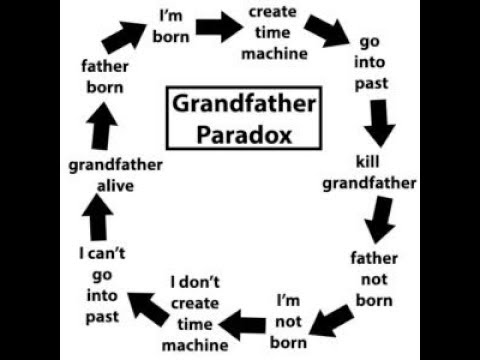
What is the grandfather paradox? Well it works like this. What if you were to travel backward in time and murder your grandfather before he fathered your own father? In that case you would never have been born and if you were never born how could you go backward in time to kill someone?

In the Grandfather Paradox the very existence of a Time Machine leads to a Logical Absurdity. (Credit: YouTube)

This idea of the dire consequences to the present of doing anything in the past has been the central idea in many Science Fiction stories like Ray Bradbury’s ‘The Sound of Thunder’ as well as movies such as ‘Back to the Future’. Many scientists feel that the logic of the grandfather paradox is so tight that traveling into the past is simply a pipe dream better left to science fiction writers.

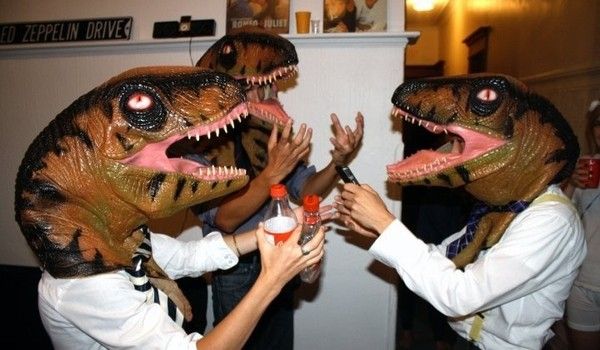
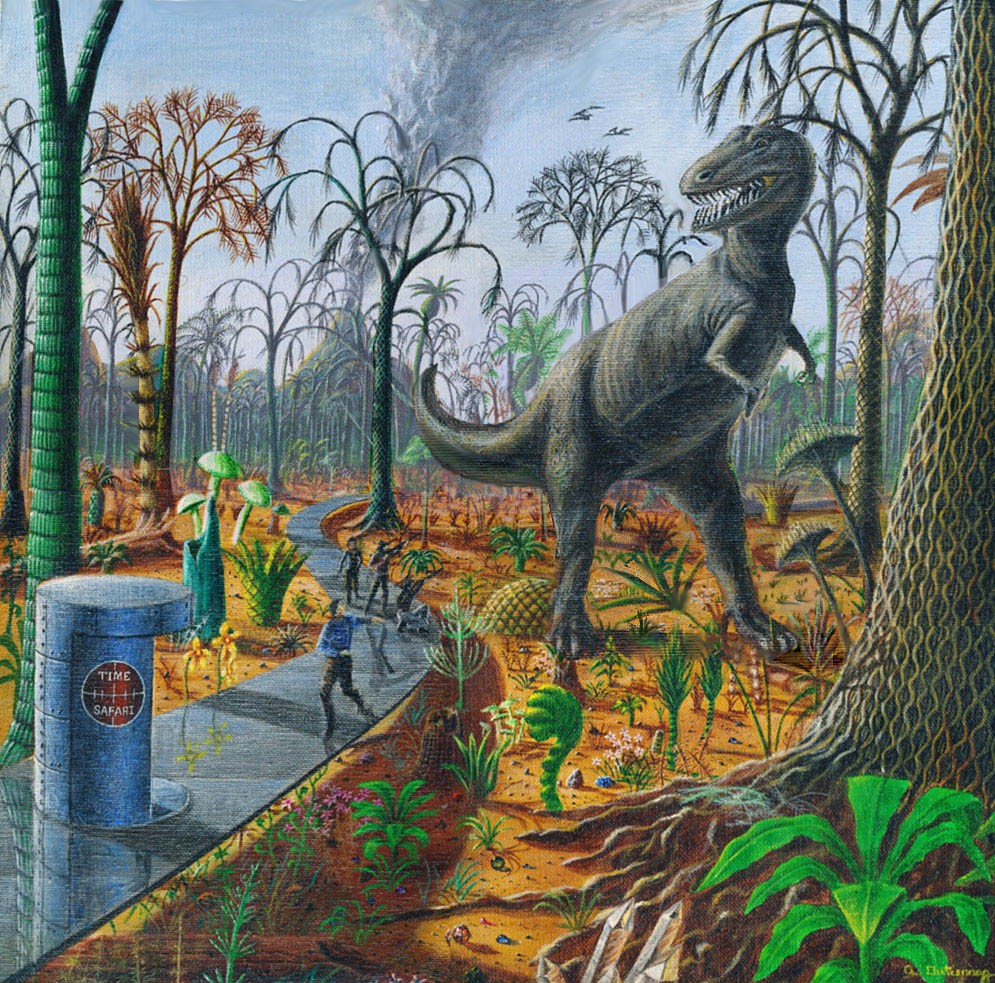
In Ray Bradbury’s ‘The Sound of Thunder’ hunters travel into the past to hunt a T Rex. Despite their best efforts they change the past, changing their present! (Credit: Deviant Art)
In ‘Back to the Future’ the same idea is used for humour as Marty has to repair the damage he’s done to the past or he’s a goner! (Credit: Universal Pictures)

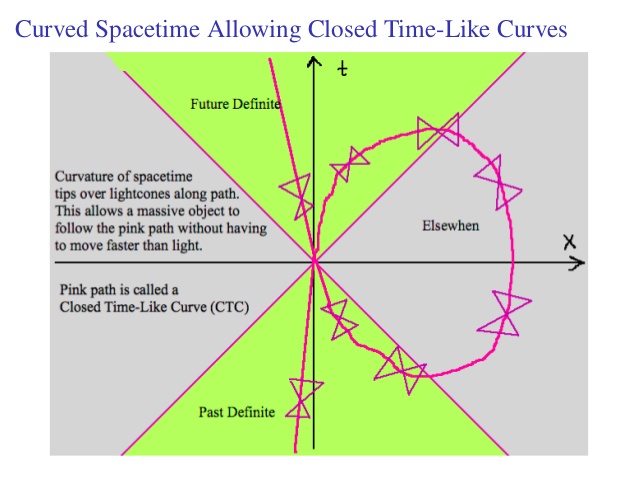
Still theoretical physicists and mathematicians looking for solutions to Einstein’s field equations occasionally came up with equations that, while physically hard to interpret seemed to include the possibility of going backward in time. Collectively these solutions are known as ‘Closed Timelike Curves’ or CTCs and where initially discovered back in 1937 by Jacob van Stockum and later extended by Kurt Gödel in 1949. Basically a CTC describes the movement of a material particle that loops endlessly through time and space in a circle. This would imply that the existence of a particle following a CTC would be extremely limited in both time and space.

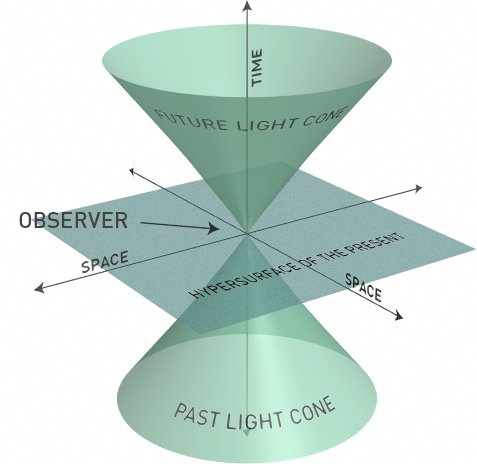
Every observer exist at a single point in space-time. Since nothing in the Universe can move faster than the speed of light that observer can only be effected by events within his Past Light Cone while he can only effect events with his Future Light Cone. (Credit: Wiktionary)
Under Certain conditions however, such as near a black hole, a light cone can be tilted. Continuous tilting results in a Closed Timelike Curve. (Credit: SlideShare)

Physically it is hard to understand how any particle following a CTC could interact with other more normal particles. Such a path in Space-Time would seem to imply the possibility of events happening without causes since to the normal particle the CTC particle can appear to pop into existence without reason. At the same time to an outside observer a particle inside a CTC might appear to experience an event before its cause!

Because of such paradoxes many physicists expect, or perhaps hope that an eventual unified theory of gravity with quantum mechanics might eliminate CTCs as even being mathematically possible. Other physicists however prefer to try to make sense of these weird solutions to the field equations.

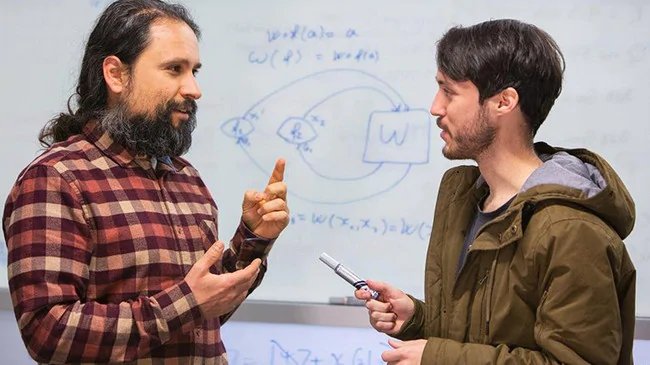
One of those physicists is Germain Tobar, a student at the School of Mathematics and Physics at the University of Queensland in Australia. With the assistance of his colleague Dr. Fabio Costa, Tobar has analyzed CTCs in such a way that he maintains opens up the possibility of time travel into the past.

Germain Tobar (r) with his advisor Dr. Fabio Costa. (Credit: News.Com.au)

But what about the grandfather paradox? What about the problem of actions in the past changing the present? Well in Tobar’s analysis what happens if you were to try to change the past then the universe would react so as to avoid the paradox, to repair the damage you have caused in other words.

I won’t go into the math. (Actually I am going through the Math, trying to remember what I learned in my course in General Relativity but I won’t impose it on you.) However, it appears to me that in Tobar’s treatment if you were to go into the past and kill your grandfather then when you returned to your present you would find yourself with a different grandfather or something equivalent. Sounds to me kind of like what Marty and Doctor Brown did to repair things in ‘Back to the Future’ except that this repairing would occur naturally, automatically.

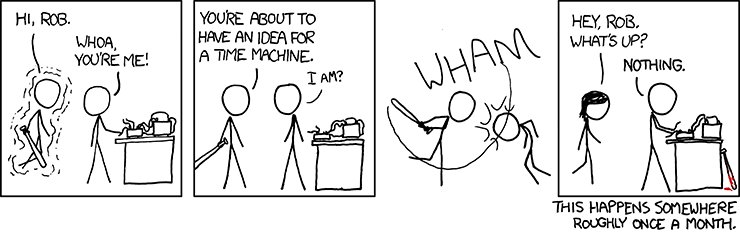
I have to admit I have real problems with that idea. Remember, the past starts just an instant ago! What if you were to step into a time machine and go back ten minutes and murder yourself just as you’re stepping into your time machine? I’m sorry but I can’t imagine how the Universe could repair that damage, how it could change things so much so quickly in order to somehow avoid the paradox!

Maybe it would work something like this? (Credit: xkcd)

Time Travel would be the ultimate power, the ability to undo all of our mistakes, to right all of the wrongs we’ve done. Perhaps for that very reason it is the one power that will always elude us.

The Nobel Prizes for Science in 2020 are Announced.

Early October is always that time of year when we all take a moment from the mundane news to recognize those scientists who are making fundamental contributions to our knowledge of the world around us. The cause of this annual ceremony is of course the announcement of the winners of the Nobel Prizes for the natural sciences of Physics, Chemistry, and Physiology.

The Nobel Prize. Oh, there’s also about a million bucks involved as well. (Credit: Phys.org)

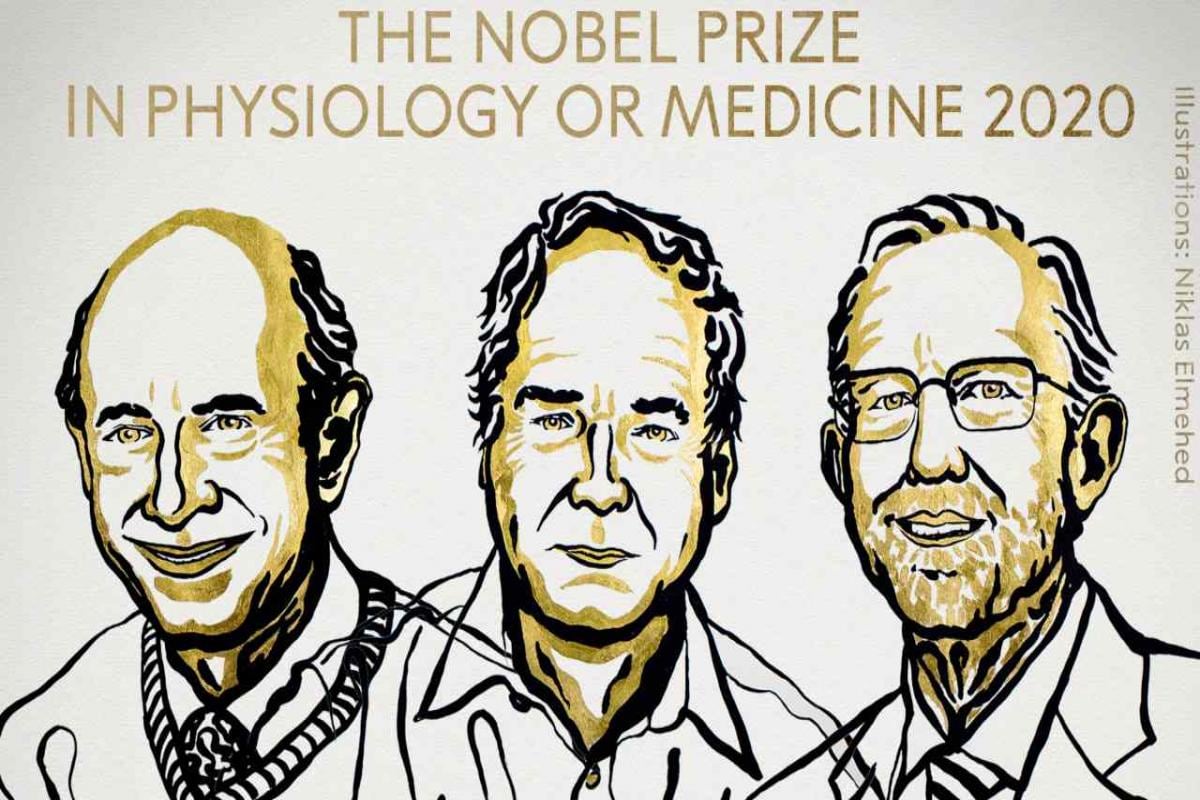
This year the Physiology, i.e. Medicine prize was announced first and has been awarded jointly to Harvey J. Alter, Charles M. Rice, both of the United States, along with British Born Michael Houghton. Fittingly in this year of the Covid-19 pandemic the work for which these three scientists have been recognized deals with the identification of and drug treatments for the deadly viral disease, Hepatitis C.

This Year’s prize winners for Medicine are (left to right) Harvey J. Alter, Michael Houghton and Charles M. Rice. (Credit: Firstpost)

Hepatitis in general is classified as an inflammation of the liver and is most commonly caused by one of five different viruses giving rise to Hepatitis A, B, C, D and E. Of these Hepatitis A and B were the first to be studied and vaccines are now available to provide immunity against those forms of the disease. The cause of Hepatitis C however remained elusive for many years, making the search for effective means of treatment difficult.

Hepatitis is really several diseases that all cause an inflammation of the liver. Hepatitis is a very serious disease that if left untreated often results in death. (Credit: DW)

It was in the 1960s that Doctor Alter succeeded in demonstrating that Hepatitis C was in fact a completely different disease from the types known at that time, A and B. Due to Alter’s work Hepatitis C was for a time actually known as Hepatitis ‘non-A’, ‘non-B’.

Following up on Alter’s work Doctor Houghton then was able to isolate the genetic structure of a previously unknown virus in Hepatitis patients. Finally it was Doctor Rice who showed that the new virus alone could cause Hepatitis. Once the cause of Hepatitis C was known tests and treatment techniques could be developed for the virus so that today Hepatitis C is a treatable disease.

Like all viruses the Hep C virus is simply a strand of genetic material, RNA in this case, surrounded by a protective shell of proteins and lipids. (Credit: Wikipedia)

The Physics prize came second and was also awarded to a trio of scientists. Sir Roger Penrose of Oxford University in the UK received half of the award while Reinhard Genzel of Germany and Andrea Ghez of the United States shared the other half. The three were all honoured for their pioneering work on Black Holes.

The 2020 Nobel Physics recipients are (left to right) Sir Roger Penrose, Reinhard Genzel and Andrea Ghez. (Credit: Hindustan Times)

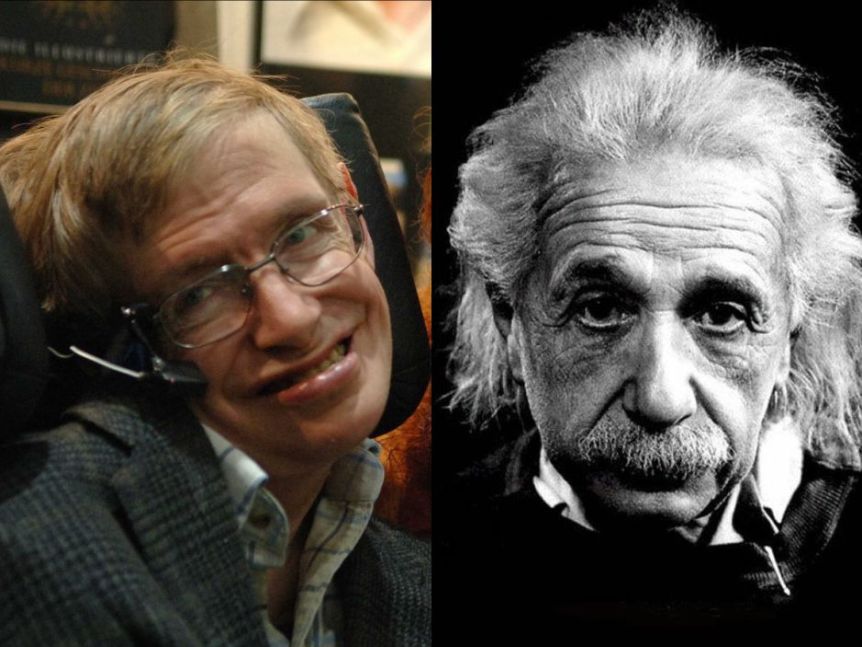
In fact it was Sir Roger, along with the late Stephen Hawking who were the first physicists to take seriously the idea that the odd solutions to Einstein’s field equations might have a physical reality. (Einstein himself could never made up his mind on whether or not black holes existed.) Penrose and Hawking spent decades mathematically working out the details of what a black hole would look like (pun intended). For much of that time they continued working despite the fact that there was absolutely no observational evidence to confirm any of their theories.

Perhaps the two men most associated with Black Holes. Stephen Hawking (l) and of course Albert Einstein. (Credit: ABC)

In fact much of the first evidence for black holes came from the work of Genzel and Ghez who were investigating the supermassive object at the center of our galaxy known as Sagittarius A. Using some of the world’s largest telescopes Genzel and Ghez developed techniques to see through the clouds of gas in the Milky Way’s center. Those techniques enabled them to study Sagittarius A and demonstrate that it was an immense black hole, confirming many of the theories of Penrose and Hawking. Supermassive black holes like Sagittarius A are now thought to exist at the center of every large galaxy.

In the constellation of Sagittarius lies the center of our Milky Way galaxy. There sits a supermassive black hole millions of times as massive as our Sun. (Credit: NASA)

So if Sir Roger is now getting a Nobel Prize why isn’t Hawking? The answer to that question is easy, he’s dead and according to the terms of Alfred Nobel’s will that set up the Nobel prizes only living persons can receive the award. If you think that’s not fair, well it really isn’t. However, this is actually not the first time that a scientist has died before his work was sufficiently confirmed to be considered for the prize.

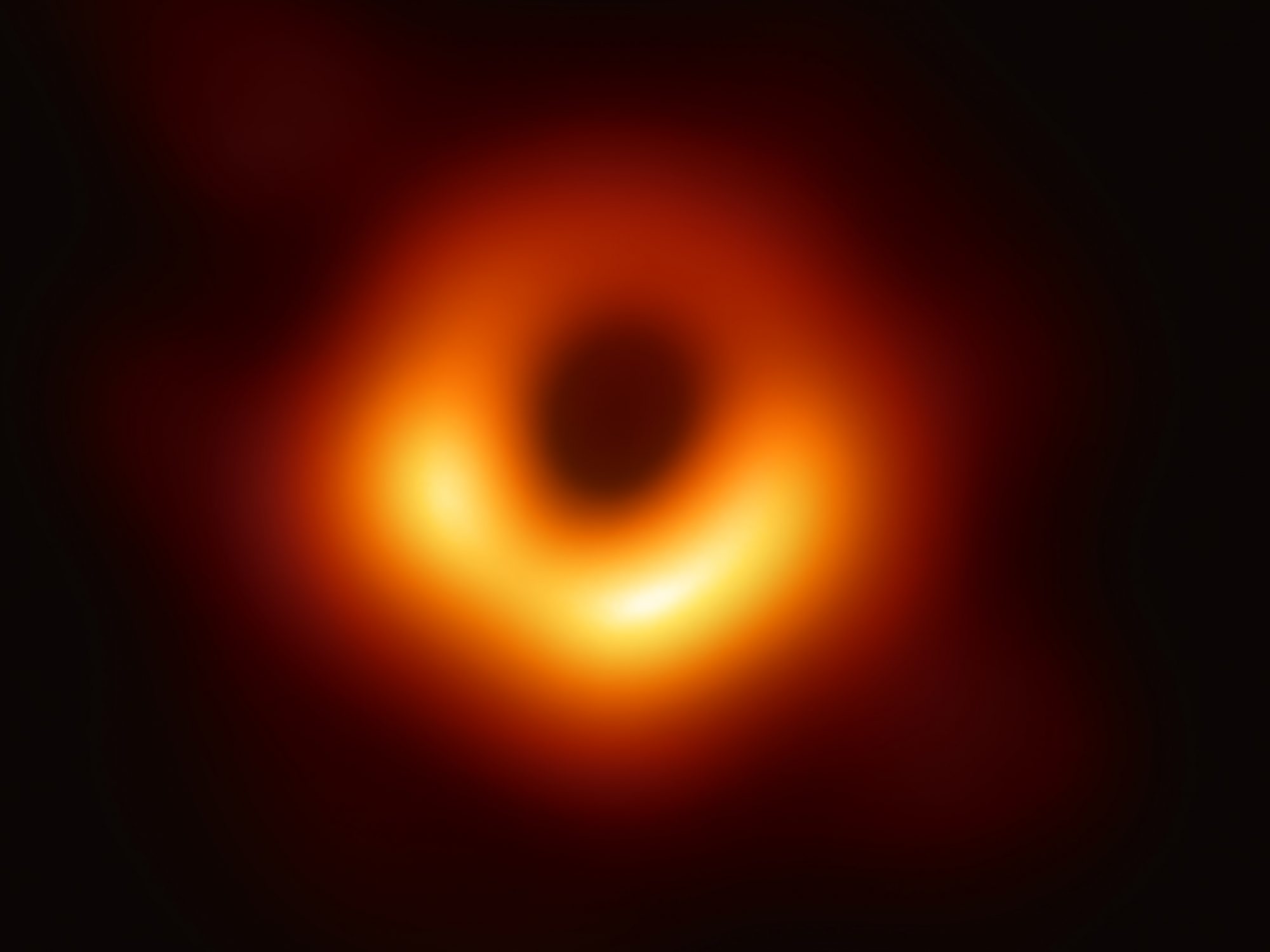
Actually I rather doubt that any of this year’s physics recipients would have won their awards if it hadn’t been for last year’s ‘photograph’ of a black hole, see my post of 17 April 2019. That image was the confirmation of many theories about black holes and undoubtedly convinced the Nobel committee that it was time for researchers studying black holes to finally be recognized.

The first ‘photo’ of a Black Hole, actually taken at microwave frequencies. This is the supermassive black hole in M87 and the accretion disk around it. (Credit: NPR)

No such prompting was required in order to choose the recipients of this year’s chemistry prize. Emmanuelle Charpentier of the Max Planck Institute in Berlin and Jennifer A. Doudna were honoured for their work on the gene editing tool CRISPR. See my posts of 5 August 2017, 1 December 2018 and 18 Aug 2019 for discussions of just how enormous a breakthrough CRISPR is.

CRISPR is the most accurate and precise tool yet discovered for the editing of genetic material. (Credit: YouTube)

The award to Doctors Charpentier and Doudna is unusual for several reasons. One reason is that the first major papers describing CRISPR were published less than a decade ago in 2011 and 2012. Nobel prizes are normally awarded for work that dates back several decades, remember what I said about Roger Penrose and Stephan Hawking above. This is in order to make certain that a great deal of conformational evidence has been accumulated supporting the work before the prize is awarded.

Over the last half dozen years however CRISPR has proven to be such a marvelous tool for genetic studies that the evidence of its importance is overwhelming. CRISPR has given science the most precise and useful tool that it has ever had for literally changing the code of life itself and we are only at the beginning of understanding all that it can do.

The other reason that this year’s chemistry prize is notable is because it represents the very first time that two women have shared the prize. It is unfortunately true that the majority of Nobel Prize winners are white men, with a small number of Asian men thrown in.

Like Hypatia of Alexandria Women have often made important contributions to science and mathematics. (Credit: Historic Mysteries)

Personally I want both greater female and minority participation in the sciences because the more scientists we have, whatever their colour or sex, the more discoveries we will get. For that reason I congratulate Doctors Charpentier and Doudna and hope that other women will soon join them in making equally important advances in our understanding of the Universe. Like Doctors Alter, Rice, Houghton, Penrose, Genzel and Ghez, and hey, let’s not forget Hawking, they all deserve our recognition for their work of discovery. 

Destruction of Archaeology sites around the World could forever erase the last traces of long ago cultures.

 It is often said that history is written by the winners. Over the past 100 years or so however many of the discoveries made by the science of archaeology have provided a more balanced view of human history, shining a light on some of the forgotten peoples from the past.

For those cultures whose written records are lost, if they ever existed, archaeology is the only means we have to learn anything about them. (Credit: Phys.org)

To recover that knowledge it is of course important that there still be archaeological locations and artifacts from the distant past that can be excavated and studied. However oftentimes throughout history the remains of the past have suffered because of the needs of succeeding generations. One prime example of this would be the city of Troy, which was rebuilt, time and time again during the classical period. Each new layer of habitation causing damage to the earlier layers beneath it.

The city of Troy actually consists of at least nine cities built one on top of the other. Homer’s Troy was either layer 6 or 7 and much of the evidence was destroyed when the later layers were built on top of them. (Credit: www.troyexcavations.com)

Of course those people of ancient times could be forgiven for not preserving the past, what few resources they had were needed just to keep them alive. It’s really only been in the last 200 years or so that human society has been able to afford archaeological research of any kind. Unfortunately that doesn’t mean that archaeology and economic progress no longer come into any kind conflict.

One very significant such conflict recently became big news in the land down under. It is thought that the first humans to reach Australia may have done so as much as 50,000 years ago and that the aboriginal population there remained in almost complete isolation until the late 18th century.

The first humans reached Australia about 50,000 years ago (KYA means Thousand Years Ago). They spread out quickly and within 10,000 years the entire continent was inhabited. (Credit: The Conversation)

That long period of isolation makes Australia a very important labouratory for the study of human societies and how they change and develop over time. Unfortunately the aboriginal population in Australia never grew very large nor did they ever develop cities or settlements of any kind. That makes any archaeological remains in Australia both very rare, and very valuable.

The musical instrument the didgeridoo is a well known symbol of Australian aboriginal culture. (Credit: Pinterest)

Which is why the destruction of two caves in Juukan George in the remote Pilbara region of western Australia by the mining company Rio Tinto is such a tragedy. Initial surveys of the caves over the last few years had found several traces of human activity, stone and bone tools along with other animal remains and even a lock of human hair. When dated the artifacts were found to be about 46,000 years old making them some of the earliest evidence for human habitation in Australia.

The two caves at Juukan George. Looks exactly like the sort of place a stone age culture would occupy but we’ll never know the extent of the occupation thanks to the mining company Rio Tinto whose engineers you can already see working in the upper background. (Credit: Jacobin)

None of that mattered to Rio Tinto, there was iron ore in the hills that contained the caves and they wanted it, and they wanted it now. So it was that in May of 2020 the two caves were blasted out of existence in order to clear the way for mining operations. Just another example of short sighted corporate greed leading to the loss of something that can never be replaced.

I dare say that this was the attitude of the corporate executives at Rio Tinto when they destroyed the Juukan caves. (Credit: Robert Steveson)

Not that Rio Tinto did anything illegal. The company had a 2013 agreement from the government of western Australia giving them permission to mine the site and in the days leading up to the detonation they gathered all of their corporate lawyers in case the Puutu Kunti Kurrama or some other indigenous people’s organization tried to obtain a judge’s injunction in an effort to stop the blasting operation.

Like a great wound in Mother Earth modern mining operations are so destructive of the local environment that the damage can last for decades. (Credit: New York Post)

Unfortunately it was only after the destruction at Juukan George that the protests and questions from government officials began. A month after the caves were destroyed Rio Tinto was forced to publish an apology for their cultural banditry. Since that time the company’s board of directors have forced out the CEO Jean-Sebastien Jacques and his top two assistants. In typical corporate fashion the trio had their yearly bonuses taken away BUT they reached an amicable departure settlement with the company, which I bet was worth more than the bonuses.

Protesters rally outside the Rio Tinto office after the destruction of Australian Indigenous sacred sites in Perth, June 9, 2020. Rio Tinto chief executive Jean-Sebastien Jacques will leave the Anglo-Australian mining giant by March over the destruction of the sacred sites, the company said on Friday, Sept. 11, 2020. (Richard Wainwright/AAP Image via AP)

In the words of Rio Tinto’s chairman Simon Thompson, “…what happened at Juukan was wrong.” To try to recover something of the company’s image he and the other Rio Tinto stockholders have agreed to help promote the preservation of other aboriginal heritage sites in the future.

But I’ll bet you they are still taking that iron ore from Juukan George!

P.S. News has just been released that the people of the Island of Bougainville in the nation of Papua New Guinea are accusing the Rio Tinto Corporation of releasing poisons such as mercury into the rivers of the island from an abandoned copper and gold mine. The residents of Bougainville maintain that they have suffered from the environmental policies of Rio Tinto for years but since the mine has stopped production the company has made no attempt to clean up the site or prevent a possible disaster happening to the people of Bougainville.

The Rio Tinto gold and copper mine on Bougainville, now abandoned. Why isn’t the company required to restore the site to something like it’s original state. Instead it was simply left to leak dangerous elements like mercury into the local water systems. (Credit: Mining .com)

Why does this news about Rio Tinto not surprise me?

Western Wildfires, yet another disastrous result of Climate Change.

Let me just take a moment before we start to address the nonsensical issue of whether we should be calling the damage done to our environment by the emission of huge amounts of greenhouse gasses global warming or climate change. I look at it this way; the greenhouse gasses are causing the Earth to warm, that’s global warming. That warming then directly causes a large variety of different problems, everything from sea level rise, more intense tropical storms to excessive droughts. That’s climate change.

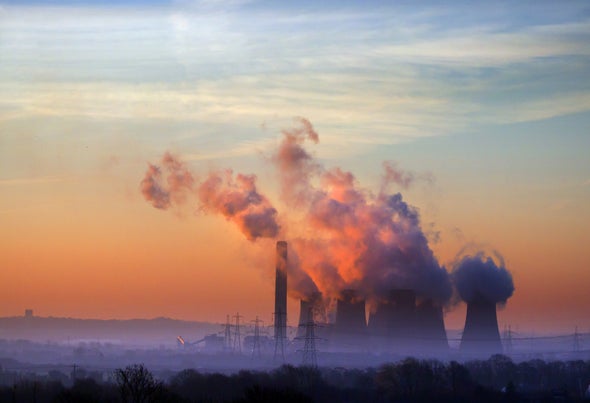
Multiply this image tens of thousands of times to get an idea of the pollution we’re just pouring into the atmosphere. Can anyone really believe it’s not having any effect on our planet? (Credit: Save Our Eco)

In other words, greenhouse gasses cause global warming. Global warming then causes the different aspects of climate change.

The greenhouse effect in a nutshell. The warming of the Earth by CO2 and other gasses hs been known now for almost two centuries, and is easy to verify in a lab, so how can anyone deny it? (Credit: NIWA)

Honestly though, it really doesn’t matter what you call it so long as you recognize the damage that we are doing to the only planet we have and are willing to do something to solve the problem. Whether you call it global warming or climate change it’s still an ever growing danger that we have to face.

This year’s Atlantic Hurricane season has been so severe that we’ve already run out of names for storms and had to resort to used the Greek alphabet, and there’s still a month left go! (Credit: NBC DWF)

And the evidence of how dangerous the situation is becoming grows every day. This year’s Atlantic hurricane season is demolishing all previous records for the number of storms but today I’d like to talk about the crisis in the western part of the US due to the unprecedented number and intensity of wildfires.

Like the hurricanes in the Atlantic the number of wildfires in the western US this year is simply unprecedented. (Credit: National Geographic)

Now I used to live in California’s silicon valley, also known as the San Francisco Bay Area, during the 1980s so I am personally familiar with how large areas of California can go from March to November without a single drop of rainfall. I can remember being warned about the dangers of drought conditions, I have seen how square kilometers of grass and brush will turn brown because of lack of water and I have myself witnessed several, small wildfires. I know from personal experience that wildfires are just a natural part of California’s ecology.

I have driven across the Golden Gate Bridge in San Francisco more than a hundred times but because of the smoke and glow of the wildfires I can barely recognize it. (Credit: Deadline)

However the extent of the fires now burning not just in California but throughout the western half of the US is far beyond anything in human experience. When I see some of the images coming out of San Francisco, coming from places I know very well, turned orange by the smoke and distant glow of massive fires I’m chilled. That hellscape is not the California I knew.

In just the past month of August the western US has seen a number of unprecedented weather and fire conditions. A fire tornado was observed for the first time ever just north of Lake Tahoe. The hottest temperature ever reliably recorded on Earth’s surface, 54.5ºC (130ºF), was measured in Death Valley. A dry thunderstorm swept across Northern California sparking 11,000 lightning strikes that ignited over 300 fires, two of which grew to become the largest even seen in the state. So far this year over 7 million acres of forest land has been burned, a staggering amount far surpassing any previous year’s total, and the fire season isn’t over yet.

The highest temperature ever recorded just recently occured in California’s Death Valley. (Credit: Forbes)
Dry lightning, lightning without rain, is another feature of California’s extreme weather. (Credit: CNN.com)

Meteorologically what is happening out west is that the increasing temperatures are leading to the growth of a massive ‘heat dome’, a high pressure system that becomes stuck in the same region of the Earth due to the jet streams. These heat domes have led to severe drought conditions causing the death of millions of trees that provide even more fuel for the fires triggered by the heat.

A Massive high pressure system has parked itself over the western US causing a historic heat wave. (Credit: CBS News)

The statistics back up the idea that what we are seeing is an ongoing trend rather than a singular, extraordinary season. Although the National Interagency Fire Center only began keeping more accurate records in 2000 those 20 years of records for California are enough to illustrate the alarming increase in the number of acres of forest burnt each year.

Acres of California woodlands destroyed by fire over the last 20 years.. (Credit: Wikipedia)

And remember the total for 2020 was as of the 11th of September and has grown considerably since then. Adding in the land area burnt in the other western states and the total area of forest destroyed now comes to something larger than the entire state of New Jersey.

But California isn’t unique; the golden state is just a bit out in front of the rest of us in the changes happening due to climate change. Back in August the Midwest States, especially Iowa, suffered badly from a rare storm system known as a derecho, a wall of storms hundreds of kilometers in width. The straight line winds developed in a derecho can be as strong as those in a tornado but the damage caused is spread out over a much wider path. In addition to massive destruction to homes and other structures several hundred square kilometers of crops were destroyed, a real tragedy in the agricultural heartland of America.

Just some of the destruction caused by the derecho storm that swept across the plains states in August. (Credit: CNN.com)

Once more we know what is happening, Earth’s rising temperatures simply means that more energy is being pumped into the weather systems around the world. More energy means more severe weather of all kinds, more severe hurricanes and more sever droughts, more and stronger tornadoes and just stronger storms in general.

And all just because we refuse to shift our energy production from quick, easy, cheap fossil fuels, which will run out eventually anyway, to longer lasting, sustainable forms of energy production. We all know that the long term cost of staying on our present path will be enormously greater than any short term savings. When will we finally find the strength of will to do what we must?

Astronomy News for September 2020.

There were a couple of interesting stories about our Universe that caught my eye. Both deal with celestial objects and events that are among the largest and most powerful known to astronomy.

I’ve written several posts about the Gravity Wave observatories that are the newest field of research in astronomy. (See my posts of 14Jun17, 22Oct17, and 17Nov18) To date the two Laser Interferometer Gravity wave Observatory (LIGO) observatories in the US along with the Virgo observatory in Italy have observed over fifty events including the merger of two black holes or two neutron stars into a black hole as well as black hole and a neutron star into a black hole.

The LIGO gravity wave observatories in the US consists of two detectors, one in the state of Washington the other in Louisiana. (Credit: Caltech)
The inner workings of one of the LIGO detectors. (Credit: Wiley Online Library)

In all of those events observed thus far however the masses of the objects involved were between two and ten times the mass of our Sun. This places them all within a class known as stellar black holes, which are black holes with a mass comparable to that of our Sun.

The merger of two Black Holes sends out waves of gravitational energy so powerful that they can be detected billions of light years away. (Credit: Science)

At the same time astronomers are discovering more and more evidence of super-massive black holes in the center of every large galaxy. These black holes are estimated to have masses anywhere from several million to several billion times that of our Sun. Those observations left a gap however; there was no direct evidence for the existence of black holes with masses between several times ten to several times a thousand that of our Sun.

When the supermassive black holes at the center of galaxies consume nearby stars and dust they become active galactic nuclei, also known as Quasars. (Credit: Mesosyn)

Until now, because on April 12th of this year a new gravity wave event, given the designation GW190521, was detected whose characteristics were such that astronomers could determine the initial masses of the two black holes to be 85 and 66 times that of our Sun. The resulting merger gave birth to a black hole with 142 solar masses, the remaining 8 solar masses being completely converted into the energy of gravity waves. That makes GW190521 by far the most powerful gravity wave event yet detected.

Gravity Wave GW190521 represents the first evidence for the existence of intermediate mass black holes. (Credit: NDTV Gadgets 360)

But what interests astronomers the most was that the masses involved, 66, 85 and 142 solar masses all fit into that gap area where no black holes had ever been observed. That makes GW190521 the first direct evidence for the existence of intermediate black holes. While astronomers may have learned a great deal from these first observations you can be certain they are eagerly waiting the next signal from the merger of intermediate sized black holes.

In another story, on an even larger scale, we have all heard of the galaxy of Andromeda, the closest big galaxy to our own Milky Way and the most distant object that is visible to the naked eye. A typical spiral galaxy Andromeda is a vast disk of more than 200 billion stars some 100,000 light years in diameter at a distance of about 2 million light years from us. And you may have also heard that Andromeda is heading straight at us! In fact Astronomers estimate that our two galaxies are likely to collide in just a little over four billion years.

The galaxy of Andromeda is the farthest object visible with the naked eye. Moving in our direction Andromeda will collide with our Milky Way in about 4 billion years! (Credit: Universe Today)

Most of our current theories about how galaxies evolve are based upon such collisions between small galaxies leading to the build up of ever larger galaxies as the galaxies merge.  What kind of a merger will result from the collision of our Milky Way with Andromeda is unknown at present, after all it’s hard to predict the details of something that’s not going to happen for four billion years.

The Whirlpool galaxy is actually a collision of two galaxies. The large spiral on the left is devouring the smaller elliptic on the right. (Credit: NASA)

Now however a group of astronomers are asserting that the collision has already begun. Using the Hubble space telescope these astronomers, led by Professor Nicholas Lehner of the Physics Department at the University of Notre Dame, were trying to determine exactly how big Andromeda is. That’s not actually an easy task since galaxies are not cohesive objects but vast collections not only of stars but huge amounts of gas and dust. In other words galaxies don’t have nice, well defined edges but rather just trail off, becoming less and less dense the farther you get from their center.

The astronomers were able to study the halo surrounding Andromeda by measuring its effect on the light of even more distant quasars located behind the halo. Quasars are the very active cores of distant galaxies powered by the feeding of supermassive black holes in the galaxy’s center. 

Using the Hubble space telescope and by observing the light coming from distant quasars astronomers could measure the size of the halo of Andromeda. (Credit: NASA)

As the light from those distant quasars passes through Andromeda’s halo certain wavelengths of light are absorbed. By studying which wavelengths are absorbed, and by how much the astronomers can learn a great deal about the material making up the halo. And what Professor Lehner and his team have found is that Andromeda has a very, very thin halo surrounding it, and that halo extends at least as far as 1.3 million light years from the galaxy’s center, half the distance to our own Milky Way.

In a couple of billion years, as Andromeda gets ever closer will there still be anyone here on Earth to observe it? (Credit: Earthsky)

But if Andromeda has a big halo, reaching halfway to our Milky Way, shouldn’t our Galaxy have just as big a halo. In fact the team has found evidence that it does, and further evidence that the two halos are already beginning to interact. So in a sense that collision between Andromeda and the Milky Way has already begun, even if the main event is still a long time to come. 

The annual ranking for Colleges and Universities has been announced.

Today’s post will be a bit out of the ordinary because I will not be discussing science or engineering so much as the places where our scientists and engineers receive their education. I’m talking about the Colleges and Universities of the world. I was prompted to write this post by the release of the annual Times Higher Education survey of the world’s best Colleges and Universities.

Why do we humans always feel the need to rank everything? (Credit: UCLA)

Now which University was chosen as the best, which schools made into the top 10, or which country had the most universities in the top 100 is really nothing more than a competitive exercise of no actual importance. What is important is whether or not new institutes of higher learning are being founded, and whether existing universities are getting better. Still it’s worth taking a quick look at some of the annual survey’s results in order to get an idea of what is going on in the world of higher education.
At the very top of the Times Higher Education list for the fifth straight year is Oxford University in the United Kingdom. Britain also has another spot in the top ten, Cambridge University coming in at number six. All of the other spots in the top ten belong to Universities in the United States from Stanford University at number two to the University of Chicago at number ten. Indeed the first non US non UK University is ETH Zurich in Switzerland coming in at number 14 with the University of Toronto in Canada ranking at #18, and Tsinghua University in China at #20, also appearing in the top 20.

For the fifth straight year Oxford University was chosen as the world’s best place of higher education. (Credit: University of Oxford)
Stanford University took the second spot in the listing. (Credit: Class Central)

Now I’m not trying to brag, and neither should these results be a great surprise. The US and UK have pretty much dominated the world of higher education since the end of World War 2 when most of the world’s other Universities lay in ruin.

During the years when the USSR was pushing education as the way to demonstrate the superiority of Communism several Russian Universities where recognized as among the best schools in the world. However the current Russian government appears to prefer to keep its population ignorant and gullible so the quality of Russian education has declined noticeably.

Lomonosov Moscow State University is Russia’s top school at #194 but just three years ago it placed at #161! (Credit: Schlinder)

Instead it’s now China whose institutes of higher learning are gaining the most ground. In addition to Tsinghua University, Peking University received a high ranking of 23 making China the only country other than the US and UK to place two universities in the top 25. China in fact succeeded in doubling its number of schools in the top 100 from three last year to six this year.

Tsinghua University is China’s top ranked school. The obvious newest of the buildings is an indication of the support education is receiving from the Chinese Government. (Credit: Hotels Combined)

Most of these Chinese Universities are in fact relatively new, babies when compared to Oxford or Cambridge. It’s a sign of China’s growing middle class who want a good education for their children, and are willing to pay for it. It’s also a sign that the Chinese government recognizes that a larger, better educated middle class will actually make China a stronger more powerful nation.

Other Asian nations are also working hard to improve the quality of the education they provide to their people. Sixteen Asian universities placed within the top 100, the most since the Times Higher Education list began.

The University of Tokyo is another important place of learning. (Credit: Britannica)

Of course the improvement in higher education in Asia doesn’t have to mean that education is the west is slipping. In the years to come the world is going to need all of its college and university graduates if we’re going to overcome the tremendous challenges facing our planet.

The Main Building at Drexel University. Drexel has grown so much in the years since I first attended class there! (Credit: The college Post)

By the way, my old Alma Matter Drexel University came in at 351. Not great, but not bad considering that’s 351st in the entire world.

Space News for September 2020.

There are a number of small but nevertheless important items that have happened over the last month which deal with NASA’s Artemis program. So let’s get started.

 If NASA’s Artemis program is going to successfully put Americans back on the Moon by 2024, or indeed ever, it is going to need a big rocket to put all of that hardware into space. The big rocket that NASA has been building now for nine years is called the Space Launch System (SLS) and although it may look superficially like the old Saturn V it is in fact a completely new design based on Space Shuttle hardware.

Artist’s impression of NASA’s Space Launch System (SLS). (Credit: NASA)

In fact the SLS employs four shuttle main engines in its first stage and in addition has two shuttle solid fuel boosters attached. Since the SLS is making use of a fair amount of existing components you’d think that the design cost and schedule would be reasonable compared to those for a completely new large launch vehicle, say Space X’s Falcon 9.

The first core stage of the SLS nearing completion. Those four big engines are identical to the engines used on the Space Shuttle. (Credit: NASA Spaceflight.com)

Well you’d be wrong, in fact the original cost of the central core first stage of the SLS was estimated at $6 billion. That amount was already ‘readjusted’ back in 2017 to $7.17 billion and now NASA has quietly increased that amount to $9.1 billion. And as to schedule, the original launch date for an unmanned flight of the SLS was supposed to be back in 2017, a date that was later pushed back to December of 2019 to June of 2020. Needless to say June has come and gone and the current schedule now for the first, unmanned launch of the SLS is November of 2021.

Even that is not certain however, because the SLS still has quite a lot of testing to finish first. In fact one big test, a static firing of one of the big solid fuel boosters, was carried out successfully on 2 September. During the test the 53m long booster burned for the full 126 seconds required for an actual flight. See image below. While the data from the test is still being analyzed the initial results indicated a very successful test.

Test of the SLS solid booster rocket, also based on Space Shuttle technology. Currently all indications are that the test was a complete success. (Credit: Spaceflight101)

The biggest test still remaining before next year’s unmanned flight is called ‘Green Run Hot Fire’ and may possibly occur as early as next month in October. For the Green Run Hot Fire test the entire rocket, except for the solid boosters, is held down to a test stand and the four main engines are fired for eight minutes, the time simulating a normal launch. Although all of the different subsystems of the SLS have been tested separately this will be the first time the entire rocket will be tested together.

Testing status for the core section of the SLS as of 10 July 2020. Test 8 could occur as early as late October. (Credit: NASA)

If any problems occur during the Green Run Hot Test it would almost certainly cause yet another delay in that first unmanned test flight. And if that first test flight gets pushed back any further there’s little hope of Artemis reaching the Moon by 2024. In fact because some members of congress are just getting sick and tired of the delays and cost overruns associated with the SLS it might just mean the end of the Artemis program entirely.

Mission plan for the unmanned Artemis 1 flight to the Moon. (Credit: NASA)

Thankfully there’s a bit of better news for Artemis. One of the aerospace companies that are preparing bids for the contract to build the Lunar lander that will actually take the Artemis astronauts down to the Moon’s surface is Blue Origin, the other two being Space X and Dynetics. In late August Blue Origin delivered to NASA’s Johnson Manned Spaceflight Center in Houston a full-scale model of their planned lander.

Mock up of the Blue Origin’s planned Lunar lander is delivered to NASA. (Credit: Tech Explorist)

The model is 12 meters in height and consists of both a planned descent and ascent stage. Although the mock-up does not in any sense function it will allow NASA astronauts to simulate getting down from the crew cabin in the ascent stage to the ground with all of their equipment, and back again. This sort of ergonomic testing is important at this stage because it will not only allow the astronauts to become familiar with the vehicle but if any design flaws are discovered during these tests they can be corrected before construction of the first lander begins.

Artists’s impression of the Blue Origin Lander on the Moon. (Credit: Blue Origin)

Although Blue Origin will be the prime contractor should they win the contract the lander design will actually be a team effort including Lockheed Martin, Northrop Grumman and Draper. While Blue Origin concentrates its efforts on the descent stage it is Lockheed Martin who will be primarily responsible for the ascent stage. The team members hope that by splitting up the design efforts it will speed up the design and development of the separate components.

So work is progressing, however slowly on the hardware needed to get Americans back to the Moon, but what about the equipment they’ll be using while on the Moon. For example the old Apollo astronauts had a small Lunar rover vehicle that allowed them to explore more of the Moon’s surface than they could on foot. Are there any plans for an updated Lunar Rover?

The last three Apollo missions, 15-17, took a small Lunar Rover along with them. This is Apollo 15’s. (Credit: The Detroit Bureau)

Well it turns out that it’s the Japanese Aerospace Exploration Agency (JAXA) who has been given the task of developing the rover as a part of their effort toward the Artemis program. As you might guess JAXA turned to a Japanese company well known for their expertise in motor vehicles, Toyota for help in developing an initial Lunar rover design.

Artist’s impression of Toyota’s concept for a new Lunar Rover. Looks a lot more comfortable! (Credit: Space News)

Named the Lunar Cruiser after Toyota’s famous Land Cruiser the proposed rover would be considerable larger than the Apollo rover. Equipped with a pressurized cabin so that the astronauts can remove their spacesuits while driving across the Moon’s surface the rover will be powered by hydrogen fuel cells and is expected to have a range as much as 10,000 kilometers.

Currently all of these design specifications are preliminary; after all we still a lot of work to do just getting back to the Moon. The eventual goal of the Artemis program is to establish a permanent base on the Moon and that’s when the Lunar Cruiser would become an important piece of equipment.

In 15-20 will we have a Moon Base resembling this artist’s impression? (Credit: European Space Agency)

Still it is nice to speculate about what kind of Lunar Base we may have in about another ten years. I do hope that NASA gets the Artemis program on track. It’s been almost 50 years since the last human set foot on the Moon, when Artemis succeeds in getting us back I hope this time its for good. 

Scientists are making strides in developing a direct connection between a human brain and a computer.

For decades now one of the dreams of science fiction has been the development of technology that would allow a direct connection between the human brain and an electronic computer, both a dream and a nightmare. The possibilities that such a technology could open up are beyond imaging. Just consider being able to access all of the stored knowledge on the Internet simply by thinking about it. Or how about being able to see, in your mind the images from cameras anywhere in the world. Such technology might even make the age old dream of telepathy real as two brains could speak to each other through a computer.
Robocop was an extreme example of a Human – Machine Interface. Would such a degree of integration even be possible? (Credit: Den of Geek)

On the other hand, could that same technology be used to access your most private thoughts and opinions without your permission, so that the very idea of privacy no longer existed?  Or what if advertisers could, on a regular schedule implant an ad directly into your brain. No changing channel or going to the bathroom during commercials, they’re inside you!

Such developments are at least decades away. Right now the major goal of Human-Machine-Interface (HMI) technology is to develop methods for people with advanced prosthetics to control them directly from their brains. Like Luke Skywalker’s robotic hand in Star Wars.

Great progress is currently being made in the technology that will allow disabled persons to control their prosthesis directly from their brain. (Business Insider)

Currently one of the major problems facing researchers in HMI is a matter of finding the right materials for the interface. Nearly all electronic circuits use copper as a conductor but when copper is implanted into living flesh, which is mostly a salty liquid, it corrodes very quickly, degrading if not actually blocking the performance of the circuit. And those corroded metals in turn cause scarring of the flesh, which will irritate if not actually harm the person who had the circuit implanted in them. So scientists and engineers have been searching for an organic conductor that will not only give good electrical performance but which will not react in any harmful way when inside the body.

Recently scientists at the University of Delaware have announced that they have found such a material. The team, led by Doctor David Martin has been investigating a class of organic materials known as conjugated polymers that are able to conduct electric current. The material that they identified is known as Pedot and is commercially available as an anti-static coating for electronic displays, I actually think I’m familiar with it.

Professor David Martin and his team of researchers at the University of Delaware. (Credit: University of Delaware)

During testing Pedot showed all of the specifications needed in an interface between electronics and living tissue without any sign of scaring. In other testing Pedot was even able to be infused with dopamine as a possible treatment for addiction making it a possible candidate for other medical procedures as well.

Some of the electrical characteristics of Pedot. To me these plots speak volumes. (Credit: Science Advances)
Disks of Pedot infused with other chemicals. (Credit: Researchgate)

So if scientists have found a material that will allow them to interface electronics directly to the human brain, what kind of electronics will be the first to be implanted? Well Elon Musk of Space X and Tesla fame has funded a small bio-tech company Neuralink that is developing a chip sized device that reads brain impulses and transmits them via bluetooth to a smartphone or other computerized device. Last year Musk showcased a model of Neuralink that was implanted behind the ear of a patient and picked up brain impulses by means of thin wired electrodes laid along the top of the skull. This year’s model has just been announced and consists of a coin-sized disk implanted directly onto the skull.

Last year’s model of Neuralink (left) and this year’s (right). (Credit: Dezeen)

Initial testing of this year’s model consisted of implanting the interface onto the skulls of three pigs, directly over that portion of the brain that dealt with signals from the animal’s snout. Now pig’s snouts are one of their main sensory organs and when the pigs were given food or other objects to smell and rummage through a display screen showed the firing of the neurons in the animal’s brains as they used their snouts.

One of the test subjects for this year’s testing of Neuralink. The disk was implanted onto the pig’s skull and could detect signals sent from the pig’s snout. (Credit: Medium)

Neuralink now hopes to begin testing on human volunteers sometime this year. The plan is to implant the device in patients with severe spinal chord injuries in the hope that a second device implanted below the injury would enable the patient’s brain signals to bypass the injury and therefore allow them to once again control their arms and legs.
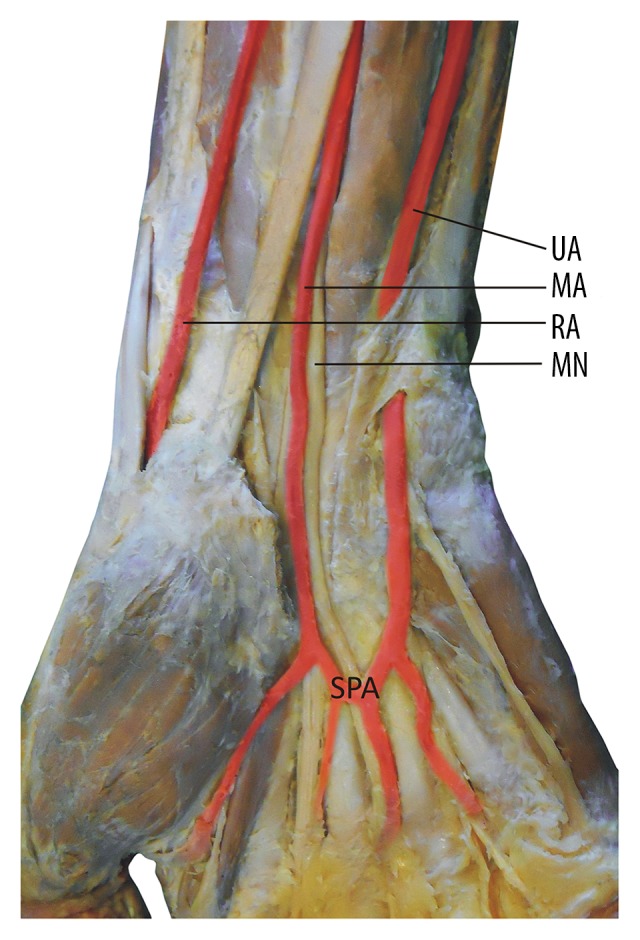
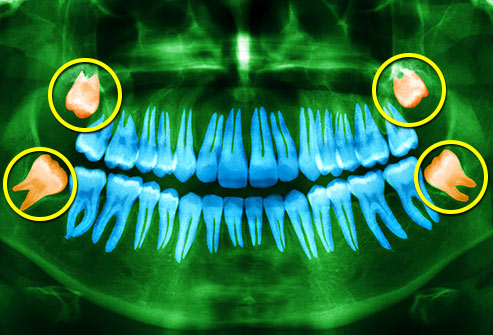
We will soon be faced with the question, how far do we want to go? (Credit: Pinterest)

The future possibilities of such technology belong more in science fiction novels, for now. Right now however the biggest problem the engineers at Neuralink have is that their rather delicate thin-wire electrodes don’t last long inside the patient’s body. They degrade over time because of the corrosive chemicals in the body.

What do you want to bet that the people at Neuralink are contacting the team at the University of Delaware right now?

Three new inventions that may help to save our environment.

Everybody knows that our environment is in trouble. The waste and pollution generated by eight billion human beings is choking the planet, producing changes that have already caused the extinction of hundreds of species, and may lead to our own. If we are going to preserve the environment we cannot just return to a simpler, less polluting level of technology, let’s say the 18th century as an example. As I said there are eight billion of us now and horsepower, waterwheels and ox-drawn plows will not sustain such a large population. Instead we must use our technology to develop solutions to the problems that ironically we used technology to cause.

Going back to the days of Currier and Ives may seem attractive to some people but the world could only support about half a billion people back then. What happens to the other seven and a half billion people living today? (Credit: Granger Art on Demand)

Recently there have been three new technological breakthroughs, inventions if you like, that may play an important role in saving our planet. At least I hope so.

In many ways plastic is actually harmless. It’s neither poisonous nor cancer causing. In fact it has many excellent qualities, it has countless uses and it’s so cheap that we use it in countless ways. Ironically it is the fact that plastic is so useful, and cheap that makes it so great a danger. We manufacture so much of it and despite what the plastics manufactures tell us we don’t recycle more than a very few percent of what we make. The truth is that, aside from plastic 2-liter bottles, most single use plastic items, like plastic bags, utensils and straws, are not even made of the right kind of plastic to be recycled. All of those items, and many others just accumulate in our waste dumps which, since plastics don’t decay, are becoming an ever bigger problem on both the land and in the sea.

Every day we produce more plastic than this. Since it doesn’t bio-degrade what do we do with it? (Credit: Rolling Stone)

To solve that problem chemists have for many years been searching for a kind of plastic, technically a polymer, that can easily, and cheaply be broken back down into their constituent parts, chemically known as monomers. These reconstituted monomers could then used to create new polymers, new pieces of plastics over and over again.

Just a few of the kinds of plastics and other polymers chemistry has developed. Notice words like ‘Chain Growth’ or ‘Polyaddition’ or Step Growth’. In many way developing a polymer is like playing with legos! (Credit: Polymer Database)

A team of researchers from the United States, China and Saudi Arabia has recently announced the development of just such a polymer plastic, which they call PBTL. According to the announcement, which appeared in the journal Science Advances, PBTL has all of the desirable qualities of current plastics but in the presence of a catalyst PBTL breaks down readily into its original monomers. After testing through multiple build ups and breakdowns the teams concluded that there was no reason that the cycle could not be carried out over and over again, that they have succeeded in developing a plastic that is designed to be recycled.

PBTL in action, being broken down into its component monomers. (Credit: Innovation Toronto)

Of course there is one caveat, in order to make the optimal use of PBTL’s reusability it must be separated not only from non-plastic waste but from all other kinds of plastic. That means more sorting, more manpower required in the recycling effort and that means more cost. What’s needed therefore is some recognizable way to distinguish PBTL from everything else. It would also be helpful if all plastic items were manufactured from PBTL but that may be difficult to accomplish since there are so many plastic manufacturers.

Sorting plastics into their various types is time consuming and expensive, the reason why so little plastic is actually recycled. (Credit: Living on Earth)

Still it is a step in the right direction. With PBTL we now can recycle all of our plastics, if we have the will to do so.

As bad as the problem of plastics is, and even greater threat to our planet must surely be the enormous amounts of CO2 that we have been releasing into the atmosphere. And to make matters worse at the same time we are cutting down the Earth’s forests that are the best way of removing that CO2 from the air. The resulting buildup of greenhouse gasses is the direct cause of global warming and the attendant changes in climate.

Oh human activity can’t be the cause of environmental change, (cough) (cough)!!!! (Credit: Science Alert)
And even as we pour CO2 into the air we are cutting down all of the trees that could absorb it! (Credit: Medical News Today)

So if forests and other vegetation are one way of getting CO2 out of the atmosphere shouldn’t we be planting more trees and other plants. Of course there are people trying to do just that, however those efforts have so far been unable to even keep pace with deforestation let alone bring down the level of greenhouse gasses.

While planting trees to get CO2 out of the air is a good idea it’s only a drop in the bucket. We need to do a lot more! (Credit: American Forests)

So scientists have been trying to develop an ‘Artificial Leaf’ which, like a real leaf, would use sunlight and water to covert CO2 into a usable fuel. Such a technology would mimic photosynthesis and in large scale operations could provide the energy we use reducing if not eliminating our dependence on fossil fuels.

The goal of artificial photosynthesis is to develop a process that will use sunlight to remove CO2 from the air while producing organic fuels. (Credit: ResearchGate)

Some of the most advanced research toward an artificial leaf has come from the Department of Chemistry at Cambridge University where Professor Erwin Reisner leads a team of chemists who last year succeeded in producing a device that converted CO2 into the fuel syngas, a fuel that is not easy to store for long periods of time. Another problem with the device was that it was constructed from materials similar to those in ordinary solar cells, making the device expensive to scale up into a large scale power plant.

Now the team at Cambridge has developed a new artificial leaf that is manufactured on a photocatalyst sheet, a technology that is capable of being scaled up much more easily, and therefore more cheaply. Also the end fuel produced by the new ‘leaf’ is formic acid which is more storable and can be converted directly into hydrogen, as in a hydrogen fuel cell.

University of Cambridge ‘Artificial Leaf’, powered by sunlight it takes CO2 out of the air and produces usable fuel. (Credit: University of Cambridge)

The Cambridge team still has more work ahead of them; the efficiency of the entire system needs to be improved for one thing. However it is quite possible that in just a few years we may have a new form of solar technology that not only produces energy but actually removes CO2 from the atmosphere.

Of course we already have a both solar and wind technologies that are actually producing a sizable fraction of our electricity. One big problem that has limited the usefulness of both solar and wind power is that the energy they generate varies significantly. When it’s a sunny day or if there’s a good breeze they produce a lot of energy that somehow has to be stored so it can be used at night or an a calm day. Most often that energy is stored in old-fashioned chemical batteries, a technology that has hardly improved in the last 100 years.

Alessandro Volta’s original battery. It’s really not that different from the battery in your car. (Credit: Wikipedia)

As any owner of an electric car will tell you batteries absorb their energy slowly, taking a long time to charge up. Not only that but batteries tend to be heavy, costly and have a limited useful lifespan, a very large number of problems for such a critical component in modern technologies. 

One of the biggest drawbacks to owning an electric car is simply the time it takes to charge the batteries. (Credit: Car Magazine)

There is another energy storing electronic device that is cheap, lightweight, can be charged and discharged thousands of times, not only that but they can absorb or discharge their energy very quickly. They are called capacitors, descendents of the old Leyden jar and even if you’ve never heard of them you own hundreds of them in your cell phones, TVs, computers and other electronics. Capacitors, the very name comes from their capacity to store electricity, are superior to chemical batteries in every way except one, they can’t store nearly as much electrical energy as a battery can.

In the 18th Century a Leyden jar, a capacitor was high-tech. (Credit: Wired)

As you might guess there are engineers working on capacitor technologies in the hope of increasing the amount of energy they can store. One such group is working out of Lawrence Berkeley National Labouratories and is headed by Lane Martin, a Professor of Materials Science at the University of California at Berkeley. Taking a common type of commercially available capacitor known as a ‘Thin Film’ capacitor Martin and his associates introduced defects into the material of the thin film known as a ‘relaxor ferroelectric’.

Lane Martin — professor, materials science and engineering (at left). With Karthik Jambunathan, graduate researcher (center); and Vengadesh Mangalam, postdoctoral resercher (at left). (Credit: Phys.org)

Now ferroelectric materials are non-conductive which allows the capacitor to hold positive charges on one side of the film and negative charges on the other, that’s how the energy is stored. The higher the voltage across the thin film the more energy is stored but if the voltage gets too high the film breaks down, the energy is released and the capacitor is destroyed.

Just a sample of the many varieties of film capacitors. (Credit: Wikipedia)

 The engineers at Lawrence hoped that by adding the defects to the thin films they could increase the voltage the capacitor could withstand without breaking down. Doubling the voltage by the way would actually increase the energy stored by a factor of four. The team used an ion beam to bombard the ferroelectric material creating isolated defects in the film and the first results of testing have shown a 50% increase in the capacitor’s efficiency along with a doubling of the energy storage capacity.

Bombarding the ferroelectric films with an ion beam the researchers produced defects that doubled the energy storing ability of the capacitors. (Credit: Phys.org)

As with the other two new inventions described in this post, capacitors that can store twice as much energy are not going to solve all of our environmental problems, but they’ll help. That’s the takeaway from all of technology developments I’ve discussed; each one is a step towards solving our energy and pollution problems. We have the scientists who can find the solutions, do we have the will to use their work and save our planet before it’s too late?

Paleontological News for August 2020.

Like ever other science paleontology began with big discoveries, the existence of the dinosaurs would be one example. As time passed paleontologists began to fill in a few of the big details, such as the fact that some dinosaurs walked on two legs. As more and better preserved specimens were unearthed more and finer details were uncovered, like the fact that some dinosaurs actually had a covering of fine feathers to help keep them warm. Finding the kind of pristine fossils needed to fill in those gaps in our knowledge however requires a lot of patience, hard work and let’s be honest, luck.

Yes. the evidence is becoming clear that the famous T rex probably had a light coating of feathers to help keep it warm! (Credit: Animals / How Stuff Works)

Some of the best preserved fossils in recent years have come from amber deposits in the country of Myanmar, see my posts of 16 December 2016 and 1 June 2019. Now a new study in the journal ‘Current Biology’ by scientists at the New Jersey Institute of Technology, the University of Rennes in France and the Nanjing Institute of Geology and Paleontology has announced the discovery of a new fossil from Myanmar that answers a lot of questions about a unique group of extinct insects known as ‘Hell-ants’.

Drawing of a Hell Ant. Did those piercing jaws move up and down? (Credit: Live Science)

In the fossil record hell ants are one of the earliest known groups of ants, with 14 different known species from the Cretaceous period they appear to have become totally extinct in the same disaster that killed off the dinosaurs. Recognizing a hell ant is quite easy, they all have two very sharp, dagger like mandibles extending out and curving upwards from their lower jaw. In addition most species have a horn like structure at the top of their heads. The whole configuration strongly suggests that the hell ants attacked their prey by sweeping it up in the dagger like mandibles, trapping it against the horn structure.

The evolutionary ‘clade’ of ants. Hell Ant heads are the top row while living ants occupy the lower two rows. (Credit: NJIT News)

There’s a problem with that idea however, those ants who exist today, like virtually all insects have mouth parts that move, not up and down as ours do but horizontally. That’s one of the reasons why close up movies of insects look so icky,  their mouth parts move side to side. The idea that hell ants somehow moved their jaws upward was quite controversial, many paleontologists refused to believe it until they saw it.

The jaws of all modern ants, like the one in this close up image, move side to side not up and down as did the Hell Ant’s. (Credit: Fine Art America)

Well they believe it now, for a piece of amber from Myanmar has recently been discovered that encases a hell ant caught in the act of attacking its prey. Looking at the image below it is obvious that the Hell Ant, a new species that has been give the name Ceratomyrex ellenbergeri has grabbed its victim, an immature specimen of an ancient relative of cockroaches called Caputoraptor elegans from beneath with those dagger like mandibles. Capturing it in a fashion that could only be accomplished if those mandibles could move up and down.

The actual fossil of the Hell Ant attack is on the left. On the right is an artist’s impression for clarity. (Credit: USA Today)

Fossils like the hell ant from Myanmar, that answer specific questions are of course rare, even the best researchers can spend years of their career looking for one. Just as often scientists can make discoveries by using the newest, latest technology to examine fossils in new ways to answer important questions about the history of life.

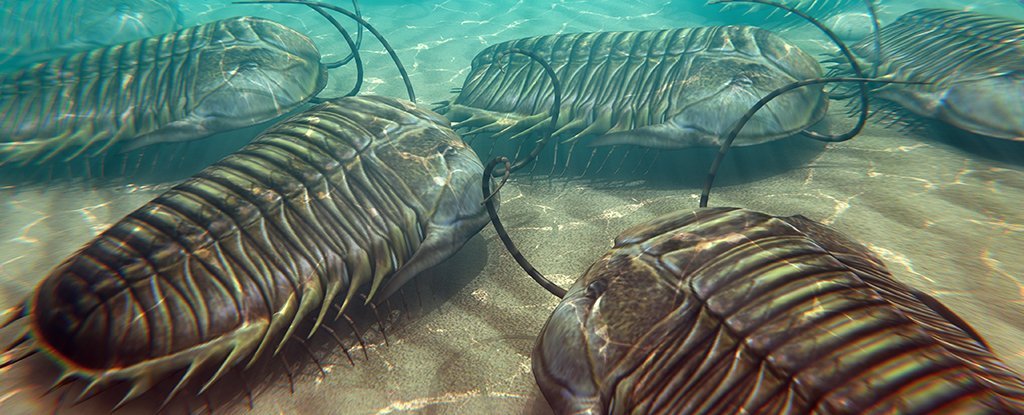
One such question deals with the first appearance of the sense of sight in the fossil record, the first animals to have eyes. While paleontologists agree that the compound eye of the ancient arthropods called trilobites were the first eyes to evolve there are still many questions about that eye. How exactly did it function and was it as advanced as the compound eye of modern arthropods like insects or crustaceans? In other words how good was the vision of a trilobite?

The compound eyes of the trilobites were the eyes to evolve. (Credit: Littlefoot’s Anthro Blog)

Now paleontologists at the University of Cologne and the University of Edinburgh have employed a high-tech digital microscope to examine the eye of a particularly well preserved specimen of a 429 million year old trilobite Aulacopleura kionickii from the Czech Republic. What the scientists found was that the trilobite’s eye was constructed from a honeycomb structure of 200 cells with each cell having its own lens and providing the animal with one pixel of information. The vision of a 430 million year old animal was therefore equivalent to a modern digital image with 200 pixels, vague and imprecise but still the best in the world at that time.

The actual trilobite fossil used in the study by Cologne and Edinburgh Universities. (Credit: Phys.Org)

Such an eye is also virtually identical to that of a modern bee or dragonfly, the only difference being the number of cells, a dragonfly’s compound eye for instance can have as many as 30,000 cells. The fact that the arthropod eye has remained so stable for so long is a testament to both the simplicity and versatility of the compound eye but also to the conservatism of evolution. If you have an organ that is doing a job quite well it can exist for many millions of years with only superficial changes.

As a final example of how, if you wait long enough the fossil record will provide amazing evidence of how creatures lived long ago a recent fossil of an ichthyosaur was unearthed in China with the remains of its last meal still recognizable in its stomach. Now ichthyosaurs were aquatic reptiles who lived during the age of the dinosaurs, see my posts of 28 October 2017 and 18 April 2018, and the fossil ichthyosaur found in China was dated to about 200 million years ago.

Ichthyosaurs (top) swimming with one of their usual prey ammonites
The actual fossil ichthyosaur. The bump in the middle of the fossil is its last meal still recognizable. (Credit: Yahoo)

According to the paper published in the journal iScience the skeleton of the ichthyosaur, a member of the genus Guizhouichthyosaurs was nearly complete and measured about 5 meters in length. The big surprise was inside however, the partial skeleton of another marine reptile known as a thalattosaur.

In life the thalattosaur would have been about 4 meters in length making this find the earliest known example of one large predator feeding on another. Although the thalattosaur’s head and tail were missing the rest of the skeleton was intact, the four limbs still connected to the body. Although the researchers cannot be certain they consider the intact condition of the body to be evidence that what they have discovered is a case of predation, not scavenging. In either case it is a remarkable find, two fossils for the price of one telling a story from long ago.

The ichthyosaur shown with the thalattosaur for comparison. Only the middle section of the thalattosaur was consumed by the ichthyosaur. (Credit: Daily Mail)

Bit by bit paleontologists are filling in the gaps in our knowledge of the history of life here on Earth. Using the trilobite’s eye as a metaphor our image of the past started out with only a small number of pixels, vague and imprecise. Each new fossil discovery adds one more pixel to that image and while we may not yet have reached the level of high-definition our view of the past is becoming clearer all the time.