The Academy of Natural Science and other Science Museums

Last night I attended the members only preview for the new exhibit at Philadelphia’s Academy of Natural Science “Frogs, a Chorus of Colors”. The Academy has a very long history and for the past five years it has been associated with my Alma Mater Drexel University and I’ve been a member for a very long time.

Frogs, a Chorus of Colors at the Academy of Natural Science

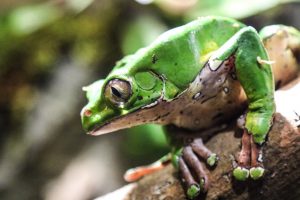
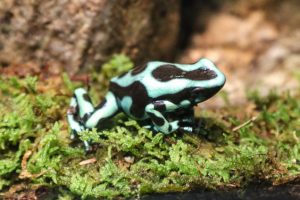
The exhibit itself was a good one, the variety of sizes, shapes and especially colours of amphibians is remarkable. Also, as we all know many species of frogs are an important indicator of the health of the environment in which they live, more so than reptiles, birds or mammals. This is because frogs breath and drink in large part through their permeable skin and this makes them more susceptible to pollutants in the water or soil. And because of this many frog species are endangered due to the mess we’ve made of this planet. While they’re still here let’s celebrate their beauty. A sample of which is in the pictures below.

Giant Monkey Frog
Poison Dart Frog

Most of the attendees at the preview were families with young children. City dwelling parents trying to give their kids a little feeling for the natural world they don’t experience in their daily lives. In addition to the new exhibit the Academy has permanent displays of butterflies and other insects, mammals of North America, fish and best of all Dinosaurs. In fact the Academy boasts the first dinosaur skeleton ever to be mounted and publically displayed The famous Hadrosaurus foulkii, which is also the skeleton that taught paleontologists that some dinosaurs walked on two legs!

We all know that taking to children to science museums is a great way to generate an interest in science that could lead to a career in one of the so-called STEM (Science Technology Engineering and Math) fields. Here in Philadelphia we are lucky enough to have not only the Academy but right across the street is the Franklin Institute of Science, which also houses the Fels Planetarium. Elsewhere in town we have the University of Pennsylvania’s Museum of Archeology and Anthropology, the Wagner Free Institute of Science and the Mutter Museum of Medicine. I think I went to all of them before I was five! O’k maybe that’s a bit of an exaggeration.

Our world today is built around science to an extent that even fifty years ago would have seemed impossible and an education in science and math is probably the closest thing there is to a sure-fire good career. Really, think of the millions of parents taking their kids to little league in the vain hope that maybe someday they’ll get one of the 100 jobs that Major League Baseball has open every year. Yea folks, that’s about it, MLB hires about 100 new ballplayers every year, and the other major sports are about the same. Football maybe 200 and Basketball less than 50!!! On the other hand America needs tens of thousands of new engineers ever year!

So take your kids to a museum and do it soon. Best of all museums are also cheaper than amusement parks or sporting events. But you don’t have to wait to go to a museum, you can just take your children to a park to look for the wildlife there, especially if it has a pond. Or you even just go into your backyard after sunset because right now Venus is at her brightest in the western sky and the Moon is waxing toward full.

Because after all Science just means knowledge. Literally, it’s just the Latin word for knowledge. And the more you know about this world the more you will come to appreciate it, and the better able you will be to live in it. So, if you live near Philadelphia go to the Academy and see the Frogs along with everything else. If you live elsewhere I know from personal experience that there’s a science museum somewhere near you! JUST GO!

Space News: Boeings Snazzy Blue Spacesuits and Future Plans for the Space Station

Over the past week there have been a couple of news items that give us a glimpse into the future of manned spaceflight in both the near and long term.

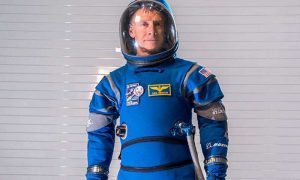
The first item is Boeing’s unveiling of their new design for the spacesuit that astronauts will wear as they rocket into space onboard the company’s CTS-100 Starliner capsule starting hopefully next year. The new suits are half the weight of current NASA spacesuits and more flexible. The helmet is directly incorporated into the suit rather than being detachable and the gloves are sensitive enough to allow the astronauts to use touchscreens even while wearing them. Despite these and other improvements however the thing that everybody keeps talking about is that the suits are blue.

Boeing’s New Spacesuit Design

Now as it happens blue is my favourite colour but still, American is about to start putting people back into space again and the news media is trying to turn this into a fashion show. Hey Elon Musk, what kind of spacesuits are astronauts going to wear on your Dragon capsule, and will they be pink?

Actually there is a lot of progress being made and within a year or so we should see the maiden flights of not only Boeing’s Starliner and SpaceX’s Dragon capsule but the first flight of NASA’s Orion capsule designed to take astronauts beyond Earth orbit for the first time since the end of the Apollo program. Think about it, America will have three different space vehicles, Russia is developing a new capsule called the Federation spacecraft to replace the Soyuz capsule, and the Chinese have their Shenzhou. Low Earth Orbit will be getting crowded.

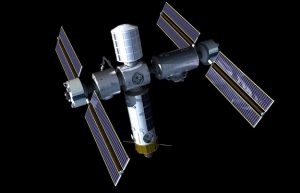
Another story that deals with more long term developments in space was the announcement by Axiom Space Corp. of their plans for the “Axiom International Commercial Space Station” which they hope to have assembled in orbit by 2024. The plan, which has been approved by NASA, is to begin by attaching a commercial module to the existing International Space Station (ISS) in 2020 and to detach that module in 2024 as a new, independent station. See the picture below for what the Axiom Space Station will initially look like.

Proposed configuration of the Axiom Space Station

Again, with the Chinese working on the development of their Space Station, the Russian’s plans for a station of their own along with other commercial companies Low Earth Orbit could soon become quite busy. For more information on Axiom’s plans click on the link below.

http://www.space.com/35488-private-space-station-2020-axiom-space.html

Of course there’s always new things happening out there on the “Final Frontier” and I’ll keep you posted.

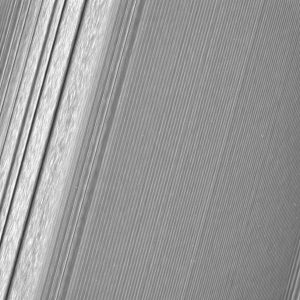
Speaking of which here’s a quick update on the Cassini  Mission now orbiting Saturn. NASA has released some new images of the planet’s Rings, the closest and most detailed ever seen. Check out the image below.

Detailed Image of Saturn’s Rings by Cassini Spacecraft

For more on Cassini click on the link below to go to NASA’s Cassini site.

https://www.nasa.gov/feature/jpl/close-views-show-saturns-rings-in-unprecedented-detail


A couple of Unrelated but interesting News Items

Over the past few days there have been several Science news items I’d like to comment on.

The first is the actual production in a labouratory of Metallic Hydrogen, a form of the simplest atom that had been theoretically expected to exist for nearly the past century. Now, if you remember from your high school chemistry class a lot of gaseous elements like to form molecules made up of two atoms. The air we’re all breathing right now is made of Oxygen molecules O2 and Nitrogen molecules N2. Hydrogen does the same thing, forming H2.

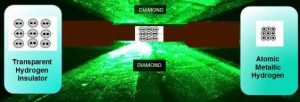
Now in order to get metallic hydrogen you first have to obtain solid hydrogen by cooling it all the way down to only 14 degrees above absolute zero, that’s degrees kelvin of course! Even then you don’t have metallic Hydrogen because you still have those H2 molecules, which are then connected to each other. In order to get metallic Hydrogen you have to apply tremendous pressure breaking the molecular bonds so that you get a uniform structure of Hydrogen atoms. The picture below details the process.

Production of Metallic Hydrogen

The only substance strong enough to be able to produce the necessary 495 gigapascals of pressure (that’s about 5 million atmospheres) was diamond. According to Professor Isaac Silvera at Harvard who led the experiment  “This is the holy grail of high-pressure Physics”. It is hoped that metallic hydrogen might turn out to be the long hoped for ‘Room Temperature Superconductor’ which could be as revolutionary as the development of electrical power itself. It is also possible that metallic Hydrogen may be meta-stable. That is although like a diamond tremendous pressure is need to produce it, also like a diamond it may be stable once that pressure is removed.

The future of metallic Hydrogen is certain to be interesting. I’ll keep you informed. For more information on the metallic Hydrogen experiment click on the link below.

https://phys.org/news/2017-01-metallic-hydrogen-theory-reality.html

A second news item also caught my eye this week and not in a good way. On a beach about 200 miles south of Buenos Aires in Argentina a baby dolphin was washed ashore and when a crowd of bathers gathered around instead of trying to help the poor creature they produced to pet it and take selfies with it until it died!

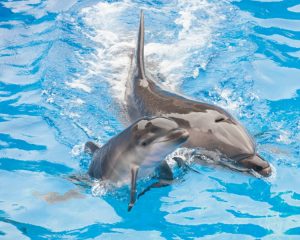
DOLPHIN CALF BORN AT SEAWORLD SAN DIEGO

Are we so callous and stupid? These were educated people and with all the stories on the news about incidents like this they cannot plead ignorance. A wild animal would simply leave another animal to die but we humans have to turn another creature’s suffering into a source of our amusement. Well I guess I’ve vented enough.

Hopefully I’ll have happier news next time.


American Experience: Rachel Carson

Last night my local PBS station broadcast the latest episode of their long running program ‘The American Experience’ covering the life and work of the noted naturalist Rachel Carson. Now, American Experience deals in history and biography rather than science but Rachel Carson is certainly worth a post on a science blog. I will however concern myself more with Ms. Carson’s work rather than her life story. For anyone interested in Rachel Carson’s struggles against numerous personal tragedies I heartily recommend the episode.

Rachel Carson on the American Experience on PBS

Sitting here right now with my copies of ‘The Sea Around Us’ and ‘Silent Spring’ at my side I can recall growing up in the 60’s when Rachel Carson’s work was new, revolutionary and hence very controversial. Science and nature were very important in my family so I read Ms. Carson in high school. I have to admit I liked “The Sea Around Us’ better than “Silent Spring’ back then.

The idea that something that was clearly beneficial in the short term may in fact be harmful in the long run was a difficult concept for some people to grasp, as it still is. Ms. Carson herself recognized the advance in public health that pesticides such as DDT had provided. In World War 2 DDT had saved thousands of our soldiers from diseases such as Malaria, Typhus and Yellow Fever and shortly after the war it succeeded in eliminating Malaria and Yellow Fever from the SE United States. Rachel Carson never argued for the elimination of all synthetic pesticides but rather their careful use along with more exhaustive studies into their long term effects.

Of course there were powerful vested interests who opposed Ms. Carson and the other naturalists studying civilization’s impact on the natural world. Let’s be honest, this is a political fight that’s still in progress and the eventual victor is not yet clear.

Maybe I can make a analogy that even the most extreme anti-environmentalist can agree with. A rifle can be a very useful device, you can obtain food with it, you can protect yourself with it, you can even have fun just seeing how well you can shoot with it! But if you’re not careful when you’re cleaning it you can blow your bloody head off. That doesn’t make you a good conservative it just makes you really, really stupid.

Today we remember Rachel Carson for her influence on the beginnings of the modern environmental movement and in some ways I think that distorts her place in the history of science. I think, if you take a step back you can see how Ms. Carson was herself influenced by such scientists as Charles Darwin and Charles Lyell, both proponents of gradualism who studied the world in the long term. Then you can see that Rachel Carson is not so much revolutionary as evolutionary. Of course there are some people who find that word even more distasteful.

Over the next few years I’m afraid that Rachel Carson’s work is going to become even more important as our current government does all it can to poison the Earth in the pursuit of larger corporate profits for the rich and famous. They may win you know, I do think human ingenuity is capable of producing a world with only man, his pets and his parasites. It will be an ugly world however.

That’s my opinion, what’s yours?


Searching for ET on Wolf 1061c

Over the past two decades astronomers have had a field day discovering new planets orbits other stars within our galaxy. As of the beginning of 2017 more than 3500 extrasolar planets have been discovered, enough to give astronomers a good statistical sample of how many planets are out there, and what kind.

Artist’s Concept of the Wolf1061 System

Those planet’s which orbit their star in the ‘habitable zone’ where liquid water can exist on their surface have received extra attention because of the possibility that life may exist on them. Such planets are neither too close to their star nor too distant and are often referred to as Goldilocks planets. Wolf 1061c is one such planet and at a distance of 13.8 light years it is one of the closest.

Astronomer Stephen Kane of San Francisco State University is presently conducting an extensive examination of Wolf 1061c to learn all we can with our present technologies while at the same time preparing for further studies as new instruments come on line.

The parent star of Wolf 1061c is a small red dwarf star whose energy output is only 0.15% that of our Sun. This means that the planet must orbit very close to it’s star in order to receive enough sunlight to warm it’s surface. The planet itself has a mass of an estimated 4.25 times that of our Earth so it may have a much stronger surface gravity.

Also, Wolf 1061c is the middle of three planets known to orbit Wolf 1061. All of them are believed to be rocky worlds more massive than Earth and because the entire Wolf system is so small the three planet’s gravities interact with each other making their orbits change considerably with time. Professor Kane warns that this could mean that the climate on Wolf 1061c may be quite chaotic. While none of this makes Wolf 1061c sound like a good spot for a vacation home you should remember that life is very adaptable and the inhabitants of Wolf 1061c might find our Earth to be unbearably dull.

Professor Kane hopes to learn even more about Wolf 1061c when the new James Webb space telescope is launched in October of next year (2018). The examination of nearby extrasolar planets is one of the jobs the Webb telescope was designed to carry out so we should soon know even more about Wolf 1061c. The last two decades have been very interesting times for the planet hunters and let’s hope that the next two decades are even more exciting. To learn more about Professor Kane’s work the link below will take you to San Francisco State University’s news story about Professor Kane.

http://news.sfsu.edu/news-story/sf-state-astronomer-searches-signs-life-wolf-1061-exoplanet


After 175 Years of Mystery, Hyoliths have finally been Classified

Just this week an article has been published in the scientific journal Nature that clears up a problem that has plagued paleontologists for over 175 years. The paper by Joseph Moysiuk and Jean Bernard Caron of the University of Toronto along with Martin R. Smith of Cambridge University examined over 1500 specimens of Hyoliths, a rather common Paleozoic marine fossil whose shell resembles an ice cream cone with a lid on top and a spine coming out each side, see picture below.

A Fossil Hyolith

Because only the hard parts of extinct animals are usually preserved the exact kind of animal that lived inside the Hyolith shell remained a mystery. The most common guess was that Hyoliths were a mollusk, that they were either a snail or clam of some kind. However, using specimens from the famous Burgess Shale formation in British Columbia Professor Moysiuk et al succeeded in finding enough of the soft tissue of Hyoliths to be able to determine their feeding mechanism and it turns out that Hyoliths are not mollusks at all but instead are related to Brachiopods, a ancient and very common type of fossil but a phylum which today contains only a few rare species. See the picture below for a reconstruction of a Hyolith.

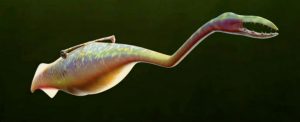
What a living Hyolith looked like

Compare this to a modern Brachiopod.

Internal structure of a Brachiopod

Whereas Brachiopods attach themselves to the sea bottom by means of a fleshy “pedicle” the Hyoliths seem to have pushed their conic shell into the sand and raised themselves up on their two spines. Because of this difference the scientists maintain that Hyoliths are related to the Brachiopods within a larger group called Lophophorates instead of being a Brachiopod.

The small tentacles reaching out of the Hyolith is the lophophore, the feeding structure common between the Hyoliths and Brachiopods and which gives the larger group its name. If you’d like to read an article in Sci-News about the work of Professor Moysiuk et al click on the link below.

http://www.sci-news.com/paleontology/hyoliths-cambrian-lophophorates-04531.html

I have two specimens of Hyoliths in my fossil collection, along with thousands of Brachiopods so this discovery by Professor Moysiuk et al is of particular interest to me. Like Dinosaurs and Trilobites I think that the more we learn about the animals that once lived on this Earth the more fascinating they become.

Maybe one day I’ll get to do a post on Nidulites, a rarer and more mysterious Paleozoic marine fossil of which I have about a dozen specimens. Till then.


Astronomer Predicts a Nova Eruption for first Time

Scientists make predictions, that’s how we know that our models are correct. If we can forecast that something will happen before it happens we must have a good idea of just what’s causing it to happen.

In my blog back on January the first I mention the total solar eclipse that’s going to happen on the 17th of August of this year and scientists have been predicting eclipses now since the time of the Roman emperor Claudius.

A few predictions have been some of the greatest moments in the history of science, such as when Edmund Halley predicted that a comet would return or when Paul Dirac predicted the existence of Anti-matter. Just a few years ago the discovery of the Higgs boson confirmed a prediction made by Peter Higgs back in the 1960s.

Now Astronomer Lawrence Molnar of Calvin College in Grand Rapids Michigan is making the first ever prediction of the eruption of a Nova, the explosion of a particular star system. The star system in question is called KIC 9832227, a 12th magnitude system in the constellation in the of Cygnus. The system consists of three stars, two of which form a contact binary, that is two stars that are so close to each other that they are “kissing”. See picture below.

Star Merger Geometry. L. Molnar, Calvin College

Professor Molnar and his team have been studying KIC9832227 for many years now and have noted an acceleration in the orbit period of the two stars, an acceleration which is increasing exponentially. Based on these observations Professor Molnar predicts that in 2022, give or take a year the stars will merge into one and that the resulting explosion will make the 12th magnitude system temporarily visible to the naked eye, a new star or Nova will appear briefly in our night sky.

While not as spectacular as a Supernova, where a star 10 or more times as massive as our Sun explodes in a fireball as bright as an entire Galaxy this is the first time anyone has been bold enough to predict a date on when a nova will occur. I hope that five years from now I get to see KIC 9832227 as it goes Nova. If it does Professor Molnar will have joined the ranks of Halley and Dirac and many others whose predictions have done so much to advance human knowledge. You can read an article on Professor Molnar’s work at Sky and Telescope Magazine by clicking on the link below.

http://www.skyandtelescope.com/uncategorized/stars-en-route-to-merger/

Before I go I want to also mention a new, and I think very beautiful picture of our Earth with the Moon that has been taken from orbit around Mars by NASA’s Mars Reconnaissance Orbiter.

Earth and Moon as seen from Mars- NASA Picture

If you’d like a better picture check out the article at Space.com by clicking below.

http://www.space.com/35252-earth-and-moon-from-mars-photo.html

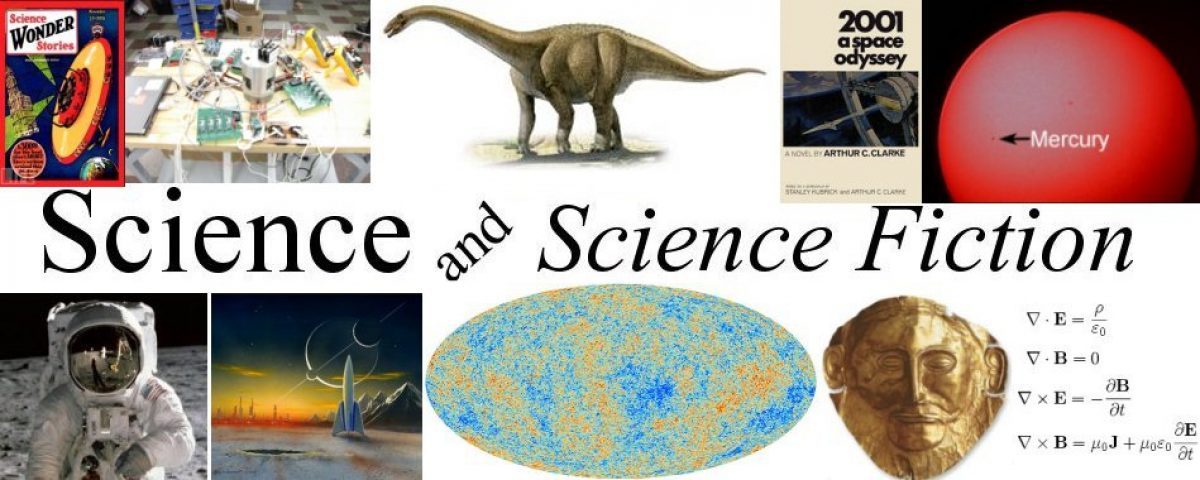
P.S. I finally got around to making a unique header image for Science and Science Fiction. I hope you like it!

NASA Selects two new deep space missions to Asteroids. Meet Lucy and Psyche

Two days ago on January the 4th, NASA selected two new missions as a part of their discovery program for the exploration of deep space, away from Earth orbit that is. The new missions are named Lucy and Psyche and will carry out detailed examinations of a range of asteroids not yet studied. To read NASA’s announcement of the missions click the link below.

https://www.nasa.gov/press-release/nasa-selects-two-missions-to-explore-the-early-solar-system

NASA Deep Space Missions. Lucy (Left) and Psyche

Since I’m more interested in the Lucy mission I’ll talk about Psyche first. The Psyche spacecraft will travel to the unusual asteroid 16Psyche. The thing that makes 16Psyche so different, from measurements made here on Earth, is that it has a much higher content of Iron and Nickel than the asteroids we visited so far. In fact it looks a great deal like what we believe the core of our own planet is.

Astronomers have for over a hundred years speculated that the asteroid belt is actually another planet that failed to form because of the gravitational effects of massive Jupiter next door. If so then 16Psyche may be the core of that failed planet and by studying it we may learn something about how planets form as well as something about the core of our Earth.

On the other hand the Lucy mission intends to visit no less than seven different asteroids in the areas of space know as the Jupiter Trojan positions. The Trojan positions have always fascinated me; they are in fact the only stable three body solutions to Newton’s equations of planetary motion Solutions that were discovered by the French mathematician Joseph-Louis LaGrange in his search for a general solution to the “Three Body Problem”.

You see, although when Newton’s laws are applied to a star and a single planet they quickly lead to a nice simple function as a solution, when you add in the gravitational effect of a second planet, a third body, there is in general analytic no solution. After Newton’s death LaGrange and other mathematicians searched for solutions to the three body problem and even today there is work being done on the problem.

So, if there is no general solution how do astronomers calculate when an eclipse will occur, or when a comet will appear in the sky or how did they calculate the trajectory of the Voyager 2 spacecraft as it went past four planets. Well you do it a tiny bit at a time, over and over again.

This was an assignment I had to do in Graduate school. You see, if you know the positions and momentum of the planets today you can calculate what their positions will be, let’s say tomorrow. Then, using Newton’s laws of Gravity, you calculate how their new positions change their momentum. Then you just repeat the whole process over and over again.

This is the sort of calculations that computers are good at, that’s how I did it in Grad school. But back in LaGrange’s day a person had to do all that arithmetic and it would take years! My hat is off to those gentlemen.

Monsieur LaGrange was able to find five particular solutions to the problem (See Picture Below) and these are know as LaGrangian points in his honor. But only two of these positions are stable, L4 and L5 and these have become known as the Trojan positions because Jupiter has acquired a number of asteroids at it’s L4 and L5 positions. Asteroids which have been named for characters in Homer’s Iliad with L4 being the Greek camp and L5 being the Trojan camp.

LaGrange Points

Getting back to the Lucy mission. Expected to launch in 2021 Lucy will flyby the main asteroid belt member 1981EQ5 in 2025 on it’s way to the Greek camp (L4) where it will encounter four different asteroids in 2027 and 2028. Lucy will then loop back around Earth before headed back to the Trojan camp (L5) for a final encounter with the dual asteroid Patroclus/Menoetius in 2033. This is going to make Lucy one of the longest and certainly most complex missions ever attempted. A lot to look forward to in the years ahead.


Welcome to 2017. What to look forward to in Science in the coming Year

Well it’s 2017 and I thought it might be nice to take some time to see what scientific discoveries and achievements we can expect in 2017.

Science in 2017

For me the most exciting event may be the upcoming TOTAL ECLIPSE of the SUN going across the USA on August the 17th. The path of totality is pretty narrow but it goes from sea to shining sea so if you really want to see it you only need to drive a day or two to get there. Here’s a link to a site giving all the details.

http://www.eclipse2017.org/2017/path_through_the_US.htm

Other Space events we can look forward to include the Cassini’s spacecraft’s final orbits through Saturn’s rings and it’s final plunge into the planet itself. Cassini has already given us so many discoveries but I’m sure there will be a few more to come.

Also coming up this year will be a Chinese unmanned Lunar mission which will hopefully bring back some samples making China only the third nation to bring back pieces of the Moon. China also plans on continuing their missions to their new Tiangong-2 space station including their first unmanned resupply vehicle the Tianzhou-1.

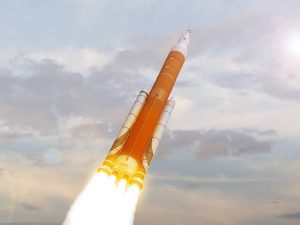
Meanwhile NASA is continuing development of their Space Launch System (SLS) which will eventually be the biggest rocket ever built, a bit bigger than the Saturn 5. The actual first launch of the SLS is scheduled for early in 2018.

Commercial development of space will continue as Space X and Orbital Science continue to resupply the International Space Station. Additionally Space X and Boeing will continue development of their manned spacecraft including unmanned test launches. The first manned missions for both Space X and Boeing are scheduled for early 2018 under NASA’s Commercial Crew Development Program. Space X also intends to perform the first re-launch of one of their previously used Falcon 9 rockets in the first half of 2017 along with the first flight of their Falcon Heavy rocket.

In Physics of course there’s the possibility of new discoveries coming from the Large Hadron Collider (LHC) at CERN. As the world’s largest and most power scientific instrument the LHC in well into it’s second full scale run after completing an upgrade in 2015. The LHC’s initial run only gave us the confirmed detection of the Higgs Boson and with its increased power maybe this year the LHC will finally provide firm evidence for, or against Supersymmetry.

Another series of experiments going on at CERN is the Alpha experiment to study anti-hydrogen. The Alpha team have made great progress in containing and cooling anti-protons and positrons, allowing them to form actual atoms of anti-hydrogen. Anti-matter, just like in Star Trek! The researchers are looking for some tiny difference between anti-hydrogen and normal hydrogen, a difference that could help to explain why our Universe appears to be made almost entirely of matter only.

There will surely be great discoveries in the fields of Paleontology and Archeology as well but it’s hard to predict just which team of researchers will make the big finds. There’s a element of luck in finding fossils and relics as you can imagine.

So we should have a lot to look forward to in the coming months. Scientific progress can sometimes be expected, but just as often you cannot predict what amazing new discoveries will be made. Of course that’s a big part of the fun. I’ll keep you informed of anything interesting I hear about.


Feathered Dinosaur Tail encased in Amber!

Remember in the movie Jurassic Park where Richard Attenborough tells Sam Neil et al that his scientists obtained Dino DNA from prehistoric mosquitoes that had been encased in amber. Well wouldn’t it be better just to have the dinosaur itself be encased in amber, or at least a part of one. Well it’s happened, a Chinese paleontologist named Xing Lida found the remarkable specimen in an amber market in northern Myanmar.

Feathered Dinosaur Tail encased in Amber

The specimen is just a portion of the tail of a very small dinosaur, and it’s covered in feathers. Now, it’s not a bird, X-rays revel that the tail bones are arranged differently than those in birds. In fact paleontologists have identified the fragment as belonging to a member of the coelurosaurian group and therefore a relative of the Mighty T-Rex and the well known velociraptors. Although this animal probably only grew to the size of a small bird.

Artists Impression of Bird sized Dinosaur

Researchers haven’t been able to obtain any DNA but they have found soft tissue and decayed blood. This specimen has already given scientists a better idea of how dinosaurs, at least some, where covered in feathers rather than scales making them better able to control their body temperature and could provide the final proof that at least some dinosaurs were warm blooded.

Looking for ordinary fossils is like looking for a needle in a haystack but trying to find such spectacular specimens in amber is certainly needle in a haystack squared. Nevertheless you can be confident that dino hunters out there will be on the lookout and before to long maybe they will find that one specimen that does give us our first actual sample of Dino DNA.

P.S. A couple of posts back I talked a little bit about Cosmic Inflation after the Big Bang and how some cosmologists, and me, think that a simpler model is to look at the Big Bang as a Big Bounce from a previously contracting Universe. Well, Nova Next from PBS just released an article which goes deeper into that very subject. If you’re as interested as I am you can check it out by clicking below.

Did the Universe Start with a Bounce Instead of a Bang?