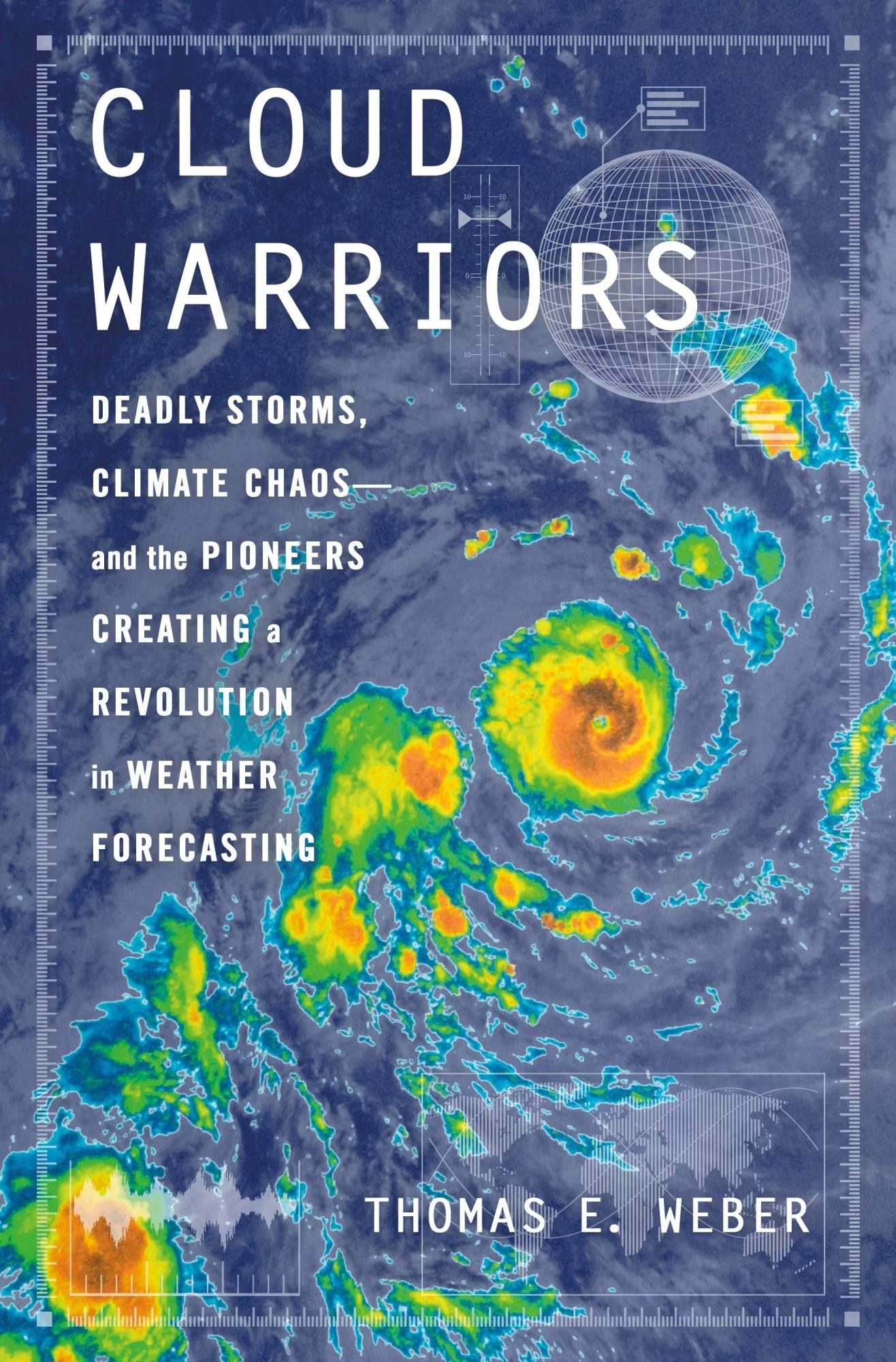
Calling all of you weather geeks out there, you know who you are. Have I got a book for you! ‘Cloud Warriors’ by Thomas E. Weber is an extensive and comprehensive survey of all of the latest advances in weather forecasting. Dealing with all of the many different types of severe weather, tornadoes, hurricanes, droughts, wildfires, flooding and even good weather ‘Cloud Warriors’ also tracks the newest developments in how weather forecasts are conveyed to the people who need to know what kind of weather is coming, government officials, business leaders, farmers as well as the general public.
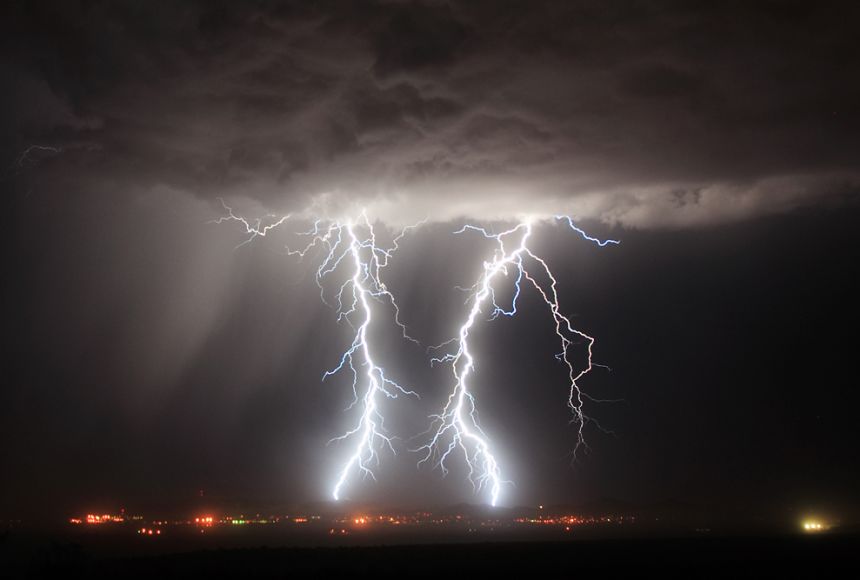
The chapters in ‘Cloud Warriors’ are divided into the main issues of weather forecasting, both the different types of severe weather as well as computer models and long-range forecasts. Running through the entire book however is a theme concerning the three pillars of modern weather forecasting, government agencies such as the National Weather Service (NWS) along with academia, that is the scientists at universities like Penn State whose observations and theoretical work advance our understanding of weather. The third pillar is kinda the new kid on the block, the commercial weather services such as Accuweather who provide individualized weather forecasts to their customers, for a fee.
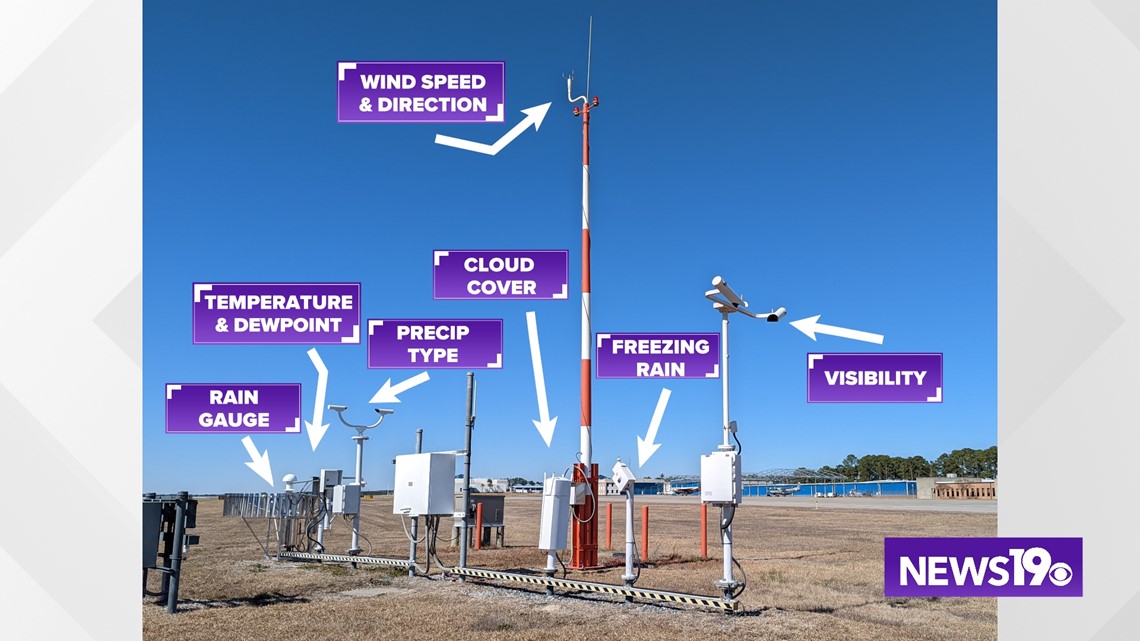
Several times in ‘Cloud Warriors’ author Weber makes the argument that all three of these pillars have an important role to play in modern weather forecasting. The Federal Government possesses thousands of weather stations spread across the country, basically one at every airport, as well as specialized weather assets such as the hurricane hunter airplanes that fly into the center of tropical storms to obtain the data needed to predict how strong a storm will become, and where it will go.
Meanwhile the scientists who study weather at colleges around the country are at the forefront of making weather predictions more accurate. It’s a fact that a seven day forecast today is as accurate as a five day forecast was twenty years ago and as accurate as a three day forecast was fifty years ago. This improvement in forecasting has been achieved by both a greater understanding of the physics of our atmosphere and also by ever more sophisticated computer models.
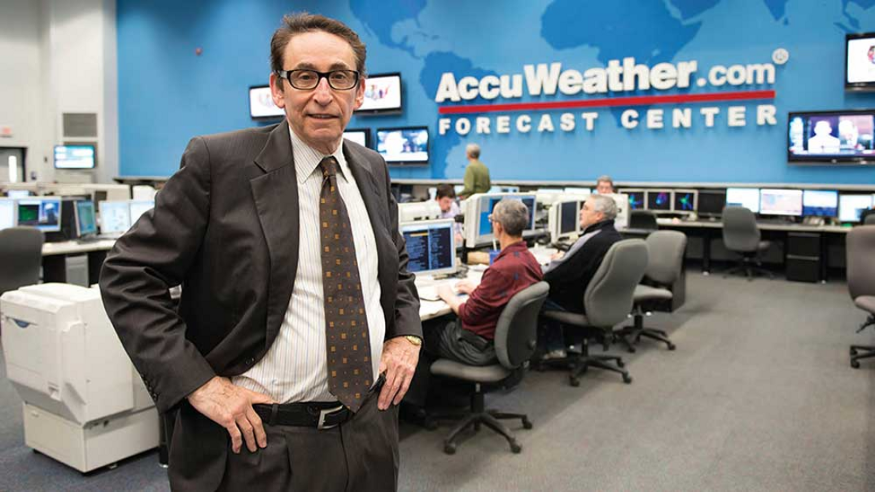
The newest player in weather forecasting is the commercial weather service such as Accuweather. Because these weather companies are so new they currently have the greatest potential for growth as other industries, such as airlines, construction companies and large-scale agri-businesses find they have a growing need for accurate weather forecasts not over a large area but for extremely small areas. What the author terms hyperlocal weather.
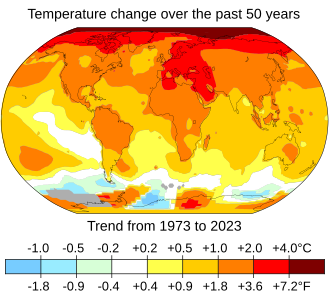
Now you may suppose that the growing problem of climate change is one of the main topics in ‘Cloud Warriors’ but actually the book is primarily concerned with how our weather forecasts are made and what improvements in accuracy we can hope for in the years to come. Nevertheless climate change certainly does get mentioned time and time again as its effects are already being felt in the number and strength of severe weather events while future weather predictions will have to take into account its growing influence.
There’s one more theme the author Weber stresses in ‘Cloud Warriors’ and that is improvements in the way that meteorologists communicate their forecasts to both government officials and the general public. Think about it, a forecast that predicts a hurricane will strike a certain location is no good if the people living there don’t hear it or ignore it.
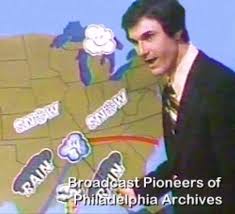
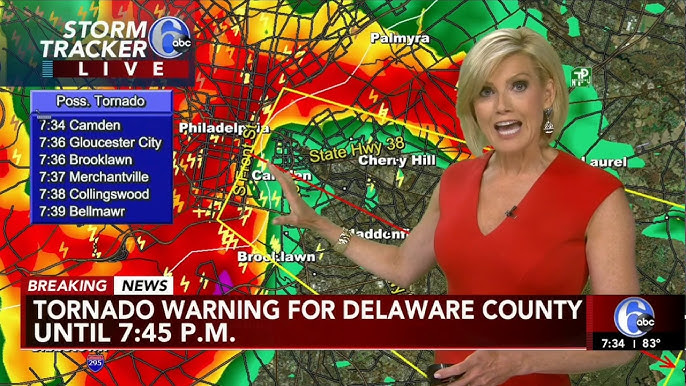
I can remember back in the 1960s when the nightly weather report on the local news consisted of a five minute segment recapping what today’s weather was and then giving the three day forecast, on Thursday we’d also get a ‘weekend forecast’. Now, in 2025 we have radar maps showing where it’s raining, or if severe weather is approaching. We get watches or warnings about thunderstorms, tornadoes even hurricanes all so that we can better prepare ourselves for such severe conditions.
As you can guess I definitely recommend ‘Cloud Warriors’ as an in depth survey of how we humans deal with one of the most important, and changeable parts of our daily lives, the weather. I said at the beginning of this post that ‘Cloud Warriors’ would be a big hit with weather geeks but maybe, with the threat of climate change and everything else, it should be on everyone’s reading list.