Astronomy News for October 2025: James Webb Telescope and the ‘Little red Dots’ at the beginning of time. 

As I described in several earlier posts, see 6July2024 and 22Febuary2025, one of the prime design goals of NASA’s new James Webb space telescope was to be able to study the early Universe, that is the Universe as it appeared just about one billion years or less after the Big Bang. How does that work, you ask? How can any telescope, even one as advanced as James Webb, see into the past?
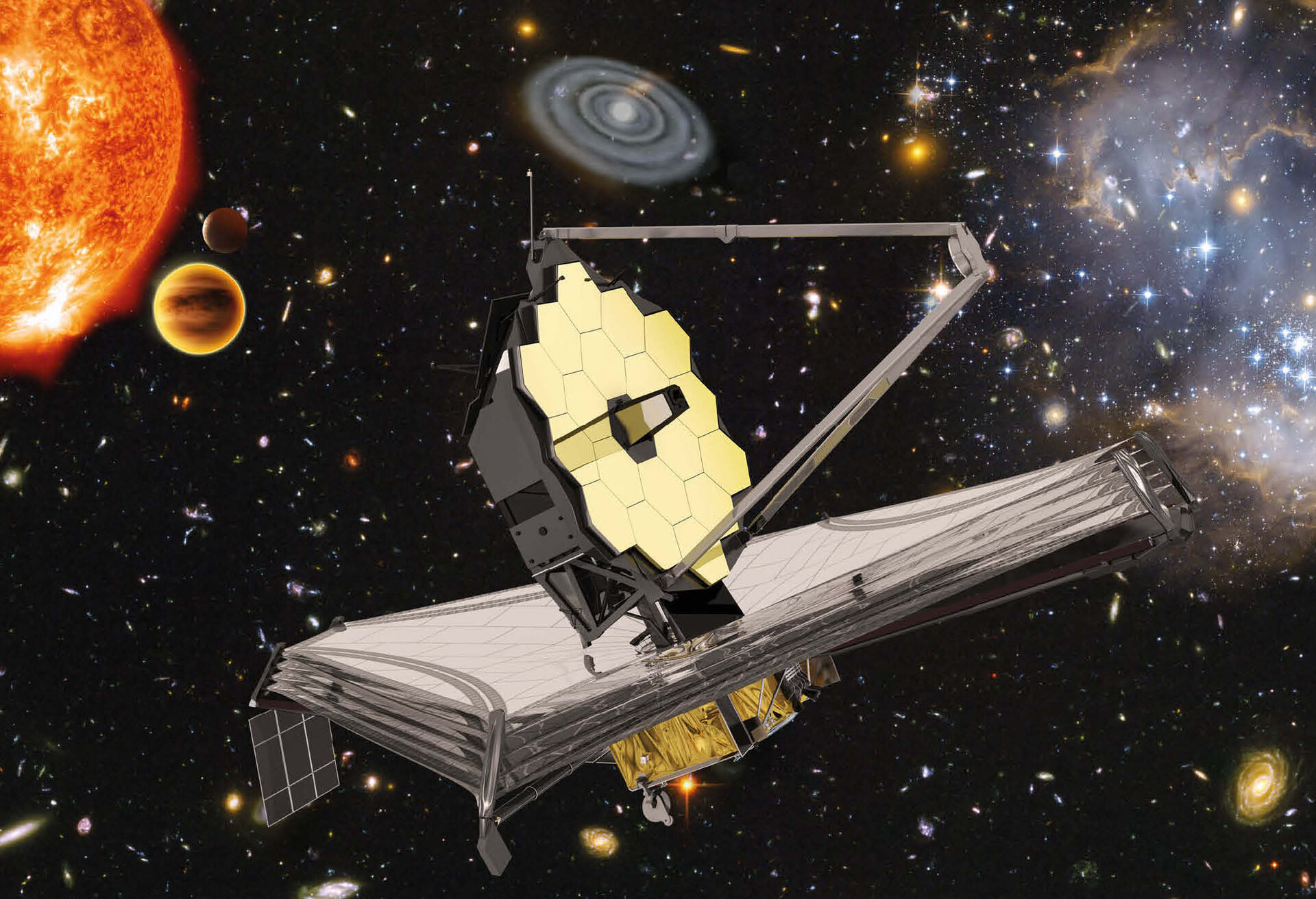
By looking at objects billions of light years from Earth the James Webb Space Telescope actually looks billions of years into the past, seeing our Universe as is was billions of years ago. (Credit: European Space Agency)

Well actually all telescopes look into the past. Because the speed of light is finite, about three hundred million meters per second, if you look at the star Sirius for example, at a distance of 8.7 light years you are not seeing Sirius as it is but rather as it was 8.7 years ago because that’s when the light entering your telescope left Sirius. Similarly, if you look at the North Star Polaris, at a distance of about 500 light years you are seeing Polaris as it was 500 years ago. The distance to the Andromeda galaxy is about two and a half million light years so whenever an astronomer looks at Andromeda they are looking two and a half million years into the past.
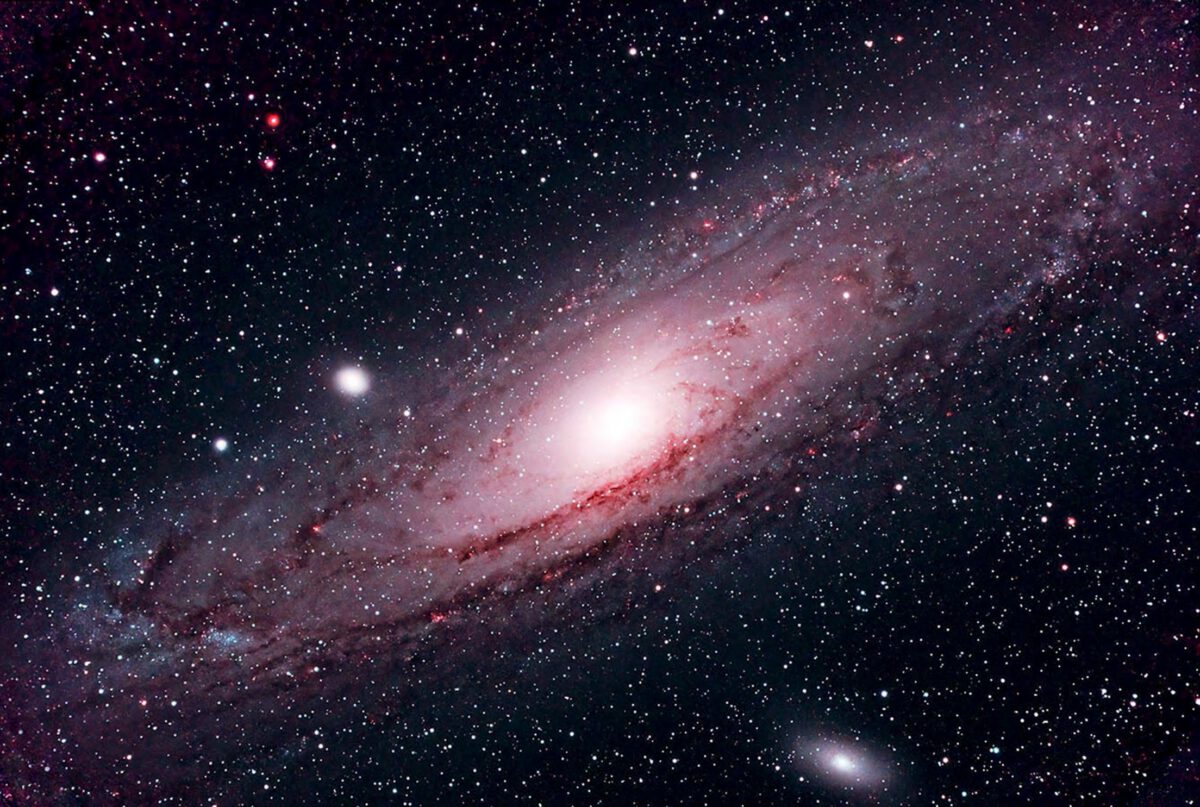
The famous Andromeda Galaxy is the farthest object you can see with your naked eye, although it doesn’t look this good. At a distance of two and a half million light years it takes the light from Andromeda two and a half million years to reach your eyes. So, when you look at Andromeda you’re looking two and a half million years into the past. (Credit: Astronomy Magazine)

Most galaxies are in fact billions of light years away so astronomers observe them in order to try to understand how the Universe has changed, how the galaxies evolve over billions of years. There’s a catch however, because the entire Universe is expanding, the further away a galaxy is the faster it is moving away from us, and objects that are moving that fast away from us have the light they emit shifted into the infrared due to the Doppler effect.
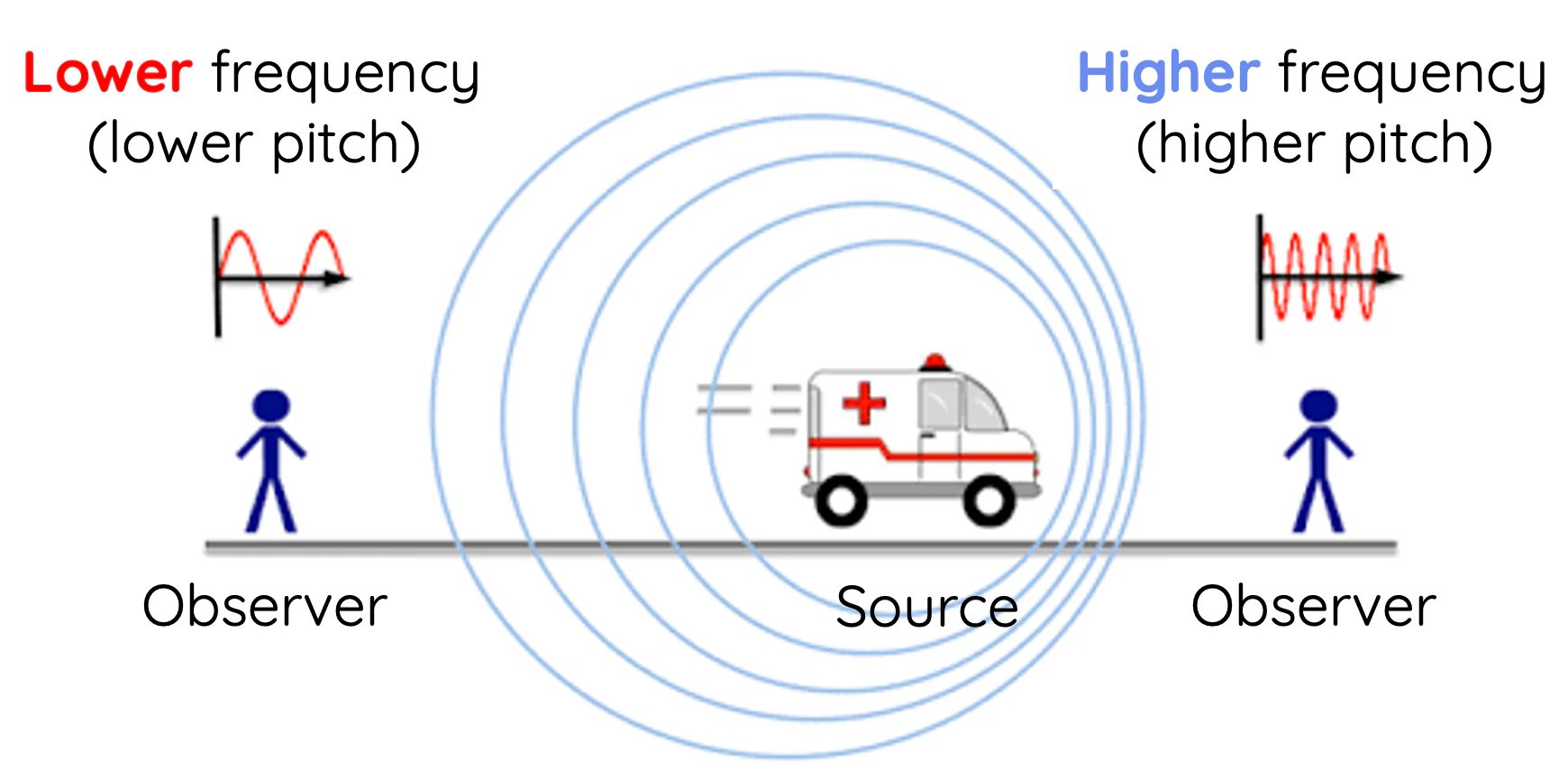
We’re all actually familiar with the Doppler effect. Whenever an emergency vehicle is moving towards you its siren has a higher pitch than when it is moving away from you. The same thing happens to light so that’s how we know that the Universe is expanding, the light from all but the very closest galaxies is shifted towards the red. (Credit: Science Ready)

Which is why the design of the James Webb space telescope was centered around its ability to see in the far infrared. That’s also why the telescope had to be positioned more then a million kilometers from Earth because our planet also emits a lot of infrared light, enough to blind Webb’s sensitive instruments. Astronomers can also use James Webb to study other objects closer to home like the gas clouds where stars are born but first and foremost the space telescope was intended to study the Universe at around one billion years after the Big Bang.
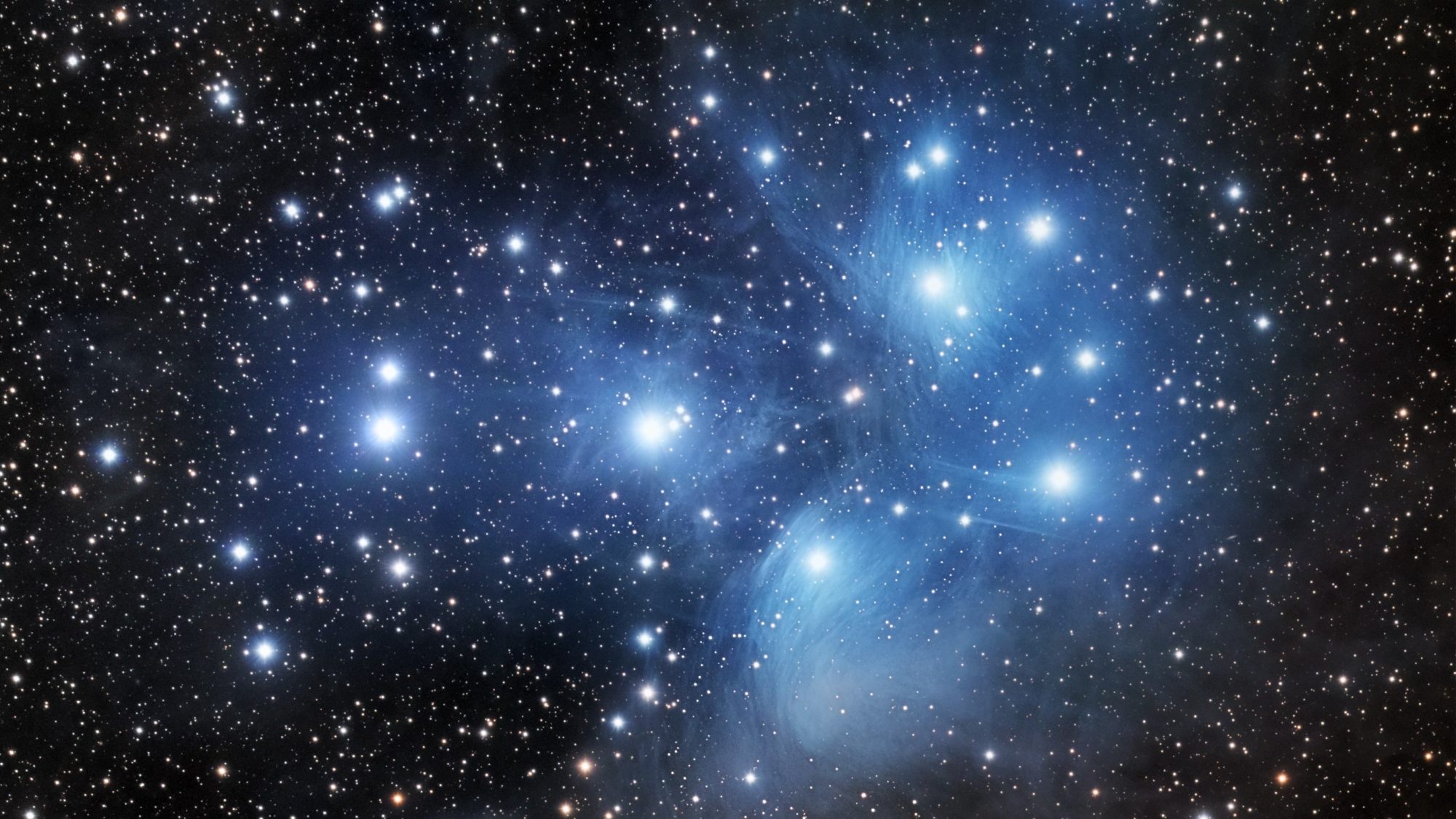
The famous Pleiades star cluster is a huge gas cloud in our galaxy that has been a stellar nursery forming hundreds of stars over the last couple of million years. By seeing in the infrared Webb can actually see through the gas and dust to actually see stars being born. (Credit: Space)

So what did astronomers and cosmologists, physicists who study the Universe as a whole, expect James Webb to find. They had quite a few theories, basically the idea was that about half a million years after the Big Bang the Universe had cooled enough for atoms, mostly hydrogen and helium, to form and when that happened the whole Universe would grow dark because there were no stars yet to emit any light. The theorists expected that gravity would cause the first stars to form around a half billion years after the Big Bang and based on their calculations those first stars would be really big ones, very bright, very blue in colour. A few hundred million years later those first stars would then be clumping together to form the first galaxies.
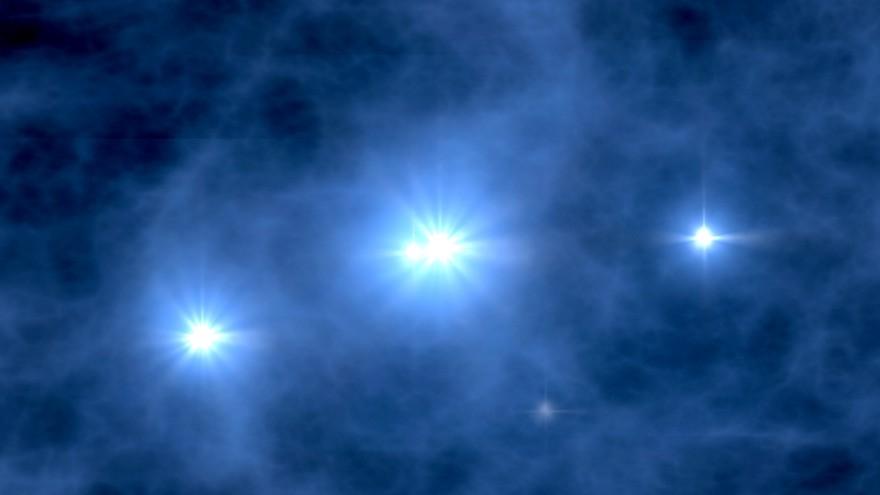
Astrophysicists expected that the very first stars to form after the Big Bang would big really big and hot, glowing in the blue portion of the spectrum. (Credit: Forbes)

That’s pretty much what astronomers expected James Webb to see, small, simple galaxies containing a few million or so really bright stars. Instead what they got as they studied the first images from James Webb almost three years ago now were a bunch of ‘Little Red Dots’ (LRDs).
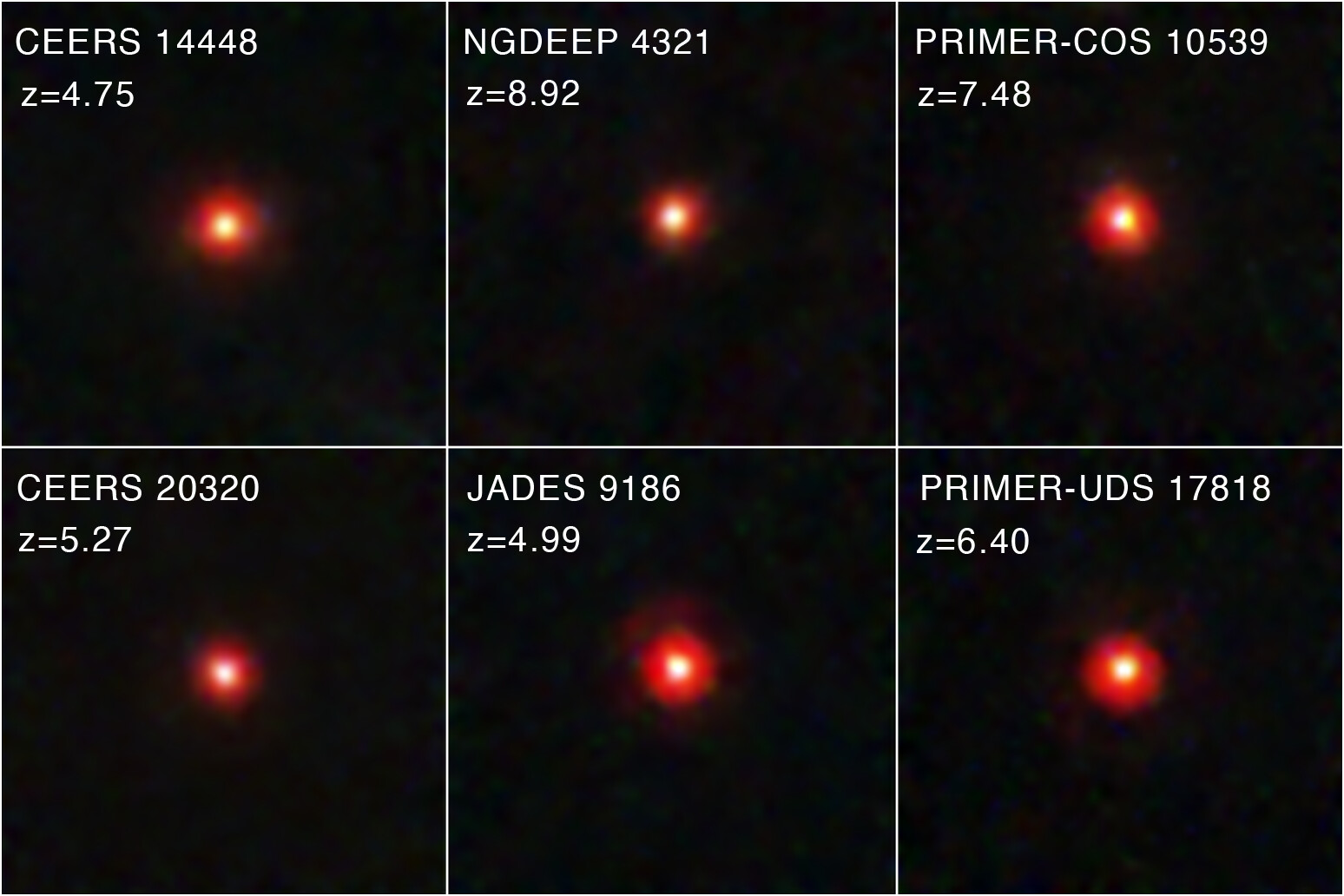
Instead, what James Webb found was a large number of ‘Little Red Dots’. (Credit: ESA/Webb)

Colour means a lot to an astronomer, red stars are actually cool while blue or violet stars are much hotter so the LRDs that Webb imaged were not the big bright stars that astronomers were expecting. At the same time the objects seemed to be too small to be any kind of galaxies. For these reasons, among others the LRDs were initially called ‘Universe Breakers’ because they went against all of our theories about the early universe at that time.
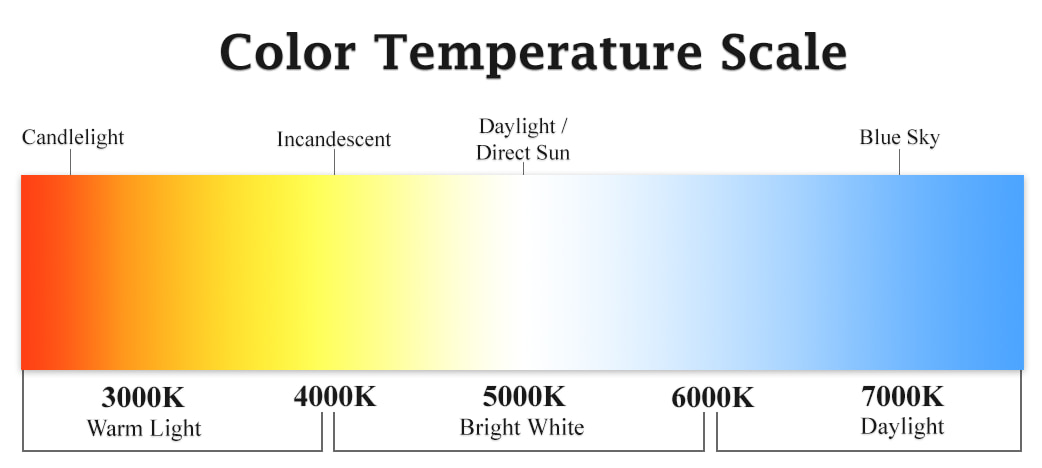
We think of red as being the colour of fire but actually the colour blue is much hotter. (Credit: Commercial LED Lights)

Trying to come up with some kind of model to describe the LRDs astrophysicists first suggested that they were small but well formed galaxies with millions of red stars packed in real tight. The idea of such compact, well organized objects already existing just a few hundred million years after the Big Bang was so outrageous is the reason why astronomers considered them to be Universe Breakers. One thing everybody agreed on was the need for more data; especially we needed the spectrum of a few of these LRDs. The early Universe cosmologists had to wait their turn however, as other programs got their first chance with Webb.

Having to wait your turn, whether at a doctor’s office or elsewhere can be the most boring thing imaginal. (Credit: Medium)

Eventually Webb did return to observing the early Universe and succeeded in obtaining the spectra of some of the LRDs and that better data has caused a shift in thinking about what they could be. The latest model for the LRDs is a black hole that has succeeded in pulling so much material around itself that it looks much like a very large but very cool star.
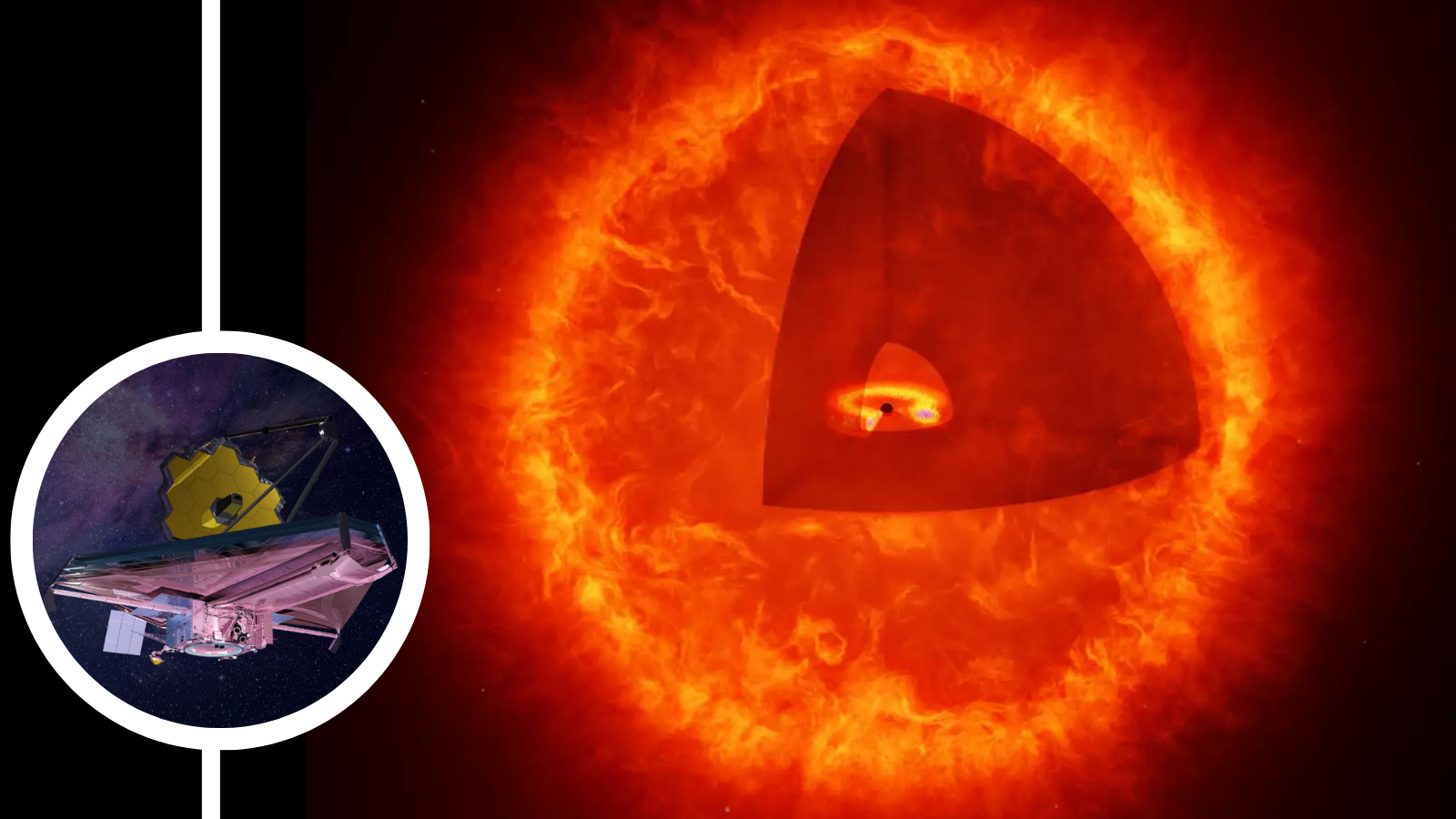
The latest theory as to what the little red dots could be is that they are a black hole that has gathered a large amount of gas around it. Deep in the center the black hole is feeding, releasing large amounts of energy that causes the entire gas cloud to glow. (Credit: Space)

In a paper from the journal Astronomy and Astrophysics with lead author Anna De Graaff these objects have been named ‘Black Hole Stars’ because even though they get their energy from matter falling into a black hole at their center, their atmospheres closely resemble those of red dwarf stars. The researchers also suggest that the LRDs are in fact the early stages in the development of the Supermassive Black Holes that are now considered to be at the center of every big galaxy.
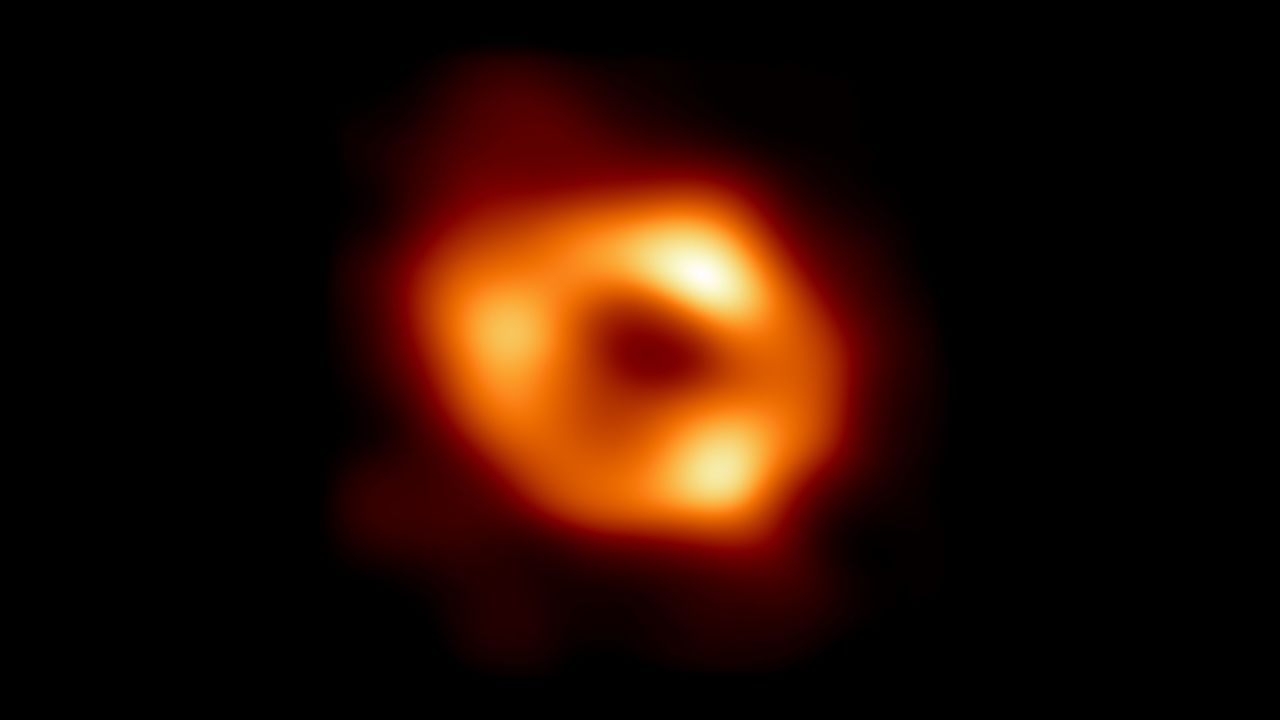
The first ever image of the supermassive black hole that is at the center of our Milky Way galaxy. The image was actually taken in radio waves and converted to a visible image. (Credit: CNN)

If that analysis is true, and there’s still a great deal to be learned about the LRDs, then James Webb has given us the answer to a question that has been bouncing around for the last twenty years or so. Which came first, do galaxies form supermassive black holes in their centers or do supermassive black holes form galaxies around them. If LRDs are baby supermassive black holes then before long Webb should find some of them with proto-galaxies around them.
We still know very little about how the galaxies formed. Hopefully James Webb will give us the data we need to understand how the Universe as it is today developed. (Credit: Wikipedia)

When, and if that happens the astrophysicists will have the data they need to rewrite their theories of how galaxies form. Then we will know more about how our Universe came to look the way it does.
Was Einstein Wrong??? Is the Speed of Light not Constant???

Over the past week there have been a series of news articles reporting that two physicists, Niayesh Afshordi at the University of Waterloo in Canada along with Joao Magueijo at the Imperial College of London have proposed that Einstein may have been wrong. The Speed of Light may not be constant, right after the Big Bang it may have been a lot faster.

Do you want the short answer or the long answer. For the short answer read the next 3 paragraphs, for the long answer keep going. If you want to read the news report use the link below.

http://www.csmonitor.com/Science/2016/1128/Einstein-s-speed-of-light-theory-tested-Did-he-get-it-wrong

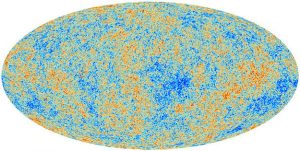
What Afshordi and Magueijo were looking for is a solution to the problem in cosmology of just how the early universe was in such good thermal equilibrium as is evidenced by the Cosmic Microwave Background, CMB see picture below. For different objects, at different initial temperatures to come into thermal equilibrium requires some kind of contact between those different objects. In this case we are taking about the entire early Universe which is flying apart at the speed of light and that ain’t good contact.

Cosmic Microwave Background from Plank Satellite

What Afshordi and Magueijo have proposed is that, in the Early Universe the speed of light was far greater than it is now allowing greater thermal contact by the process of radiation. Remember there are three ways for heat to flow: conduction, convection and radiation, well Afshordi and Magueijo’s model would make radiation a much more efficient process thereby eliminating the thermal contact problem.

The point to remember here is that this is all mathematics at present, no one has measured a different value for the speed of light. Afshordi and Magueijo do make a prediction of the scalar fluctuations in the CMB as an experimental check but at the moment this is all just a model.

Also, we’ve been here before. The problem of thermal equilibrium in the CMB goes back to the 1970s when Alan Guth of MIT proposed cosmic inflation as the solution. The idea of inflation was that, right after the big bang itself, and we’re taking pico-seconds here, a huge amount of energy was dropped into the universe causing it to expand faster than the speed of light so that a small section of the universe that was in thermal equilibrium became the entire universe that we see. For thirty years after Guth published his model inflation was a standard part of cosmology, I learned it, but no one has been able to figure out where all that energy came from so inflation is no longer quite so highly regarded.

To me however, this new idea of Afshordi and Magueijo is just kind of the opposite of inflation. Instead of having a small part of the universe after the big bang expand faster than the speed of light they increase the speed of light, in a sense making the early universe smaller. And they now have the problem of describing what made the speed of light so different, and what makes it so constant now? Kind of the opposite of Guth’s problem of where all that energy came from. I wish Afshordi and Magueijo luck but as I said, we’ve been here before.

Now I get to give my opinion. To me the reason the early universe was in thermal equilibrium right after the big bang was that it was in thermal equilibrium before the big bang. That’s right I’m one of those big crunch guys, that is I think that about 15 billion years ago, before the big bang,  the universe was collapsing at the speed of light. Eventually the universe collapsed as much as it could and then rebounded, that rebound is what we call the big bang. A universe that is collapsing is coming into greater contact and therefore will achieve thermal equilibrium before the rebound, giving it thermal equilibrium after the rebound.

Anyway, that’s what I think. I know this has been a bit of a long post but I hope you enjoyed it. Let me know what you think.