Climate Change and the increasing number of Weather related Disasters: July 2025. 

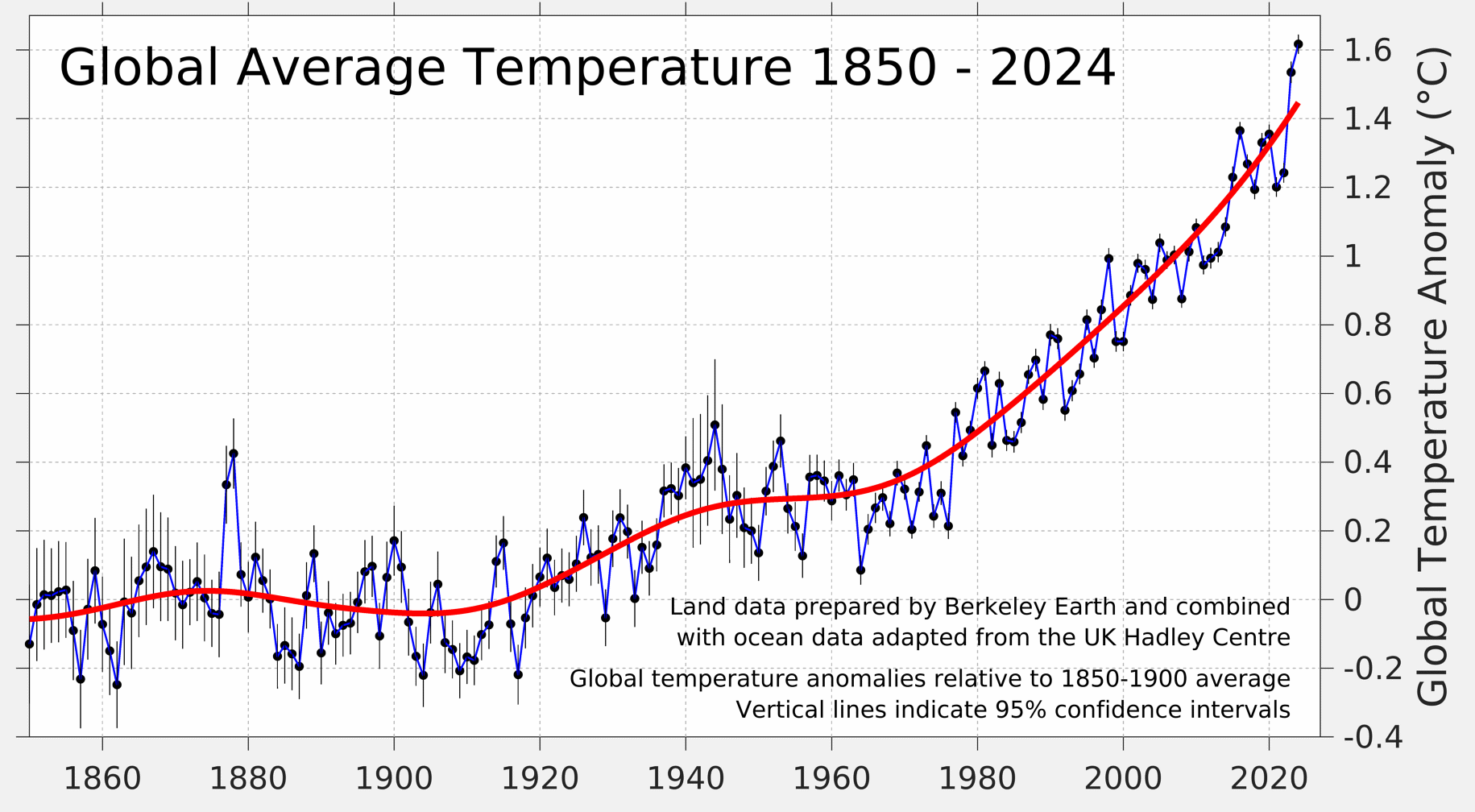
The last two years, 2023 and 2024 have been simply the hottest years ever recorded for our planet with last year being so hot that the planet as a whole broke the 1.5ºC above the pre-Industrial averages limit that scientists are convinced will bring on worldwide disasters. In fact every month since July of 2023 has been hotter than 1.5ºC above the world’s average for that month during the 19th Century. This year the world’s temperature was expected to moderate slightly as an El-Ninó condition in the Pacific being replaced by a La Niná but the steady rise in temperature due to our continued emissions of greenhouse gasses meant that 2025 would still be hot, just hopefully not as hot as 2025.
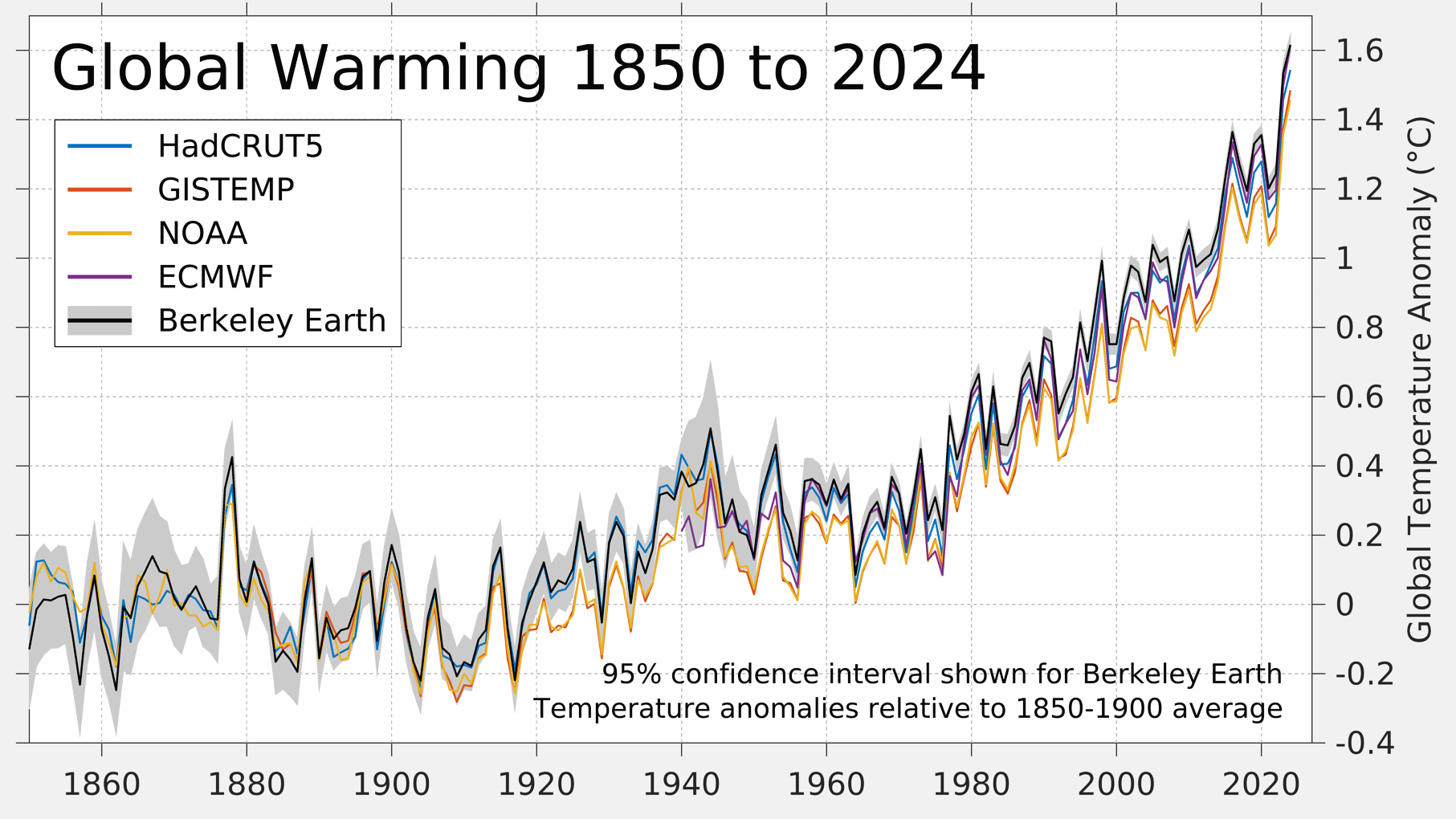
The World’s temperature rise has become so obvious that even a fool should be alarmed. The scary part is that we have entered the exponentially increasing phase meaning things are going to get even worse more quickly going forward. (Credit: Berkeley Earth)

Nevertheless 2025 has already had its share of weather related disasters, from the wildfires that swept Los Angeles to major flooding events to severe outbreaks of Tornadoes. Hurricane season is just beginning, and this year is expected to be a busy one, and already the US has suffered from numerous episodes of severe weather strengthened by climate change.
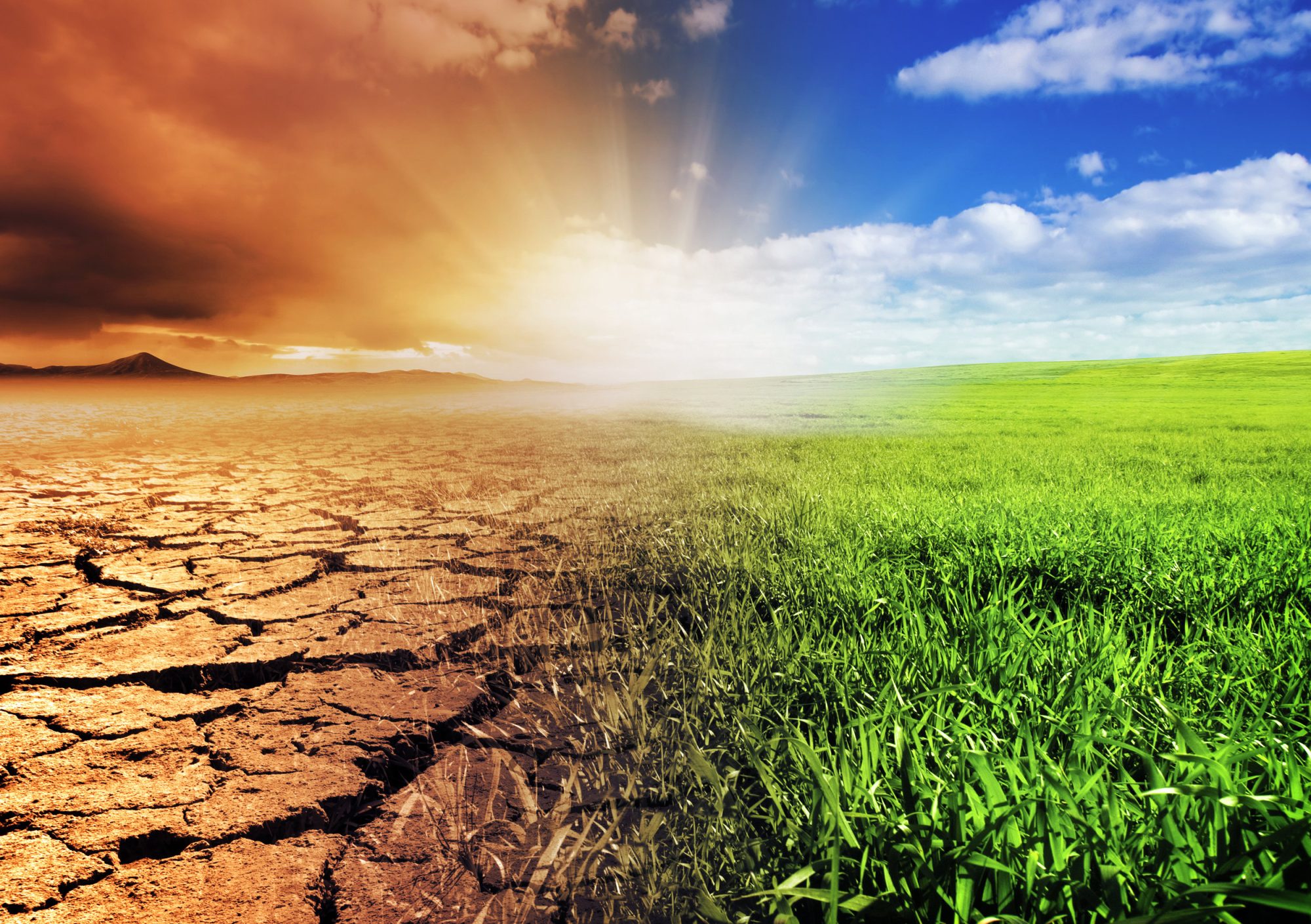
When I was young we were still in the right-hand side of this picture. I’m afraid that by the time I die the whole world will be in the left-hand side! (Credit: As You Sow)

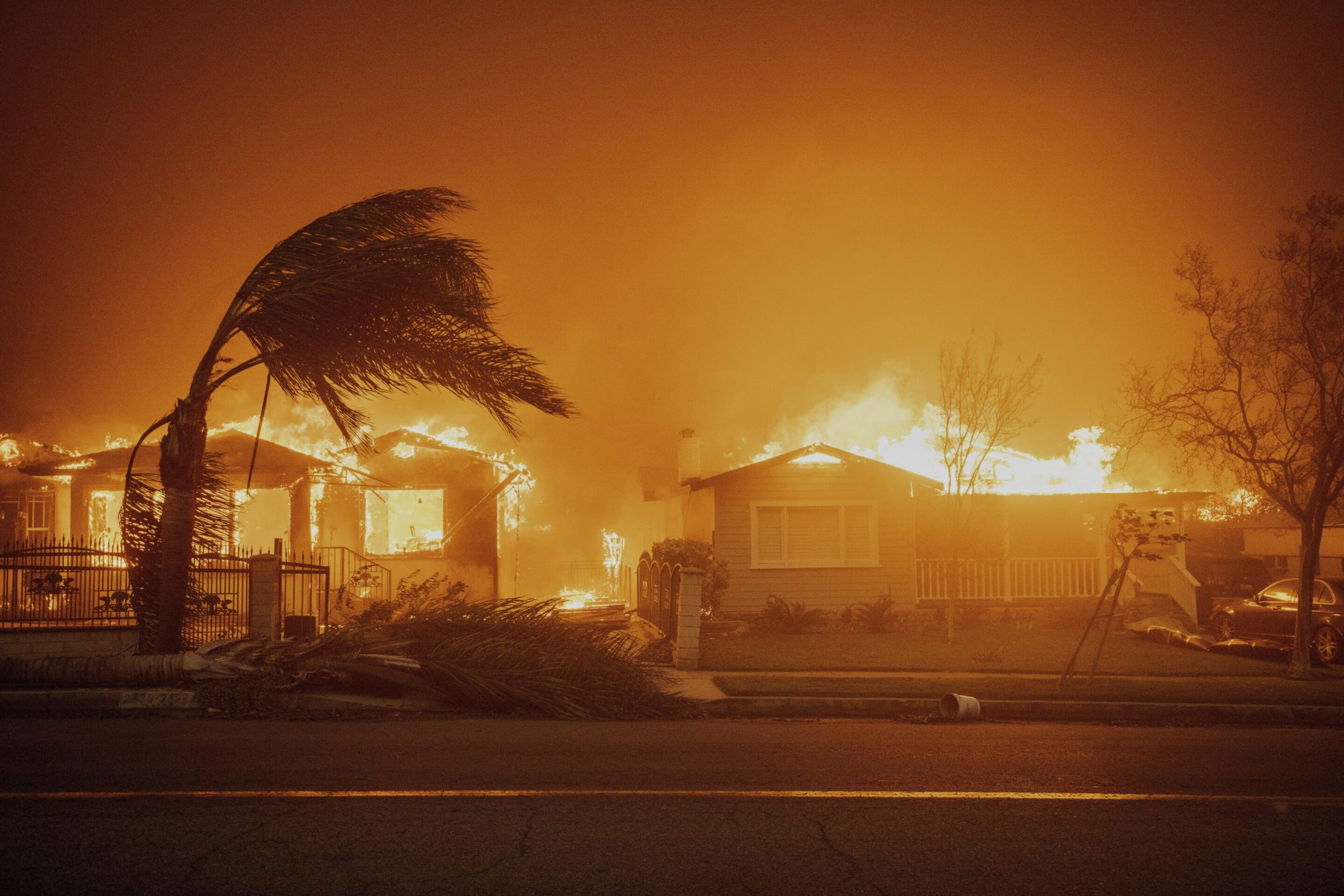
The year was only a few days old when the first disaster suddenly struck in the form of a series of wildfires that broke out in Los Angeles and surrounding communities. Within hours two of the fires, the Palisades and Eaton fires had destroyed hundreds of homes and would go on burning for weeks destroying more than 16,000 structures. The total damage caused by the LA fires as a whole has been estimated to be somewhere between $35 and $45 Billion dollars making it the third costliest natural disaster in US history after only Hurricanes Katrina ($102 Billion) and Ian ($56 Billion).
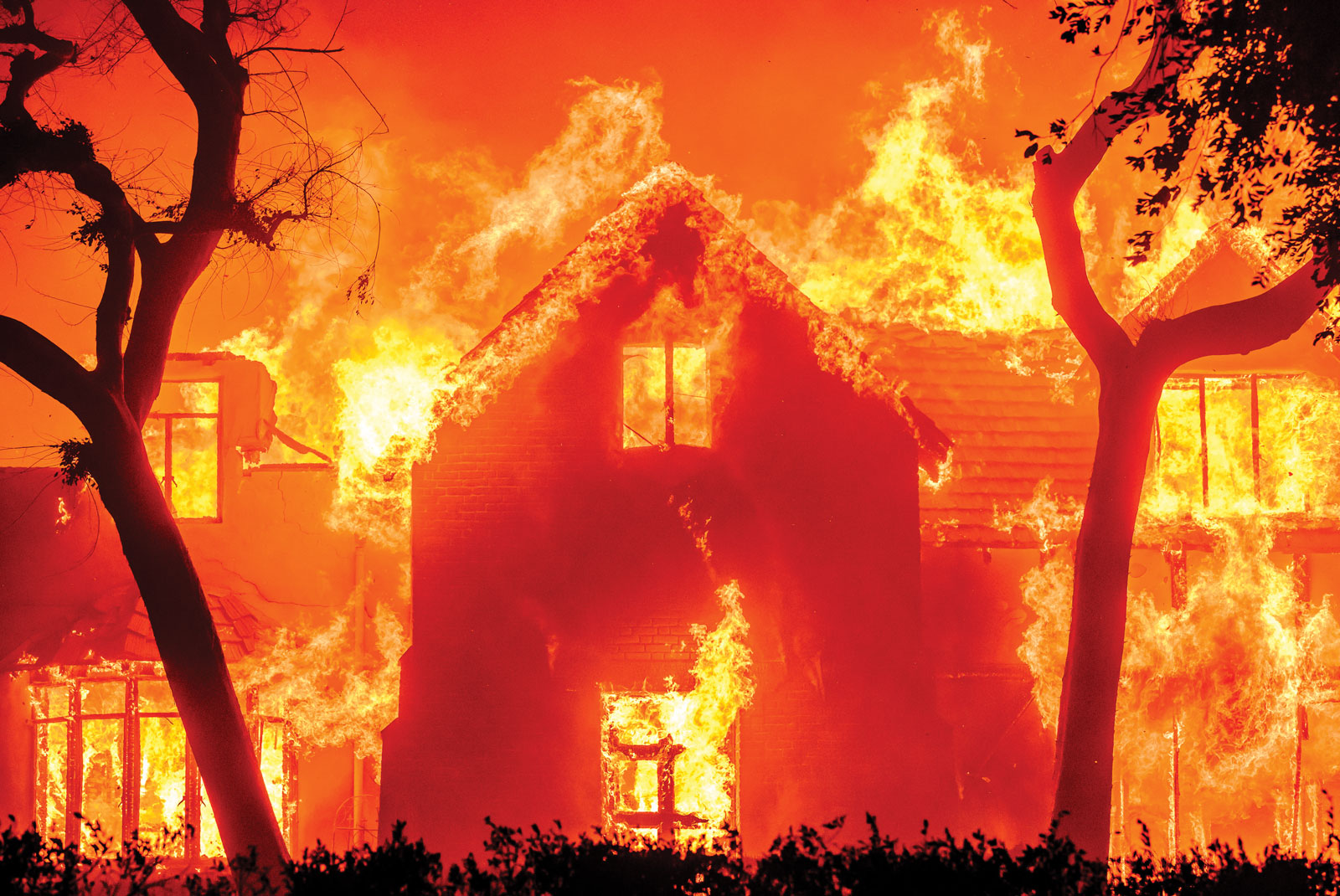
Thirty people died, over 16,000 buildings destroyed and the long term health damage is still unknown. That’s the cost of climate change in Los Angeles this year. Who knows when it will be coming for you! (Credit: Science)

Now LA has often the location for wildfires as its long dry summers cause vegetation in the nearby hills to die and the Santa Ana winds from the north both fuel and spread whatever flames get started. The extreme severity of this year’s fires however were undoubtedly due to climate change as last summer’s heat and drought set records throughout the southwestern US. Even the strength of the Santa Ana winds was above average, helping to spread the fires further and faster than in other years. The added strength of those winds is again likely due to climate change caused by greenhouse gas emissions.
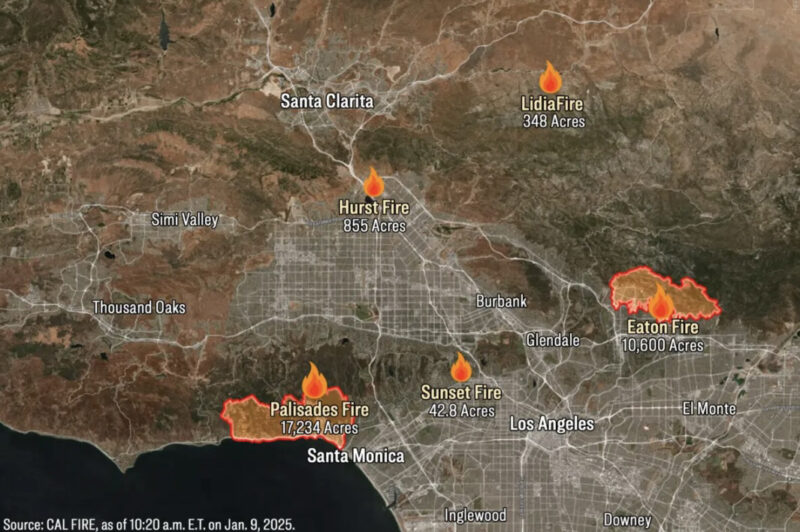
The wildfires of January 2025 destroyed large sections of our second largest city. To be honest LA often has fires but that’s what global warming does, it just makes the kind of weather we’ve always had more severe, more extreme. (Credit: Santa Clarita Valley Signal)

Then, starting in April it was the middle of the country’s turn as a series of severe storms caused destruction from Texas in the south to Illinois in the north, from Colorado in the west to Georgia in the east. Springtime in those areas often brings strong storms and tornadoes as warm, moist air from the Gulf of Mexico moves north and runs headlong into dry, cool air coming down from Canada. That’s why the plains states are known as tornado alley.
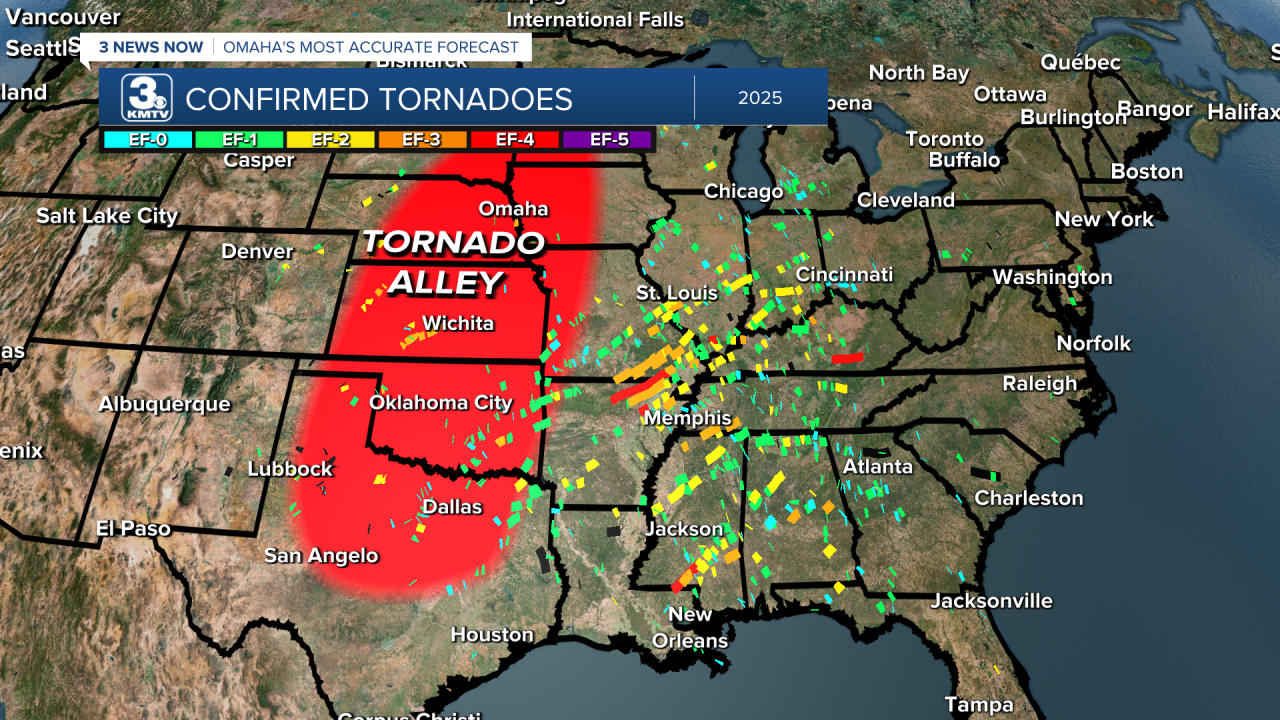
What used to be called tornado alley was the area from Minnesota in the north down to Texas in the south. One thing that climate change seems to be doing, in addition to increasing the number and strength of tornadoes is to shift the area of most tornadoes east to the Mississippi valley. (Credit: KMTV)

Thanks to global warming however the both the water and the air of Gulf set records for high temperatures last year leading to increased ocean evaporation that supercharged with moisture the air before it moves north. With record amounts of both water vapour and energy this year’s storms have triggered massive flooding and catastrophic winds, both tornado and straight line, that have been causing destruction on an almost daily basis.
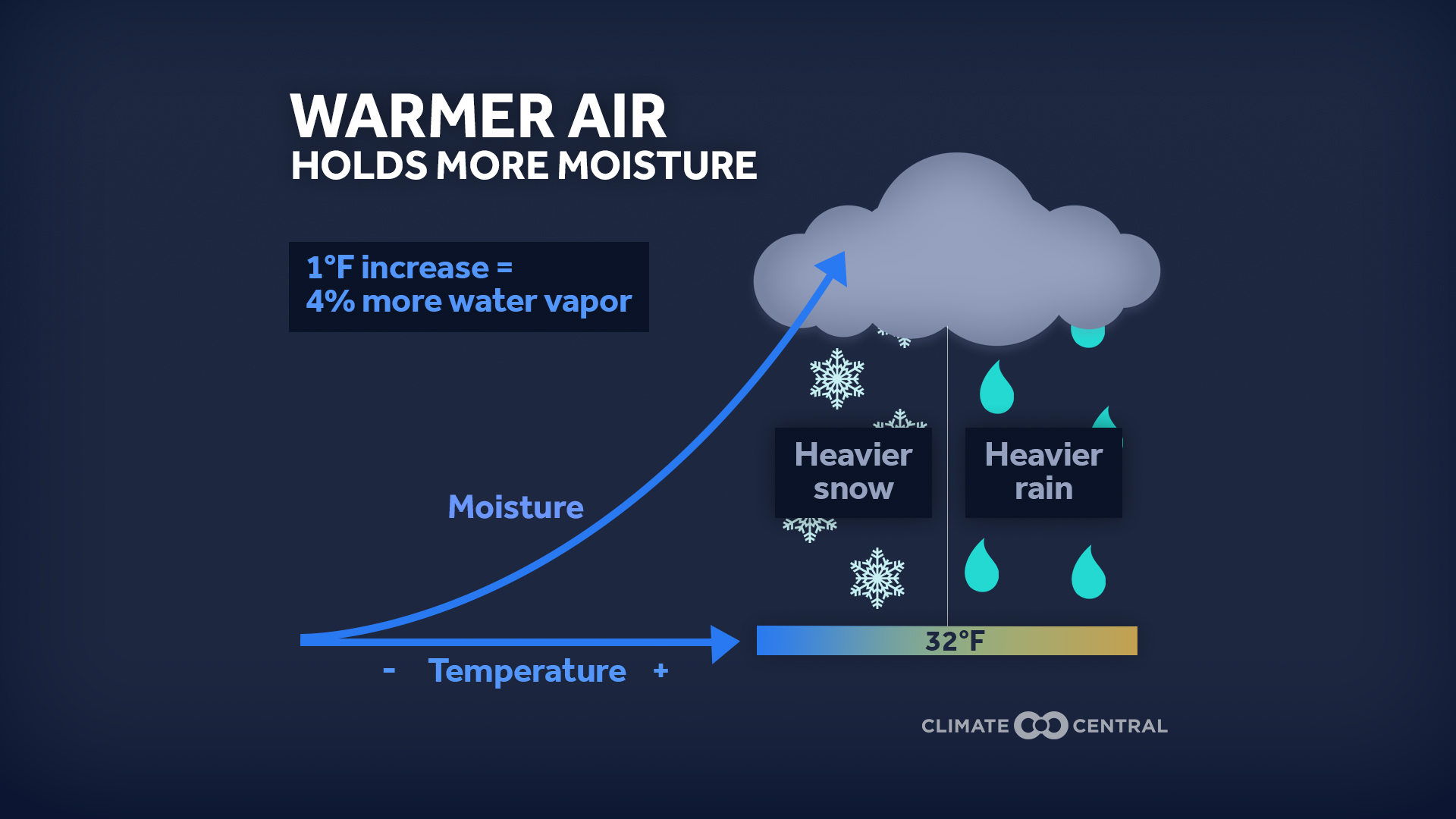
If 1 degree Fahrenheit equals 4% more moisture in the air, then the 3 degrees Fahrenheit (equal to 1.5 degrees C) increase due to global warming means 12% more water in the atmosphere, 12% more rain and going by this year’s disasters more than a 12% increase in flooding deaths and destruction. (Credit: Climate Central)

The twin calamities of tornado winds and rising floodwaters can even leave people not knowing how to protect themselves. Think about it, in a tornado warning you are supposed to get underground for protection but in a flash flood warning you need to get as high up as possible. What do you do when both warnings are issued for your location at the same time? This is something that has happened over a hundred times so far this year.
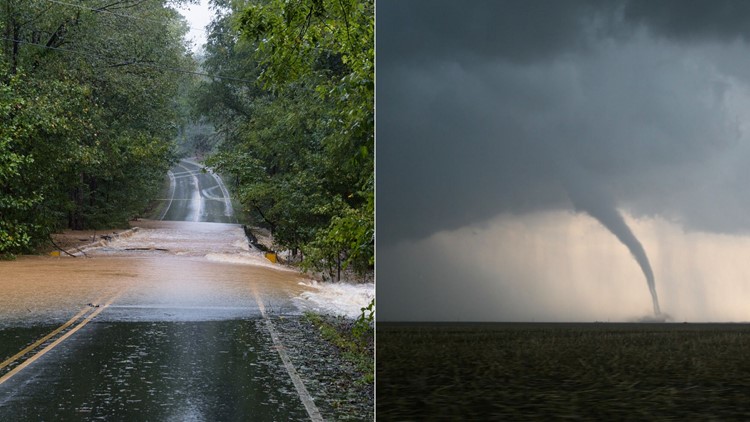
What do you do when you get a tornado warning and a flood warning at the same time? When a tornado is threating you’re supposed to get underground but that’s the worst thing you can do during a flood! A lot of people have had to make that choice so far this year. (Credit: KSDK)

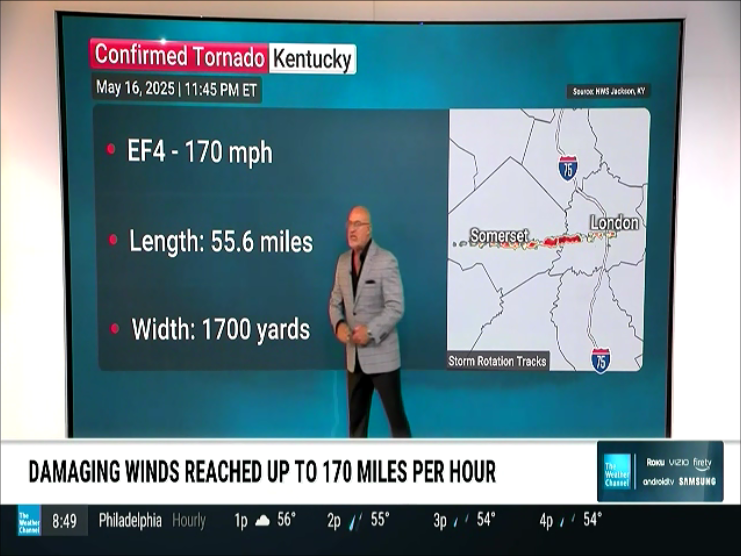
From the 3rd to the 6th of April a series of storms lashed the Mississippi valley leading to numerous flood and tornado warnings. The flooding was responsible for more than eight deaths while hundreds if not thousands of homes were damaged. Then, just a little more than a month later on the 15th and 16th of May another series of storms unleashed dozens of powerful tornadoes. One tornado moved through the city of St. Louis killing 5 and destroying over 5,000 structures. Another tornado struck the town of London, Kentucky killing 18. While those days may have seen the greatest number and intensity of tornadoes so far this year nearly every day since March there has been a handful of tornado and severe storm warnings issued by the National Weather Service.
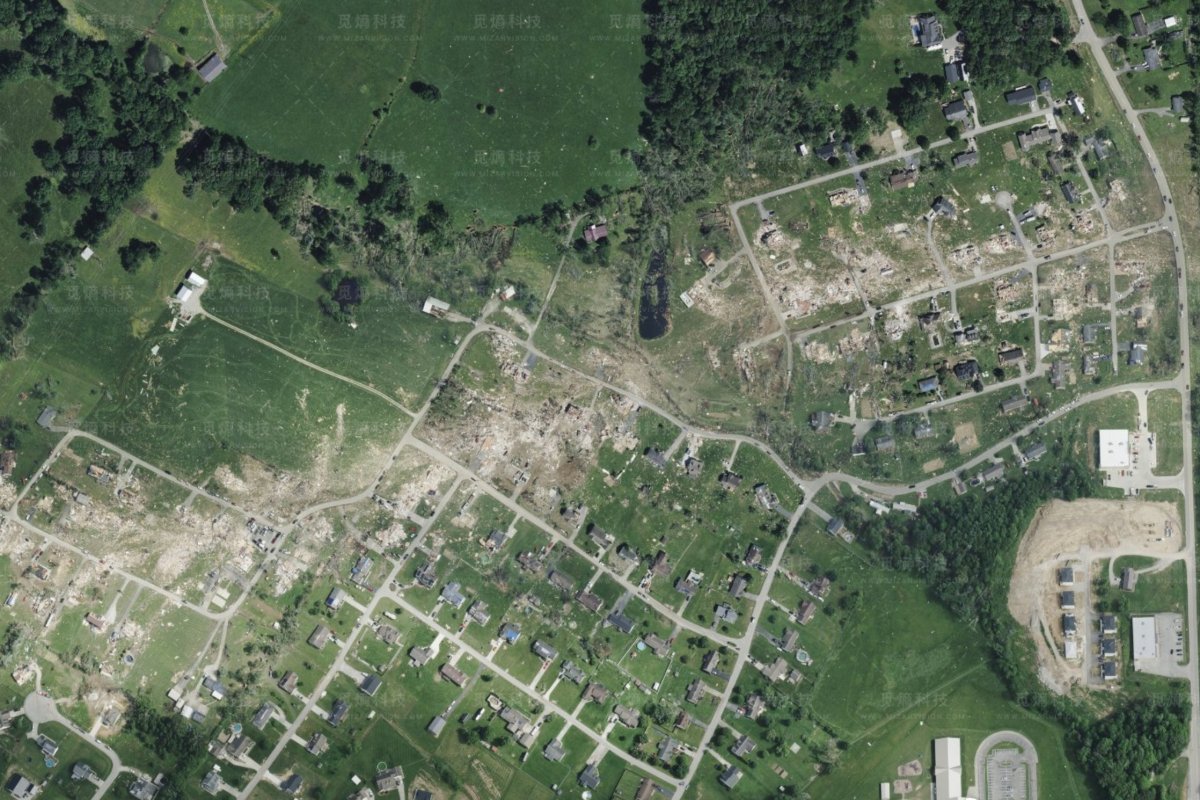
The path of the tornado that struck London, Kentucky is clearly visible in this ariel view. This was just one of multiple tornadoes that struck on the 15th and 16th of May across the Midwest. (Credit: Newsweek)

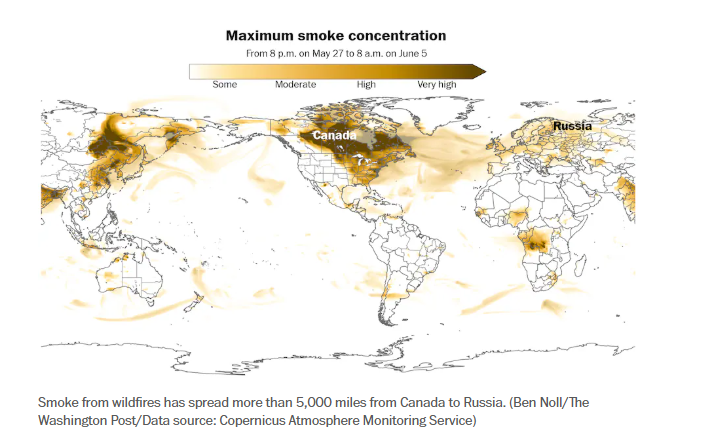
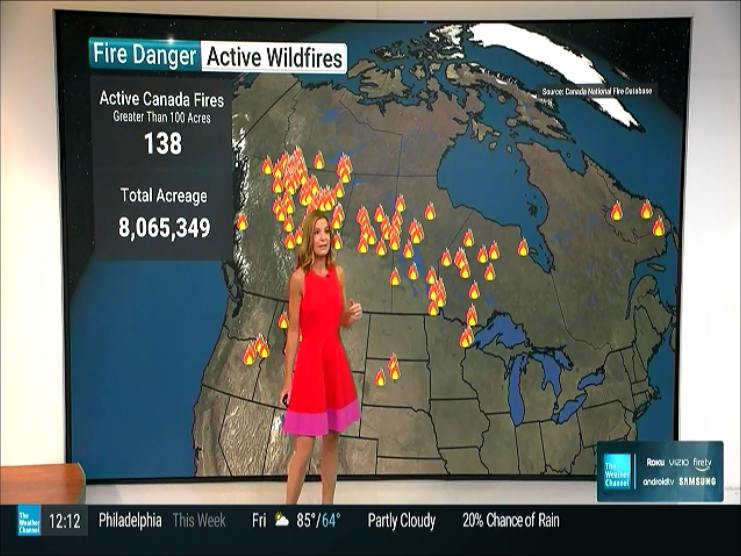
Meanwhile to the north fire season in Canada is well underway with over a hundred and thirty wildfires burning over eight million acres of forest, an area greater than the size of the state Delaware. Those same winds that are triggering the tornadoes are now bringing the smoke from those fires south into the US impacting the health of millions of people. Because of this air quality alerts have now joined tornado warnings, flash flood warnings and severe weather threats as a daily occurrence somewhere in this country.
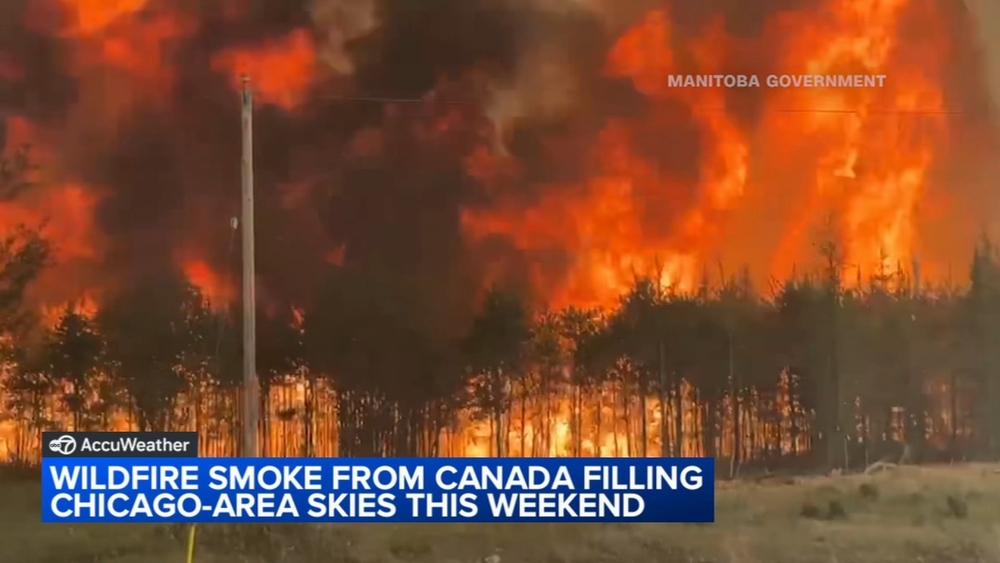
Trump and his allies want to strengthen our borders but the smoke from wildfires doesn’t care about nation states. The smoke from Canadian wildfires is coming south affecting the health of millions of US citizens. (Credit: ABC7 Chicago)

Of course the biggest weather related disaster of the year continues to unfold in the hill country of central Texas where tremendous rainfall caused the Guadalupe River to rise by 10m in an hour in some places. In addition to the homes that damaged or carried away there were several summer camps along the riverbanks whose campers apparently did not receive adequate warning of the floodwaters rising around them. At present more than 134 people are confirmed dead while another 100 are still missing, making this flood one of the deadliest in the last century.
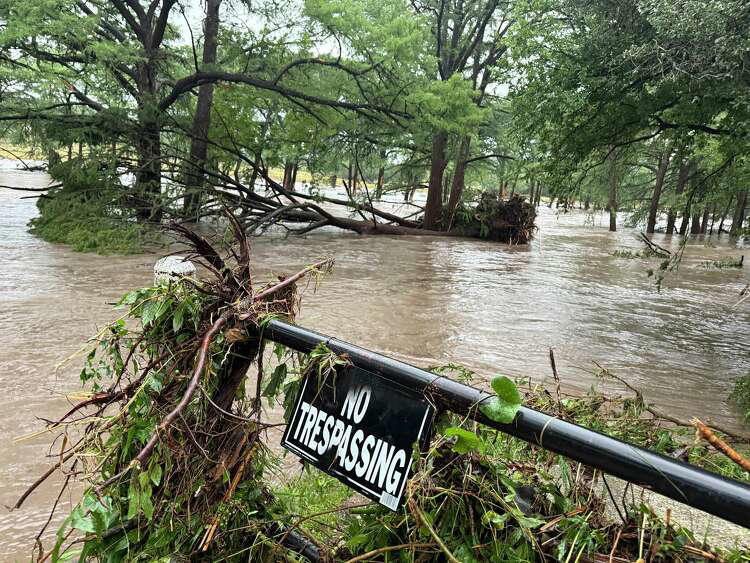
Again, we can put up ‘No Trespassing’ signs but nature doesn’t care about our laws. Just one image of the flooding in Kerr County, Texas that took so many lives over the 4th of July weekend. (Credit: MSN)

While there can be little doubt that global warming played a role in the intensity of the flooding in Kerr, County and its surrounding area there is more to the story than just climate change. For years residents along the Guadalupe have asked their state government to set up a network of sirens along the river to warn people in the event of a flood, which the river has a long history of. Those requests have gone unanswered by a state legislature that is more interested in keeping out illegal migrants than protecting its citizens from natural disasters.
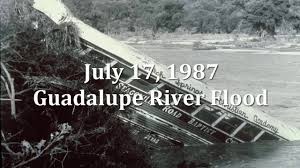
The Guadalupe River is known for its flood potential. Instead of installing warning sirens to protect their own people the Texas State legislature decided to spend billions trying to keep out illegal migrants from Mexico. (Credit: National Weather Service)

Also, thanks to Trump’s recent budget cuts FEMA’s response to the disaster has been severally criticized. All in all the disaster in Texas highlights the way politicians whose greatest concern is low taxes and small government are putting people’s lives at risk. The only thing such politicians are willing to spend on the people who suffer because of their incompetence is ‘thoughts and prayers’.
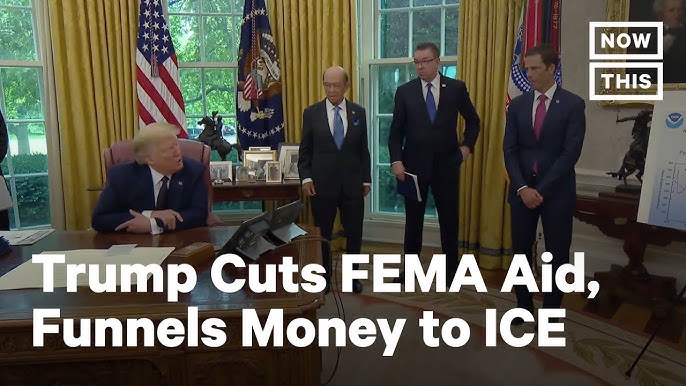
Again, the money that used to help people suffering from a natural disaster is now being used to round up and deport people whose only crime is being in this country. (Credit: YouTube)

Now we have the start of Hurricane season, and again this year is forecast to be above average. Not that that means wildfire season or tornado season is over. We could easily have forests burning out west and up north at the same time that tornadoes are ravaging the middle of the country all while hurricanes are slamming into the Gulf or Atlantic coasts.
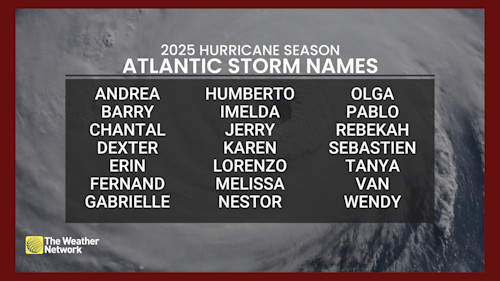
The 21 names for this year’s Atlantic hurricane season. It’s just starting, and we’ve already used the first three names. (Credit: The Weather Network)

Global warming caused by our emissions of greenhouse gasses is making the entire world hotter and heat is a form of energy, a particularly violent form of energy. If we don’t stop it these disasters are only going to get worse.
Climate Change and the increasing number of Weather related Disasters: June 2025.

The last two years, 2023 and 2024 have been simply the hottest years ever recorded for our planet with last year being so hot that the planet as a whole broke the 1.5ºC above pre-Industrial averages limit that scientists are convinced will bring on worldwide disasters. In fact every month since July of 2023 has been hotter than 1.5ºC above the world’s average for that month during the 19th Century. This year the world’s temperature was expected to moderate slightly as an El-Ninó condition in the Pacific has been replaced by a La Niná but the steady rise in temperature due to our continued emissions of greenhouse gasses means that 2025 will still be hot, just hopefully not as hot as 2024.

It’s easy to see why scientists like to compare our rising temperatures to those of the 19th Century. The last ten years have in fact been the hottest ever recorded and that trend is certain to continue. (Credit: New York Times)


Nevertheless 2025 has already had its share of weather related disasters, from the wildfires that swept Los Angeles to major flooding events to severe outbreaks of Tornadoes. Hurricane season is just beginning, and this year is expected to be a busy one, but already the US has suffered from numerous episodes of severe weather strengthened by climate change.
The year was only a few days old when the first disaster suddenly struck in the form of a series of wildfires that broke out in Los Angeles and surrounding communities. Within hours two of the fires, the Palisades and Eaton fires had destroyed hundreds of homes and would go on burning for weeks destroying a total of more than 18,000 structures. The total damage caused by the LA fires as a whole has been estimated to be somewhere between $35 and $45 Billion dollars making it the third costliest natural disaster in US history after only Hurricanes Katrina ($102 Billion) and Ian ($56 Billion).

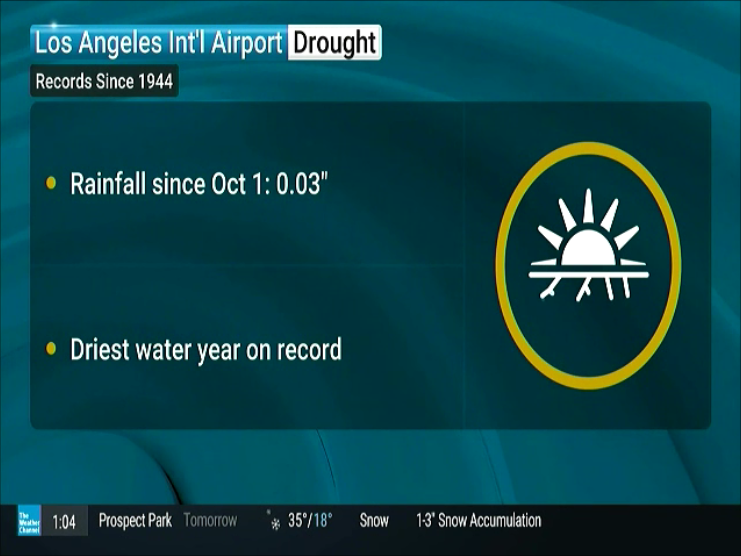
Southern California is usually a raher dry region but the drought that started in 2024 was the worst ever, fueling the LA fires of January 2025
Just Two of the thousands of homes destroyed by the January fires in LA. (Credit: Phys.org)

Now LA has often the location for wildfires as its long dry summers cause vegetation in the nearby hills to die and the Santa Ana winds from the north both fuel and spread whatever flames get started. The extreme severity of this year’s fires however were undoubtedly due to climate change as last summer’s heat and drought set records throughout the southwestern US. Even the strength of the Santa Ana winds was above average, helping to spread the fires further and faster than in other years. The added strength of those winds is again likely due to climate change caused by greenhouse gas emissions.

The LA Fires weren’t just a single fire but a series of blazes of the outlying areas north and west of LA. (Credit:CERT-LA)


Then, starting in April it was the middle of the country’s turn as a series of severe storms caused destruction from Texas in the south to Illinois in the north, from Colorado in the west to Georgia in the east. Springtime in those areas often brings strong storms and tornadoes as warm, moist air from the Gulf of Mexico moves north and runs headlong into dry, cool air coming down from Canada. That’s why the plains states are known as tornado alley.
Thanks to global warming however the both the water and the air of the Gulf set records for high temperatures last year leading to increased ocean evaporation that supercharged with moisture the air before it moves north. With record amounts of both water vapour and energy this year’s storms have triggered massive flooding and catastrophic winds, both tornado and straight line, that have been causing destruction on an almost daily basis.

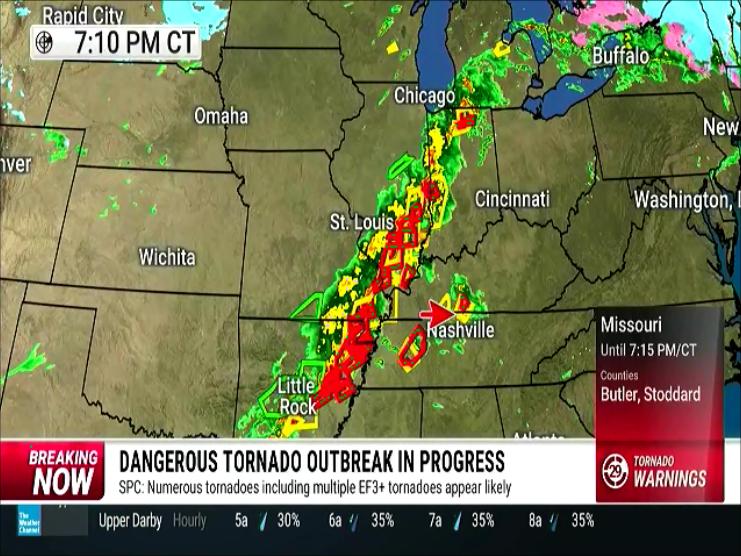
At one point on the 16 of March there were 29 Tornado warnings at the same time across the Midwest. (Credit: Weather Channel)


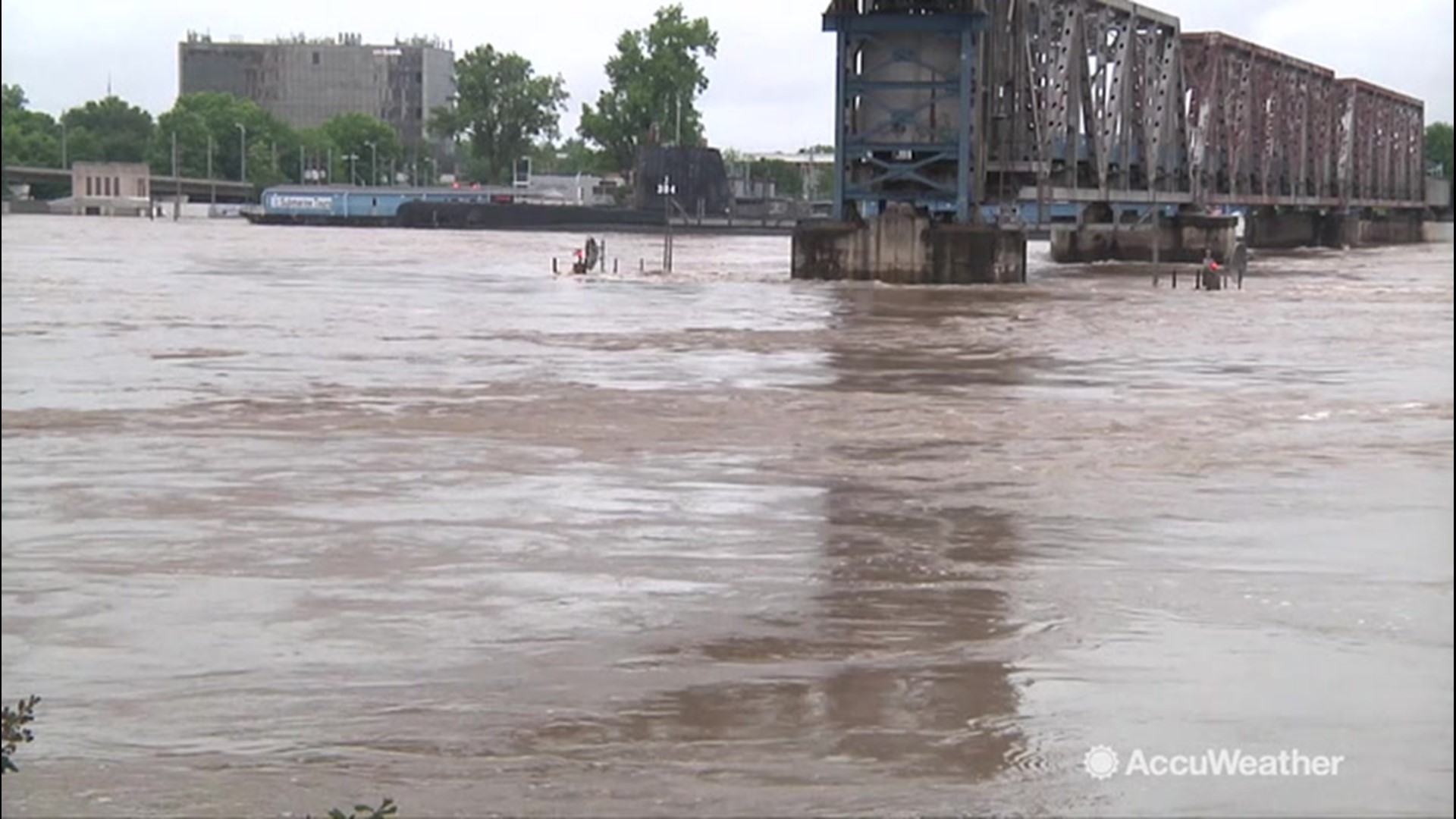
The twin calamities of tornado winds and rising floodwaters can even leave people not knowing how to protect themselves. Think about it, in a tornado warning you are supposed to get underground for protection but in a flash flood warning you need to get as high up as possible. What do you do when both warnings are issued for your location at the same time? This is something that has happened over a hundred times so far this year.

The city of Little Rock was being subjected to massive flooding at the same time as tornado warnings were being issued. What would you do in the situation? (Credit: KGW)


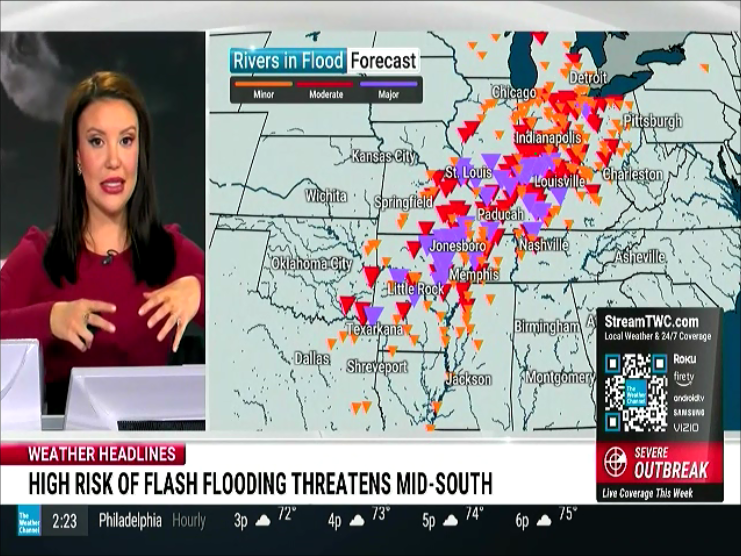
There was flooding up and down the Mississippi valley in early April along with numerous Tornadoes and other severe weather. (Credit: Weather Channel)

From the 3rd to the 6th of April a series of storms lashed the Mississippi valley leading to numerous flood and tornado warnings. The flooding was responsible for more than eight deaths while hundreds if not thousands of homes were damaged. Then, just a little more than a month later on the 15th and 16th of May another series of storms unleashed dozens of powerful tornadoes. One tornado moved through the city of St. Louis killing 5 and destroying over 5,000 structures. Another tornado struck the town of London, Kentucky killing 18. While those days may have seen the greatest number and intensity of tornadoes so far this year nearly every day since March there has been a handful of tornado and severe storm warnings issued by the National Weather Service.

The statistics on the tornado that struck London, Kentucky on the 16th of May killing 18 people. (Credit: Weather Channel)


Meanwhile to the north fire season in Canada is well underway with over a hundred and thirty wildfires burning over eight million acres of forest, an area greater than the size of the state Delaware. Those same winds that triggered the tornadoes are now also bringing the smoke from those fires south into the US impacting the health of millions of people. Because of this air quality alerts have now joined tornado warnings, flash flood warnings and severe weather threats as a daily occurrence somewhere in this country.

The smoke from the massive fires in Canada is coming across the border into the US no matter what the politicians say about illegal immigration! (Credit: The New York Times)


Now we have the start of Hurricane season, and again this year is forecast to be above average. Not that that means wildfire season or tornado season is over. We could easily have forests burning out west and up north at the same time that tornadoes are ravaging the middle of the country all while hurricanes are slamming into the Gulf or Atlantic coasts.

The number and intensity of the Canadian wildfires is unprecedented for this early in the year. Makes you wonder how bad it’s going to get in the next few months! (Credit: Weather Channel)


Global warming caused by our emissions of greenhouse gasses is making the entire world hotter and heat is a form of energy, a particularly violent form of energy. If we don’t stop it it’s only going to get worse.