People who are interested in Archaeology recognize that the British Isles are a hotbed for the study of ancient peoples starting from the Neolithic ‘Stone Age’. As it happens I’m of Irish and Scottish ancestry so for me the archaeology of those islands is like family history. You’ll understand then when I use the occasional post to discuss some of the latest findings from those lands. As always I’ll start with the oldest and move forward in time.
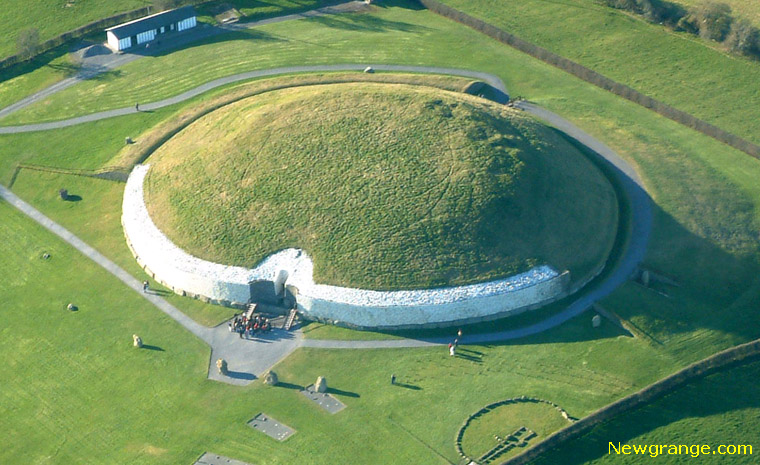
Scotland is commonly known as a dark, misty, rocky sort of place. It is true that the population of Scotland has never been as large as the more temperate country of England to the south. Nevertheless Scotland has been a home for humans since the end of the last Ice Age and possesses a wealth of archaeological sites including stone circles, hillforts and burial sites.
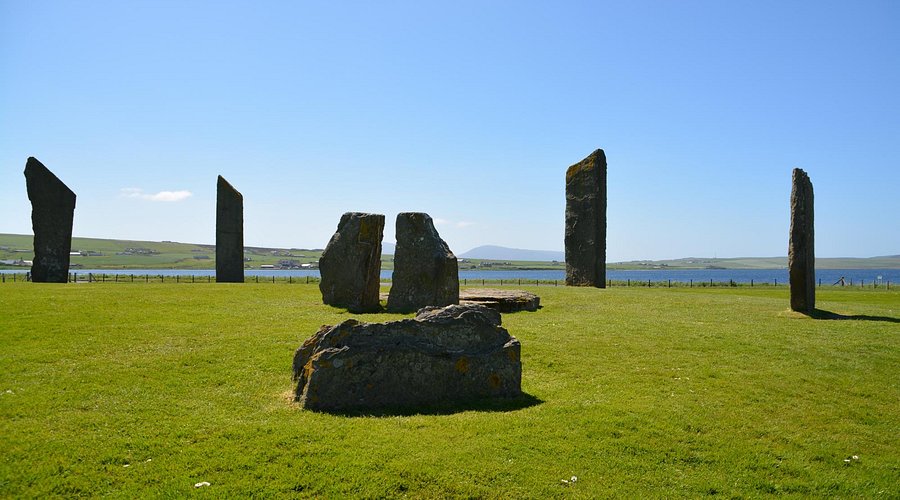
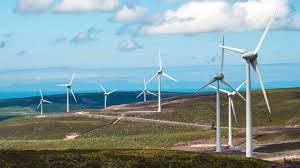
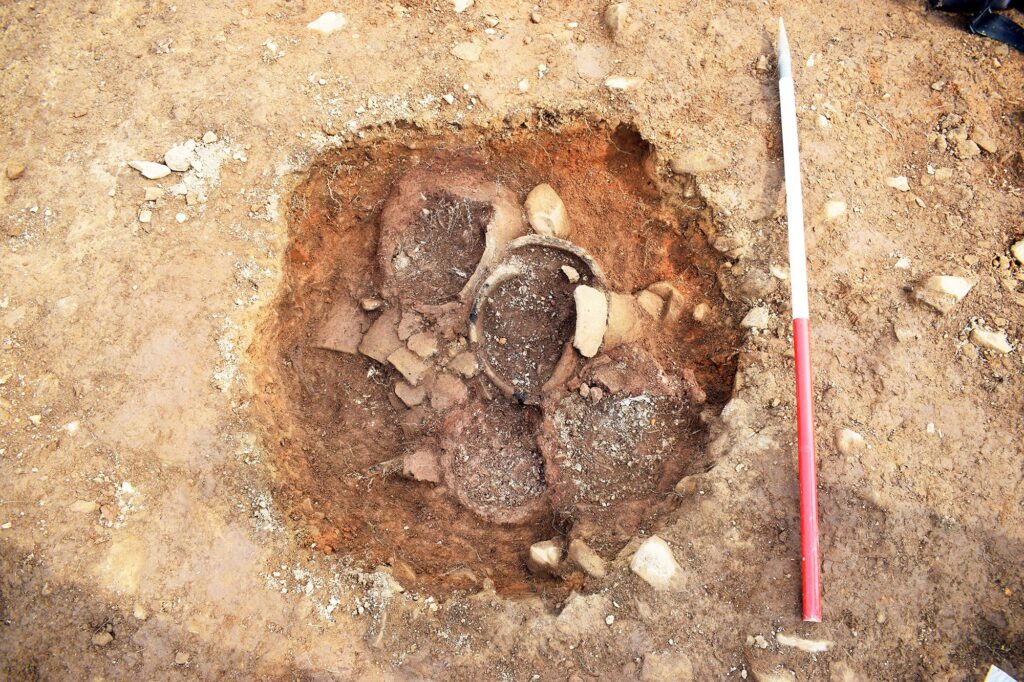
Recently the construction of a new access road to a wind farm called Twentyshilling in the area of Dumfries and Galloway has unearthed several previously unknown barrow type graves that are of the type common throughout the British Isles. One pit at the south was tentatively dated to between 2867-2504 BCE in the Neolithic period while the pit a bit further north was dated to 1439-1287 BCE, the Bronze Age. It was the Bronze Age site that drew the most attention as it contained five funeral urns that held the remains of at least eight individuals. The researchers are convinced that the five urns were buried at the same time because they were packed so tightly together in a hole at the center of the barrow.
The ancient Scots had a few curious customs when it came to burying their dead, for one they often placed the remains of an adult and a child in the same urn, as seems to be the case here. On the other hand Bronze Age Scots usually exposed their dead and only interred the bones in funeral urns buried in barrows. There is evidence that was not the case in the Twentyshilling barrow. The archaeologists who excavated the site conjecture that perhaps the relatives of the deceased were in a hurry to bury their kin for some reason, possibly disease? The fact that eight persons were buried at the same time is further evidence for this.
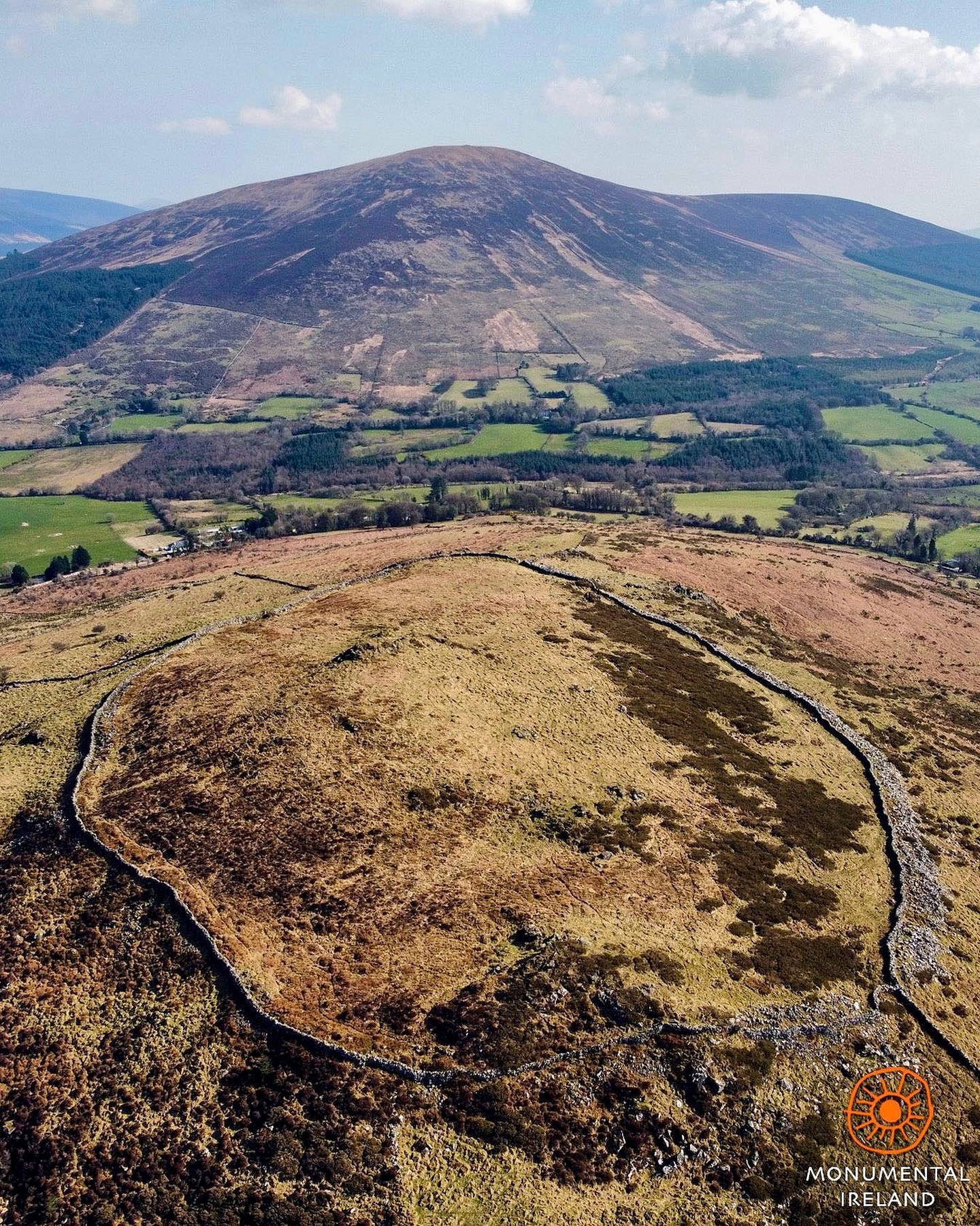
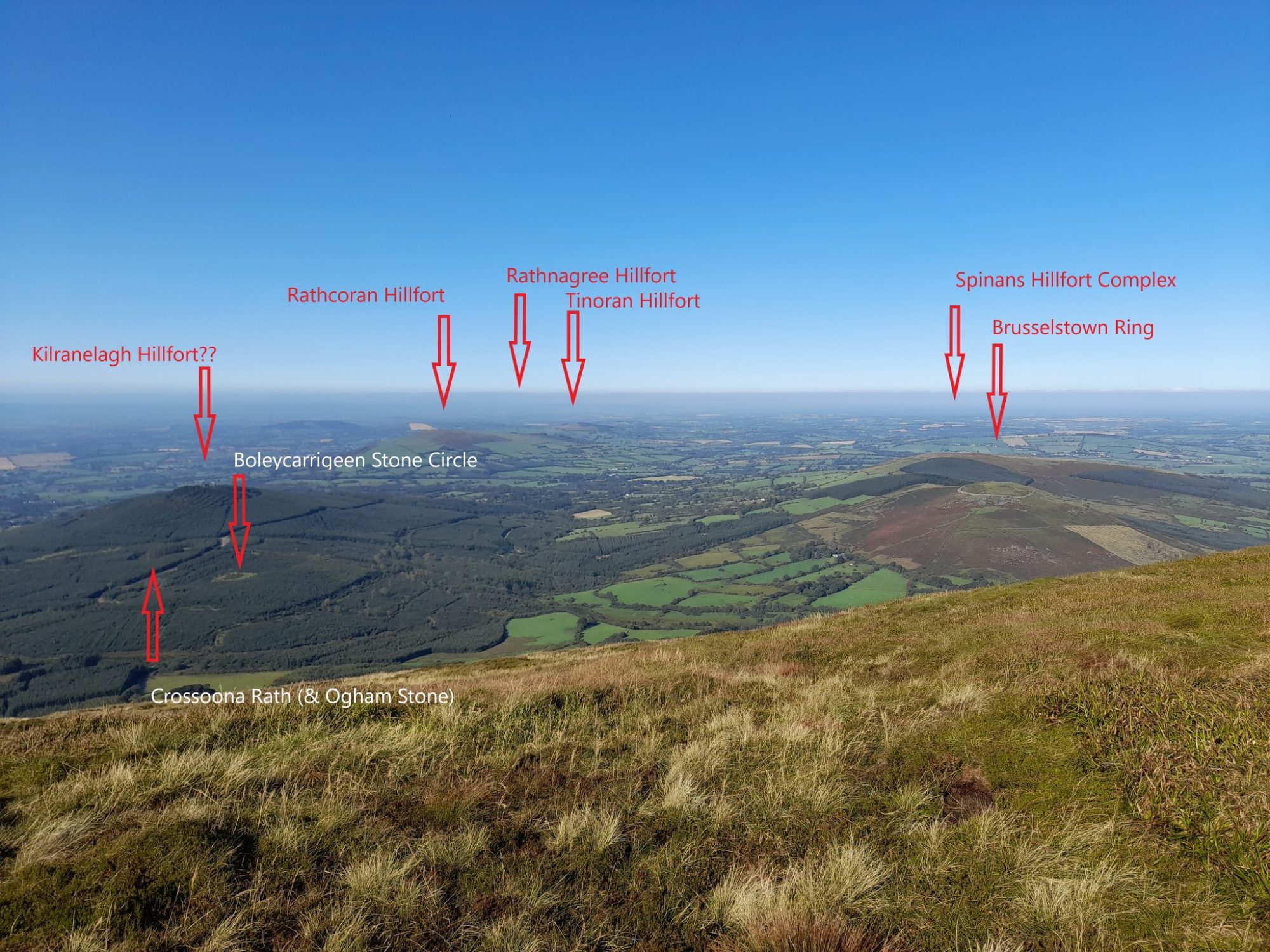
At about the same time as the Bronze Age barrow in Scotland was being laid down one of the largest ‘towns’ in the British Isles was being founded just across the Irish Sea in county Wicklow, Ireland. Brusselstown Hill has long been known as the site of an ancient hillfort but a recent survey from both the air and ground level has revealed just how extensive and densely populated the site was.
As can be seen in the image below the site consists of two concentric earthen rings containing numerous flat ‘platforms’, that is leveled areas where a hut or roundhouse once stood. The number of platforms within the inner ring has been numbered to be ninety-eight while the number within the outer ring is over five hundred. Based on this number the population of the hillfort must have been in the thousands making Brusselstown one of the largest ‘towns’ in the British Isles at that time.
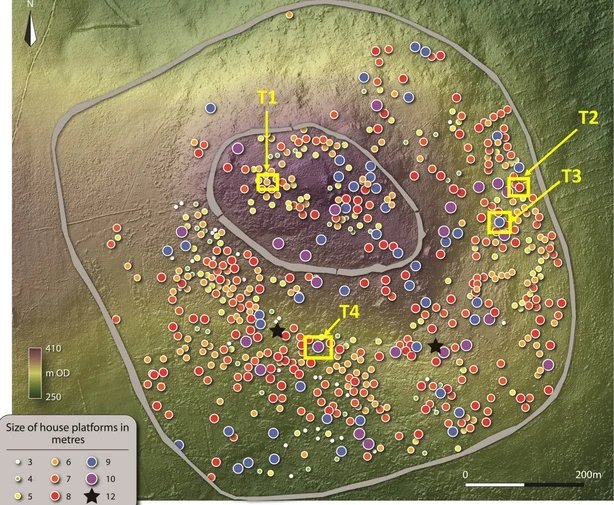
The platforms themselves come in a variety of diameters indicating different sizes of roundhouse but there does not appear to be any clustering of bigger houses where the ‘nobility’ might live. Instead it appears that Busselstown was rather egalitarian in social structure.
At ground level four test trenches were excavated over areas containing several of the platforms where both artifacts and organic remains were unearthed. Based upon carbon dating of the organic remains Brusselstown has been dated to between 1200 to 400 BCE, from the Bronze thru the Early Iron Age. By the way the artifacts discovered also showed no indication of any difference in social class or status.
Because of the size of the site, along with the other hillforts and archaeological sites in the area, a full understanding of County Wicklow during the Bronze Age may take a long time and a lot of work to complete.
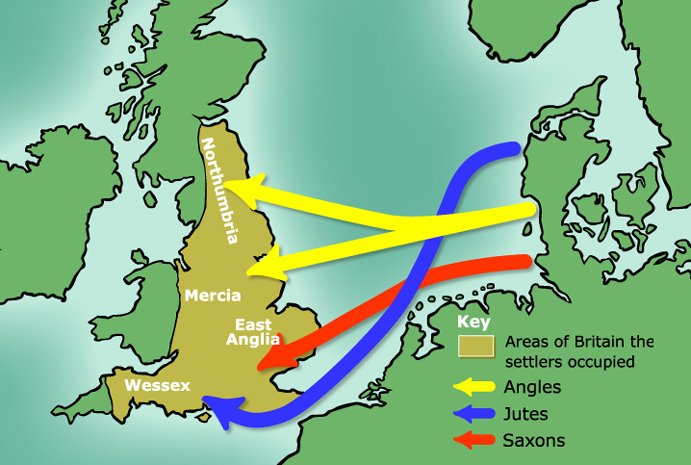
My final study comes from a more recent time, the so-called ‘dark Ages’ between the time when Roman troops abandoned Britain and the Norman Conquest, that is about 400-1100 CE. Researchers from the School of History, Classics and Archaeology at the University of Edinburgh and the Department of Archaeology at Cambridge University have used chemical analysis of the dental enamel from 659 skeletons dated to that period to determine the amount of migration both into and within the British Isles.
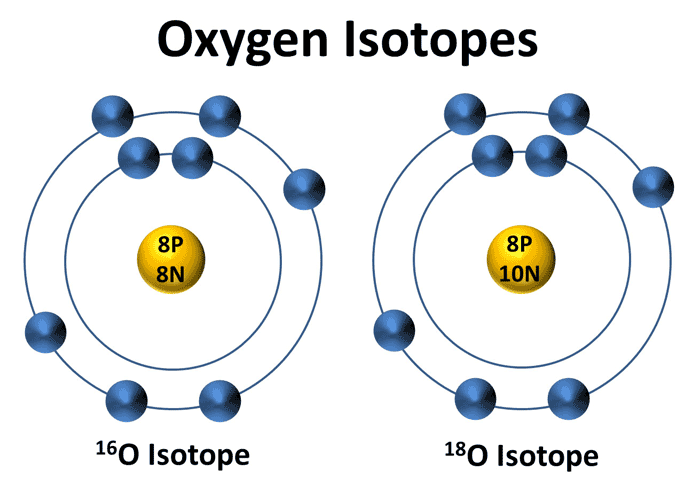
You see as a person grows up the enamel of their teeth absorbs various chemicals from the local environment and those chemicals can remain in their teeth for thousands of years after death. Archaeologists can then analyze the proportion of those chemicals to determine whether a person grew up in the place where they were buried. In particular the chemicals used in the study were oxygen and strontium. Most oxygen in nature comes in the form of isotope O16 with a nucleus of eight protons and eight neutrons. A small amount of oxygen, less than one tenth of one percent, comes in the form of O18 with eight protons and ten neutrons.
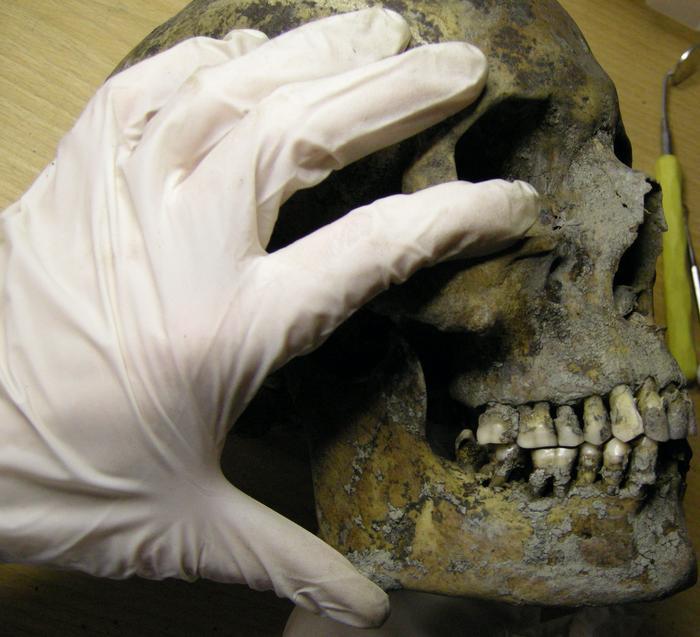
The interesting part is that the amount of O18 in the environment depends on the climate, warm or cold and the altitude, mountainous or seacoast. A Cold or mountainous environment results in less O18 than normal while warm or seacoast gives more O18 than normal. If a person’s O18 differs from the region where they were buried, then they must have moved to the area where they died. Much the same is true for Strontium isotopes 86 and 87.
What they researchers found was that while the degree of migration changed over time it was still quite large throughout the period 400-1100 CE. Over the whole period about 41.4% of people in the British Isles did not grow up in the place where they later died.

Now once again many of these people were moving from Ireland or Whales into England or within England as well as Vikings coming from Scandinavia or people coming from modern France or Spain. What it does mean is that people in general were on the move during one of the darkest times in European history. The archaeology of the British Isles shows in microcosm just how the people of the past lived and died. Therefore by studying the archaeology of those isles we can learn how to study human pre-history in general.