Space News for April 2026. 

Of course, the big news in space this month is the Artemis II spaceflight that took human beings beyond Earth orbit and back to the vicinity of the Moon for the first time since 1972, fifty-four years ago. This mission has obviously been a long time in coming and I’ll have a great deal more to say about it later in this post but first I’m afraid that I have to talk about something even more important, if much less interesting, NASA’s budget! 

Back in the heady days of Apollo, NASA’s budget was over 4% of the total federal budget. Nowadays it’s less than 1/2% and will get even smaller if Trump gets his way! (Credit: NASA)

Back on the 31st of March NASA chief Jered Isaacman announced his agency’s grand plan for building a permanent base on the Moon in the early 2030’s. This Lunar base would then be followed by a mission to Mars aboard a nuclear powered rocket. The first nuclear powered rocket would be used for an unmanned mission to Mars taking a series of three small helicopters, upgrades of the Ingenuity helicopter that went to mars aboard the rover Perseverance.
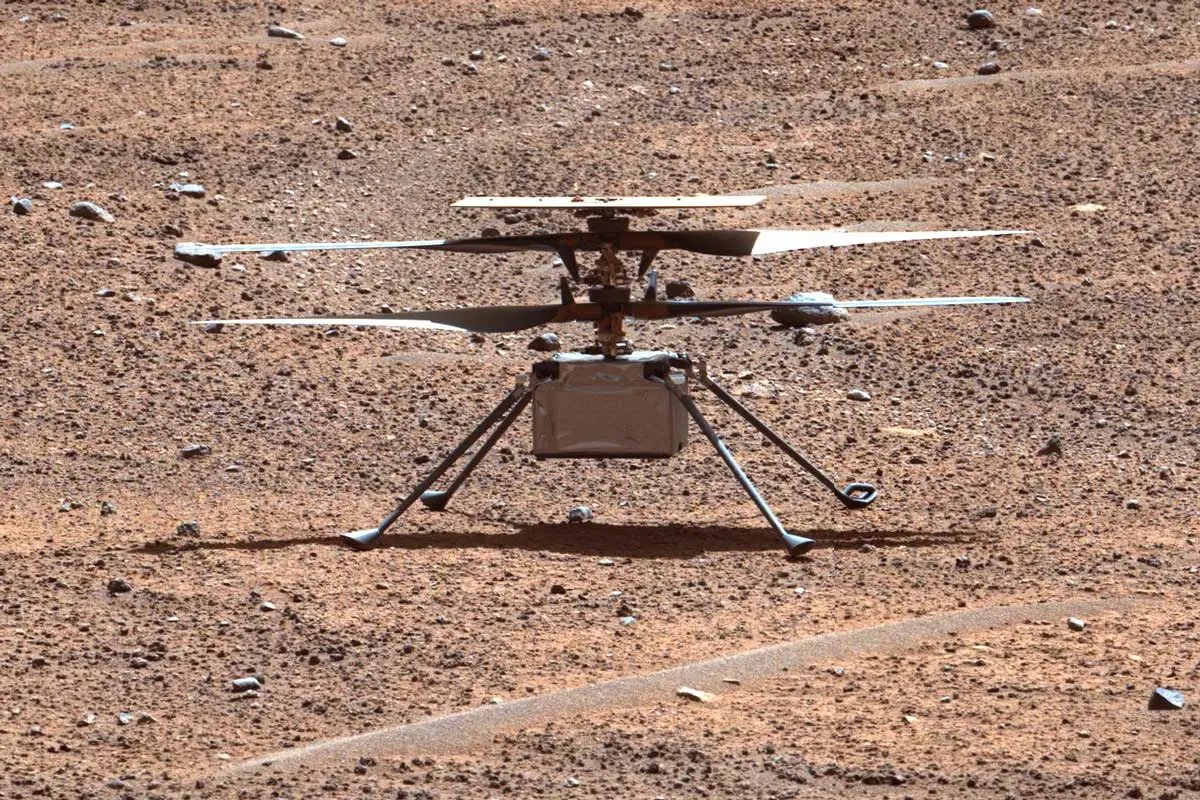
The success of Ingenuity on Mars has inspired NASA to plan for more such airships on Mars and Saturn’s moon Titan. (Credit: NASA Science)

Then, just a few days later, the Trump administration announced their planned budget for fiscal year 2027 that included an almost 50% increase for the Department of Defense while enacting severe cutbacks pretty much everywhere else. NASA’s budget is scheduled to be reduced by $5.6 Billion or 23%. Taking inflation into account this would make the 2027 NASA budget the agency’s smallest since 1961! The biggest cuts will come to the Science Mission Directorate, a whopping 47% decrease, so say goodbye to that nuclear rocket taking any helicopters to Mars.

From the very beginning of the space program, and for all of our science programs the budget has been dependent on support from a bunch of politicians who rarely understand and never care about science. (Credit: Yarn)

The Trump budget is going to make drastic cuts in many other parts of American science as well. If passed by congress and carried out it will undoubtedly mean the end of our nation’s leadership in science and technology. I’ll be writing more about the threat of Trump’s budget to our country in a later post.
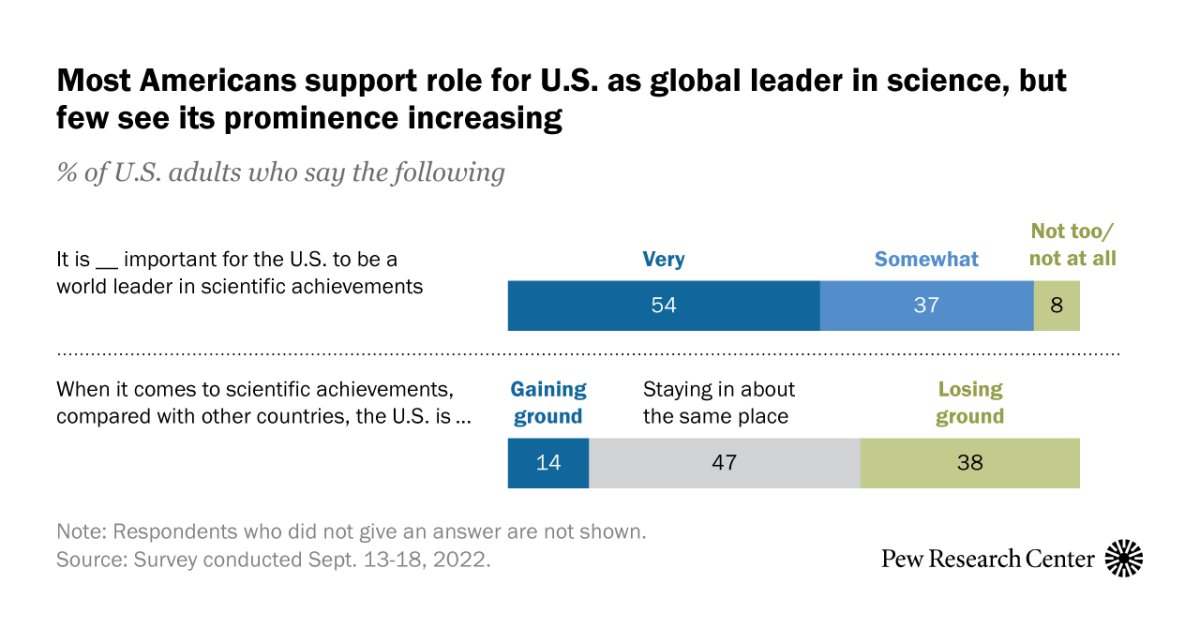
About 90% of Americans think it’s important for America to lead the world in science, but few think it’s doing a good job of it! (Credit: Pew Research Center)

But let’s get back to some good news, the Artemis II mission that took human beings further from the Earth than even the Apollo program did. In short they’re back, safe and sound after a very successful mission.
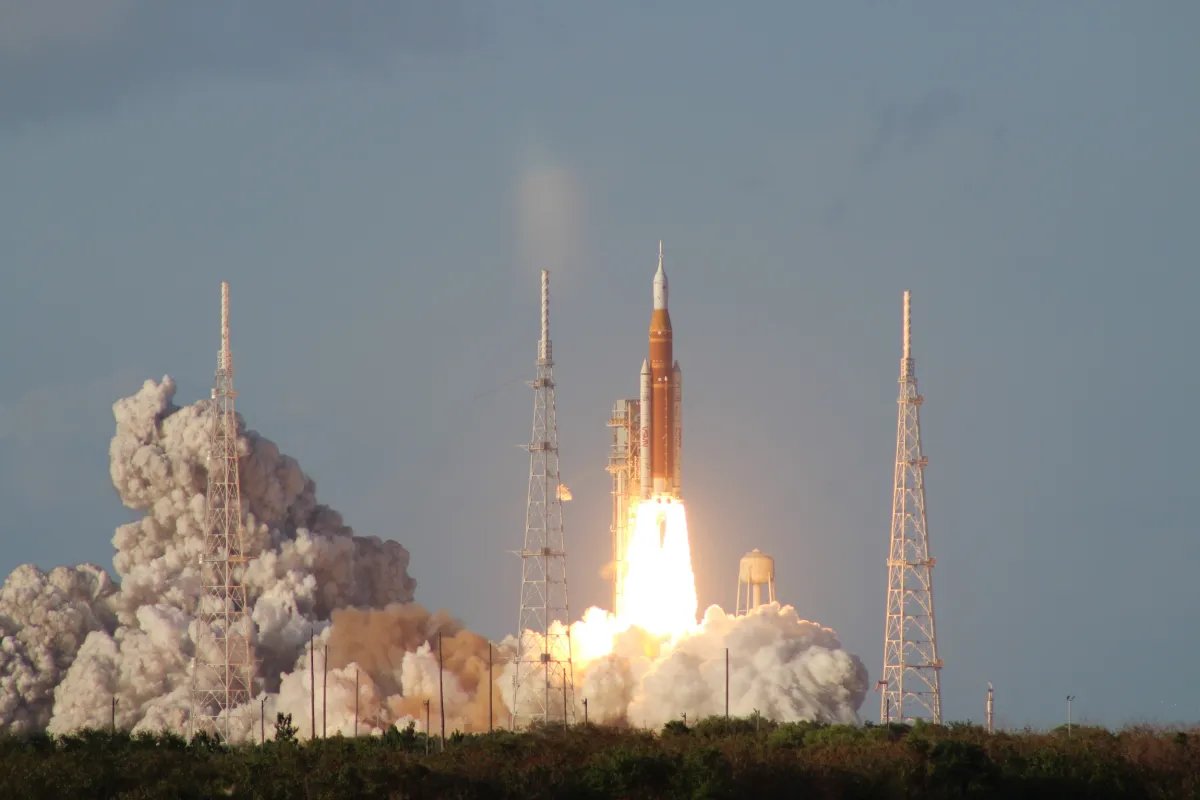
Launch of the Artemis 2 rocket and capsule taking four astronauts back to the Moon for tthe first time since 1972. (Credit: SpaceNews)

Launched on the first of April, April fool’s day, the giant Space Launch System (SLS) rocket took off from the Kennedy Space Center in Florida and effortlessly placed the Orion capsule and it’s Service Module into Low Earth Orbit (LOE). After spending a day checking out their spacecraft the four person Crew were given the go ahead for Trans Lunar Injection (TLI) a command that had not been given to any manned mission since 1972.
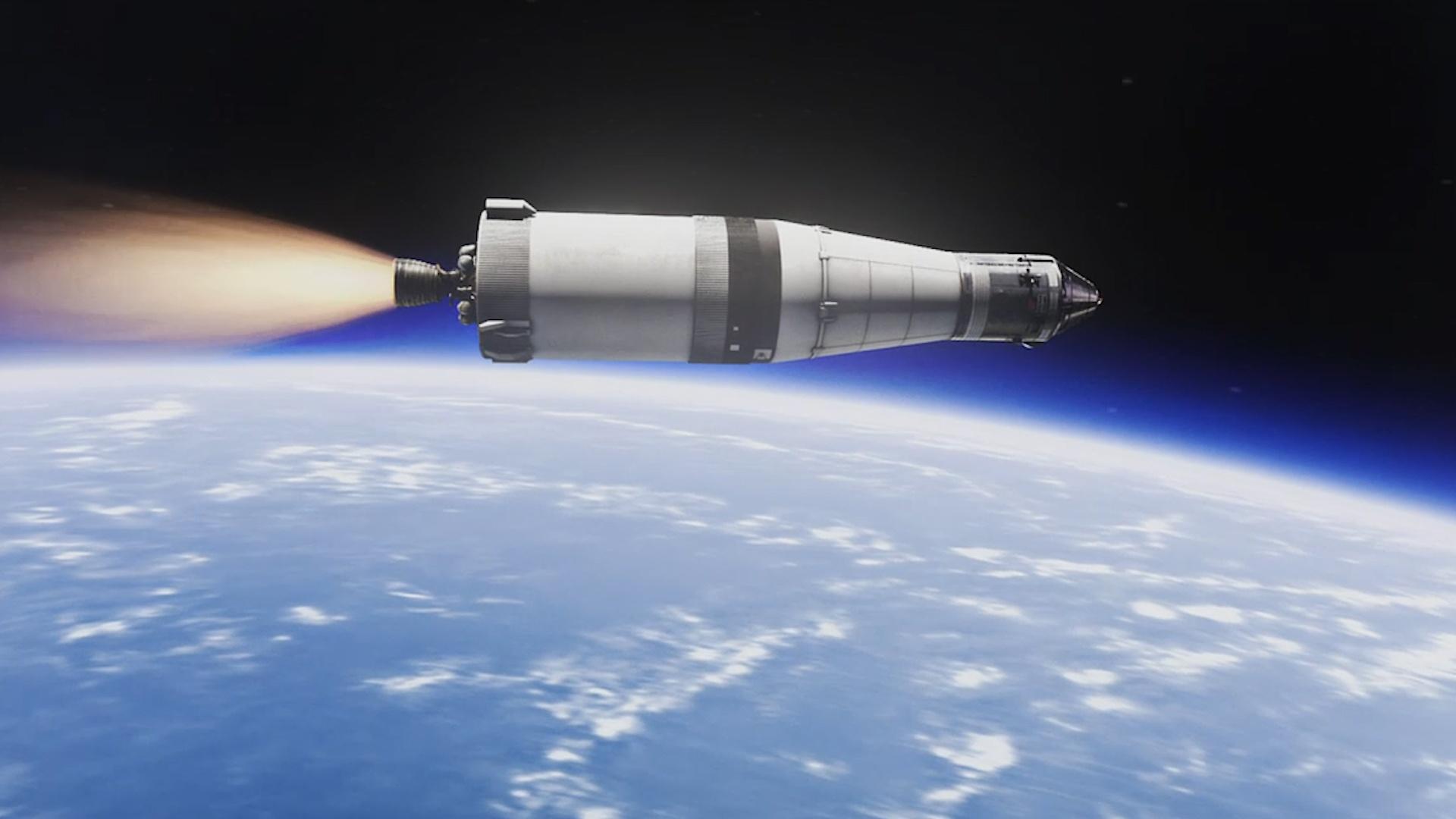
In December of 1968 the Apollo 8 mission was given the signal for TLI or Trans Lunar Injection. That was the first time that human beings ever truly left Earth. (Credit: PBS)

The voyage to the Moon was uneventful; so much so that the only problem the media had to talk about was a malfunctioning toilet. A malfunction that was quickly corrected by the way. On the mission’s fifth day the Orion capsule looped behind the Moon enabling the crew of Artemis II to set a new record for the farthest that any human being had ever been from planet Earth. The mission profile for Artemis II did not actually call for the spacecraft to enter Lunar orbit so the Orion capsule made only one loop around the Moon. As the Orion capsule swung behind the Moon radio contact with Earth was lost just as had happened with the command module in every Apollo Lunar mission. Forty minutes later communication with Artemis II was restored as the crew began their journey home.
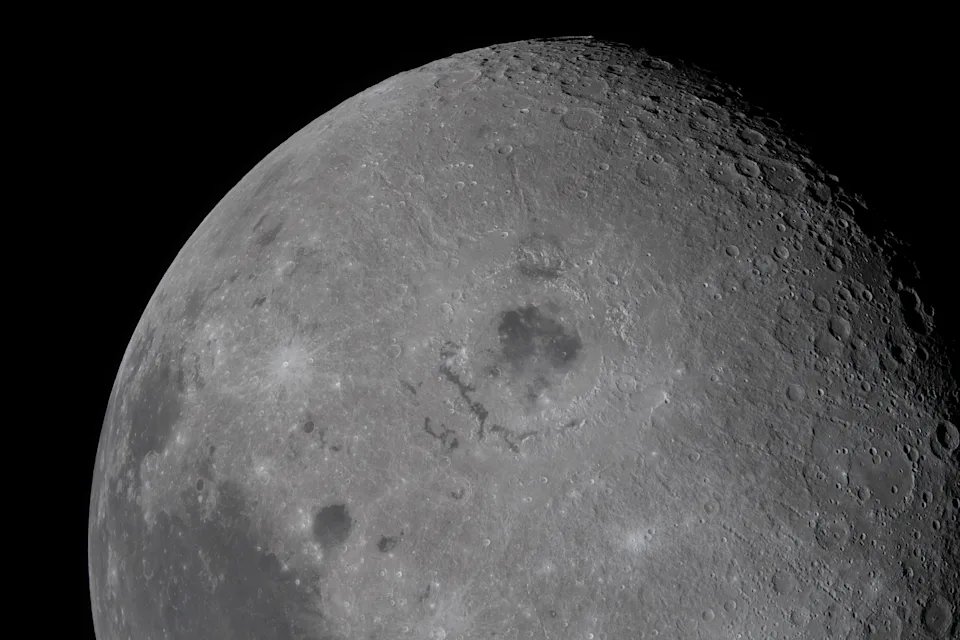
Because they traveled higher above the Lunar surface than the Apollo astronauts did the Artemis crewmembers got to see parts of the Dark Side that no humans had ever seen! (Credit: Yahoo)

The journey home was if anything even more routine. On the 10th of April the Orion capsule separated from its Service Module and entered our Atmosphere. Splashdown came minutes later just off the coast of San Diego in the Pacific.
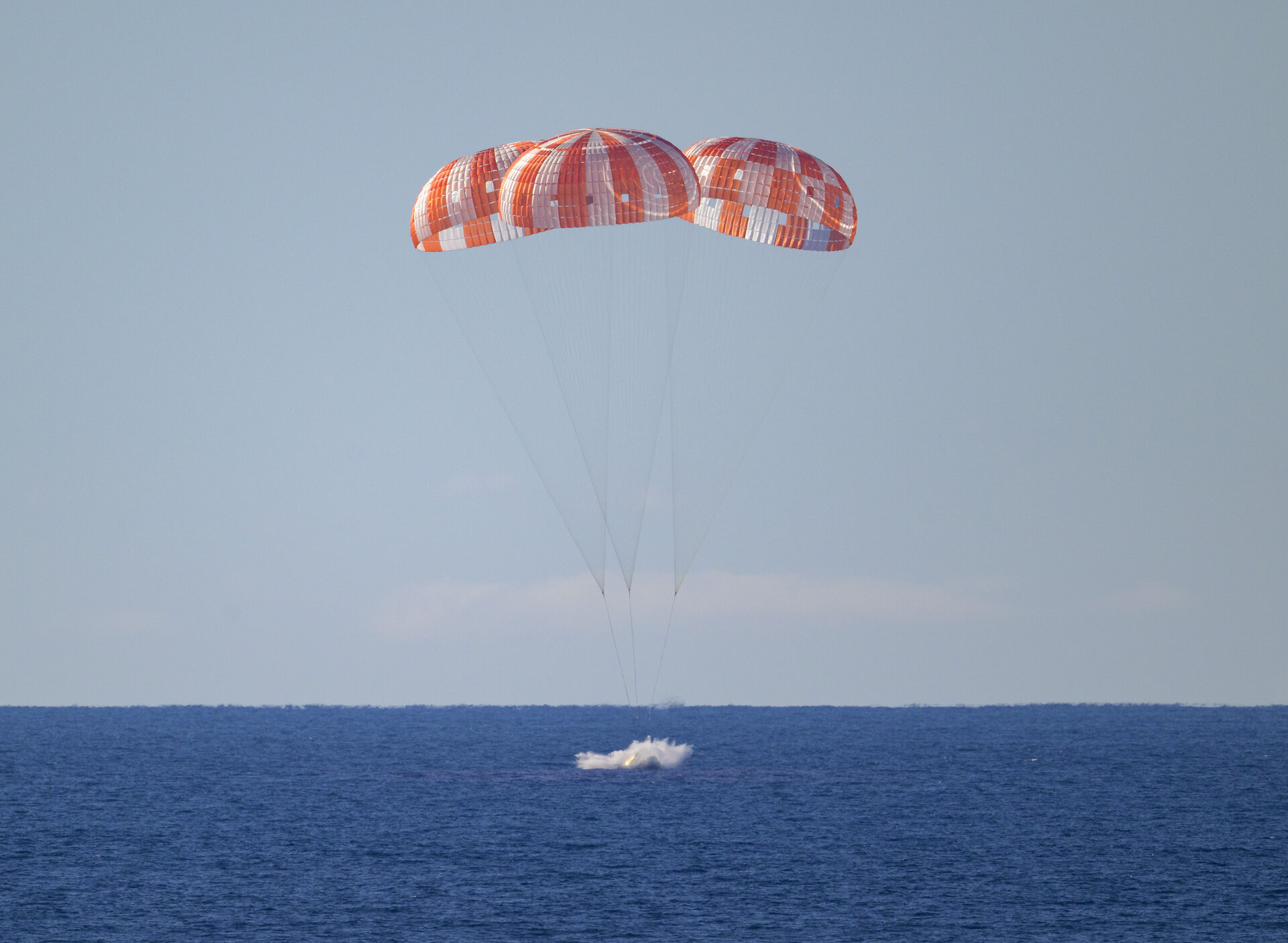
Splashdown! (Credit: European Space Agency)

With the success of the Artemis II mission it might seem like a landing on the Moon should only be a couple of months away. After all the Apollo 8 mission orbited the Moon in December 1968 while Apollo 11 landed there in July of 1969, just seven months later. However, while the SLS and Orion capsule have proven themselves capable of getting humans to the vicinity of the Moon, NASA still needs a lander to get them down to the Lunar surface, and the two companies assigned the task of building landers have been having more than a few problems.
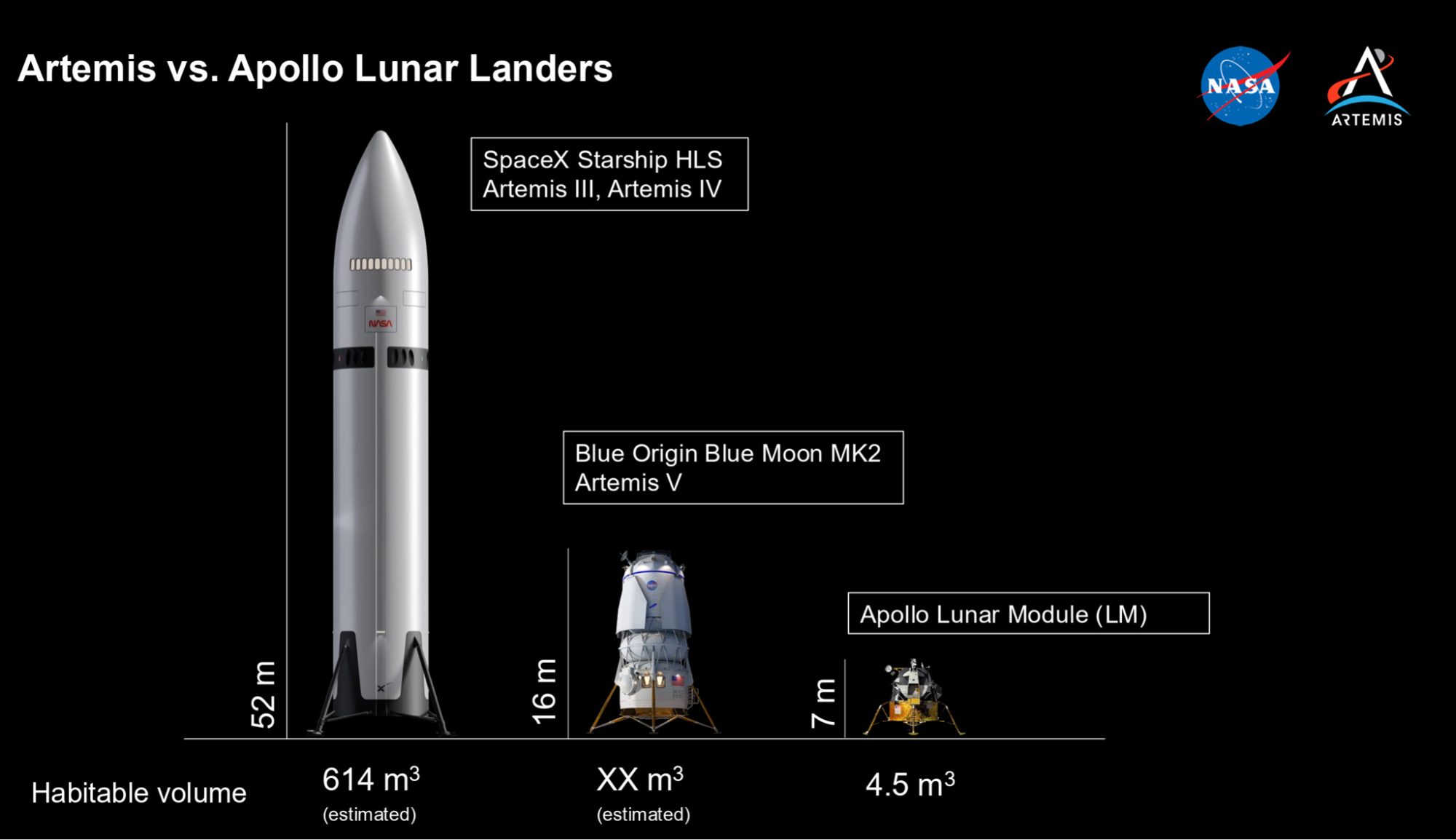
The two planned Artemis Lunar landers compared with the old Apollo Lunar Module. Both are much larger to allow the astronauts to have a more extended stay on the Moon. But let’s be real, Starship is really a bit much!!!! (Credit: Human Mars)

One of the companies is Space X, who hopes to use a modified version of their starship upper stage as the landing vehicle. Problem is that over the last several years Space X has seen a series of problems in the development of their starship launch system. These problems have pushed back the timeline generating considerable doubt about Space X’s ability to deliver a lander by 2028, the current schedule for an Artemis Moon landing mission.

Artist’s illustration of how the Orion Capsule will link up with the Starship lander in Lunar orbit. (Credit: NASA)

Another problem with the Space X lander is the fact that once the starship upper stage is in LOE it will require as many as 20 refueling missions before it can leave Earth and go to Lunar orbit, where it will rendezvous with the Orion manned capsule. With 20 refueling missions it just seems like there’s a lot of opportunity for something to go wrong!
Murphy’s law works in space just like it does here on Earth! (Credit: YouTube)

Meanwhile Blue Origin is the other company that has been developing a lander, they call theirs the Blue Moon Lander. The problem here is that the Blue Moon Lander was not scheduled for its first mission until 2032 but because of Space X’s difficulties Blue Origin has been asked by NASA to accelerate their lander’s development. Rushing the development of a spacecraft is just never a good thing.
Rushing to complete a job is the surest way to get behind schedule! (Credit: A-Z Quotes)

In fact on March 10th NASA’s Office of Inspector General released a report criticizing both the companies developing the lander as well as NASA’s own management of the lander program. So right now it is questionable if either lander will be ready by 2028.

Still, it’s good to be back to NASA’s prime mission of human exploration of the Universe! (Credit: Space)

Still, right now we can sit back and enjoy the fact that once again human beings are voyaging into deep space rather than just whirling around in LOE.
Archaeology News for April 2025: Ongoing Research in the British Isles. 

People who are interested in Archaeology recognize that the British Isles are a hotbed for the study of ancient peoples starting from the Neolithic ‘Stone Age’. As it happens I’m of Irish and Scottish ancestry so for me the archaeology of those islands is like family history. You’ll understand then when I use the occasional post to discuss some of the latest findings from those lands. As always I’ll start with the oldest and move forward in time.

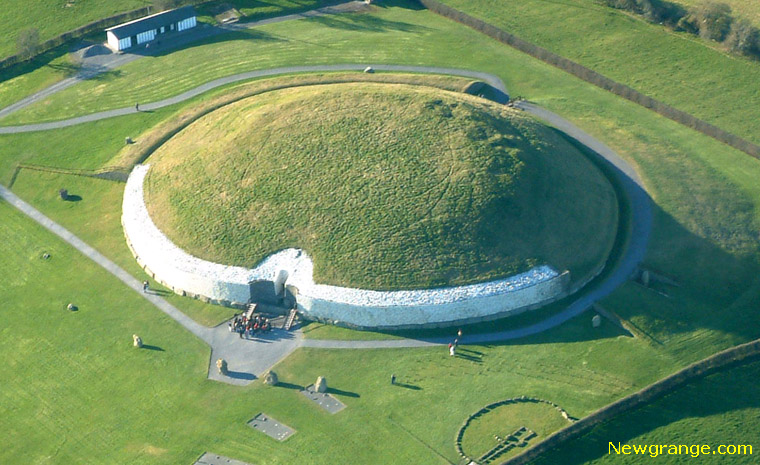
One of the largest and best-preserved stone age sites in Europe is New Grange along the river Boyne in Ireland. It’s construction must have taken the cooperation of hundreds or thousands of people. Strong evidence of ‘civilization’ of a kind in Ireland 5,000 years ago! (Credit: www.newgrange.com)

  Scotland is commonly known as a dark, misty, rocky sort of place. It is true that the population of Scotland has never been as large as the more temperate country of England to the south. Nevertheless Scotland has been a home for humans since the end of the last Ice Age and possesses a wealth of archaeological sites including stone circles, hillforts and burial sites.

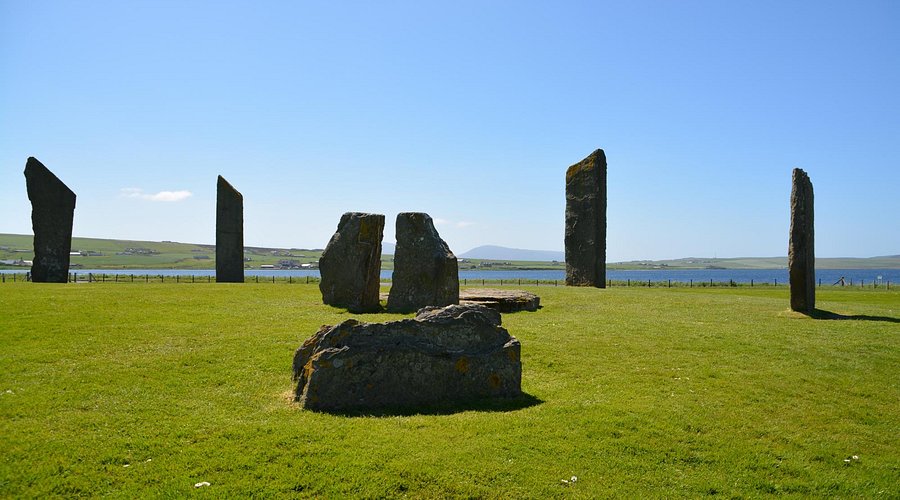
The stone circle of Stennis in the Orkney Isles of Scotland. Again, the people who made this were hardly ‘Cave Men’! (Credit: Tripadvisor)

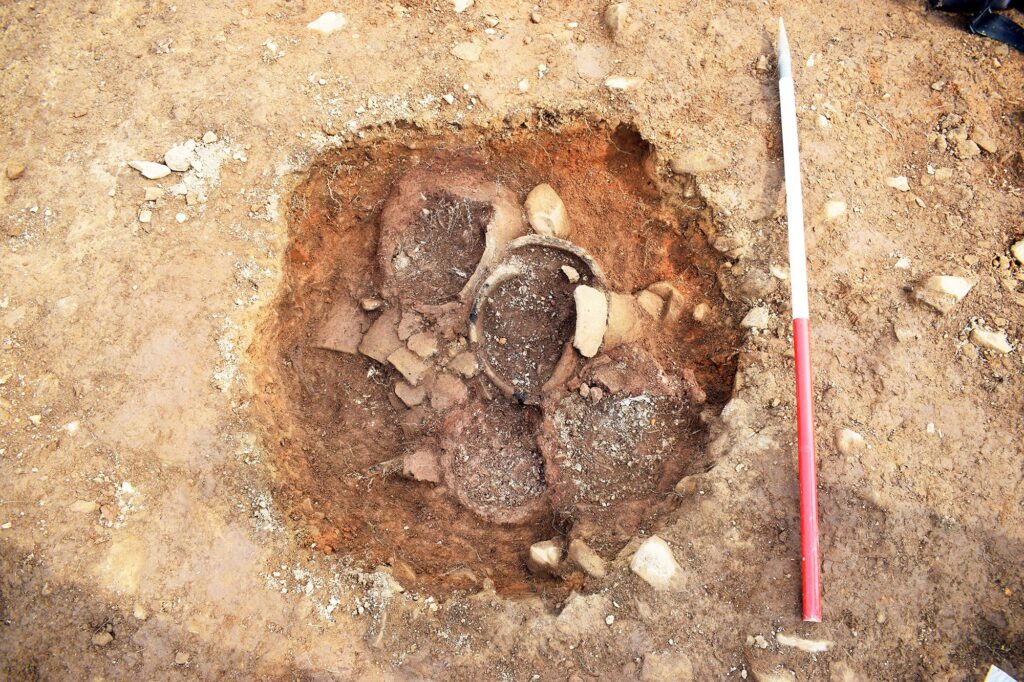
Recently the construction of a new access road to a wind farm called Twentyshilling in the area of Dumfries and Galloway has unearthed several previously unknown barrow type graves that are of the type common throughout the British Isles. One pit at the south was tentatively dated to between 2867-2504 BCE in the Neolithic period while the pit a bit further north was dated to 1439-1287 BCE, the Bronze Age. It was the Bronze Age site that drew the most attention as it contained five funeral urns that held the remains of at least eight individuals. The researchers are convinced that the five urns were buried at the same time because they were packed so tightly together in a hole at the center of the barrow.

The Twenty Shilling Wind Farm in Dumfries and Galloway in southern Scotland. Not exactly the sort of place where you expect to find evidence of ancient culture! (Credit: Statkraft)

The ancient Scots had a few curious customs when it came to burying their dead, for one they often placed the remains of an adult and a child in the same urn, as seems to be the case here. On the other hand Bronze Age Scots usually exposed their dead and only interred the bones in funeral urns buried in barrows. There is evidence that was not the case in the Twentyshilling barrow. The archaeologists who excavated the site conjecture that perhaps the relatives of the deceased were in a hurry to bury their kin for some reason, possibly disease? The fact that eight persons were buried at the same time is further evidence for this.

The Bronze Age burial at the Twenty Shilling wind farm showing the urns in which the dead were interred. (Credit: Guard Archaeology)

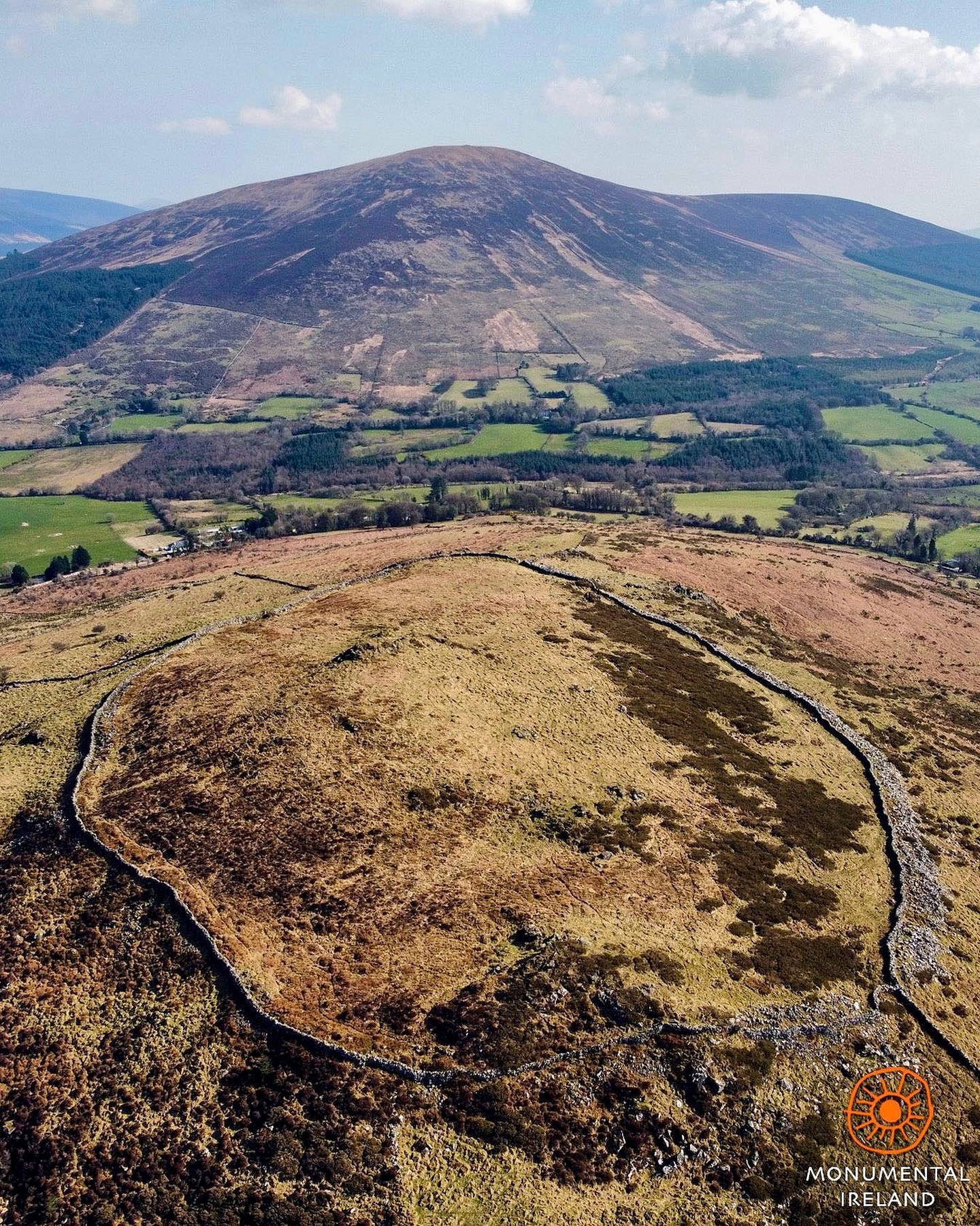
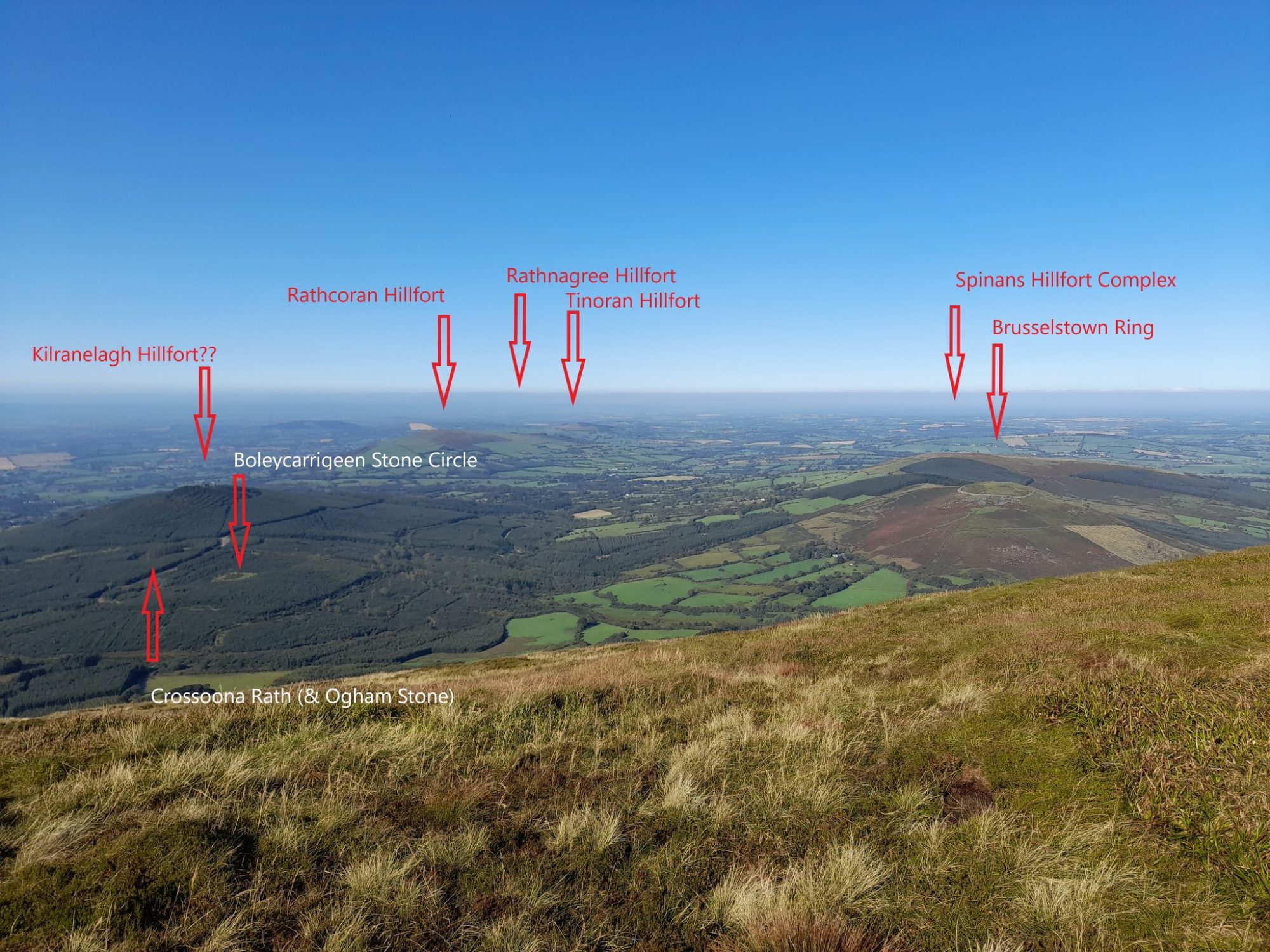
At about the same time as the Bronze Age barrow in Scotland was being laid down one of the largest ‘towns’ in the British Isles was being founded just across the Irish Sea in county Wicklow, Ireland. Brusselstown Hill has long been known as the site of an ancient hillfort but a recent survey from both the air and ground level has revealed just how extensive and densely populated the site was.

The Brusselstown hillfort as it is today. Archaeologists are now thinking that about 3,000 years ago this was the largest town in Ireland! (Credit: Facebook)

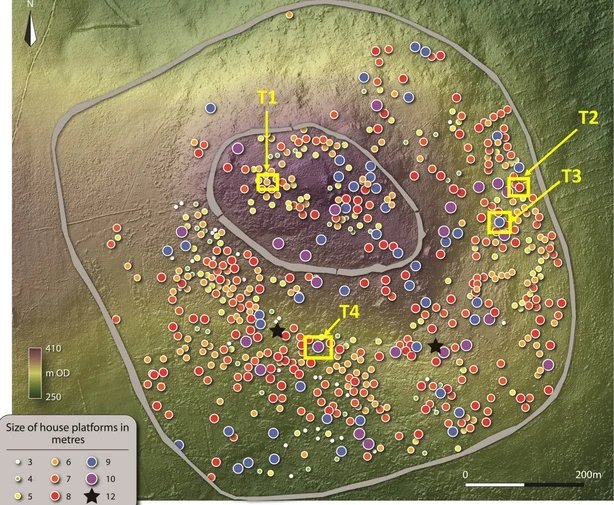
As can be seen in the image below the site consists of two concentric earthen rings containing numerous flat ‘platforms’, that is leveled areas where a hut or roundhouse once stood. The number of platforms within the inner ring has been numbered to be ninety-eight while the number within the outer ring is over five hundred. Based on this number the population of the hillfort must have been in the thousands making Brusselstown one of the largest ‘towns’ in the British Isles at that time.

The ‘Platforms’, i.e. homes at Brusselstown at its height. At least several thousand people must have lived here! (Credit: RTE)

The platforms themselves come in a variety of diameters indicating different sizes of roundhouse but there does not appear to be any clustering of bigger houses where the ‘nobility’ might live. Instead it appears that Busselstown was rather egalitarian in social structure.

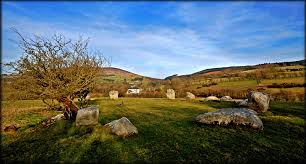
In addition to several identified hillforts, County Wicklow is also known for other neolithic and Bronze Age sites like this stone circle. (Credit: Megalithic Ireland)

At ground level four test trenches were excavated over areas containing several of the platforms where both artifacts and organic remains were unearthed. Based upon carbon dating of the organic remains Brusselstown has been dated to between 1200 to 400 BCE, from the Bronze thru the Early Iron Age. By the way the artifacts discovered also showed no indication of any difference in social class or status.

Were Stone Age societies more equal than our present civilization? That’s what many anthropologists think but without written records how will we ever know for certain! (Credit: Vocal Media)

Because of the size of the site, along with the other hillforts and archaeological sites in the area, a full understanding of County Wicklow during the Bronze Age may take a long time and a lot of work to complete.

There are more than a dozen recognized hillforts in county Wicklow. It will take quite a while to investigate them all! (Credit: Tinahely.ie)

My final study comes from a more recent time, the so-called ‘dark Ages’ between the time when Roman troops abandoned Britain and the Norman Conquest, that is about 400-1100 CE. Researchers from the School of History, Classics and Archaeology at the University of Edinburgh and the Department of Archaeology at Cambridge University have used chemical analysis of the dental enamel from 659 skeletons dated to that period to determine the amount of migration both into and within the British Isles.

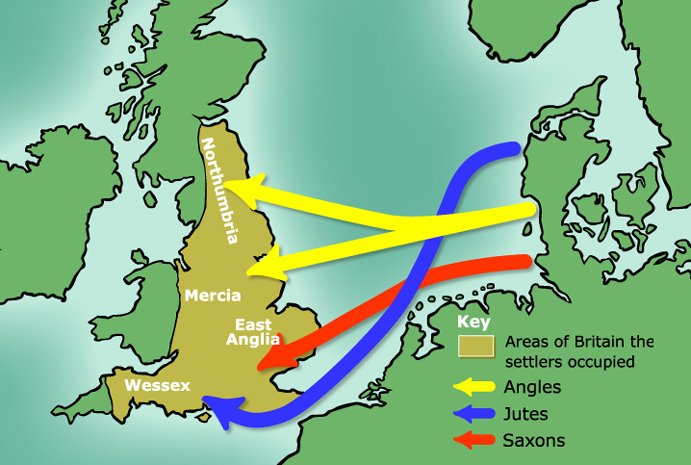
The people we call ‘English’ are actually a Germanic people who migrated to the British Isles starting in the 5th century. (Credit: StirytellingDB)

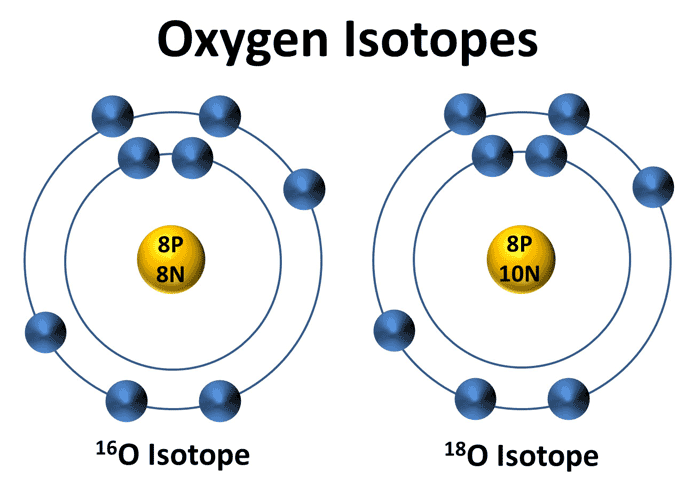
You see as a person grows up the enamel of their teeth absorbs various chemicals from the local environment and those chemicals can remain in their teeth for thousands of years after death. Archaeologists can then analyze the proportion of those chemicals to determine whether a person grew up in the place where they were buried. In particular the chemicals used in the study were oxygen and strontium. Most oxygen in nature comes in the form of isotope O16 with a nucleus of eight protons and eight neutrons. A small amount of oxygen, less than one tenth of one percent, comes in the form of O18 with eight protons and ten neutrons.

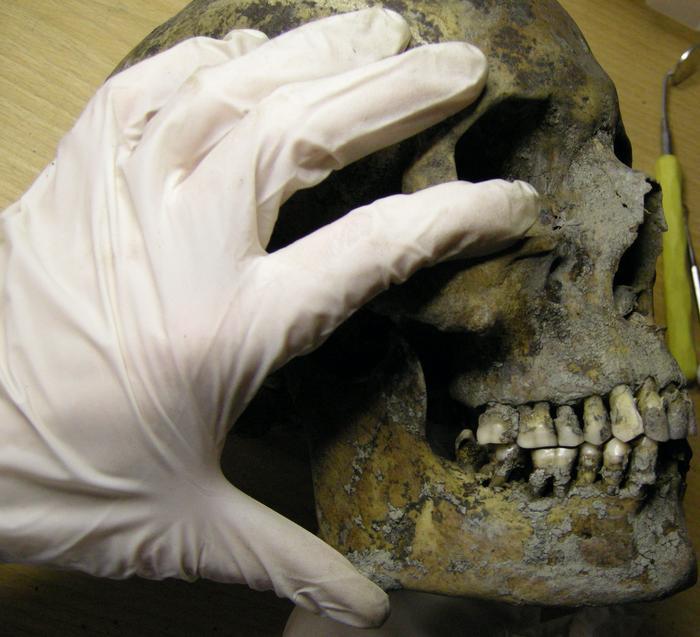
Teeth are the hardest part of the human body so they are preserved the best and retain the most information about the person whose teeth they are! Archaeologists are using teeth to learn a great deal about the lives of ancient people. (Credit: Archaeology Magazine)

The interesting part is that the amount of O18 in the environment depends on the climate, warm or cold and the altitude, mountainous or seacoast. A Cold or mountainous environment results in less O18 than normal while warm or seacoast gives more O18 than normal. If a person’s O18 differs from the region where they were buried, then they must have moved to the area where they died. Much the same is true for Strontium isotopes 86 and 87.

Most of the Oxygen in the world is O16, with 8 each Protons, Electrons and Neutrons. A tiny amount of Oxygen is O18 with two extra Neutrons. Chemically they are the same but O18 is a little heavier. (Credit: Climate Science Investigations South Florida)

What they researchers found was that while the degree of migration changed over time it was still quite large throughout the period 400-1100 CE. Over the whole period about 41.4% of people in the British Isles did not grow up in the place where they later died.

Human migration is nothing new. For millions of years now people have left the lands they grew up in to try to find a better life elsewhere. (Credit: World Bank)

Now once again many of these people were moving from Ireland or Whales into England or within England as well as Vikings coming from Scandinavia or people coming from modern France or Spain. What it does mean is that people in general were on the move during one of the darkest times in European history. The archaeology of the British Isles shows in microcosm just how the people of the past lived and died. Therefore by studying the archaeology of those isles we can learn how to study human pre-history in general.