The popular concept of a caveman, you know, an ignorant brute who carried a club and who solved every problem by hitting something with it has been around now since the first Neanderthal skeletons were discovered back in 1856. The more we learn about our Stone Age ancestors however the less brutish and ignorant they appear. In this post I’ll be discussing a couple of recent discoveries that add further evidence showing just how intelligent ‘Cave Men’ could be. As usual I will begin with the oldest study and go forward in time.
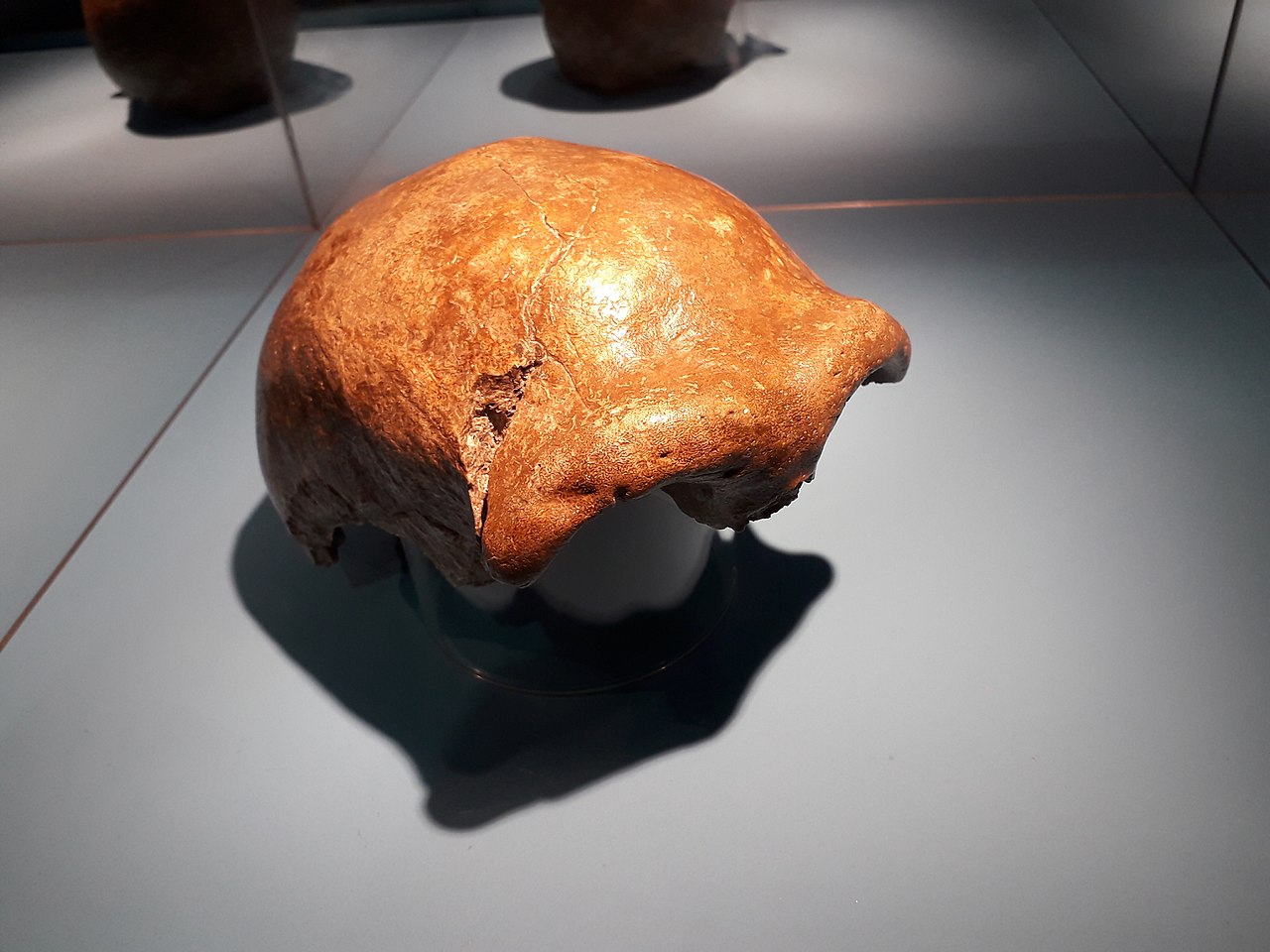
Neanderthal 1, the type specimen of the species is a skull cap that clearly shows the strong brow ridges above the eyes, a classic characteristic of Neanderthals. (Credit: Eunostos)
Just when did we humans begin to make tools, whether they be made from stone, wood or bone doesn’t matter, is a very controversial subject. The fact that even our relatives the chimpanzees use several different kinds of tolls indicates that our ancestors might have been using tools as long ago as five million years or more. Of course, using tools is a very different thing from making tools.
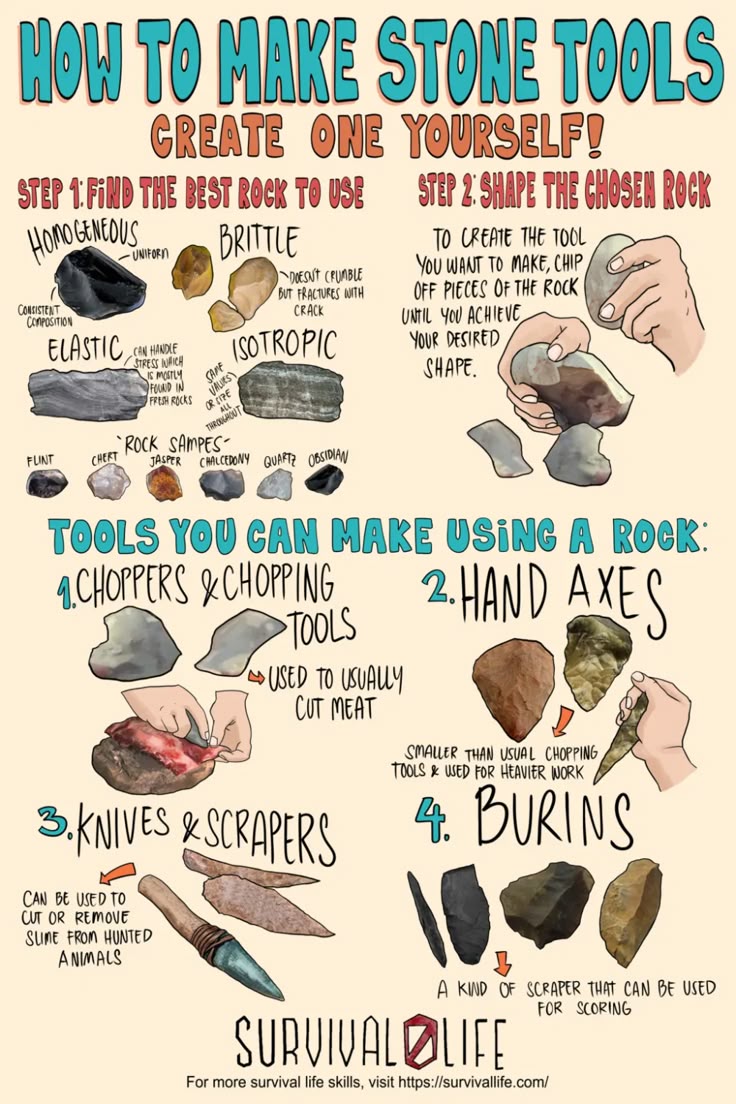
Chimpanzees have been known to pick up a stone and use it to break open a nut or similar food item. That’s a lot different from making stone tools however. (Credit: The New York Times)Eventually however, our ancestors learned how to manufacture a wide variety of stone tools. (Credit: Pinterest)
Picking up a rock to smash open a walnut takes a lot less thought than shaping that rock to have both an easy handgrip and a flat surface to crush the shell without damaging the nut inside. At the same time however, it is often difficult for an archaeologist to look at a rock today and tell whether it had been modified to become a tool a million or more years ago.
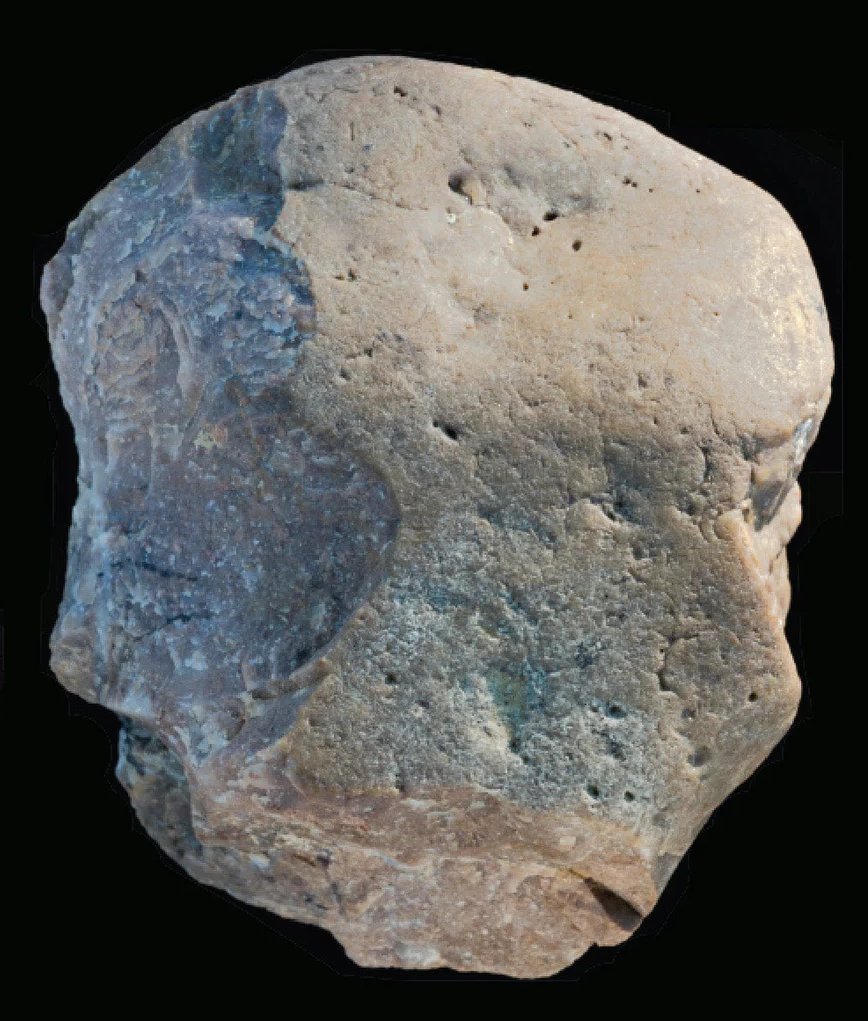
Is this a stone tool or just a stone? Sometimes even an expert has difficulty telling the difference. (Credit: The Guardian)
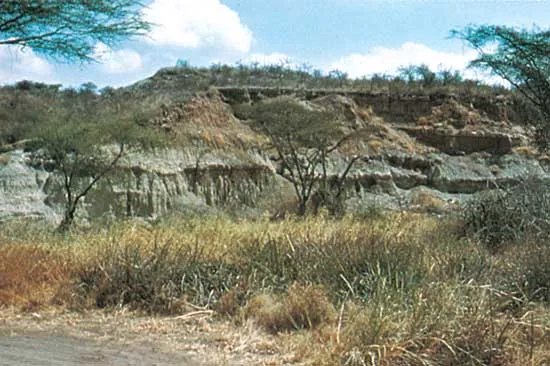
Now a paper published in the journal Nature has provided evidence that not only were humans making tools one and a half million years ago but that they were manufacturing tools at ‘factory’ sites according to a ‘standardized’ design. The site in question is at Olduvai Gorge in Tanzania the famous place where Louis Leakey discovered what is still considered to be the oldest species in our genus, Homo habilis.
Olduvai Gorge in Tanzania. It was here in the 1950s and 60s that the first evidence for our earliest human ancestor Homo habilis was unearthed. (Credit: Britannica)
What the researchers from CNRS and the l’Université de Bordeaux discovered at Olduvai were 27 tools made from both the bones of hippopotamus’ and elephants all of which had been modified in a similar ‘standardized’ way. Prior to the discovery at Olduvai the earliest known ‘manufacturing site’ for tools was dated at just a half a million years old so the finds indicate that humans were capable of organizing and planning complex tasks far earlier than had previously been known.
Some of the bone tools found at Olduvai Gorge. (Credit: ScienceDirect.com)
And once our ancestors began to ‘manufacture’ goods in quantity at specific sites they then had to transport those goods to where they used them. One problem modern archaeologists have in trying to understand early transportation technology is that any ancient vehicle would have been composed of wood, wood that usually has decayed away a long time ago.
Everybody knows about the stone circles of the British Isles like Stonehenge but few people know that those ancient Britons also made a large number of wooden circles as well. The problem is that the wood has decayed over the centuries and the only evidence we have of the wooden circles are the post holes left in the ground. (Credit: Wikipedia)
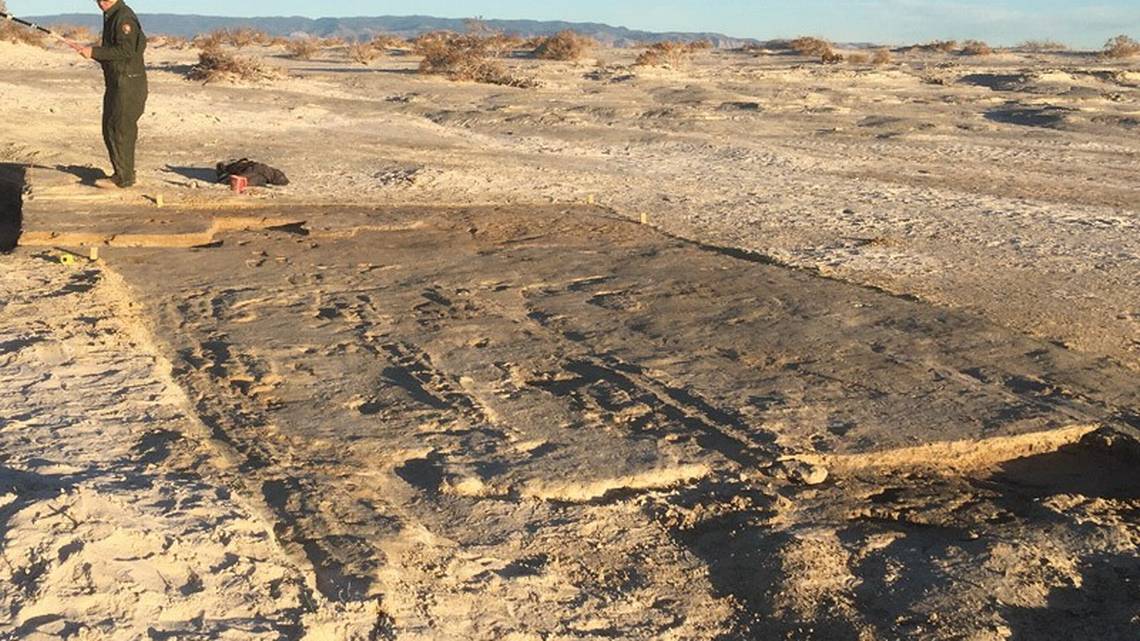
A new discovery in the desert of White Sands, New Mexico however had shown that even without the vehicles themselves we can still learn a lot about the ways that our ancestors transported their goods thousands of years ago. Drag marks in the same sediment as, and intermingling with human footprints have been unearthed in 20,000-year-old dried mud. The drag marks are of two kinds, either a single line furrow with footprints on both sides or two lines in parallel with footprints usually inside the lines.
A section of the ‘fossilized’ track marks made nearly 20,000 years in White Sands National Park. (Credit: Sacramento Bee)
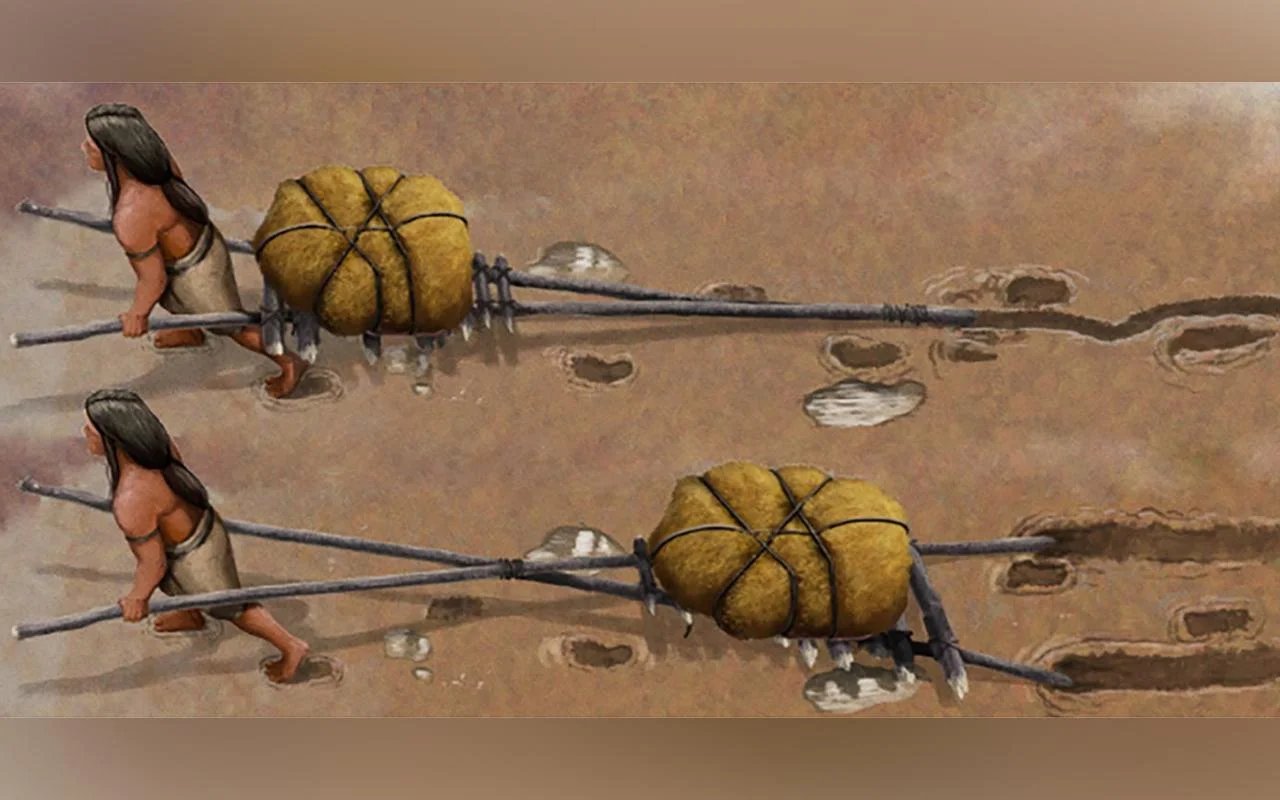
The researchers from Bournemouth University in the UK who discovered the tracks think that the lines were made by a type of unwheeled vehicle known as a travois, basically wooden poles tied together to form a ‘Y’ shape, the single line, or ‘X’ shape, the parallel lines. The goods that were to be carried were then secured on top of the poles and the whole vehicle dragged along the ground. For a culture that hasn’t invented the wheel yet that’s about as good a transportation technology as you can get.
The track marks made at White Sands came from two different types of vehicles. The single line was made by a ‘Y’ shaped wooden vehicle (top) while the parallel tracks were made by an ‘X’ shaped wooden contrivance (bottom). (Credit: Archaeology News)
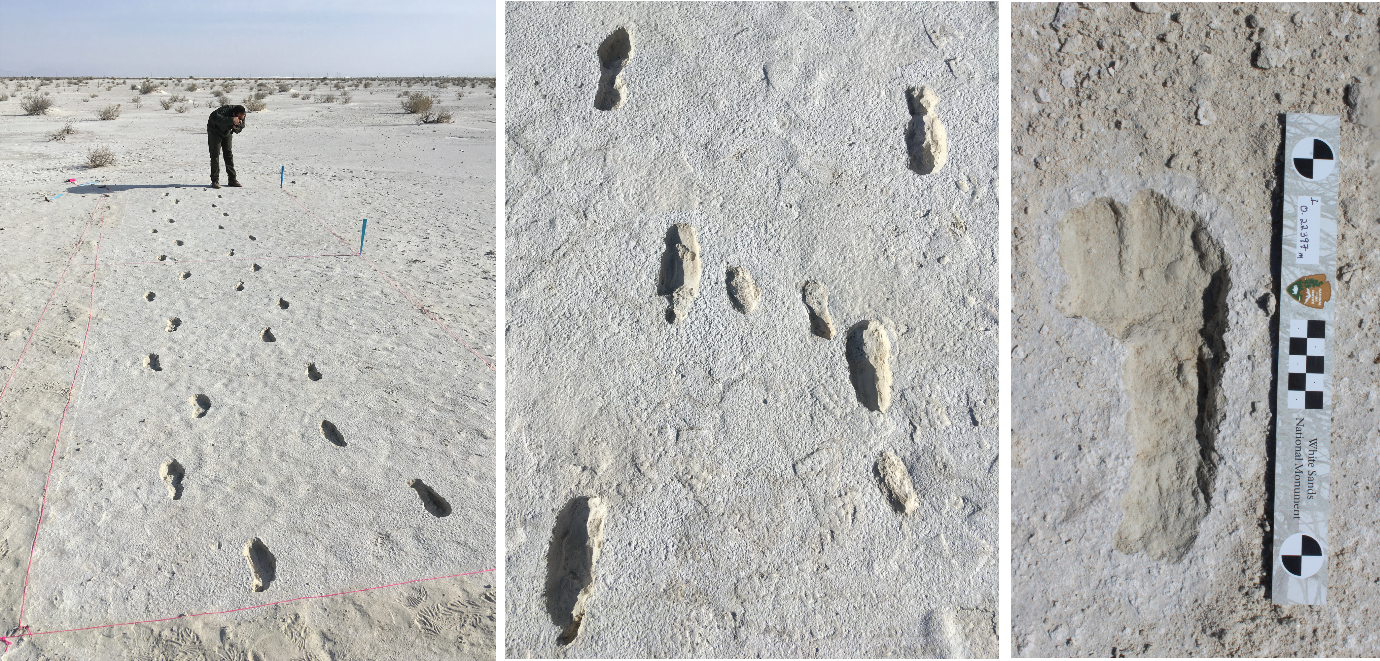
Alongside the footprints of the adults who were presumed to be dragging the travois the archaeologists found the footprints of children indicating that these were entire family groups on the move. Some of the drag marks are as long as 50m and the fact that there were no animal footprints indicates that the travois were in use before the people of North America had domesticated animals. Thousands of years later the people of North America were known to use dogs to drag their travois. Even back in the Stone Age our ancestors were thinking, trying different techniques in order to make their lives better. They passed that wisdom on to their descendants, who in the long run passed it on to us.
Some of the footprints made at White Sands thousands of years ago. In the middle picture you can see how there are two different sizes of prints indicating that children walked along with their parents, just like we do today! (Credit: National Park Service)
We are all aware of how important the stock market is to our nation’s economy as a whole. At the same time we all have some notion of the markets as being those places where ‘shares’ in the big corporations that make up so much of the economy are bought and sold. Few of us however have more than vague idea of many of the various terms that get mentioned every time the stock market is discussed. Often, the many terms that economists and financial experts use seems like words from a foreign language.
Economists and Market Analysts have their own special language and if you want to understand what’s happening in our economy you need at least some familiarity with the terms they use! (Credit: Investments IQ)
So, in this post I’m going to try to explain some of those terms in simple enough language so that hopefully those of you out there who aren’t finance types can understand the ups and downs and ins and outs of the market. I think I’ll start with an example that’s easy to understand, a privately owned small business.
The majority of our economy still consists of small, privately owned businesses. However small shops and markets like this one can get swamped by economic downturns caused by the big corporations. (Credit: Common Edge)
Consider a barbershop or beauty shop, such a small business is almost certainly owned by a single person, the head barber or beautician. Now the shop may have a few employees as well, but they get paid a flat salary. Whatever profits the business makes go to the owner alone, along with all of the losses if there are any. Now owning a small business is complicated enough, usually the owner had to take out a bank loan to start the business, and there are always things like insurance, legal permits and so on. However, a small business, owned by a single person at least doesn’t have to worry about the price of any stock in that business.
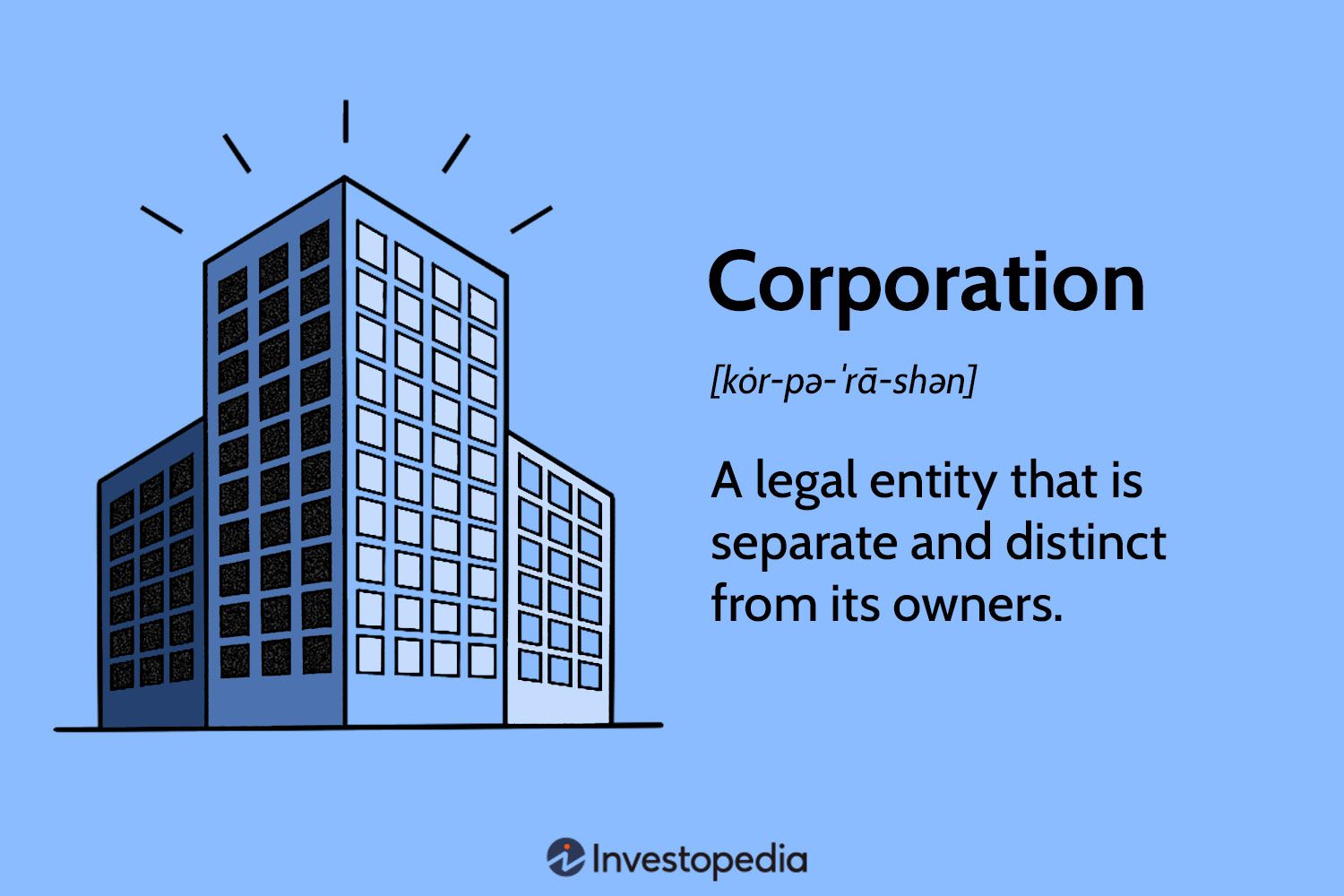
Mitt Romney got into trouble but stating that “Corporations are people too!”, but it is true that corporations do have many of the same legal rights that you and I have! (Credit: Investopedia)
That’s a small business; a larger business or company may decide to register itself as a ‘Corporation’, which strictly speaking can be any group that is legally allowed to act as a single entity. In business terms when a group of people called ‘Investors’ come together to form a company they will incorporate that company. If the investors each contribute equally to the formation of the corporation then they will each receive an equal share of whatever profits the corporation makes.
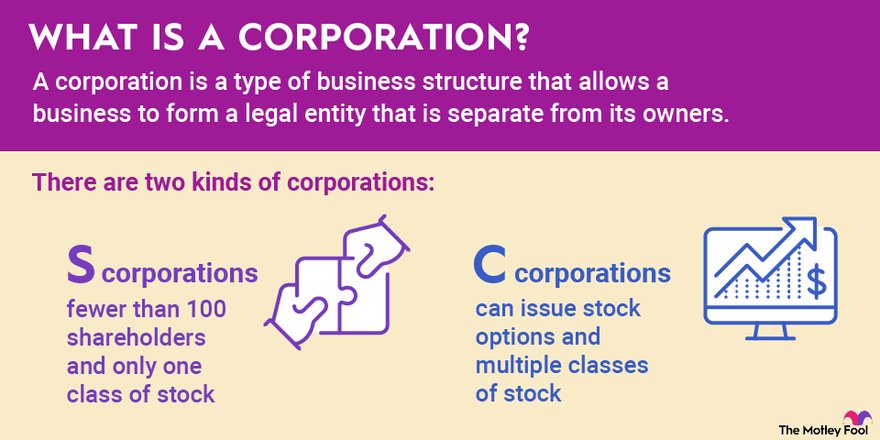
Small corporations can register as ‘S’ corporations while larger firms prefer to register as ‘C’ corporations. (Credit: The Motley Fool)
Oftentimes however the investors do not contribute equally to the new corporation. In that case the corporation may issue ‘Stocks’ that represent a certain share of the total value of the company. For example if the corporation issues 100 shares of stock then each share of the stock is worth 1% of the total value of the company and each share will receive 1% of the profit. (Usually a corporation issues a lot more shares of stock than that, often millions of shares.) The investors now become ‘Shareholders’ with each receiving a number of shares proportional to their investment.
The most often traded type of corporate stock is known as common stock. Buying a share of common stock is actually buying a portion of the company that issued the stock. (Credit: Investopedia)
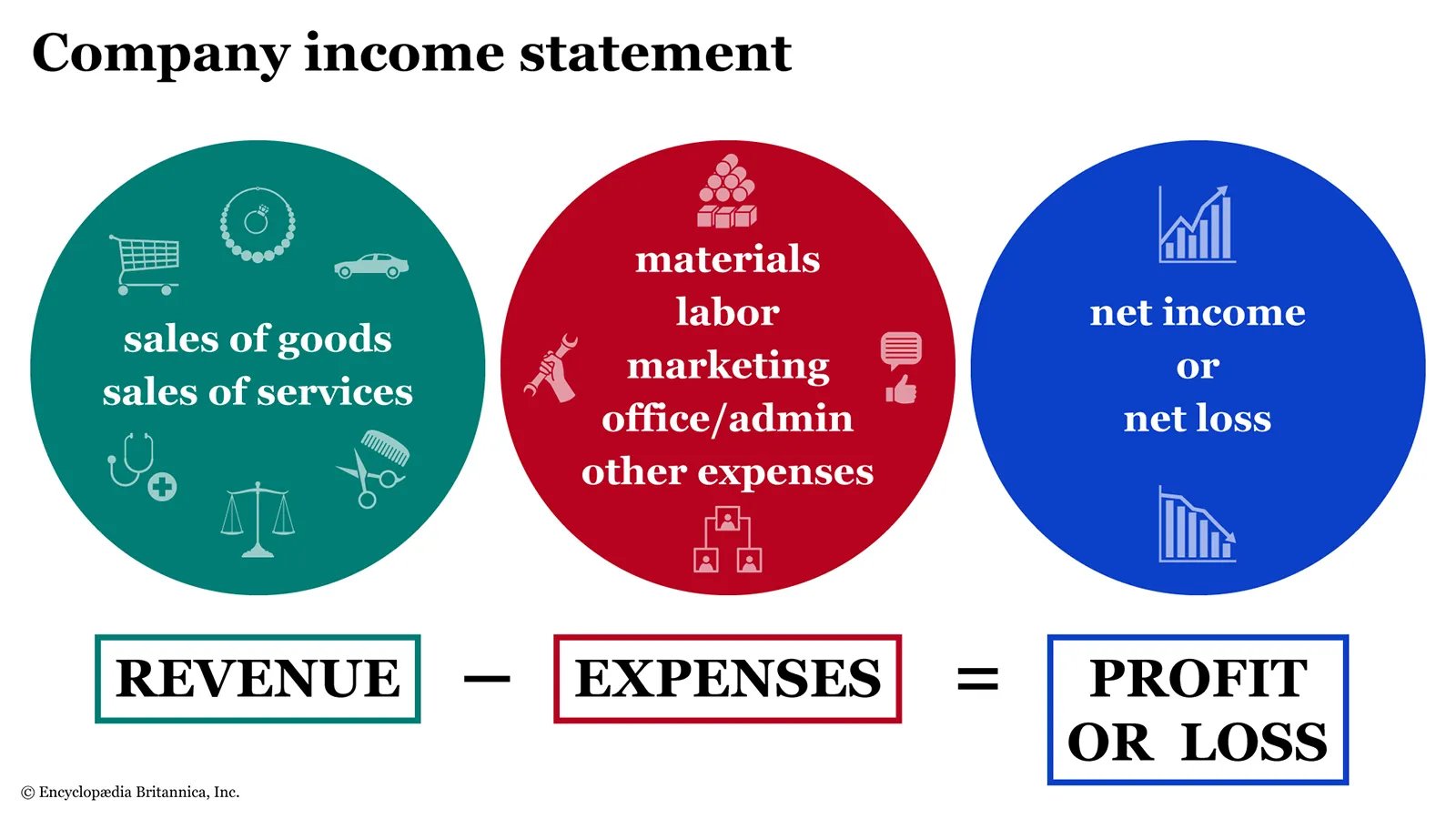
Now the whole purpose of forming a corporation of course is to make money, and the total sum of all of the money that a company makes is formally called its ‘Revenue’. ‘Expenses’, on the other hand are the costs that any company must pay in order to do business, expenses include but are not limited to paying employees, purchasing materials, paying for utilities like electricity and water, rent for buildings or building maintenance.
Pretty much says it all. Whatever money a company makes minus the costs of doing business is the profit that shareholders receive, if there is any profit. (Credit: Britannica)
Revenue minus expenses is the ‘Profit’ that company makes, unless of course expenses are larger than revenue in which case the company has suffered a ‘Loss’. Whatever profit a company makes is then divided amongst the shareholders on an equal basis for every share, this is known as either a ‘Dividend’ or “Earnings per Share’ (EPS). Dividends can be issued by a company on an annual, semi-annual, quarterly or even monthly basis. Which depends on the company.
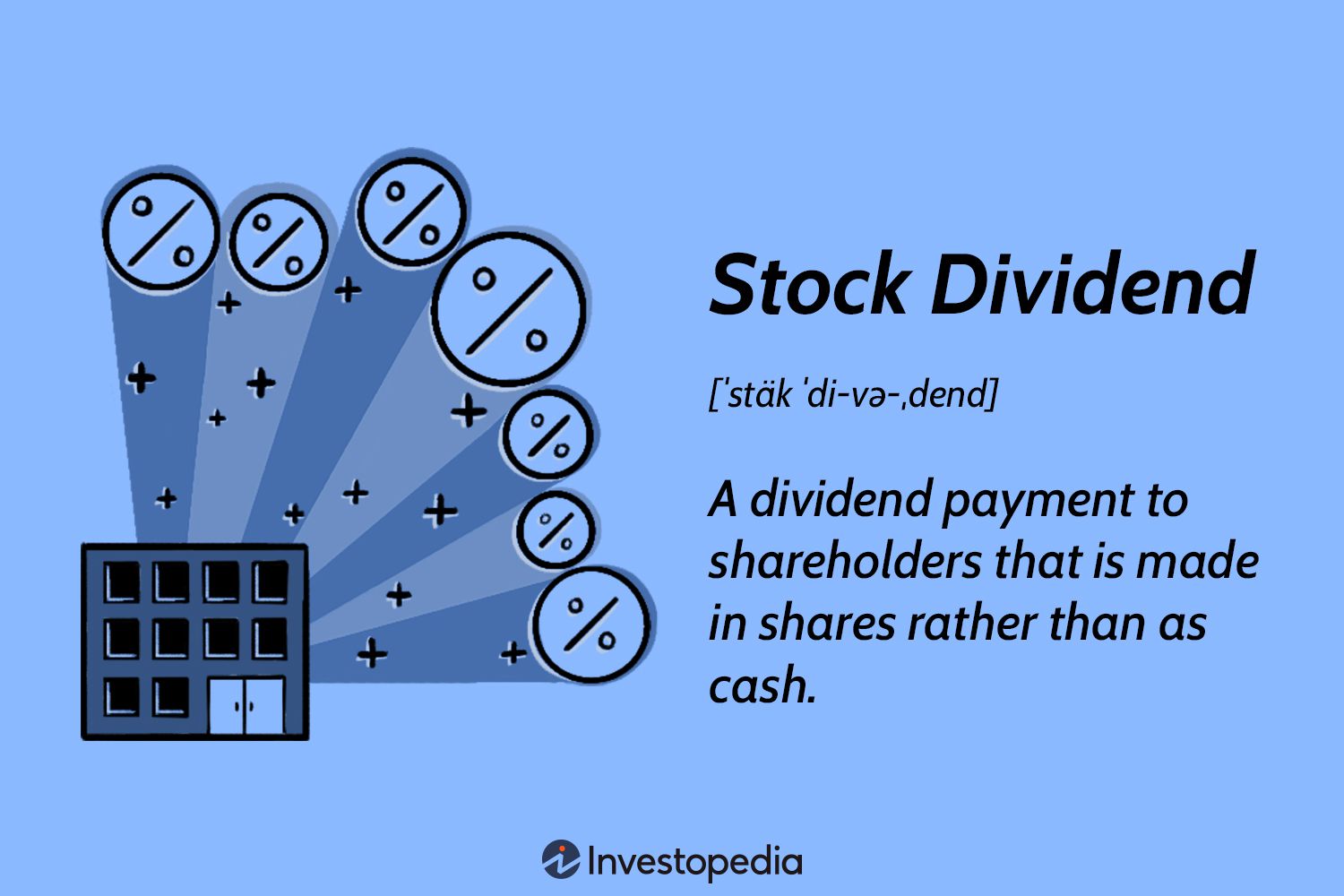
Investors can sometimes arrange for their share of the profits, their dividends to get paid in more shares of the company’s stock! (Credit: Investopedia)
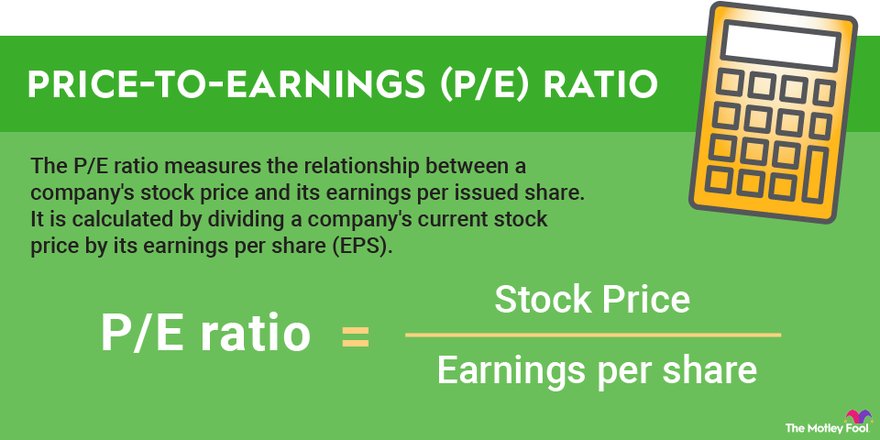
Obviously, the value of a share of stock depends greatly on the size of the dividend the company pays for each share of its stock, everything else being equal a stock that pays a dividend of $10 per share per year is worth ten times more than a stock that pays a dividend of $1 per share per year. Another important quantity that financial experts often use is known as the ‘Price per Earnings Ratio’ or P/E. This is simply the price of a single share of stock divided by the total dividends earned by that share over a year. What P/E works out to be then is the number of years you would have to own a share of that stock in order for its dividends to cover the cost of having bought the stock in the first place. Obviously the lower the P/E of a stock the less time it takes for the dividends to pay for the stock and therefore the more valuable the stock is.
When you are looking to buy a stock, you want the P/E ratio to be small so that you get big earnings for the price you paid for the stock! (Credit: The Motley Fool)
O’k, so now let’s say that one of the stockholders in a company wants to sell their stock, or someone who is not a stockholder in a company wants to become one. We all know that the buying and selling of shares of stock has become an enormous business in itself and takes place at ‘Stock Markets’ or ‘Stock Exchanges’. The oldest stock market in the Unites States is actually the Philadelphia Stock Exchange, which first began trading in 1790 but of course the largest exchange in the entire world is the New York Stock Exchange, which first began trading in 1792 and which today lists 2,132 companies whose stock can be bought or sold there.
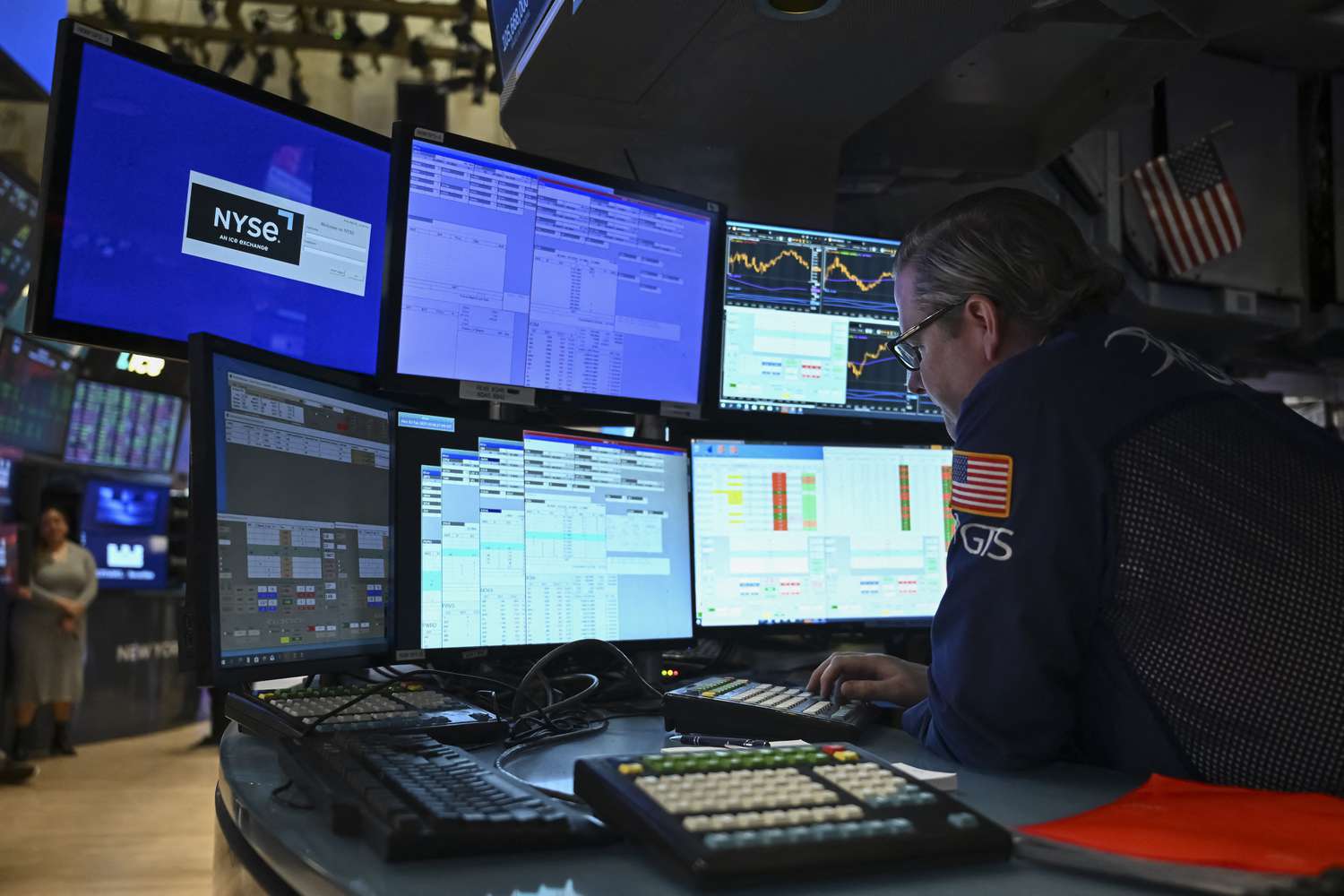
The New York Stock Exchange in all its glory. Time is money so the buying and selling of stocks is carried out at a frantic pace. (Credit: Bloomberg.com)
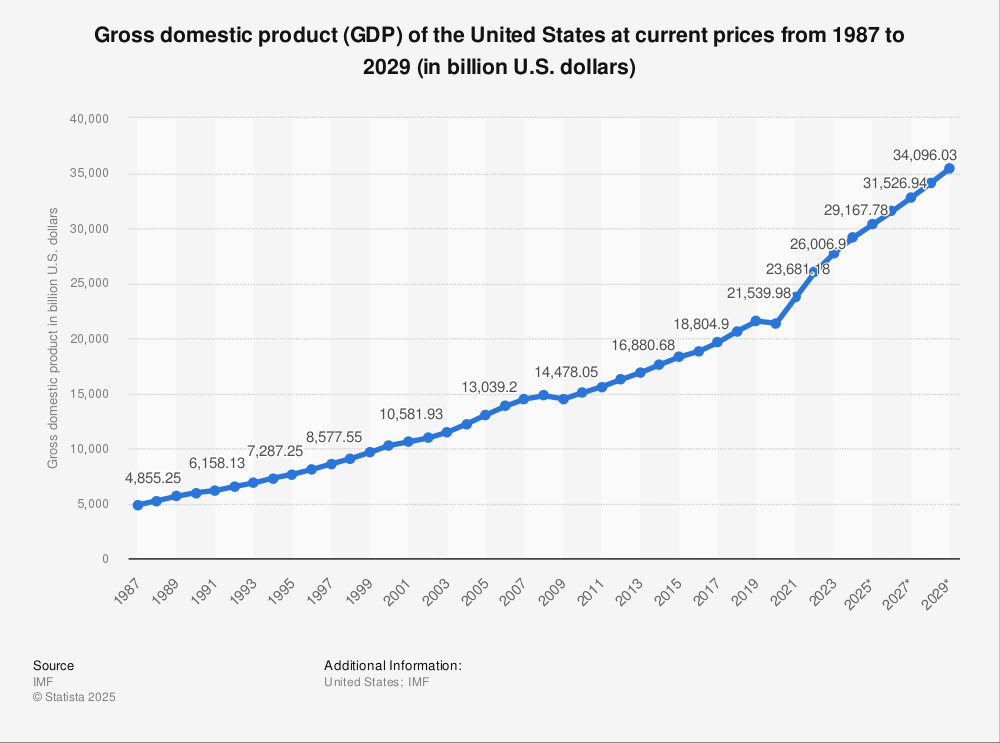
As in any marketplace the prices of stocks at an exchange can go up or down depending on supply and demand. I said above that the size of a stock’s dividend is the primary thing that determines a stock’s price but investors can also speculate that in the future a company is going to do better, or worse and that speculation can drive a stock’s price up or down, as can opinions about the overall health of the US economy.
An increasing Gross Domestic Product (GDP) means that the economic health of the country is good. In these times you would expect stock prices to rise as investors try to profit from the increase in overall wealth. (Credit: Statista)
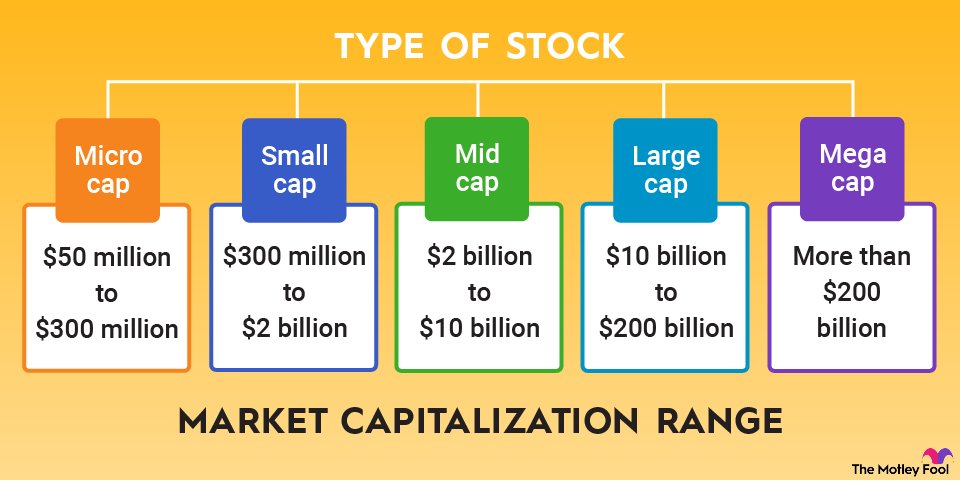
Once a company’s stock is listed on an exchange is becomes possible to calculate the total value of that company, a quantity known as ‘Market Capitalization’ or Market Cap. Market Cap is simply the current price of a share or the company’s stock multiplied by the total number of shares the company has issued. For example assume a company has issued 100 million shares of stock and at the end of a trading session the price per share is $10, in that case the total value of that company is considered to be $1 billion dollars.
Companies come in all sizes so Wall Street has invented names that relate to a firm’s Market Cap. (Credit: The Motley Fool)
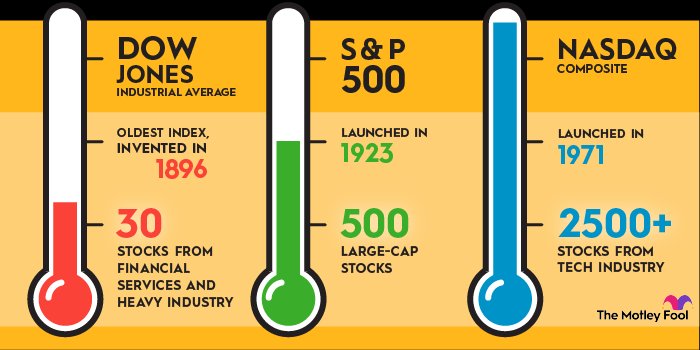
Now with over two thousand of our country’s biggest companies being traded every day the performance of the New York Stock Exchange, NYSE, is an important measure of just how the United States economy is doing as a whole. The problem is that measuring the daily performance of over 2,000 stocks, some of which will go up and some of which will go down is not an easy thing to calculate, especially back in the days before electronic computers. That’s why a number of different ‘Averages’ were developed, the best known of which is the ‘Dow Jones Industrial Average’ or simply the Dow. Begun in 1896 the Dow is an average of the stock value of thirty of the biggest companies in the US, known as Dow components, but spread over number of different industries. In other words the Dow is not just the 30 biggest companies, it’s the biggest financial services companies like J.P. Morgan Chase and Goldman Sacks along with the biggest retailers like Walmart and Amazon plus the biggest information services like Apple and IBM. By spreading its components over different industries the Dow became a quick peak at the entire US economy and since it only had 30 companies it could be calculated on a daily basis.
The three main indexes for understanding the health of the financial markets as a whole are the Dow Jones, The S&P 500, and the NASDAQ. (Credit: The Motley Fool)
With the advent of modern computers it has become possible to calculate the Dow average almost instantaneously, and there are now other averages as well including the ‘Standard and Poor’s 500’ S&P 500 which is the 500 biggest companies in the NYSE along with the NASDAQ 100 which is the 100 biggest companies on the NASDAQ stock exchange. In fact our new ability to monitor thousands of stocks moment by moment has only increased the volatility of stock prices allowing speculators to drive prices up or down so that they can make a quick profit.
At stock exchanges nowadays there are more computers than traders as keeping up with stock prices is something only a computer can handle. (Credit: Investopedia)
There has always been an aspect of gambling to any commodities market, including the stock market. There are always investors who think they have some inside information that allows them to pick short-term winners and losers causing market fluctuations that can hurt the long-term strength of an economy. Maybe it’s just my opinion but while investing in stocks is good for the economy, it does enable companies to secure the money they need to grow after all, turning the markets into casinos with winners and losers is not in anybody’s interest.
Compare this image of a casino floor to that of the stock exchange above. As far as I’m concerned the gambling aspect of stock markets hurts our economy. (Credit: Century Casinos)
And I think I’ll let it go at that. If there’s anyone who thinks I made this brief outline of what the many terms associated with the stock market mean either too simple, or too complicated well I tried my best. Hopefully a few people out there learned something, and that was my intent.
On Tuesday the 18th of March a Space X Dragon capsule returned to Earth carrying the four Crew 9 astronauts completing their mission at the International Space Station (ISS). Those astronauts had two days earlier been relieved at the ISS by four Crew 10 astronauts who will now crew the station until at least July.
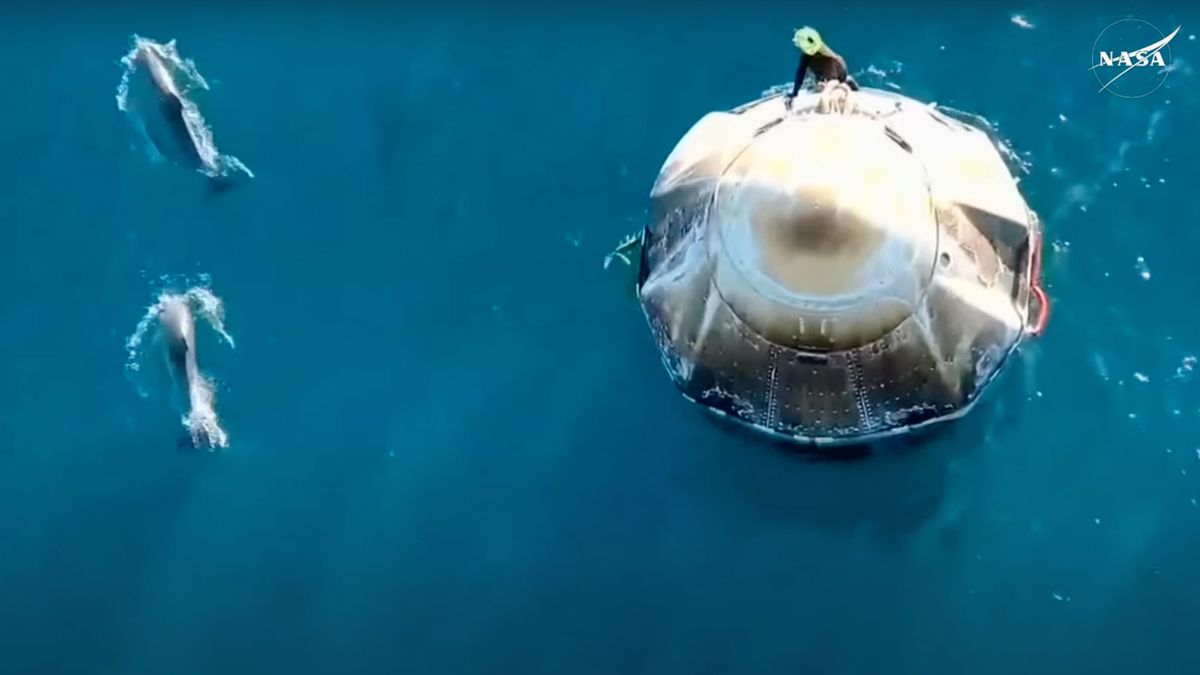
When the Crew 9 astronauts, including the Starliner crew, splashed down in the Gulf of Mexico their welcoming committee included a pod of Dolphins! (Credit: Space.com)
In many ways the splashdown of the Dragon capsule in the Gulf of Mexico off the coast of Florida represented just another routine crew transfer for Space X. The long saga of Crew 9 however was anything but routine, for two of the astronauts returning to Earth were originally the crew of Boeing’s Starliner capsule on its first manned mission to the ISS. The Starliner crew only became a part of Crew 9 when NASA decided they did not trust Starliner to safely bring them back home.
The Starliner Crew of Suni Williams (l) and Butch Wilmore (r) got to spend a lot more time in space then they had originally expected. (Credit: Newsweek)
It’s a long story that I’ve already discussed in several past posts, see my posts of 20 July 2024 and 31 August 2024. In brief astronauts Suni Williams and Butch Wilmore were assigned by NASA as the test pilots for Boeing’s Starliner capsule which was intended to both compliment and compete with Space X’s Dragon capsule in transferring astronauts to and from the ISS. After many years of technical problems and delay the Crew Flight Test (CFT) was finally launched on the fifth of June 2024 and reached the ISS after more problems while in orbit.
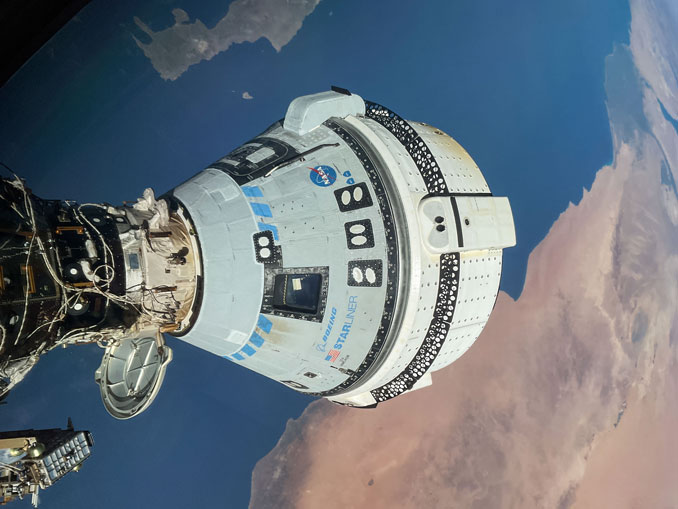
Boeing’s Starliner capsule docked at the ISS. Turns out that the crew completely lost control of the spacecraft for several seconds just prior to docking, a very dangerous turn of events that could have caused a real disaster! (Credit: Spaceflight Now)
Astronauts Williams and Wilmore were only supposed to remain on the ISS for eight days but NASA engineers spent more than a month trying to understand and fix the problems with Starliner’s thrusters. In the end it was decided that Starliner was too untrustworthy to risk returning from orbit with astronauts aboard so the Starliner capsule was brought back unmanned.
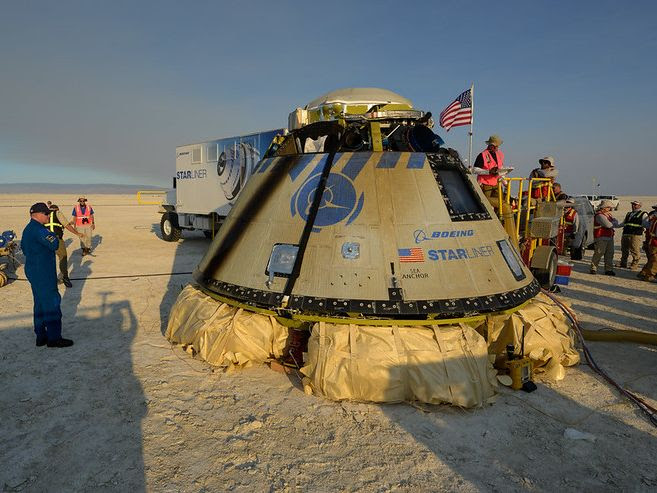
In the end NASA ordered that Starliner be returned to Earth unmanned. It turned out to be the most successful part of the mission. (Credit: HamletHub)
A special rescue mission using a Space X Dragon capsule was considered but in the end NASA decided to send the next scheduled crew transfer mission, Crew 9, with only two rather than the usual four astronauts. Williams and Wilmore then became the other two Crew 9 astronauts and would return to Earth when Crew 9 was relieved by Crew 10. In all, the eight-day mission for Williams and Wilmore turned into a nine month mission.
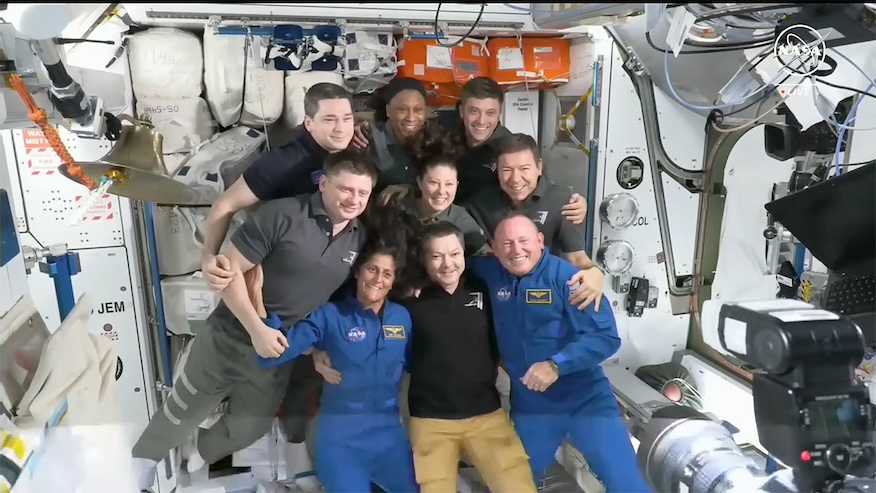
The Starliner crew, in blue uniform, with the regular crew of the ISS with whom they’d spend the next nine months. (Credit: Spaceflight Now)
So with Williams and Wilmore now safely back on Terra Firma the question for NASA is, what to do with Starliner. Boeing has yet to demonstrate that the eight billion dollar capsule can complete a mission without problems. To make matters worse for Boeing the ISS is scheduled to be de-orbited in five years so there are a maximum of about eleven regular crew transfer missions left for Starliner to take part in.
NASA has hired Space X to modify one of their Dragon capsules as a re-entry module to bring the ISS down into the middle of the Pacific Ocean in 2030. That re-entry would be something to see! (Credit: YouTube)
Currently NASA is considering their options. At a briefing on March 9th, shortly before the launch of Crew 10, it was announced that Boeing and the space agency were “making good progress” and had resolved 70% of the issues that Starliner had developed during its CFT. If that is so it seems that another CFT is unlikely to be carried out before this time next year and even if everything in that test goes smoothly a regular crew transfer mission can hardly be set up before early 2027.
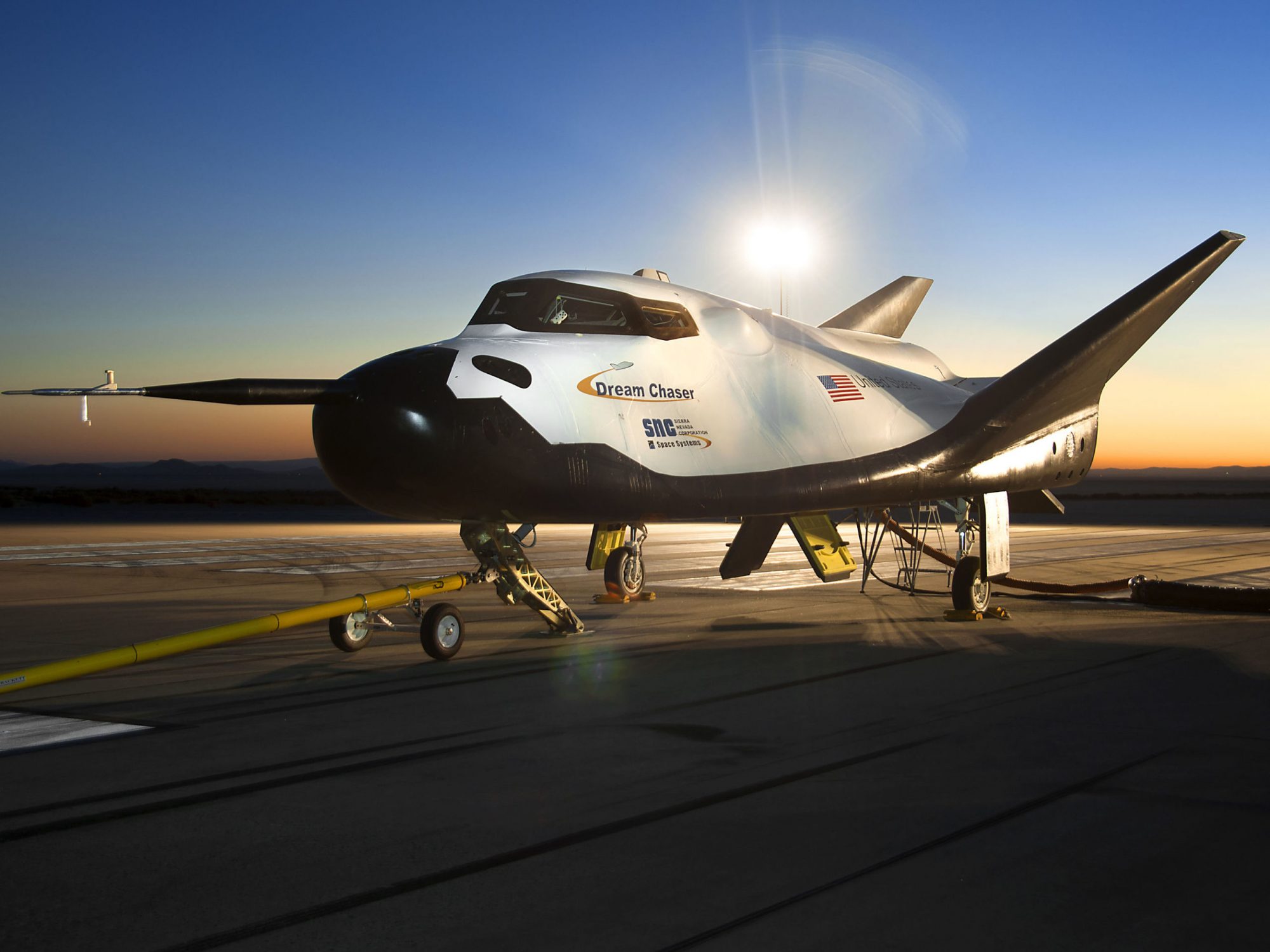
In addition to Space X’s successful Dragon capsule Boeing is going to have to compete with Sierra Nevada’s Dream Chaser space plane. (Credit: Popular Mechanics)
There are even rumours coming from Boeing that the aerospace corporation might be considering giving up on Starliner. After all there is now little chance that Boeing can recoup the losses that they have incurred due to Starliner on a few missions to the ISS before it is de-orbited. Add to that the damage to Boeing’s reputation if there are any further problems with Starliner. At the same time however there are plans in the works for several commercial space stations to replace the ISS and Boeing would certainly like to use Starliner to secure a portion of the business of taking astronauts back and forth to them.
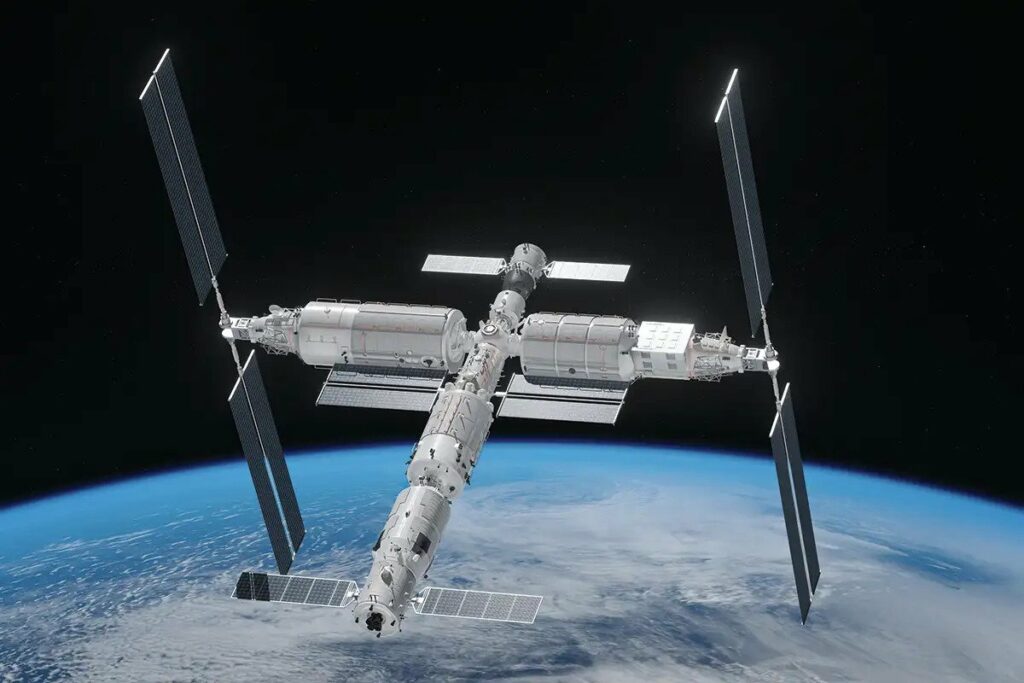
There are a lot of commercial space stations currently on the drawing board. How much of the business of keeping them manned and supplied Boeing’s Starliner will get is very much up in the air! (Credit: Universe Space Tech)
A few paragraphs above I mentioned that the current plan for the ISS is to de-orbit the aging space station in or around 2030. Space X has already been awarded the contract to modify the cargo version of their Dragon capsule to provide the necessary power to bring the ISS down for a landing in the middle of the Pacific Ocean. On February 21st however Space X’s CEO Elon Musk announced that in his opinion that the ISS should be brought down “as soon as possible”, within two years if not sooner. Musk’s claims that the ISS has served its purpose and is now taking money and resources away from his chief goal of reaching Mars. Musk has even argued that NASA should forget about the Artemis program’s goal of returning astronauts to the surface of the Moon, again with the intent of getting to Mars as quickly as possible.
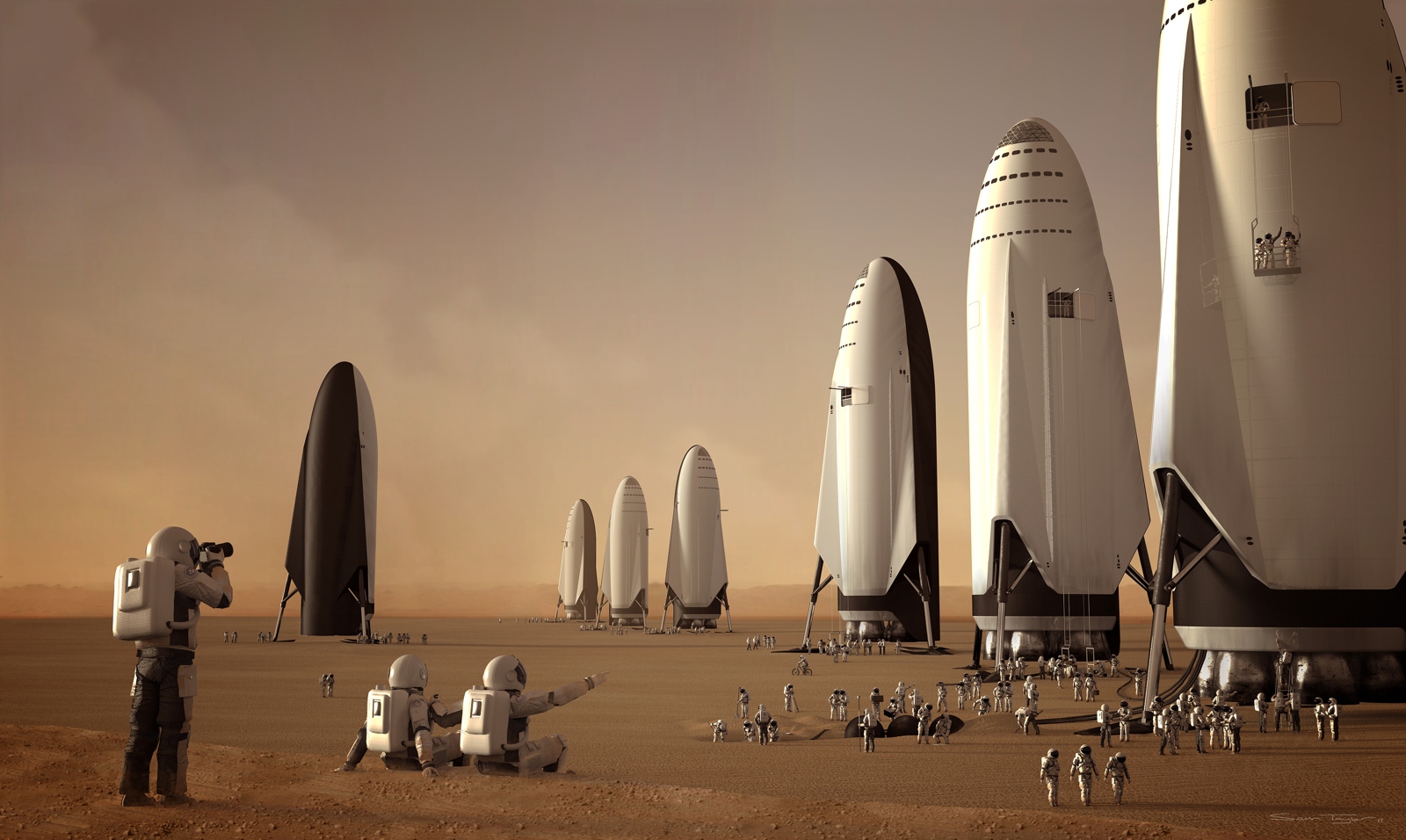
This is what Space X has really been aiming at all along, the colonization of Mars. Will NASA cancel its Artemis Lunar Program and endorse this vision? Only time will tell. (Credit: Human Mars)
NASA’s new director Jared Isaacman, who has ridden into space twice via commercial flights onboard Space X’s Dragon, also feels that the space agency needs to concentrate on a long term goal of Reaching Mars. Meanwhile Trump has publicly stated that although the idea of missions to the red planet “are of interest” they are not currently “a top priority”. Once again we see the possibility of a political change in Washington upending all of NASA’s long term goals, resulting in a waste of money, resources and worst of all time.
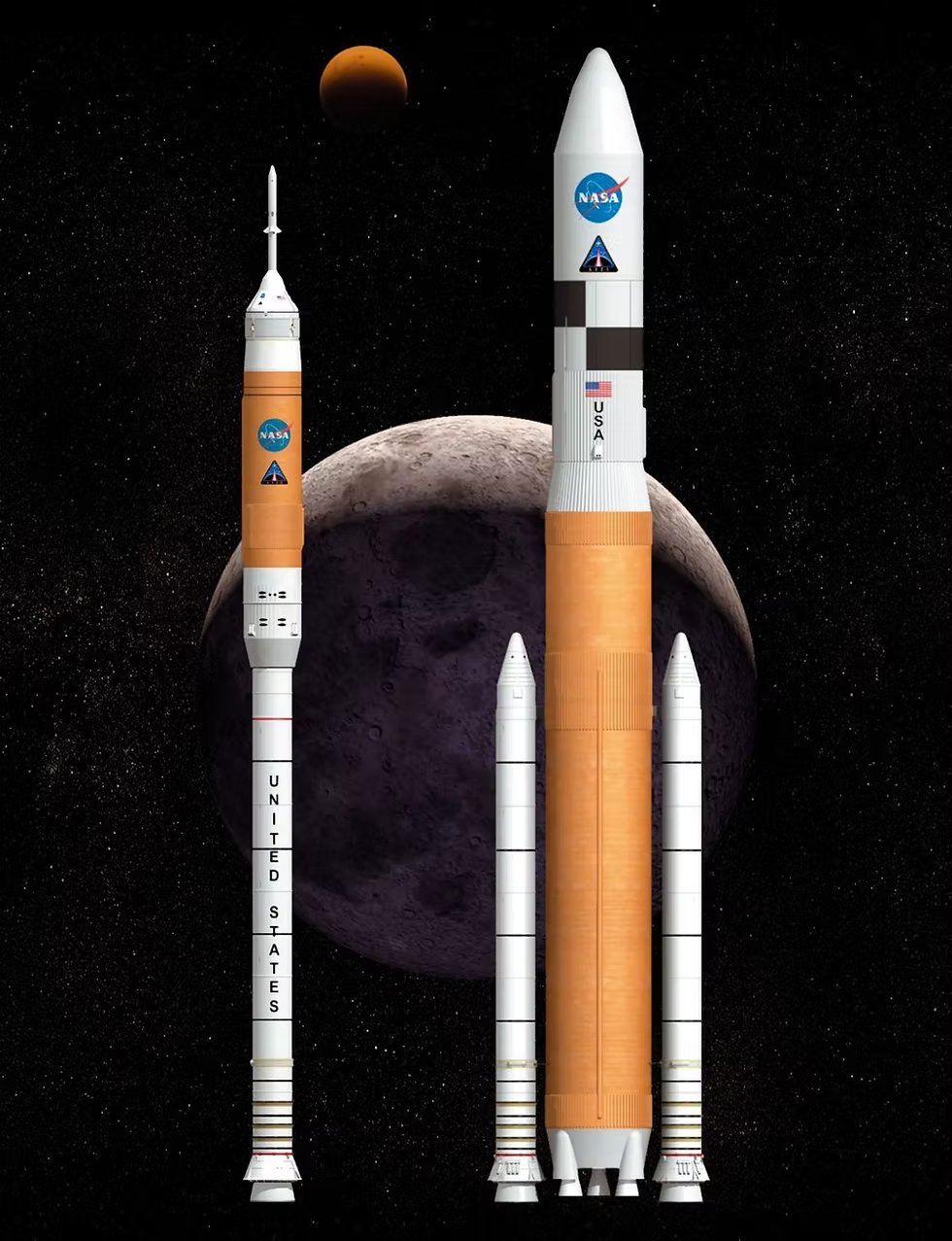
During the ‘W’ Bush Administration NASA began the ‘Constellation’ program for returning the US to the Moon. The whole thing got canceled by Obama after several billion dollars had been spent. Changing to a Mars mission now would waste even more money. (Credit: Spaceflight History)
And to top it off Space X has conducted another private space mission designated as Fram2. That mission was funded by Chun Wang a Chinese born cryptocurrency billionaire and the crew consisted of three of his friends, Eric Phillips of Australia, Jannicke Mikkelsen of Norway and Rabea Rogge of Germany. This latest billionaire joyride was distinguished by its planned orbital path, which will for the first time take astronauts over Earth’s polar regions. The mission launched on the first of April and successfully splashed down on the April fourth.
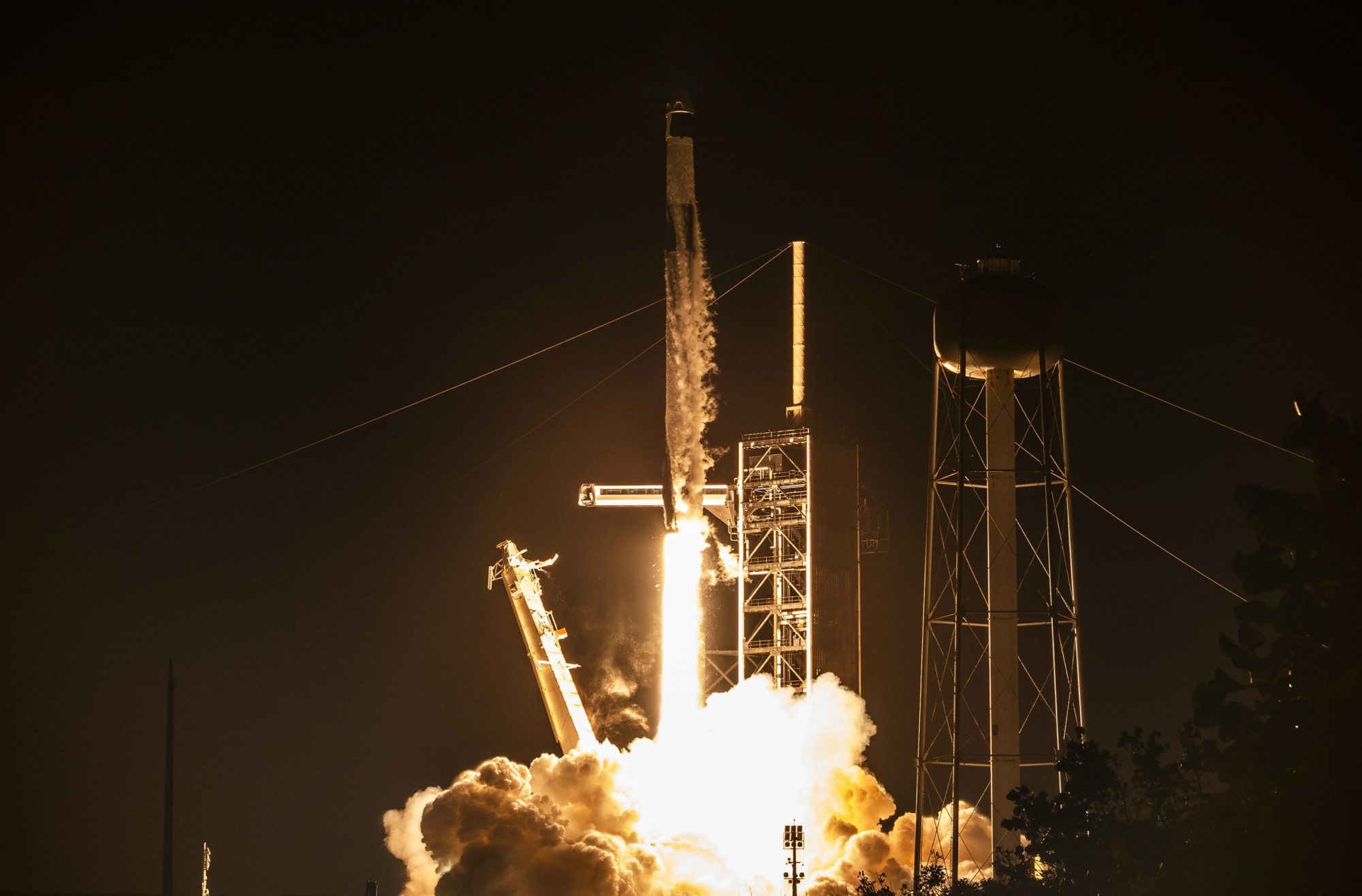
Launch of the Space X Fram2 Private space mission. (Credit: The Space Report)
This post turned out to be entirely about manned space flight but that doesn’t mean that there isn’t a lot going on with robotic space probes. Hopefully I’ll be able to catch up with them soon.
Over the past century it seems as though all of the big discoveries in Physics have come from either Relativity Theory or Quantum Mechanics. These two pillars of 20th century science are all about objects that are moving very, very fast, or are very, very small. Sometimes it seems as if the old Physics of Isaac Newton has little left to teach us, as if we’ve learned everything there is to know about the behaviour of objects in our everyday world. In this post however I’ll be discussing two recent studies that show how much we still have to learn from classical physics about the ways objects in our everyday life behave.
In Today’s World it is really necessary for everyone to have some understanding of the two Scientific Revolutions that shaped the 20th Century! (Credit: Amazon.com)
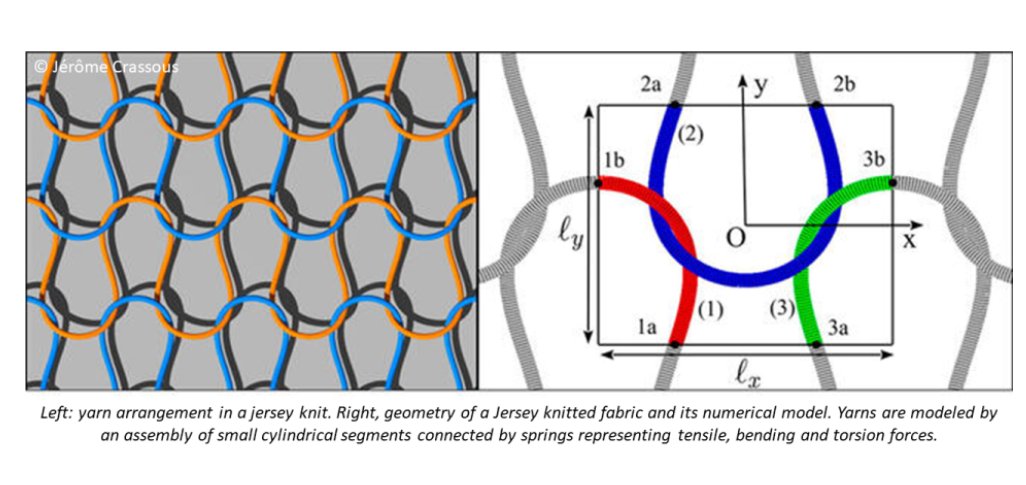
The first paper I’ll be discussing comes from researchers at the University of Rennes and the University of Lyon, both in France along with Aoyama Gakuin University in Japan who examined the different shapes and forms that knitted fabrics can take on after being stretched and pulled. Specifically, the team used a common jersey knit stitch known as stockinette, which consists of interlocking loops of threads, to knit a piece of fabric with 70×70 stitches. See figure below. This piece of fabric was then placed on a specifically designed tensile mechanism that allowed the researchers to stretch, pull and twist the piece of fabric in a wide variety of different directions and strengths.
Familiar to anyone who knits the Stockinette stitch is one of the most common methods of turning a thread into a piece of fabric. (Credit: Gathered)
Now we all know that knits that are really pulled and stretched never quite return to their original shape, they become deformed. What the researchers did however was to measure the degree of deformation that resulted in their piece of fabric depending on the amount of stretching given to the fabric. Each of the resulting shapes that the piece of fabric took on after stretching and twisting the team designated as a ‘metastable shape’ and they categorized the many metastable shapes generated during their testing.
Quantitative definitions established by the researchers to study the deformation of knitted fabrics. (Credit: CNRS Le Journal)
At the same time the team ran a series of computer simulations that replicated the actual experimental results. One thing the computer simulations allowed the researchers to do that they couldn’t do experimentally was to reduce and even completely eliminate the effect of friction between the stitches of their piece of fabric. What the team discovered in these simulations was that, in the absence of friction the piece of fabric always returned to its original shape, regardless of the amount of stretching and twisting. Without friction there were no matastable shapes.
Some of the Data obtained by the researchers showed the relaxed states of their fabric after stretching. (Credit: Crassous, Poincloux and Steinberger)
Perhaps the research conducted by the team in France and Japan will help manufacturers develop clothing that does not lose it shape after being worn or washed, perhaps not. At least however you now know that friction is to blame when your favourite sweater gets deformed.
Personally, I think all sweaters are misshapen. They feel so uncomfortable I just can’t wear them at all! (Credit: iStock)
Another study dealt with a twist on the familiar phenomenon of how two or more objects moving a fluid, water or air, actually reduce the force of friction on each other. We’ve all seen how a flock of geese will fly in a ‘V’ shaped pattern. Well that’s because the lead goose’s motion sets up an flow of air called a bow wave that reduces friction to the two geese on either side of it and slightly behind, reducing the amount of energy they have to expend in flying. This reduction in friction continues right down the line so that the flock forms a ‘V’ shape in order to reduce the amount of energy they expend in flying. In water dolphins will often swim close the bow of a ship to take advantage of the same phenomenon, and many species of schooling fish arrange themselves for the same reason.
Geese always fly in a “V” formation because the air currents generated by the bird in front actually makes flying easier for the bird behind them. The bird in front gets relieved on a regular basis. (Credit: Online Training Courses)
Obviously this doesn’t work in a solid medium because solid objects simply cannot move through a solid medium. What about a granular medium however, where each individual grain may be solid but where thousands, if not millions of tiny grains can still in many ways behave like a fluid.
In many ways the grains of sand in an hourglass behave more like a thick liquid than solid objects. (Credit: Amazon.com)
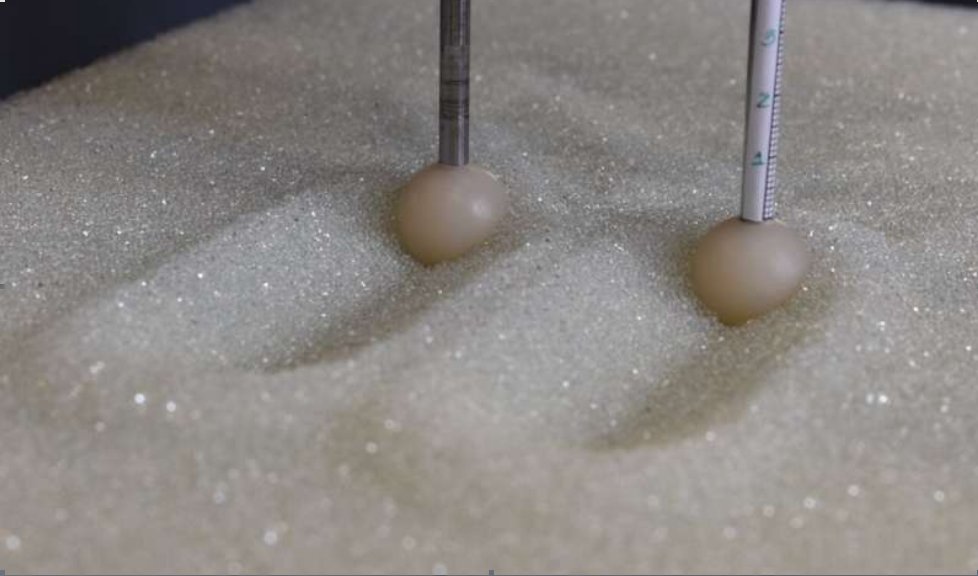
That’s what physicists at the University of Campinas in Brazil and the University of Paris-Saclay in France decided to study. The experimental setup the researchers employed consisted of a bed of glass beads, used in place of sand because of their uniformity, through which two steel balls called ‘intruders’ could be pulled in parallel. The researchers could vary both the distance between the intruders as well as their depth in the glass beads, riding the surface, just submerged or fully submerged etc.
During testing the steel balls were actually submerged in the sand but this is an image of the actual setup the scientists used to measure the effect of multiple objects moving through a granular media. (Credit: University of Paris-Saclay)
What the team discovered was that there was a significant reduction, nearly 30%, in the force of fiction on both balls when they were so close as to be almost touching. The cause of this reduction in friction the researchers attribute to the motion of one intruder breaking the force chains between the grains around the other intruder, and vice versa.
Just looking at all of the different shapes and sizes of sand grains it’s easy to understand where the friction caused by moving through sand comes from. (Credit: Vecteezy)
The researchers also believe that their findings may help to explain some well-known phenomenon in the natural world such as the digging of animal burrows and the growth of plant roots. In any case the results discovered by both teams of physicists clearly show that classical physics can still teach us a lot about the world around us.