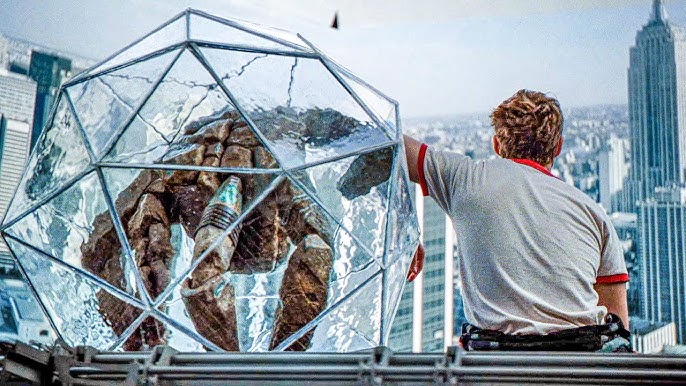
Ryland Grace, played by actor Ryan Gosling, awakens from hibernation to find himself aboard a spaceship arriving at another star system. Problem is he has lost his memory and has no idea who he is let alone why he is there. To make matters worse the ship’s two other crewmembers have died in hibernation. That’s the beginning of the film ‘Project Hail Mary’ based upon the novel of the same name by Andy Weir. I think this is the first time I have reviewed a movie based upon a novel that I have already reviewed, to see that review check out my post of 18 August 2021.
Poster for ‘Project Hail Mary’. Out now in theaters. (Amazon.com)
Without giving too much of the story away our Sun has been losing energy, within 30 years the Earth’s temperature will drop by more than 10ºC leading to widespread famine and if the trend continues the end of all life on the planet. Ryland Grace is a schoolteacher who majored in biochemistry and published an article about life not based on water. Because of this the governments of the world ask him, and other scientists to analyze samples brought back by a space probe. It is Grace who discovers that the Sun has been infected by a virus-like ‘Astrophage’ and it is this Astrophage that is consuming some of the Sun’s energy. Not only that but our Sun appears to be on the outer edges of a cluster of stars that are all affected by astrophage. The virus is spreading from star to star.
A Phage is a simple form of virus. In ‘Project Hail Mary’ the term Astrophage is coined to describe the virus-like life form infecting our Sun. (Credit: Department of Biochemistry: Madison University)
Except for Tau Ceti, a star right in the middle of the cluster at a distance of 12 light years. Tau Ceti isn’t dimming at all, it appears to be immune to the astrophage. Hoping that the solution to controlling the astrophage may lay at Tau Ceti the nations of the world band together to send a spaceship there, a Hail Mary pass as it were. So, Ryland Grace ends up being the only human being in the Tau Ceti system as he tries to save Earth by finding the secret to controlling astrophage.
The nearby Star Tau Ceti, on the right, is just slightly smaller, and cooler than our Sun on the left! Credit: Wikipedia)
Grace may be the only human at Tau Ceti, but he’s not alone. Even as he’s trying to gain control of his ship, and remember what he’s doing at Tau Ceti an alien spaceship appears and makes contact. The alien is from the star 40 Eridani and their star is also infected by astrophage so they are also making a Hail Mary pass hoping to save their planet.
Not an astronaut by training, Ryland Grace is sent to Tau Ceti because he is a biochemist. When the two real astronauts die in route however, Grace has to learn how to run his spaceship all by himself! (Credit: IMDb)
The alien turns out to be based on a chemistry using silicon rather than carbon, an alien made of rock who lives in an atmosphere of ammonia at a temperature well above the boiling point of water. Grace gives the alien the name Rocky and together the two have to learn how to communicate and survive each other’s environment before they can work together to save their planets.
The idea of aliens using silicon rather than carbon for their biochemistry is not new. It was even used in ‘Star Trek’ TOS in the episode ‘The Devil in the Dark’. (Credit: Wikipedia)
Like most good SF ‘Project Hail Mary’ works because once you accept a couple of strange ideas, astrophages and aliens based on silicon, the rest is sound science. Besides which ‘Project Hail Mary’ is just a fun story with a likable protagonist, or should I say likable protagonists.
Only by working together can Grace and Rocky save their home planets. A lesson for all of us here on Earth! (Credit: YouTube)
Like most movies based on novels ‘Project Hail Mary’ cuts out a bit of the story, mostly where Grace and Rocky learn to communicate. Also the movie is pretty much a one-man show since Ryan Gosling is the only human most of the time. Gosling does a great job but if you like to see a lot of interplay between actors, well mostly you get Gosling and a rock!
Leaning to communicate is probably the most important skill we have to learn. However, it’s not that interesting to watch, so very often movies will have different nationalities, or even different species quickly leaning English in order to get on with the story! By the way kids you have to pull that string tight in order for Tin Can phones to work! (Credit: Secret Entourage)
Still ‘Project Hail Mary’ is a really fun film, the kind of story we need right now. It’s a story about a very bright but non-heroic kind of guy who sacrifices himself to save the world. It’s also a story about a very strange friendship, two very different kinds of ‘people’ who work together to save their worlds.
Perhaps the lesson to be learned from ‘Project Hail Mary’ is that we can save our planet. All we need to do is work together. (Credit: Wikipedia)
So go see ‘Project Hail Mary’, it’s probably the best SF movie since ‘The Martian’.
Quite a few stories of interest this month, mostly dealing with manned spaceflight. So let’s get to it!
In my last space post I talked about how the Crew 11 astronauts were forced to depart from the International Space Station (ISS) early on the 11th of January because of a medical issue with one of its four members. This emergency left the ISS with only a skeleton crew of three cosmonauts until the Crew 12 team could be readied and launched aboard their Space X Dragon capsule.
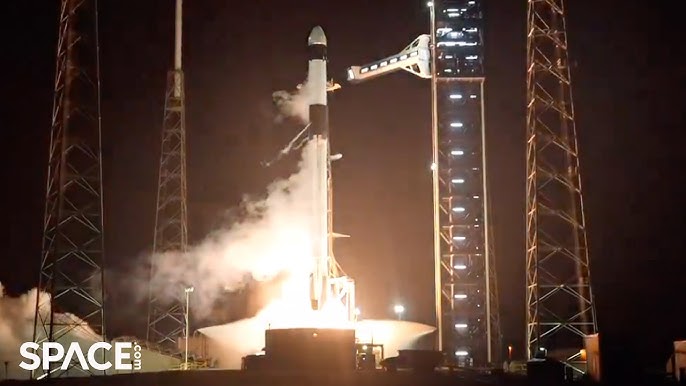
Launch of the Space X Crew 12 mission to the International Space Station (ISS) on 13 February. (Credit: YouTube)
Working quickly NASA and Space X succeeded in moving up the launch of Crew 12 from its original planned date to February 13th. As usual the launch of the Falcon 9 rocket went off without any problem and about a day later on the 14th the Dragon capsule was docked at the ISS. Thanks to Space X and its reusable Falcon 9 rocket and Dragon manned capsule NASA’s commercial crew program is an unqualified success as manned missions to Low Earth Orbit (LOE) are becoming routine.
Humanity’s first long term habitat in space the ISS has been manned for more than twenty years now and thanks to Space X, crew rotations are becoming quite routine! (Credit: ESA)
In fact manned missions are becoming so routine that they are no longer solely the province of national space agencies. Private companies or even individuals can, for a large amount of money, charter a manned space mission. There have already been four such missions to the ISS and several other missions that did not go to the ISS.
Launch of the first Axiom commercial mission to the ISS. Axiom has completed three other such missions now and has been granted a fifth mission. (Credit: The New York Times)
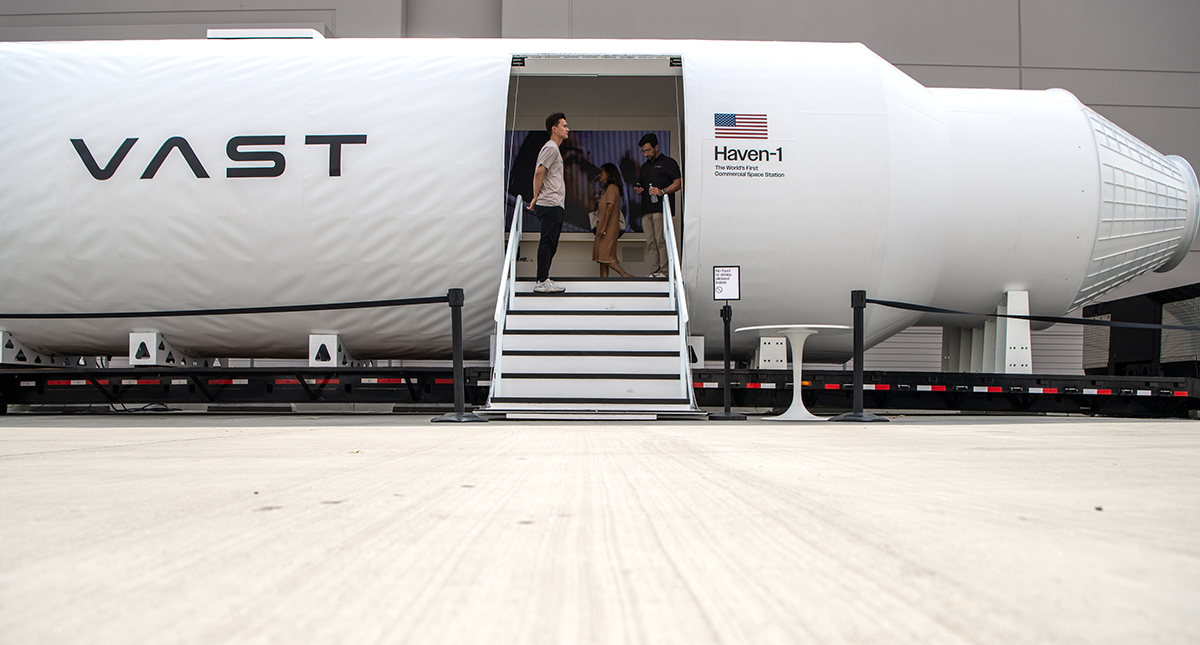
As a part of this growing commercialization of LOE, NASA and its partners in the ISS have signed contracts for a fifth and sixth private mission to the ISS. The fifth mission, scheduled for no earlier than January of 2027, was awarded to Axiom Space Corporation, the company that charted the first four private missions to the ISS. The sixth mission was awarded to a newcomer, Vast Corporation and is scheduled to launch no earlier than the summer of 2027.
In addition to arranging missions into space, Vast Corporation has plans to construct a private Space Station once the ISS is de-orbited! (Credit: Long Beach Post)
Both of these two missions will spend about 14 days at the ISS and will consist of four crewmembers. Axiom and Vast will purchase mission services from NASA including crew consumables and cargo delivery and storage. Both companies will also have to make flight arrangements with Space X including launch and re-entry missions. In exchange Axiom and Vast will each be allowed to sell four tickets to the ISS, although the private astronauts who are selected must be approved by NASA and will be trained by both NASA and Space X.
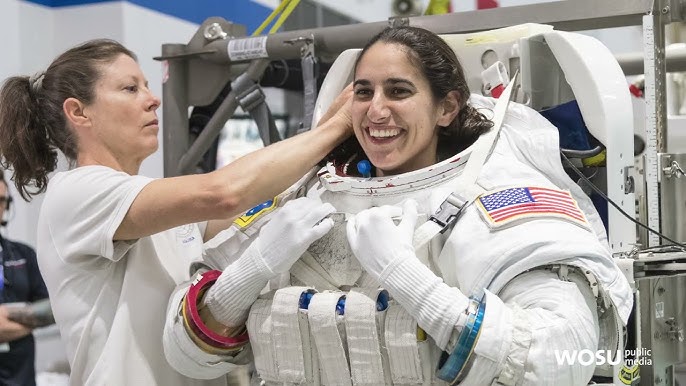
The training of a NASA astronaut can take years and even the training of a space tourist takes months! (Credit: YouTube)
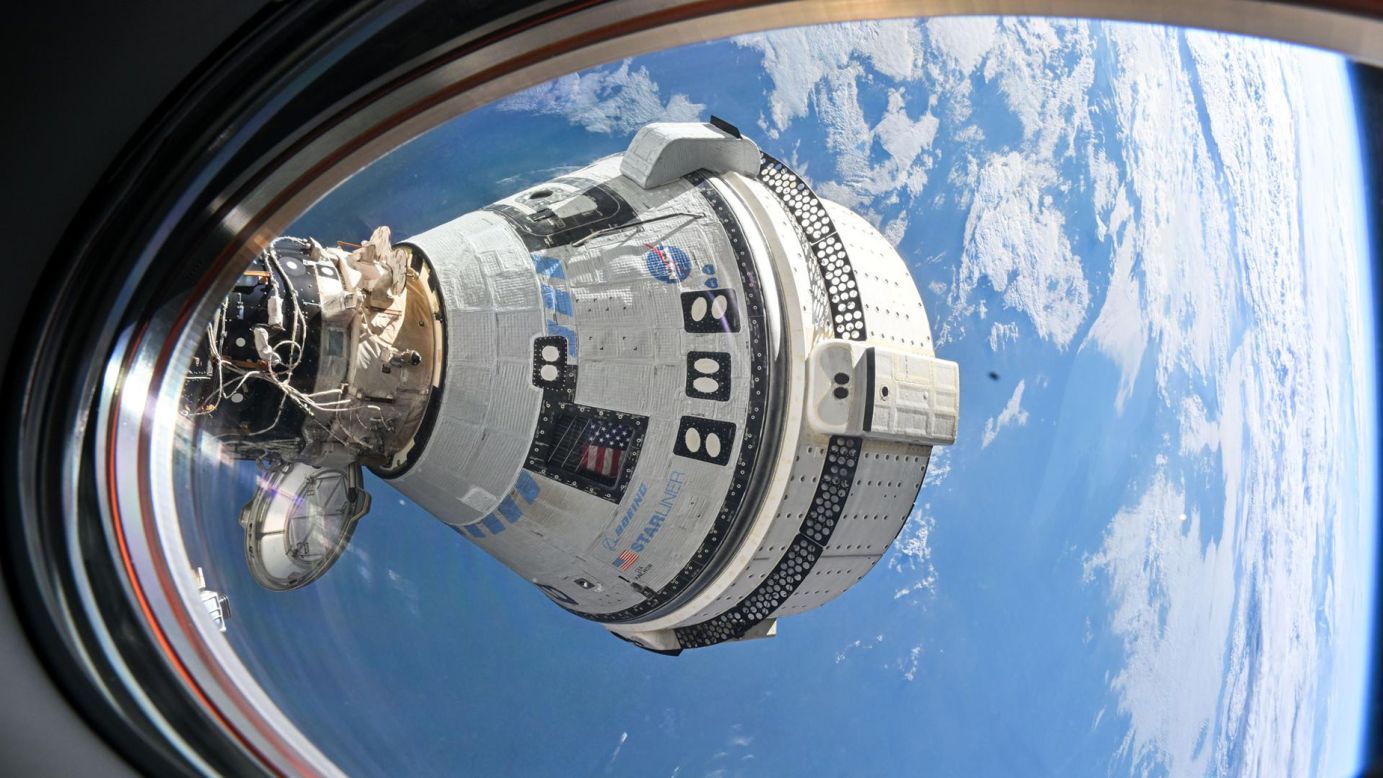
NASA’s commercialization of space was not originally intended to become a Space X monopoly. The plan was for Boeing’s Starliner capsule to also transport both NASA and commercial astronauts to the ISS. However, as I have often mentioned in earlier posts, see my posts of 20July2024, and 12April2025, the Starliner capsule has suffered a seemly unending series of problems. Back in 2024 Starliner finally succeeded in getting two astronauts to the ISS but with so many issues that NASA deemed the capsule to be unsafe for the astronauts to return in. So, the Starliner astronauts Suni Williams and Butch Wilmore’s stay at the ISS went from being only a week to more than eight months before they could return to Earth aboard a Space X Dragon capsule.
Everyone expected Boeing’s Starliner capsule to reach the ISS before Space X’s Dragon, but things just didn’t work out that way. Starliner has been plagued by problems and has yet to complete a successful mission. (Credit: CNN)
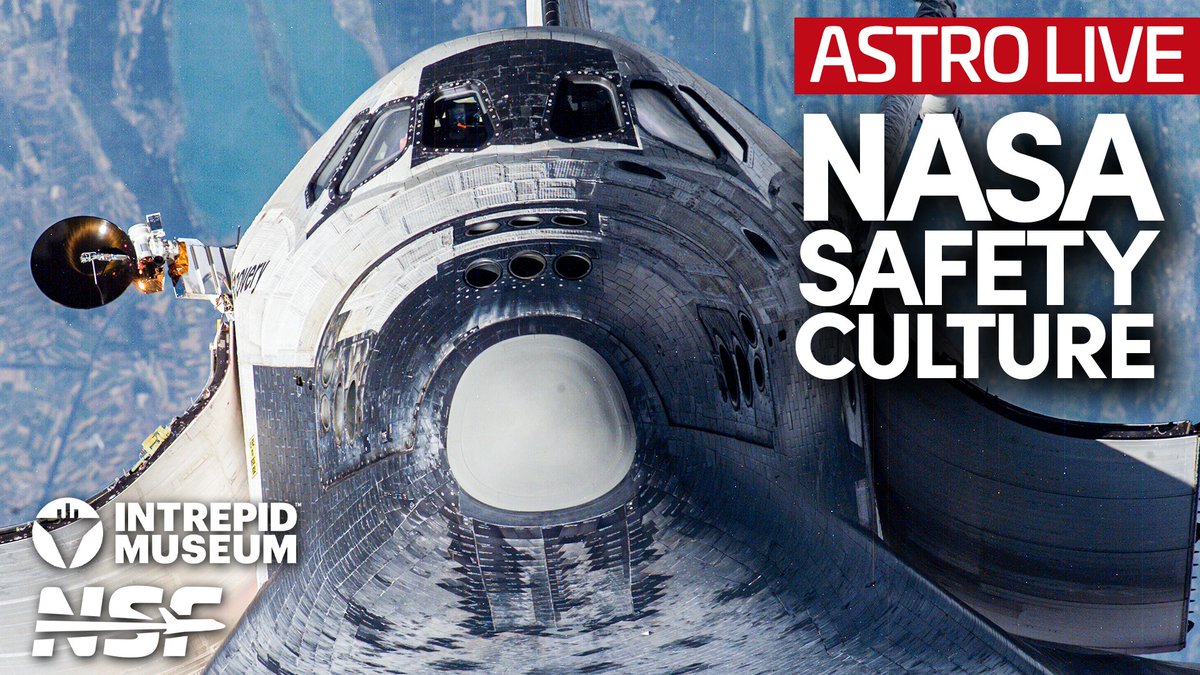
On the 19th of February NASA released its final report on Starliner’s mission and the results were not good for Boeing. Officially Starliner’s mission has been categorized as a ‘Type-A Mishap’, the worst category possible and equivalent to the Challenger and Columbia Space Shuttle disasters! The report details numerous failings that “revealed critical vulnerabilities in Starliner’s propulsion system, NASA’s oversight model, and the broader culture of commercial human spaceflight.” Hither to this report NASA’s Commercial Crew Program had been permitted to investigate itself but now that philosophy is considered to be “inconsistent with NASA safety culture.”
Space is trying to kill you! So anyone who goes into space has to practice a strict safety code if they want to come back alive!!! (Credit: X.com)
Nevertheless NASA still hopes that Starliner can fulfill some part of its original aspirations. The current plan is for Starliner to conduct one more test mission, to be designated Starliner-1, to the ISS. This test flight however will be unmanned; Starliner will only carry cargo to the ISS. This test flight is scheduled to be conducted no earlier than April.
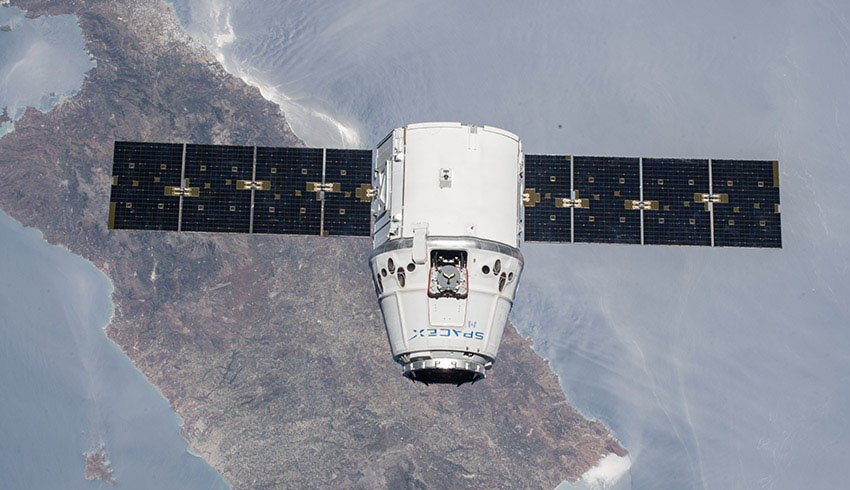
In addition to sending astronauts to the ISS Space X also has the job of sending unmanned cargo missions to the station. Starliner’s next flight could be a similar such mission. (Credit: Space Connect)
If everything goes well in this latest Starliner attempt then it is possible that the next ISS crew rotation, planned for August, may be carried out with Starliner rather than a Space X Dragon. For that reason the four astronauts assigned to the next ISS mission are training on both Dragon and Starliner capsules. Whether or not this scheduled plan will be altered because of the 19th of February report remains to be seen.
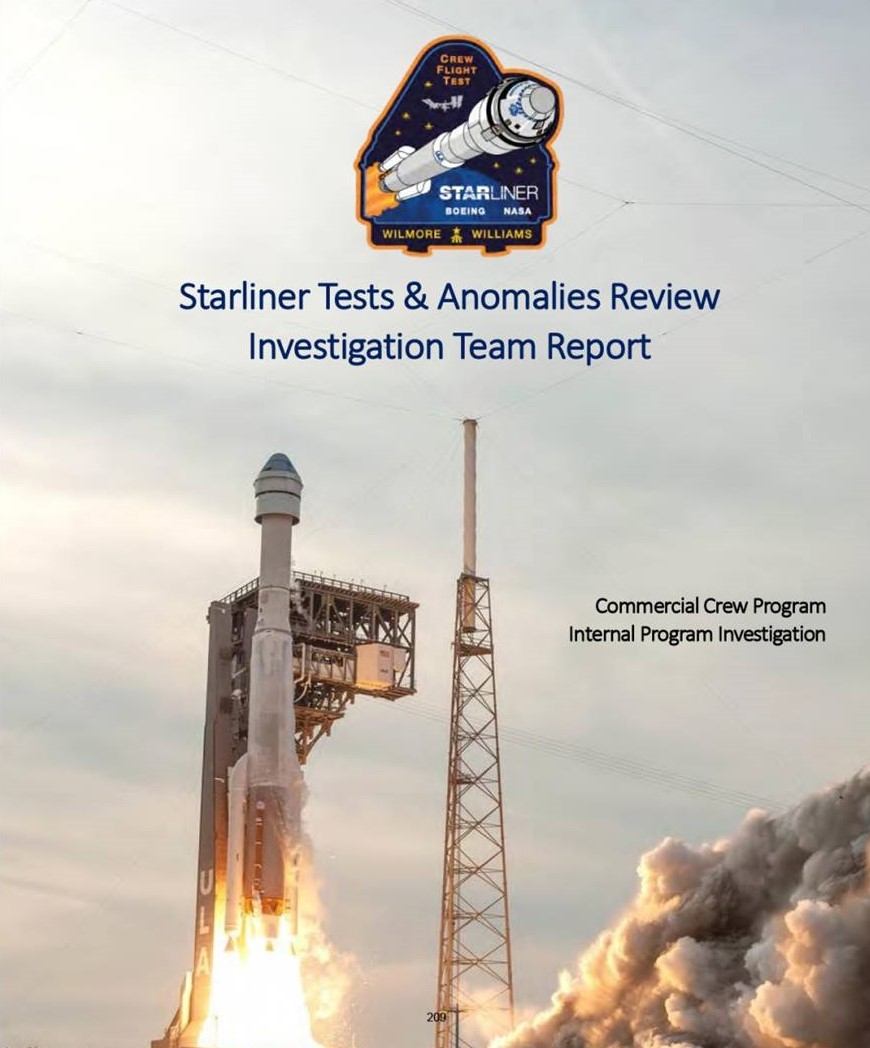
Front cover of the actual report on Starliner’s mission to the ISS. NASA pulled no punches and detailed every problem Starliner had. Assuming there is a next Starliner mission any further problems would surely kill the entire program! (Credit: NASA)
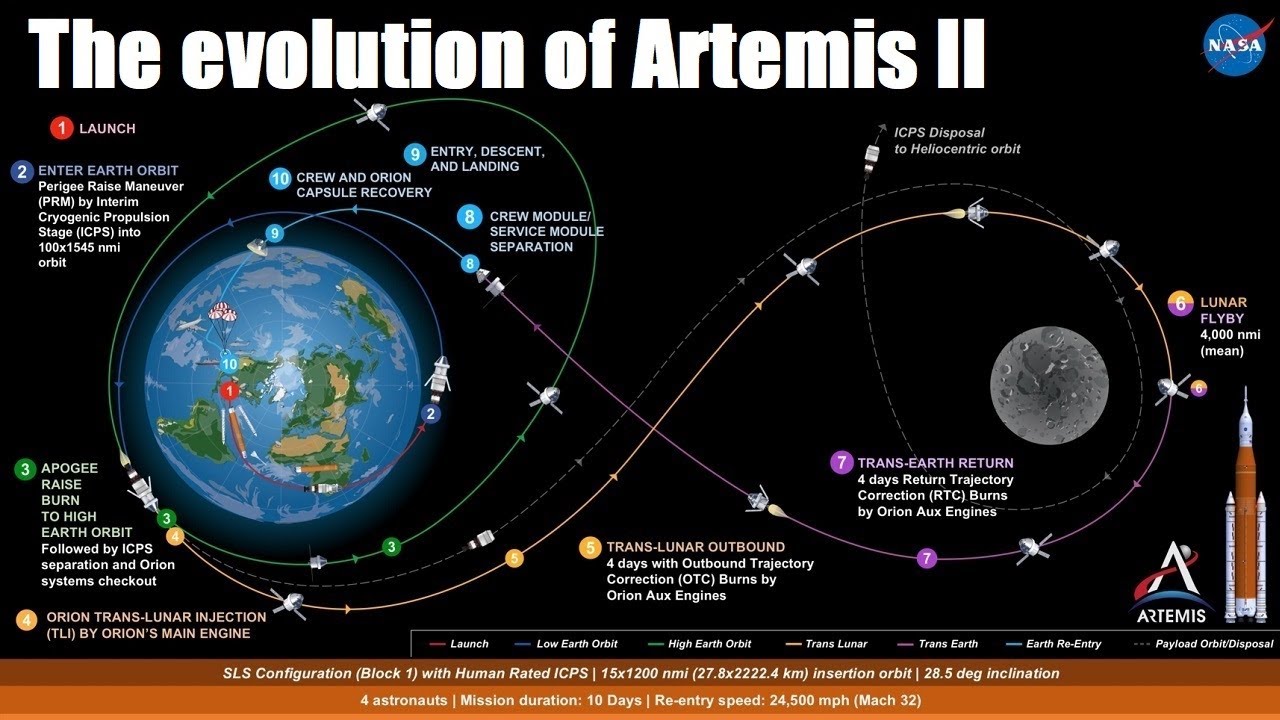
So far all of my news in this post have dealt with space flights to LOE, begging the question of when will we be getting back into deep space, getting back to the Moon and beyond. Well, the Artemis II rocket and Orion capsule are currently sitting on their launch pad undergoing final testing before launching four astronauts out of LOE for a trip around the Moon similar to Apollo eight’s mission back in 1968.
The Artemis II launch vehicle and spacecraft being rolled back to the assembly building. Problems during final testing have provoked this delay. (Credit: NASA)
As a final test before launch NASA conducted a wet dress rehearsal on February 12th, that’s a full fueling of the rocket. Unfortunately during that test a series of hydrogen leaks occurred forcing the test to be terminated early. This same problem occurred during testing of the Artemis I unmanned mission back in November of 2022.
Hydrogen is the lightest and smallest of all elements so it can leak out of any hole no matter how small!!! (Credit: BYJU’s)
A second wet dress rehearsal was carried out from February 17th to the 20th and at first it appeared that the hydrogen leak problem had been resolved, the mission was put on a schedule for a launch on March 11th. However on the very next day the leak problem reappeared in the Artemis II’s second stage and the decision has been made to roll Artemis back into the Vehicle Assembly Building for repairs. How long of a delay this will cause to the Artemis II’s launch is just guesswork at the moment.
The Artemis II mission, if it ever happens, will mark to first time in more than 50 years that humans have left LOE. (Credit: YouTube)
All of the stories above concerned either NASA or American commercial aerospace corporations but there is also news coming from China’s space agency as well. On the 12th of February China successfully tested two components of their future manned Lunar exploration missions simultaneously.
Abort test of China’s Mengzhou capsule. Chinese astronauts going to the Moon will ride in this capsule. (Credit: Facebook)
Like NASA’s Artemis program China is designing a large rocket called the Long March 10 along with a crew capsule called the Mengzhou and a Lunar lander called the Lanyue. The test conducted on the 12th consisted of an abort systems test for the Mengzhou capsule along with a test of the re-usability of a scaled down version of the Long March 10 rocket.
China’s Long March 10 rocket will come in several variants for both LOE and deep space missions. (Credit: China in Space)
The abort test of the Mengzhou capsule is a standard test for manned spacecraft, both the Space X Dragon and Artemis’ Orion capsules underwent such testing. If during a launch anything should go wrong with the first stage rocket, or if there’s a problem with jettisoning the first stage and igniting the second stage, solid fuel rockets on the capsule will fire pulling it away from the launch vehicle and allowing the capsule and crew to safely land. The test of the abort system is usually carried out during the launch at what is called ‘Max Q’ which is the moment when aerodynamic pressure on the entire launch vehicle is greatest.
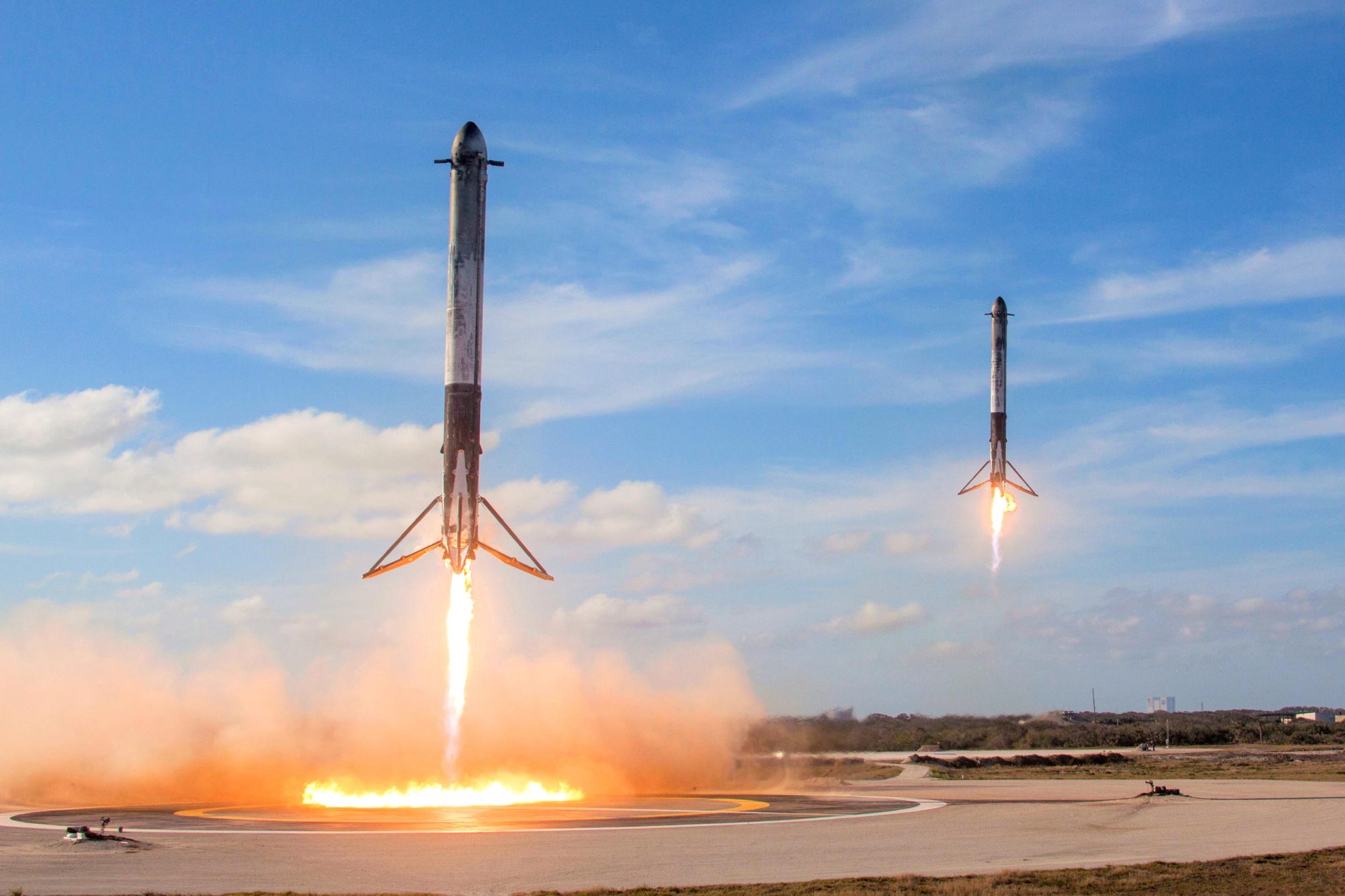
As I mentioned above both the Dragon and Orion capsules underwent this test and in those tests the launch rocket was simply jettisoned after the capsule was pulled away. The Chinese however wanted to try for more than that. Currently the Chinese are working very hard to develop a re-usable rocket similar to Space X’s Falcon 9. So they decided to conduct a full flight of the Long march 10 rocket, after the Mengzhou capsule was pulled away. Therefore, about five minutes after the Mengzhou capsule had completed its test the Long March 10 rocket re-ignited its engines and was able to make a controlled splashdown in the waters off China’s Hainan Island. Two successful tests for the price of one.
Space X has revolutionized space travel with its reusable Falcon 9 rocket. Now everybody else, especially the Chinese, want to have their own reusable rocket! (Credit: Via Satellite)
The race to get back to the Moon is heating up, as is the effort to commercialize space. The future will belong not to whoever is first but whoever keeps going and finishes the job.
We humans like to think that we’re the only truly intelligent species on this planet; the behaviour of other animals is really just instinct. Well in this post I’ll discuss two recent discoveries that highlight just how intelligent other creatures can be along with another story about how selfless one kind of animals can be, sacrificing itself for the good of its whole community.
Over thousands of years Mother Nature has been represented in many, many ways but always as a caring woman protecting her children! (Credit: Fine Art America)
I’ve often spoken about tool use by several different species, see posts of 16March2019 and 24August2024. Now a recent video from British Colombia has given evidence that sometimes an animal can even learn how to make use of a human tool.
The territory of the Haitzaqv people of Canada’s Pacific coast. (Credit: HIRMD.ca)
In the waters along Canada’s Pacific coastline the European Green Crab is an invasive species that the Canadian government is trying to eliminate or at least control. The indigenous Haitzaqv Nation is taking part in this effort by placing crab traps along the shorelines baited with herring and seal meat in order to catch as many green crabs as possible.
The Green Crab is an invasive species along Canada’s Pacific coast so the Canadian government is trying to control if not eliminate its population. (Credit: The Counter)
Recently the Haitzaqv have found that a number of their traps were being pulled onto the beach and the bait was being removed, and presumably eaten. In order to discover who, or what the thief was they placed motion sensitive trail cameras nearby in order to keep watch on the traps. Since many of the traps were submerged in fairly deep water it was first suspected that otters or seals might be the culprits.
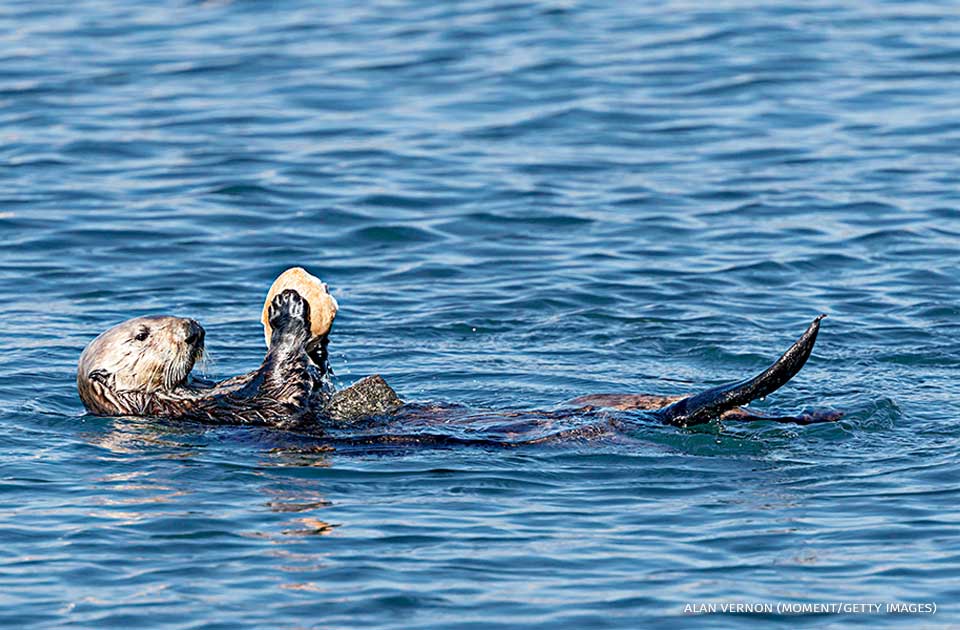
Sea Otters are already known to make use of tools, using small rocks to break open the clams and oysters they feed on. (Credit: National Wildlife Federation)
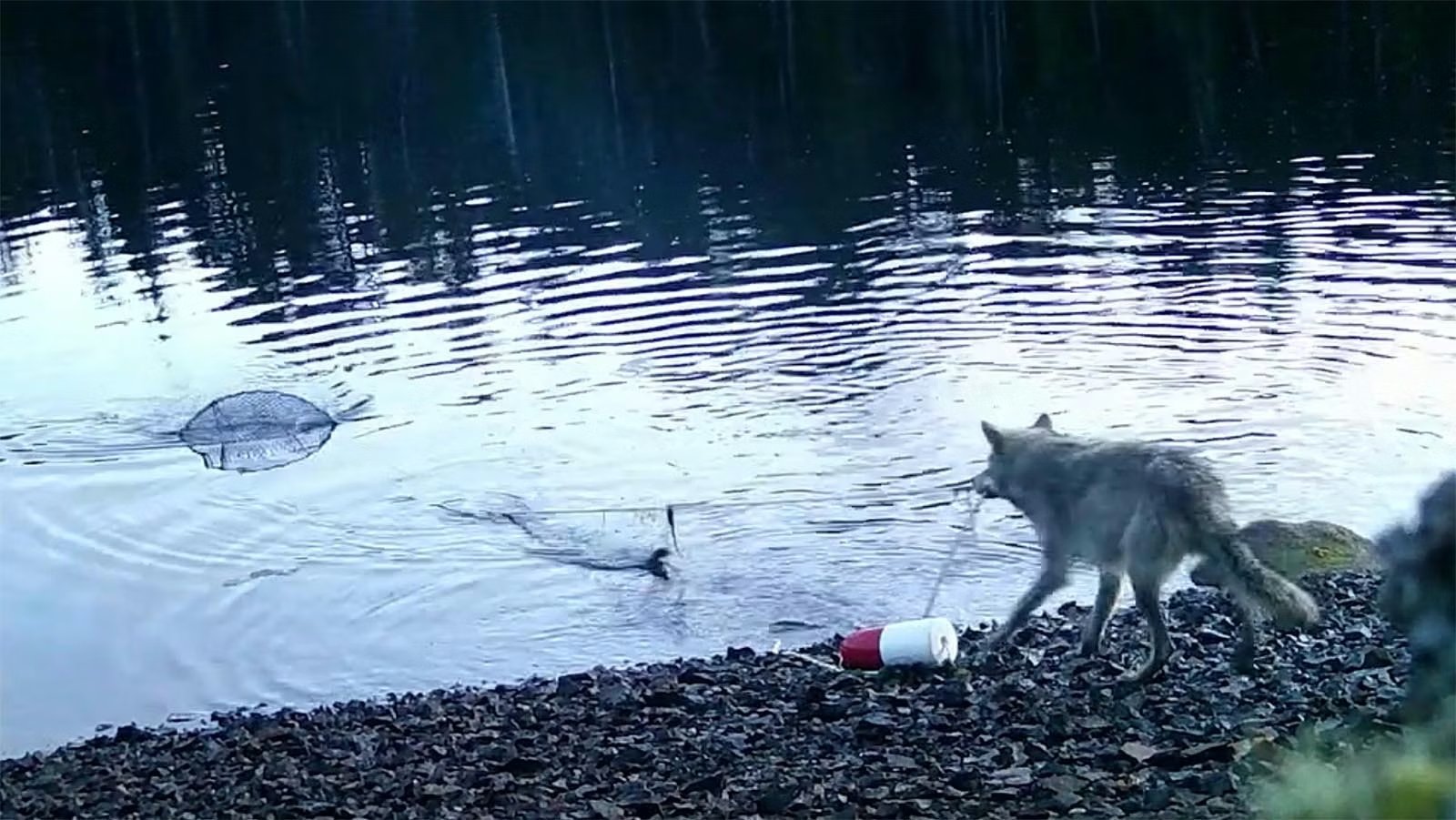
Instead, what the videos showed was a wolf that waded out to the trap’s buoy, grabbed it with his teeth and then dragged the buoy back to the shore. The wolf then grabbed the rope that attached the buoy to the trap and began dragging it onto the shore until the trap was on the beach. The whole operation took less than three minutes and once the wolf had the trap completely on shore it would break into it and devour the bait.
A wolf pulling a crab trap out of the water so it can eat the bait inside. Whether this is tool use or not is an academic question, but it is certainly clever. (Credit: Cowboy State Daily)
Naturalists are now debating whether this behaviour is truly ‘tool use’ since humans made the traps and all the wolf did was pull it onshore. Still, you have to admit the wolf, or perhaps wolves, are being very clever in figuring out how to get a cheap meal.
More often than tool use, wolves are known to cooperate in the hurt, using numbers to take down bigger prey like deer or even bison. (Credit: Animal: How Stuff Works)
Cooperation between individuals is another good strategy for getting a meal. Now normally such team work is between members of the same species but recently another series of videos has been taken showing how on occasion even species that are sometimes known to be predator and prey may still cooperate, if it improves their chances of getting fed.
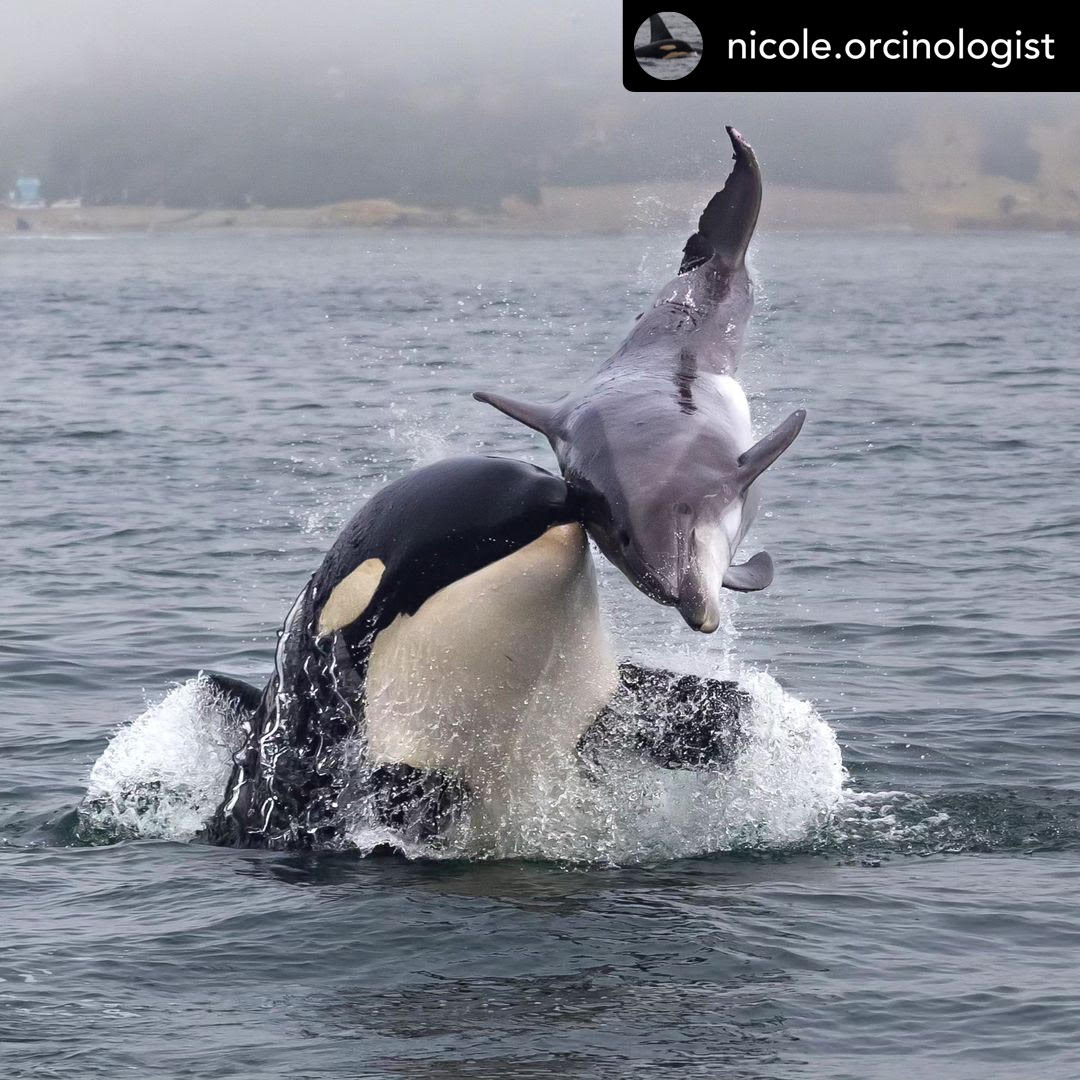
Instead of cooperating Orca and Dolphins are normally Predator and Prey. Sometimes however even enemies can work together for a common goal. (Credit: Whale Tales)
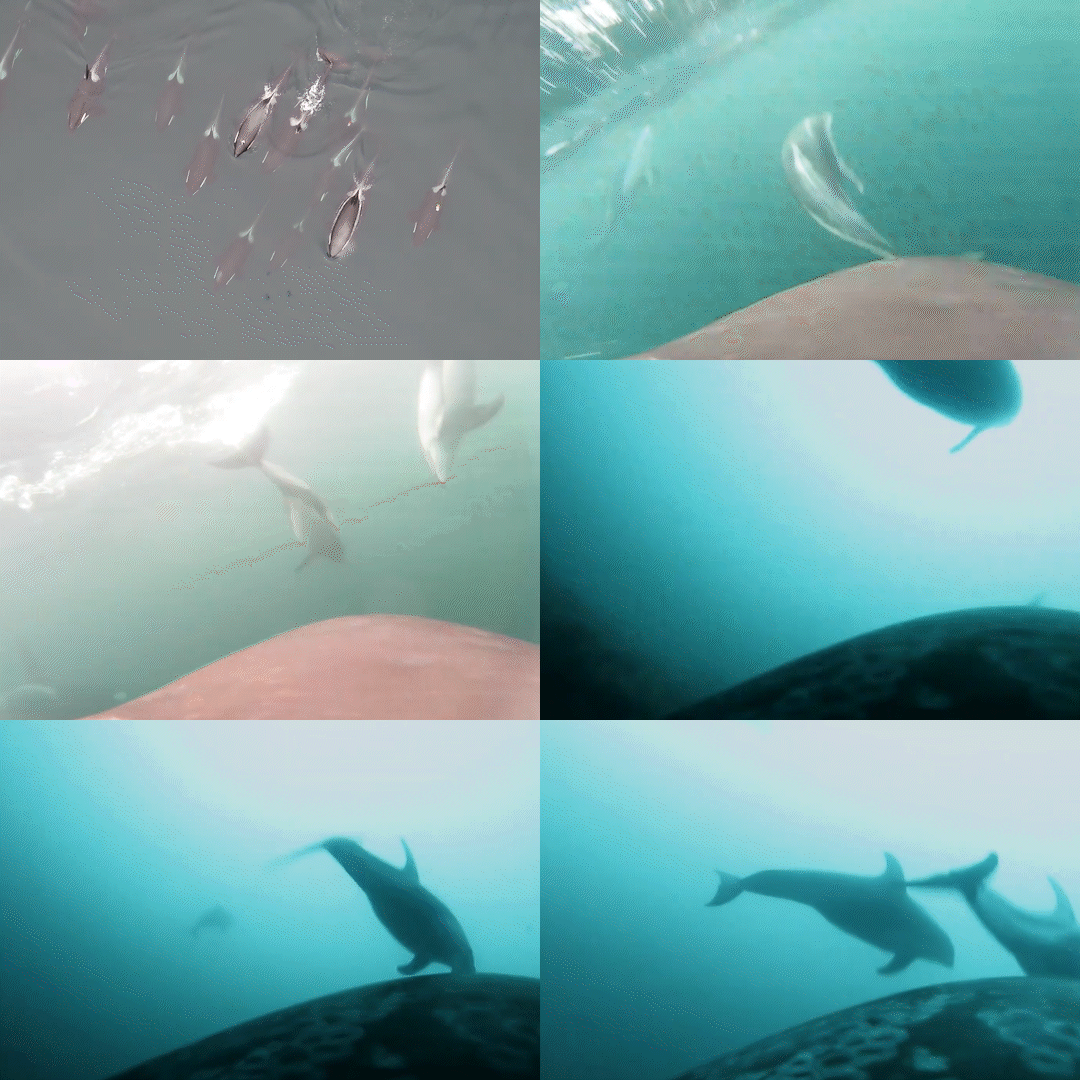
Once again the video comes from the Pacific coast of Canada where a pod of nine Orcas, or killer whales were seen teaming up with pod of Pacific white-sided dolphins to attack large schools of Chinook salmon. It was while the researchers were observing the Orcas that they found that on occasion the pod would change course in the presence of the dolphins and follow them to a large school of salmon.
Video of Orca and Dolphins hunting Salmon together. (Credit: The Times)
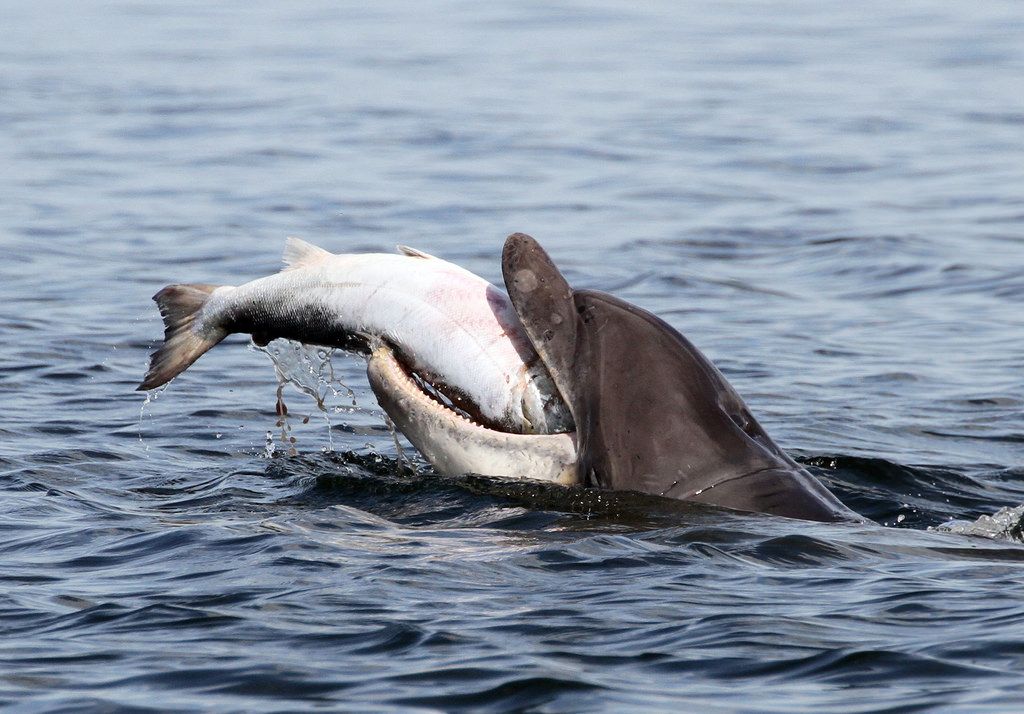
It appears that what is happening is that the dolphins are using their superior echo-location ability to find the salmon, who are too large for the dolphins to swallow whole. So the dolphins lead the Orcas to the salmon where they attack the school. Meanwhile the dolphins benefit by consuming the scraps that the killer whales don’t swallow. Teamwork indeed!
A large Chinook Salmon is a bit too much for a Dolphin to swallow but after an Orca has chopped it in half the Orca can at least feast on the scraps! (Credit: Independent Hostels)
Both Orcas and dolphins are well known to possess a variety of hunting techniques and both are known to be very intelligent species. This is however the first time they have ever been seen to work together. In fact in other parts of the world killer whales have been known to sometimes attack dolphins.
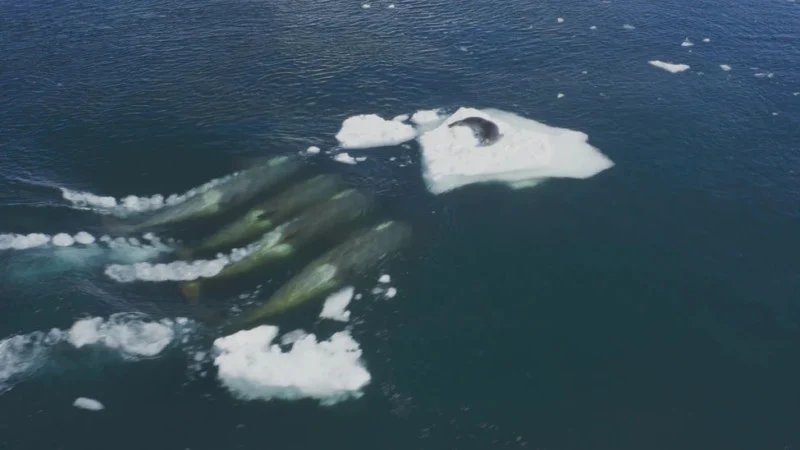
Orcas use a wide variety of hunting techniques. Here a group of Orca are creating a wave to knock a seal off of an iceberg so they can catch it and eat it! (Credit: Petapixel)
My final story comes from the insect world and is a lesson in self-sacrifice, of putting the good of the many above one’s own personal interest. As you might guess the story concerns one of the social insects, the ants.
An ant colony can be as large and complex as any human city, just better organized! (Credit: Innovative Pest Control Singapore)
If you think about it species that live together in large numbers are much more subject to communicable diseases than those that live more solitary lives. A disease like the flu has little chance of spreading amongst mountain lions, who rarely come into contact with each other, than say a flock of geese, which is why we’re all concerned about bird flu! Ants, who can live in colonies numbering many thousands are well know to be affected by a number of infectious diseases.
An ant infected with the famous ‘Zombie’ fungus. Living in large colonies ants are subject to many infectious diseases. (Credit: Reddit)
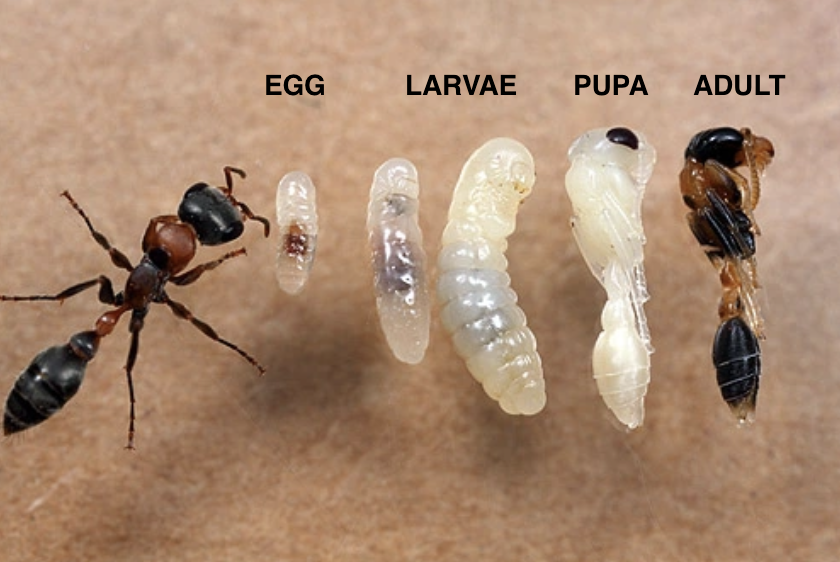
It has been know for many years that when an adult worker ant feels itself getting sick they will leave the nest and die alone in order to protect the rest of the colony from disease. Recently researchers at the Institute of Science and Technology in Austria have investigated whether infected young ants called pupae also try to protect the colony in some way. You see pupae cannot move and are confined to their cocoon so they cannot simply walk away. Do they also try to protect the colony from getting their illness?
The stages of an ants life from egg to adult. Obviously only the adult is mobile, so what do the larvae and Pupa do to sacrifice themselves if they get infected? (Credit: Antastic Ants)
What the researchers found was that an infected pupae begins to emit a chemical smell that signals to the nearby adults that ‘I’m infected, come and kill me’ which the adults quickly do by injecting the pupae with a poison that kills both the pupae as well as the disease. One interesting exception to this behavior that the scientists discovered is young queen ants that get infected do not emit this chemical, perhaps because queen ants are known to have a better immune system enabling them to better able to fight off an infection.
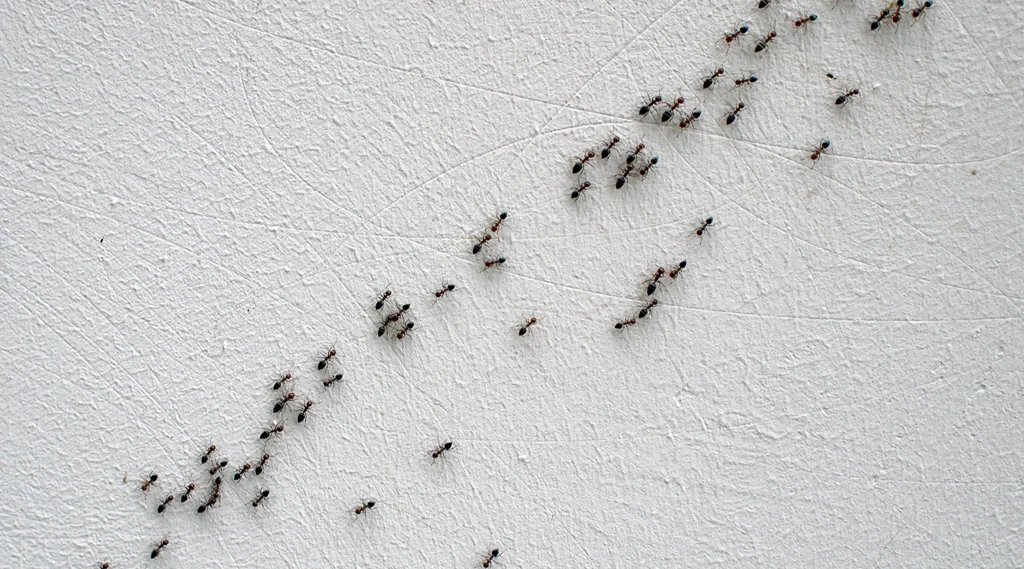
Ants use chemicals as their language. Here a group of ants are following a chemical trail to a source of food a scouting ant has discovered. (Credit: Pest HQ)
Many creatures in nature will selfishly do whatever they can to survive, even if it risks others of their species. Some animals however will sacrifice themselves for the sake of their children. So far only among the insects can we find creatures who will sacrifice themselves in order to protect their community.
Ever since Galileo first pointed his tiny little telescope upward into the night’s sky astronomers have been designing and building first bigger telescopes, then telescopes that can see at wavelengths of light that are invisible to our eyes and then finally putting telescopes into space in order to see the heavens without the distortions caused by Earth’s atmosphere. In this post I’d like to talk about three telescopes, one that has finished it’s designed program, another that is celebrating thirty years of discoveries and a third that may be launched into orbit a year from now to begin its work of exploring the Universe.
As you might guess, Galileo’s Telescopes are among the most revered of scientific artifacts! (Credit: Grand Voyage Italy)
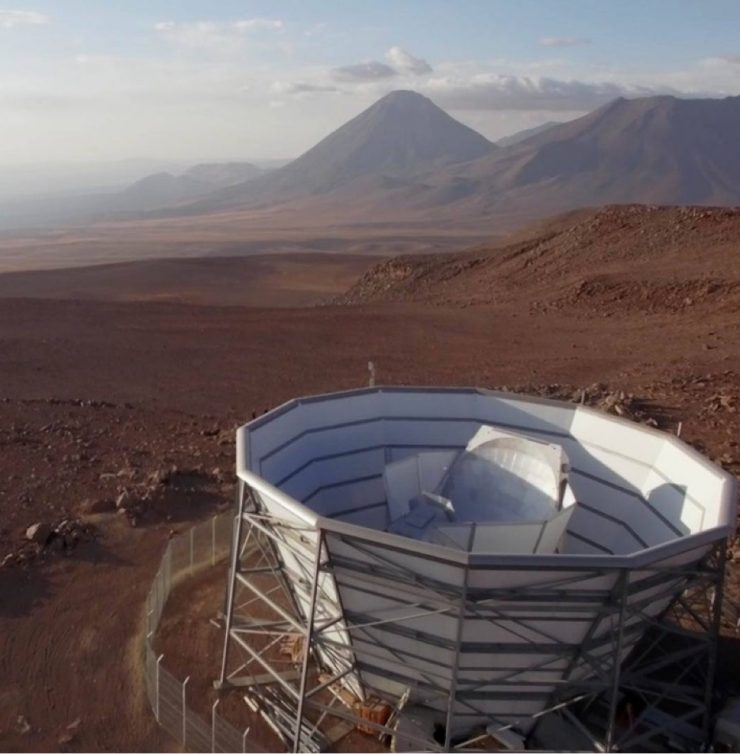
The Atacama Desert in the high mountains of Chile is often considered to be the driest place on Earth. With the lack of water vapour and at an altitude of 5,190 Meters the desert is the best place to put a telescope that looks at the sky in far infrared light so that is where the Atacama Cosmology Telescope (ACT) was built and where it began operation in 2007. ACT was purposefully designed to study the Cosmic Microwave Background (CMB), the ‘fossil’ remnant of the Big Bang itself. Before ACT the CMB was always studied from space with satellites like the COsmic Background Explorer (COBE) or the Planck satellite. However, the cost of getting into space limited the size of those space telescopes and therefore their resolution. ACT was designed as a big infrared telescope put in the best place on Earth for such an instrument.
Since the Atacama Cosmology Telescope (ACT) sees the Universe in the infrared rather than visible light its appearance and function are a good bit different from more familiar telescopes! (Credit: Stony Brook University News)
ACT has just recently completed its long-term program and in a series of three papers the full set of data collected has been released. The big headline from this data dump was a conformation of the Planck satellite’s measurement of Hubble’s constant, the speed at which the Universe was expanding, back 13.5 billion years ago, ~67 km/sec/Mpc.
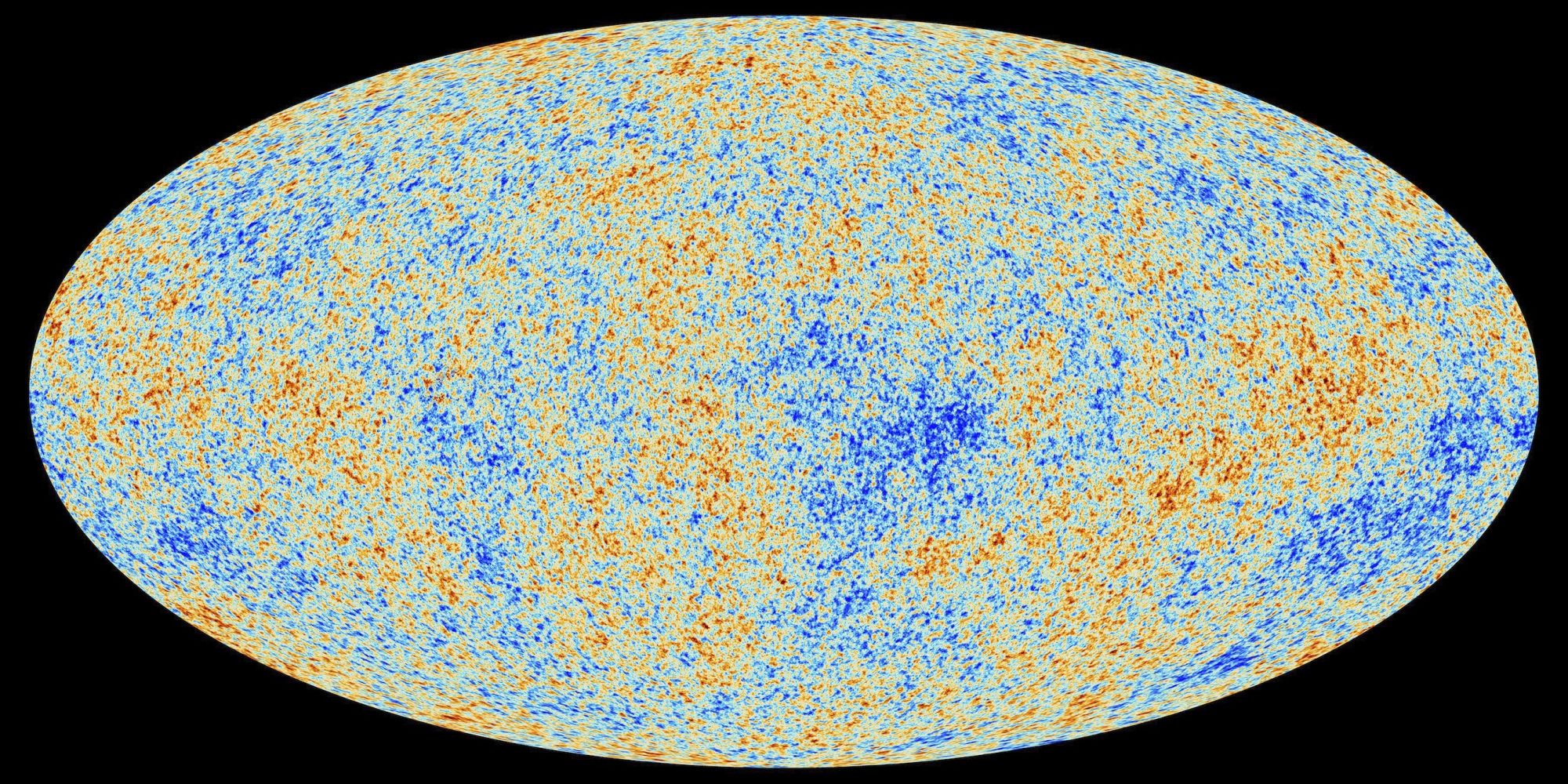
The Cosmic Microwave Background (CMB) as see by the ACT. The difference between the hot (red) areas and the cool (blue) areas is less than one part in a thousand but those variations were enough to become the seeds out of which all the galaxies in the Universe grew! (Credit: Stony Brook University News)
You see the problem is that the measured value of Hubble’s constant using Type I supernova over the last two or so billion years comes out to be ~73 km/sec/Mpc, different by an amount that can no longer be considered to be ‘measurement error’. This discrepancy is called the ‘Hubble tension’ and in order to explain it a number of theories, extensions of the standard model of the universe have been proposed. With it’s greater resolution however ACT has also eliminated many of those theories leaving cosmologists with a big problem on their hands. Of course, a big problem, that’s also a big opportunity to discover new physics!
The Hubble tension has only become noticeable in the last fifteen years or so. The difference between the speed the Universe is expanding as measured over the last billion years or so (top) is much difference from what it was in the early Universe (bottom). Does this imply that Dark Energy is losing strength? (Credit: Mapping Ignorance)
Another telescope making news is the SOlar and Heliospheric Observatory (SOHO), a satellite that was designed and built by a combination of NASA and the European Space Agency (ESA) and launched on the 2nd of December in 1995. In it’s thirty years in space SOHO has revolutionized our knowledge of how the Sun behaves on a day-to-day basis. Armed with an array of instruments specially designed to observe the Sun SOHO has over the course of nearly three complete Solar cycles witnessed over 40,000 coronal mass ejections (CMEs). This enormous amount of data has given solar scientists new insights into how the Sun produces such enormous explosions while at the same time giving us warning about any CMEs that are aimed at our planet.
Right now the Sun is at solar maximum so there are a lot of sunspots on its surface ready to emit solar flares and CMEs. Sunspot AR 4366 shown here is only a week or so old and it’s already fired off six X-class flares! (Credit: Spaceweather.com)
One completely unplanned benefit that SOHO provided was its ability to observe comets whose orbits bring them close to the Sun. To date citizen scientists have used the freely available data from SOHO to discover more than 5,000 of them.
Image from the SOHO satellite showing a comet on the right nearing the SUN, which is covered by the circle so that its brilliance doesn’t overwhelm NASA)everything else in the picture. (Credit:
Although there are plans to send other satellites into space to study the Sun currently there are currently no plans to terminate SOHO’s mission. So we can look forward to more discoveries to come.
If you don’t happen to live in LA there is sure to be a museum or science center in your town where you too can experience the thrill of discovery! (Credit: Museum of Illusions)
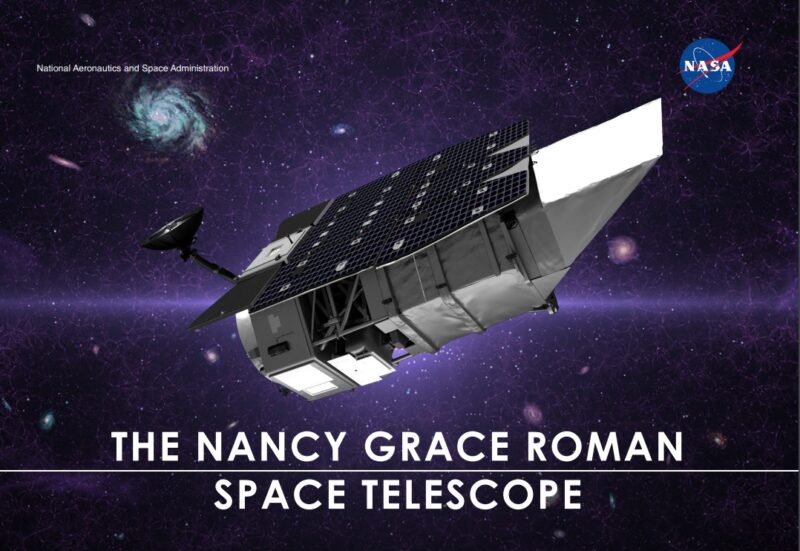
Finally I’d like to mention NASA’s Nancy Grace Roman Space Telescope, which has just completed its final assembly at Goddard Space Flight Center in Greenbelt, Maryland. The telescope is now scheduled to undergo an extensive series of environmental tests to be certain that it can survive the rigors of space. Once these tests are completed, which is expected to be this summer, the telescope will be shipped to the Kennedy Space Center where it is currently scheduled to be launched to space aboard a Falcon Heavy rocket in early 2027.
Artist’s impression of the Nancy Grace Roman Space Telescope in orbit observing the Universe. (Credit: EarthSky)
Roman is equipped with two instruments that will give as an unprecedented view of the Universe. The Wide Field Instrument (WFI) is an infrared camera designed to study billions of galaxies, once again in order to better understand the evolution of our Universe. The other instrument is a coronagraph similar to the one that SOHO uses to block the Sun so that it can observe solar flares except that Roman’s will have much greater resolution.
The Nancy Garce Roman Space Telescope will be launched into orbit sometime in 2027 by the Space X Falcon Heavy launch vehicle. (Credit: Spaceflight Now)
Roman will use its coronagraph to block out the light from nearby stars to that it can better see and study any exo-planets orbiting those stars. It is also expected that Roman will be able to discover isolated black holes by observing the micro-lensing effects the black holes gravity has on the light from distant stars. Over the last several decades our knowledge of the heavens has advanced greatly thanks to telescopes like the Atacama Cosmology Telescope and the Solar Heliospheric Observer and we can expect to learn even more once the Nancy Grace Roman Space Telescope has begun its career.
There’s been a lot of news happening in both manned and unmanned space exploration lately with the manned missions getting most of the press as usual. So let’s get to it.
It does seem like we’re finally getting back to the idea of Space exploration being the most exciting thing we can do! (Credit: Walmart)
The big news of course is the medical emergency with a member of the International Space Station’s (ISS) Crew 11. Owing to privacy concerns NASA has not officially announced which astronaut is ill or just what their medical condition is, but the space agency has insisted that their situation is ‘stable’. Still, the medical facilities aboard the ISS are not sufficient to treat the emergency so they are bringing the whole crew back to Earth.
In the first ever medical emergency in space NASA had to make the decision to bring all four members of the Crew 11 mission back to Earth. (Credit: YouTube)
Therefore NASA has decided to take the unprecedented step of bringing Crew 11 back to Earth about a month early, this announcement was made on January 8th. The Crew 11 mission was launched back in July of 2025 as a routine crew rotation for the ISS and the crew was scheduled to return to Earth in late February or early March after being relieved by the upcoming Crew 12 launch.
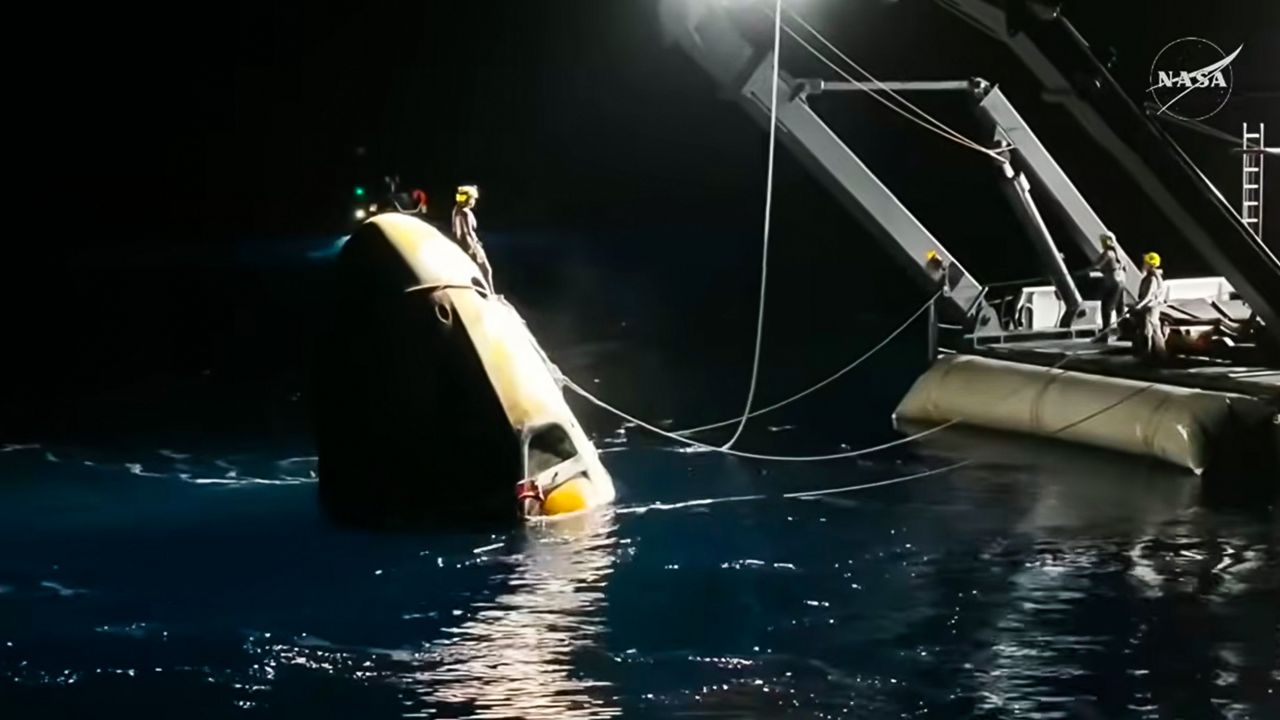
Despite the change in schedule, and the medical emergency the deorbit and splashdown of Crew 11 went off without a hitch. The capsule was safely recovered in the Pacific Ocean. (Credit: Spectrum News 13)
Instead Crew 11 departed from the ISS on January 14 and splashed down in the Pacific off California in the early morning hours of the 15th. Despite the rushed schedule to return the mission was completed without incident and the astronauts were safely recovered, including the one with the medical emergency. This unique situation will leave the ISS with only a crew of 3 cosmonauts for a month but that’s the way things were for the nine years between the last Space Shuttle flight and the first Space X manned missions.
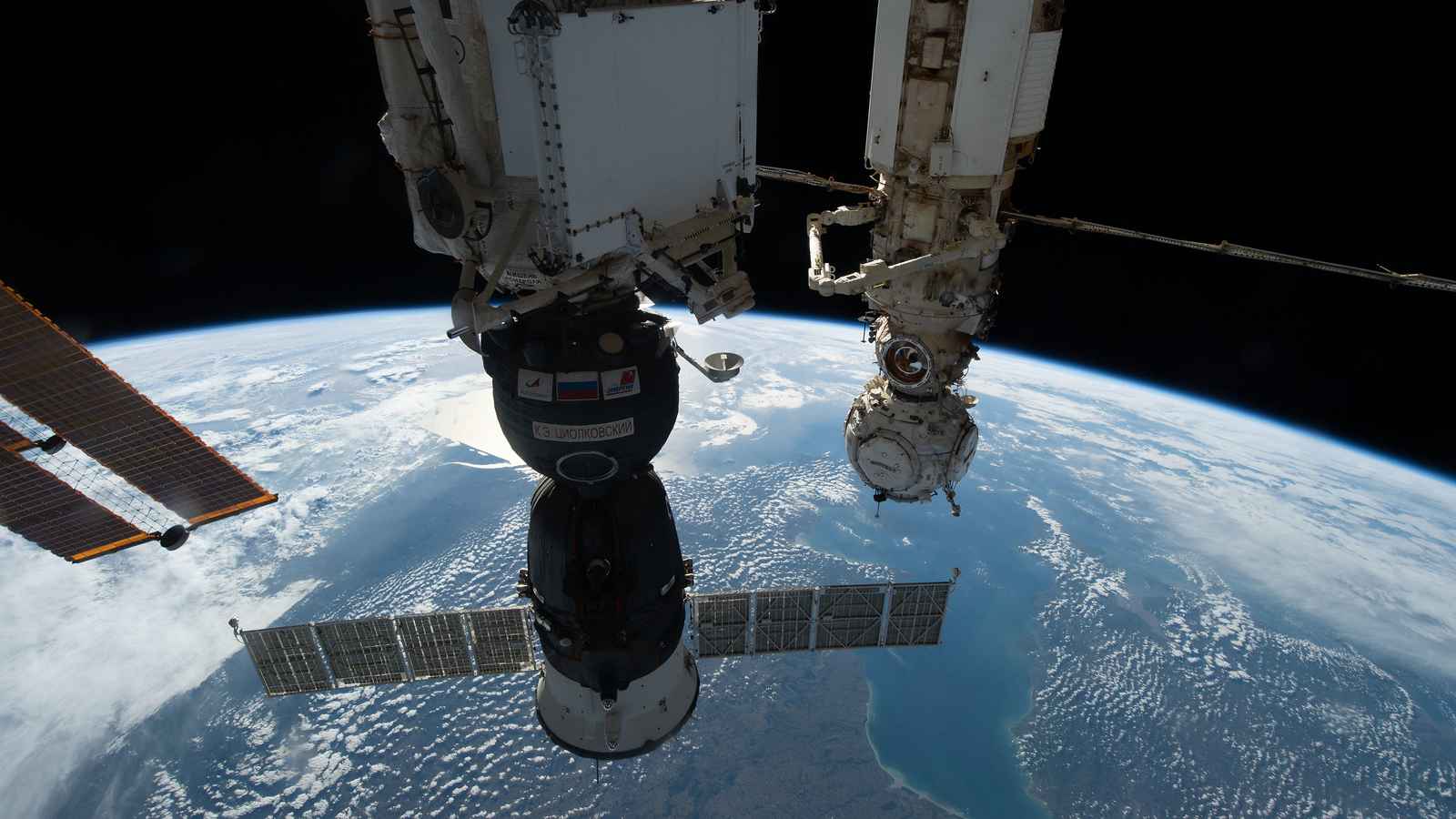
So right now there is only a crew of three cosmonauts aboard the ISS, brought there by Russia’s venerable Soyuz capsule. (Credit: Space)
February also begins the scheduled time frame for another manned mission, one that will be anything but routine. Sometime between January 31st and April 6th the Artemis II mission will be launched to carry humans back to the Moon for the first time since 1972. Now the Artemis II crew will not be landing on the Lunar surface, instead the mission will be similar to the Apollo 8 mission where humans orbited the Moon for the first time.
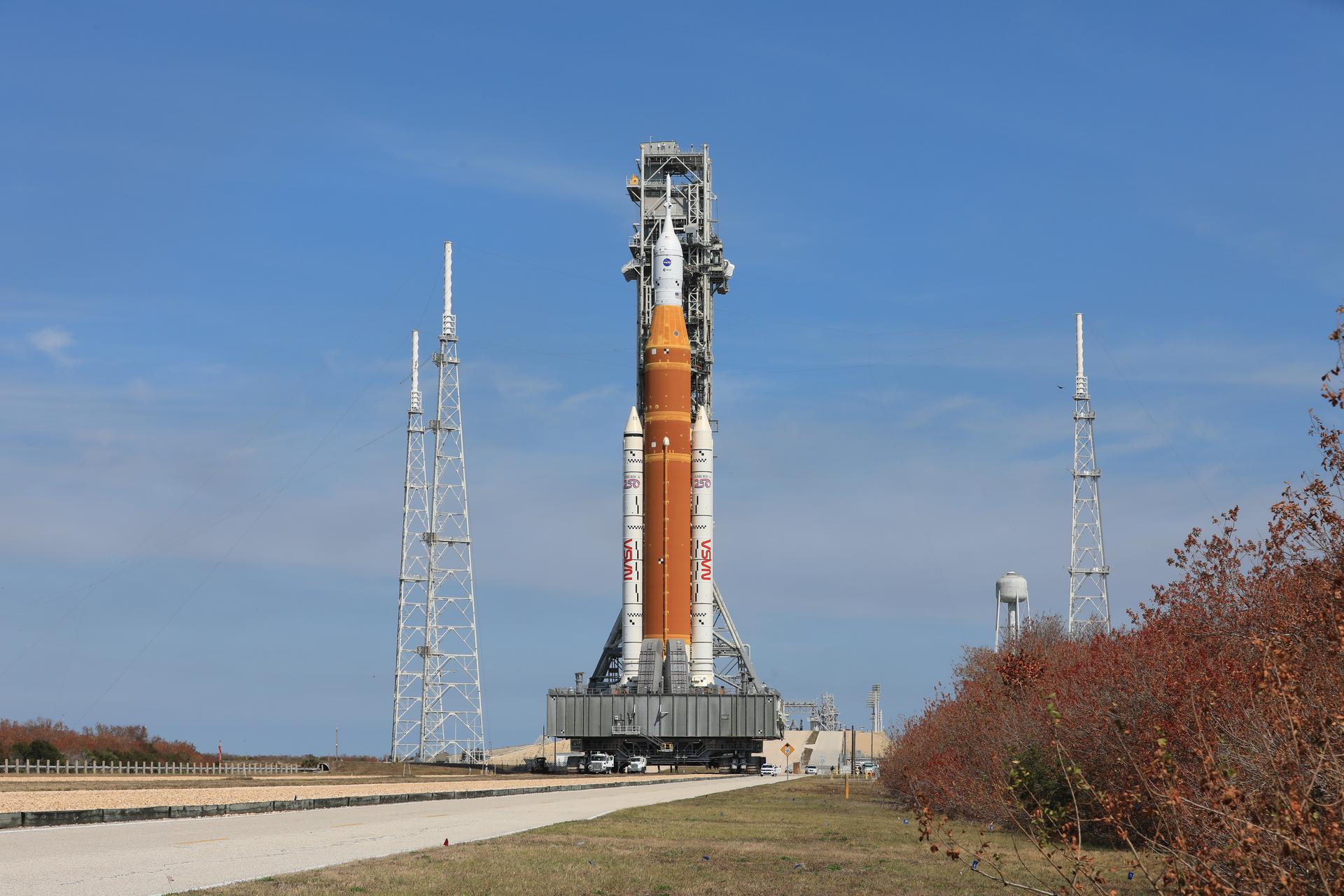
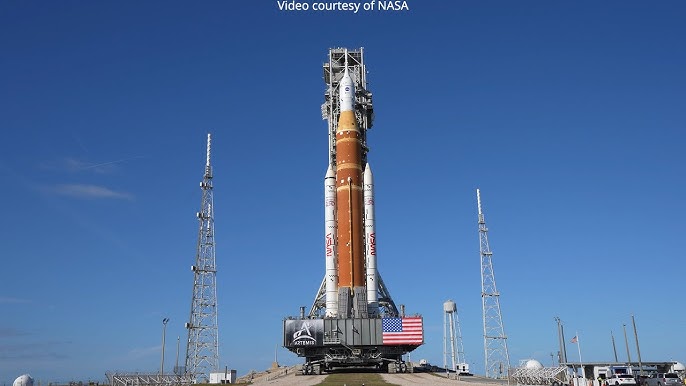
Carried by the same crawler that took the Saturn V’s to their pad, the Artemis II rocket was slowly taken to the launch pad for its upcoming mission that will take humans back to Lunar orbit for the first time in over 50 years. (Credit: YouTube)
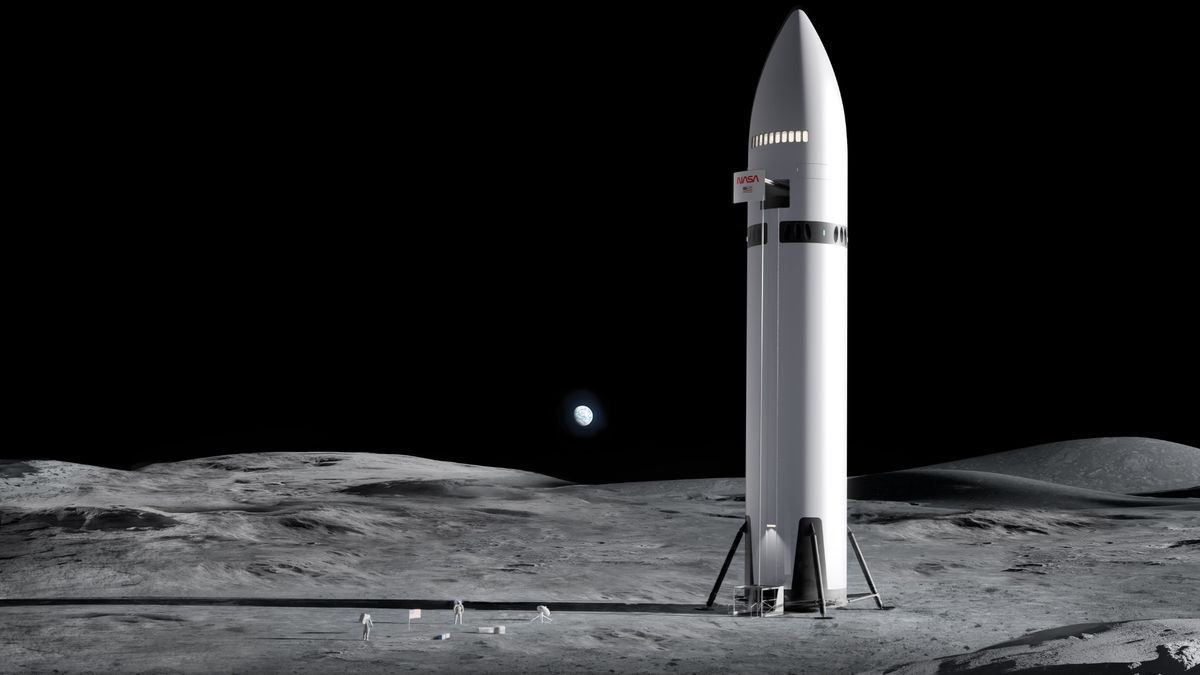
Still that means that once again the US has developed two-thirds of the systems necessary to land on the Moon. We now have a launch vehicle, the Space Launch System (SLS) capable of sending a crew capsule and service module, the Orion capsule, to Lunar orbit. All that is lacking is a lunar module (LM) to take our astronauts down to the Moon’s surface.
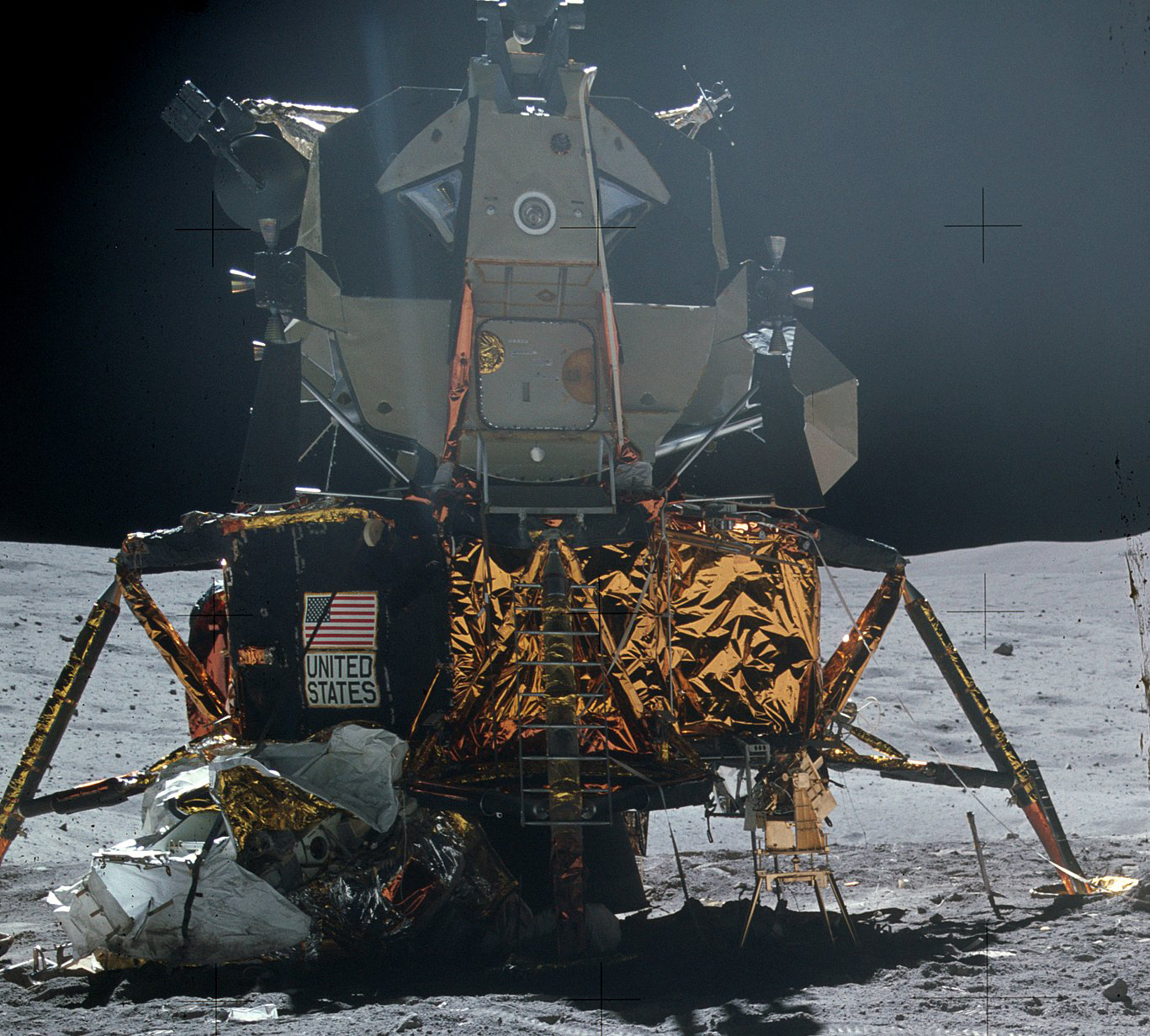
The Apollo Lunar Module (LM) sitting on the Moon’s surface. With the Space Launch System (SLS) and Orion capsule all NASA needs right now is an updated version of the LM and we’re back on the Moon! (Credit: Wikipedia)
As I’ve mentioned in previous posts, see my post of 1January2025, both Space X and Blue Origin have been contracted by NASA to develop such a lander but Space X has been having problems with its Starship launch vehicle, which is supposed to be the basis of its lander design and Blue Origin’s design isn’t scheduled to be ready until about 2032. Whether either of these two companies can deliver a lander module in time to beat the Chinese to the Moon is questionable, see my post of 27 September 2025 for information about China’s progress.
Space X is basing its Lunar Module on its Starship rocket. The company has run into a few problems with Starship however and it’s questionable whether they can be ready by Artemis 3’s scheduled launch date of 2028. (Credit: Space)
I have one more item about manned spaceflight. I mentioned above that for a month or so only three cosmonauts will remain on the ISS. Those cosmonauts were launched to the ISS aboard a Soyuz spacecraft that took off from Russia’s Baikonur Cosmodrome in the nation of Kazakhstan. The launch pad currently used for manned Soyuz launches is the same one that Russia has used since Yuri Gagarin’s flight in 1961.
The circle highlights the damaged area of Russia’s only man capable launch pad. There was a time when this damage would have been fixed ASAP but with things the way they are in Russia today, who knows! (Credit: Futurism)
In this latest launch back in November however there was ‘damage to several elements of the launch pad’ to quote Russian sources. Photos taken after the launch showed a service platform that had been shoved out of its moorings and had fallen into the flame trench where it was considerably damaged.
Russia uses the same pad to launch their progress cargo spacecraft, that looks an awful lot like Soyuz, to the ISS. Again, any delay in repairs to the pad will certainly affect ISS operations. (Credit: Wikipedia)
The official went on to state that the parts needed for repair were already available and the launch pad would be ready again ‘in the near future’. As usual the Russian’s are being tight lipped about the severity of the damage since this is the only pad they have qualified for manned launches and without it they be unable to replace their portion of the ISS crew or launch their progress cargo capsules to resupply the station.
Yuri Gagarin taking off on the first manned spaceflight in 1961. Russia is still using much of the same equipment and facilities that they developed back in the first decade of the space age. (Credit: RussianSpaceWeb.com)
The entire Russian space program is still dependent on systems and facilities that were developed back in the 1960s and there is currently no money to upgrade anything. Russia is spending everything it has, men as well as money, on Putin’s vain attempt to conquer Ukraine. If this continues the world’s oldest space program may in a few years simply cease to exist.
Will Russia’s space program become a dodo! So long as Putin is in charge it’s certainly headed that way. (Credit: dlab)
One last little item about a robotic mission that NASA has spent more than a decade trying to figure how to accomplish, the Mars Sample Return (MSR) Mission. Over the last twenty years NASA has been pretty successful with its robotic rovers to the red planet and the space agency had the ambitious goal of sending a rover that could collect Martian rocks and soil, place them into a rocket and then launch that rocket back to Earth where the samples could be studied just as all of the rocks brought back from the Moon by the Apollo astronauts have been.
For budgetary reasons NASA has canceled the Mars Sample Return mission (MSR) which would have brought Martian rocks back to Earth for study. (Credit: NASA Science)
Problem was that no matter what the engineers at JPL and other NASA facilities did the cost of such a mission remained more than $11 billion dollars, a price that the Trump administration simply would not fund. So the latest NASA funding bill does not include any money for even continuing the design process of a Mars Return vehicle and there is little chance that the program will be reinstated in the near future.
All in all 2026 looks like it’s going to be an interesting one in space exploration.
Paleontologists surely must envy their colleagues the naturalists. Think about it, a naturalist can observe an animal in real life, in it’s natural habitat, actually seeing how that animal lives. They can even capture a specimen of the animal and dissect it to study its anatomy. Nowadays naturalists can even get a DNA sample of an animal in order to compare its genetic code to that of related species.
Naturalists like Jane Goodall can just sit back and watch the behaviour of the animals they study. Paleontologists on the other hand have to figure out behaviour from the scant evidence remaining after millions of years. (Credit: Raincoast Conservation Foundation)
Paleontologists can’t do any of those things. With only a few fossils, often of only the hard parts of an animal, they have to figure out not only what kind of creature it was, its relation to other animals, but also how it lived, what it ate, everything about it. If new fossil evidence comes to light paleontologists often have to change their ideas, even about creature that have been known for many years.
When the first discovered Dinosaur Megalosaurus was described by William Buckland he thought that it was a four-legged lizard as shown in the top drawing. Today, with better evidence we know that Megalosaurus is a two-legged Theropod as shown in the bottom drawing. Better evidence, better science! (Credit: El Pais in English)
There have been some major discoveries made in recent months concerning several extinct animals that have been known and studied for over a century. In this post I’ll be discussing several of these new finds. As usual I will start with the oldest and work my way forward in time.
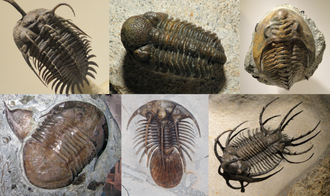
The best know fossils from before the time of the dinosaurs are trilobites, there are thousands of known species of these creatures who lived for over 250 million years. (Credit: Wikipedia)
After dinosaurs I suppose that trilobites are the best known type of extinct animals. Trilobites were one of the first animals to develop a hard shell and because of that the Cambrian period, the earliest well recognized period of multi-cellular life, is often called the age of the trilobite. Not only were trilobites easily fossilized but they were both numerous, about 6,000 different species are known, and they lasted some 270 million years. That means there are a lot of trilobites in every paleontologist’s collection, professional or amateur.
Trilobites are rather common fossils. So common in fact that they are sometimes turned into jewelry! (Credit: Etsy)
While the hard parts of trilobites, their shells are well preserved their internal anatomy rarely is. So paleontologists are always on the lookout for fossil sites that do preserve the soft parts of any species. Recently exceptionally preserved trilobite fossils have been discovered at a rock formation in the Atlas Mountains of Morocco in North Africa.
The external anatomy of a Trilobite is well known from literally thousands of specimens. The internal organs of trilobites are rarely preserved, however. (Credit: Deposits)
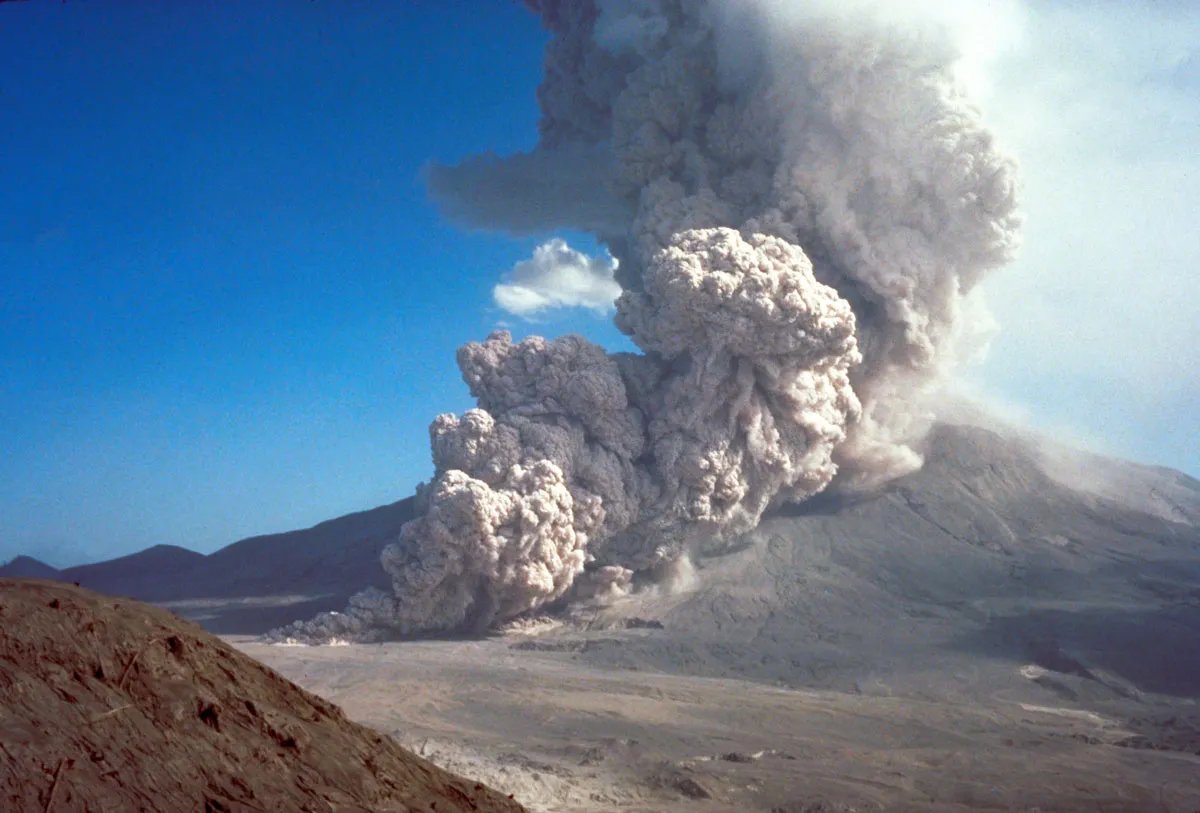
According to geologist Robert Gaines at Pomona College in Claremont, California what happened was that a nearby volcano erupted in a pyroclastic flow, similar to the one that buried Pompeii. In this case however the hot ash flowed onto the ocean where it quickly cooled before sinking to the bottom. The now cooled ash buried the trilobites alive in a sterile environment, one where bacteria could not cause the soft parts to decay. The ash then preserved much of the trilobite’s internal anatomy for millions of years. While the researchers hope to find many more specimens of well-preserved trilobites at the Morocco site their study has already confirmed one aspect of trilobite eating that had been conjectured for many years, trilobites chewed their food with the same legs they walked with.
Pyroclastic flow from a Volcano is one of the most destructive of natural events. Things that are covered by that dust and ash can be preserved for millions of years, however. (Credit: Britannica)
That’s not as weird as it sounds because the jaws of all arthropods are actually modified legs. That’s what makes a close-up video of a grasshopper or an ant eating look so strange, they chew from side to side rather than up and down because they chew with legs that have evolved into jaws.
Bio geneticists use fruit flies in many of their studies. Sometimes a fly is born with legs where its jaws should be, clear evidence that an arthropod’s jaws are actually modified legs! (Credit: Nature)
As one of the most primitive arthropods, trilobites did not have specialized legs so they actually chewed with the same legs they walked with before using those legs to then pass their food to their mouth. These fossils therefore not only tell us a lot about how trilobites themselves lived but also about how arthropods, the largest phylum of animals there is, developed their mouths and jaws.
As weird as it may sound trilobites used their legs for both walking and breathing, their gills were positioned right above their legs, labeled as Branchie above! Now we know that they also used their legs for eating! Later arthropods would evolve to specialize some of their legs into gills and jaws. (Credit: www.geol.umd.edu)
Almost two hundred million years after the first trilobites crawled on the ocean floor our ancestors the fish were developing their jaws. This was the Devonian period and the arrangement we have now of jawbone and teeth was not the only experiment that was tried. In fact there was a whole family of fish whose entire head and torso were covered in bone.
During the Devonian period, the “Age of Fishes” many early fish had a head shield of bone. These fish are now known as the Anthrodires. (Credit: X.com)
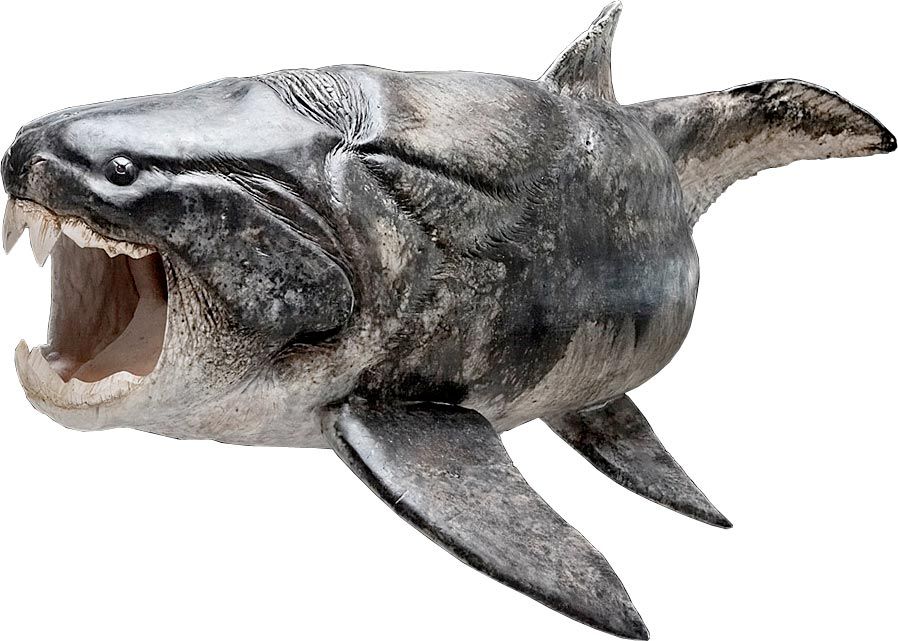
These fish are known as the anthrodires and they included some of the largest and fiercest predators of the time. The poster child for the anthrodires was a monster called Dunkloesteus terrelli, a four meter long armoured fish whose head was covered in bone and who bit its prey with razor sharp bony jaws.
Artists impression of Dunkloesteus. Those fierce ‘teeth’ are actually made of bone not dentine like our teeth. (Credit: Live Science)
Although discovered in the 1860s there is still much about Dunkloesteus that paleontologists didn’t know. However the last scientific paper on Dunkloesteus was published back in 1932 and paleontology since then has made great strides, especially in instruments. It was certainly time for a new look at Dunkloesteus.
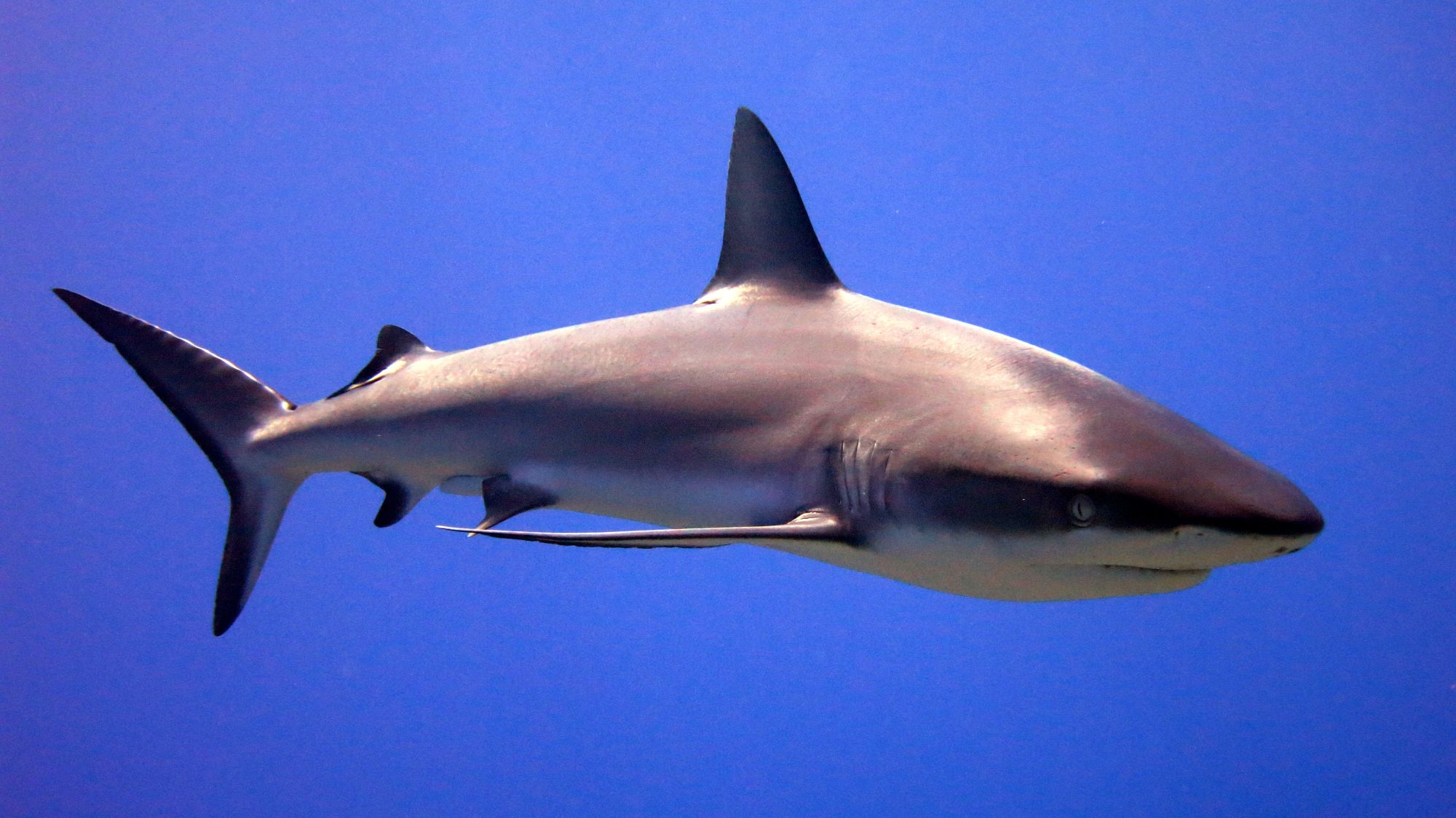
Recently a group of researchers led by Russell Engelman of Case Western Reserve and including paleontologists from Australia, Russia and the United Kingdom have carried out a complete review of all available fossil specimens of Dunkloesteus. What the team found was that Dunkloesteus actually had considerably more cartilage in its bony head than had previously thought, that the muscle arrangement for its jaw was more similar to that of sharks than other fish and that unlike other members of the anthrodires, Dunkloestus really was toothless, making it a real oddball.
Most people are aware of the fact that sharks do not have skeletons made of bone but rather their skeletons are made of cartilage. It seems that Dunkloesteus resembled shakes a lot more than other anthrodires, a lot more than we thought. (Credit: Wikipedia)
My last story concerns what is probably the best known of all extinct species Tyrannosaurus rex. Now finding a specimen of T rex is a rare find, predators are always outnumbered by their prey, there are twenty zebra or wildebeest for every lion in Africa, and when a T rex is found it is usually incomplete. Because of this there can be considerable debate over what a related species or juvenal T rex’s looked like.
Probably the best known dinosaur of them all. T rex deserves the name Tyrant King! (Credit: Hope College’s Student News)
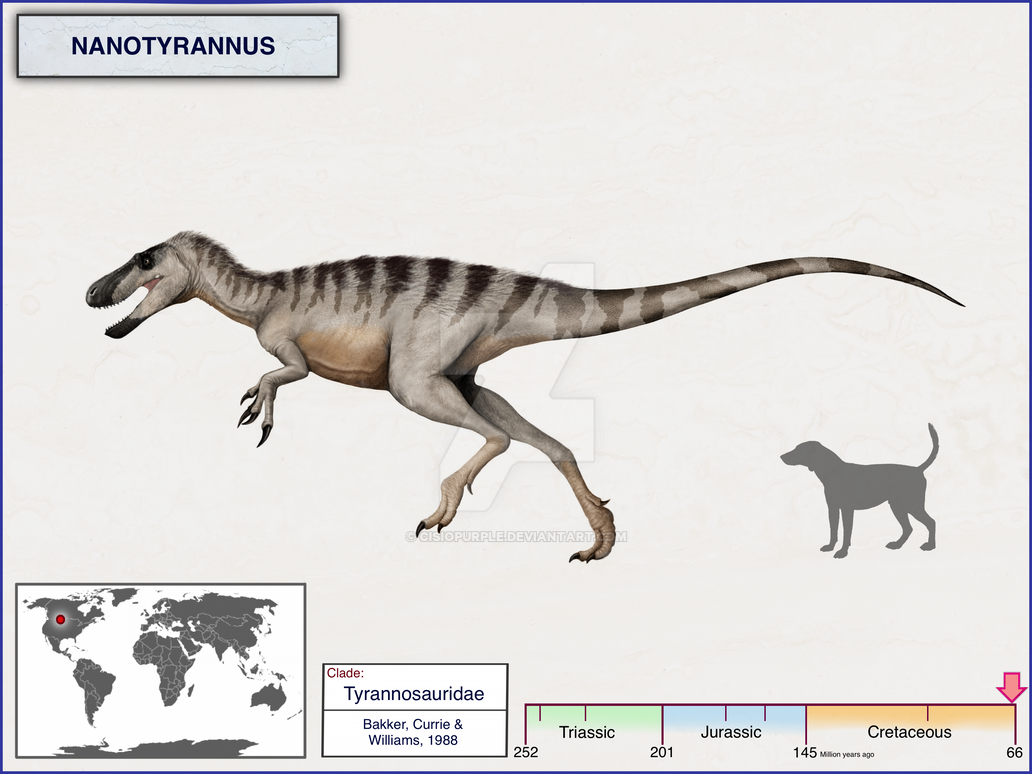
In fact back in the 1980s a skull was unearthed in a rock strata that had already yielded specimens of T rex. The skull was very similar to but much smaller than a T rex skull so initially it was classified as a new species Nanotyrannus lancensis. Then in 1999 another group of researchers re-examined the skull and announced that the specimen was actually a ‘teenage’ T rex. The debate has carried on since then.
Artist’s impression of Nanotyrannus lancensis. To me it certainly looks like it could be a teenage T rex. (Credit: Reddit)
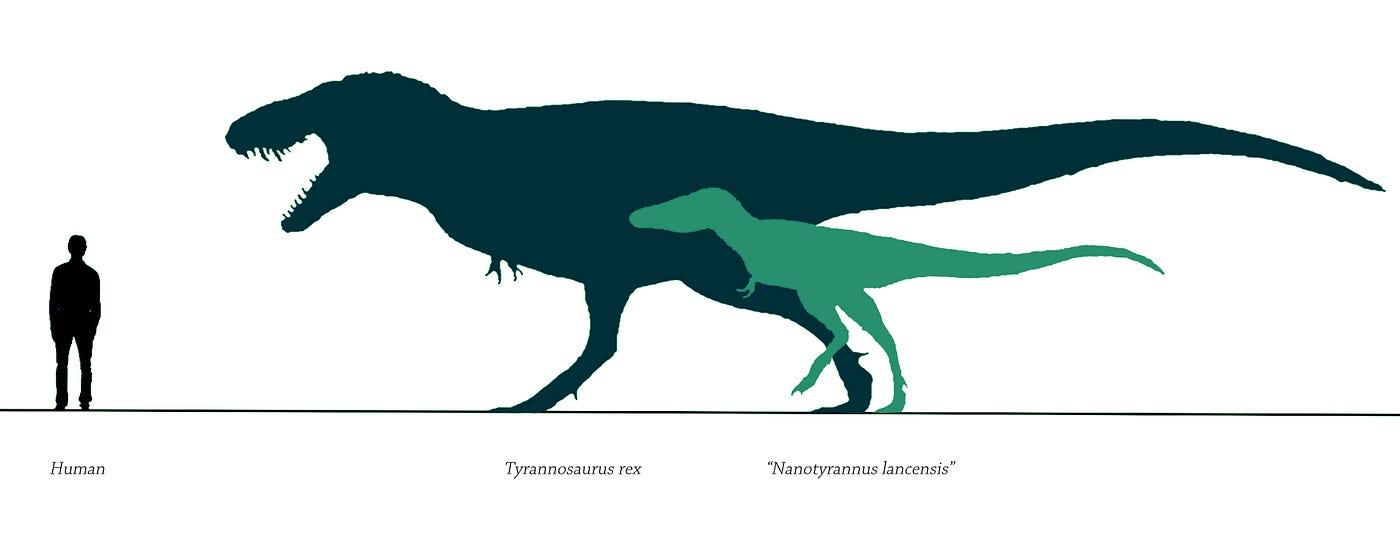
Now a through examination of a nearly complete specimen discovered in 2008 may have answered the question. The specimen was of a small ‘T rex like’ animal so determining its age when it died was essential. To do this the researchers cut through the thighbone and counted the growth rings just like a tree. Turns out the animal was twenty years old, hardly a juvenal. Further examination found that the new specimen also had more teeth than an actual T rex would have as well as fewer vertebra in its tail. These details leave little doubt that N lancensis is a true species not a teenage T rex.
Which would you rather face? The T rex would finish you off in one bite while the N lancensis might take a while to eat you. Either way not much of a choice! (Credit: Reddit)
In that case however, where are the young T rexes?
There has always been severe weather, we all know that. In the Odyssey, Odysseus’ ship is destroyed in a storm and he alone survives to be washed up onto the shore of Calypso’ island. History records dozens of battles that have been won or lost because bad weather had damaged one side more than the other. Our modern Climate Change deniers use these facts as an argument against global warming because there’s always been bad weather.
In the Odyssey the hero Odysseus is forced to endure a storm at sea created by the god Poseidon. Many an ancient mariner’s tale deals with severe weather. (Credit: Look and Learn)
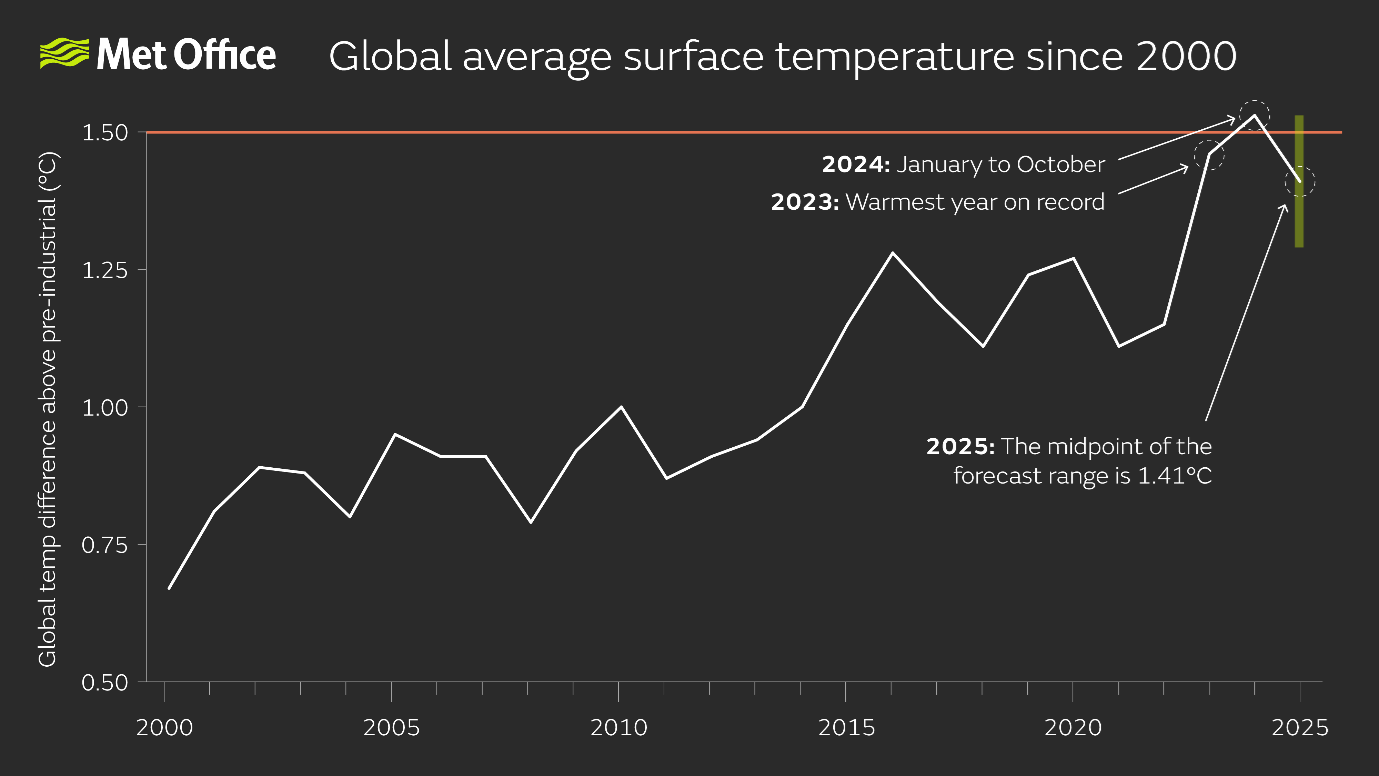
The facts say something much different however. Measured values taken around the world tell us that the last ten years have been the hottest ten years ever reliably measured, basically since the late 19th century. In fact 2024 stands as the hottest year ever measured, and is thought to be the hottest year since before the Ice Ages began. Although the data is still coming in it is thought that 2025 was only slightly cooler, and will stand as either the second or third hottest year ever. In fact, if you take the average of 2023, 2024 and 2025 then the Earth’s temperature has for three straight years gone over the +1.5ºC above pre-industrial temperatures that the nations of the world promised to stay below in the Paris accords and above which scientists have warned the world will begin to suffer greatly from climate change.
Global temperatures since the year 2000. A blind man can see where we’re headed, and it isn’t a good place! (Credit: World Meteorological Organization WHO)
So let’s take a look at the severe weather around the globe in 2025 to see if the weather was significantly more destructive than just a couple of decades ago. By a strange coincidence we shall begin and end our survey in Los Angeles, California, USA.
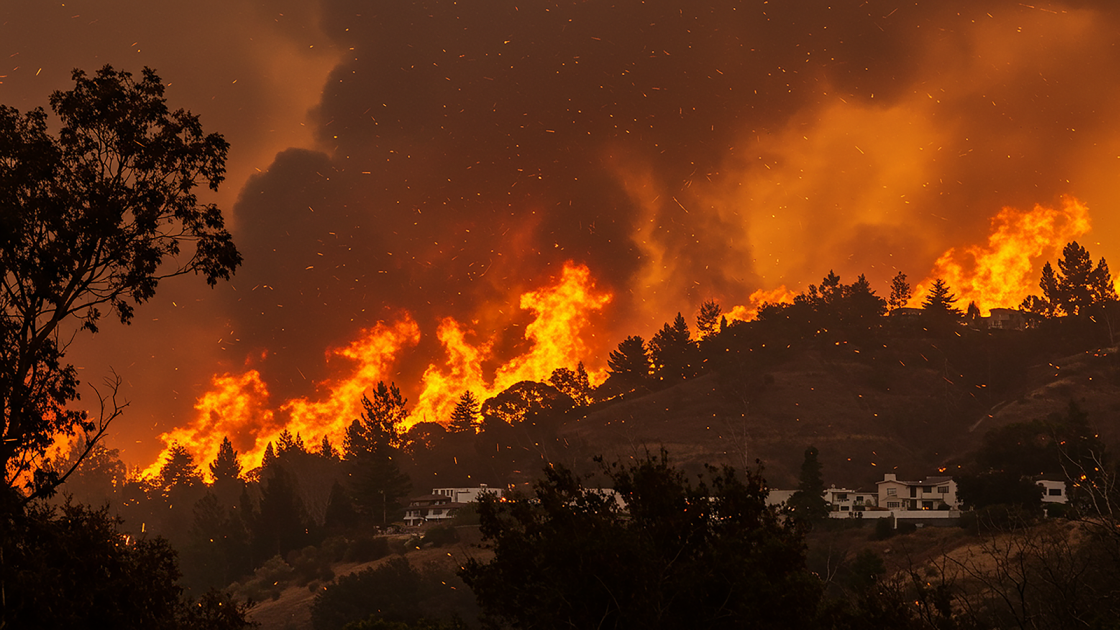
Just a year ago this is what the US’s second largest city looked like. To the climate deniers who say dealing with global warming will ruin the economy, won’t this? (Credit: United Nations University)
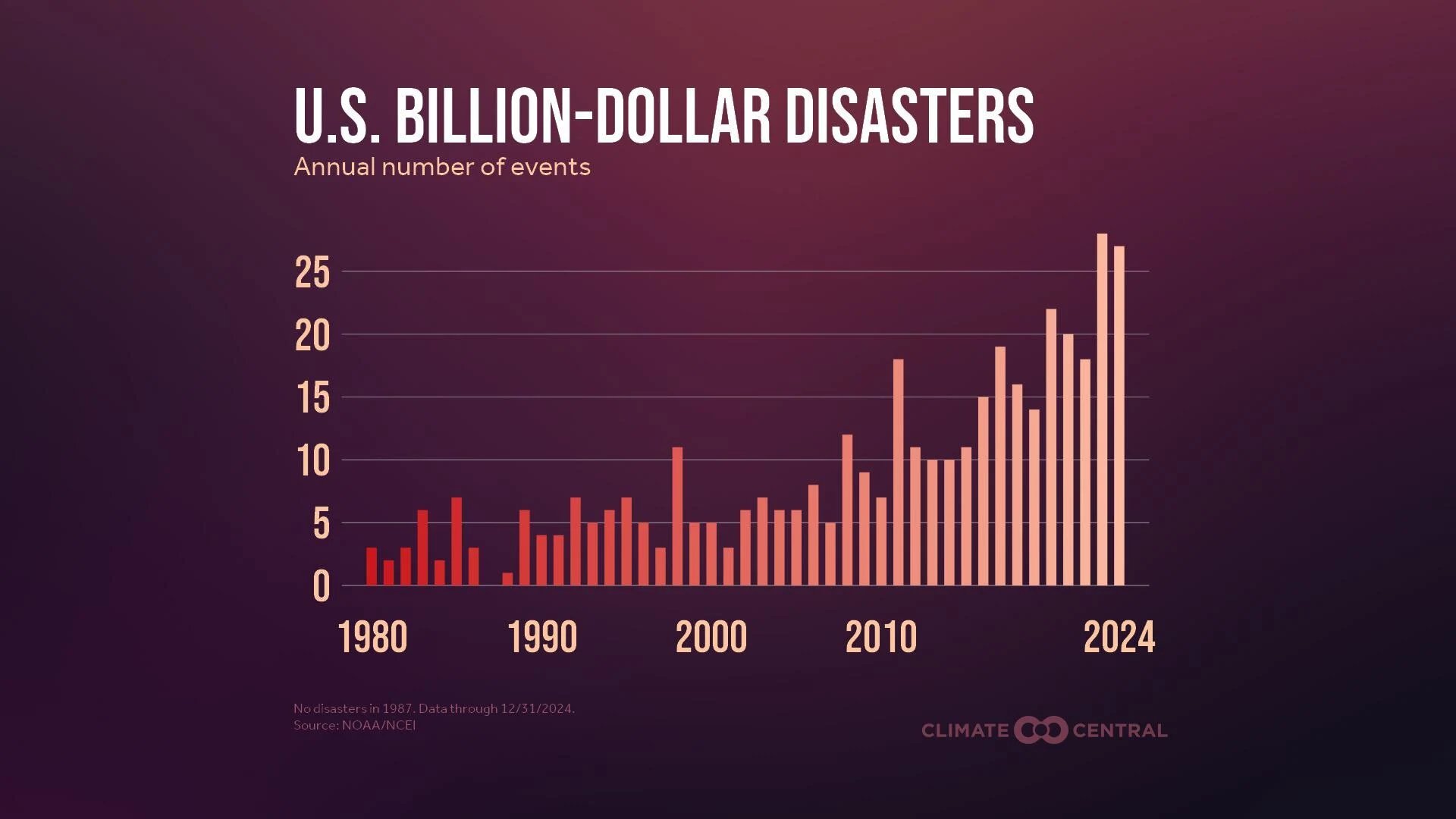
As 2025 began southern California was in the midst of yet another drought but thanks to the extreme heat of 2024 this drought was as bad as any ever recorded. When combined with stronger than ever Santa Ana winds, another effect of 2024’s heat, the fires that ignited in Palisades and Eaton exploded, burning for weeks, destroying whole neighborhoods and killing over 400 people. The damage from the LA fires has been estimated at almost $60 billion dollars making it the third costliest disaster in US history. And 2025 was just getting started. By the end of 2025 the US had endured 23 separate disasters each causing over $1 Billion in damage for a total of $115 billion in economic loss!
The number of billion dollar disasters continues to grow as does the cost of the disasters themselves. Again this is an economic cost that will only increase. (Credit: Climate Central)
One undeniable effect of climate change over the last decade or so has been the enormous growth in wildfires around the world. Surprisingly enough the US experienced a fairly normal year for wildfires in 2025 but the same could not be said for our neighbor to the north. In 2025 Canadian wildfires destroyed almost 22 million acres of forest making this year the Second worst in Canada’s history.
The smoke from Canada’s wildfires spread across much of the US impacting the health of millions. (Credit: Newsweek)
The rest of the world suffered as well with the United Kingdom experiencing its worst ever recorded wildfire season. The same was true for Portugal and northwestern Spain along with South Korea while Greece and Turkey saw very bad wildfires, just not quite as bad as the ones they saw in 2024.
The British Isles are not usually thought of as a place threatened by wildfires. However, 2025 was their worst fire season ever recorded. (Credit: Royal Meteorological Society)
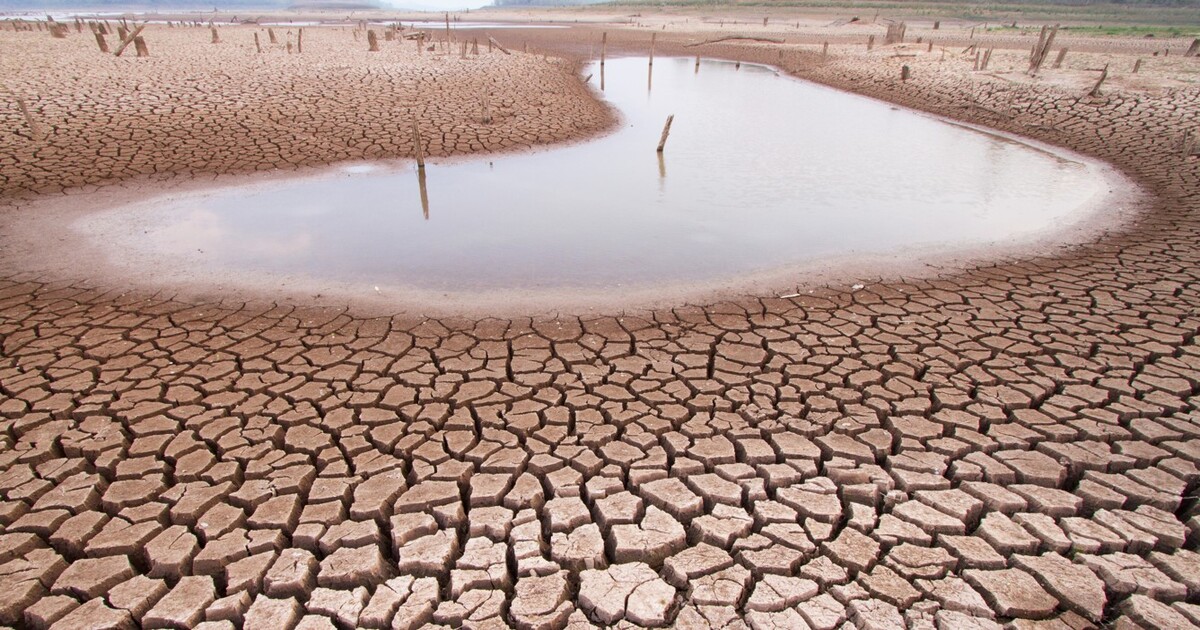
Meanwhile drought conditions and heat waves struck many regions of the world not used to such environments while increasing in severity in places where they are more common. The droughts in Syria, Iraq and Iran are especially severe with only a trickle of the once mighty Tigris River remaining. There are even reports that the Iranian government is considering evacuating its capital Teheran, a city of 15 million people because there is just no water remaining in the city’s reservoirs. At the same time the droughts across northern Africa have continued unabated for the last several years with an ever greater number of people being subjected to famine.
Some of the Reservoirs for Iran’s capital Teheran are simply empty. The recent protests in Iran have as much to do with the water shortage as the country’s economic woes. Again, climate change going hand in hand with a bad economy. (Credit: The Globalist)
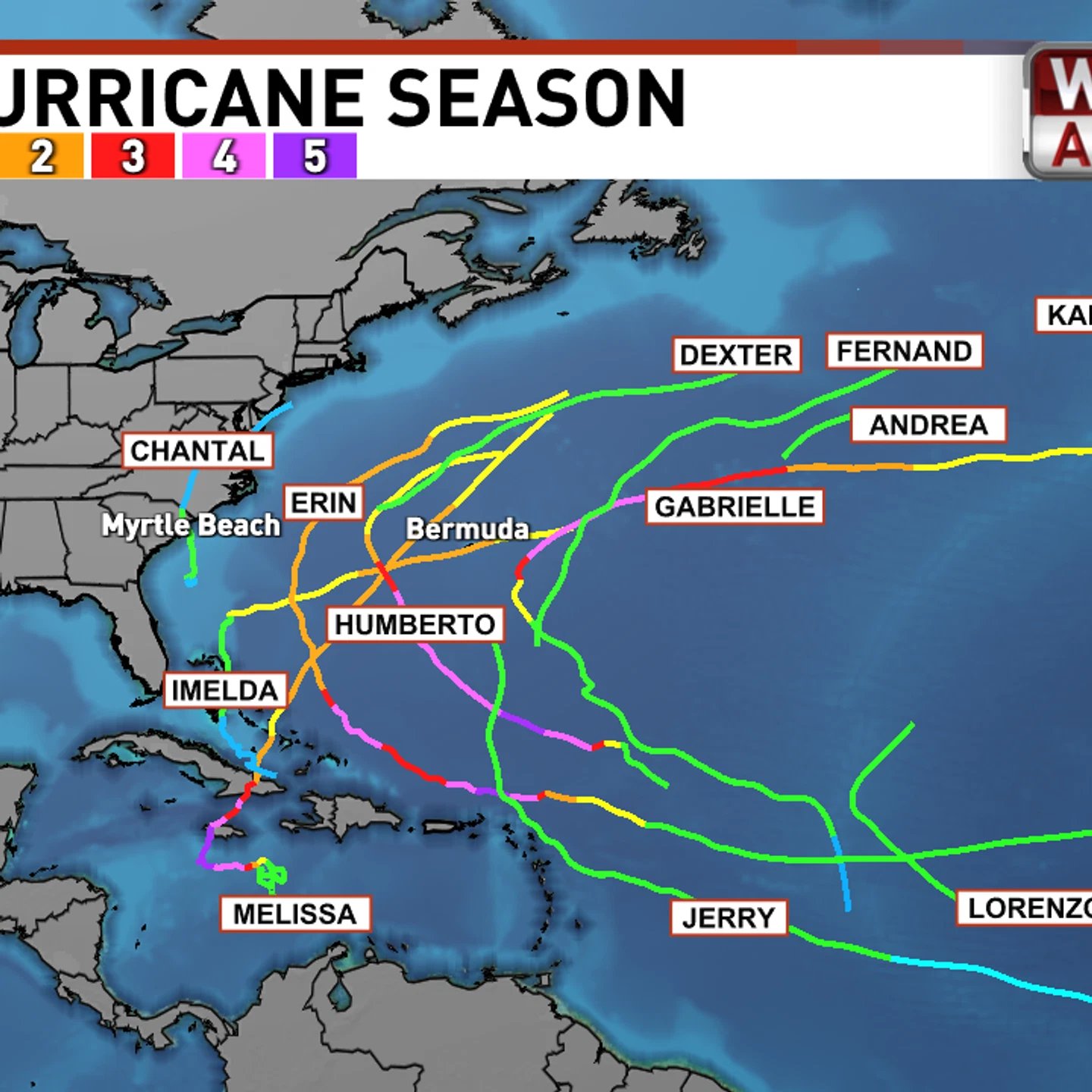
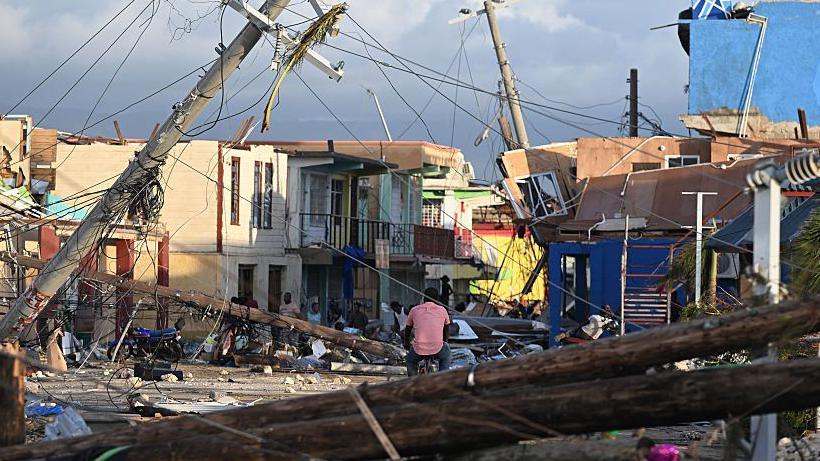
This year also brought a higher than average tropical storm season but in the Atlantic we got lucky. In the Atlantic there were three Category five hurricanes, tying for the most in any year with 2005, along with one Cat 4 storms but only one Hurricane, Melissa made landfall. Still that one storm caused an enormous amount of damage to Jamaica, Haiti and eastern Cuba. While climate change cannot be named as the cause for any particular storm, nevertheless it has been estimated that Melissa’s winds and rainfall were increased by somewhere between 15-30% due to global warming. In the Pacific on the other hand several Typhoons did make landfall resulting in considerable destruction in the Philippines and South Korea.
We dodged a bullet with respect to hurricanes in 2025. Three big Cat 5 storms but only Melissa made a landfall, doing a great deal of damage. It could have been much worse! (Credit:WPDE)
But of all the different types of severe weather it was probably flooding that caused the most damage in 2025. The most intense floods occurred in Indonesia and India where an estimated 1,800 people died in each event. Another severe flood hit China during June through August killing an estimated 30 people, if you trust Chinese media. Here in the US there were several flooding events, the worst being the Kerr County, Texas flood that killed over 135 people.
In the end over 40 people, many of them children would die because of the intense flooding in Texas over the July 4th weekend. Warmer air can contain more moisture, that’s all there is to it!!! (Credit: YouTube)
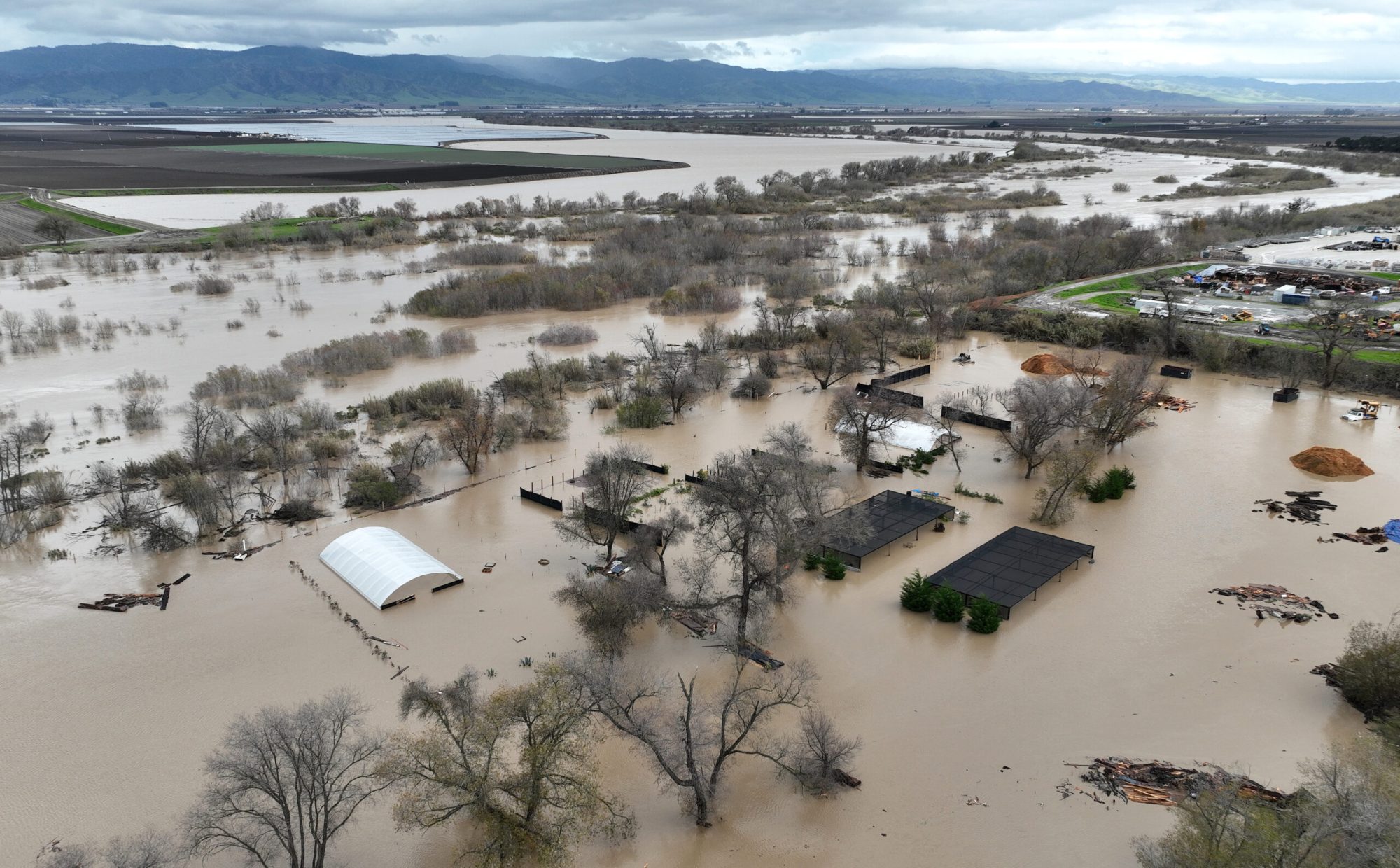
There were also floods in the Mississippi valley, the state of Washington and finally, bringing us back to where we began, over the Christmas holidays Los Angeles and other areas of California were hit by extreme rainfalls that caused landslides and much flooding. All told the damage in just the top ten severe weather events in 2025 has been estimated to be over 115 billion dollars, not counting all of the people killed.
Many of the same areas that experienced wildfires in January of 2025 saw flooding in December. Every year the weather just keeps getting worse and will until we stop emitting greenhouse gasses. (Credit: Capital & Main)
This kind of destruction is unprecedented and is growing ever greater as the world’s temperature increases. There is some good news in the fact that renewable energy sources are now so inexpensive that most of the world’s new power generating project are wind or solar. Still in 2025 the human race increased the amount of green house gasses it spewed into the atmosphere. We still are not even trying to control our emissions.
Although we travel on them every day we scarcely ever think about the roads that lay right outside our door but which can literally take us almost anyplace on Earth. The idea of roads connecting towns and cities together is so natural that we almost forget that every one of them is artificial, man-made, often at great cost and effort.
Throughout history road building has been an expensive but very necessary part of civilization. Those societies that have been successful have always been those who built roads. (Credit: Propeller Aero)
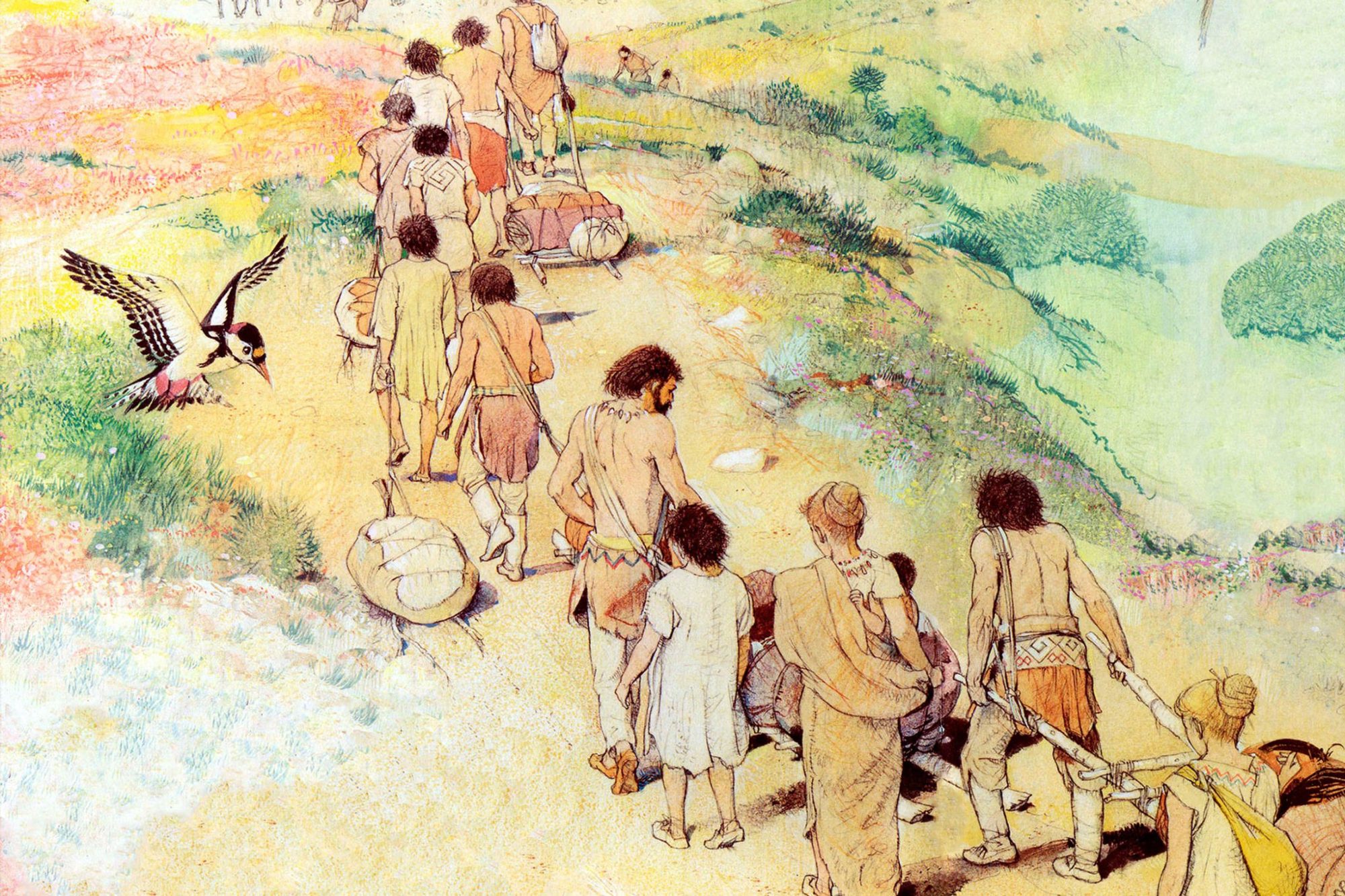
Roads are an essential part of civilization. We humans are a traveling species and whenever we choose to go someplace, or move some of our material goods someplace, roads just greatly facilitate that movement. Stone Age people followed the easiest path they could find but as soon as civilization got started people began making roads between cities to speed up travel and trade.
As our ancestors spread around the globe they followed the natural paths made by animals or streams. Since the dawn of civilization however we have built roads to speed up our travel. (Credit: SUGI Project)
Historically we know of roads that existed from the Bronze Age. One road in particular went north out of Egypt to the town of Megiddo in northern Israel, the biblical Armageddon. There the road split with one branch continuing north to the Hittite empire in Modern Turkey while the other branch went east into ancient Mesopotamia.
One of the most ancient and important roads split at a small town called Megiddo. So important was this site that Megiddo was fought over time and again so that, by its Greek name Armageddon it has become a byword for the final battle to end time. (Credit: Wayne Stiles)
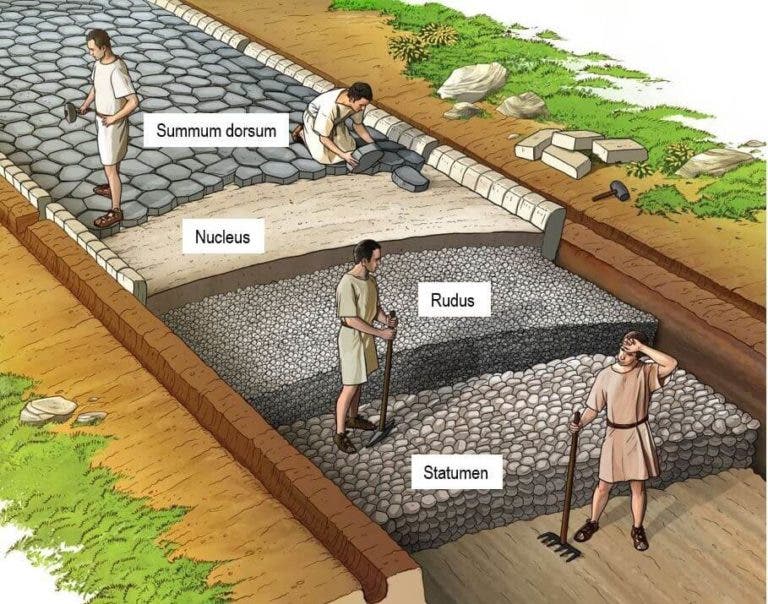
The Romans were famous road builders; wherever their legions went in their conquests they built roads. Every legion possessed at least one officer who was trained as an engineer so that the army could build roads and bridges. One of the strengths of the legion was its speed and the legions got that speed by means of the roads they built throughout the empire. Now I’m not saying that the Roman foot soldiers did all the work of road building, sometimes they did but just as often they forced the local population to do most of the menial labour.
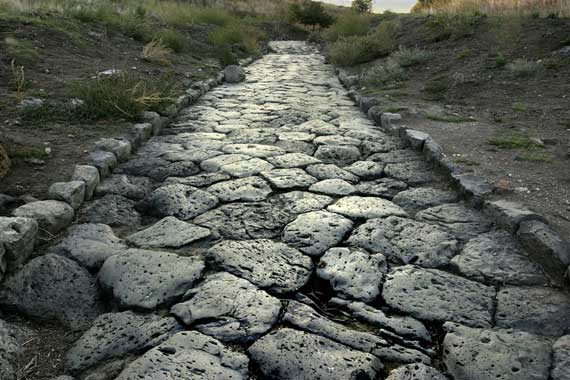
The Romans not only built a lot of roads they built really good roads, many of which were so well built that they have lasted thousands of years. (Credit: ZME Science)
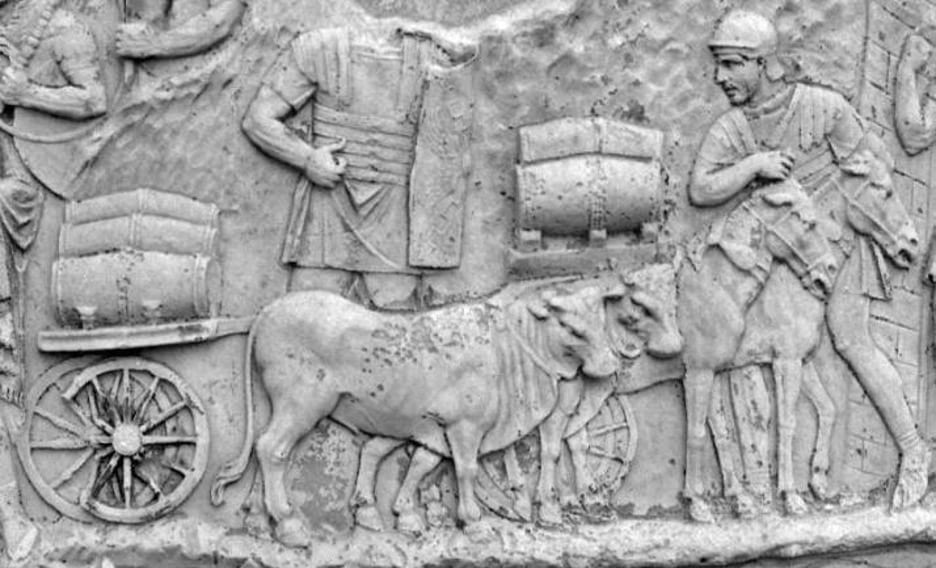
The Romans built their roads so that their army could quickly move from place to place but once built those same roads could be used to transport people and goods from place to place in the Roman Empire. In fact for much Roman period the roads away from the frontiers rarely saw a legionary’s sandal, most of the traffic consisted of the wheels of carts or the hooves of livestock.
The Romans were proud of their accomplishments at road building, even picturing traffic on them in stone carvings. (Credit: web.sas.upenn.edu)
Roman roads were so well built that there are still hundreds of kilometers of Roman road remaining in various countries of Europe. At the same time many modern roads in Europe follow the same route as an old Roman road. Roman roads knitted together an empire of dozens of different ethnic groups and kept them knitted together for hundreds of years.
The major Roman roads that brought their empire together. (Credit: www.landesgeschichte.uni-goettingen.de)
Historians and archaeologists have studied Roman roads for hundreds of years now, in some sense since the fall of Rome itself. Recently a new study in the journal Scientific Data has been published that catalogues over 300,000 km of Roman road, 100,000 more than previously known. The study was led by Dr. Pau de Soto of the Autonomous University of Barcelona in Spain and includes an interactive map of the study’s result that has been christened Itiner-e. The interactive map is available for use by the public and not only includes the map itself but also images and animations that allow students to visualize the Roman roads in the empire’s heyday about 150CE.
An actual Roman road that still exists in England after thousands of years. It still looks quite usable. (Credit: Roman Britain.Org)
While many of the principal Roman roads, like the Appian Way in Italy were well known the study concentrated on the secondary routes connecting small towns or even individual farms and villas. Along with historical references the researchers made extensive use of satellite images and even old WW2 aerial photographs looking for traces like a roadcut through a hillside or differences in vegetation forming a linear tract. According to co-author Tom Brughmans the effort became “A massive game of connecting the dots on a continental scale.”
The allies in WW2 took thousands of aerial photographs like this one. Today these images are a treasure trove of information for historical researchers such as those searching for lost Roman Roads. (Credit: The Digital Collections of the National WWII Museum)
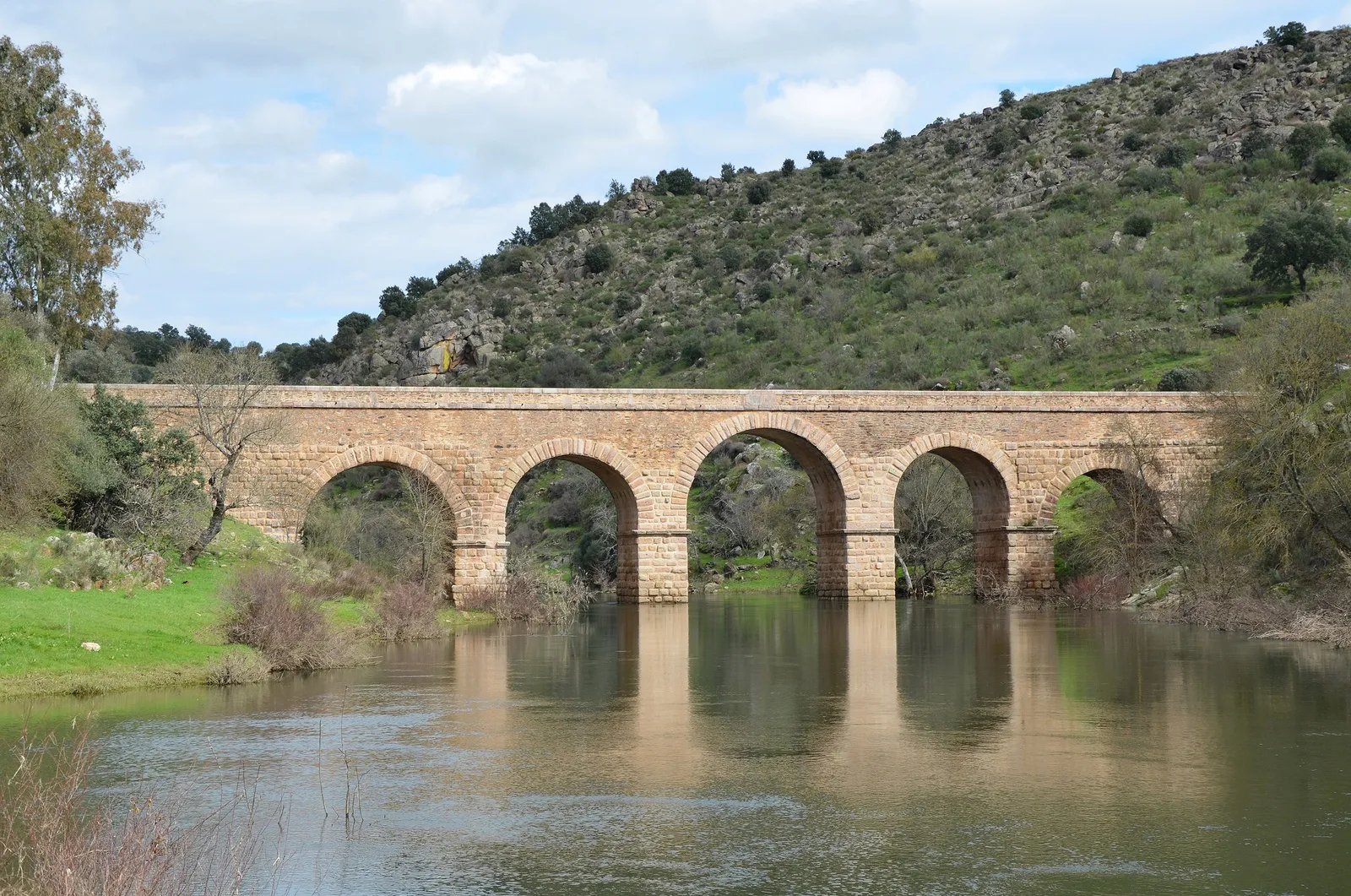
While the study dealt exclusively with Roman roads it must be remembered that Roman infrastructure also consisted of bridges, seaports, aqueducts and many other structures. Like the Roman roads some of these engineering projects still exist today and can be seen in many places in Europe. At its height the Roman Empire possessed a level of technology that the world would not see again until the 17th century. The ancient Romans were of course followed by the Dark Ages and some of the reasons why that era was so dark was because of the collapse of the Roman infrastructure, especially the Roman roads.
Today’s Portugal was at the far end of the Roman empire but even here the Romans built roads and bridges that are still used today! Perhaps the reason that the Roman Empire lasted so long was simply because of good engineering! (Credit: Following Hadrian) Compare this road in Minnesota with the Roman road pictured above. We have neglected our roads the way we have neglected so much in the US today and so our empire is likely to collapse a lot sooner than the Roman’s did! (Credit: MinnPost)
In the US today we have neglected our infrastructure for the last 50 years, allowing our roads and bridges to fall into disrepair while failing to replace water pipes and our electrical grid. If we continue on this course it’s likely that we too will fall the way the Romans did leading to another Dark Age.
As I write this post hurricane Melissa has intensified from a category 1 to a category 5 in just about 24 hours, a rapid growth that had never been seen in any storm before the advent of global warming. Right now as I write this the storm is taking at direct aim at the island nation of Jamaica and all of the news programs are discussing the effect Melissa could have on the lives of people in its path.
Hurricane Melissa did a tremendous amount of damage to Jamaca. Are we simply going to adapt to these extreme weather events, like the animals in this blog have to, or are we going to do something about climate change? (Credit: BBC)
The harm that climate change is doing to our species is real and growing but what about the effects that it is having on the other creatures that live here on planet Earth? In this post I’ll be discussing the way that three different species of animal are adapting to global warming and it’s not always bad news, at least not for them. I’ll start with the most northerly species and work my way south.
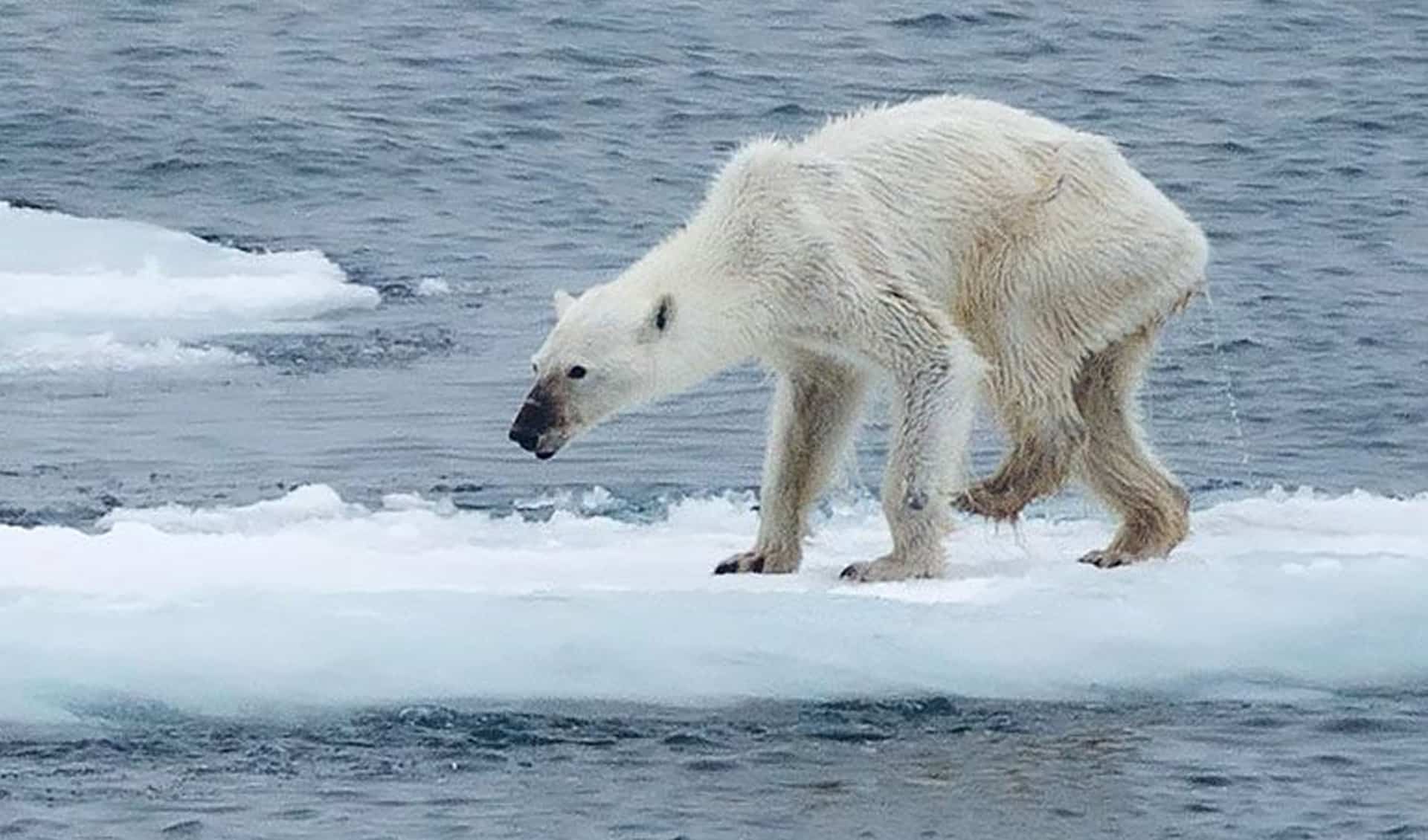
Perhaps the best known species being driven to the edge by climate change is the Polar Bear. As more and more sea ice melts the hunting grounds for the polar bear are disappearing and maybe with it, the bear itself! (Credit: Earth.org)
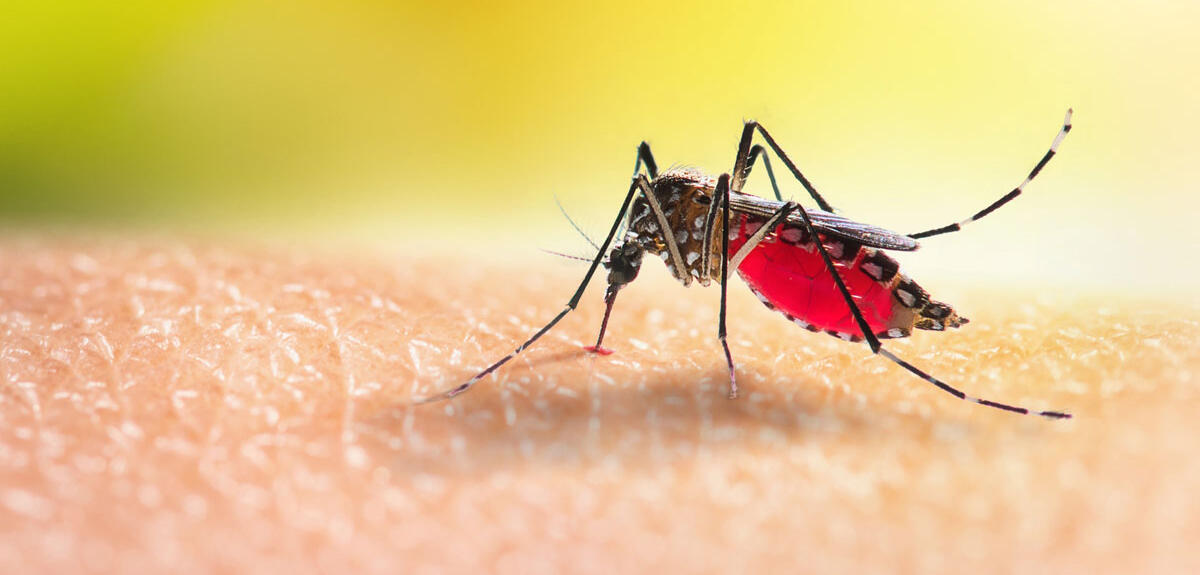
The island of Iceland is one of the very few places on Earth that are considered to be completely free of the insect pests mosquitoes, the other being Antarctica. Obviously both places are very cold but Iceland is also rather isolated and because of the nearby Gulf Stream, Iceland can have several periods of Ice-Thaw every year. That makes it difficult for any species of insect to both get to the island and to survive there for very long. Now, mosquitoes have been detected several times at the airport for Iceland’s capitol Reykjavik, stowaways on jets coming from other countries. Those invaders have never survived for long however, until now.
It’s thought that diseases spread by mosquitoes have killed as much as half of all the human beings who have ever died! (Credit: CRNS News)
Amateur naturalist Bjorn Hjaltason, who lives in Kjós, a glacial valley to the southwest of the capital, commonly hangs wine soaked ropes outside of his home in order to capture and study Iceland’s moths. Just a few weeks ago Mr. Hjaltason noticed three flies on his ropes of a type that he had never seen before. Mr. Hjaltason sent his finds to the Iceland Institute of Natural History where the flies were identified as two females and one male of the mosquito species Culiseta annulata, a common pest in Europe and one of the most cold-resistant species of mosquito.
Bjorn Hjaltason with his wine soaked traps for catching insects in Iceland. An amateur naturalist Bjorn recently discovered the first evidence for mosquitoes living in Iceland, another development caused by climate change. (Credit: ZME Science)
There’s no doubt as to why mosquitoes have suddenly been able to survive in Iceland, over the last twenty years the average temperature on the island has increased by more than one degree Celsius, that’s one degree over the entire year for the entire island. Just this past May Iceland recorded its highest ever temperature, 26.6ºC and the temperature remained above 20 degrees for ten consecutive days, another record. Just more evidence that, as the world’s temperatures warm species that we think of as tropical or temperate are moving northward.
Known as the land of fire and ice, Iceland is rapidly losing its glaciers thanks to global warming. The picture on the left is from 2003 while the one on the right is from 2013, the change is significant in only ten years. (Credit: Iceland Monitor -mbl.is)
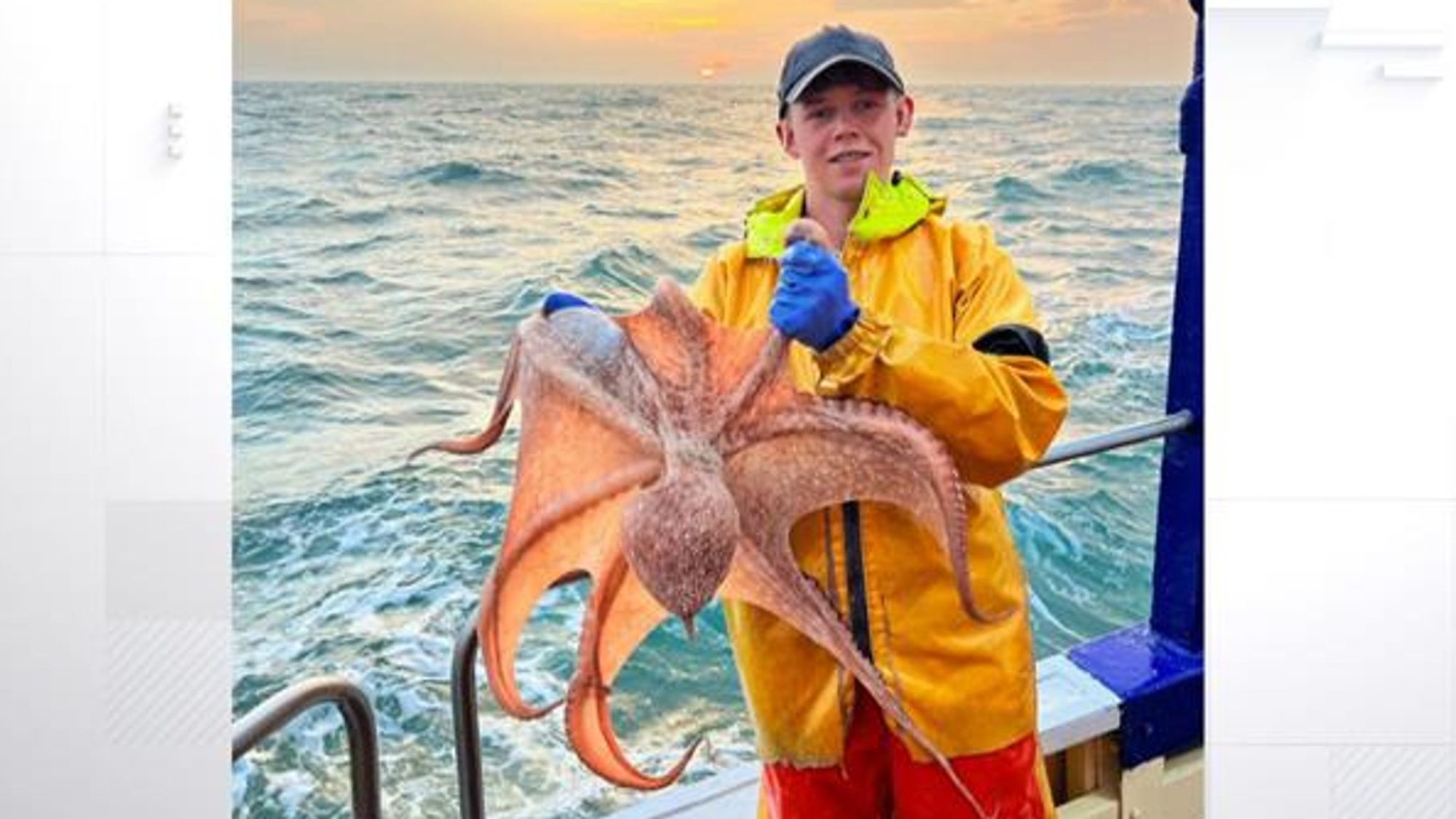
The cold waters around Great Britain have been fished for thousands of years. A large part of the food eaten by the citizens of the UK today still consists of plaice, turbot and Dover sole harvested from the English Channel and the North Sea. Recently however fisherman along the English coast have been bringing up an unexpected catch, hundreds or thousands of octopodes, the correct plural for octopus.
Fisherman in England are profiting from the octopodes who are moving into English waters. Those who make their living off of crabs and lobsters are not at all happy about the new arrivals however. (Credit: SKY News)
The octopodes are members of a species normally found in the warmer waters of the Mediterranean but once again thanks to global warming the temperature of the waters of the channel have risen and so the cephalopods are moving north. The fishermen along England’s south coast are thrilled because octopus sells for around seven pounds a kilo, a good deal more than their usual catch. Lobstermen and crabbers are not so thrilled however because the octopus feed on their catch, and octopodes are both clever and voracious eaters.
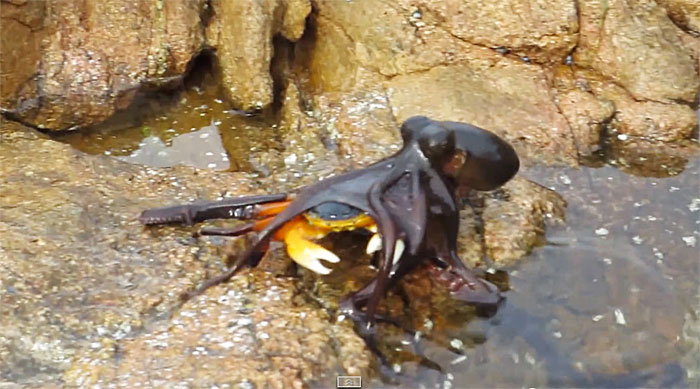
Even out of water an octopus is very skilled at hunting crabs and lobsters. No wonder the lobstermen in England are not thrilled about their increasing numbers. (Credit: California Diver Magazine)
Another such example is happening in the waters of Chesapeake Bay where Stone Crabs have been captured for the first time ever. Native to the warmer waters of Florida and the Gulf of Mexico Stone Crabs have never before been observed north of the Carolinas. Four males of the species were discovered near Norfolk, Virginia over this past summer however.
The big claws of Stone crabs are delicious but the rest of the animal not so much. So sometimes crabbers in gulf states just break off the claws and throw the crabs back into the water. If, that’s a big if, the crab survives it will regrow its claws. (Credit: Port Royal Sound Foundation)
Labouratory tests have shown that Stone Crabs do not survive in waters with a temperature below 5ºC and do not survive well below 10ºC. The waters of Chesapeake Bay have also been warming by more than 1ºC since the 1980s and that appears to be enough to allow Stone crabs to extend their habitat northward into the Bay.
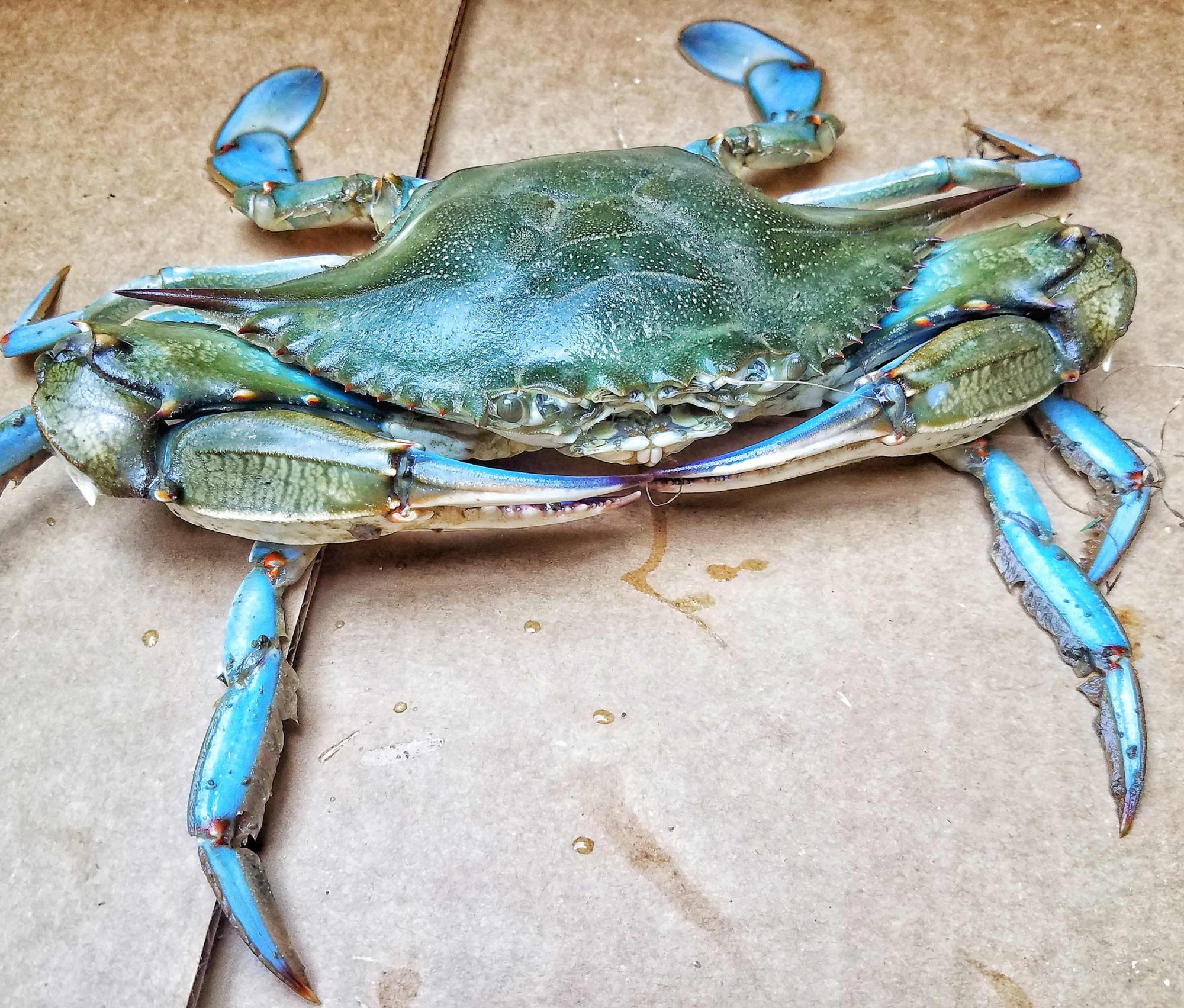
The Chesapeake Bay however is famous for its Blue Crabs, of which you can eat almost the whole thing, which I have done many times! (Credit: Sandaway Suites and Beach)
Now this could be a small silver lining in the dark cloud of climate change because Stone Crab claws are delicious and the species will not compete with the Chesapeake’s famous Blue Crabs. So in the future the bay’s crabbers may find themselves with a new source of income.
In nature competition is the rule whether it be within a species or between species. Stone crabs and Blue Crabs should not compete however. (Credit: CK-12)
Finally my last story about how climate change is causing species to move northward is about a single individual, a single animal who would not exist except for climate change.
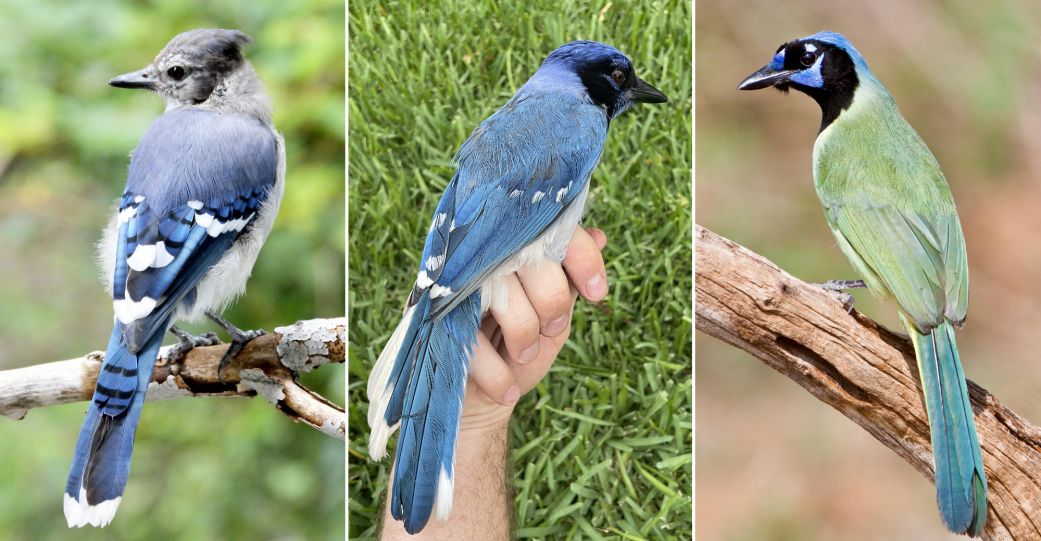
Blue jays are one of the most common songbirds in the eastern US and Canada. Not only are blue jays colourful but they are also fearless, often getting into fights with other birds many times their size, sometimes even with human beings. At the same time Mexico and Central America have their own species of jay, the closely related green jay.
The familiar Blur Jay is on the left while the Mexican Green Jay is on the right. In the middle is a Hybrid Jay with a Blue father and a Green Mother. (Credit: CNN)
Now green jays are a tropical species who have rarely been seen north of the Rio Grande while blue jays are a temperate species rarely seen west of Houston, Texas. Thanks to climate change however the two species, separated by an estimated seven million years of evolution, are now intermingling in southern Texas. And when two closely related species share the same habitat the result can be, a hybrid.
Yes, Lions and Tiger can interbreed as can many other closely related species, a mule is the best known example. (Credit: Live Science)
A birder living in a suburb of San Antonio recently posted a photograph of an odd looking bird on the social media app eBird. The photo was noticed by Brian Stokes, a Ph.D. candidate at the University of Texas at Austin. Stokes contacted the woman and arranged to come to her home to observe, and hopefully catch the animal. Using a mist net, a common technique ornithologists use to capture small birds unharmed, Stokes managed to capture the bird and get a blood sample before banding and releasing it.
Naturalists studying birds species will often catch their specimens in mist nets. The birds are rarely harmed and are usually released after being examined and banded. (Credit: Kadoorie Farm and Botanic Garden)
DNA testing of the blood sample showed that the bird was a hybrid of a male blue jay and a female green jay, an animal that would not have existed without climate change. How many more such hybrids will be born because of global warming remains to be seen.
I’ll begin today’s post by reviewing out current model of the Universe. About 13.5 Billion years ago our Universe underwent a ‘Big Bang’, an explosion of unimaginable energy and pressure. This explosion caused the entire Universe to expand rapidly as time passed but also caused it to cool until atoms could form. We can still see the ‘fossil’ evidence of this time in the Cosmic Microwave Background (CMB).
The Cosmic Microwave Background (CMB) as seen by the Planck Satellite. This is the ‘fossil’ light left over from about 370,000 years after the Big Bang. (Credit: Wikipedia)
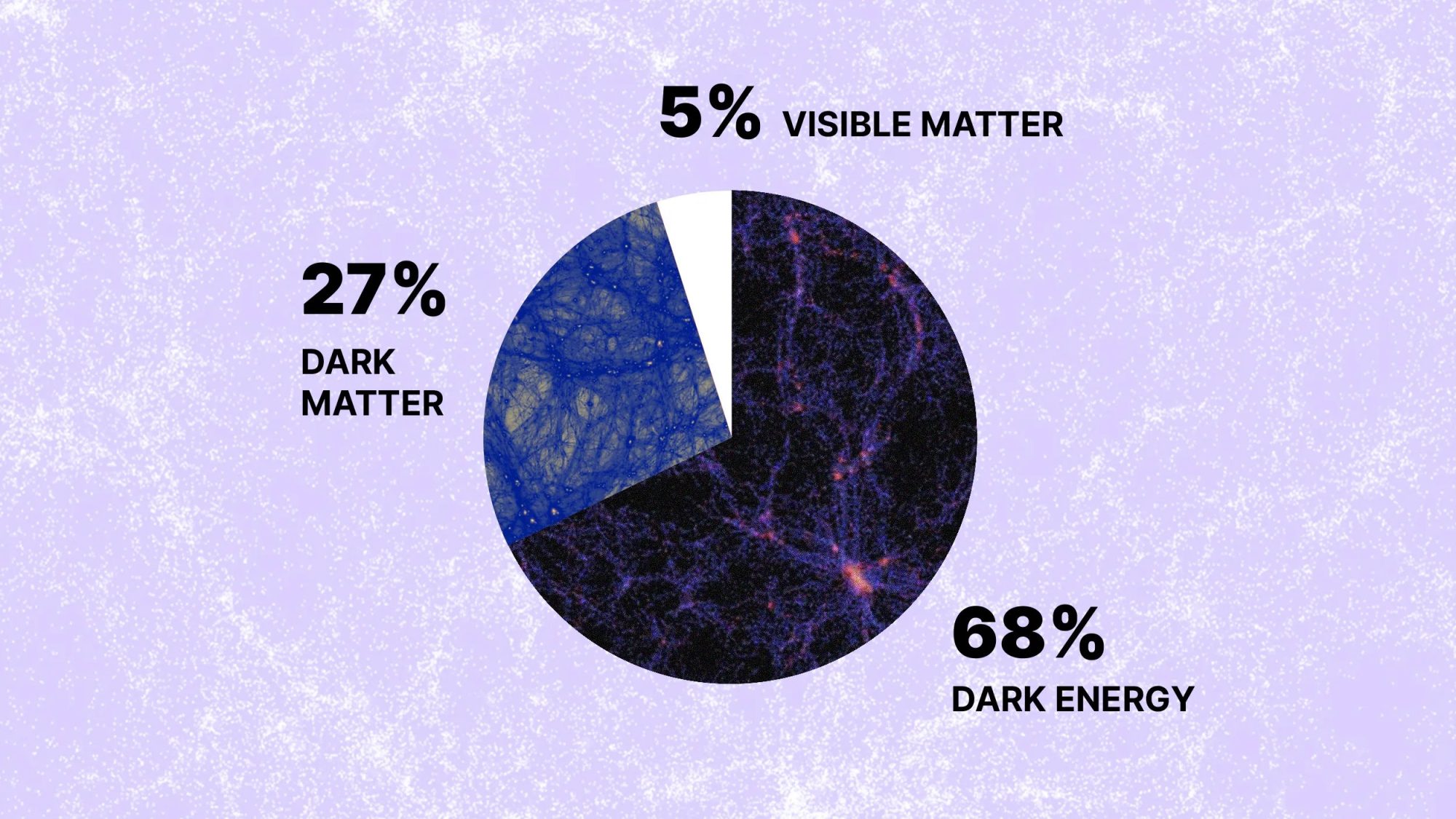
After about 500 million or so years gravity caused the gasses of the early Universe to begin to clump together, forming the first stars and galaxies. Gravity also should have made the general expansion of the Universe slow down but something that we call ‘Dark Energy’ is actually making the expansion accelerate. Discovered in the 1990s we still know very little about dark energy even after almost 30 years of intense study.
Back in the 1990s astronomers all thought that the ultimate fate of our Universe would be one of the three scenarios on the left. Either gravity would cause the expansion to stop and then begin a contraction phase leading to a ‘Big Crunch’, far left. Or gravity was too weak to stop the expansion and the Universe would expand forever, third from left. The second from the left is a scenario where gravity and the expansion are exactly balanced. When astronomers tried to decide which scenario was correct they found that the expansion was actually increasing, far right. We still have little knowledge of what is causing the acceleration, so we call it ‘Dark Energy’. (Credit: LSST.org)
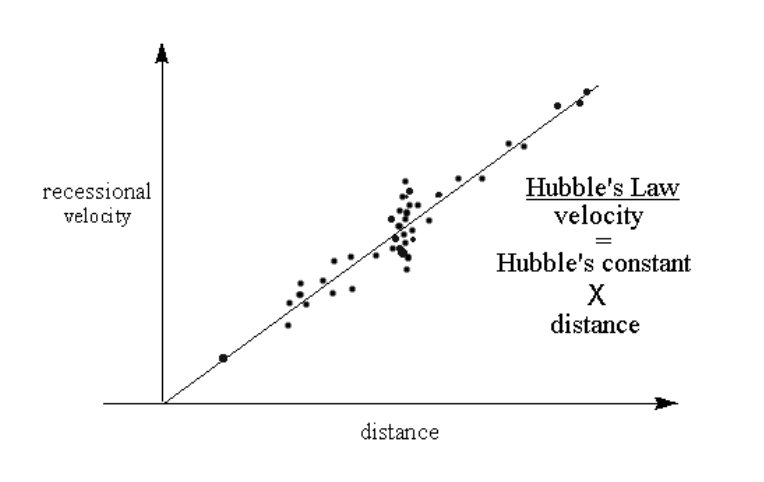
I’m going to have to get a little technical here about how astronomers actually measure whether the Universe’s expansion is decelerating or accelerating. The whole idea of the Big Bang began when Cark Hubble first found that, except for a few really close galaxies, the light from all of the galaxies was red shifted, meaning that they were moving away from our galaxy. At the same time he discovered that the further away a galaxy was the faster it was receding. Hubble expressed this as a simple equation.
V=HoD
Some of Hubble’s actual data for his ‘Law’ about the expansion of the Universe. (Credit: Curious STEM)
Here D is the distance to a galaxy, V is the velocity that galaxy is moving away from us and Ho is a constant called Hubble’s constant. Now astronomers realized that if gravity were slowing the expansion of the Universe, then Ho would not be a constant but rather be getting smaller as the Universe aged.
Before Newton’s law of gravity people thought that gravity only affected things here on Earth, that the heavens obeyed different rules. It was Newton who realized that gravity is everywhere and affects everything, even the expansion of the Universe. (Credit: BBC)
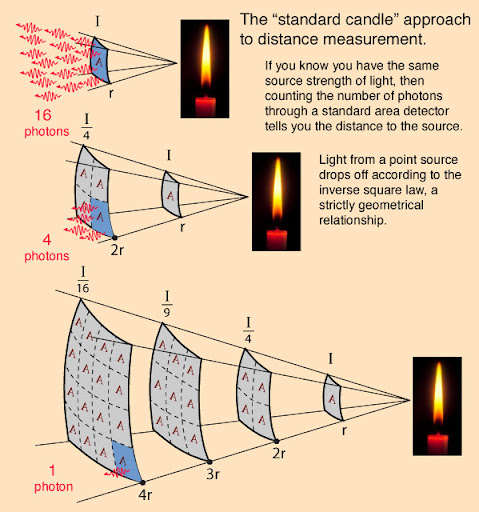
It wasn’t until the 1990s that astronomers developed a technique to measure any change in Ho. Astrophysicists studying Type 1a supernova calculated that all such supernova should explode with the same amount of energy, should shine with the same absolute brightness. So if a Type 1a supernova appeared bright that meant the galaxy it was in was fairly close to our Milky Way while if the Type 1a supernova appeared dim it meant that the host galaxy was farther away. Astronomers call such objects ‘Standard Candles’ and can use them to measure the distance to objects in the Universe.
Astronomers are always searching for what they call ‘Standard Candles’ that is sources of light far away in space whose absolute brightness they know somehow and whose apparent brightness they can measure. A simple calculation will then tell them just how far away that candle is! (Credit: hyperphysics.phy-astr.gsu.edu)
So using Type 1a supernova to measure the distance, and then using redshift to measure velocities they could determine whether Ho was getting smaller. What they found was that Ho was actually getting bigger, that something was pushing the Universe to expand faster, something they called ‘Dark Energy’.
Astronomers calculate that about two-thirds of all the energy in the entire Universe is ‘Dark Energy’ about which we know almost nothing! (Credit: Big Think)
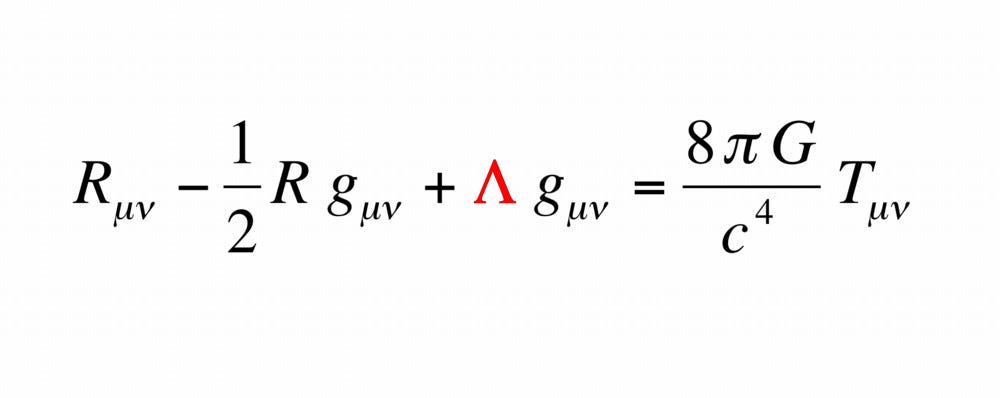
As I said earlier the standard model of the Universe considers Dark Energy to be the Cosmological Constant that made Einstein’s field equations complete, a property of space itself. Still cosmologists wanted to be sure and so they continued to gather supernova data in order to see if Dark energy did remain constant with time.
The full, tensor version of Einstein’s field equations for gravity. Mathematically the constant lambda has every right to appear, but its value had to be very small or it would be seen in the way the planets orbit our Sun. Einstein was glad to get rid of it but it would generate something like ‘Dark Energy’ so now its come back. The question is, is lambda really constant? (Credit: Medium)
In several of my past posts I have discussed recent evidence that Dark Energy is in fact dynamic, that it does change with time and that it has been growing steadily weaker as the Universe ages. Now a new paper published in the Monthly Notices of the Royal Astronomical Society by astrophysicists at the Department of Astronomy and Center for Galaxy Evolution Research at Yonsei University in Seoul, South Korea asserts that the technique used to measure Dark Energy needs a correction factor. When that correction is carried out it makes λ much weaker and in fact in just the last billion years or so the Universe has actually begun to decelerate.
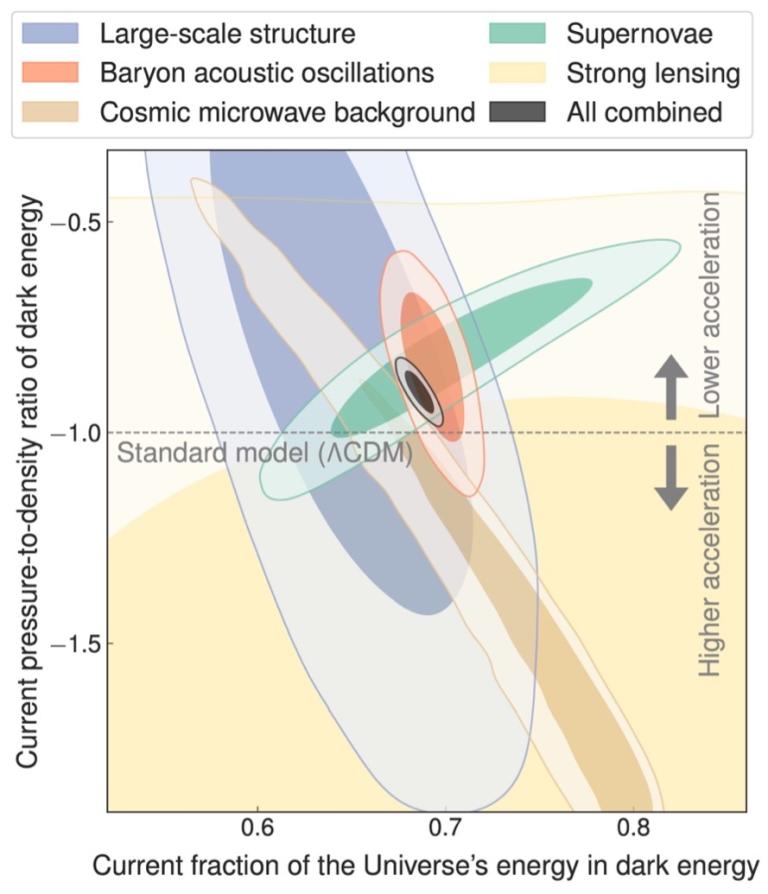
Over the last 20+ years astronomers have tried to study Dark Energy by many different techniques. A consensus is growing that Dark Energy is not constant but rather dynamic, changing with time and growing weaker! (Credit: UChicago News – University of Chicago)
What the researchers assert is that the brightness of a Type 1a supernova depends on the age of the white dwarf star that explodes. Taking this correction factor into account the supernova data becomes far more conclusive that dark energy is weakening and in fact agrees more closely with data based on analysis of the CMB. It also means that sometime in the last billion years dark energy became weaker than gravity and the Universe has in fact begun to decelerate.
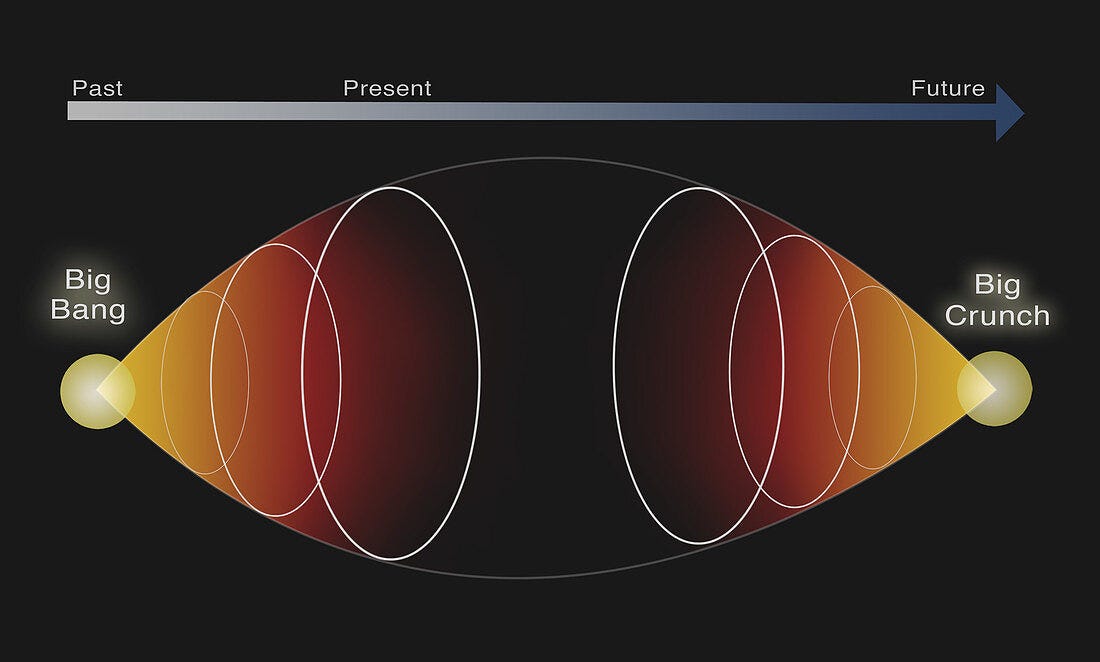
If Dark Energy is growing weaker, we may be headed toward a ‘Big Crunch’ where the entire Universe collapses into a singularity triggering another ‘Big Bang’. (Credit: Avi Loeb – Medium)
Now there are already criticisms of the paper, the researchers did not in fact measure the age of the star that goes nova, a rather impossible thing to do with all the billions of stars in other galaxies. Instead they measured the age of the galaxy and used that value as a proxy for the age of the star that went nova. Still the author’s new measurements of the change in dark energy do closely align with the analysis made from the CMB data.
Guessing someone’s age at a party may be fun but guessing the age of a star in a distant galaxy is a lot of hard work. (Credit: Amazon.com)
The eventual fate of the Universe itself depends on the nature of Dark Energy and cosmologists and astrophysicists are working hard to uncover its secrets.