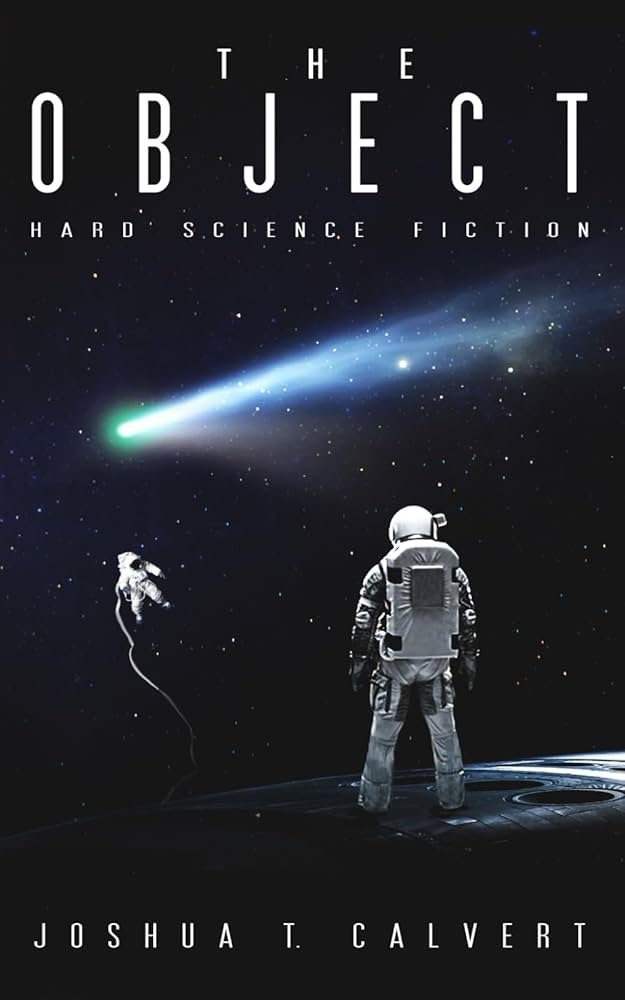
‘The Object’ by Author Joshua T. Calvert advertises itself as a ‘Hard Science Fiction’ novel, meaning that all of the technology in the story is based on well-established science. In stories of this kind spaceships are propelled by rockets not by warp drive or anti-gravity, there are no transporter beams and time travel is simply impossible. The problem with such stories is that they can become dated pretty quickly.
For example Arthur C. Clarke’s first novel, ‘The Space Dreamers’ was written in 1947 and describes the development of a rocket designed to take men to the Moon using technology that was at least possible in the late 1940s. Needless to say the story soon became ‘quaint’ to put it nicely.

Author Joshua T. Calvert goes even further, placing his story in the present day world of NASA, the International Space Station and even Space X gets a lot of mention. Today’s politics are also a part of the plot with tense relations between the US-EU bloc and the China-Russia bloc. The story even begins in the year 2023. The risk in this strategy is that things could change a lot in the next few years so that ‘The Object’ also rapidly becomes dated.
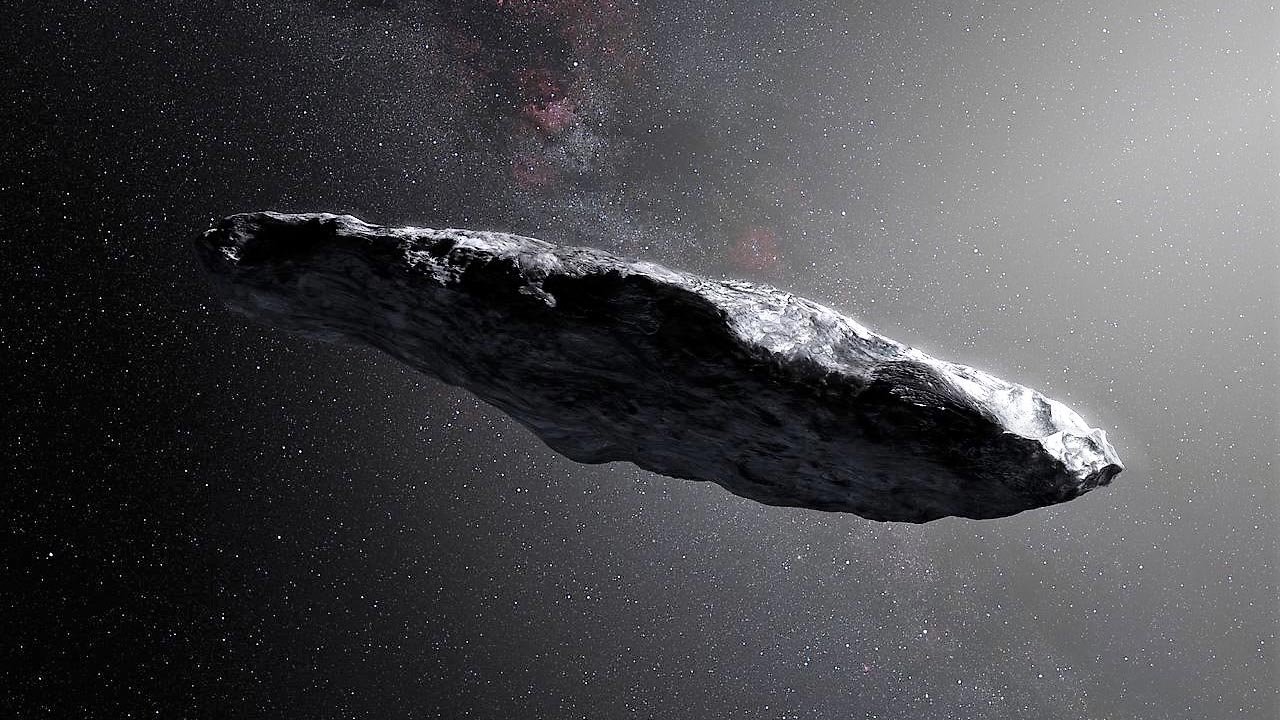
As the novel begins Melody ‘Mel’ Adams is a scientist working for NASA keeping a watch out for asteroids and comets. Mel was in line for an astronaut post but she just missed the cut, her current position at least keeps her a part of the space agency. During an observing run Mel discovers a comet with a developed tail out beyond the orbit of Pluto. The problem with identifying the thing as a comet is that comets don’t develop their tails until they get close enough to the Sun to warm up and begin outgassing.

The object’s orbit is soon calculated and indicates that, whatever it is it comes from outside the solar system. When the object, which is given the name Serenity, then makes at stop at the planet Saturn and then changes course heading toward the inner planets the possibility that it is an alien spaceship is taken seriously.
Serenity’s new trajectory doesn’t have it headed toward Earth however. In fact the closest it will come to our planet is the orbit of Mars so a special mission, using a modified Space X Starship is set up to take a crew of six, two Americans, two Europeans and two Chinese, to rendezvous with the object as it intersects Mar’s orbit. The training and preparation for this mission take up a large part of the novel and it is during training that an injury to the assigned mission commander causes Mel Adams to become the ship’s commander.

I won’t give away the secret of just what Serenity turns out to be but it certainly is different from just a spaceship with an alien crew aboard. That’s the best part of ‘The Object’, Serenity itself. It’s here that the author finally let’s his imagination go, the problem is it takes so long to get there.
I’m not saying that the first three quarters of “The Object’ are bad, it’s just that they are so filled with minutia that I often lost track of the story, a case of not being able to see the forest for the trees. Author Calvert has obviously spent years learning all of the details of how NASA handles a space mission, of what working for NASA is like and wants to include every one of them.
So I am giving ‘The Object’ a thumb’s up, especially if you are interested in how NASA organizes a space mission, how the space agency selects and trains its astronauts. For me however I would have preferred to have the first two-thirds of the novel cut in half and the last third doubled in size.