Movie Review: Disclosure Day. 

I’m going to say it right from the start; Steven Spielberg’s latest film ‘Disclosure Day’ is the shiniest piece of shit I’ve ever seen. Oh, it’s a great movie, a taunt, gripping plot, wonderfully acted, with intense action sequences and top notch special effects, everything we’ve come to expect from Spielberg.

Poster art for the new Steven Spielberg movie ‘Disclosure Day’. (Credit: Wikipedia)

At the same time however it’s nothing more than a rehash of all the old, by now very old conspiracy theories about how the government is keeping all of the evidence of alien visitations a secret, about alien abductions and captured alien technology. Even the aliens themselves are nothing more than updated CGI versions of the ones from Spielberg’s original alien film ‘Close Encounters of the Third Kind’ released back in 1977.
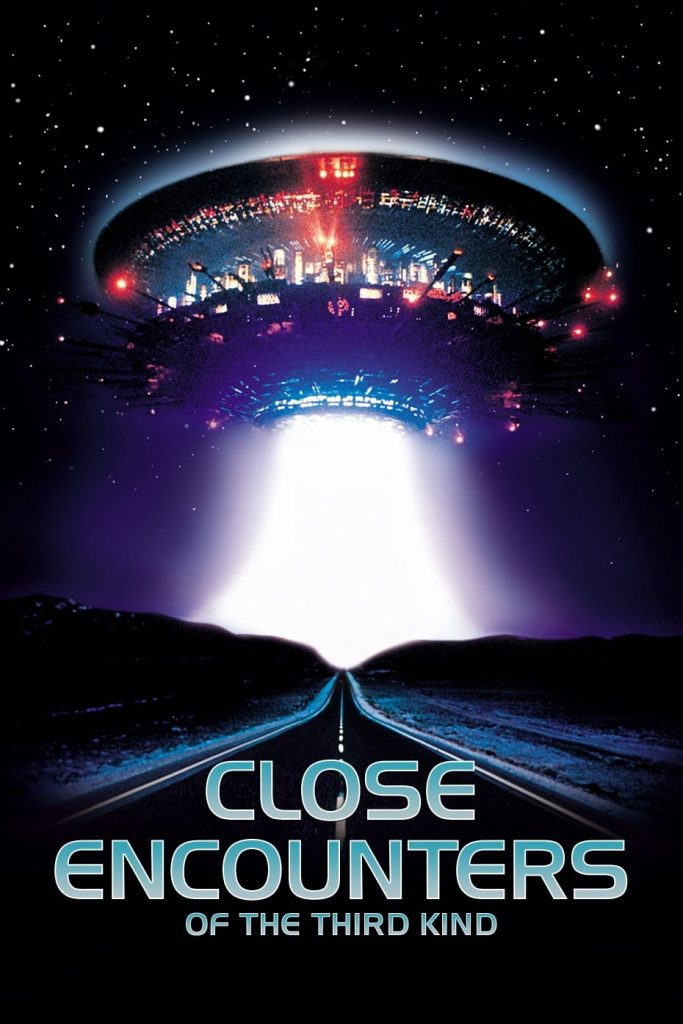
‘Close Encounters of the Third Kind’ was Spielberg’s first film about alien visitations here on Earth with ‘ET’ being the second. In interviews for his new film ‘Disclosure Day’ Spielberg has said that he kind of considers the three movies to be a trilogy of sorts. (Credit: Row House Cinemas)

But let’s talk about the film first. The two main characters are Margaret Fairchild, played with great effect by Emily Blunt, and Dr. Daniel Kellner, played by Josh O’Connor. Margaret is a weather forecaster at a local TV station in Kansas City while Daniel is a cybersecurity specialist working for a secret company called Wardex, a company that has been created by the government with the task of preventing all evidence of alien activity here on Earth from becoming known to the general public. The Men in Black of UFO lore!

Each having a piece of the puzzle the two main characters of ‘Disclosure Day’ are Daniel (l) and Margaret (r). Both have been ‘enlightened’ by their encounter with aliens! (Credit: SYFY)

At the beginning of the film Daniel has stolen numerous data files containing massive amounts of that evidence which he is trying to get to Hugo Wakefield, played by Colman Domingo, a former employee of Wardex who has organized a group of people trying to ‘disclose’ all the evidence.

In ‘Disclosure Day’ the bad guys are a clandestine organization called Wardex led by Noah (Center). In the film the baddies are a one-dimensional portrayal of everybody’s fears about technology being used to control society! (Credit: Gold Derby)

The head of Wardex is Noah Scanlon, played against type by Colin Firth. While Firth is nicely creepy in his performance the other Wardex characters are nothing but soulless thugs in black, riding around in black vehicles or sitting in front of computer screens in dark rooms. The villains are the worst part of ‘Disclosure Day’, with the exception of Firth they are nothing but cartoons.

There is also a secret organization trying to get the ‘good news’ of alien existence out into the public. These good guys (?) are led by Hugo who once worked for the bad guys at Wardex! (Credit: Decked Out Magazine)

Meanwhile weathercaster Margaret has had a visit in her apartment from a male Cardinal, the bird kind of Cardinal, who triggers something miraculous in her. Suddenly she is able to read other people’s deepest thoughts and emotions, she knows about things happening hundreds of miles away. The aliens, in the form of an animal, have endowed her with ‘special powers.

Several times in the film the aliens are portrayed as animals. Here a male cardinal is triggering a psychic experience in Margaret near the beginning of the film. (Credit: The Guardian)

Most of ‘Disclosure Day’ consists of chases and narrow escapes as Daniel and Margaret both try to reach Hugo.  I’ll go no further in order to avoid any spoilers, except for one last spoiler at the end of this post.

Don’t you just hate it when people give away the ending of a film or book you’ve just gotten interested in! (Credit: mcdreeamie-musings)

Instead I’d like to talk about the influence that ‘Disclosure Day’ may have on the debate about alien visitations and UFOs in general. In the seventy-nine years now since Kenneth Arnold first reported his sighting of ‘Flying Saucers’ nothing has ‘promoted’ the idea of aliens visiting Earth as much as the 1977 film ‘Close Encounters of the Third Kind’ which was produced and directed by Steven Spielberg just as he has now done with ‘Disclosure Day’. Although it is hard to obtain accurate numbers, in the years following ‘Close Encounters’ the number of UFO sightings at least tripled and numerous books and magazine articles about aliens were published.

Published shortly after the movie Close Encounters ‘Communion’ was just one of many books about alien abductions that became popular in the late 70s and early 80s. (Credit: Wikipedia)

The actual evidence for UFOs in the 1970s was actually no better than it had been back in the middle 1950s, sightings of strange, apparently solid objects by reputable witnesses along with a few reliable photos and even fewer films. But that didn’t stop millions of people from suddenly believing in aliens, now we even had tales of people being abducted and ‘probed’ by ETs!

One of the earliest (1952) photos taken by a reliable witness of UFOs. In the seventy-four years since then we still haven’t gotten any better concrete evidence. (Credit: YouTube)

I vividly remember one incident I had just about a year after ‘Close Encounters’ came out. The episode happened on a beautiful, clear early evening in May, an hour or so before sunset. I was walking along an avenue near my home, walking past a graveyard by the way, when I looked west and saw what is still the best Sundog I’ve ever seen. It was oval in shape and it’s edges were much sharper than a normal Sundog, which is what made it the best I’ve ever seen. It was clearly a Sundog however because it was just about 45º to the right of the Sun and at the same height above the horizon.

Sundogs are atmospheric phenomenon that are often mistaken for UFOs. The weather conditions that cause sundogs are quite common making them one of the most common types of sightings. (Credit: YouTube)

As I was watching the Sundog, yes I stop to watch things like Sundogs; a man came walking along and saw me staring to the west. “Oh, my God,” he said. “That’s a Flying Saucer!”

“No,” I told him. “It’s a Sundog. Ice crystals in the atmosphere are reflecting the light of the Sun.” I explained while pointing to the Sundog and the Sun.

Disappointed at my description he walked away while muttering. “Anybody can see it’s a Flying Saucer”. He’d never heard about Sundogs but he’d knew all about Flying Saucers.

That’s why I think that “Disclosure Day’ is a bad film. It’s just going to generate a lot more argument about flying saucers and aliens without providing any better evidence than we had back when I was born!

SPOILER ALERT: If you don’t want to hear anything about the end of ‘Disclosure Day’ then skip the next paragraph.

People claim that, since in so many encounters by different people the aliens all look the same, they must be real encounters with real aliens! Actually, people see the same aliens because they all saw the same movie! (Credit: YouTube)

One more thing, at the very end of the film, while Margaret and Daniel are releasing all of the files on UFOs to the world, Hugo brings out an actual alien that his group has rescued from Wardex. Think about that, Hugo spend the entire movie waiting for Daniel and Margaret to get him all of the videos and other evidence so they could publish it, but he had a real live alien the whole time!!! Why didn’t he just go to CNN or ABC News or MSNBC or etc. etc. and just say, “You want evidence of aliens…here’s one!!!!” If you think about it that last little scene kinda makes the whole movie really ridiculous!
Space News for June 2026. 

There’s been a lot going on in space exploration this past month, much of it dealing with both the US and China’s Lunar ambitions but also in robotic probes exploring the Solar system. Let’s get to it!

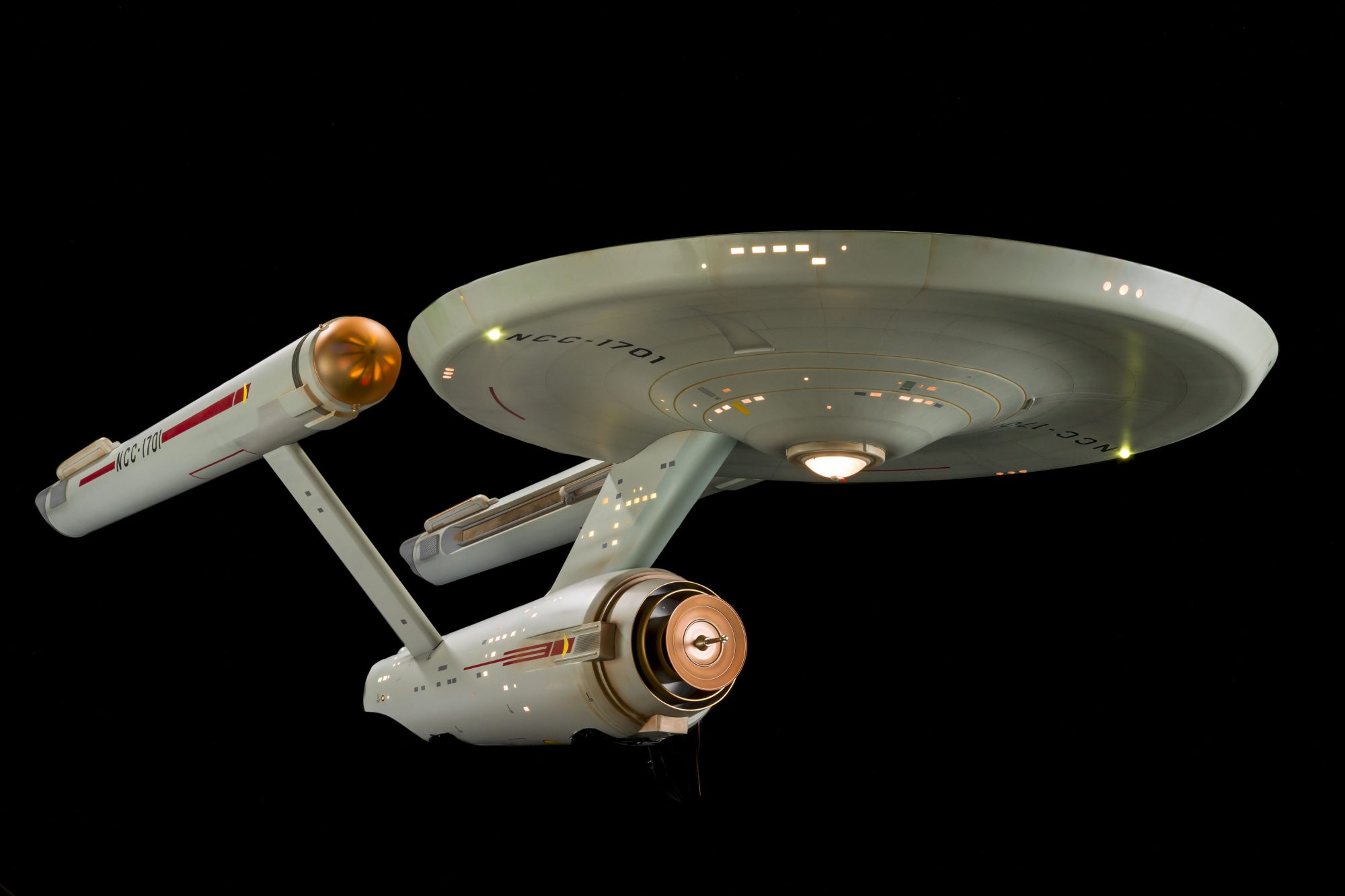
‘Space, the final frontier’. That’s still as true today as it was back in 1967. But only if we here on Earth can learn to work out our differences without fighting will we ready to ‘seek out new life and new civilizations’ (Credit: Popular Mechanics)

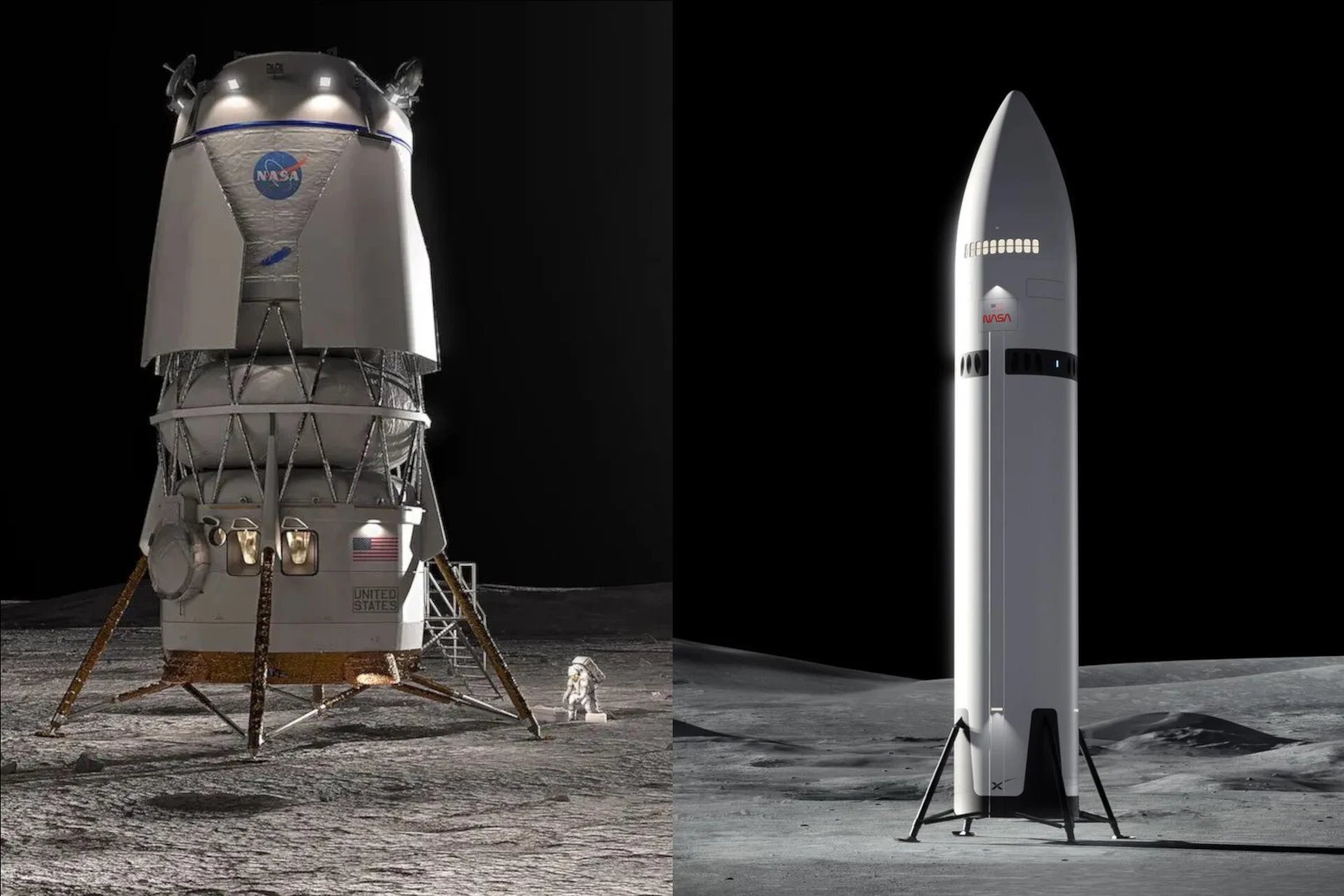
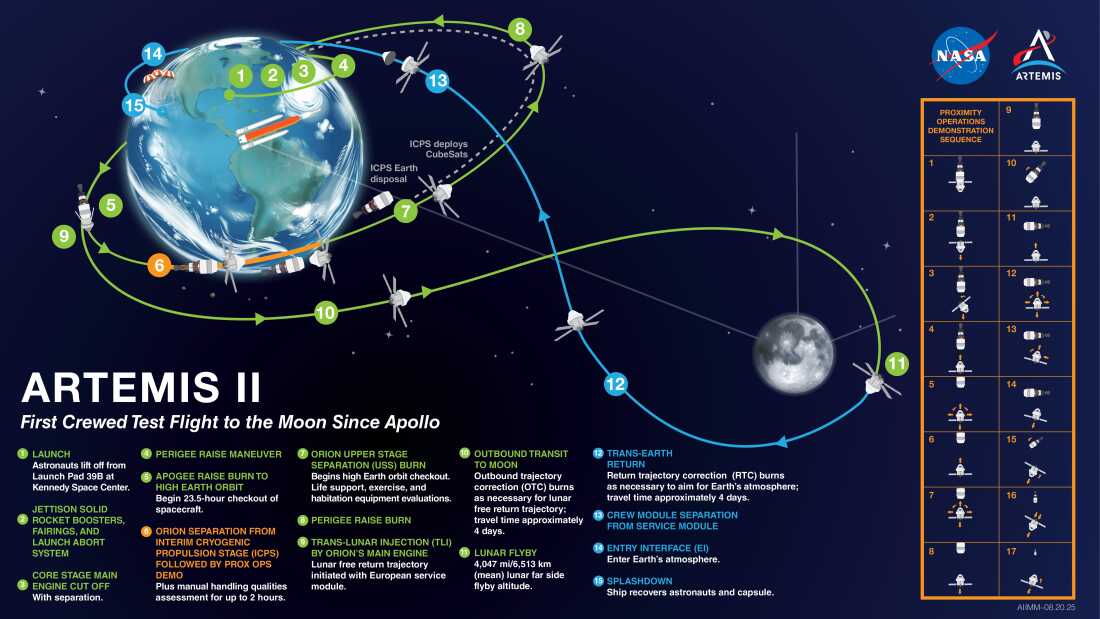
The recent success of NASA’s Artemis II mission had given hope that Artemis III, scheduled for 2027, might actually return human beings to the surface of the Moon. However, delays in the development of the Lunar lander vehicle by both Space X and Blue Origin have caused NASA to alter the schedule. Instead of landing on the Moon Artemis III will now rendezvous with and check out the Lunar landing module in Low Earth Orbit (LOE). So the Artemis III mission will be an updated version of the Apollo 9 mission just as Artemis II was an update of Apollo 8.

For the first time since 1972 the Artemis 2 mission succeeded in taking humans beyond Earth orbit and to the vicinity of the Moon. (Credit: NPR)

Which of the two landing modules Artemis will rendezvous with, perhaps both (?), has yet to be determined but now the plan is for Artemis IV in 2028 to be the first to land on the Lunar surface. The change in mission profile will also cause a few changes in the Space Launch System (SLS) rocket itself. Artemis III was to be the first mission to employ NASA’s new Interim Cryogenic Propulsion Stage (ICPS) but since Artemis III is ‘only going’ to LOE that stage will not be included as a part of the launch system. The good news however is that the core stage of the SLS has arrived at Kennedy Space Center where it is now being prepared at the Vehicle Assembly Building. Currently the launch of Artemis III is scheduled for no earlier than March of 2027, and no later than June. Of course all that could change depending on the progress of the lander modules.

The Lunar landers proposed by Blue Origin (l) and Space X (r). Whether either of them will be ready by the scheduled time for Artemis 3 is questionably at the present time. (Credit: Gizmodo)

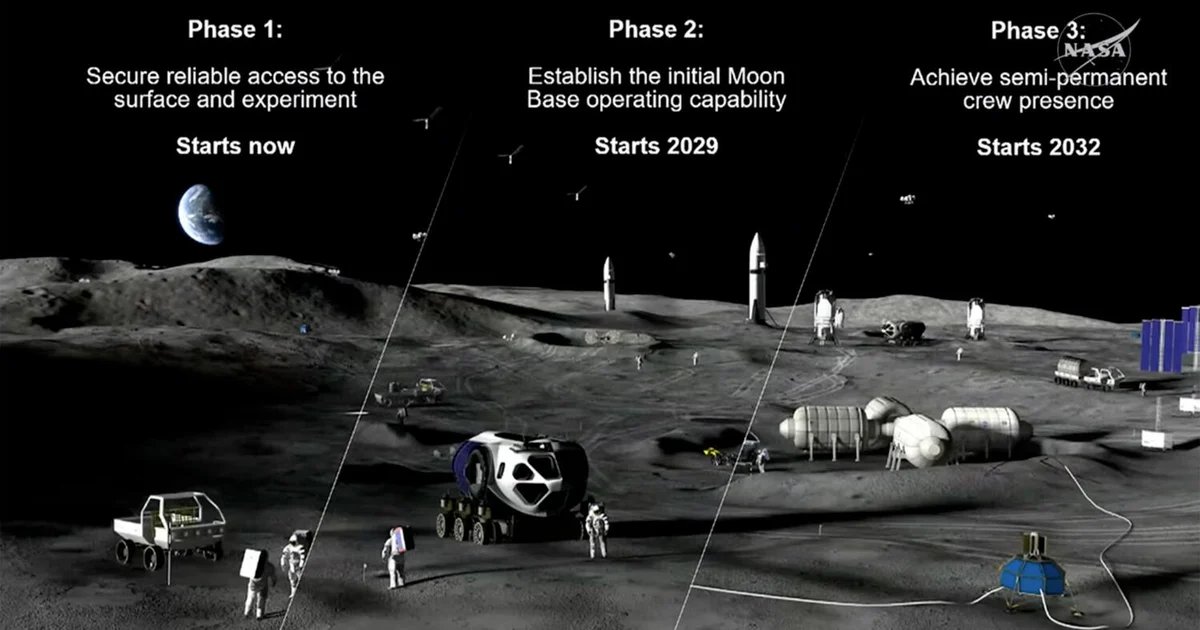
And this time NASA plans to not just visit the Moon a few times as the Apollo program did. No indeed, on the 26th of May the space agency’s manager for Moon Base program’s Carlos Garcia-Galán announced plans and scheduling for the construction of a Lunar base near the Moon’s south pole over the next decade.

NASA’s plans for a Lunar base consist of three phases beginning with the first landings and leading to a permanent human presence on the Moon’s surface. (Credit: CBS News)

Phase One of the program will consist of gathering detailed information about the terrain of the moon’s south pole while ‘securing reliable access’ to the Moon’s surface, in other words completing several manned landings. Phase Two will then follow by establishing the base’s ‘initial operating capability’ while Phase Three will be a long term, permanent occupation of the base.

Artist’s impression of what the final, permanent Lunar base could look like. (Credit: Reddit)

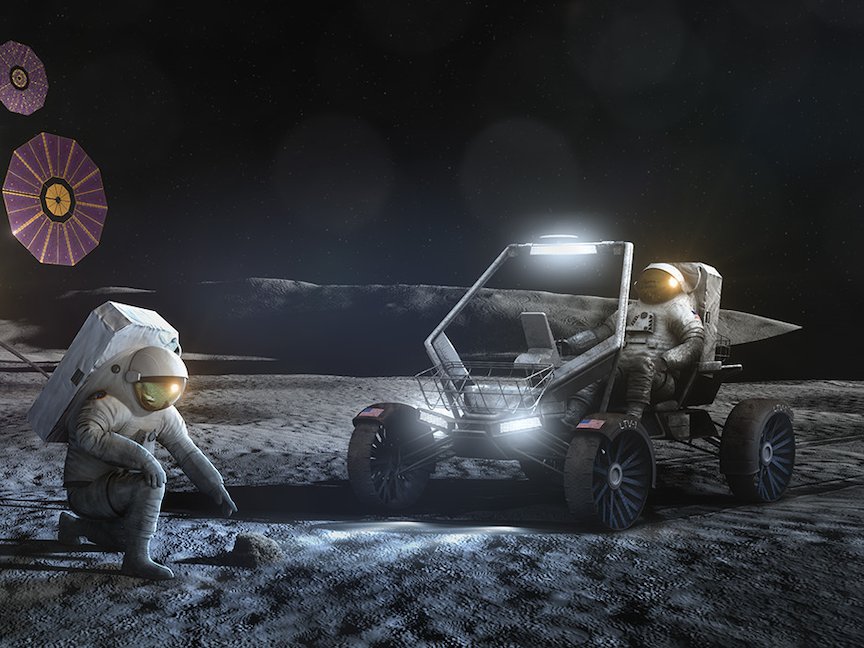
One interesting aspect of NASA’s plans is the large-scale employment of drones in establishing the base. In fact, before any humans land at the chosen base site NASA intends to land two lunar rover vehicles, which are being designated as Lunar Terrain Vehicles or LTVs. Unlike the lunar rover from Apollo however, the LTVs are also going to be capable of autonomous movement on the lunar surface. In a sense the LTVs will be a combination of the old Apollo rover and the current Mars rovers. The idea is that the rovers will scope out the planned area of the base, giving detailed information to scientists back here on Earth. Then, once the exact spot for the base is chosen the rovers will drive there to greet the first astronauts as they land.

One concept for a Lunar Terrain Vehicle or LTV to be landed on the Moon before the astronauts and which will scout the surface while waiting for humans to arrive. (Credit: SpaceNews)

Meanwhile China has been keeping mostly secret about progress towards its goal of landing a Taikonaut on the Moon by 2030. However on May 24th the Chinese did succeed in launching their Shenzhou 23 mission to their Tiangong space station. This mission is the eleventh manned mission to China’s station in LOE where the crew will relieve the Shenzhou 22 crew who has been manning the station now for over 200 days. The Chinese space agency has also announced that one member of the Shenzhou 23 crew will remain in space for an entire year making it the longest stay in space for any Taikonaut and one of the longest for any human.

Launch of the Shenzhou 23 spacecraft to China’s Tiangong space station. (Credit: Space Launch Schedule)

And speaking of Space X, on May 22nd the Hawthorn based company carried out a test flight of its enormous Starship rocket, the new version 3. After a couple of less than optimal tests of version 2 last year Space X was hoping for a much better outcome this time and despite the failure of an engine on each of the first stage (33 engines total) and second stage (6 engines) the mission was completed as planned with the second stage simulating a landing in the Indian Ocean after reaching orbital velocity. It now remains for Space X to conduct a full simulated mission with a capture of both the first stage, already accomplished, as well as the second stage.

While Space X has yet to actually catch the upper stage of Starship, they have now made several controlled splashdowns in the Indian Ocean. (Credit: Instagram)

Space X has big plans for its starship rocket, not only for use as NASA’s Lunar lander but going forward as the main vehicle for the company’s ambitions for the planet Mars.

Space X still intends for Starship to be the vehicle that takes them to Mars. (Credit: Space X)

In a bit of breaking news, on the 28th of May a New Glenn rocket from Blue Origins was undergoing a test of its first stage rocket motors when the entire rocket exploded in a huge ball of fire. This is the second major problem in a row for the New Glenn launch system as just back in April a launch left a satellite in the wrong orbit owing to an engine failure. While it is too soon to determine just what went wrong to cause the rocket to explode thankfully no one was injured and the engineers at Blue Origin are already investigating the disaster.

Fortunately, it was only the New Glenn rocket that was destroyed during a test of the rocket’s engines. Still Blue Origin will have to figure out what went wrong before it can attempt another launch! (Credit: ABC7)

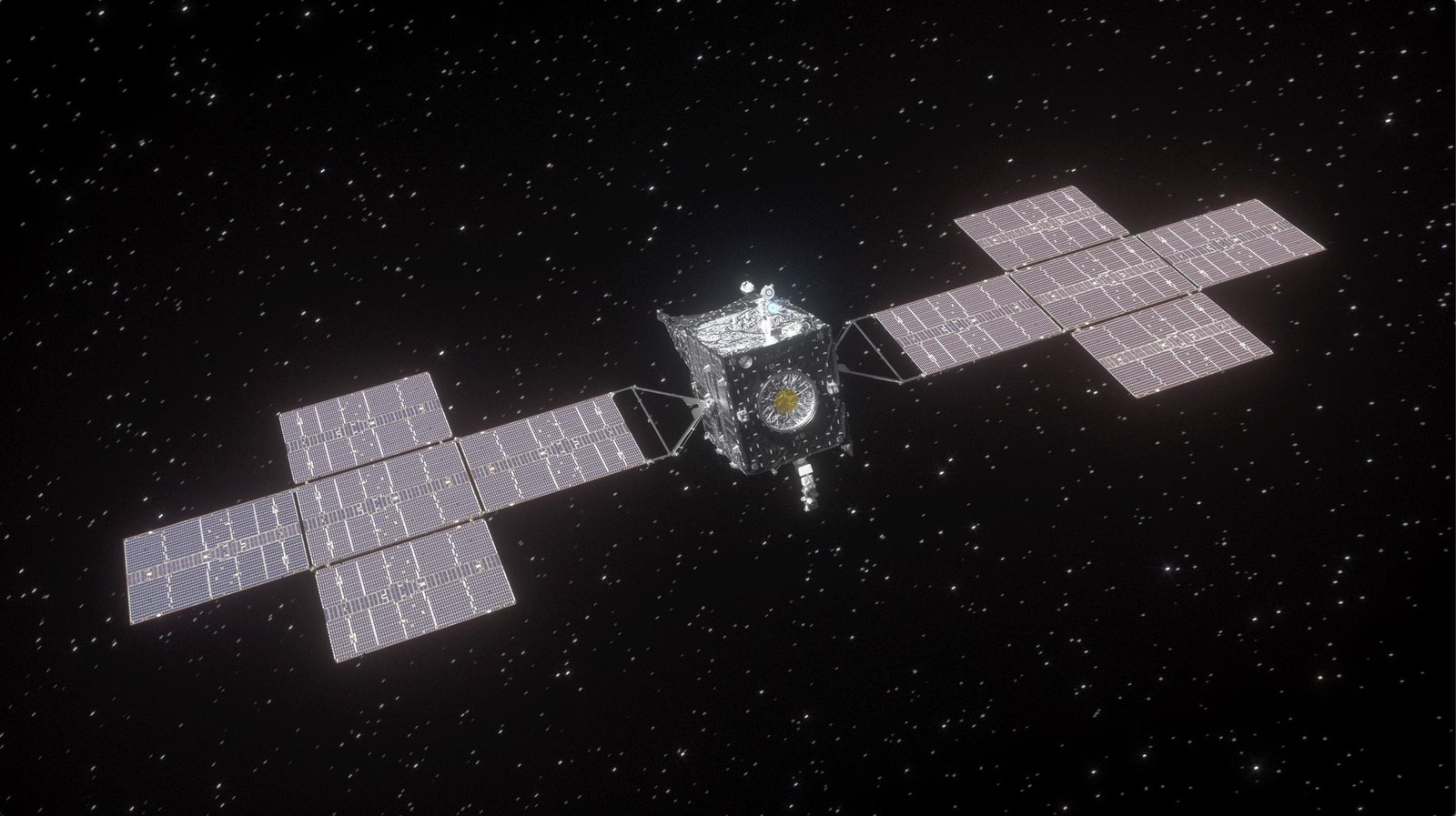
There’s also news concerning robotic probes in interplanetary space with NASA’s Psyche spacecraft on its way toward the asteroid of the same name. On May 15th the spacecraft successfully used the gravity of the planet Mars to slingshot the probe towards the asteroid belt between Mars and Jupiter. The Psyche spacecraft is expected to reach it target asteroid in the summer of 2029.

The Psyche spacecraft is on its way to the asteroid of the same name. During its flight the probe used the gravitational field of Mars to give it a boost towards the asteroid belt. (Credit: Space)

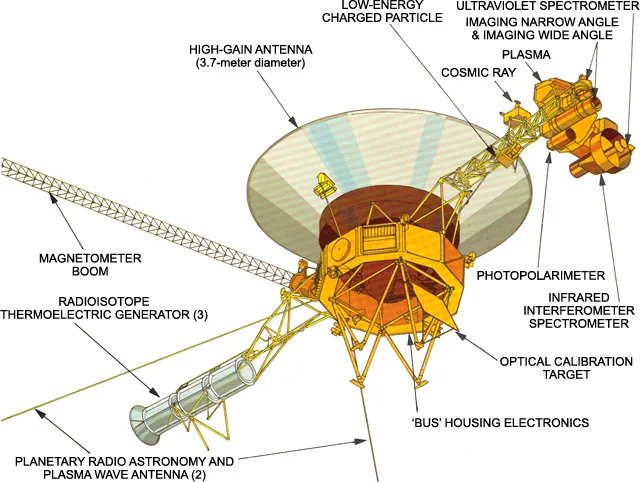
One last little news item concerns NASA’s oldest operating spacecraft, Voyagers 1 and 2. Next year the two probes will reach the 50th anniversary of their launch back in 1977 and both are now getting quite low on power as the nuclear material powering their Radioisotope Thermoelectric Generator (RTG) continues to decay. The spacecraft lose about four watts of power every year.

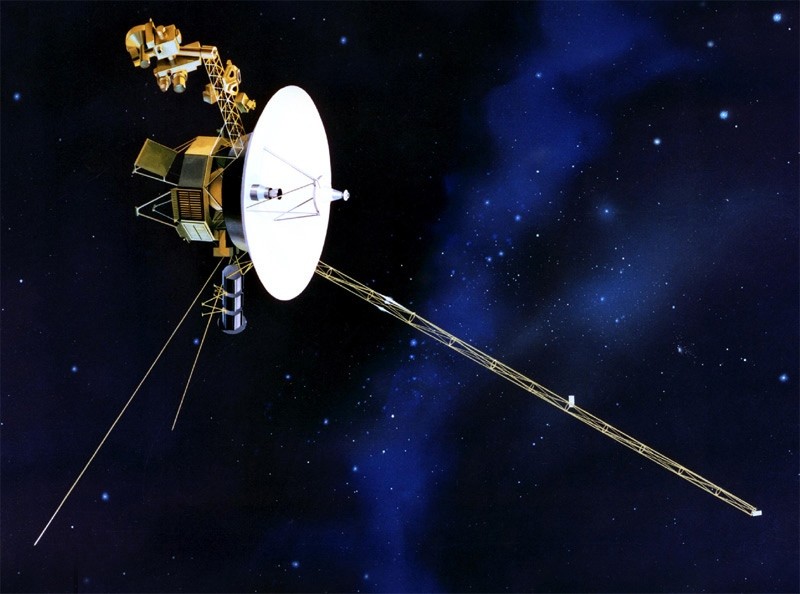
The Voyager spacecraft, almost 50 years old and still sending back data. The Radioisotope Thermoelectric Generator (RTG) that powers the aging probe is at bottom left. (Credit: NASA-Science)

Each spacecraft began the journey with ten scientific instruments taking data but because of the power loss Voyager 1 is now only operating its magnetometer and its plasma wave detector. Voyager 2 meanwhile has both of those instruments operating along with its cosmic ray detector.

NASA’s listing of those instruments aboard the voyager spacecraft that are still operating. (Credit: NASA)

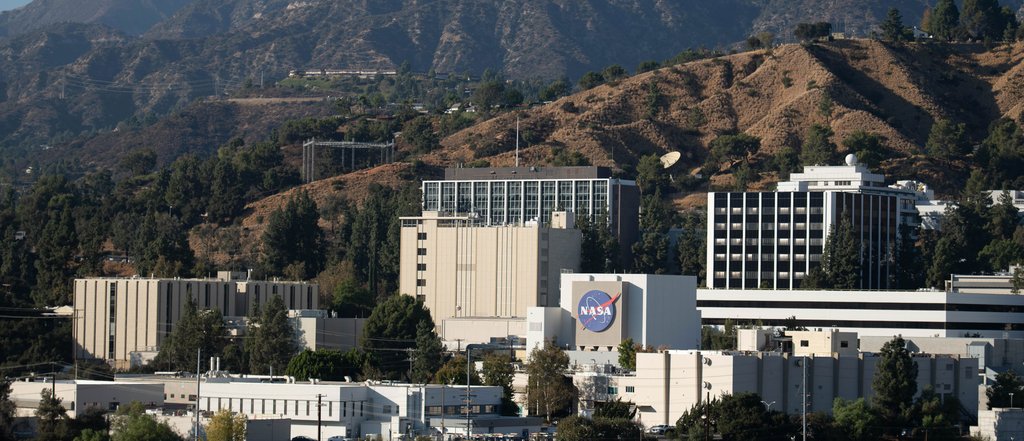
Right now NASA is quite confident that both probes will reach their 50th birthday and that Voyager 1 will reach another milestone, that of traveling one full light day from Earth, the farthest that any man made object has ever traveled. The engineers at the Jet Propulsion Labouratory (JPL) have an idea however that may allow the Voyagers to stay alive much longer, maybe even allow them to turn some of their unused instruments back on!

The engineers at the Jet Propulsion Labouratory are among the best in the world. They’ve kept both Voyagers operating for almost 50 years and who knows, maybe for years yet to come! (Credit: NASA JPL)

The most critical system on the Voyagers are the thrusters that orientate the probes so that their antennas point toward Earth, otherwise we would quickly lose all contact with the spacecraft. Three heating elements are needed to keep the fuel for those thrusters warm and together they use up a good bit of Voyager’s power. What the engineers are planning is to do is to turn off those heaters and replace them with three other devices, devices that use 10 watts less power.

In order to keep in contact with the Voyager probes that big parabolic antenna has to be pointed straight at Earth. Therefore, the thrusters that keep the spacecraft oriented correctly are the most critical system on the probe! (Credit: Nature)

If this plan, which has been given the unofficial name ‘Big Bang’, succeeds each Voyager could turn on another instrument and in the long run this could extend the amount of life span left to the spacecrafts. The engineers at JPL have managed to keep the Voyagers alive and sending back data for 49 years now. Let’s hope they can work their magic one more time!