Nobel Prizes for 2026 

The Nobel Prizes have been announced for 2026 starting with the prize for Physiology or Medicine on the fifth of October. The Physics prize followed on the sixth with Chemistry on the seventh. Let’s discuss the work for which the recipients were honoured.
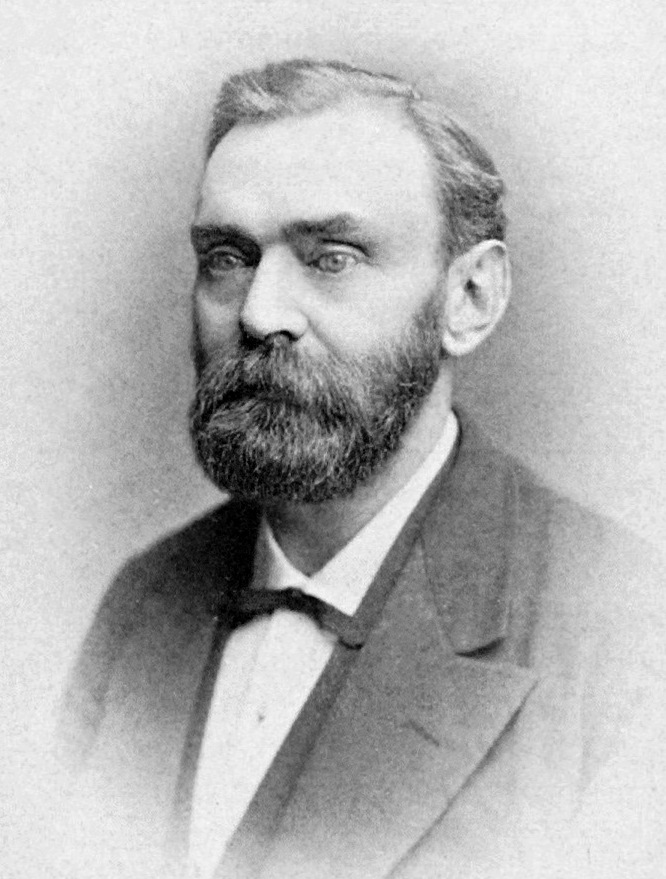
We usually only see him as a profile on the Nobel medal but here is an actual photograph of the discoverer of dynamite, Alfred Nobel. (Credit: Wikipedia)

The winners of the prize for Physiology or Medicine were Dr. Karl Deisseroth a professor of bioengineering and psychiatry at Stanford University in California, Dr. Peter Hegemann, a professor of experimental biophysics at Humboldt University in Berlin along with Dr. Georg Nagel who is a professor of plant physiology at the University of Wurzburg in Germany.
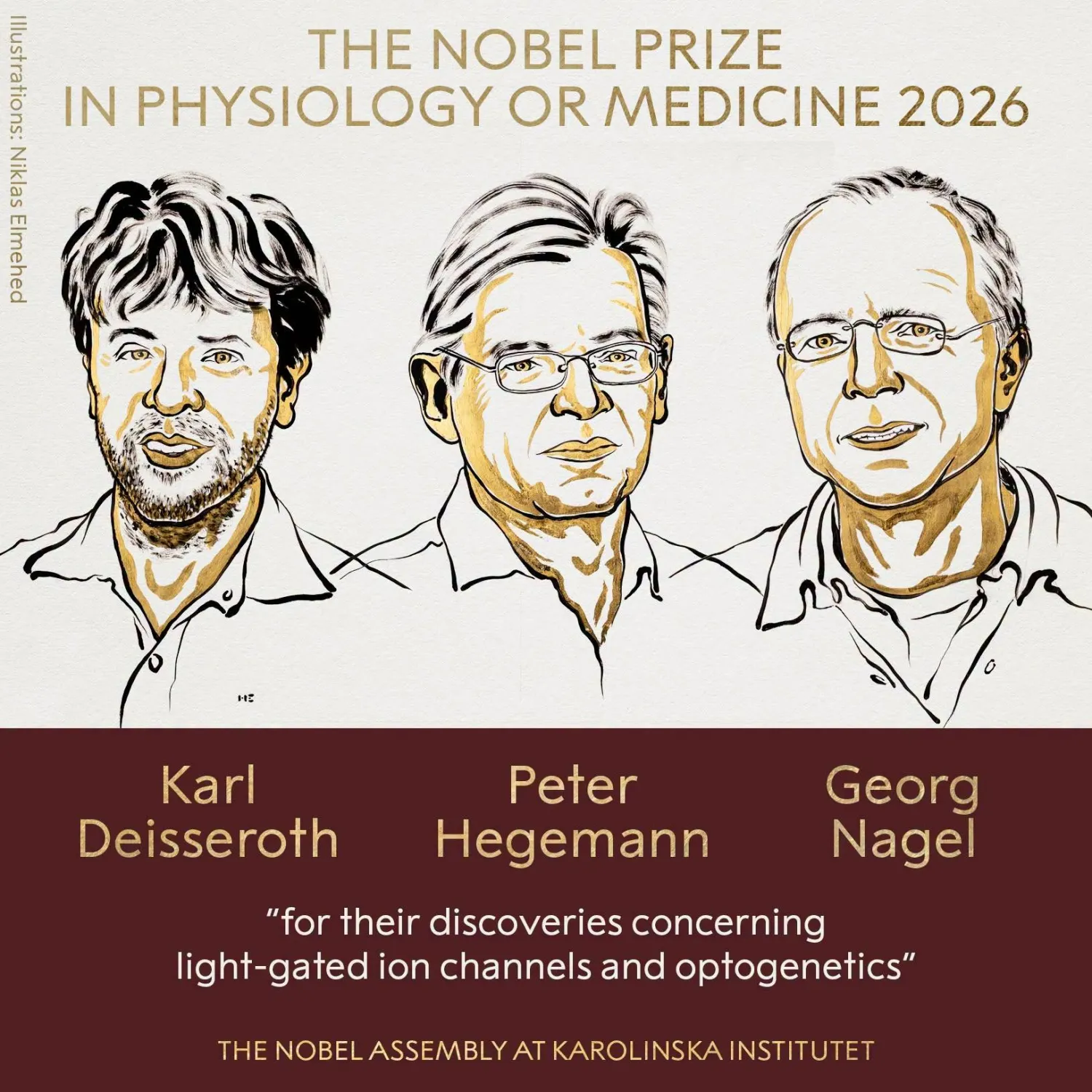
The 2926 Nobels Prize in Physiology or Medicine was awarded jointly to Karl Deisseroth, Peter Hegemann and Georg Nagel for their work in optogenetics. (Credit: IUPAB)

The work for which these three researchers were recognized deals with a new technique for studying the brain using tiny lights to activate neurons that has been christened “optogenetics”. Thanks to the work of these three pioneers optogenetics has become a powerful research tool in neuroscience. By genetically manipulating brain cells scientists can activate them by simply switching on a light. This technique has been used successfully in the study of neurological disorders such as blindness, dementia, depression and addiction.
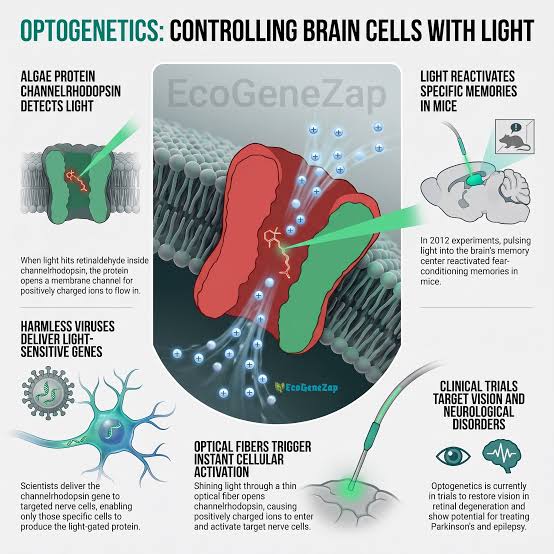
I freely admit that I don’t know a lot about optogenetics, but it certainly seems like a field that shows great promise in being about to teach us a lot more about how our brains work! (Credit: Facebook)

Dr. Deisseroth was the first to experiment with inserting light sensitive cells into the brains of mice and then using fiber optics to trigger various types of behaviour in the mice. Dr. Hegemann then discovered the protein that was responsible for converting the light into an electrical signal. Dr. Nagel furthered the work by analyzing the light-gated ion channel that allowed the protein to turn the light into the electrical signal. Together these three scientists have developed a powerful tool that has enabled neuroscientists to map which portions of the brain control specific behaviors.
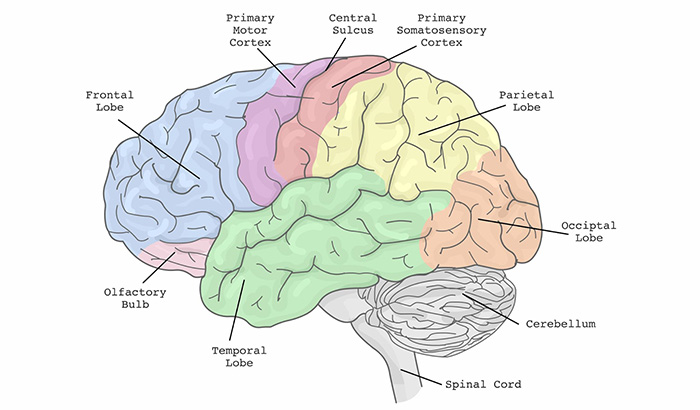
When i was in school this was about as detailed a map of the brain as was possible. Today, thanks in part to optogenetics we now possess a much more detailed map of the brain’s functions. (Credit: Brain Health Center)

The Physics prize was announced the next day and was awarded to Dr. Francis Halzen of the University of Wisconsin-Madison for his life long efforts to build and now direct the Ice Cube neutrino detector in Antarctica. Dr. Halzen first proposed using the Antarctic Ice Sheets as a detector back in 1988 but the project was only completed and began observing in 2011.
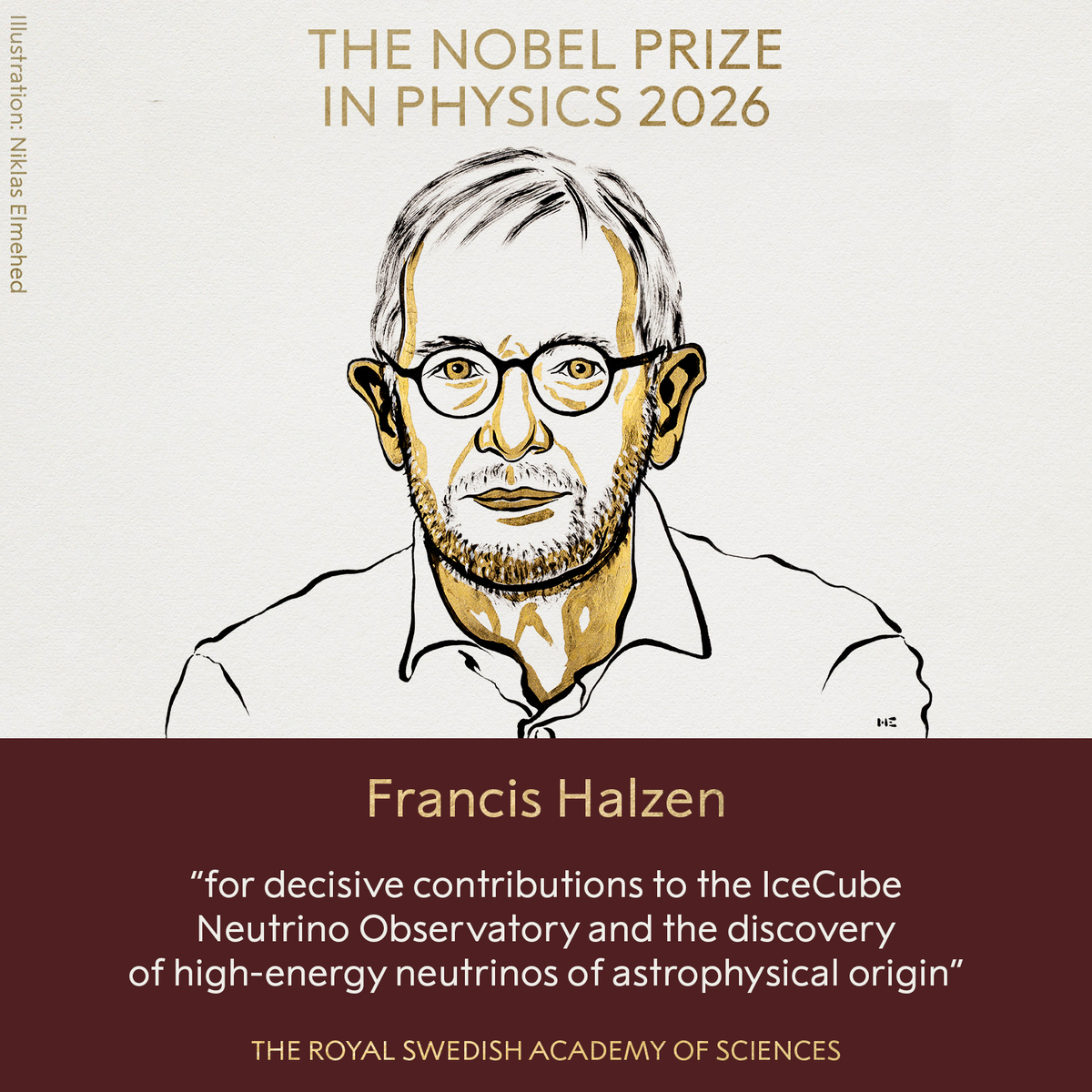
It’s been a while since any of the Nobel Science Prizes were awarded to a single person, but Francis Halzen certainly deserves to be recognized for his efforts in designing and constructing the Ice Cube experiment in Antarctica. (Credit: China Daily Global Edition)

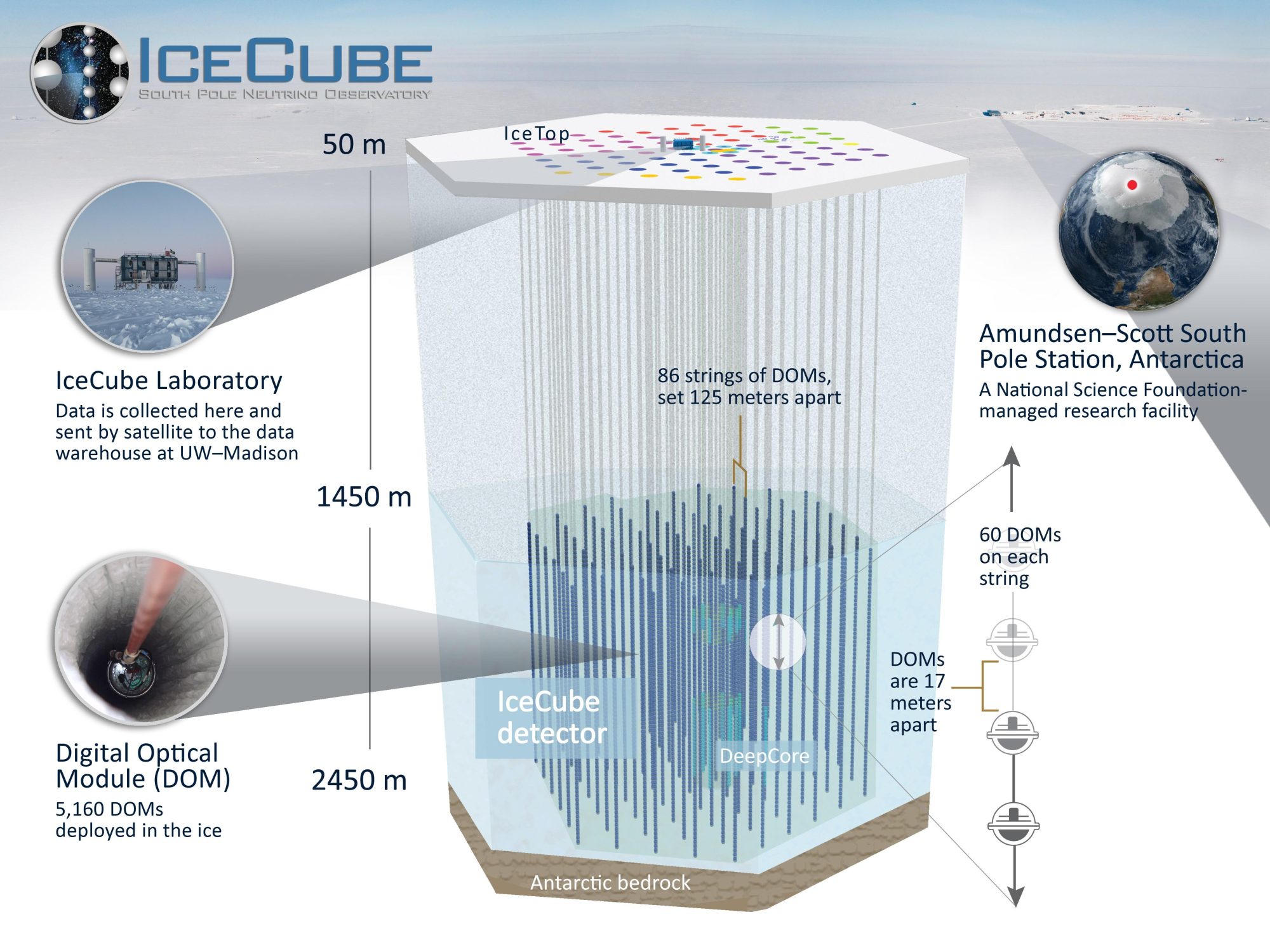
Essentially the detector consists of a cube of ice, each of whose sides are one kilometer long, that has had hundreds of holes drilled into it and to which long chains of photomultiplier tubes were then inserted. Whenever a neutrino interacts with any of the ice molecules within the cube the reaction gives off several photons of light, which are then picked up and greatly amplified by the photomultiplier tubes.
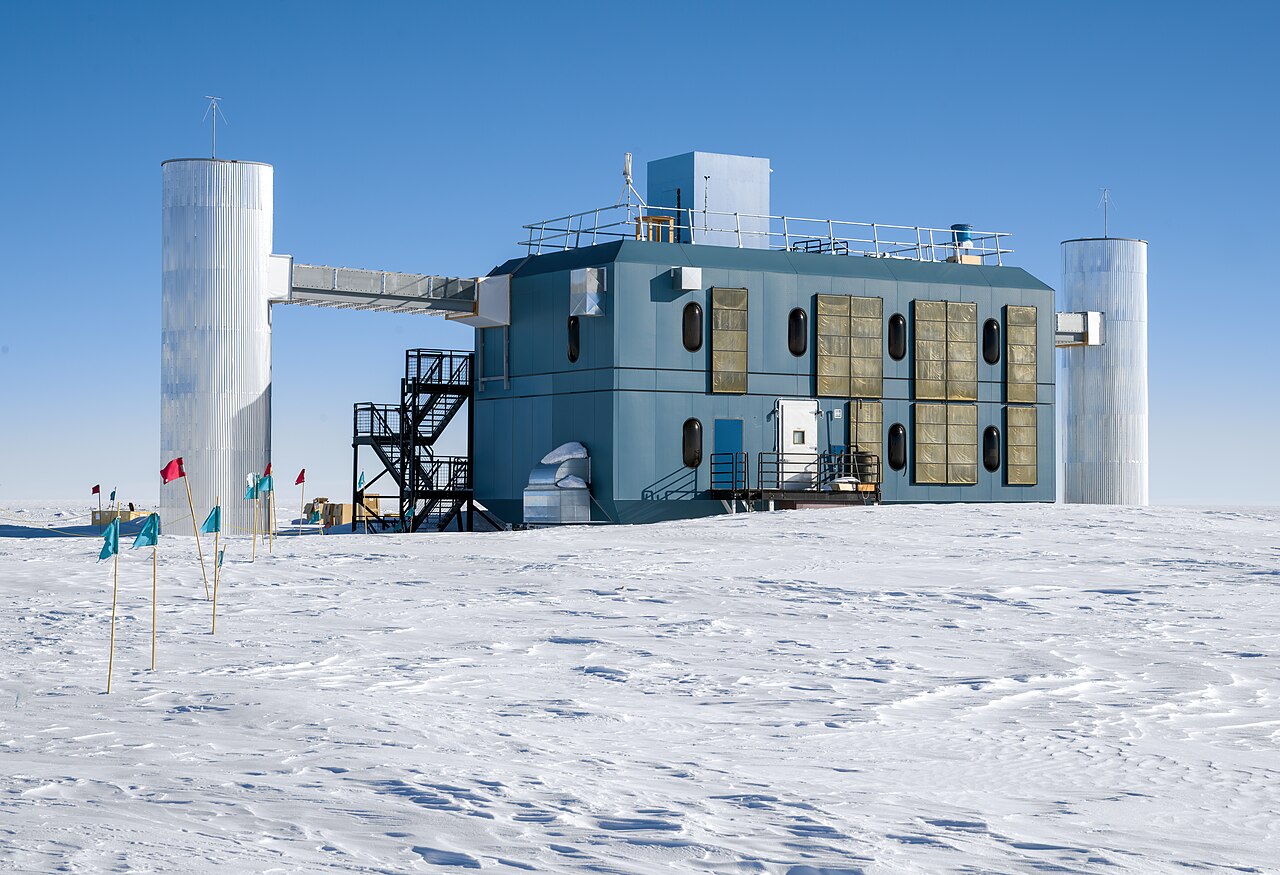
Like an Iceberg only a tiny fraction of the Ice Cube Experiment is about ground. (Credit: Wikipedia)
Most of Ice Cube consists of over 5,000 ‘Digital Optical Modules’ that detect the tiny amount of light that is produced whenever a neutrino interacts somewhere within a cubic kilometer of ice. (Credit: Ice Cube Neutrino Observatory)

Because neutrinos very rarely interact with the protons, neutrons and electrons that make up normal matter physicists need large detectors to capture just a few of them and the Ice Cube experiment is the biggest of them all. After just a few years in operation the Ice Cube experiment was able to announce the first detections of high-energy neutrinos coming from outside of our solar system and in the years since then the experiment actually been able to identify some of the likely cosmological sources for these extremely energetic particles. 
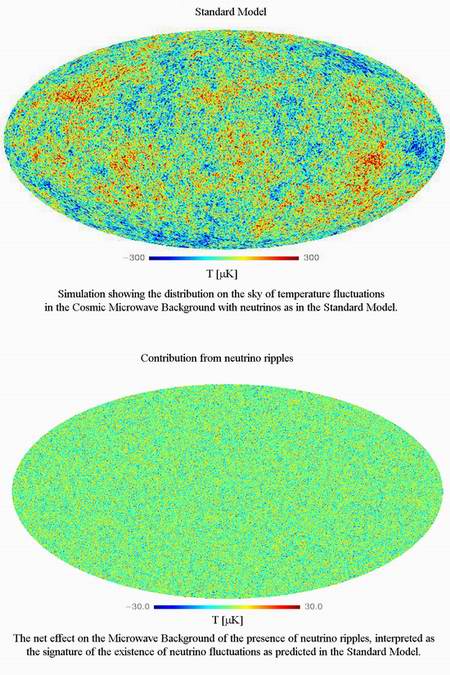
The Cosmic Microwave Background (Top), which is the leftover energy in light from the Big Bang along with what we think is the Cosmic Neutrino Background of Neutrinos left over from the Big Bang (Bottom). The Ice Cube Experiment was the first to confirm the existence of this neutrino background! (Credit: Phys.org)

Finally on the seventh of October the Chemistry prize was awarded to Henri Kagan of the Université Paris-Sud in Orsay, France along Kenso Soai of the Tokyo University of Science. The duo received the prize for their solution to a hundred year old chemical mystery, how homochirality can emerge spontaneously in chemical compounds. If that sounds a bit esoteric to you, well chirality has to do with right or left handedness.
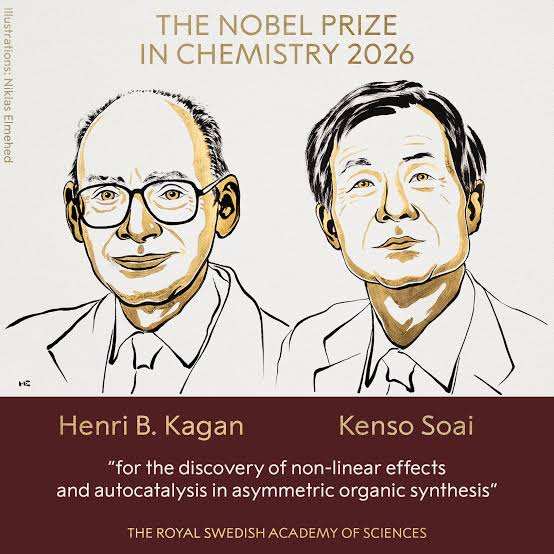
The 2026 Nobel Prize in Chemistry was awarded to Henri B. Kagan and Kenso Soai for their work in asymmetric organic synthesis. (Credit: Facebook)

Often in chemistry compounds can have the same chemical formula but because their atoms are arranged differently they can have different properties. Large, complex molecules like proteins are the best examples of this. There is also a special class of chemicals that have the same shape but which are right and left handed versions of each other!
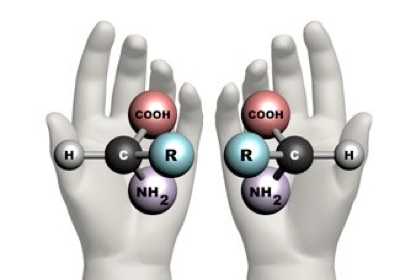
The word Chirality may be unfamiliar, but the concept itself is just the idea of right and left handedness. (Credit: Mathematical Institute -University of Oxford)

The amino acids that make up the proteins in our bodies all have this property but our bodies, the bodies of all living things are all made up of the right handed versions only. The mystery is, why, why are all the amino acids in living creatures right handed?
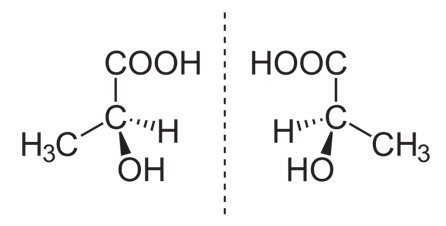
Like all of the Amino Acids that make up proteins, Lactate comes in both right- and left-handed versions. For some reason we still don’t know living creatures today are all right handed! (Credit: D-Amino Acids)

It was Mr. Kagan who first showed how this could happen while Mr. Soai later succeeded in doing it. This process has been a great boon to the pharmaceutical industry because many of the drugs we take come in mirror images but only the right handed version works in our bodies! The ability to manufacture only the right handed versions greatly reduces the cost and complexity of drug making. So there you have it, this year’s Nobel Prizes awarded to scientists who have done so much to advance the cause of human knowledge.
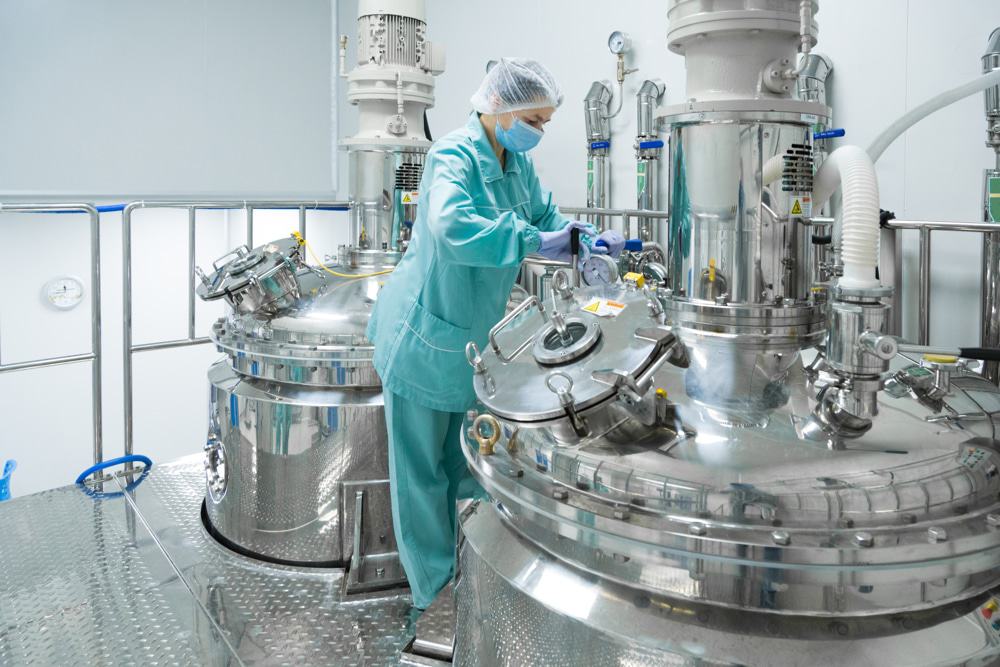
In the past Drug manufacturing techniques produced both left and right versions of drugs of which the left handed versions did not work. The work of Kagan and Soai helped reduce the cost of drug manufacturing for all of us! (Credit: US Speciality Formulations)

With all of the political infighting, to say nothing about the shear incompetence of our elected leaders it’s nice to know that there are still some people working to make the world a better place. 

2017 Nobel prizes in Medicine, Physics and Chemistry.

Over past week the Nobel committee has been announcing their selections for this year’s prizes. This year it seems as if trios are popular because each of the prizes for science was awarded to a trio of researchers.

The award for medicine / physiology was the first to be announced on Monday. The winners were Jeffery C. Hall and Michael Rosbash, who worked together at Brandeis University in Massachusetts along with Michael W. Young at Rockefeller University in New York. See Picture below.

2017-Nobel Winners for Medicine. L-R Jeffery Hall, Michael Rosbash, Michael Young. (Credit: Nobel Foundation)

The Three scientists were honoured for their research into the biological rhythms built into living creatures, a phenomenon known as the Circadian clock, the 24 hour day-night cycle caused by the rotation of the Earth.

The two teams conducted their research using fruit flies, a species that has been center stage in biological studies for over a century now. What they discovered was that the mechanism of the clock consisted of a network of genes and proteins that time the release of hormones turning on then turn off sleep, raise and low body’s temperature and blood pressure while regulating other body processes. Occasional disruptions in this genetic rhythm results in the familiar ‘Jet-Lag’ while prolonged disruptions can result in a number of serious health problems.

Before I move on I would to mention that much of the original work on circadian clocks was carried out by two scientists named Seymour Benzer and Ronald Konopka. It was these two men who discovered the ‘Period’ gene that initiates the entire process. Benzer and Konopka are ineligible to share in the prize however as they are both deceased. Alfred Nobel’s will specifically states that only living scientists can receive the award and this is not the first time that a scientist worthy of the honour has died before the committee saw fit to select them.

On Tuesday it was the Physics prize that was announced and I was very pleased to learn that it had been shared by Rainer Weiss of the Massachusetts Institute of Technology (MIT) along with Kip Thorne and Barry Barish of the California Institute of Technology (Caltech not CIT). See picture below.

Nobel Physics winners. Rainer Weiss, Kip Thorne and Barry Barish (Credit: Getty Images)

The work for which these scientists won the prize was the detection and measurement of Gravitational waves, a phenomenon predicted by Albert Einstein in his Theory of General Relativity almost exactly a century before they were finally detected.

Professors Weiss, Thorne and Barish are the principle designers and leaders of the Laser Gravity Wave Observatory (LIGO) project. I have written posts about the LIGO project earlier (14Jun2017) but simply put the LIGO project consists of two, four kilometer long L shaped laser detectors, one in Hanford Washington the other in Livingston Louisiana.

By comparing the laser beams traveling up and down the two arms of the L the detector is capable of measuring tiny distortions in the fabric of space-time itself. Using the two detectors allows the direction of signals source to be estimated and now that a third detector in Italy (VIRGO) has come on line the accuracy of the direction measurement will increase.

Detecting gravity waves is a completely new way of looking at the Universe and every time science has succeeded in doing that we’ve discovered thousands of new wonders. We can only hope that the study of gravity waves will prove to be as fruitful.

On Wednesday it was the Chemistry prize that was announced. The recipients were Jacques Dubochet of Lausanne University in Switzerland; Joachim Frank of Columbia University in New York along with Richard Henderson of Cambridge University’s Labouratory of Molecular Biology. It’s worth noting that Professor Henderson is the 15th Nobel laureate from the Lab (Not 15 Nobel laureates at Cambridge, 15 at just that lab at Cambridge!!!). See picture below.

Nobel Chemistry. Jacques Dubochet, Joachim Frank, Richard Henderson (Credit: EPA-EFE/REX/Shutterstock)

The work these three men carried out was the development of a series of techniques that have enabled scientists to better image complex organic molecules and structures with electron microscopes. Electron microscopes are similar to the microscopes you used back in High School but because the wavelength of an electron is so much smaller than that of visible light an electron microscope can magnify an image thousands of times more. I’ve had several occasions in my career to use electron microscopes to study electronics and they are wonderful instruments that can provide so much useful data.

Electron microscopes have problems when used to study living tissue however. First of all the electron beam must be in a vacuum, a condition that is not only lethal but can also cause the water in the cells to evaporate explosively, and remember we are composed of 70% water. Also the beam of electrons itself can be powerful enough to physically alter the specimen being studied.

Professor Henderson developed a technique for replacing the water in organic structures with a sugar cocktail that could withstand the vacuum. Professor Dubochet took a different tack, creating a process that quick froze the specimens so that the water in them did not crystallize. This process is called Cryo-electron-microscopy. Finally Professor Frank used computer algorithms to increase the precision of the data allowing scientists to learn even more from their instruments. An example of just how detailed the images provided by an electronic microscope have become the picture below shows a protein molecule.

Improvement in Electron Microscope Resolution. (Credit: Nobel Foundation)

The discoveries made by this year’s Nobel laureates have brought great advances to human knowledge. In a world filled with an almost daily barrage of bad news maybe we should think of a way to honour our scientists more than three days a year!